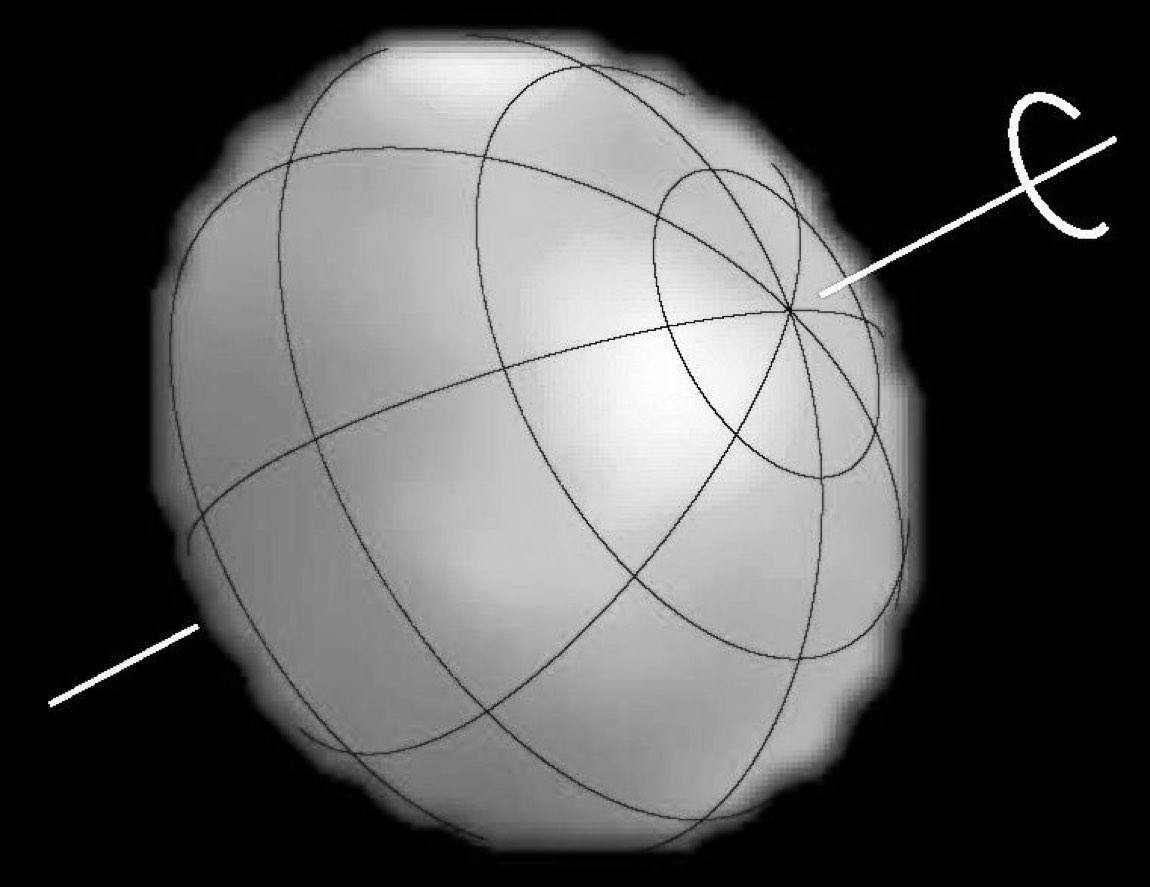
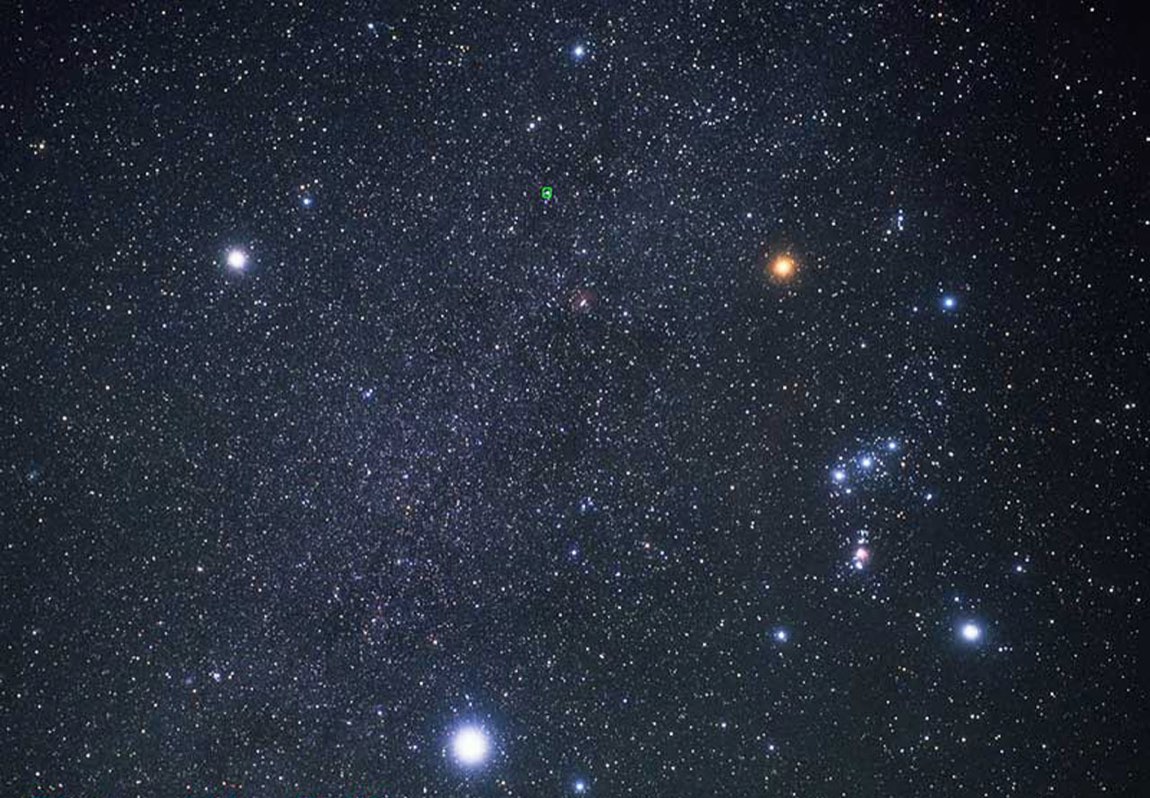
 Photograph · Hubble European Space Agency Credit: Akira Fujii · Public domain
Star · Deep guide
Procyon
The Little Dog's bright star, and a near neighbor with a dead companion.
What is it?
Procyon, just 11.5 light-years away in Canis Minor, is the eighth-brightest star in our sky, forming the Winter Triangle with Sirius and Betelgeuse. Like Sirius it hides a white dwarf companion — the leftover core of a star that died long ago — orbiting every 41 years. Procyon itself is beginning to evolve off the main sequence: a preview of the Sun's late middle age.
The deep dive
Researched for the Atlas from Wikipedia — Procyon (10,622 characters read) · updated Sep 20, 2026
01 The Winter Triangle and how to spot Procyon
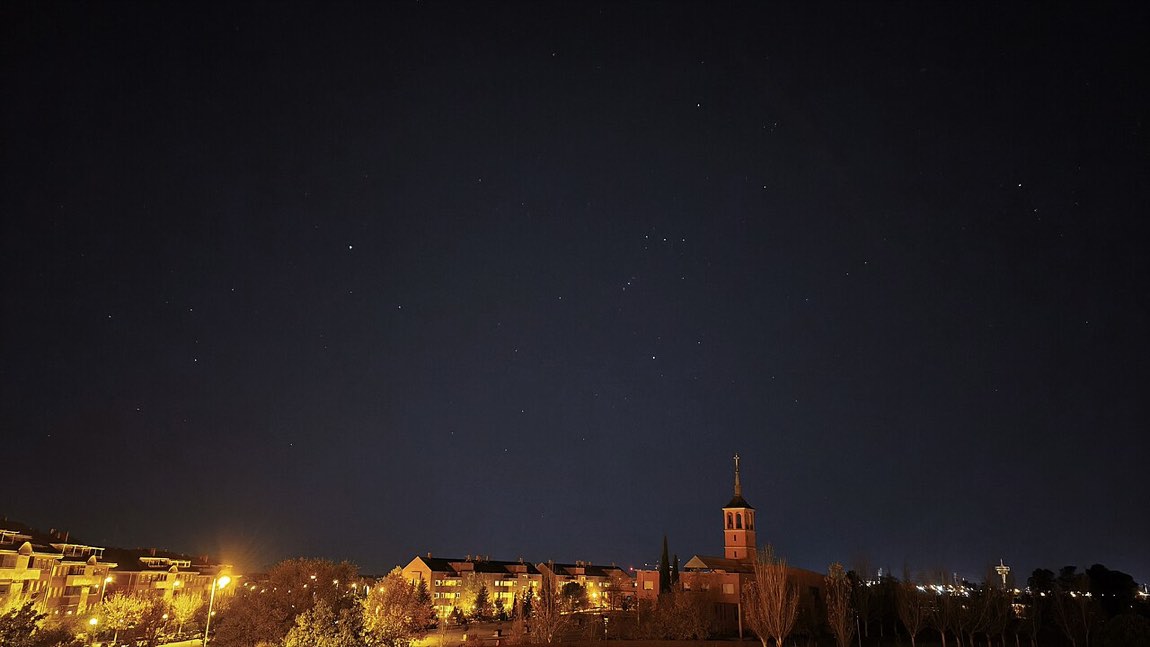
Procyon is one of the easiest bright stars to find because it anchors a famous naked-eye pattern called the Winter Triangle, sharing that asterism with Sirius — the brightest star in the sky — and the red supergiant Betelgeuse. The three stars form a large, nearly equilateral triangle that dominates the southern winter sky for observers in the Northern Hemisphere. Procyon itself culminates, reaching its highest point in the sky, at midnight on 14 January each year, and the prime season for evening viewing runs through late winter. Despite its reputation as a white star, it carries a color index of 0.42, and careful observers have noted a faint yellow tinge to its hue. At an apparent visual magnitude of 0.34 it is usually the eighth-brightest star in the entire night sky, bright enough to be seen even from moderately light-polluted suburbs. Its relatively low altitude from northern latitudes sometimes gives it a reddish cast as it rises, an atmospheric effect that has had real cultural consequences — the Inuit, for instance, associated that reddish appearance with a dramatic mythological story.
02 An orbit more eccentric than Mercury's Deeper
The two stars of the Procyon system do not circle each other in a tidy, nearly circular path. Their mutual orbit has an eccentricity of 0.4, which is explicitly more eccentric than Mercury's orbit around the Sun — itself the most elliptical planetary orbit in our solar system. That elongated ellipse means the separation between Procyon A and Procyon B changes dramatically over the 40.84-year orbital period. At their closest, the two stars are only 8.9 AU apart — roughly the distance from the Sun to Saturn — while at their farthest they stand 21.0 AU apart, a gap similar to the Sun–Uranus distance. The average separation across the full orbit works out to 15.0 AU, slightly less than the Sun–Uranus distance. The plane of this orbit is tilted at 31.1 degrees relative to our line of sight from Earth, which is why the two stars never appear as widely separated in the sky as their true physical distance would suggest, making Procyon B considerably harder to observe than its orbital radius alone would imply.
03 Procyon A is nearly done fusing hydrogen
Procyon A carries the spectral classification F5 IV–V, that middle label — subgiant territory — being the key detail. It is brighter than a typical star of its spectral type, which tells astronomers it has nearly exhausted the hydrogen fuel in its core, converting it to helium. Once the core fuel runs out, nuclear reactions will migrate to a shell surrounding the inert helium core, and the star will begin to expand dramatically. Models suggest Procyon A will eventually swell to somewhere between 80 and 150 times its current diameter, transforming into a red or orange giant. That transformation is expected to happen within the next 10 to 100 million years — a wide range reflecting genuine uncertainty in the models, but in cosmic terms, essentially soon. Today it already measures twice the Sun's radius and carries 1.5 times the Sun's mass, generating seven times the Sun's luminosity at an effective surface temperature of 6,582 K. That temperature produces the white hue that makes Procyon A visually distinctive.
04 A star with two convective layers inside Deeper
The internal structure of Procyon A is unusual in that both its core and its outer envelope are convective — meaning hot plasma physically rises and cooler plasma sinks in both regions, transporting energy by bulk motion rather than purely by radiation. Separating these two convective zones is a wide radiation zone, a region where energy moves outward only by photons rather than by the churning motions of the gas. This layered architecture — convective core, radiative middle, convective envelope — has direct consequences for how the star oscillates and how energy generated by nuclear fusion eventually reaches the surface. The granulation visible near the surface, where the convective envelope meets the photosphere, was detected photometrically by NASA's Wide Field Infrared Explorer satellite in observations from 1999 and 2000. Those WIRE measurements also showed evidence of solar-like oscillations, consistent with what ground-based radial velocity measurements had suggested, providing an early indication that the stellar interior was behaving in ways similar to the Sun's own oscillating structure.
05 The oscillation controversy Deeper
For several years, whether Procyon A genuinely pulsates like the Sun was a live scientific debate. In late June 2004, Canada's MOST satellite — an orbital telescope — conducted a continuous 32-day photometric survey of the star specifically to confirm solar-like brightness oscillations that had been reported from ground-based observations. The result was surprising: no oscillations were detected, leading the MOST team to suggest that the theory of stellar oscillations might need fundamental revision. Other researchers pushed back, arguing that the non-detection was actually consistent with the published radial velocity data when the measurement noise was properly accounted for. The dispute was eventually resolved: subsequent radial velocity observations confirmed that Procyon A is indeed oscillating. MOST itself, in additional observations taken in 2007, was able to detect the oscillations that had eluded the 2004 campaign. The episode is a clear example of how instrumental sensitivity and data interpretation can generate apparent contradictions that only additional observations can settle.
06 Procyon B: predicted before it was seen
The faint white dwarf Procyon B has a history that mirrors the discovery story of Sirius B almost exactly. German astronomer Friedrich Bessel inferred its existence as early as 1844, purely from the wobble it caused in Procyon A's proper motion across the sky — decades before any telescope could actually image it. His countryman Arthur Auwers calculated the companion's orbital elements in 1862 as part of his doctoral thesis. Despite that mathematical prediction, the star remained unseen until 1896, when John Martin Schaeberle finally spotted it at the predicted position using the 36-inch refractor at Lick Observatory. Even today Procyon B is harder to observe than its famous counterpart Sirius B, because the magnitude difference between primary and companion is greater and the angular separation smaller. It shines at magnitude 10.7, nearly ten magnitudes fainter than Procyon A, meaning it emits roughly 10,000 times less light, and it is easily drowned out by the primary's glare.
07 Why Procyon B is bigger than Sirius B Deeper
White dwarfs follow a counterintuitive rule: less massive ones are physically larger. Procyon B, at 0.6 solar masses, is considerably less massive than Sirius B, yet it has an estimated radius of 8,600 km compared to only 5,800 km for Sirius B. This is a direct consequence of the quantum pressure — electron degeneracy pressure — that supports white dwarfs against gravity. With less mass pressing down, the electron sea is not squeezed as tightly, so the star puffs to a larger size. Procyon B's radius is consistent with white dwarf models that assume a carbon-dominated core. Its surface temperature of 7,740 K is also much cooler than Sirius B, a product of its lower mass and greater age. Its spectral classification DQZ indicates a helium-dominated atmosphere with traces of heavier elements. One puzzle the article flags honestly: the mass of Procyon B is unusually low for a white dwarf of its type, and the reasons remain unclear. Its progenitor star had a mass of about 2.59 solar masses and exhausted its main-sequence life approximately 1.19 billion years ago after burning for 680 million years.
08 X-rays and what Einstein Observatory found Deeper
Astronomers tried repeatedly to detect X-ray emission from Procyon before 1975 using soft X-ray instruments, but every attempt failed. Through the late 1970s, extensive observations were carried out with the Copernicus and TD-1A satellites, without a clean detection. The breakthrough came on 1 April 1979, when the Einstein Observatory's high-resolution imager finally pinpointed an X-ray point source associated with the Procyon system. Crucially, the location of that source mattered: it was approximately 4 arcseconds south of Procyon A, placing it on the edge of the 90-percent confidence error circle for Procyon A. Procyon B was located about 5 arcseconds north of Procyon A, making it roughly 9 arcseconds from the X-ray source. This positional offset strongly implied that the X-ray emission originates from Procyon A rather than from the white dwarf companion. The detection linked Procyon A to the same kind of coronal activity seen in the Sun and other F-type stars, where hot plasma in the upper atmosphere emits X-rays.
09 "Before the dog": the name's deep roots
The name Procyon descends from the Ancient Greek Προκύων, meaning "before the dog." The dog in question is Sirius, the Dog Star, and the name reflects a simple observational fact: Procyon rises above the horizon before Sirius does, at least from most northerly latitudes. Although Procyon has a greater right ascension than Sirius, its more northerly declination means it clears the horizon first. In Babylonian tradition the star was known as Nangar, meaning "the Carpenter," cast as an aspect of the god Marduk who organized the celestial sky. Arabic-speaking astronomers called it Al Shira — "the Syrian sign" — or Elgomaisa, meaning "the bleary-eyed woman," in poetic contrast to Sirius, called "the teary-eyed woman." Medieval English and Western European astrolabes preserved a variant spelling, Algomeiza or Algomeyza. In Chinese astronomy it was the Third Star of South River, part of the South River asterism and of the larger Vermilion Bird. Procyon's formal modern name was officially approved by the International Astronomical Union's Working Group on Star Names in their first bulletin of July 2016.
10 Navigation, myth, and meaning across cultures
Few stars carry as varied a cultural biography as Procyon. Hawaiian navigators included it in the asterism Ke ka o Makali'i, "the canoe bailer of Makali'i," alongside Capella, Sirius, Castor, and Pollux, using the pattern to orient voyaging canoes at sea. In Hawaiian the star is called Puana, meaning "blossom," a name derived from the Māori Puangahori, or "False Puanga" — a name that distinguishes it from the star Rigel, which the Māori call Puanga and regard as central to their calendar. In Tahitian tradition Procyon was one of the pillars literally holding up the sky, known by a long ceremonial name meaning "star-the-priestess-of-brave-heart," and associated with elocution. Macedonian folklore grouped it with Sirius as Volci, "the wolves," prowling hungrily around Orion. The Kalapalo people of Brazil link Procyon and Canopus as a duck named Kofongo; when this asterism appeared, it signaled the rainy season and the time to prepare manioc feasts. Procyon even appears on Brazil's national flag, representing the state of Amazonas.
11 Procyon's nearest neighbor and what observers there would see
Procyon's closest stellar neighbor is not one of the famous nearby stars but the relatively obscure Luyten's Star, sitting just 1.12 light-years (0.34 parsecs) away from the Procyon system. From the perspective of a hypothetical planet orbiting Luyten's Star, Procyon would blaze as the single brightest star in the sky, reaching an apparent magnitude of −4.68 — comparable in brilliance to how Venus appears from Earth. Luyten's Star, in turn, would be visible from Procyon at a magnitude of 4.61, near the naked-eye limit. Meanwhile, if we imagine observers at Procyon looking back at our own Sun, they would see it as a magnitude 2.55 star sitting in the constellation Aquila — about as bright as the star β Scorpii appears in Earth's sky — at coordinates that are exactly opposite to Procyon's own coordinates as seen from Earth: right ascension 19h 39m 18.11950s, declination −05° 13′ 29.9552″. The geometry of the universe makes distant home stars look unremarkable.