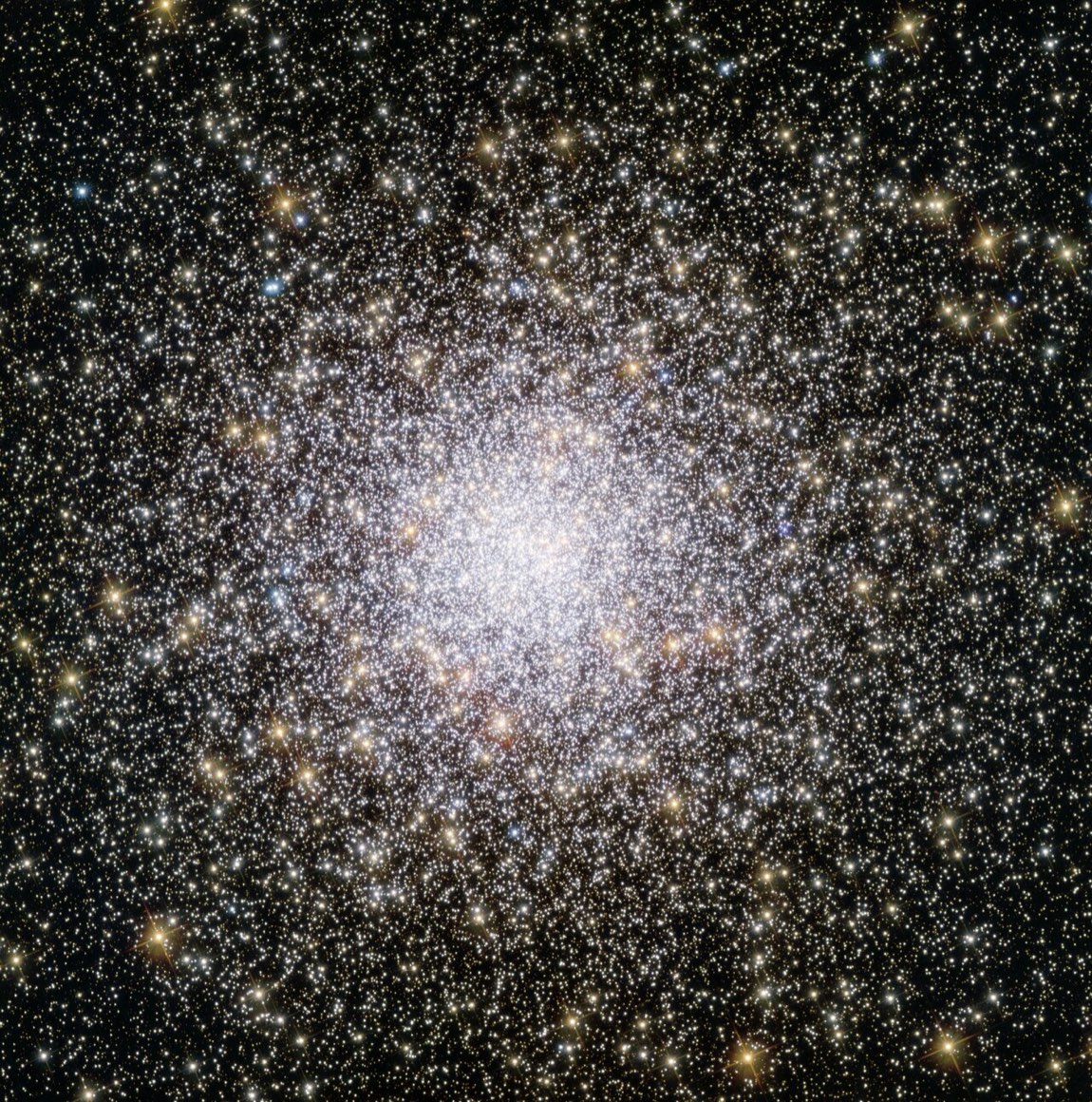
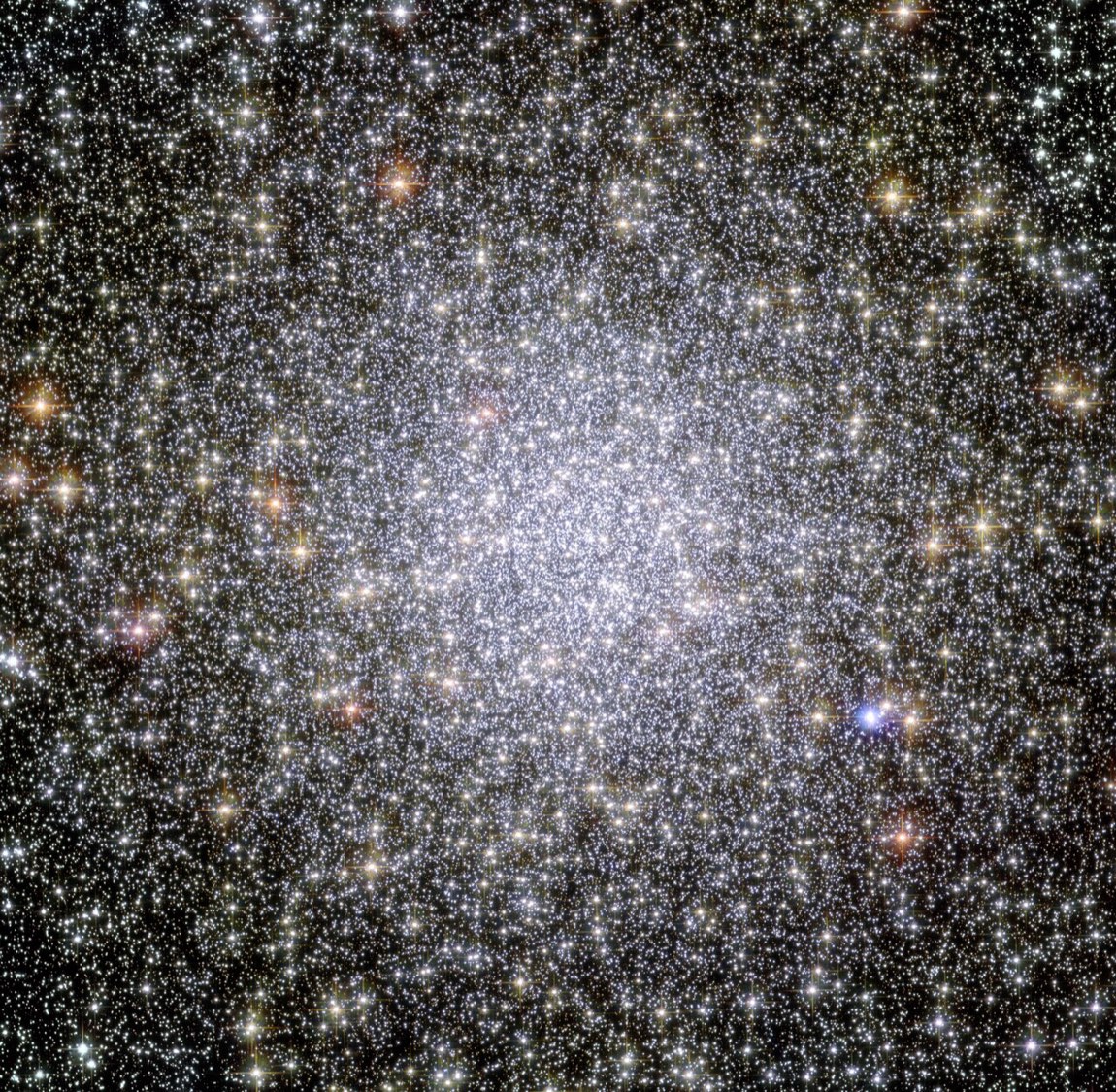
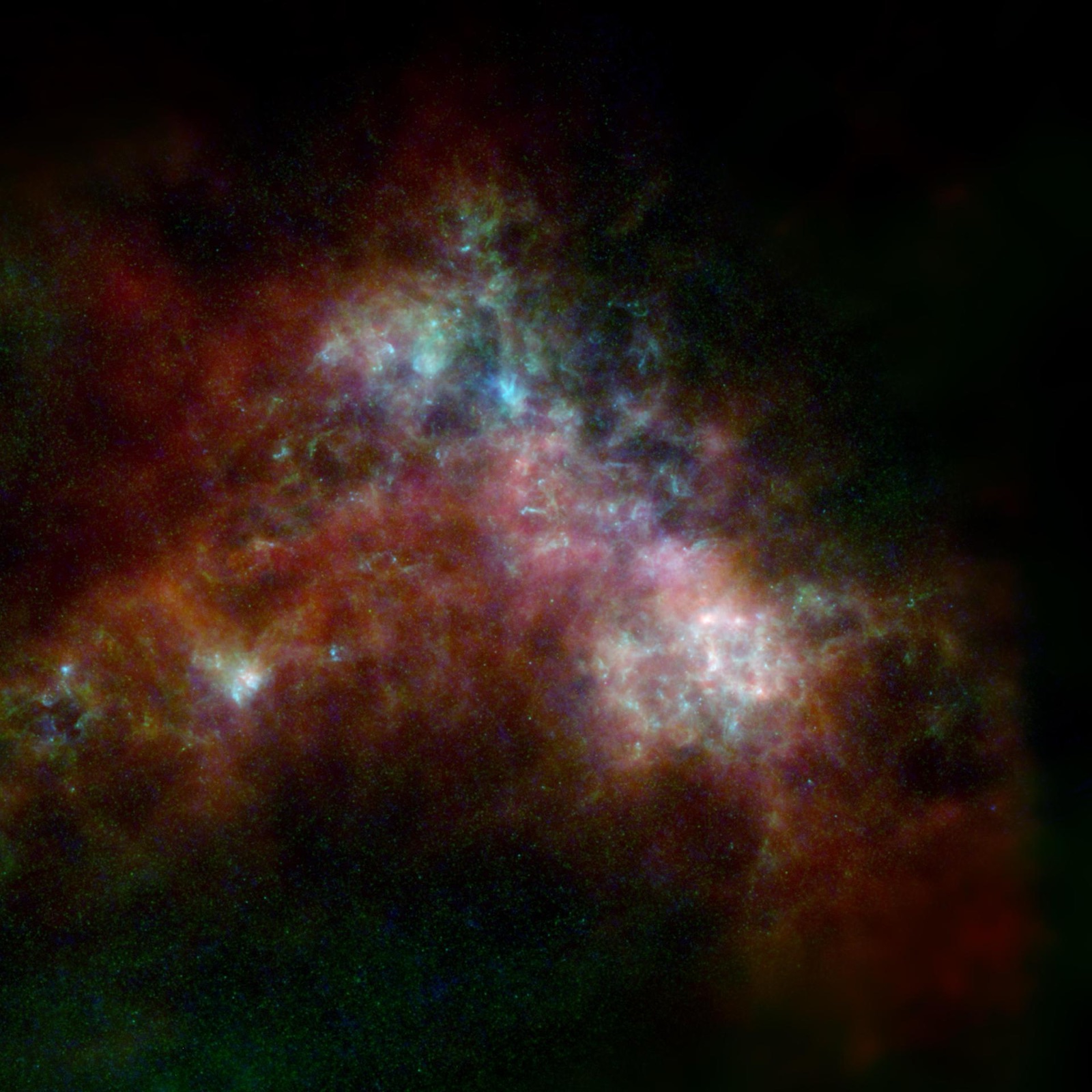
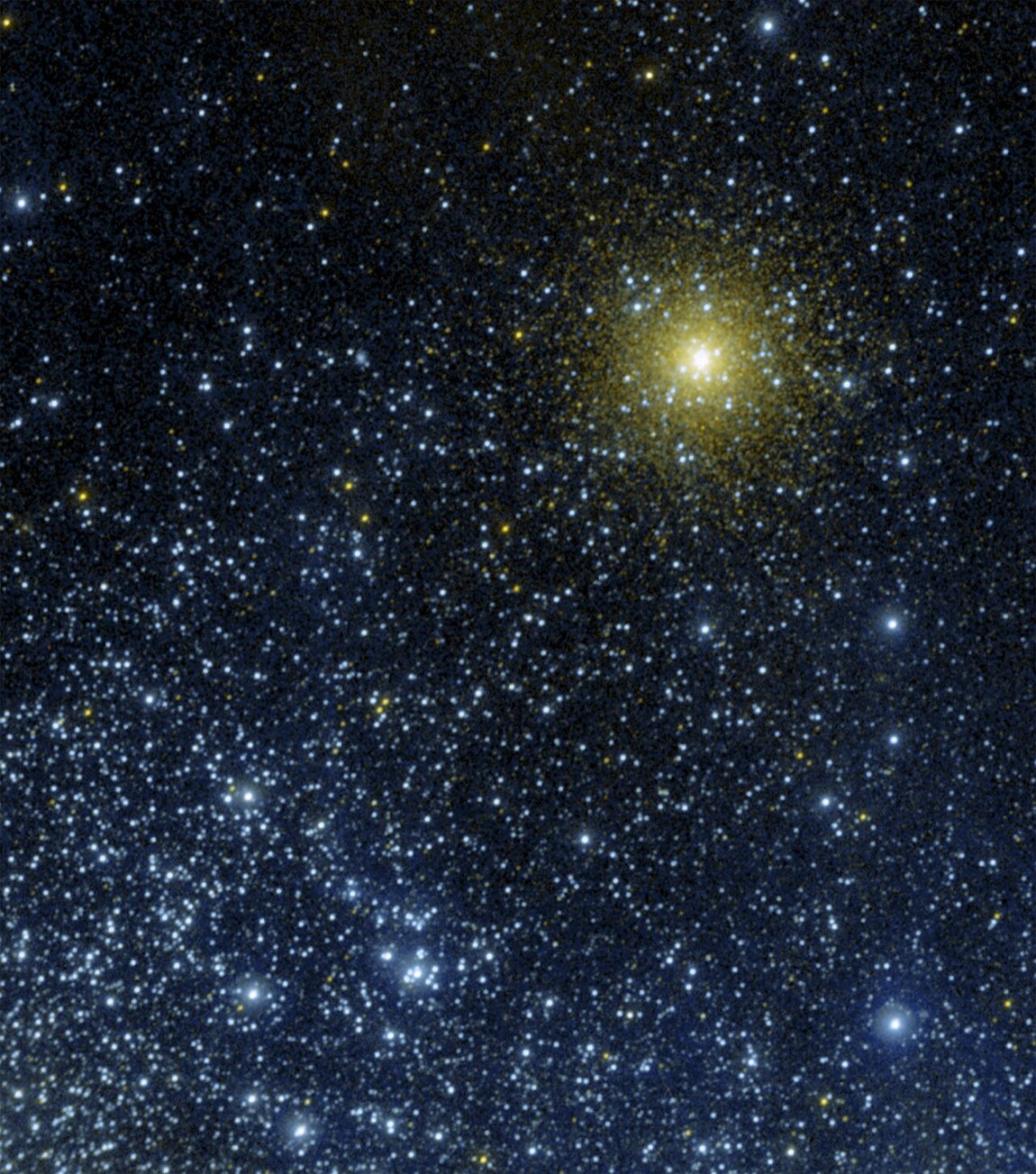
 Photograph · NASA/JPL-Caltech/University of Virginia/R. Schiavon (Univ. of Virginia) · Public domain
Star Cluster · Deep guide
NGC 362
Also called: Caldwell 104 · NGC 362
A bright globular cluster that sits beside the Small Magellanic Cloud but has nothing to do with it.
What is it?
NGC 362 is a globular cluster in Tucana, discovered by James Dunlop on 1 August 1826. On the sky it lies just north of the Small Magellanic Cloud, but it is a Milky Way cluster far closer to us. It can be seen with the naked eye under dark skies, though its neighbour 47 Tucanae outshines it. Its stars are richer in metals than most globulars, a sign it is relatively young for its type, and its very eccentric orbit brings it within about 3,260 light-years of the galactic centre.
More real images of NGC 362
Genuine spacecraft and telescope imagery, every frame credited and licensed. Tap any photo to enlarge.