 Photograph · ESA/Hubble & NASA · CC BY 3.0
Star Cluster · Deep guide
Messier 69
Also called: M69 · NGC 6637
A compact globular near the galaxy's bulge, unusually rich in heavier elements.
About 28,700 light-years away
Light makes the trip in 28,700 years
What is it?
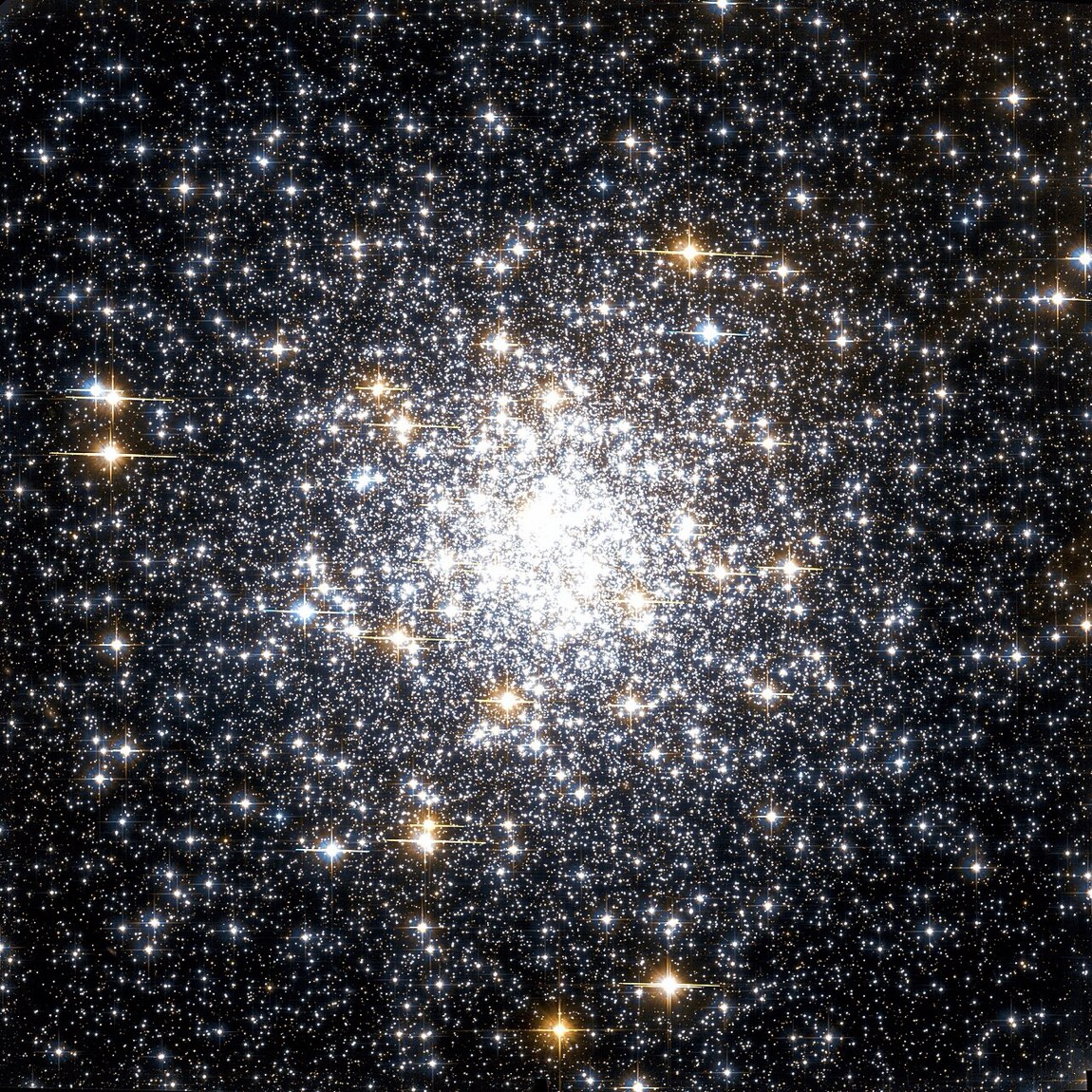
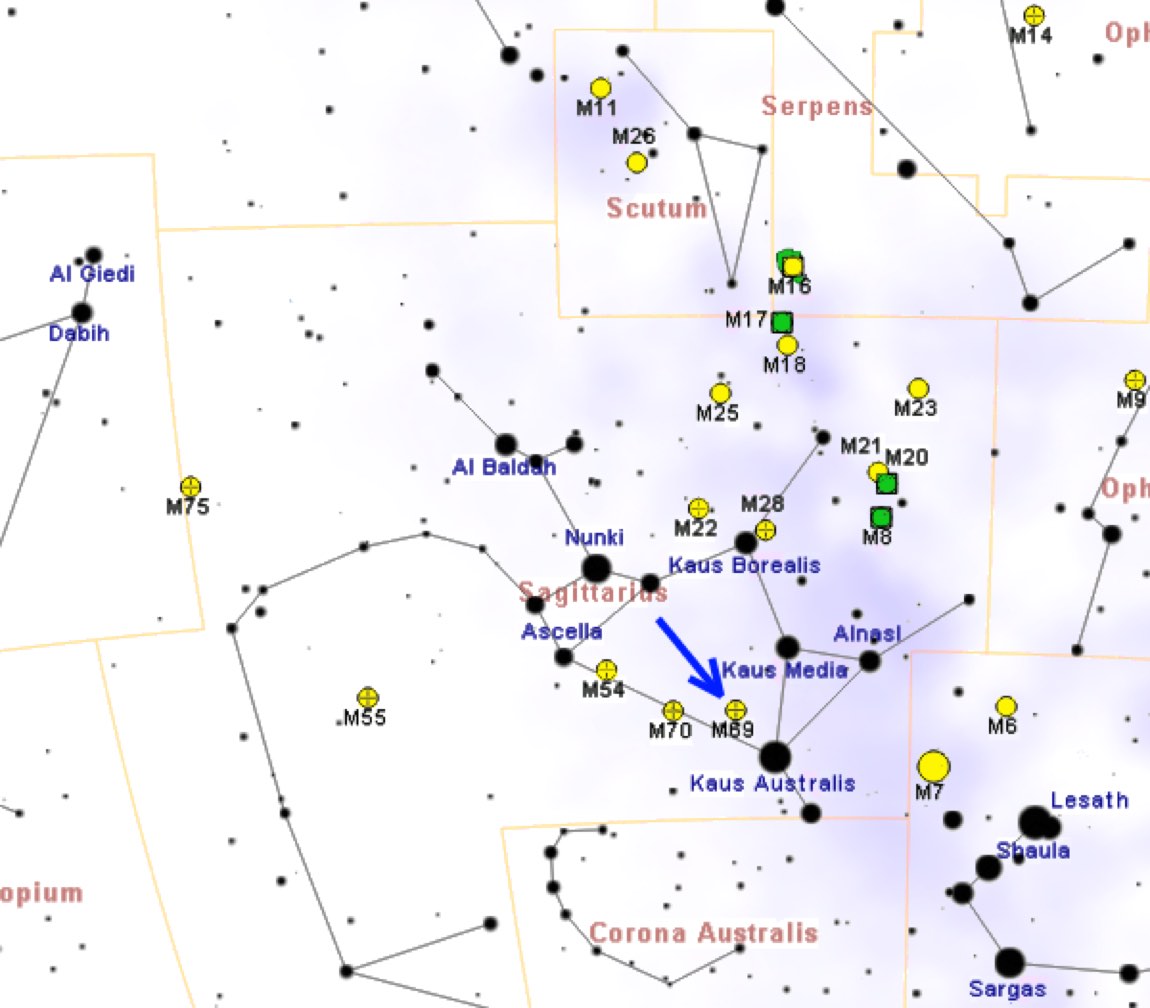
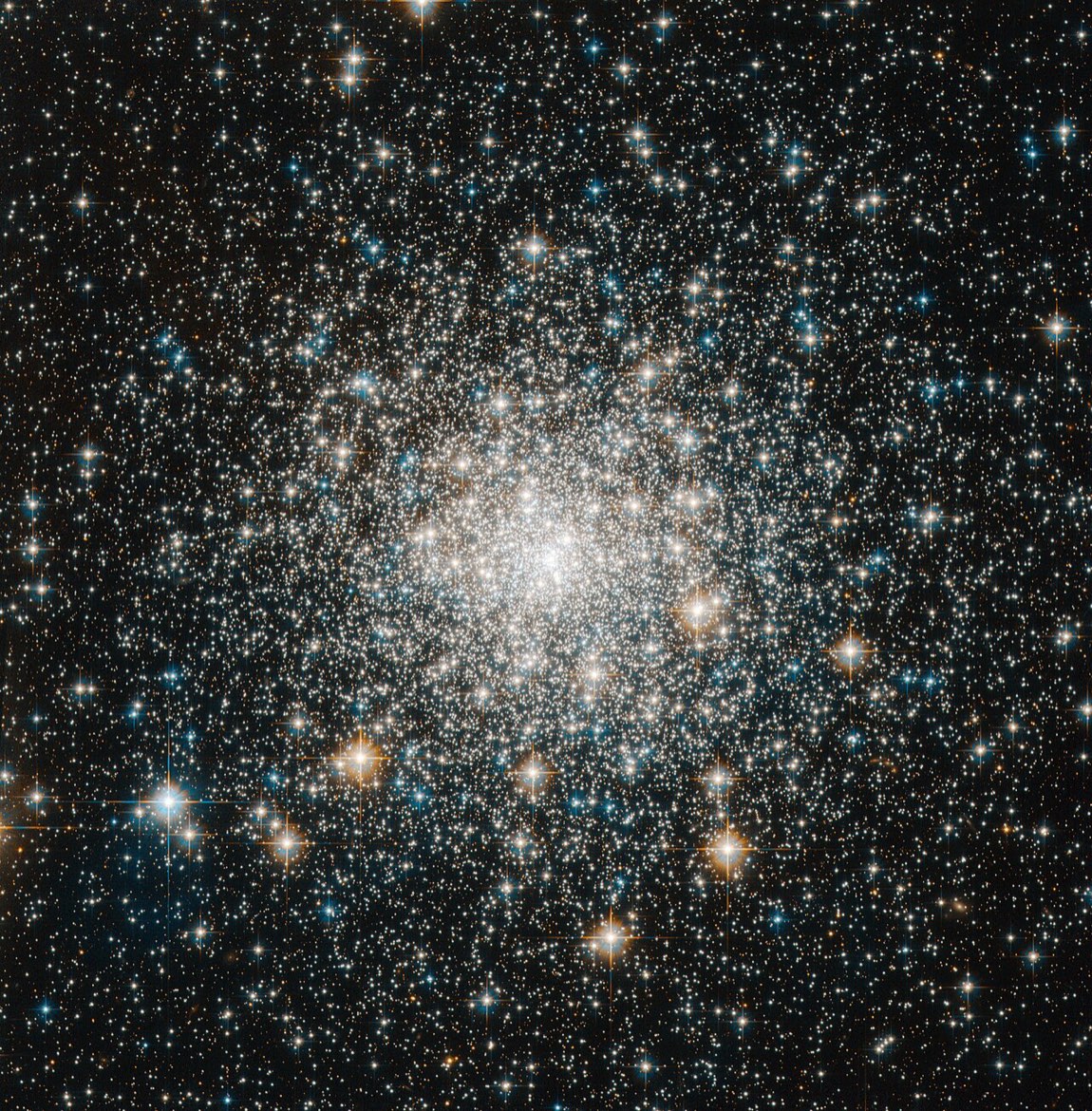
Messier 69 is a globular cluster in Sagittarius, about 2.5° northeast of the star Epsilon Sagittarii. Messier found it on 31 August 1780, the same night he found M70. It lies about 28,700 light-years from Earth, quite close to the Milky Way's centre, and probably belongs to the galaxy's central bulge. Compared with most globular clusters it is rich in metals, the elements heavier than helium. Its near-twin M70 may be only about 1,800 light-years away from it in space.
More real images of Messier 69
Genuine spacecraft and telescope imagery, every frame credited and licensed. Tap any photo to enlarge.