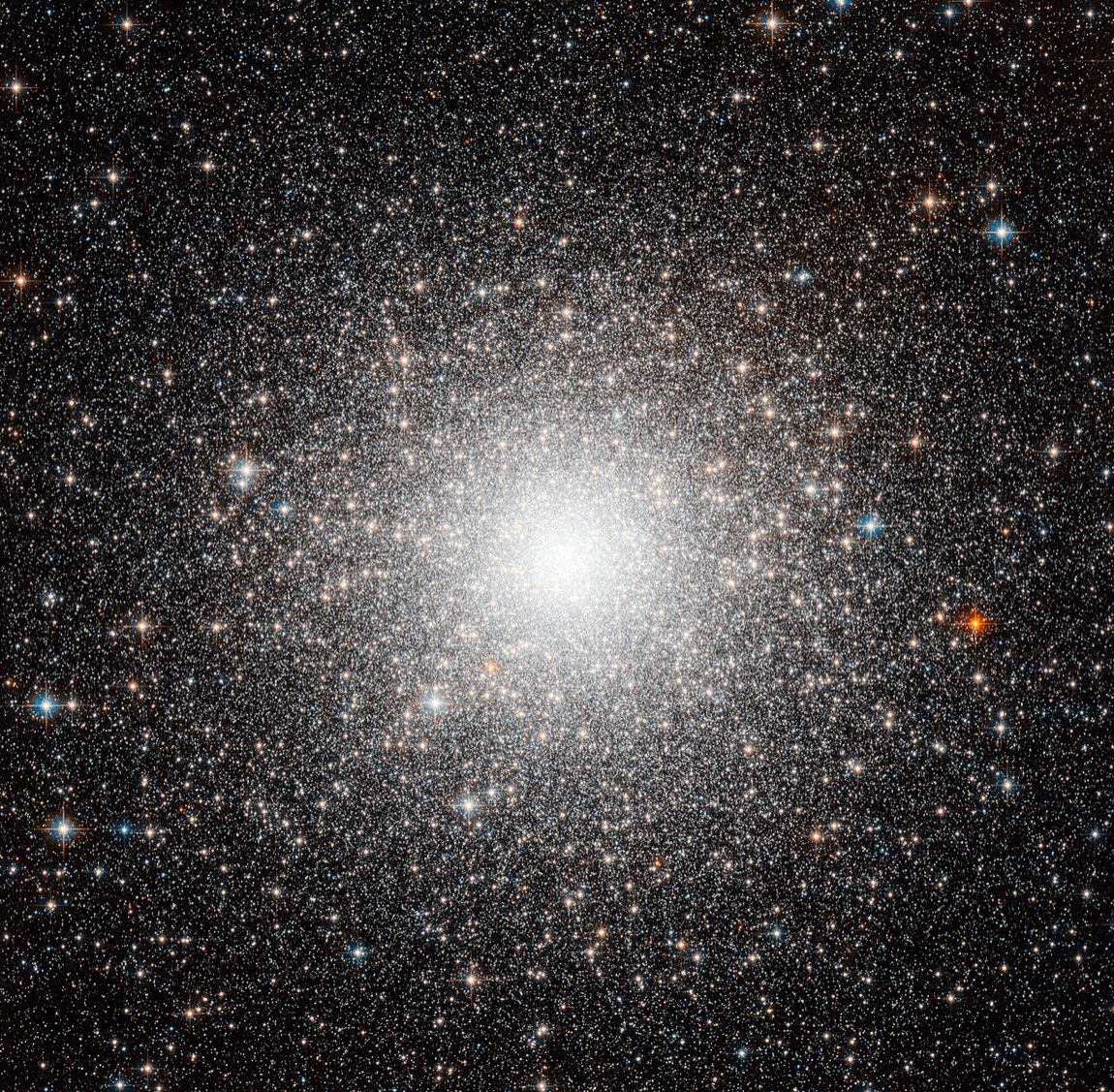
 Photograph · ESO/J. Emerson/VISTA · CC BY 4.0
Star Cluster · Deep guide
Messier 55 (Specter Cluster)
Also called: M55 · NGC 6809 · Specter Cluster
A loose southern globular that Messier struggled for years to see from Paris.
What is it?
Messier 55 is a globular cluster in southern Sagittarius, discovered by Nicolas Louis de Lacaille in 1752 from what is now South Africa. From Paris it rises only a little above the horizon, so Messier did not manage to catalogue it until 1778. It lies about 17,600 light-years away, has a mass of about 269,000 Suns, and is poor in heavy elements, with only about 1% of the Sun's proportion of iron. It can be spotted with 50 mm binoculars.
The deep dive
Researched for the Atlas from Wikipedia — Messier 55 (1,226 characters read) · updated Nov 15, 2026
01 A Ghost on the Southern Sky
The name Specter Cluster suits Messier 55 well. It is a large, loosely concentrated ball of ancient stars that hovers low on the horizon for most observers in the Northern Hemisphere, appearing faint and diffuse — almost ghost-like — even through a telescope. Its discoverer, Nicolas Louis de Lacaille, first spotted it in 1752 while working from what is today South Africa, a location far enough south that M55 climbed to a usable altitude in the night sky. For observers at mid-northern latitudes, however, the cluster barely clears the horizon, which is precisely why Charles Messier struggled so long to pin it down. Despite beginning his search in 1754, he made several failed attempts from Paris before finally observing and cataloguing it in 1778, a gap of roughly 24 years between discovery and his own confirmation. That story alone makes M55 one of the more hard-won entries in the famous Messier catalog.
02 Why Paris Made It Nearly Impossible Deeper
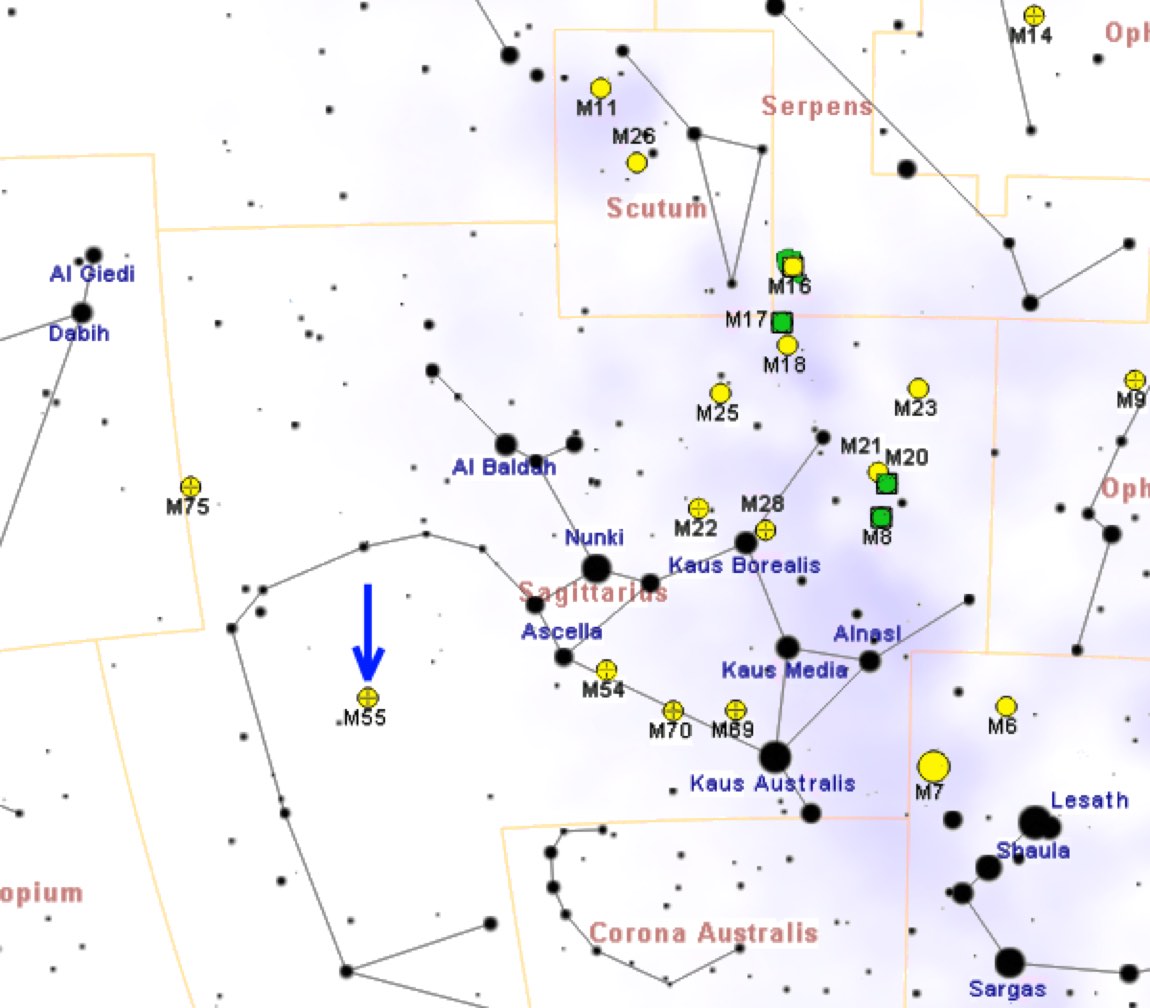
Messier 55 sits in the southern reaches of the constellation Sagittarius, and its low declination is the root of the problem for northern observers. Declination is the celestial equivalent of latitude: objects with strongly negative declination rise and set at angles that keep them close to the southern horizon as seen from Paris or similar latitudes. Each night the cluster rises only a very small distance above the horizon before setting again, leaving it perpetually embedded in thick, turbulent air that blurs and dims whatever light passes through it. Messier, working from Paris, faced exactly this geometry. He tried multiple times over more than two decades and was consistently defeated by the horizon. His eventual success in 1778 required exceptional conditions and patience. This observational history is a vivid reminder that the catalog as a whole reflects not just what exists in the sky, but what was accessible to 18th-century European observers using the instruments and locations available to them.
03 How to Actually See It Tonight
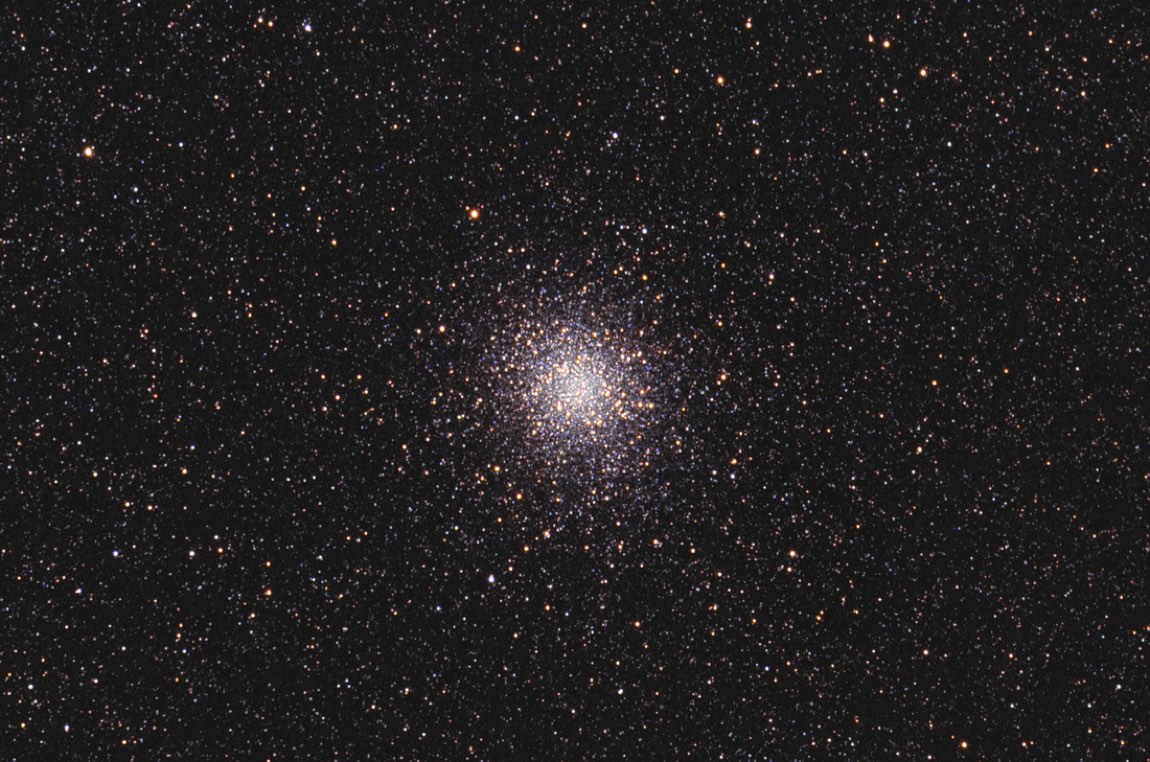
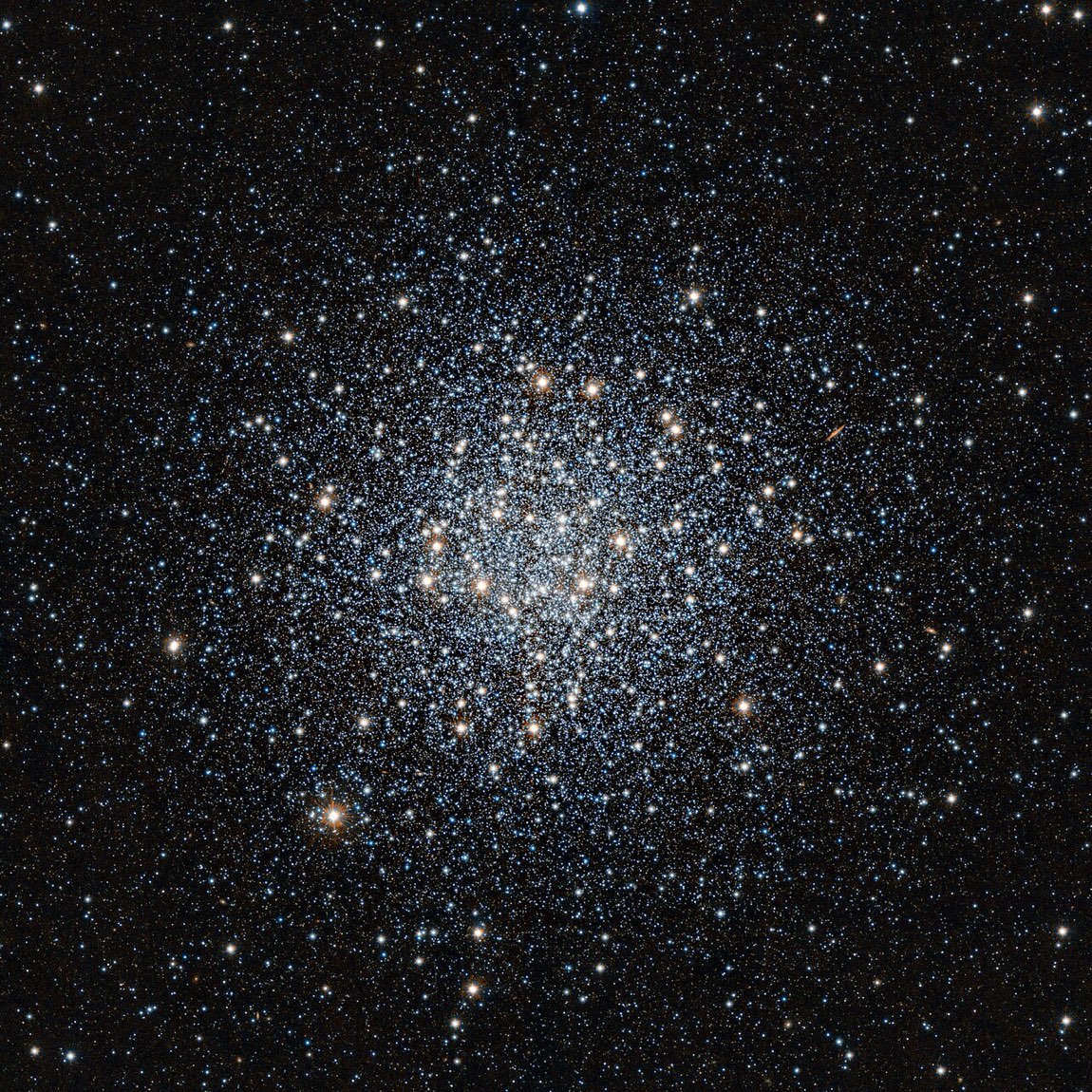
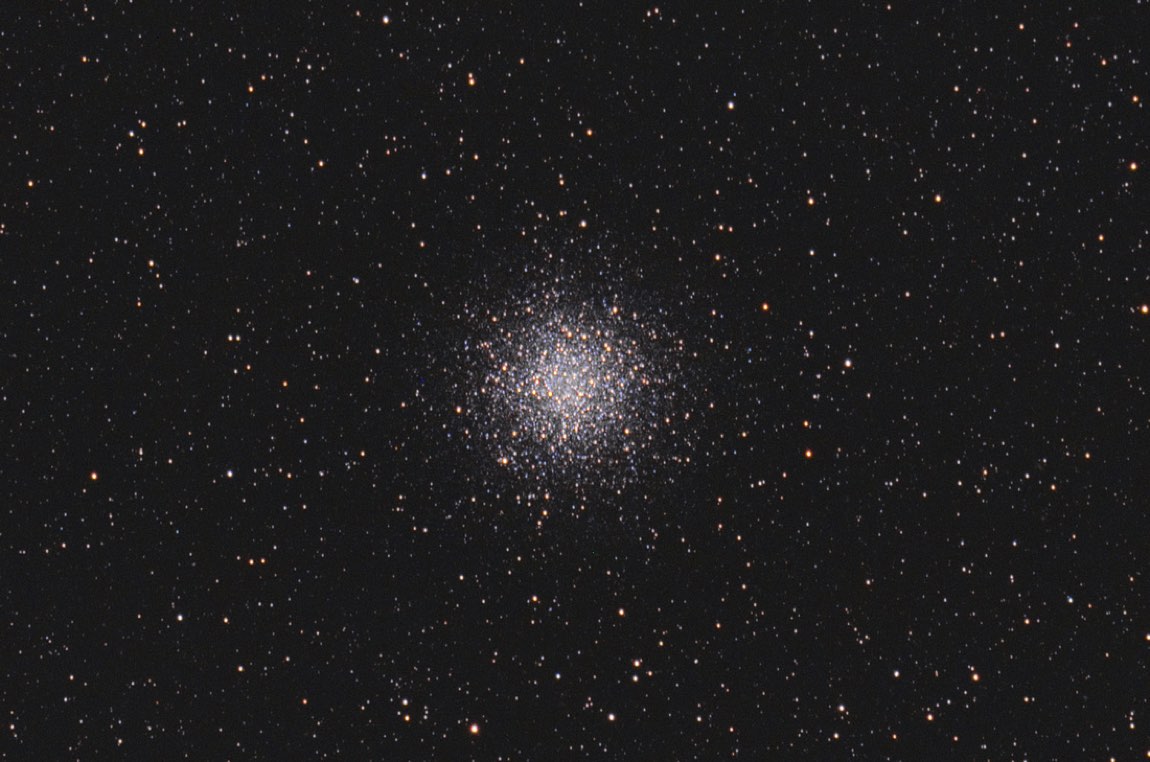
Messier 55 is one of the globular clusters within reach of modest equipment, though location matters enormously. The cluster is visible with 50 mm binoculars, which puts it within reach of a wide range of amateur astronomers. Through binoculars it will appear as a soft, unresolved glow — the individual stars blur together into a hazy patch. Resolving those stars into distinct points of light requires a medium-sized telescope, which begins to break the outer halo into a dusting of pinpoints against the dense central core. Observers in the Southern Hemisphere or at tropical latitudes have a decisive advantage, since the cluster climbs much higher above the horizon from those locations and the light travels through far less atmospheric distortion. Northern observers who want the best view should wait for the cluster to reach its highest point in the sky — transit — which for Sagittarius targets occurs on summer nights.
04 An Ancient City of 269,000 Suns
Scale is one of the most striking things about any globular cluster, and Messier 55 is no exception. The cluster contains about 269,000 solar masses worth of material. To put that in perspective, if you could somehow replace our Sun with 269,000 identical copies and pack them into the same roughly spherical region, you would have something approaching the mass budget of M55. Those stars are not spread across the same kind of sparse, wide-open space that characterizes our neighborhood; globular clusters concentrate enormous stellar populations into a relatively compact volume. Despite this vast stellar census, the cluster is considered loosely concentrated compared to many globulars, which contributes to its diffuse, spread-out appearance and to the Specter nickname. It sits about 17,600 light-years from Earth, placing it well within the Milky Way's halo rather than far beyond our galaxy.
05 The Chemistry of an Ancient Cluster Deeper
Metallicity is the astronomer's shorthand for how much of a star or star cluster is made of anything heavier than hydrogen and helium. In the early universe those two lightest elements dominated almost completely; heavier elements — carbon, oxygen, iron, and everything else — built up gradually inside stars and were scattered by supernovae over billions of years. Messier 55 formed early enough that it inherited very little of that accumulated enrichment. Its metallicity is recorded as [Fe/H] = −1.94 dex, a logarithmic scale where the Sun sits at zero. A value of −2 would mean exactly 100 times less iron relative to hydrogen than the Sun has; M55 at −1.94 sits just barely above that threshold, meaning it contains approximately 1.1% of the iron proportion found in the Sun. Like other Milky Way globular clusters, it is dominated by hydrogen and helium with only a trace of heavier elements — a direct chemical fingerprint of its ancient origin.
 ⤢
06 What Low Metallicity Tells Us Deeper
The extremely low iron content of Messier 55 is scientifically significant because metallicity functions as a rough clock. Stars and clusters that formed early in the universe's history, before many generations of supernovae had seeded interstellar space with heavy elements, tend to be metal-poor. High metallicity, by contrast, signals a younger or more chemically enriched origin. M55's [Fe/H] of −1.94 dex places it firmly among the most ancient stellar populations known, consistent with what we observe broadly across the Milky Way's globular cluster system. The Sun, for comparison, formed much later in galactic history when the interstellar medium had already been substantially enriched. The difference is dramatic: M55's stars are working with just over one percent of the iron budget available to our own Sun. This poverty of heavy elements also affects what kinds of planets could plausibly have formed around those stars, though the article does not detail that question further.
07 Variable Stars: A Quiet Population
Among the many stars packed into Messier 55, only about 55 variable stars have been found in the central part of the cluster. Variable stars are stars whose brightness changes over time, either because they physically pulsate — expanding and contracting in a regular rhythm — or because of other physical processes. In globular clusters, the most scientifically prized variables are RR Lyrae stars, which pulsate with well-understood periods and luminosities, making them useful as distance markers. The article notes 55 variables specifically in the central region, which is a relatively modest count for a cluster containing hundreds of thousands of solar masses of material. This low number may reflect the cluster's loosely concentrated structure or the particular age and metallicity of its stellar population. Variable star surveys of globular clusters have historically been important tools for pinning down distances and understanding stellar evolution, so even a modest population like this one carries real scientific weight.
08 Lacaille's Extraordinary Southern Survey
Nicolas Louis de Lacaille was a French astronomer who made one of the most ambitious observing journeys of the 18th century, traveling to what is today South Africa specifically to study the southern sky that was invisible from European observatories. It was during this expedition, in 1752, that he discovered Messier 55. Lacaille's southern survey was remarkable in its scope; he catalogued thousands of southern stars and defined many of the southern constellations still used today. The discovery of M55 was one among many achievements of that trip, but the cluster's subsequent history — Messier's years of failed attempts to verify it from Paris — illustrates perfectly how much of the southern sky remained practically inaccessible to European astronomy at the time. Lacaille's willingness to leave the continent and observe from the Southern Hemisphere opened up a portion of the universe that could not otherwise have been studied with the tools of the era.
09 Where M55 Lives in the Milky Way
At roughly 17,600 light-years from Earth, Messier 55 is not among the most distant globular clusters associated with our galaxy, but it is far enough to sit well outside the Milky Way's thin disk of gas, dust, and young stars. Globular clusters generally occupy the galactic halo, a roughly spherical region that surrounds the disk and bulge, and M55 is consistent with that picture. Its location in the southern part of Sagittarius places it in a direction toward the inner galaxy from our vantage point, though the cluster itself is not in the galactic center — it is at a halo distance that puts it in the outer reaches of the system we call home. The 17,600 light-year distance means its light takes that long to reach us; when you observe M55 tonight, you are seeing it as it existed 17,600 years ago, long before recorded human history began.
 ⤢