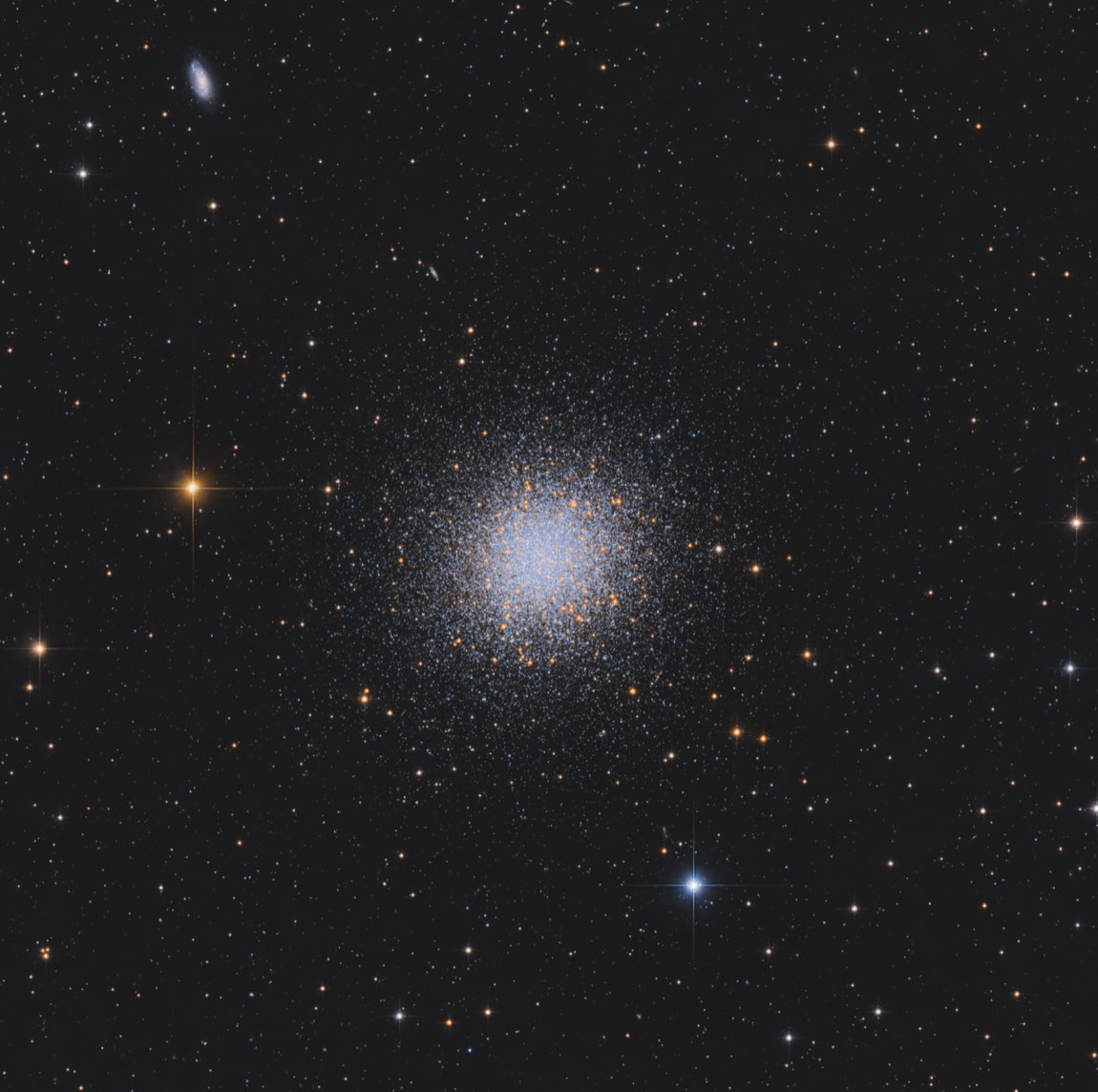
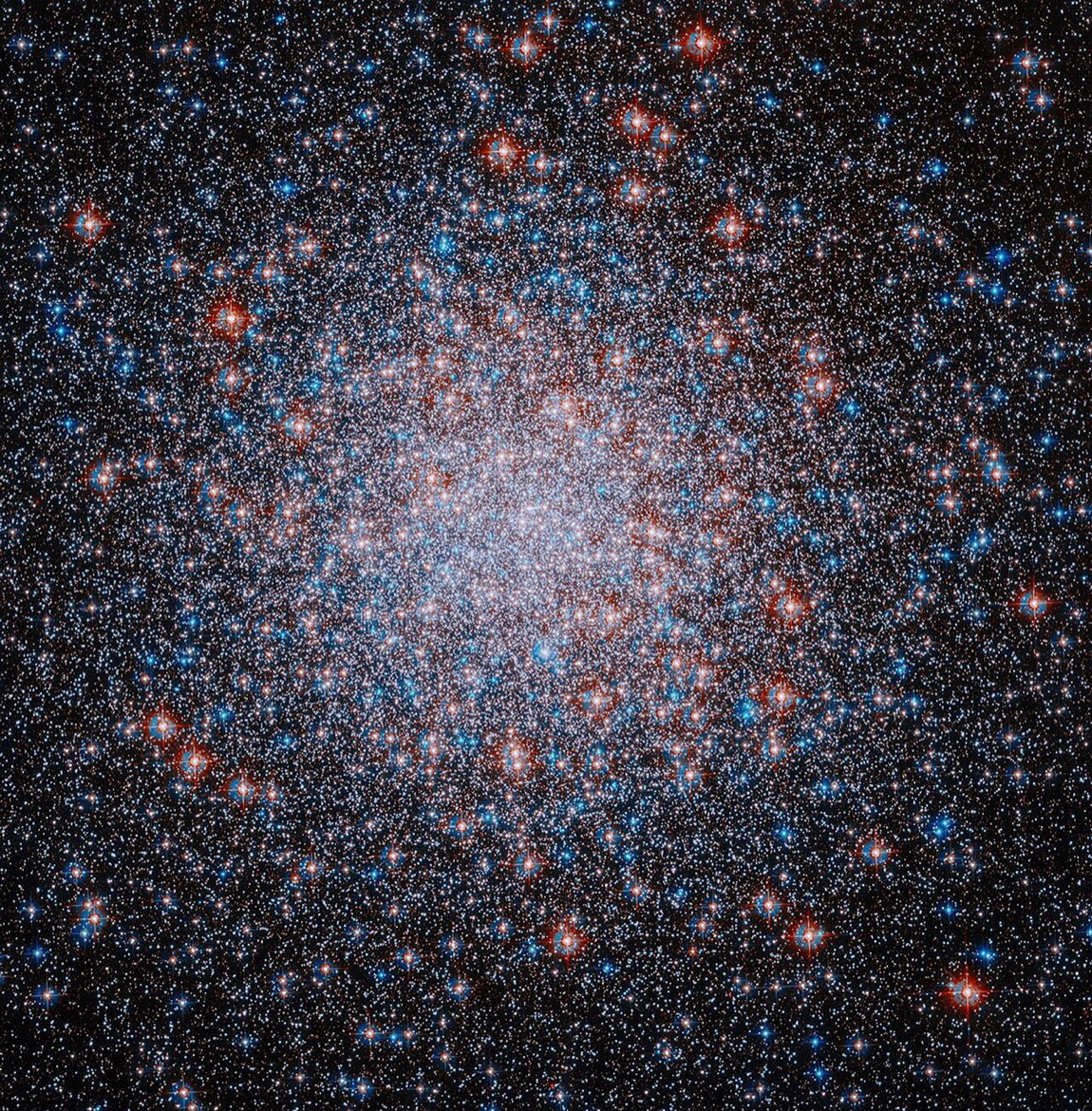
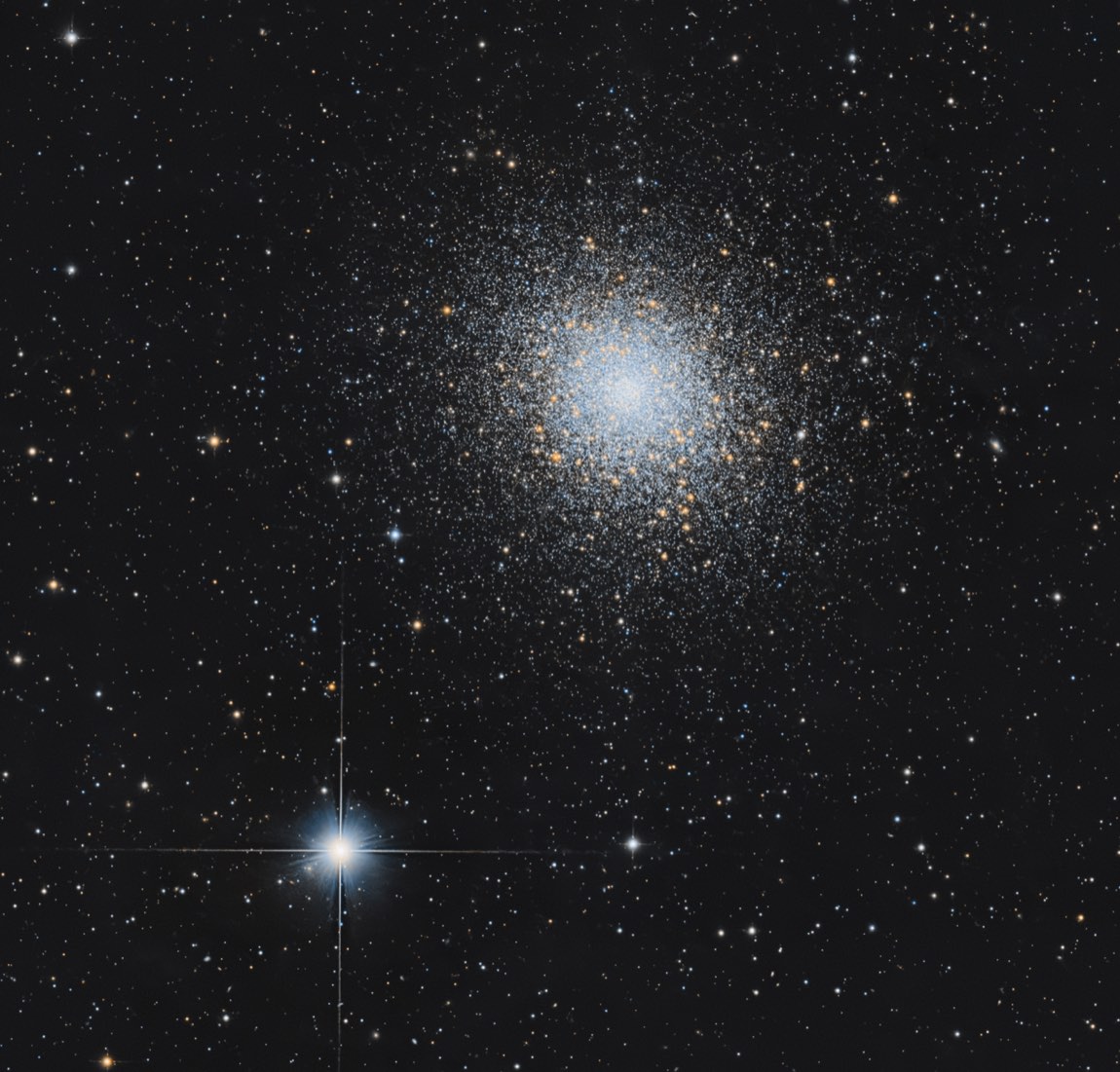
 Photograph · Chuck Ayoub · CC0
Star Cluster · Deep guide
Messier 5
Also called: M5 · NGC 5904
An ancient star city in Serpens, home to more than a hundred pulsing variable stars.
What is it?
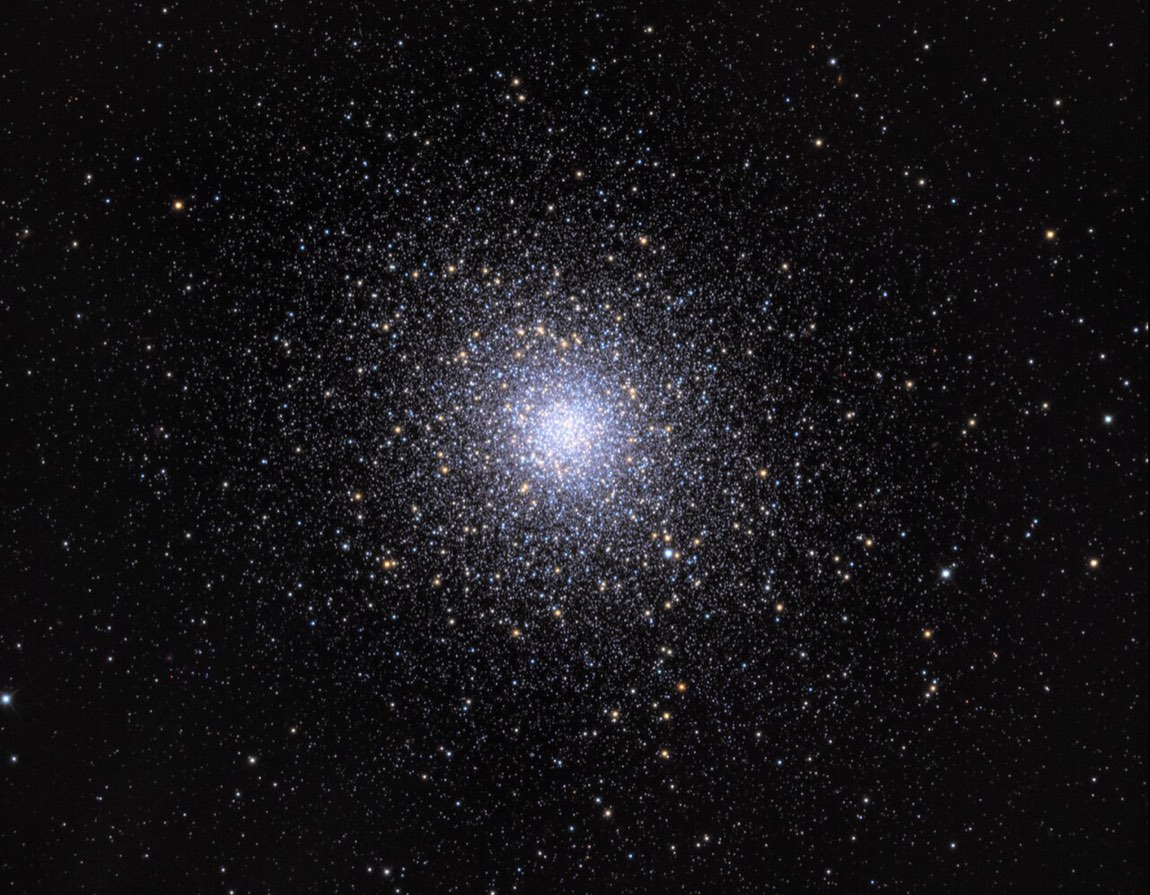
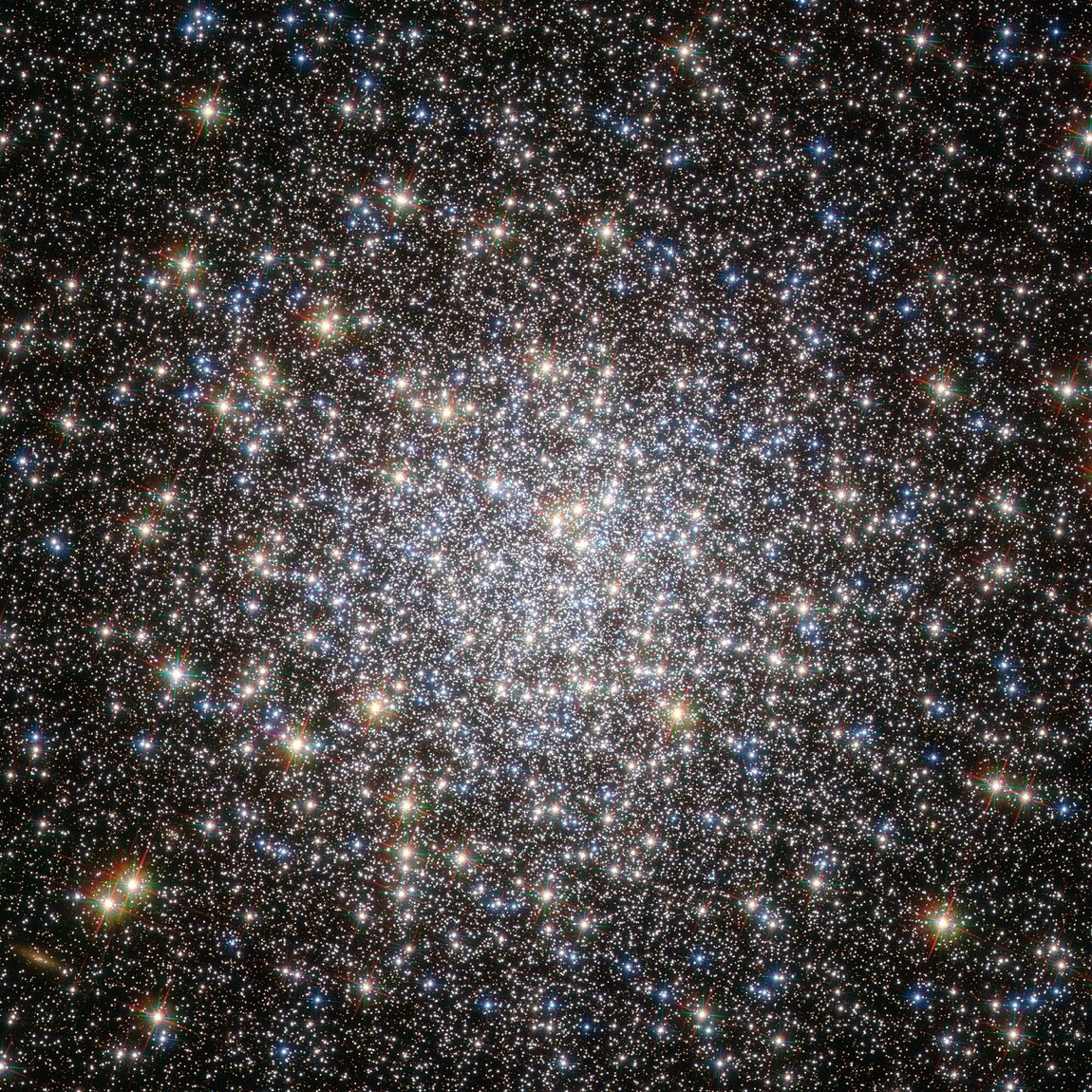
Messier 5 is a globular cluster in the constellation Serpens. German astronomer Gottfried Kirch spotted it in 1702 while watching a comet, and William Herschel first resolved its stars in 1791, counting around 200. Under very dark skies it is just visible without optical aid as a faint, fuzzy star. It contains 105 known variable stars, 97 of them RR Lyrae stars, whose regular brightness changes help astronomers measure cosmic distances. The cluster is moving away from us at more than 50 km/s.
The deep dive
Researched for the Atlas from Wikipedia — Messier 5 (1,874 characters read) · updated Nov 15, 2026
01 How Gottfried Kirch Stumbled Upon M5
Messier 5 owes its discovery to a happy accident of comet-hunting. In 1702, German astronomer Gottfried Kirch was tracking a comet through the constellation Serpens when a faint, fuzzy patch caught his attention — something that clearly wasn't the comet he was chasing. He recorded it, but the object sat in relative obscurity for decades. It wasn't until 1764 that Charles Messier, himself an obsessive comet hunter, catalogued it as one of his famous list of 'not-comets' — objects that could fool observers into thinking they had discovered a new comet. Messier's practical motivation was to spare himself and other comet seekers that exact confusion. Then, in 1791, William Herschel turned a more powerful telescope on the smudge and became the first person to resolve it into individual stars, counting roughly 200. We now know the true stellar population is vastly larger, but Herschel's achievement was a landmark moment: a nebulous blur became, for the first time, a city of stars.
02 Seeing M5 With Your Own Eyes
Under extremely good conditions — dark skies far from city lights — Messier 5 is just visible to the naked eye as a faint 'star' sitting 0.37 of a degree, or 22 arcminutes, north-west of the star 5 Serpentis. That angular gap is less than the width of a full Moon, so the two objects share a convenient signpost in the sky. Binoculars or a small telescope immediately reveal that something is different: the object refuses to snap into a sharp stellar point, betraying its extended, non-stellar nature. Larger amateur telescopes begin to pick out individual stars within the cluster, some of which reach as bright as apparent magnitude 10.6 — well within the grasp of modest equipment. The cluster sits in the constellation Serpens, the serpent, making spring and early summer evenings in the Northern Hemisphere the ideal time to hunt for it.
03 RR Lyrae Stars: M5's Distance Rulers Deeper
Of the 105 known variable stars inside Messier 5, a remarkable 97 belong to the RR Lyrae class — so common in globular clusters that they are sometimes called 'cluster variables.' RR Lyrae stars behave somewhat like the more famous Cepheid variables: their brightness pulsates in a regular, predictable rhythm, and because the relationship between their luminosity and their pulsation period is well understood, astronomers can use them as standard candles to measure cosmic distances. Spot an RR Lyrae, time its period, and you can calculate how intrinsically bright it is; compare that to how bright it appears in the sky, and the distance falls out of the mathematics. The brightest and most easily observed variable in M5 cycles between magnitude 10.6 and magnitude 12.1 over a period of just under 26.5 days — a swing of more than a full magnitude that dedicated amateur observers can follow with modest equipment. This rich population of RR Lyrae stars has made M5 a valuable calibration laboratory for the cosmic distance scale.
04 Millisecond Pulsars Hiding in the Cluster Deeper
Buried within Messier 5 are two millisecond pulsars — neutron stars spinning hundreds of times per second, their rotation ground up to extraordinary speeds by mass transferred from a companion star over millions of years. One of these pulsars is in a binary system, locked in an orbital dance with another object. That binary arrangement turns out to be scientifically precious: the precise timing of the pulsar's radio pulses, slightly shifted by orbital motion, allows astronomers to measure the proper motion of the entire cluster across the sky with exceptional accuracy. Beyond positional astronomy, the binary pulsar offers a potential window into the physics of neutron degenerate matter — the almost unimaginably dense state of material inside a neutron star. The current measured median mass of the system, if confirmed by further observations, would rule out any 'soft' equation of state for neutron degenerate matter, constraining the theoretical models physicists use to describe what happens to matter under those extreme conditions.
 ⤢
05 Testing Neutrino Physics With a Star Cluster Deeper
Messier 5 has served an unexpected role in particle physics: astronomers have used it as a laboratory to search for magnetic dipole moments in neutrinos. Neutrinos are nearly massless, electrically neutral particles produced in vast numbers inside stars, and the standard model of particle physics predicts they should have no magnetic moment at all — or an immeasurably tiny one. If neutrinos possessed a detectable magnetic dipole moment, they would behave differently inside stellar interiors, altering the rate at which stars lose energy and changing their observable properties. By studying the stars in M5 and comparing their behavior to theoretical predictions, researchers can place limits on how large that magnetic moment could possibly be. This kind of test also has implications for hypothetical particles such as the axion, a candidate dark-matter particle whose existence is tied to extensions of the standard model. A globular cluster, packed with thousands of well-characterized stars, provides a statistical sample rich enough to make these subtle tests meaningful.
06 A Dwarf Nova Caught in the Act
Among the stellar exotica packed into Messier 5, astronomers have observed a dwarf nova — a type of cataclysmic variable star system in which a white dwarf pulls material from a close companion star. As accreted gas builds up on the white dwarf's surface, it eventually triggers a runaway thermonuclear flash that causes the system to suddenly brighten by several magnitudes before fading back to quiescence. These outbursts can recur on timescales ranging from weeks to years. Finding a dwarf nova inside a globular cluster adds to the already impressive inventory of exotic objects in M5 and reflects the cluster's dense stellar environment, where stars are packed closely enough that binary systems — the prerequisite for a dwarf nova — form through gravitational encounters far more readily than in the loose stellar neighborhoods typical of a galaxy's disk. Each new type of object found within the cluster deepens our understanding of how dense stellar populations evolve over billions of years.
07 M5 Is Moving Away From Us
Messier 5 is not standing still relative to our Solar System. The cluster is receding at a speed of more than 50 kilometres per second — that is roughly 180,000 kilometres per hour, or about 150 times faster than a commercial airliner cruises. This recession velocity is measured through the Doppler shift of light from the cluster's stars: as the cluster moves away, its light is stretched toward the red end of the spectrum by a precisely measurable amount. That single number, the radial velocity, tells astronomers about M5's orbit within the Milky Way. Globular clusters follow looping, often highly eccentric paths around the galactic center, diving through the disk and arcing high above and below it over timescales of hundreds of millions of years. The recession speed is one piece of the data needed — alongside the proper motion measurements enabled by the cluster's millisecond pulsar — to reconstruct that full three-dimensional trajectory through the galaxy.
08 Open Questions That M5 Hasn't Answered Yet Deeper
For all that has been learned from Messier 5, several significant questions remain open. The binary millisecond pulsar system within the cluster holds the promise of constraining the equation of state of neutron degenerate matter, but astronomers note that the current median mass measurement needs further confirmation before 'soft' equations of state can be definitively excluded — the physics stakes are high enough that the community demands rigorous verification. The search for magnetic dipole moments in neutrinos using M5's stellar population has placed limits on that quantity, but has not yet detected a signal, leaving open whether neutrinos possess any magnetic moment beyond the standard model's prediction of essentially zero. The 105 known variable stars may not represent the complete census; the crowded core of the cluster makes detecting faint, short-period variables challenging even with space-based observatories. And the dwarf nova observed in the cluster invites follow-up to characterize its recurrence timescale and the nature of its companion star — details that speak to how binary stars evolve in the dense globular environment.
 ⤢