 Photograph · Manfred Höcherl · CC BY-SA 4.0
Star Cluster · Deep guide
Messier 10
Also called: M10 · NGC 6254
A bright globular cluster in Ophiuchus, a near neighbour of Messier 12.
What is it?
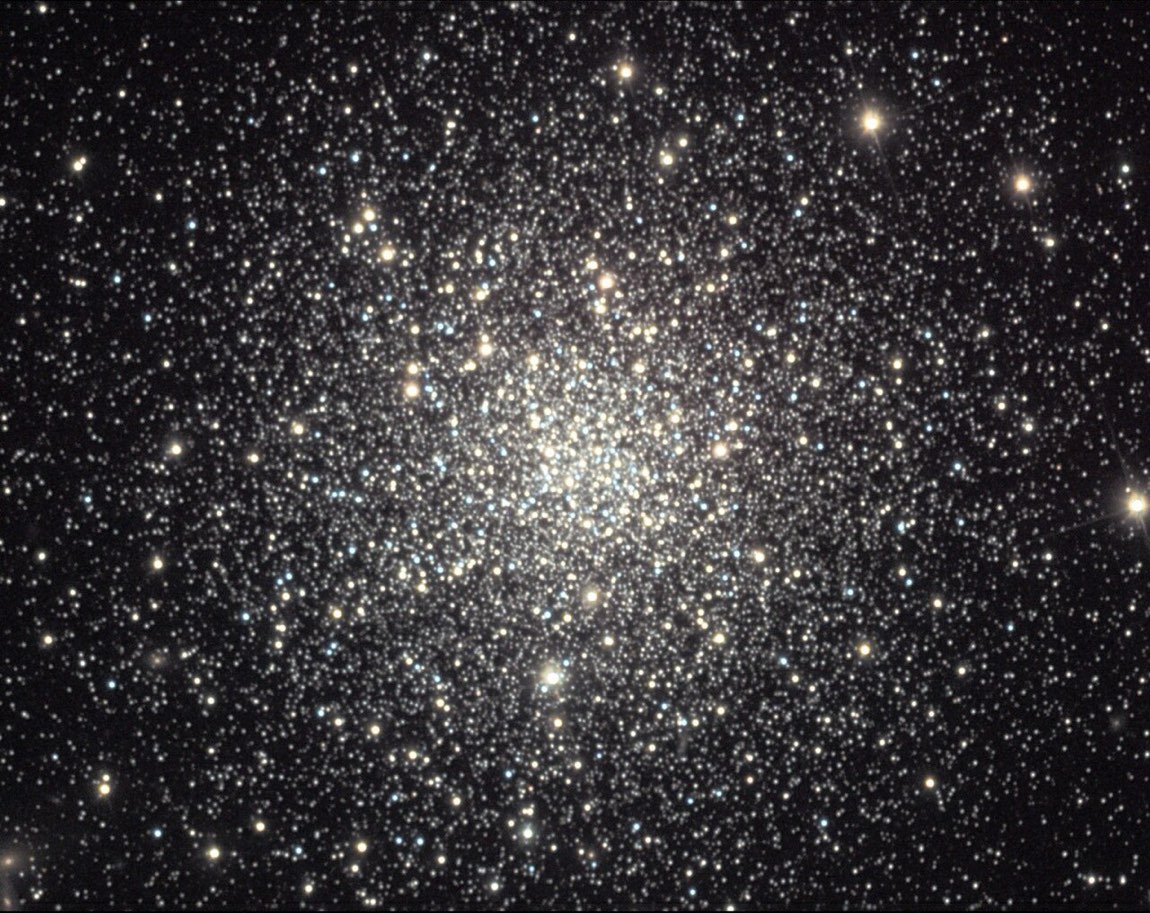
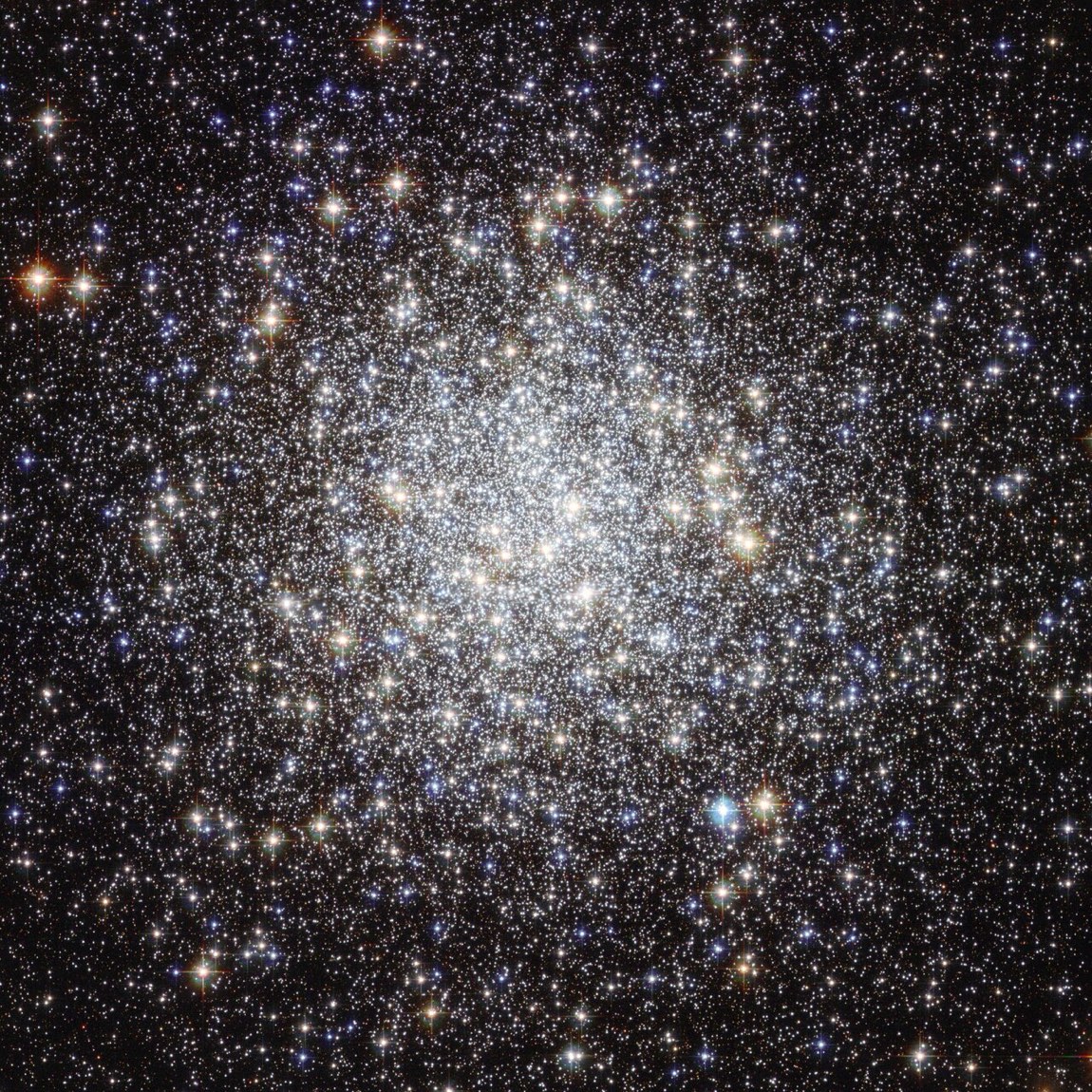
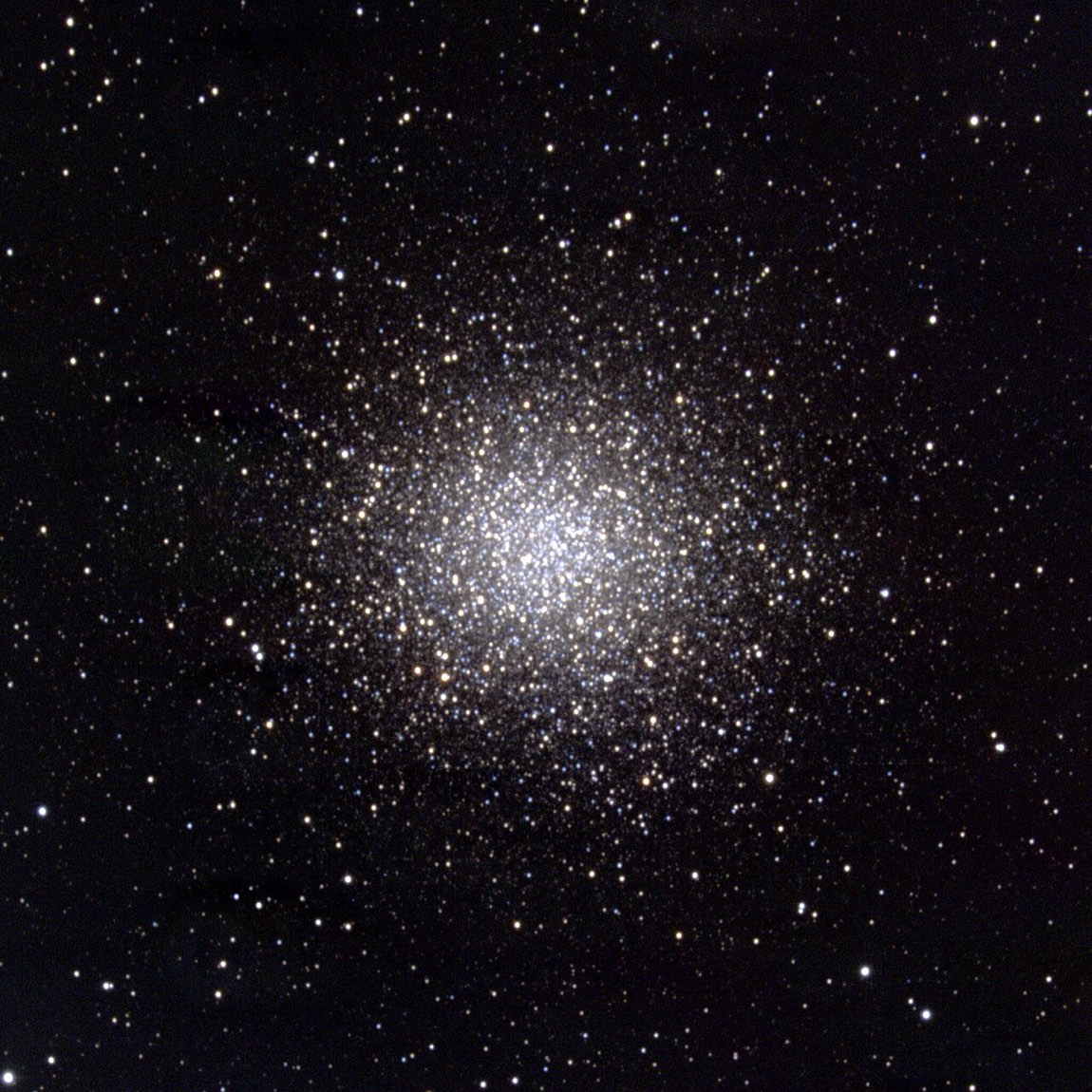
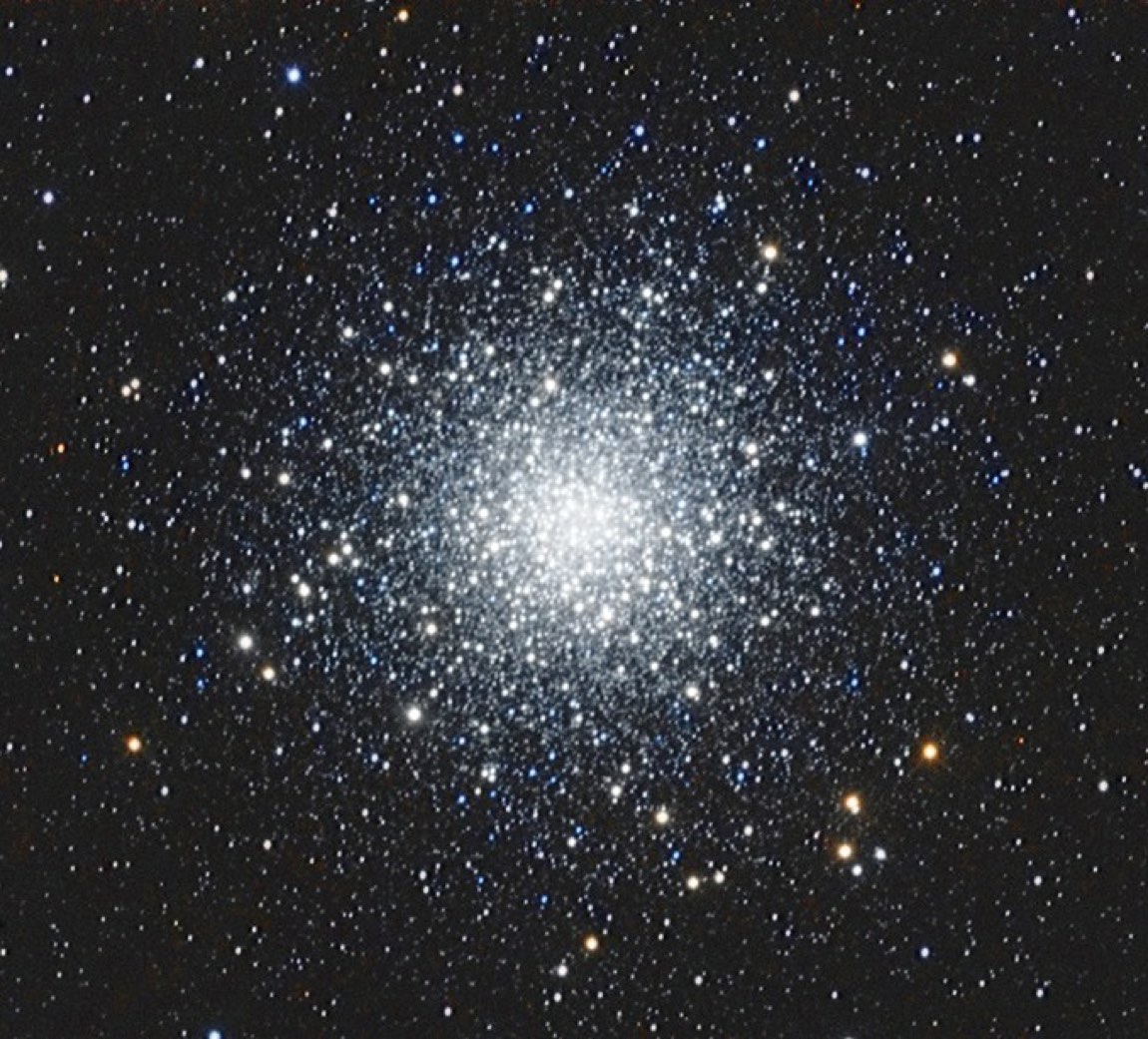
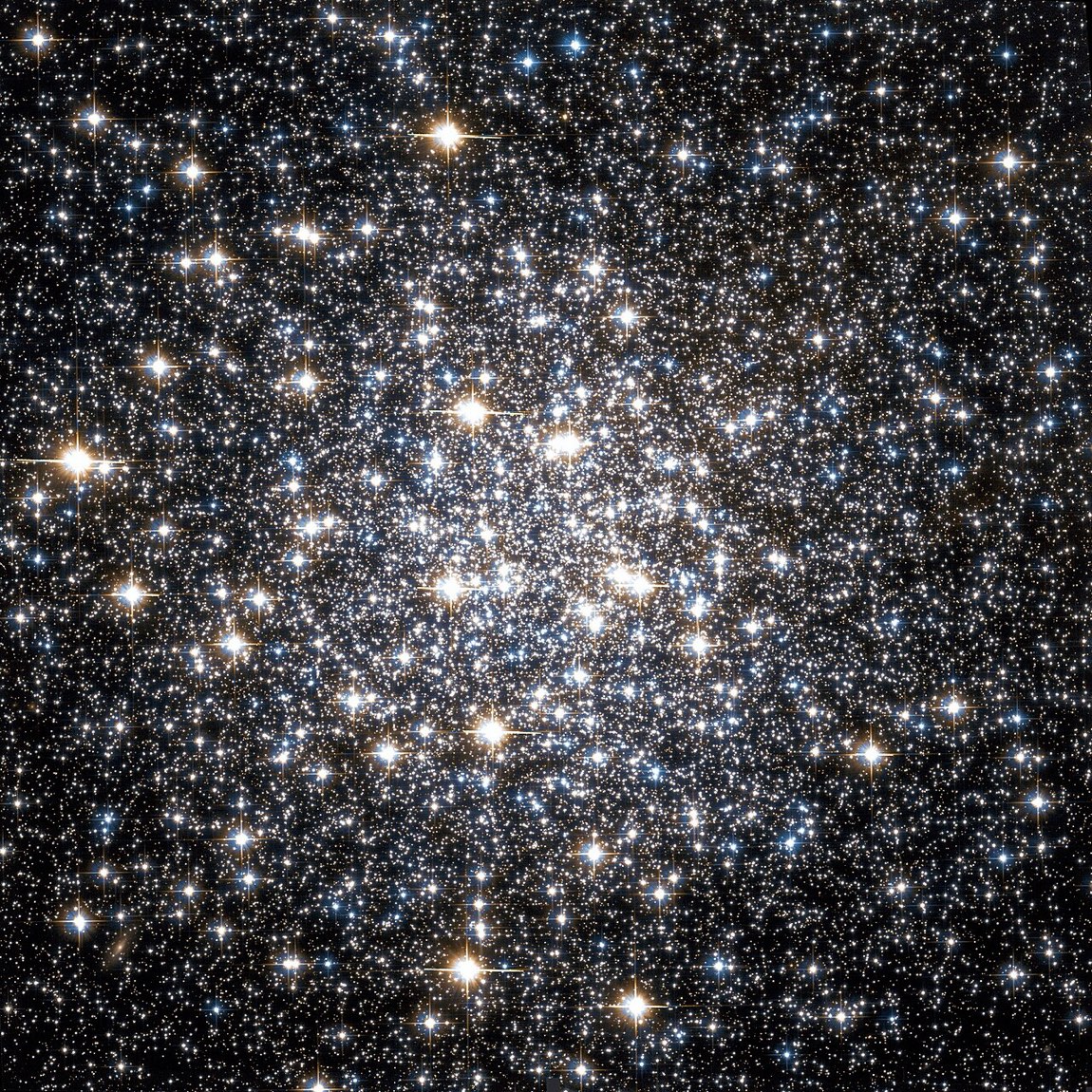
Messier 10 is a globular cluster in Ophiuchus that Charles Messier logged in 1764 as a pale nebula without stars. Larger telescopes later showed it to be a dense swarm of stars; William Herschel called it a beautiful, compressed cluster. It lies about 14,300 light-years away and is about 83 light-years across. M10 and Messier 12 are only a few thousand light-years apart, so from one cluster the other would look like a bright, fuzzy star.
The deep dive
Researched for the Atlas from Wikipedia — Messier 10 (2,979 characters read) · updated Nov 15, 2026
01 From Nebula to Stars: M10's Discovery Story
When Charles Messier first spotted M10 on May 29, 1764, he recorded it simply as a "nebula without stars" — a smudge of light with no apparent detail. A decade later, Johann Elert Bode looked again and reached the same conclusion, calling it a "nebulous patch without stars; very pale." Both men were limited by the modest telescopes of their era. It took the larger instruments of William Herschel to crack the cluster open visually, revealing what he enthusiastically described as a "beautiful cluster of extremely compressed stars." Even then, observers kept finding new puzzles: William Parsons, the 3rd Earl of Rosse, believed he could see a dark lane cutting through part of the cluster — a tantalizing detail that showed how much texture lay hidden inside. The distance question came much later, when Harlow Shapley made the first serious estimate. His figure of 33,000 light-years sounded plausible at the time but turned out to be more than twice the modern accepted value of 14,300 light-years, illustrating just how difficult it was to gauge cosmic distances in the early twentieth century.
02 Size and Structure: Layers Within the Cluster Deeper
M10 is not a uniform ball of stars — it has a layered architecture that becomes clearer as you move outward from its heart. The core radius is 48 arcseconds across, while the half-mass radius, the point enclosing half the cluster's total mass, sits at 147 arcseconds (2.5 arcminutes). The bright core itself spans only 35 light-years, which sounds large until you consider that the cluster's full spatial diameter is 83 light-years. The tidal radius — the outer boundary beyond which the Milky Way's gravity would pull stars away — reaches 19.3 arcminutes, roughly two-thirds the apparent diameter of the Moon as seen from Earth. Visual observers using medium-sized telescopes typically see only the inner 8 to 9 arcminutes, the brightest portion of this layered structure. This gradual fade from dense core to tenuous halo reflects how gravity and stellar interactions shape the cluster's internal balance over billions of years.
03 Iron-Poor Stars: What Metallicity Reveals Deeper
Astronomers use the word "metallicity" as shorthand for how much of everything heavier than hydrogen and helium a star contains. For M10, the iron abundance is measured as [Fe/H] = –1.45 ± 0.04 dex, which translates to just 3.5% of the iron concentration found at the surface of the Sun. That makes M10 "moderately metal-poor" — not at the extreme low end of globular clusters, but far below the chemical richness of younger stellar populations like the Sun's neighborhood. This poverty in heavy elements is a fossil record. The stars of M10 formed from gas that had not yet been heavily processed by generations of stellar life and death. The cluster does show signs of enrichment from the s-process occurring in massive stars and from Type II supernovae, the violent deaths of the most massive stars. Tellingly, it shows little enrichment from Type Ia supernovae, suggesting it formed and chemically matured before that slower channel of element production had time to contribute significantly.
04 Binary Stars and the Migration to the Center
Binary star pairs — two stars orbiting each other — are, on average, more massive than single stars in M10. Because of this extra mass, they tend to sink toward the cluster's center over time through a process called dynamical friction, trading kinetic energy with lighter neighbors until gravity pulls them inward. The result is striking: in M10's core, roughly 14% of stars belong to binary systems, while in the outer regions of the cluster that fraction drops to only about 1.5%. The core is therefore disproportionately crowded with these heavier pairs, and their interactions drive some of the most unusual stellar phenomena in the cluster. The star density in the core is about 3.8 solar masses per cubic parsec — not extraordinarily high by globular cluster standards, but dense enough for close encounters between stars to reshape individual stellar histories over billions of years.
05 Blue Stragglers: Stars That Refused to Age
Among M10's most puzzling residents are the blue straggler stars concentrated in its core. In a typical old cluster, the most massive stars have long since burned out, leaving only the cooler, dimmer veterans. Blue stragglers appear younger and hotter than they should, seemingly defying the cluster's age. The leading explanation is that they gained extra mass through interactions — either by merging directly with another star or by siphoning material from a binary companion. Because the core of M10 is where binary stars accumulate, it is exactly the right environment for producing these stellar curiosities. The cluster's blue stragglers mostly formed 2 to 5 billion years ago, well after the cluster itself was born, confirming that they are rejuvenated objects rather than genuinely young ones. Their concentration in the core makes M10 a useful natural laboratory for studying how stellar collisions and mass transfer work in crowded environments.
 ⤢
06 A Census of Variable Stars and Exotic Objects Deeper
Astronomers have identified 35 variable stars within M10, and their variety is a window into stellar physics. The single RR Lyrae variable is particularly valuable: these pulsating stars have well-known intrinsic brightnesses, making them useful distance indicators. Three W Virginis variables, a type of pulsating star related to but distinct from Cepheids, add another layer of interest. Five semiregular variables, two eclipsing binaries, and 16 SX Phoenicis variables round out the census, with SX Phoenicis stars being especially notable because many of them are thought to be blue stragglers that have begun to pulsate. Beyond the variable stars, M10 harbors two known millisecond pulsars — neutron stars spinning hundreds of times per second, almost certainly spun up to those frantic rates by accreting material from binary companions. The presence of millisecond pulsars is itself evidence for a history of intense stellar interactions, since the recycling process that creates them requires precisely the kind of close binary encounters that the cluster's dense core promotes.
07 M10's Rosette Path Around the Galaxy
M10 is not sitting still in the Milky Way — it is in constant motion, tracing a rosette-shaped orbit around the galactic center. Right now, the cluster sits about 5 kiloparsecs (16,000 light-years) from the Galactic Center. One full orbit takes roughly 140 million years to complete, a timescale so vast that in that same interval, the dinosaurs rose and went extinct on Earth with time to spare. The orbit's eccentricity is 0.21, which means it is not a perfect circle but a gently elongated path, carrying M10 closer to and farther from the galactic core over each cycle. As it orbits, M10 crosses the plane of the galactic disk every 53 million years, punching through the denser regions of the Milky Way twice per orbit. These crossings expose the cluster to stronger tidal forces and increased chances of encounters with other material in the disk.
08 Tidal Forces and the Cluster's Outer Boundary Deeper
Every globular cluster exists in a tug-of-war between its own gravity and the relentless pull of the Milky Way. The tidal radius of M10 — 19.3 arcminutes on the sky — marks the practical boundary of this contest: beyond it, the galaxy's gravity wins and stars escape. Stars that drift past this boundary are stripped away, potentially feeding into the broader stellar halo of the Milky Way as a tidal stream. At M10's distance, that 19.3-arcminute radius corresponds to a physical boundary that places the full extent of the cluster well beyond what most visual observers see. The fact that M10 crosses the galactic disk every 53 million years makes this boundary dynamic rather than fixed, since the tidal forces the cluster experiences vary as it moves through regions of different galactic mass density. Over billions of years, this repeated stripping gradually reduces the cluster's total stellar population.
09 How to Find and Observe M10
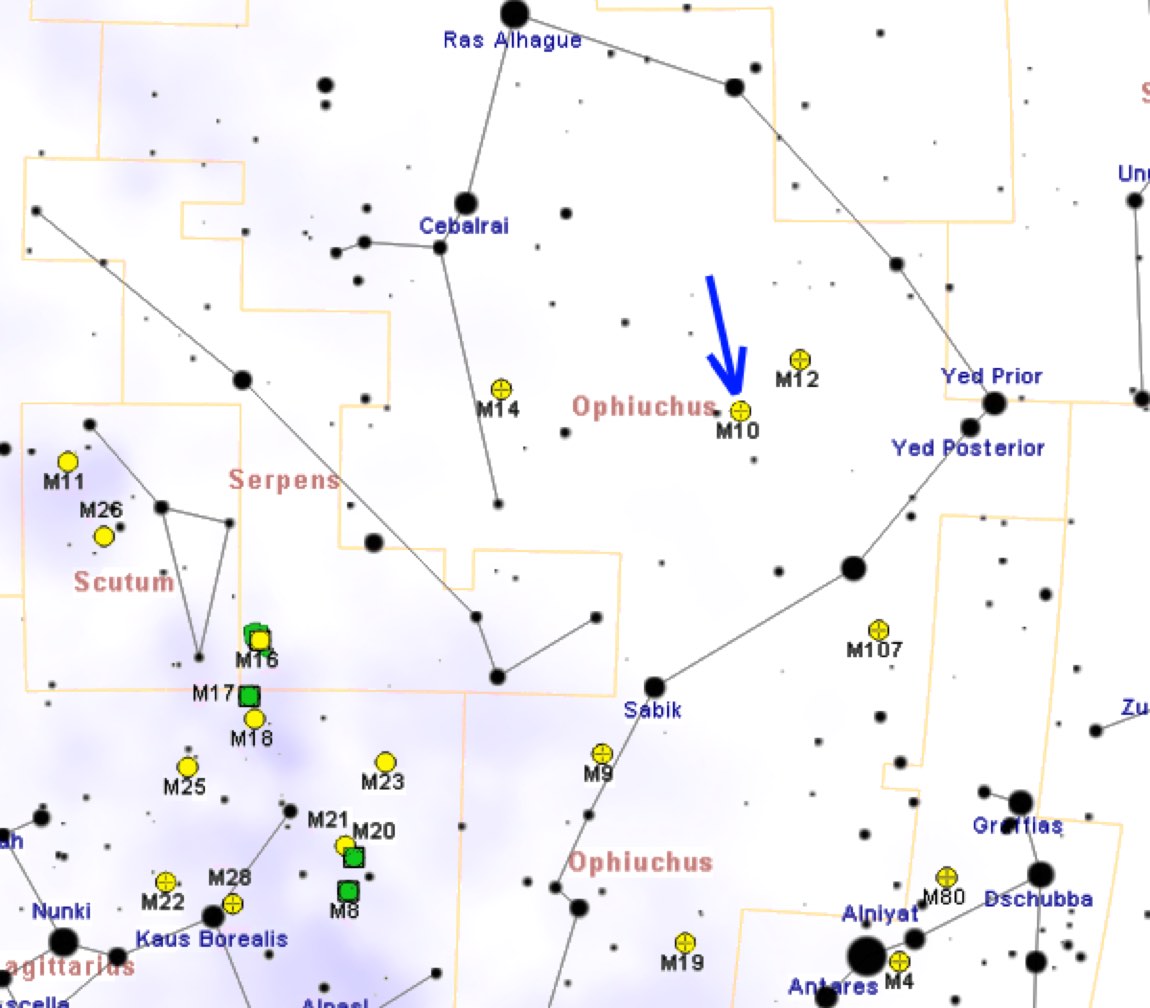
M10 lives in the constellation Ophiuchus, the serpent-bearer, which straddles the celestial equator and is best placed for observation during Northern Hemisphere summer evenings. A useful star-hop starts at 30 Ophiuchi, a recognizable orange star near the center of the constellation — M10 lies about one degree to the west of it. Even a small telescope will show the cluster as a fuzzy, slightly concentrated glow. Medium-sized telescopes reveal the bright core spanning roughly 8 to 9 arcminutes and begin to resolve individual stars around the edges. To appreciate the full tidal extent, which stretches to 19.3 arcminutes — about two-thirds of the full Moon's diameter — requires dark skies and careful observation, since the outer halo is far fainter than the core. M10's apparent magnitude makes it a rewarding target even under less-than-perfect conditions, sitting as it does among a rich field of Milky Way star clouds.
10 M10's Twin Next Door: Messier 12
Although the article does not discuss Messier 12 in detail, M10 and its neighbor are often observed together because they appear only about 3 degrees apart on the sky — close enough to fit in the same binocular field of view. What the article does establish is M10's specific position relative to 30 Ophiuchi and its place within the broader Ophiuchus field, which is one of the richest regions in the sky for globular clusters. M10's spatial diameter of 83 light-years and distance of 14,300 light-years give it an angular scale that rewards patient telescopic study. Its designation as both Messier 10 and NGC 6254 reflects the two great cataloguing traditions of the eighteenth and nineteenth centuries that systematized deep-sky observation, and finding M10 tonight connects any observer directly to the moment Charles Messier logged that first faint smudge on May 29, 1764.
 ⤢