 Photograph · Pline · CC BY-SA 3.0
Spacecraft · Deep guide
Luna 9
The first soft landing on another world, and the first photos from its surface.
What is it?
The Soviet Luna 9 probe proved on February 3, 1966 that a machine could land on the Moon without sinking or shattering — settling a genuine scientific debate about whether lunar dust would swallow landers whole. Its airbag-cushioned capsule righted itself, opened like a flower, and transmitted the first photographs ever taken from the surface of another world.
The deep dive
Researched for the Atlas from Wikipedia — Luna 9 (5,706 characters read) · updated Sep 20, 2026
01 Twelve Tries to Stick the Landing
Luna 9 was not born from a single inspired effort but from a grinding campaign of failure. The Soviet Union made eleven previous attempts to soft-land a spacecraft on the Moon before Luna 9, and every one of them fell short for a variety of reasons. The project began inside OKB-1, the storied design bureau led by Chief Designer Sergei Korolev — the man most responsible for Sputnik and the first human spaceflight. Korolev died before Luna 9 ever left the ground, meaning he never saw the triumph his team had been chasing. By the time the project transferred to the Lavochkin design bureau, OKB-1 was fully consumed by preparations for a crewed lunar expedition. Luna 9 became Lavochkin's debut on the deep-space stage, and it succeeded where eleven predecessors had not. That success was not a footnote: Lavochkin would go on to design and build almost every Soviet and later Russian lunar and interplanetary spacecraft that followed, making this single mission the founding moment of an entire institutional legacy.
02 A Rocket Built for Elliptical Ambition Deeper
Getting to the Moon requires more than raw thrust — it demands precise orbital choreography. Luna 9 lifted off at 11:41:37 GMT on 31 January 1966 aboard a Molniya-M rocket, serial number 103-32, from Site 31/6 at the Baikonur Cosmodrome in the Kazakh Soviet Socialist Republic. The first three stages deposited the payload and fourth stage into a low Earth parking orbit with an altitude of 168 by 219 kilometres and an inclination of 51.8 degrees. From there, the fourth stage — a Blok-L upper stage — fired to dramatically raise the orbit's high point to approximately 500,000 kilometres, roughly 30 percent farther than the Moon's average distance, before releasing Luna 9 into a highly elliptical geocentric trajectory. During the three-day coast to the Moon, engineers performed a mid-course correction on 1 February at 19:29 GMT: a 48-second engine burn that produced a delta-v of 71.2 metres per second, nudging the spacecraft onto a precise intercept path. To manage the thermal environment during that long coast, the spacecraft spun itself up to 0.67 rpm using nitrogen jets.
03 Engineering a Survivable Crash
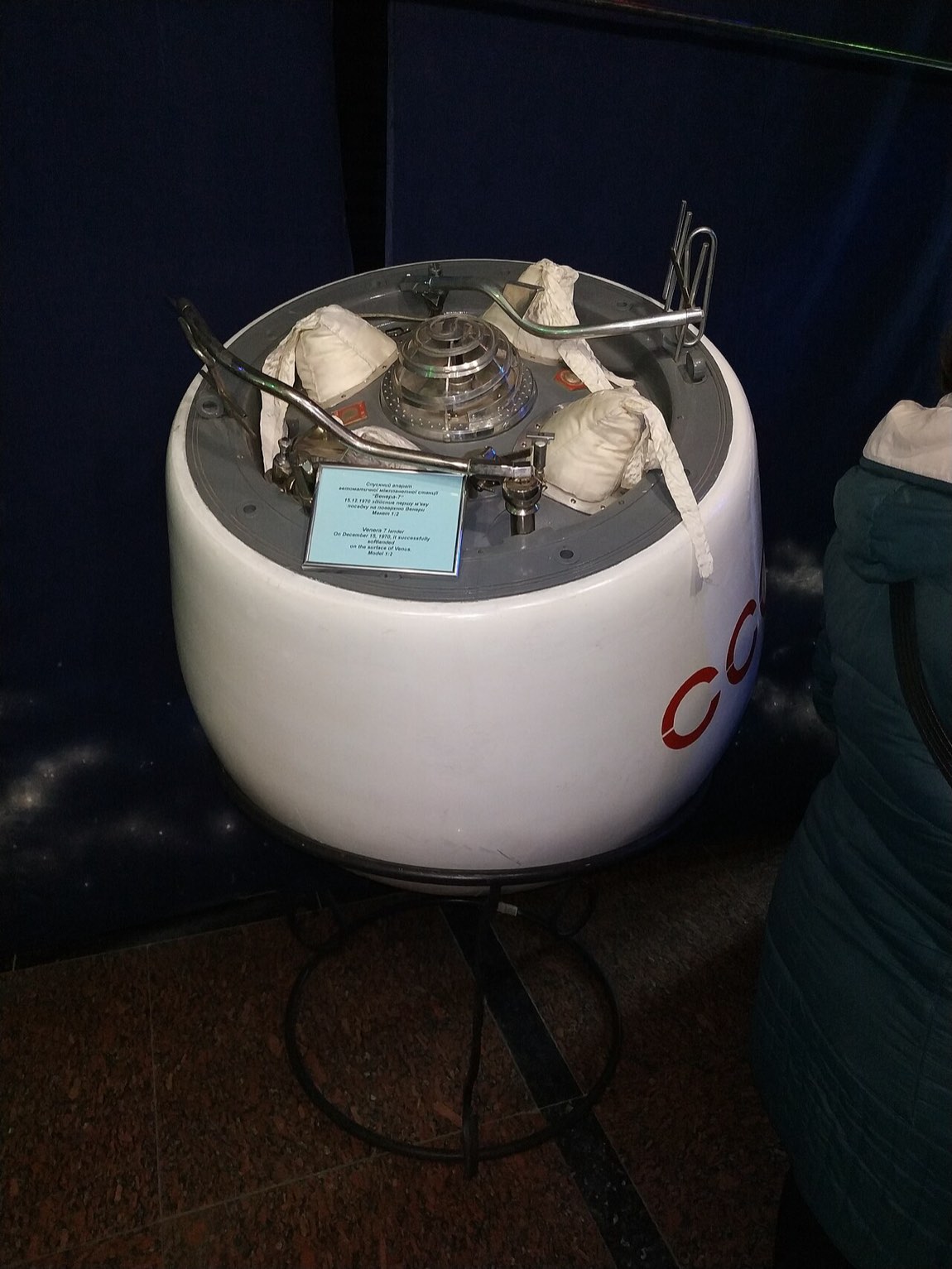
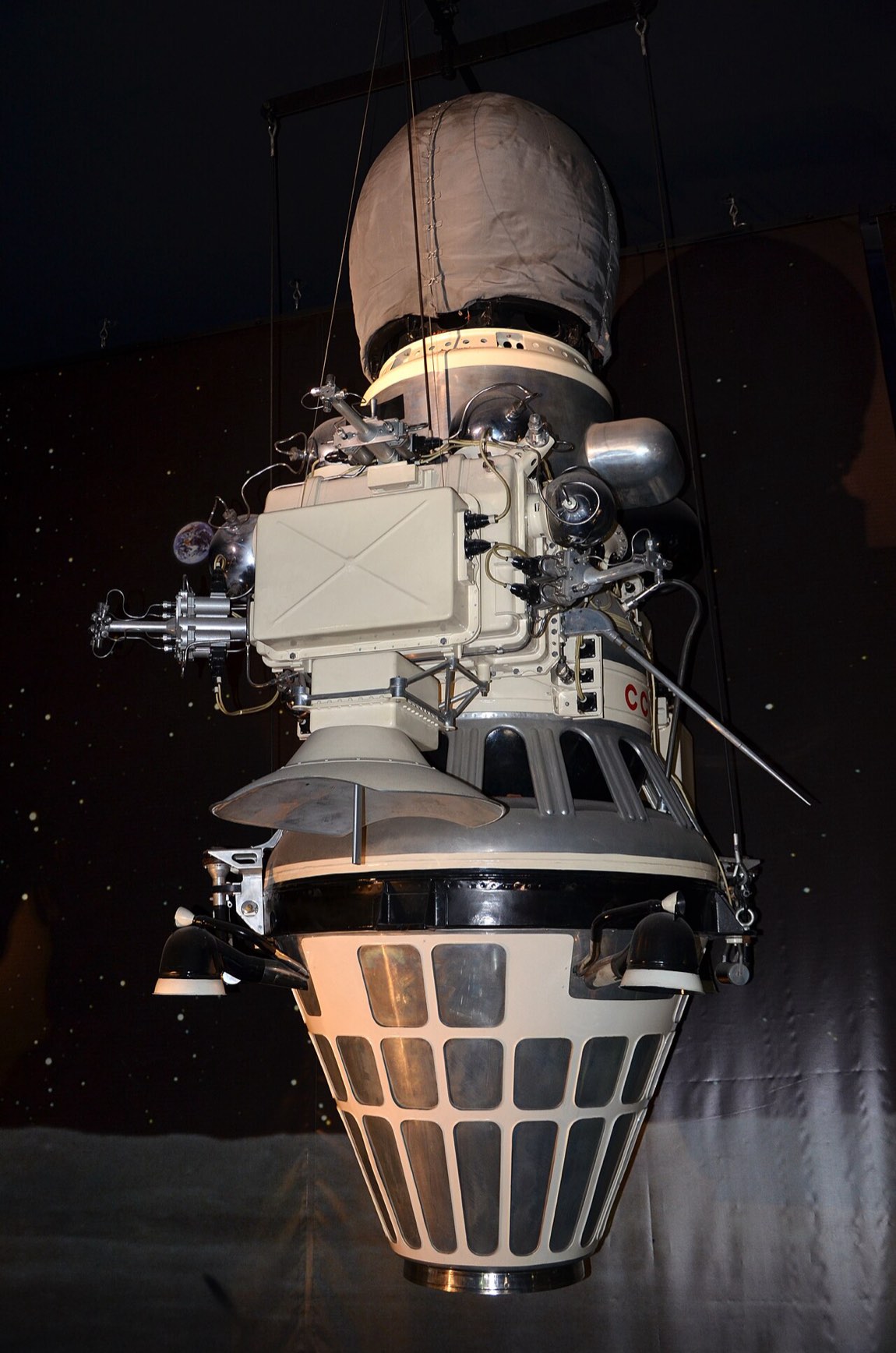
Soft landing sounds gentle, but the engineering reality is violent. The combined spacecraft and lander capsule weighed 1,538 kilograms and stood 2.7 metres tall, yet the actual lander — the piece that had to survive — had a mass of only 99 kilograms and was a spheroid just 58 centimetres across. Getting something that small safely to the surface required a precisely sequenced series of braking events. At 8,300 kilometres above the Moon, retrorocket orientation began. At 75 kilometres altitude, a radar altimeter triggered the jettison of side modules, the inflation of airbags, and the firing of retrorockets. At 250 metres, the main retrorocket cut off once its integrator confirmed the craft had reached the planned braking velocity, and four outrigger engines took over. About 5 metres above the surface, a contact sensor touched the ground, the engines shut down, the lander capsule was ejected, and its airbag inflated. The capsule still hit the surface at 22 kilometres per hour — fast enough that it bounced several times before finally coming to rest. A landing bag absorbed that remaining impact speed, which was noted as over 54 kilometres per hour at the moment of initial contact.
04 Where Exactly Did It Land? Deeper
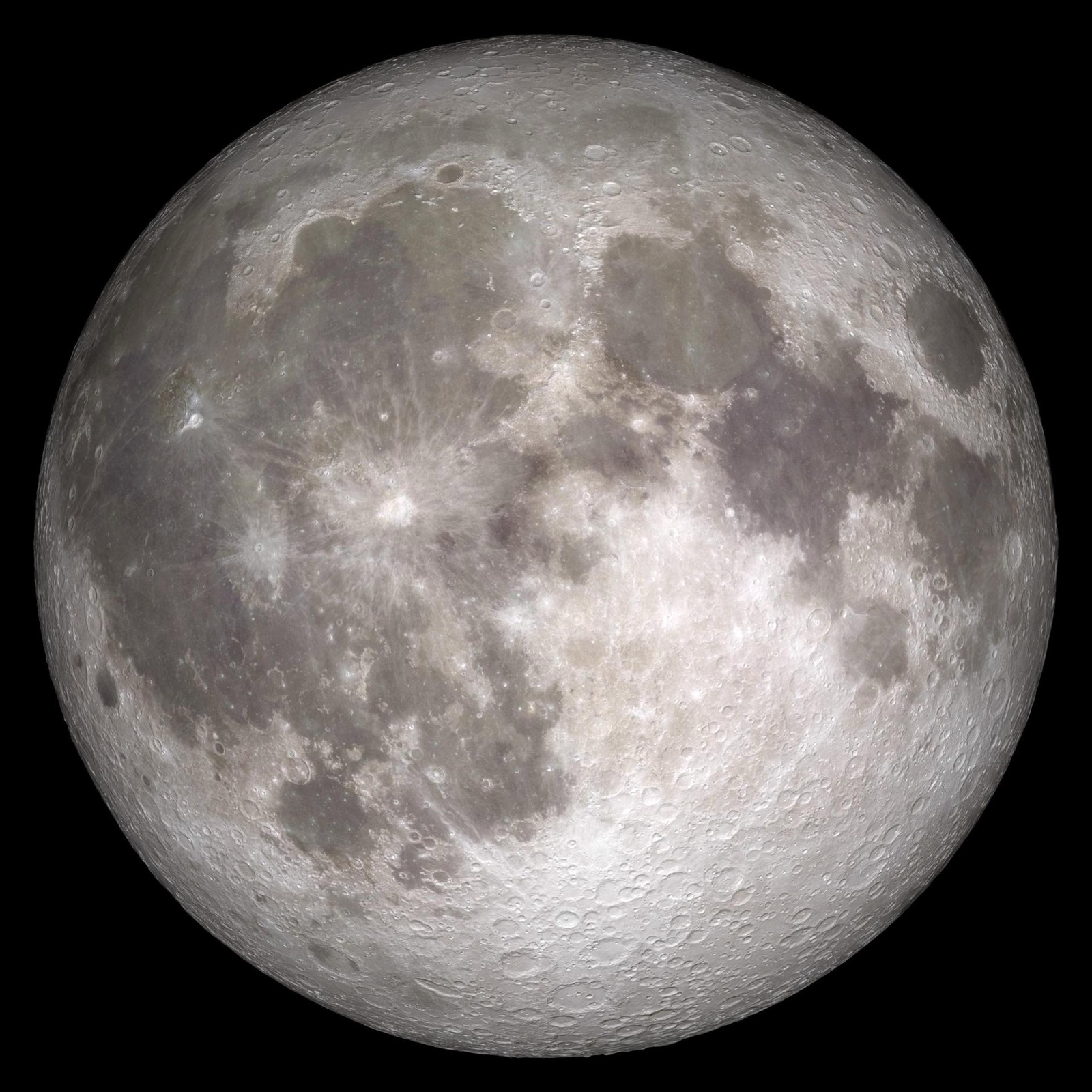
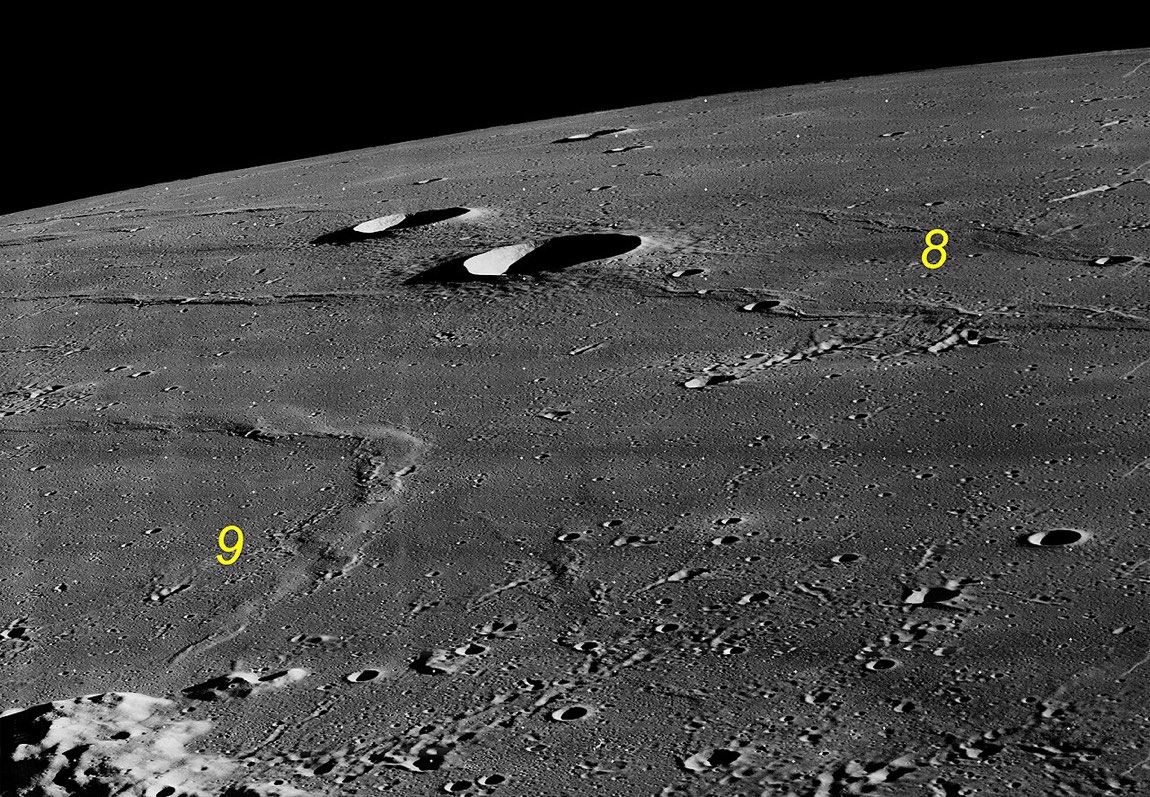
Luna 9 came to rest in Oceanus Procellarum — the vast dark plain known as the Ocean of Storms — west of the craters Reiner and Marius, at approximately 7 degrees 8 minutes north latitude and 64 degrees 22 minutes west longitude. The timestamp of touchdown was 18:45:30 GMT on 3 February 1966. For decades that approximate coordinate was the best available answer, but in early 2026 researchers published findings identifying a very probable candidate for the true landing site with greater precision: 7.03 degrees north, 64.33 degrees west. The update matters because pinpointing exactly where early landers touched down allows scientists to tie surface imagery and instrument readings to specific geological contexts, improving interpretation of the data decades after the mission ended. The fact that the location needed refining after sixty years also illustrates how difficult it was to reconstruct precise trajectories from 1966-era tracking data.
05 Opening Petals and Catching Light
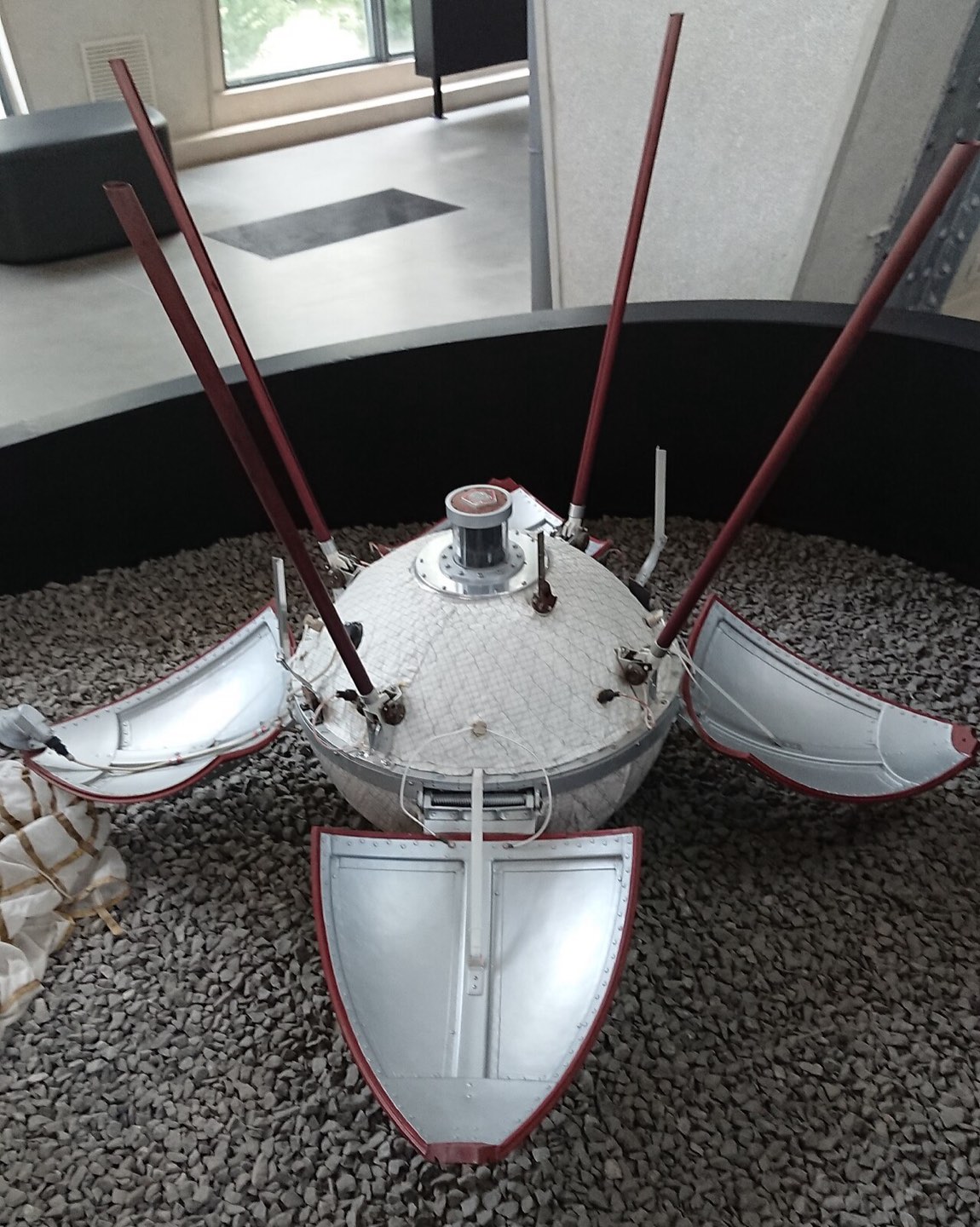
Luna 9 did not begin photographing the moment it stopped bouncing. Roughly 250 seconds after landing, four petals that covered the top half of the capsule unfolded outward, improving the spacecraft's stability on the lunar surface. Then came a deliberate wait of seven hours. The mission planners wanted the Sun to climb to an elevation of 7 degrees above the horizon before imaging began, because low-angle sunlight rakes across terrain and throws small rocks and surface textures into sharp relief — exactly the kind of detail scientists needed. When transmission finally started, Luna 9 sent nine images in total, including five panoramas. Seven separate radio sessions totaling 8 hours and 5 minutes of transmission time were conducted, along with a series of three television pictures. The assembled photographs revealed rocks, the texture of the immediate surface, and a clear view to the horizon 1.4 kilometres away — the first time humanity had seen the lunar landscape from ground level rather than orbit.
06 How Jodrell Bank Scooped the Soviet Union
Soviet authorities did not immediately release the images from Luna 9 to the world, but they could not stop the signals from crossing international airspace. Scientists at Jodrell Bank Observatory in England were monitoring the spacecraft's transmissions and made a striking observation: the signal format was identical to the internationally agreed Radiofax system that newspapers used to transmit photographs over telephone lines. It was a known, off-the-shelf standard, not a secret Soviet encoding. The Daily Express newspaper, recognizing the opportunity, rushed a compatible receiver to the observatory. Engineers decoded the signals and the images from Luna 9 were published worldwide — before Moscow had officially released them. The BBC speculated afterward that Luna 9's designers had deliberately equipped the probe with Radiofax-compatible hardware specifically to enable Jodrell Bank to receive the pictures, though this remains an inference rather than a confirmed design decision.
 ⤢
⤢
07 The One Scientific Instrument Aboard Deeper
Luna 9 was not a sophisticated science platform. The lander carried only a single dedicated scientific instrument: a radiation detector. Over the course of the mission that detector measured a radiation dosage of 30 millirads — equivalent to 0.3 milligrays — per day on the lunar surface. That figure, modest by the standards of deep space environments but meaningful for future mission planning, gave engineers and flight surgeons their first direct measurement of the radiation environment a crew or sensitive hardware would encounter while operating on the Moon. The rest of the spacecraft's internal systems — the radio equipment, program timing device, heat control systems, power sources, and television camera — served operational and engineering purposes rather than pure science. The mission's broader scientific value came from what it demonstrated rather than what its instruments measured: that the surface was solid enough to bear weight, and that a lander could survive there and function.
08 Settling the Dust Debate Once and For All
Before Luna 9 landed, there was genuine scientific debate about what the lunar surface was actually made of and whether it could support a spacecraft. One influential hypothesis held that billions of years of micrometeorite bombardment had ground the surface into a deep, fine powder — a layer of dust so loose and deep that any lander might simply sink into it and disappear. This was not fringe speculation; it was taken seriously enough to influence mission design discussions in both the Soviet and American space programs. Luna 9 resolved the argument empirically and definitively. The lander touched down, stayed on the surface, deployed its petals, and transmitted for days. The ground supported it. There was no sinking. The mission demonstrated beyond doubt that the lunar surface was mechanically competent — solid enough to bear the weight of a spacecraft — clearing one of the most practically important unknowns standing between Earth and any future crewed lunar landing.
09 Three Days of Contact, Then Silence Deeper
Luna 9's operational life on the Moon was short but complete. The spacecraft transmitted across seven radio sessions spanning a total of 8 hours and 5 minutes. The last confirmed contact with the spacecraft was logged at 22:55 GMT on 6 February 1966, meaning the mission lasted approximately three and a half days from landing to final signal. The brevity was almost certainly determined by battery life rather than any mechanical failure — the capsule's power sources were sized for a limited surface mission, not an extended stay. Within that window the spacecraft returned all nine images, conducted its radiation measurements, and transmitted the television picture series. The mission's internal designation was Ye-6 No.13 — the thirteenth spacecraft in the Ye-6 series — and it was also the first successful deep space probe constructed by the Lavochkin design bureau, marking a clean handoff of Soviet planetary exploration from one institution to another.
10 A Hermetically Sealed World in 58 Centimetres Deeper
The lander capsule had to be entirely self-contained. Measuring just 58 centimetres across, the spheroid Automatic Lunar Station was a hermetically sealed container — meaning no lunar vacuum, dust, or temperature extremes could reach its internal components. Inside that tight volume were packed radio equipment for communicating with Earth, a program timing device to manage automated operations, heat control systems to keep electronics within operating range across the extreme lunar temperature swings between day and night, the television system, scientific apparatus including the radiation detector, and the power sources to run all of it. The capsule's mass was only 99 kilograms, approximately the weight of an average adult human plus a heavy backpack, yet it performed reliably across multiple transmission sessions in an environment that had never been tested by any surviving hardware before. The engineering challenge of fitting all those systems into a 58-centimetre sphere while keeping the mass so low represented a significant achievement in miniaturization for the mid-1960s.
11 The Role of Sergei Korolev's Shadow
Luna 9 carries a poignant footnote in the story of its chief architect. The spacecraft was developed at OKB-1 under Chief Designer Sergei Korolev, the pivotal but for many years publicly anonymous figure behind Soviet space successes from Sputnik onward. Korolev died before the Luna 9 launch on 31 January 1966, meaning he never knew whether the twelfth attempt at a soft lunar landing would finally succeed. The mission that represented the culmination of his bureau's long campaign to reach the Moon's surface flew and succeeded without him. The project had already been handed to Lavochkin by the time of launch, partly because OKB-1 was consumed with planning a human lunar expedition. That transition meant Korolev's organization did not receive the institutional credit for the eventual success, while Lavochkin, building on the technical groundwork laid during those eleven failed earlier attempts, claimed the historic first and went on to define Soviet and Russian planetary exploration for decades to come.
 ⤢
⤢