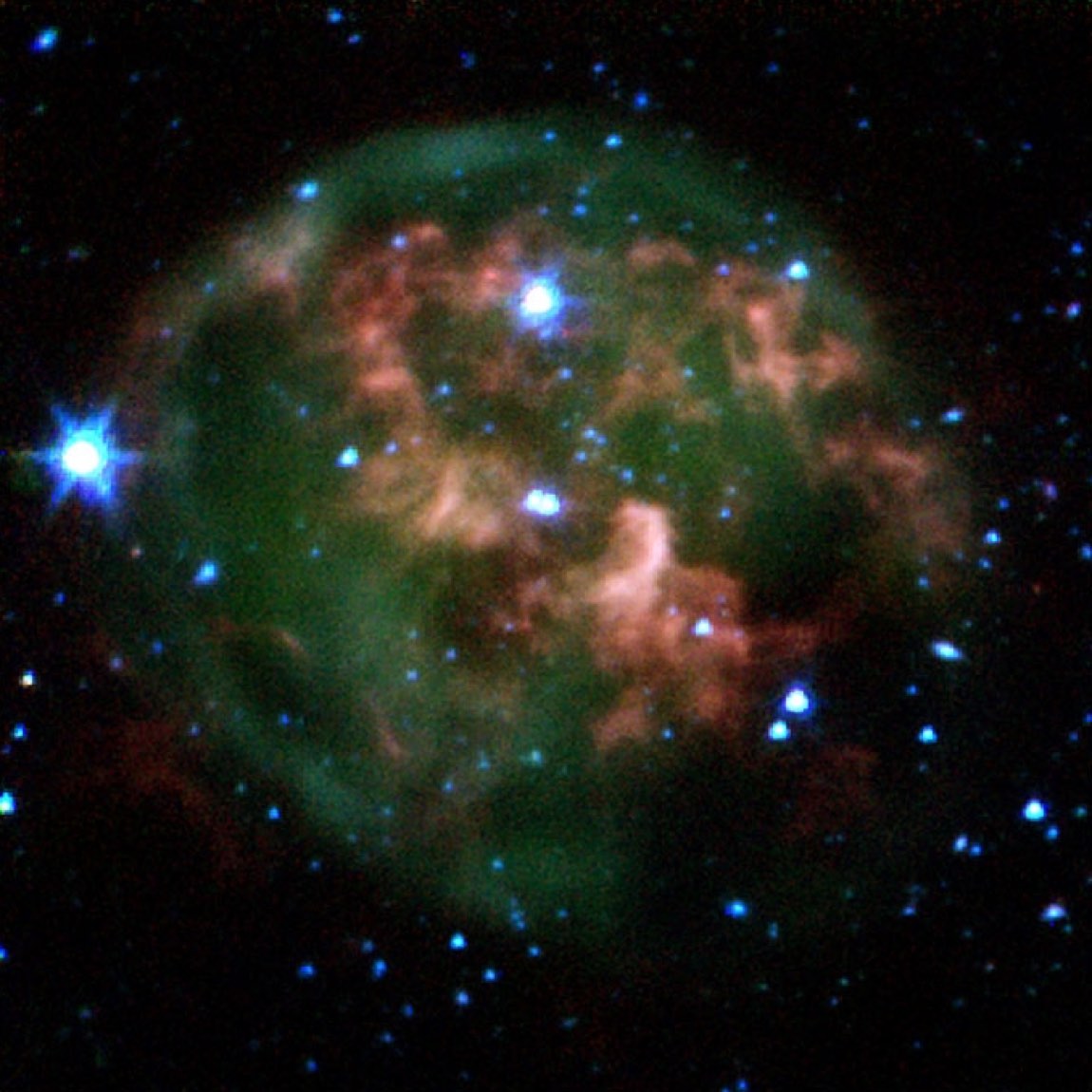
 Photograph · Wikimedia Commons · Public domain
Nebula · Deep guide
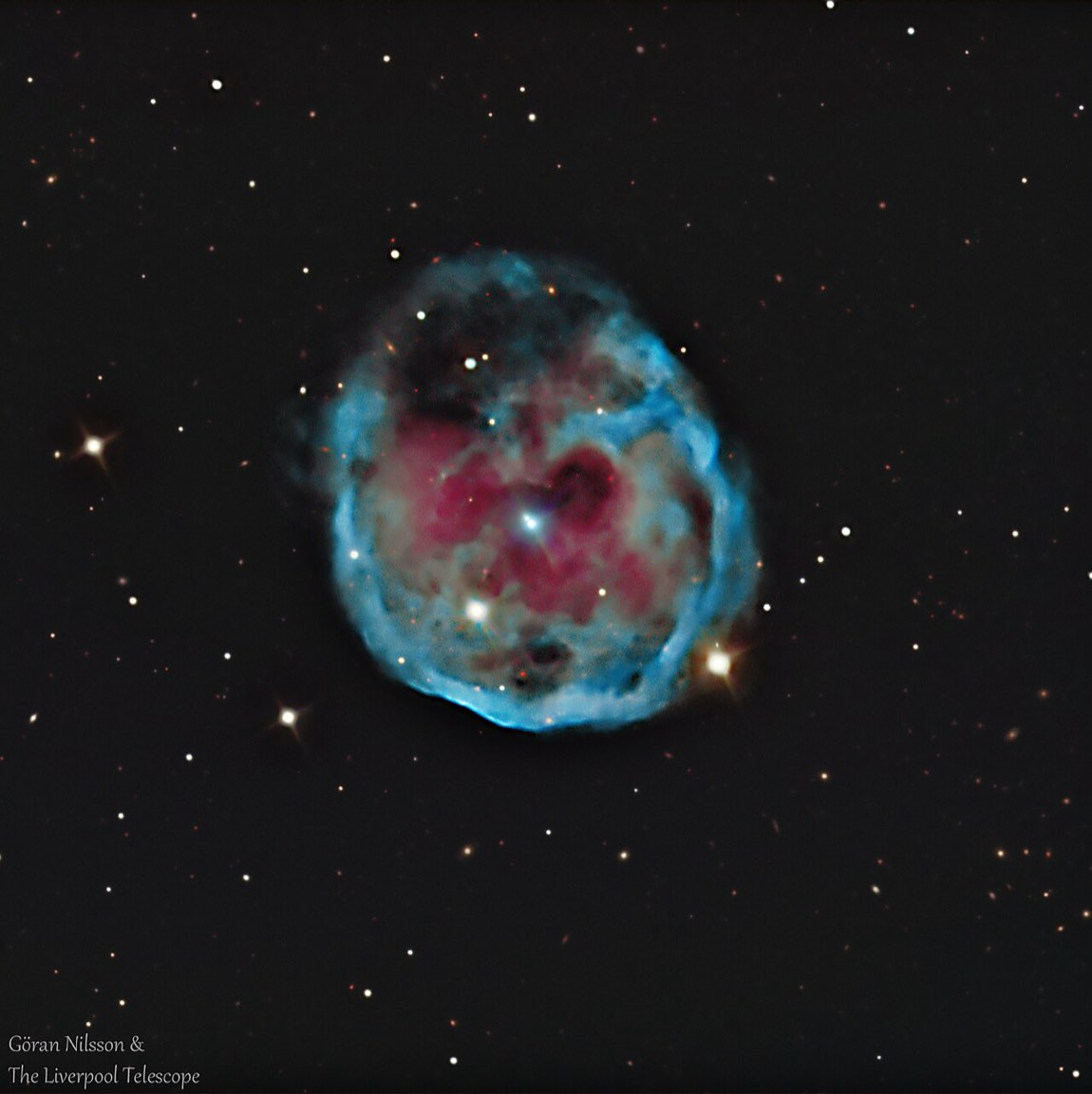
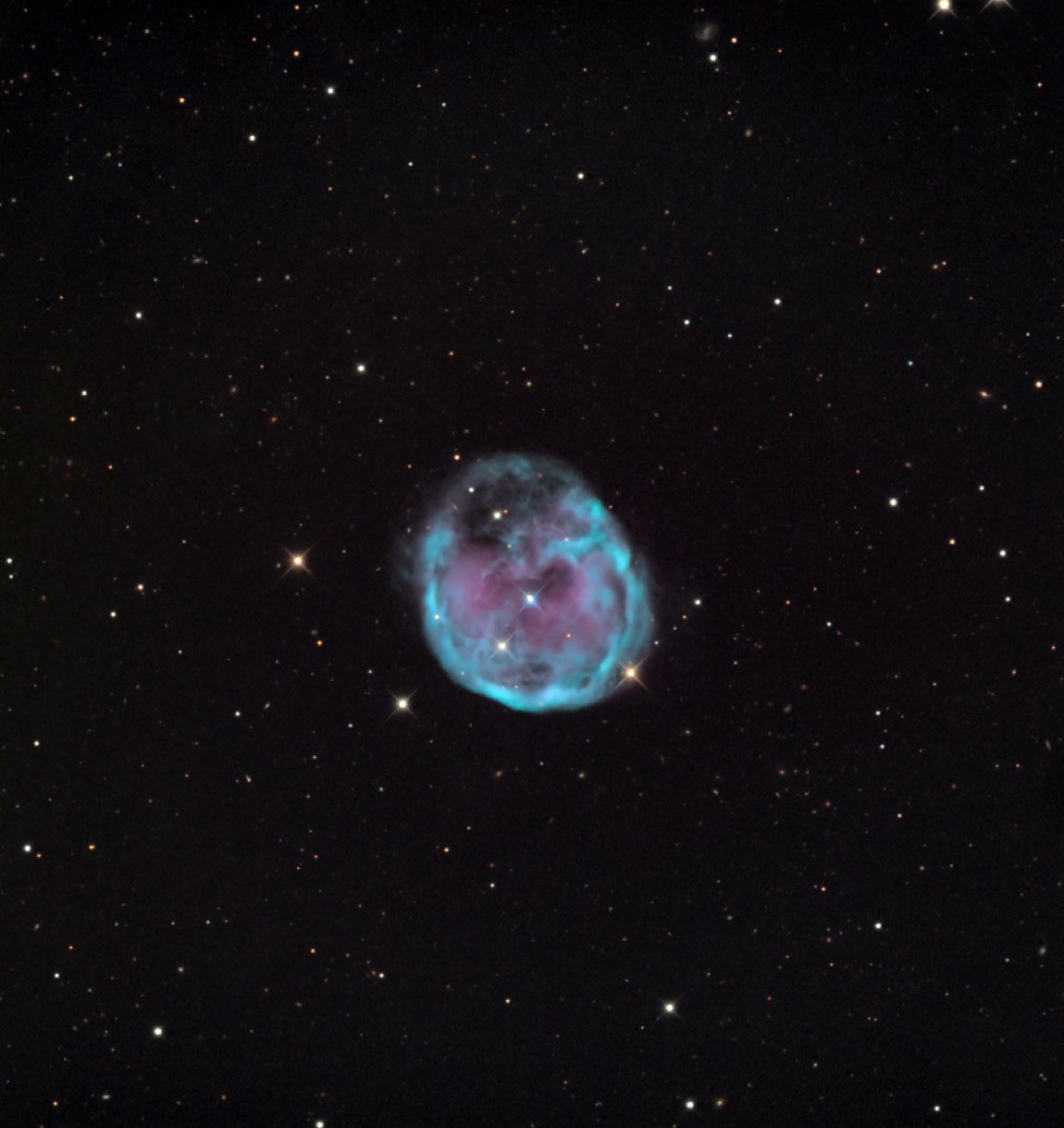
NGC 246 (Skull Nebula)
Also called: Caldwell 56 · NGC 246 · Skull Nebula · Pac-Man Nebula
A dying star's ghostly shell in Cetus, with a rare triple-star system at its heart.
What is it?
NGC 246 is a planetary nebula: a glowing bubble of gas thrown off by a Sun-like star near the end of its life. William Herschel discovered it in 1785. Its central star is now a white dwarf, and in 2014 astronomers using ESO's Very Large Telescope found a faint red dwarf orbiting with it and a second companion, making NGC 246 the first planetary nebula known to have three stars in its core. Amateur observers sometimes call it the Pac-Man Nebula because of the pattern its stars make.
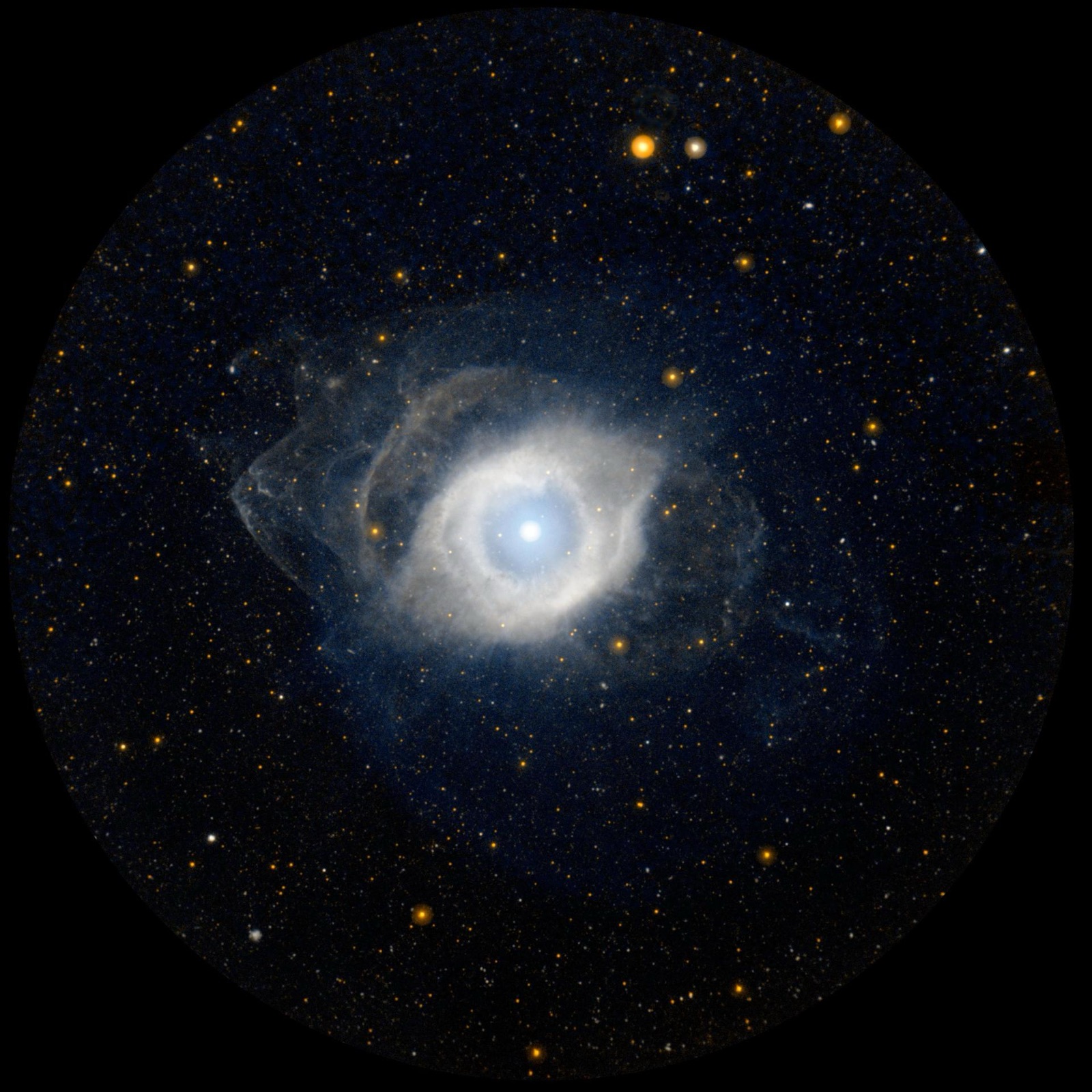
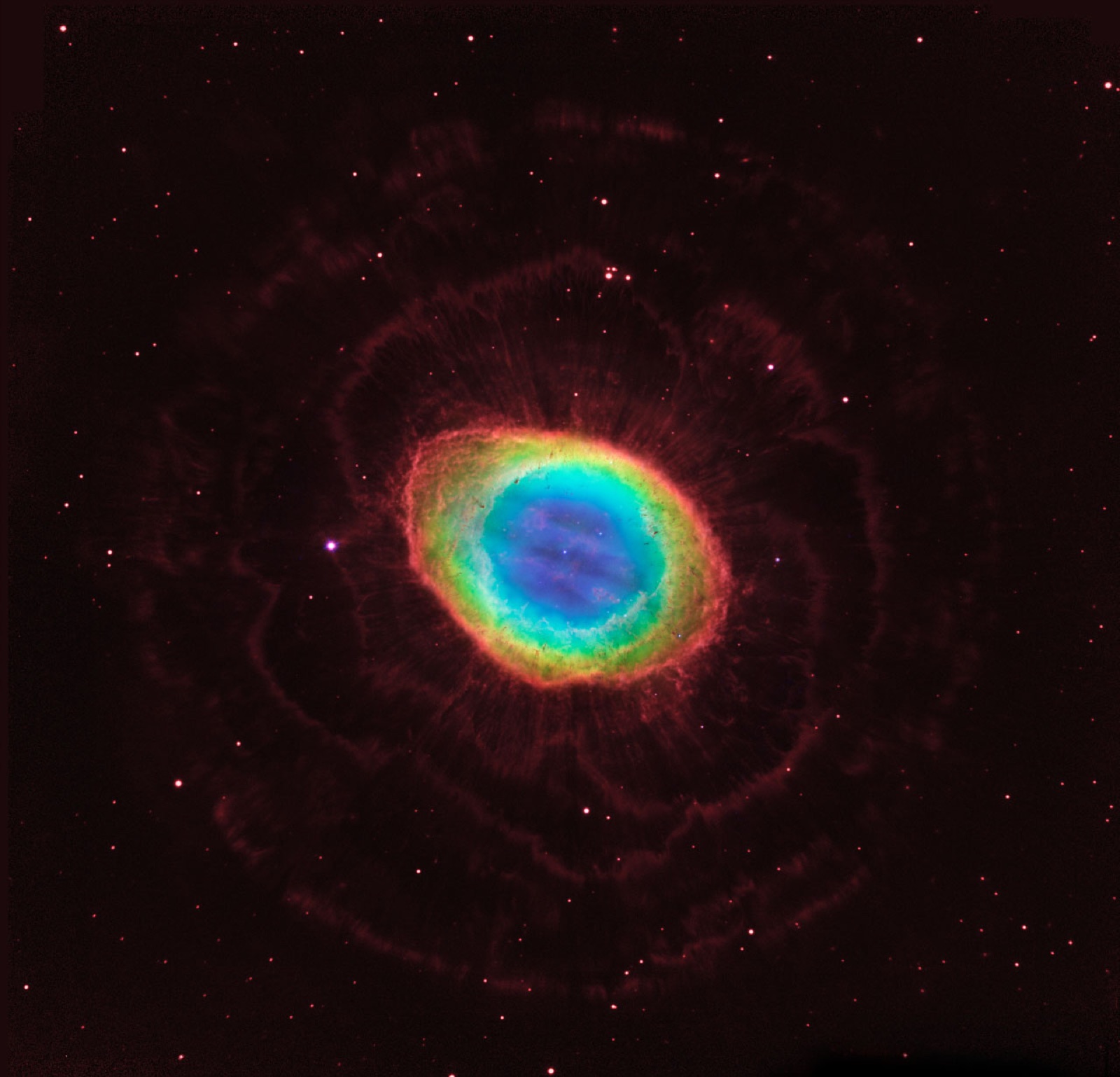
More real images of NGC 246 (Skull Nebula)
Genuine spacecraft and telescope imagery, every frame credited and licensed. Tap any photo to enlarge.