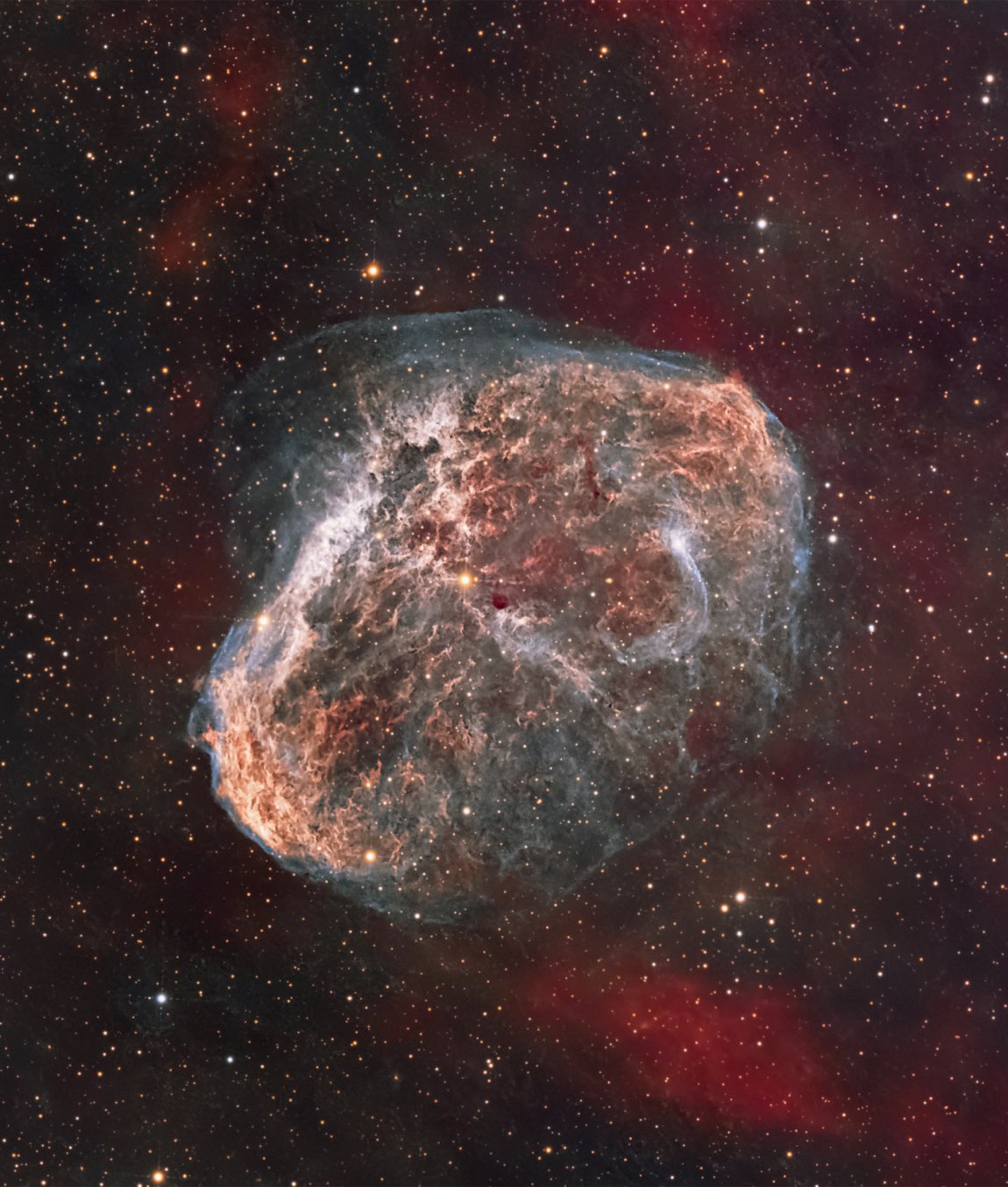
 Photograph · Chuck Ayoub · CC0
Nebula · Deep guide
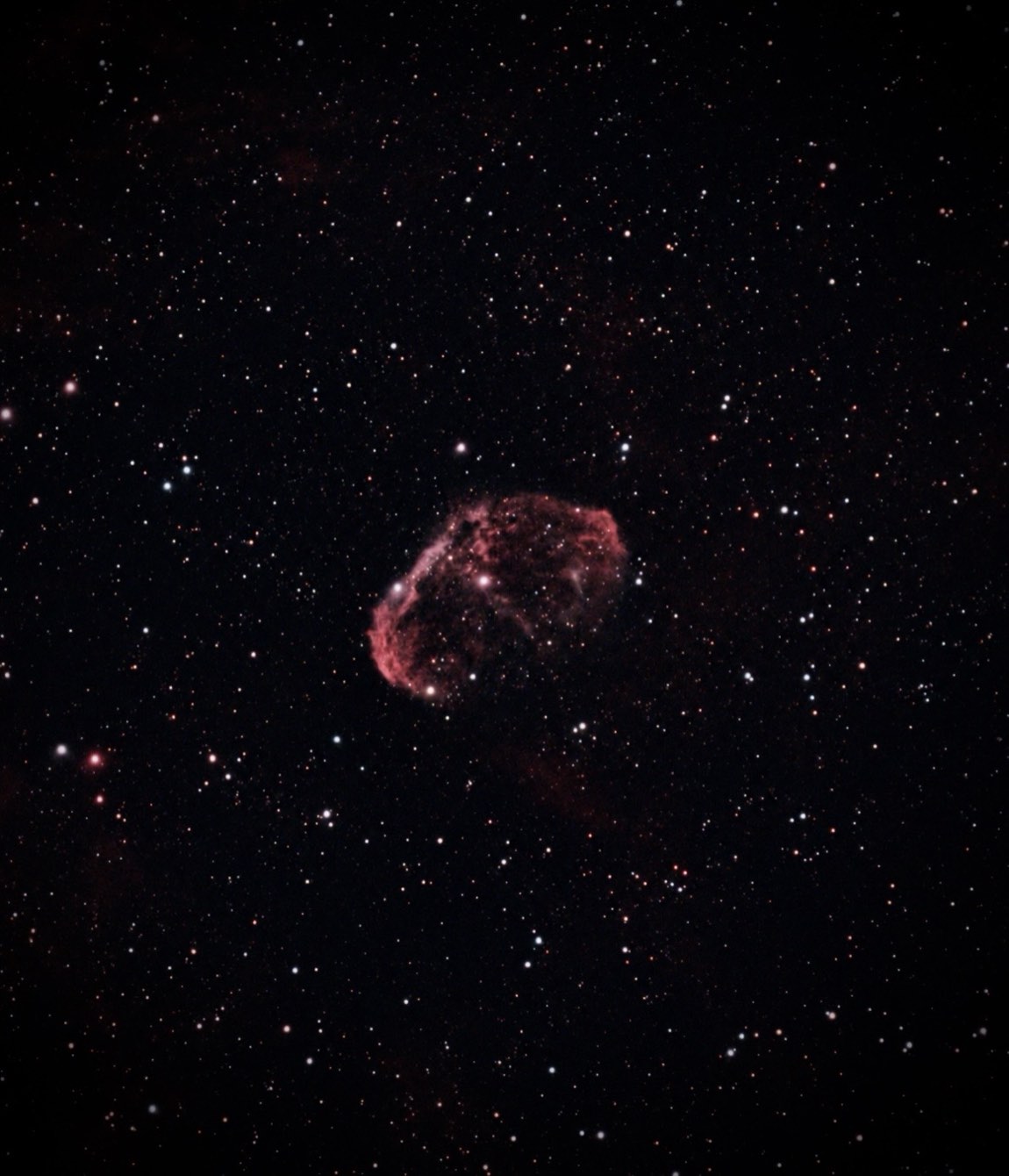
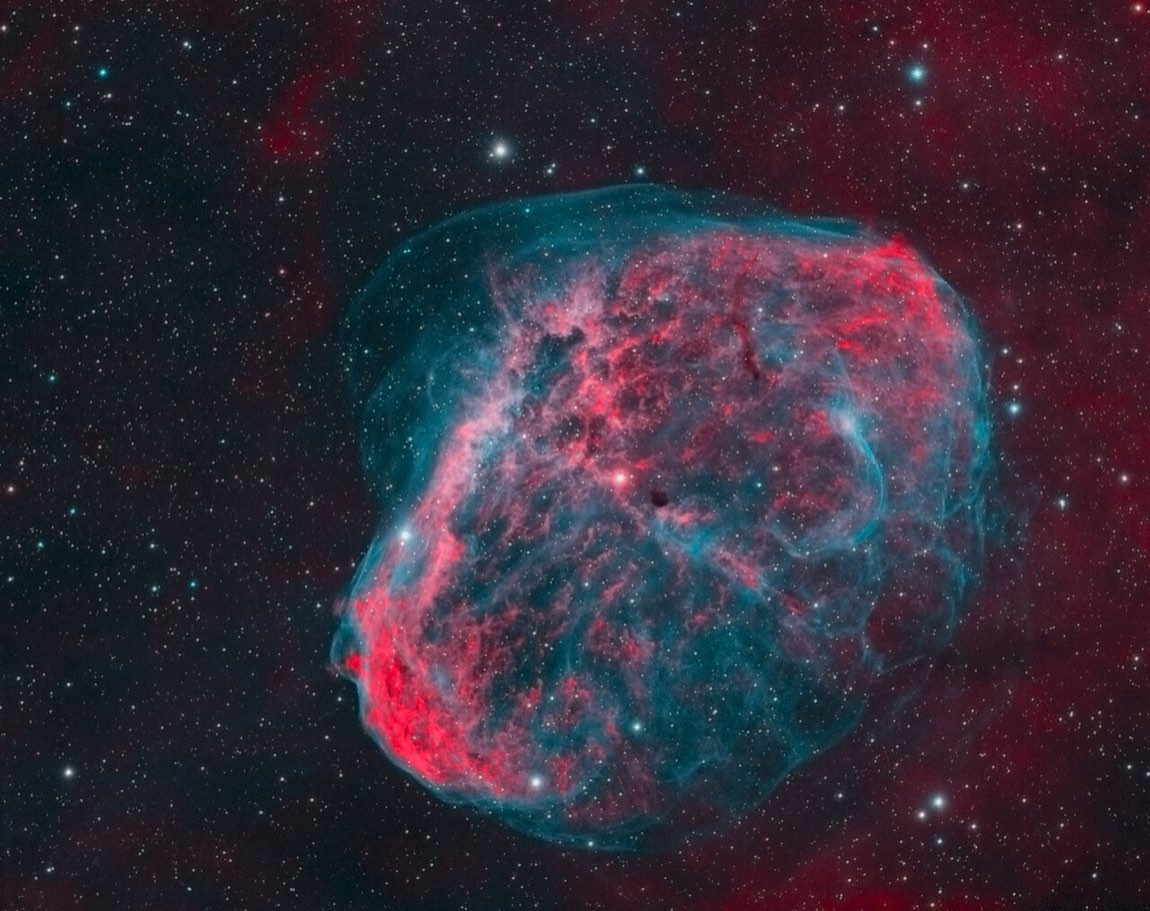
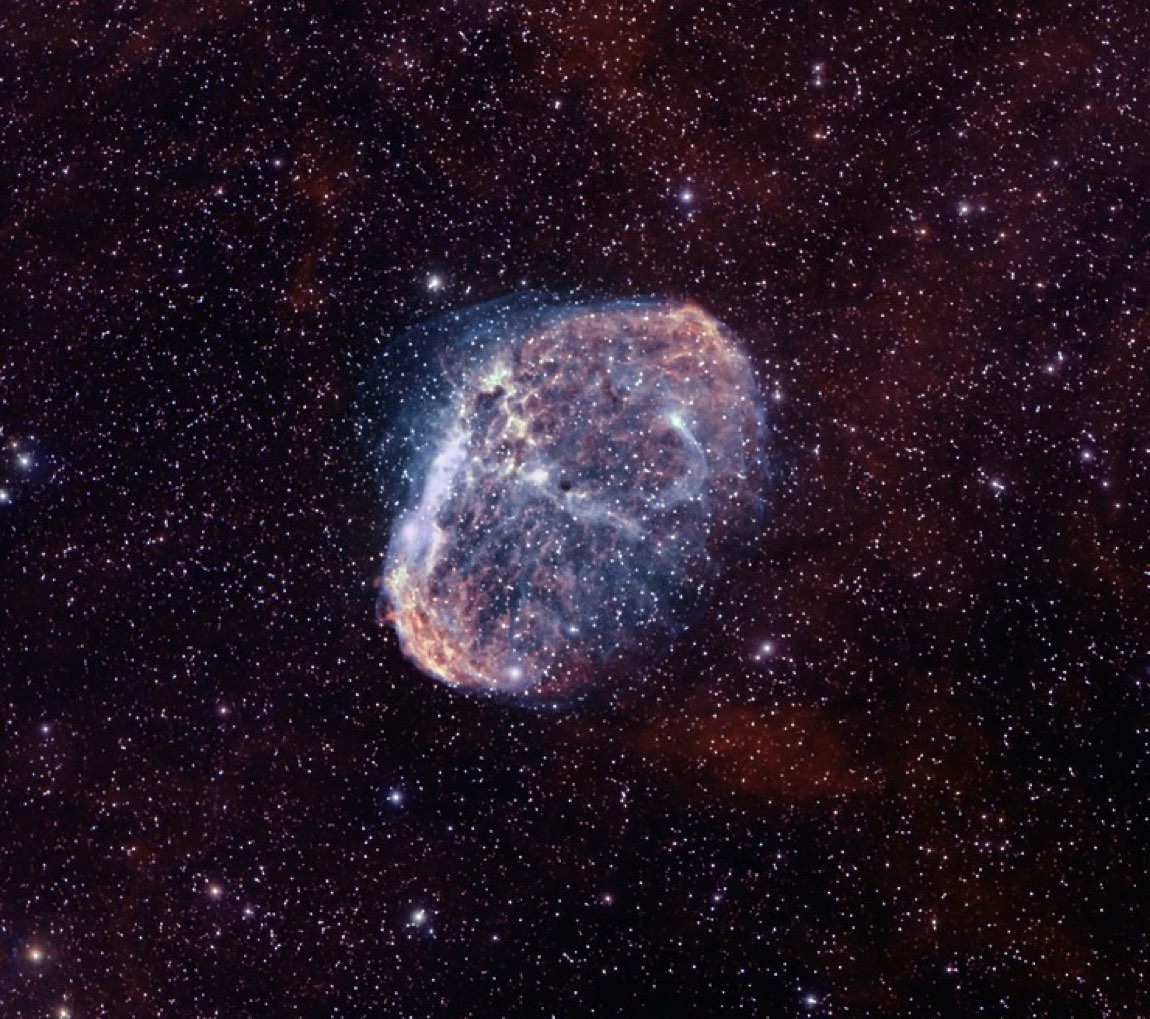
The Crescent Nebula
Also called: Caldwell 27 · C27 · NGC 6888 · Sharpless 105 · Euro Sign Nebula
A shell of gas shocked into glowing by a Wolf–Rayet star's ferocious wind.
What is it?
The Crescent Nebula is an emission nebula in Cygnus, about 5,000 light-years away. It formed when the very fast wind from the Wolf–Rayet star WR 136 slammed into slower gas the same star had shed as a red giant about 250,000 years earlier. The collision made a shell and two shock waves, one heading outward and one inward; the inward shock heats gas hot enough to give off X-rays. Visually it is faint, and most telescopes need a nebula filter to show it. William Herschel discovered it in 1792.
More real images of The Crescent Nebula
Genuine spacecraft and telescope imagery, every frame credited and licensed. Tap any photo to enlarge.