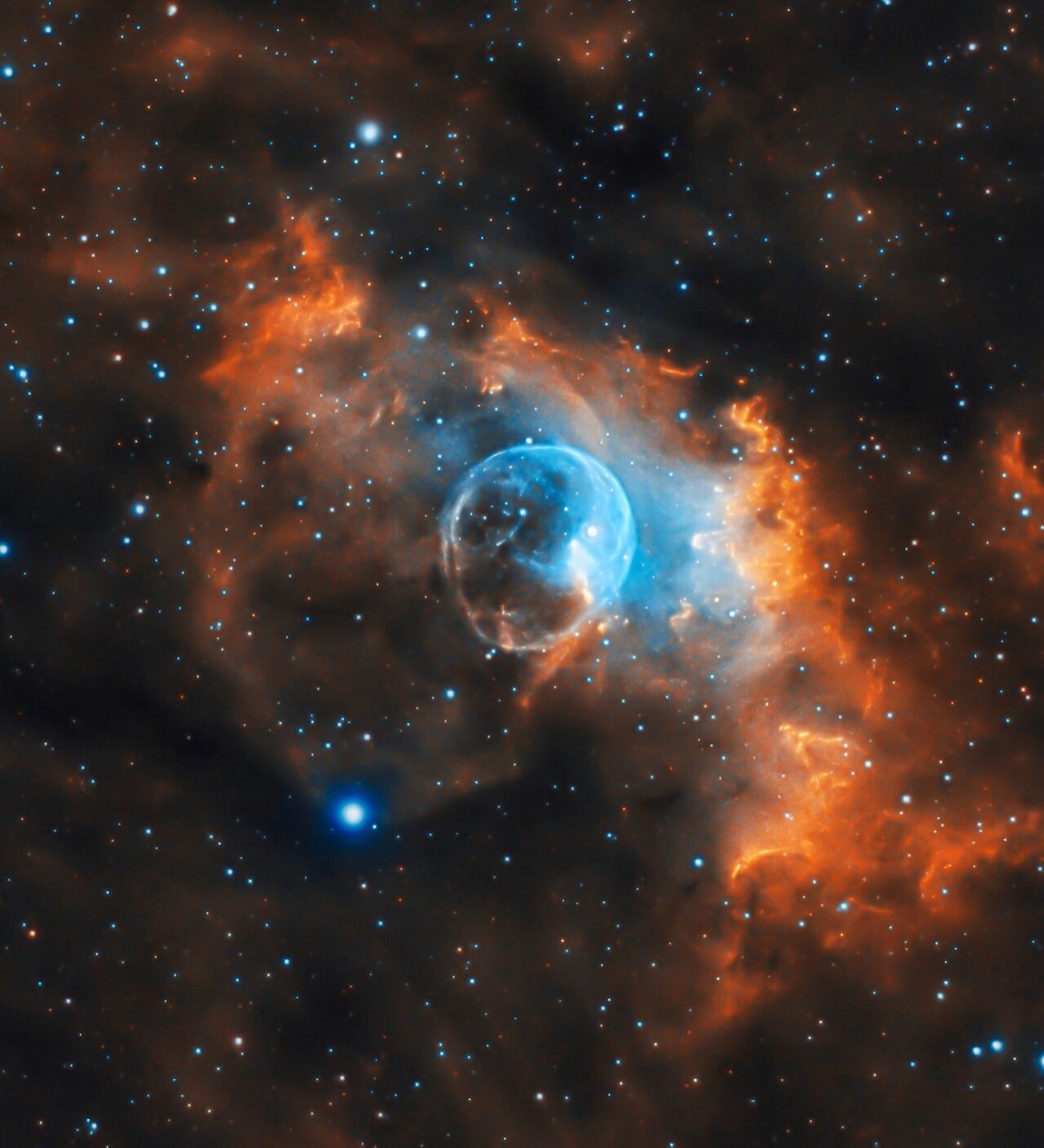
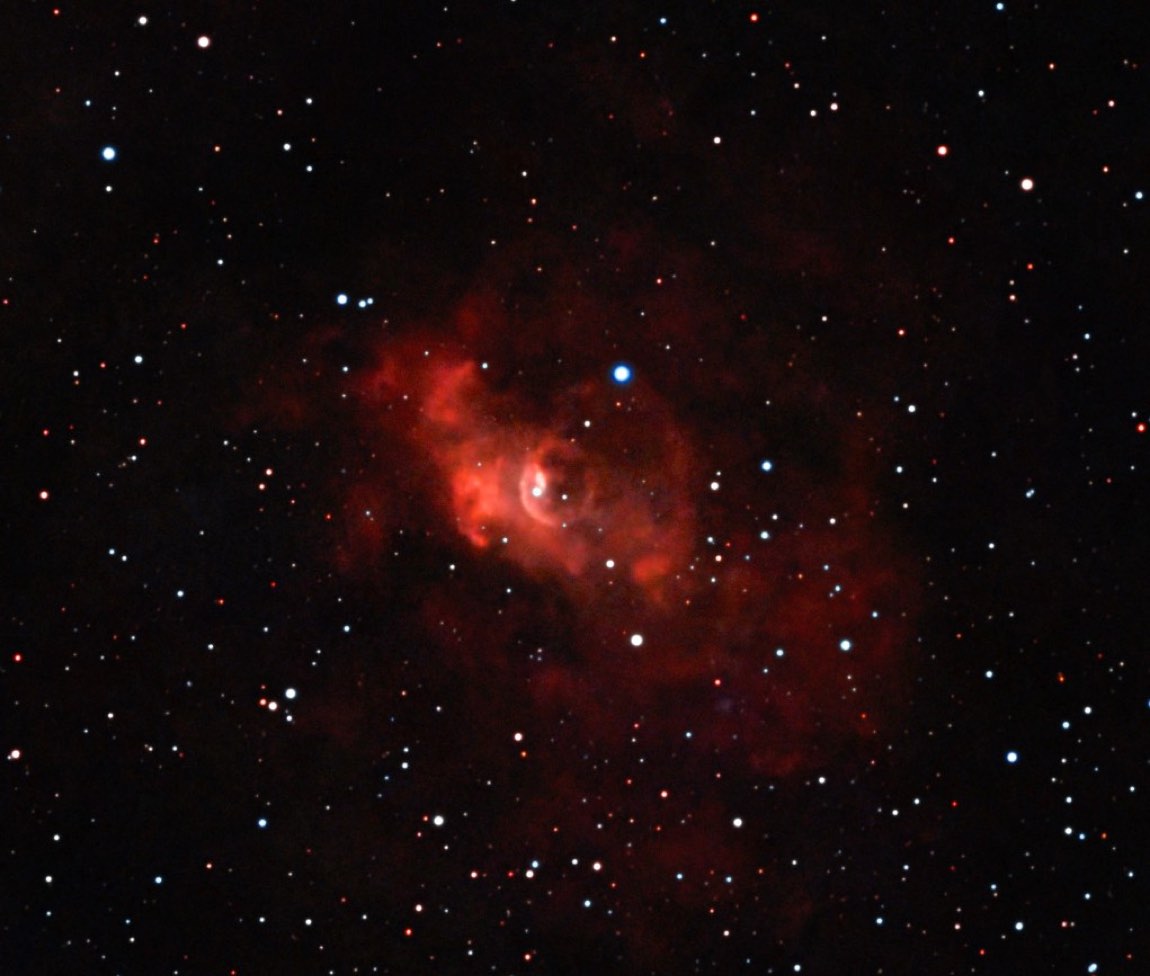
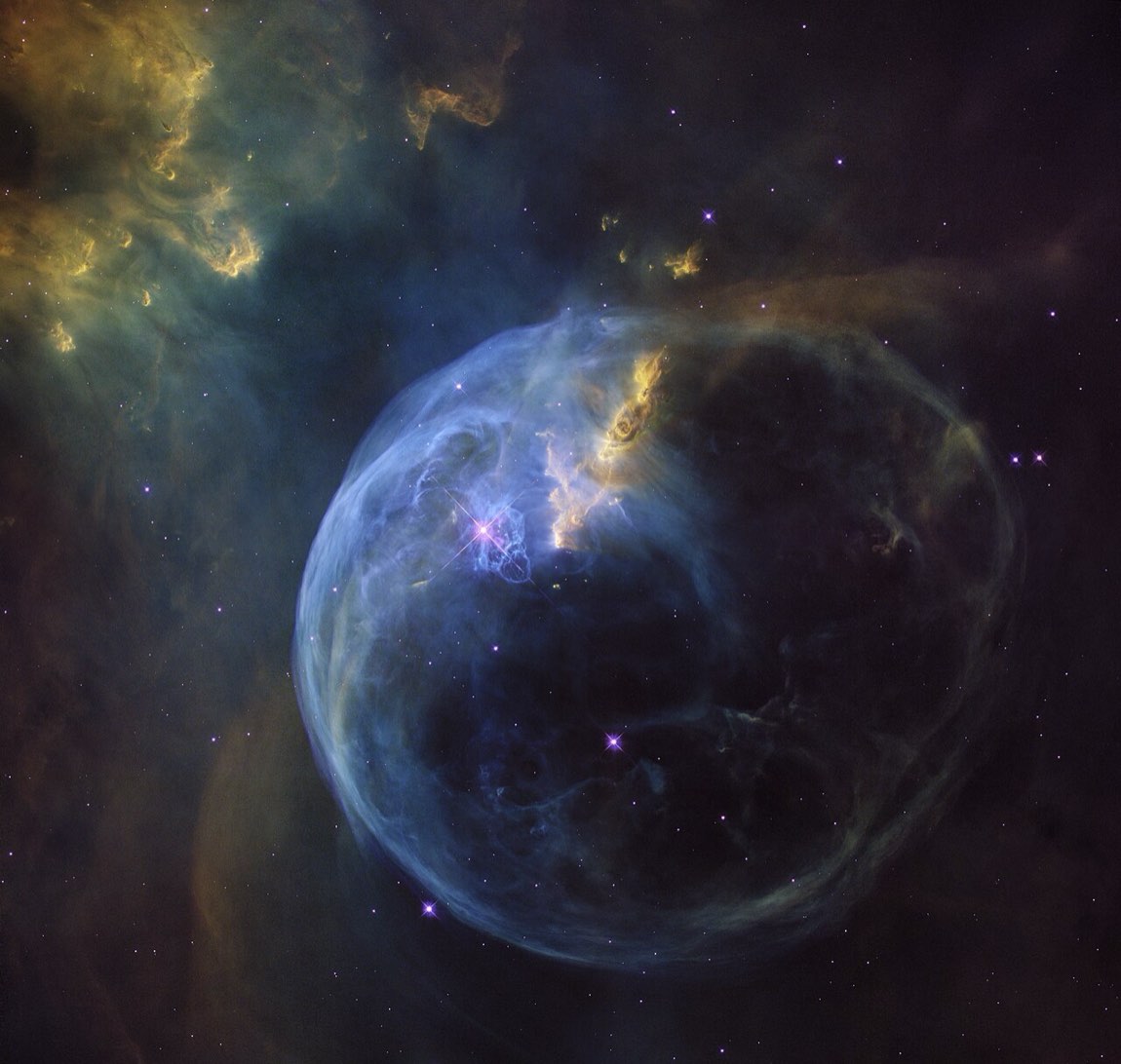
 Photograph · NASA, ESA, Hubble Heritage Team · Public domain
Nebula · Deep guide
The Bubble Nebula
Also called: Caldwell 11 · C11 · NGC 7635 · Sharpless 162 · Sh2-162
A cosmic soap bubble blown by the wind from a single massive star.
About 7,100 light-years away
Light makes the trip in 7,100 years
What is it?
The Bubble Nebula is a glowing cloud of hydrogen in Cassiopeia, close to the star cluster Messier 52. Its round shell is inflated by the fierce stellar wind of a hot, young central star, BD+60°2522, thought to be about 44 times as massive as the Sun. A neighbouring giant molecular cloud hems the bubble in, while the star's light makes the gas glow. William Herschel discovered it in November 1787. Visually it is very faint, and small telescopes need averted vision to show it.
More real images of The Bubble Nebula
Genuine spacecraft and telescope imagery, every frame credited and licensed. Tap any photo to enlarge.