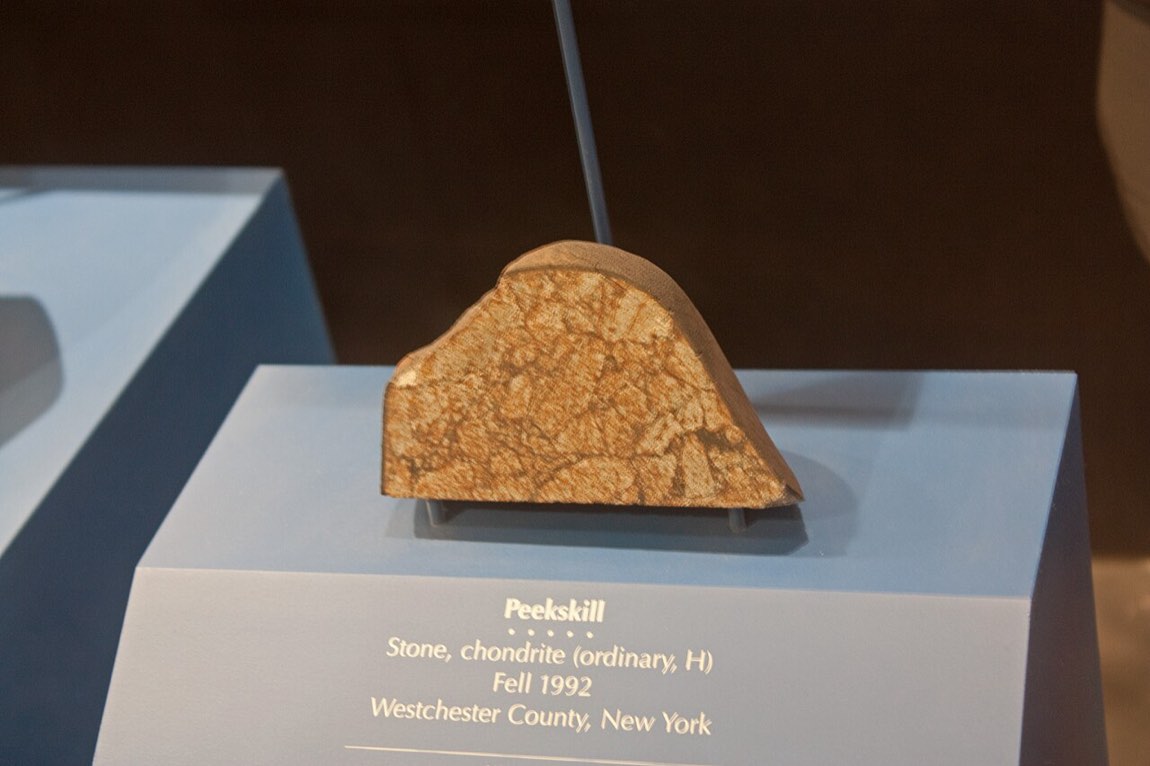
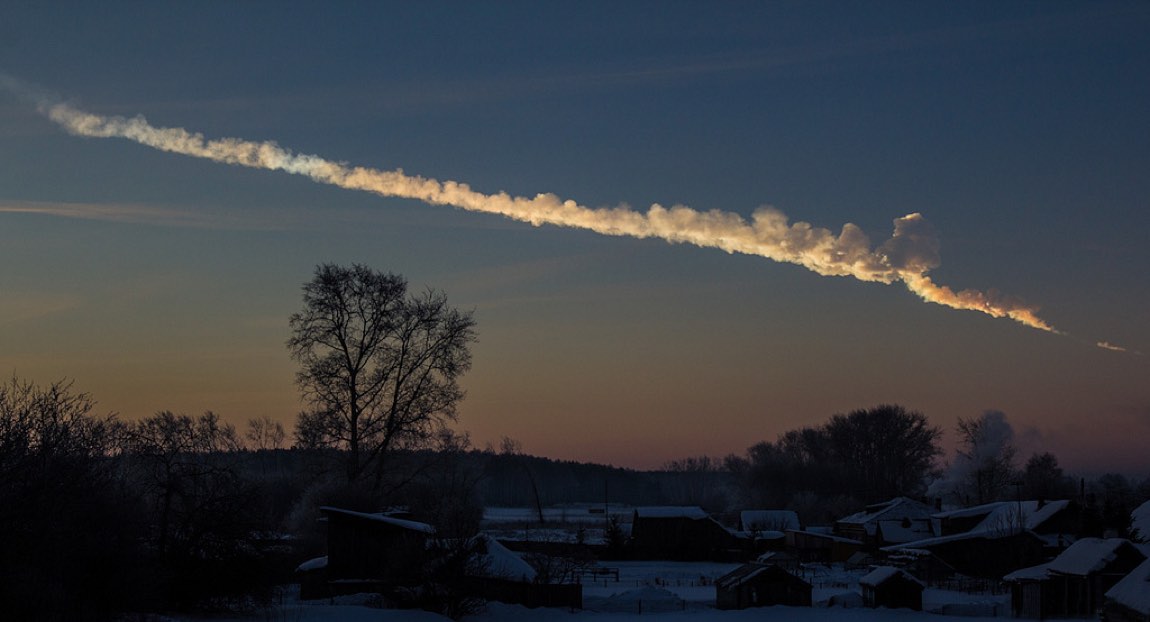
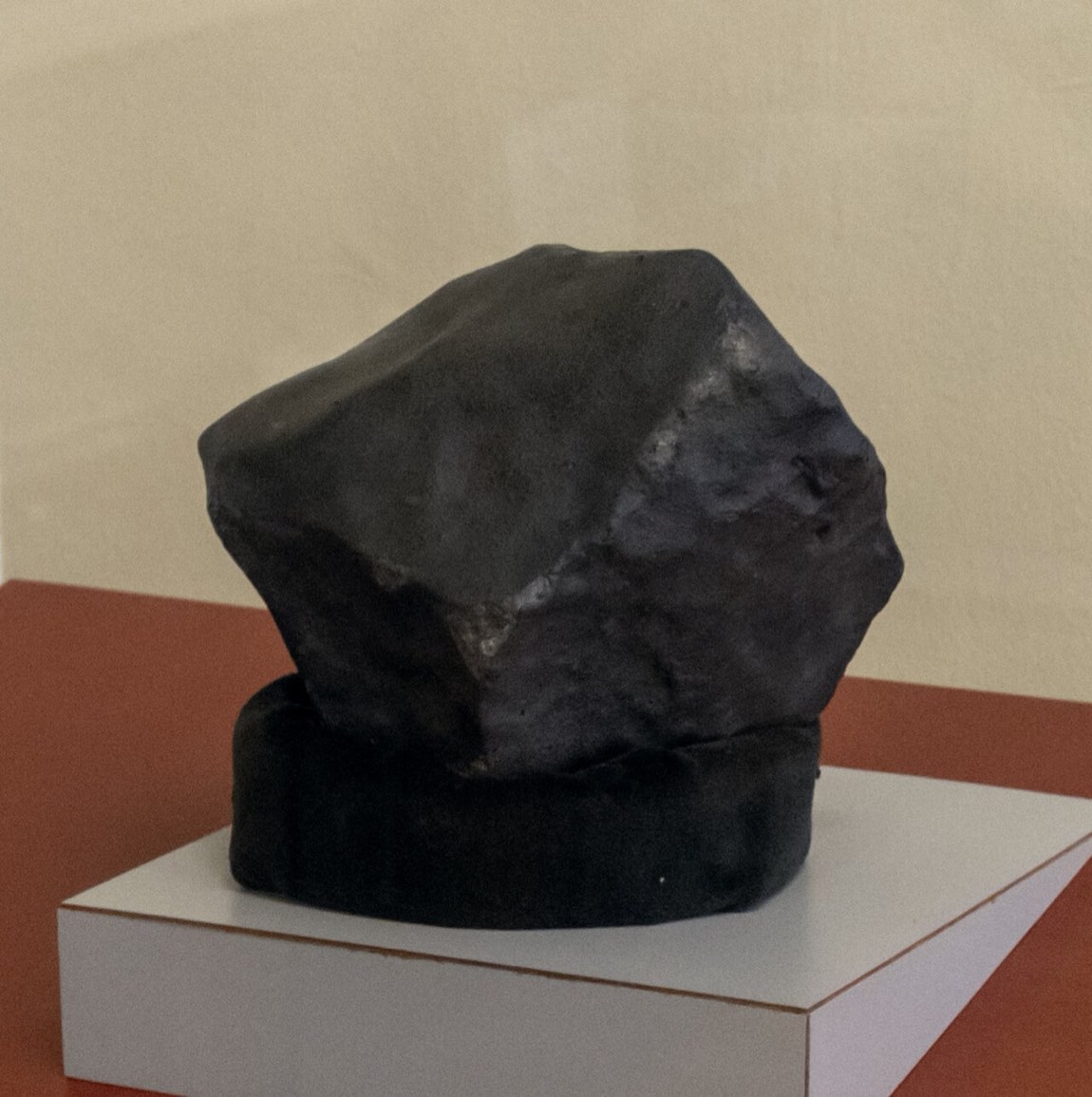
 Photograph · Kai NeSmith · CC BY 4.0
Meteorite · Deep guide
Sylacauga (Hodges) Meteorite
Also called: Hodges meteorite · Sylacauga
In 1954 a meteorite crashed through a roof in Alabama and bruised Ann Hodges as she napped on her couch.
What is it?
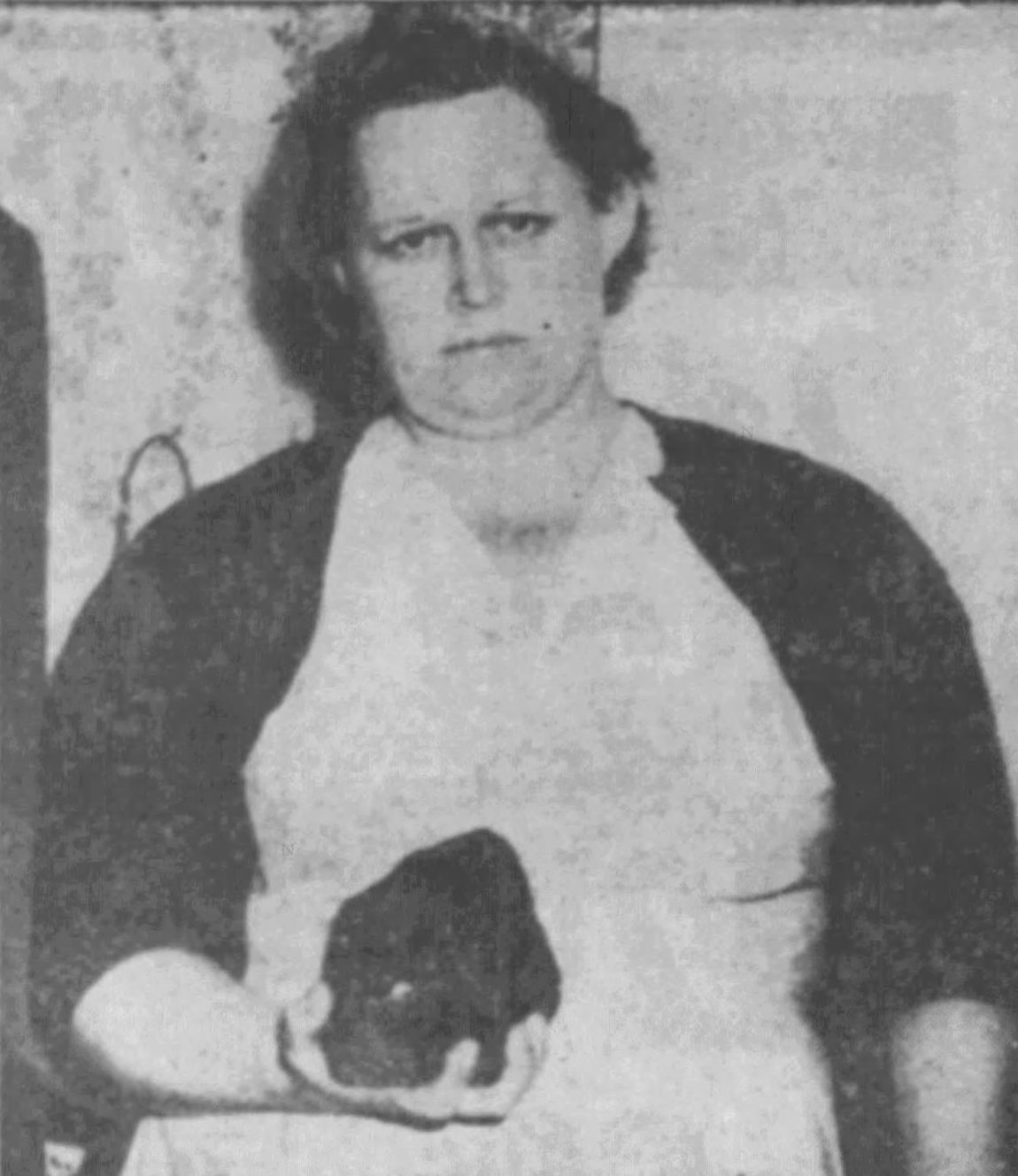
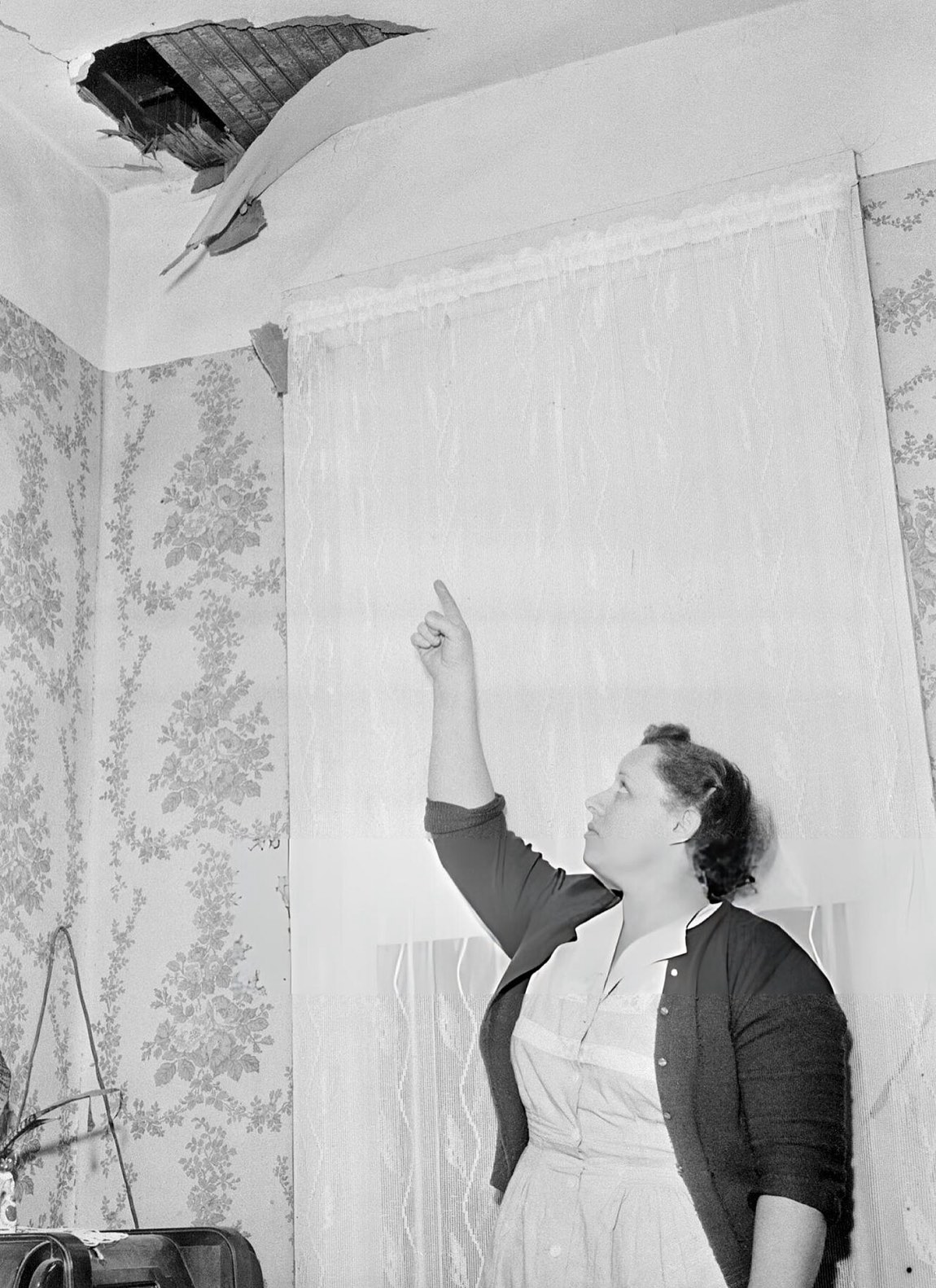
Early in the afternoon of 30 November 1954, a fireball seen across three US states broke into at least three pieces over Sylacauga, Alabama. One 3.86 kg fragment punched through the roof of a house in Oak Grove, bounced off a radio and hit Ann Elizabeth Hodges on the thigh and hand, leaving a large bruise. She is the first documented person to be struck by a meteorite and survive. The stones are an H4 ordinary chondrite, and the Hodges fragment is now at the Alabama Museum of Natural History.
The deep dive
Researched for the Atlas from Wikipedia — Sylacauga (meteorite) (6,879 characters read) · updated Nov 15, 2026
01 A Tuesday Afternoon Fireball Over Three States
Most meteorite falls go unwitnessed, but the Sylacauga event on November 30, 1954, was conspicuous enough to be seen across three American states simultaneously — and it arrived in the middle of the afternoon, at 12:46 p.m. Central Standard Time. That made it all the more startling: daytime fireballs compete with sunlight yet still blaze visibly across the sky. Witnesses on the ground did not just see the streak; they heard it. Reports described what sounded like explosions or loud booms, the classic signature of an air blast caused by a rapidly decelerating body compressing the atmosphere ahead of it. The fireball's path carried it toward Oak Grove, Alabama, a community near the town of Sylacauga, where the meteoroid was about to transition from a spectacular light show into something far more personal and historically unique.
02 How the Rock Entered a Living Room
Before reaching Ann Hodges, the Sylacauga meteorite had to run a remarkable obstacle course inside a house. It punched through the roof, leaving a hole 3 feet (91 centimeters) wide — roughly the width of a standard doorway. Rather than burying itself in the floor, the meteorite then struck a console radio and deflected, losing enough energy and direction to strike Hodges, who was napping on her couch, on her upper thigh and hand. The result was a large bruise rather than a lethal wound. The collision with the radio was a critical detail: a direct, unimpeded impact at that mass would have been far more dangerous. Hodges and her mother, also in the house, initially assumed the chimney had collapsed because of the cloud of dust and debris that accompanied the rock's arrival, and only after spotting the stone did they call both the police and fire department.
03 The Meteorite's Classification: H4 Ordinary Chondrite Deeper
Maxwell Air Force Base personnel who examined the stone confirmed it as a chondrite meteorite, and it has since been formally classified as an ordinary chondrite of the H4 group. Ordinary chondrites are the most common type of stony meteorite, representing primitive material left over from the early solar system. The "H" designation refers to high total iron content, distinguishing this group from the lower-iron L and LL chondrites. The number 4 indicates a petrologic grade reflecting the degree of thermal metamorphism the rock experienced on its parent body: grade 4 chondrites have undergone enough heating to partially homogenize their minerals, though they still preserve clear chondrule structures. This classification places the Sylacauga meteorite among a well-studied family of space rocks, making it scientifically valuable not only for its dramatic arrival story but also as a sample of ancient, thermally processed solar system material.
04 Three Fragments, Three Destinations
The incoming meteoroid did not arrive as a single body. It fragmented into at least three pieces during atmospheric entry. The largest, now called the Hodges fragment, weighed 3.86 kilograms (8.5 pounds) and is the one that struck Ann Hodges. The second-largest, the McKinney fragment, weighed 1.68 kilograms (3.7 pounds) and landed some distance away, at coordinates recorded as 33°13′08.4″N, 86°17′20.7″W. A third fragment is believed to have struck Earth somewhere near Childersburg, a few kilometers northwest of Oak Grove, but was never officially recovered. The two recovered fragments ended up on remarkably different journeys: the McKinney fragment was purchased by an Indianapolis-based lawyer on behalf of the Smithsonian Institution, while the Hodges fragment, after years of legal dispute, ended up donated to the Alabama Museum of Natural History, where it remains on exhibit today.
05 The Orbit: Coming In from the Sun's Direction Deeper
The trajectory of the Sylacauga meteoroid offers an interesting orbital clue. It came in on the sunward side of Earth, meaning that at the moment of impact it had already passed perihelion — its closest point to the Sun — and was traveling outward, away from the Sun. This inbound geometry from the sunward side is a constraint that helps researchers reconstruct the object's pre-impact orbit. Scientists have suggested that its orbit may have been similar to that of the asteroid 1685 Toro, a near-Earth object in a resonant orbit with both Earth and Venus. While that comparison is speculative rather than definitive, it places the Sylacauga meteorite in the broader context of near-Earth objects whose paths bring them into periodic close proximity with our planet, eventually leading — in this case — to an impact in a small Alabama town.
06 A Legal Battle Over a Rock from Space
The meteorite's arrival created an immediate and contentious legal dispute. After the United States Air Force confiscated the stone, the Hodges family fought to have it returned. Meanwhile, their landlord, Bertie Guy, asserted her own ownership claim on the grounds that the meteorite had fallen on her property. Under traditional property law, objects that fall on land can belong to the landowner, making Guy's argument legally credible. The two parties eventually reached a settlement: the Hodgeses paid Guy $500 for the rock. By the time the stone was finally returned to them — more than a year after the fall — public fascination had faded, and they were unable to find a buyer despite having received offers reportedly approaching $5,500 while the meteorite sat at the Air Force Base. The delay cost them significantly, transforming what could have been a windfall into a stone they eventually donated to a museum for approximately $25.
 ⤢
07 The Human Cost of Sudden Fame
The aftermath of the meteorite strike reshaped Ann Hodges's life in ways that went far beyond the bruise on her thigh. Approximately 200 reporters gathered outside her home, most of them unwelcome. She appeared on the game show I've Got a Secret, hosted by Garry Moore, exposing her to a national audience. Fan mail and questions arrived in volume she did not answer. According to the article, her behavior changed noticeably after the incident: her pre-existing shyness deepened into social anxiety, her general health deteriorated, and she exhibited symptoms consistent with post-traumatic stress disorder. The stress of the ownership dispute compounded all of this. Ann and Eugene Hodges divorced in 1964, and she died in a nursing home from kidney failure on September 10, 1972, at the age of 52 — just eighteen years after the meteorite found her napping on her couch.
08 Julius McKinney: The Luckier Find
While Ann Hodges navigated media attention, legal disputes, and lasting psychological distress, the story of the Sylacauga meteorite's second fragment unfolded very differently. The day after the fall — December 1, 1954 — local farmer Julius Kempis McKinney came upon the second-largest piece lying on the ground. An Indianapolis-based lawyer subsequently purchased it on behalf of the Smithsonian Institution. For the McKinney family, the transaction was straightforwardly life-changing: they used the proceeds to buy both a car and a house. The contrast with the Hodges family outcome is striking. The Hodges fragment, the larger and more famous piece, generated legal battles, stress, and ultimately sold for about $25. The McKinney fragment, found by chance the next morning, financed two major purchases for a farming family. The meteorite's two largest fragments thus produced two very different human stories.
09 The Rarity of People Actually Being Hit
The Hodges case sits in a nearly empty category. The article notes that more than 50,000 meteorites have been found on Earth, yet the Hodges fragment remains the only one documented to have struck a person. Historical claims do exist: a 1677 manuscript published at Tortona, Italy, describes a Milanese friar allegedly killed by a meteorite, though its authenticity is unknown. The Tunguska event of 1908 is reported to have caused three casualties, though that event involved an airburst rather than a surface impact. In 1992, a 3-gram meteorite fragment struck a young boy in Mbale, Uganda, without injuring him — it had been slowed by a tree first. In October 2021, a meteorite landed on a sleeping woman's pillow in Golden, British Columbia, again without harm. The pattern suggests that while rocks do occasionally reach inhabited areas, the combination of mass, velocity, and human proximity required to actually make contact with a person is extraordinarily rare.
10 The Console Radio's Unexpected Role in History
Among the objects present in Ann Hodges's living room that Tuesday afternoon, her console radio turned out to be historically significant in a quiet way. It was the surface the meteorite struck after punching through the roof, and that collision deflected and slowed the stone before it hit Hodges — a detail that likely reduced the severity of her injury. Decades later, the radio itself became a museum piece. In 2005, fifty years after the impact event, Eugene Hodges loaned it to the American Museum of Natural History. An everyday piece of mid-century furniture thus became an artifact of one of the most unusual events in both meteorite science and human history. The Hodges fragment itself is on permanent exhibit at the Alabama Museum of Natural History, the institution the Mayor of Sylacauga had originally hoped to give it to back in 1954, before the legal battles intervened.
11 A Pattern That Keeps Repeating
The Sylacauga event has not remained unique for long in some respects. In June 2025, a meteorite blasted through the roof of a home in McDonough, Georgia, just south of Atlanta, missing its owner by about 14 feet. The circumstances — a rock from space penetrating a residential roof — echoed 1954 closely, though no one was struck. Georgia has had 27 meteorites recovered within its borders, yet the Hodges fragment retains its singular distinction. Each new rooftop impact reinforces what astronomers already know: meteorites do fall on populated areas, and the built environment occasionally intercepts them. The Sylacauga event established the template for how such incidents unfold — the initial confusion, the official involvement, the media frenzy, and the long tail of legal and personal consequences — making it a reference point every time a new meteorite finds its way through someone's ceiling.
 ⤢