 Photograph · ESO · CC BY 3.0
Galaxy · Deep guide
Messier 95
Also called: M95 · NGC 3351 · UGC 5850 · PGC 32007
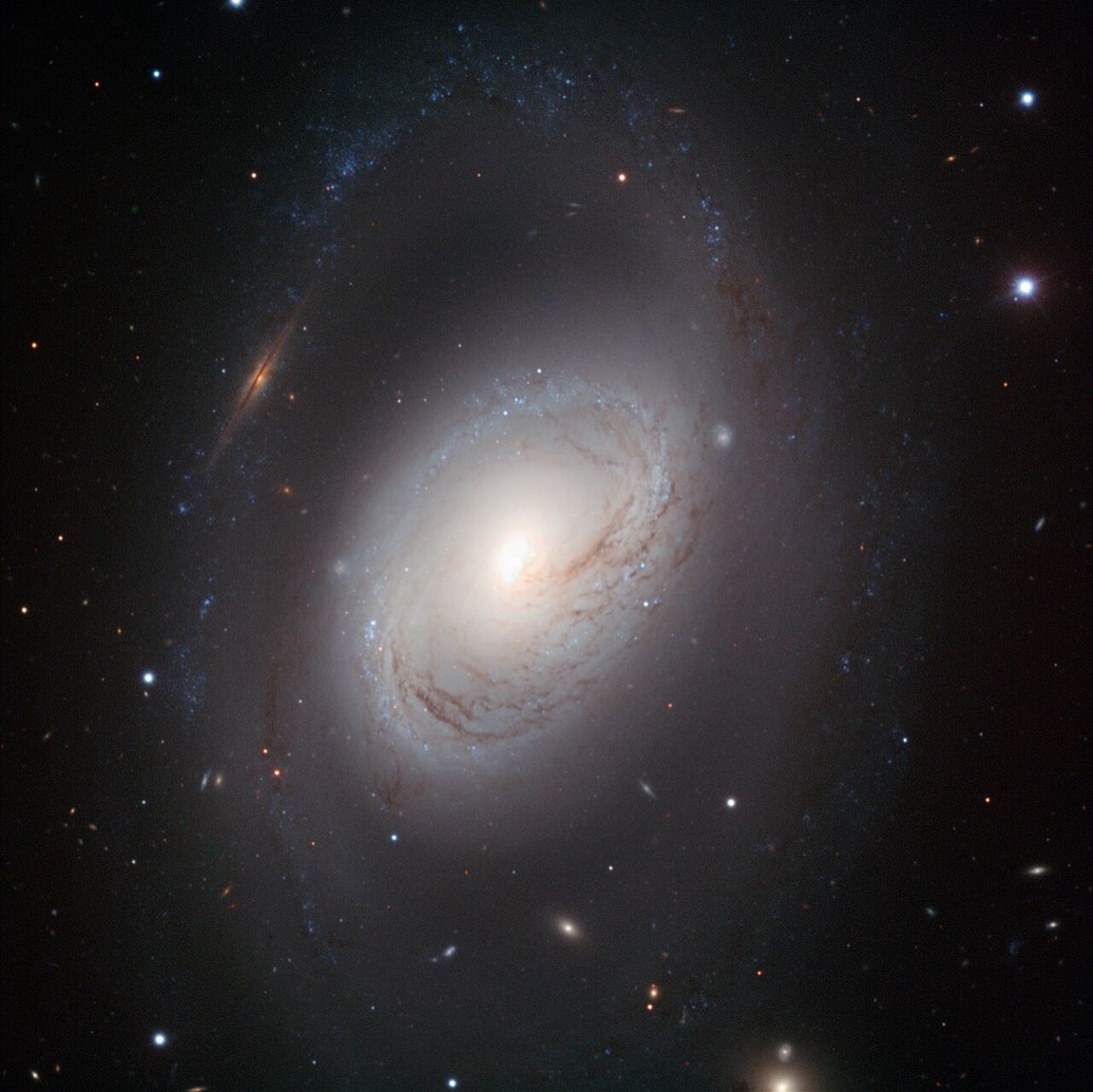
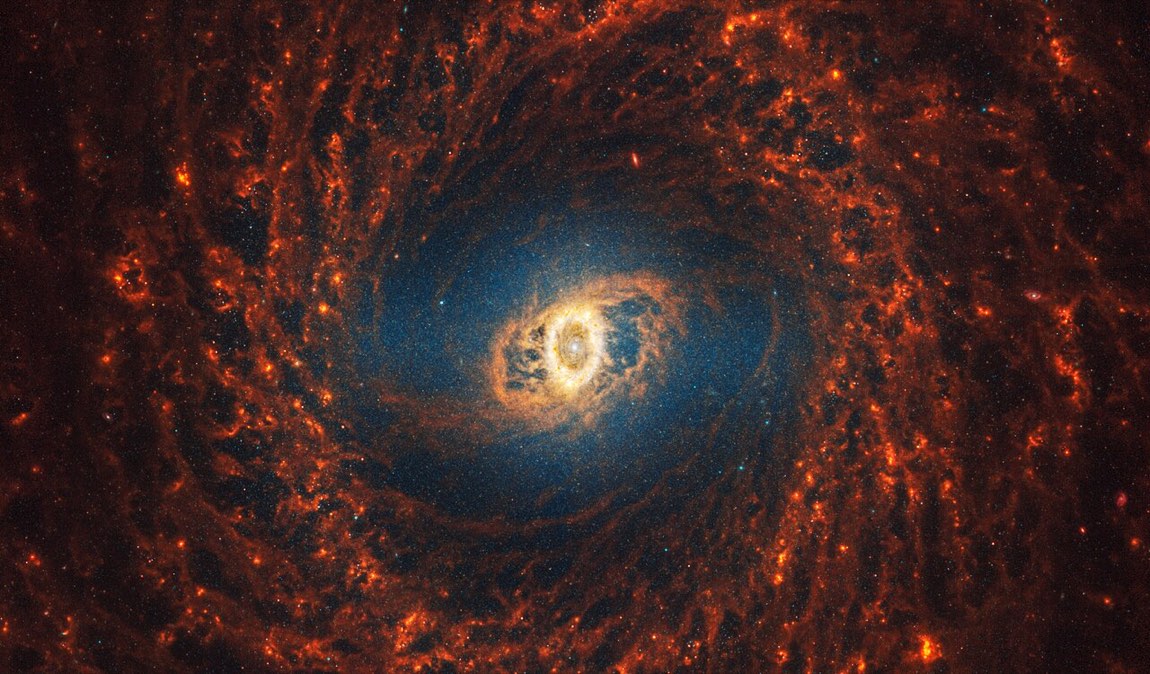
A barred spiral in Leo with a ring of starbirth wrapped around its bar.
What is it?
Messier 95 is a barred spiral galaxy in Leo, about 33 million light-years away. Pierre Méchain discovered it in 1781, and Messier catalogued it four days later. A straight bar of stars crosses its centre, and an inner ring of star formation surrounds it, with spiral arms extending outward from there. Within that ring, several clumps of young star clusters may eventually become globular clusters. M95 belongs to the M96 Group in Leo, along with M96 and M105. A supernova was found in it in 2012.
The deep dive
Researched for the Atlas from Wikipedia — Messier 95 (1,857 characters read) · updated Nov 15, 2026
01 Discovered in four days flat
The story of M95's discovery is a quick one by eighteenth-century standards. Pierre Méchain, a French astronomer and close colleague of Charles Messier, spotted the galaxy first in 1781. Just four days later, Messier himself logged it in his now-famous catalog of fuzzy objects that could be mistaken for comets. That catalog was a practical tool for comet hunters — Messier wanted to flag things that were decidedly not comets — and M95 made the cut simply by looking like a soft smudge through the modest telescopes of the era. Neither man could have known they were staring at a vast barred spiral system tens of millions of light-years away. The galaxy carries three names from that era of catalog-building: Messier 95, M95, and NGC 3351, the last assigned in John Dreyer's later New General Catalogue.
02 A ring of fire around the bar
What makes M95 visually and scientifically distinctive is a ring-shaped, circumnuclear star-forming region that wraps around the galaxy's central bar. This ring is enormous: approximately 70,000 light-years across — nearly the full diameter of the Milky Way — and roughly 2,400 light-years thick. Its morphological classification, SB(r)b, encodes this feature directly: the "(r)" stands for inner ring. Rather than the spiral arms feeding directly into the nucleus as in many barred spirals, here the bar terminates in this ring, and the spiral structure then unfurls outward from it. The ring holds around 3.5 × 10⁸ solar masses of molecular gas, the raw ingredient for new stars, and it is actively converting that material into stars at a rate of 0.38 solar masses per year — roughly the equivalent of one new star being born every few years inside that single ring structure.
03 Star birth happening in clusters Deeper
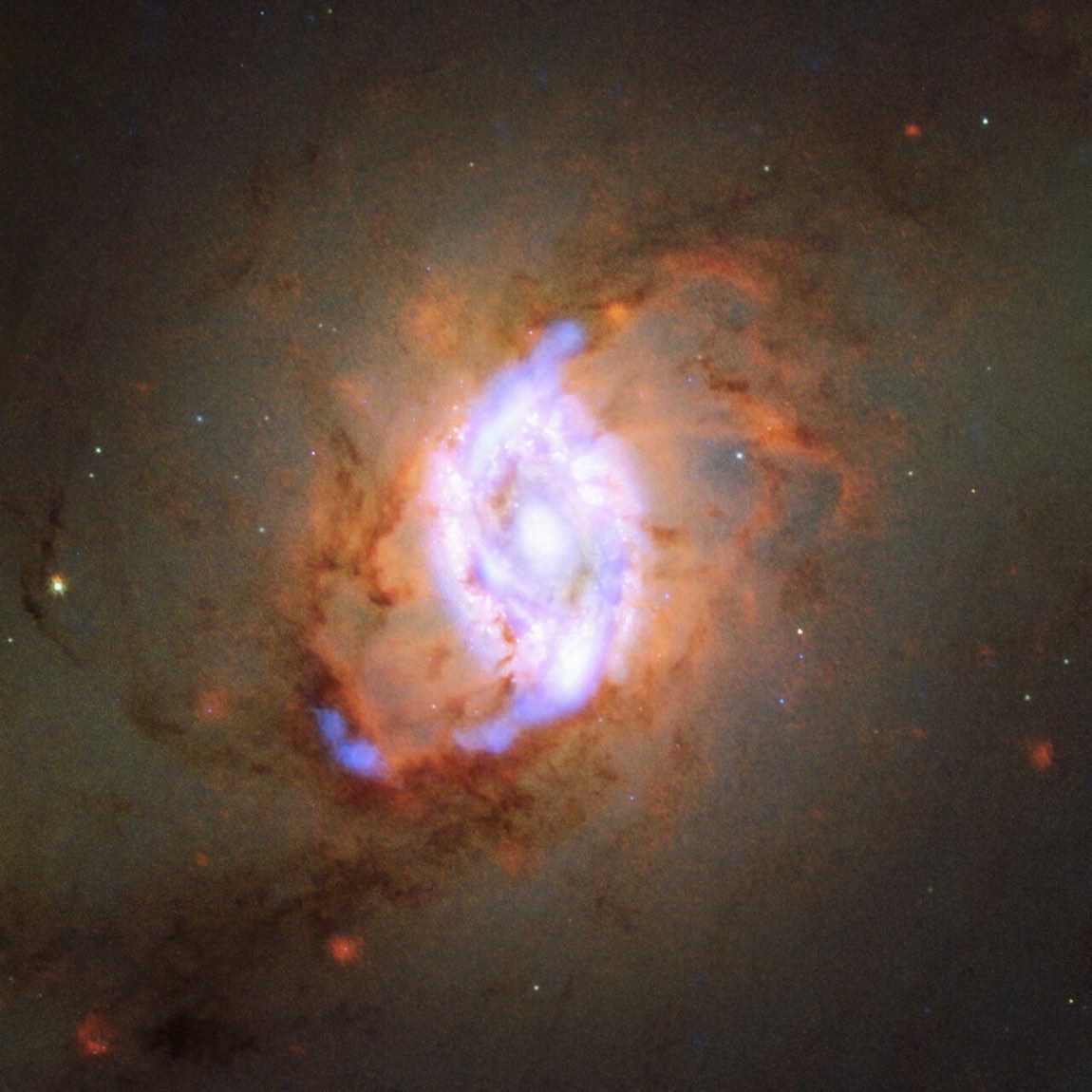
The star formation inside M95's ring is not spread smoothly around its circumference but is concentrated into at least five distinct regions, each with a diameter of between 100 and 150 parsecs — a parsec being about 3.26 light-years, so each region spans roughly 300 to 490 light-years. Within those regions, the actual star-making happens in individual star clusters that are far more compact, ranging in size from just 1.7 to 4.9 parsecs across. These clusters are substantial objects: each contains between 1.8 million and 8.7 million solar masses of stars. The article notes that these young, massive clusters may be on a developmental path toward becoming globular clusters — the ancient, densely packed stellar balls that orbit the outskirts of mature galaxies like the Milky Way. If that interpretation is correct, M95's ring may be giving astronomers a rare window into the conditions under which globular clusters originally formed in the early universe.
04 What SB(r)b really tells us Deeper
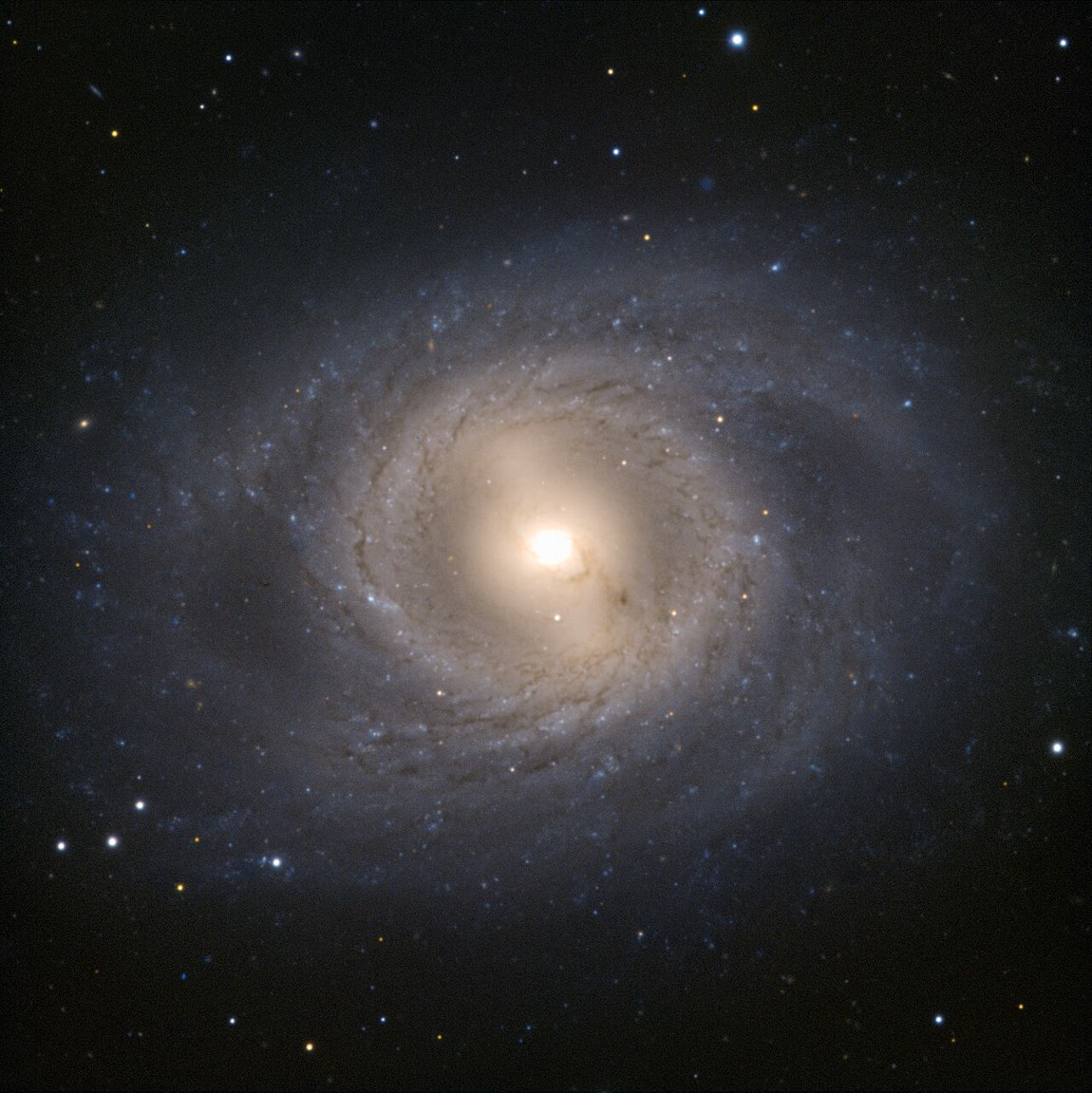
Galaxy classification can look like a string of cryptic characters, but each part of M95's designation SB(r)b carries real physical meaning. The "S" identifies it as a spiral galaxy. The "B" specifies that the spiral has a bar — an elongated, straight structure of stars and gas cutting through the galaxy's center rather than a smooth, round nucleus. The lowercase "b" at the end places M95 in the middle of the winding scale: its arms are neither as tightly coiled as an "a" type nor as loosely flung as a "c" type. And the "(r)" in parentheses marks the inner ring that encircles the bar. Each of those features reflects underlying gravitational dynamics. Bars funnel gas inward along their length, and that inflow can pile up into ring structures where star formation then ignites. M95 is thus a textbook case of how a galaxy's large-scale shape connects directly to where and how stars are born inside it.
05 The supernova of 2012
On 16 March 2012, two astronomers independently discovered a new supernova blazing inside M95. Paolo Fagotti made one detection, and Jure Skvarc made another, confirming the event from separate observations. The supernova, designated SN 2012aw, reached an apparent magnitude of 15 — not naked-eye visible, but bright enough for amateur telescopes. Its light curve, the record of how its brightness changed over time, showed a pronounced flattening after 27 days. That plateau pattern is the defining signature of a Type II-P supernova, the "P" standing for plateau. Type II-P supernovae are core-collapse events: a massive star exhausts its nuclear fuel, its iron core implodes, and the resulting shockwave blows the outer layers apart. The plateau phase is produced by a thick hydrogen envelope that recombines as it expands, releasing energy at a roughly constant rate for weeks before the light finally fades.
 ⤢
06 Identifying the star that exploded Deeper
One of the most scientifically valuable things astronomers can do after a supernova is look at archival images taken before the explosion and try to identify the progenitor star — the specific object that died. For SN 2012aw, this detective work paid off. Near-infrared imaging of the region later confirmed the disappearance of the star that had occupied that location, providing direct evidence linking the supernova to its source. The progenitor was identified as a red supergiant, the class of bloated, cool, luminous star that is the standard expected parent of Type II-P supernovae. The brightness of that pre-explosion source allowed astronomers to estimate the star's mass: 12.5 ± 1.5 solar masses. That range, roughly 11 to 14 solar masses, falls squarely within the mass window where theory predicts stars will end their lives as core-collapse supernovae rather than gently shedding their outer layers as planetary nebulae.
07 M95's place in the Leo galaxy group
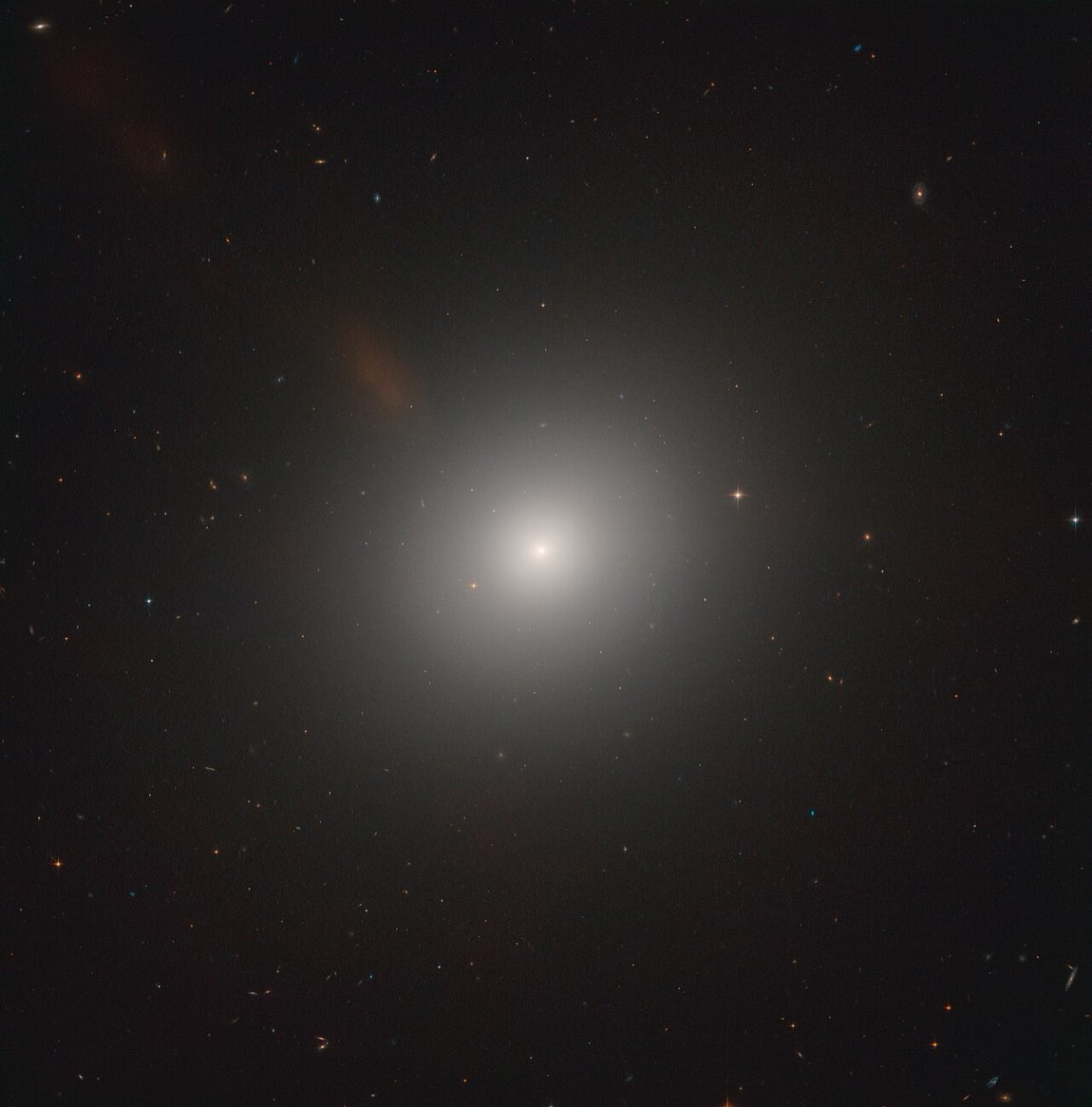
M95 does not travel through space alone. It is one of several galaxies bound together by gravity in what astronomers call the M96 Group, located in the zodiac constellation Leo. The group takes its name from M96, another spiral galaxy, and also includes M105, an elliptical galaxy. Leo is one of the richer patches of sky for nearby galaxy groups, making it a favorite region for studying how galaxies influence each other through tidal forces and gas sharing over cosmic time. At roughly 33 million light-years away, the M96 Group is close enough for detailed study but far enough that its member galaxies appear as small, structured objects rather than the sprawling systems we can resolve star by star, like the Magellanic Clouds. This intermediate distance makes the group a useful laboratory for galaxy evolution research.
08 How to find and observe M95
M95 sits in Leo, one of the most recognizable zodiac constellations, which makes finding the right region of sky relatively straightforward for northern hemisphere observers in spring. With an apparent magnitude of around 10, the galaxy lies well below the naked-eye limit but is reachable through binoculars under dark skies and shows noticeably more detail through a backyard telescope. Through larger amateur instruments, the inner ring structure and the bar running through the galaxy's center become distinguishable features. M95 is conveniently located near its groupmates M96 and M105, meaning all three can sometimes be swept into the same wide-field eyepiece view, offering a compact tour of different galaxy morphologies — barred spiral, spiral, and elliptical — in a single session. Its position in a zodiac constellation also means it is accessible from most inhabited latitudes on Earth.
09 Open questions the ring raises Deeper
Despite the detail now known about M95's star-forming ring, several questions remain genuinely open. The suggestion that the compact, massive young clusters inside the ring may evolve into globular clusters is intriguing but not settled — astronomers are still working out the conditions under which young massive clusters survive long enough and retain enough stars to become the ancient globular clusters seen around galaxies today. The ring's gas supply and how long the current star formation rate of 0.38 solar masses per year can be sustained are also not addressed by existing observations alone. Bars are known to drive gas inward, but bar-driven inflow rates and timescales depend on the bar's strength and the galaxy's overall mass distribution, details that require deeper mapping of M95's gravitational structure. The 2012 supernova progenitor mass estimate also carries a formal uncertainty of ±1.5 solar masses, leaving room for refinement as stellar evolution models improve.
 ⤢