 Photograph · Sboone61 · CC0
Galaxy · Deep guide
Messier 102
Also called: M102 · NGC 5866
The Messier object nobody can pin down, most likely the edge-on Spindle Galaxy in Draco.
What is it?
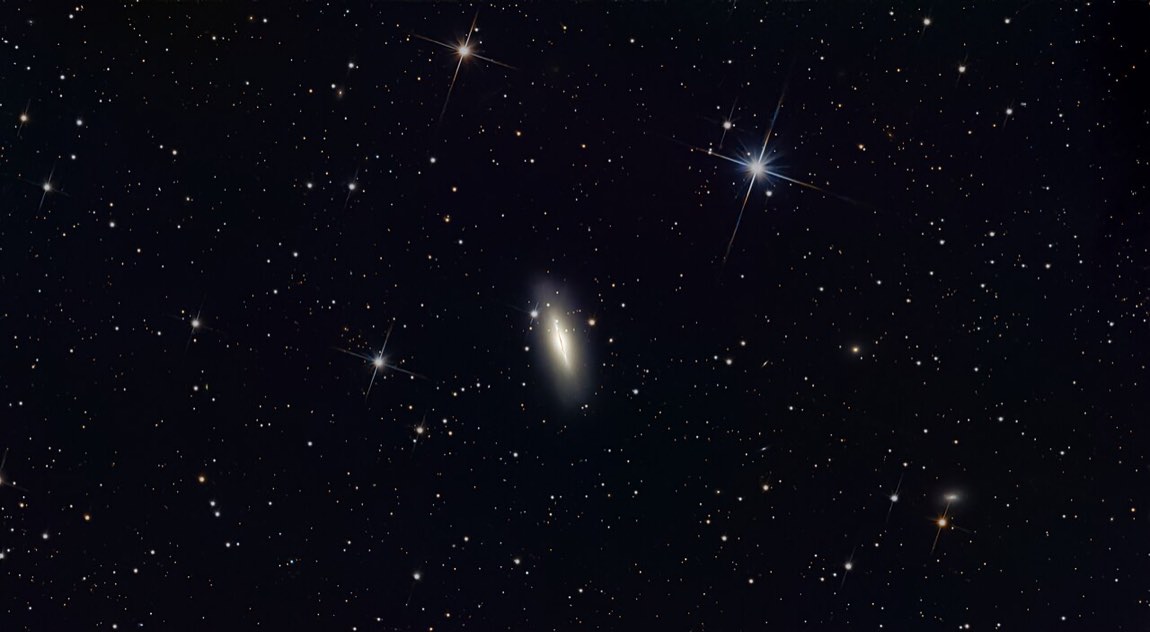
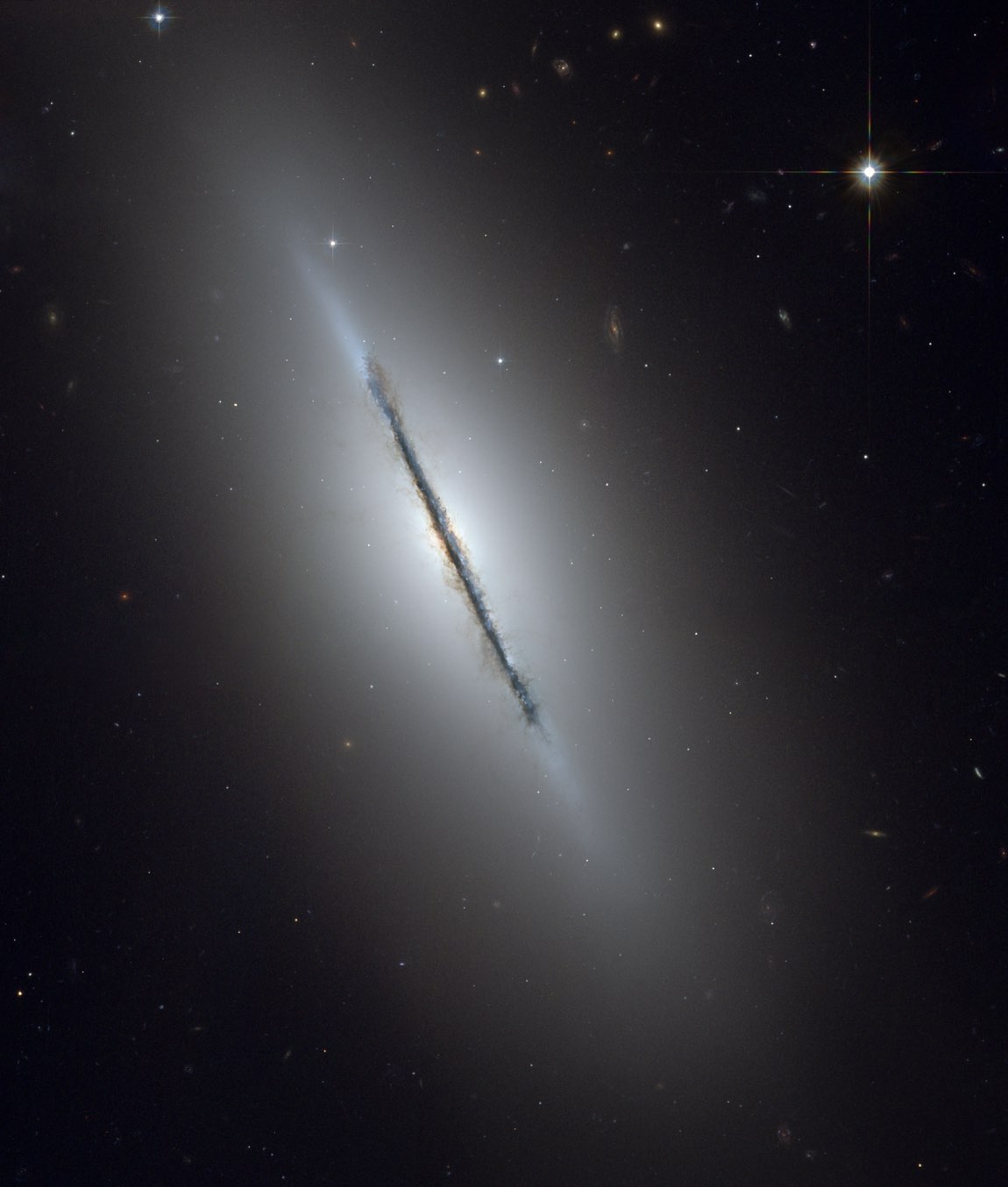
Messier 102 is a catalogue entry whose identity is still disputed. Pierre Méchain reported it in 1781, but Messier gave no coordinates, and two years later Méchain said it was a duplicate sighting of M101. Later historical research favours the galaxy NGC 5866 in Draco, and NASA treats M102 as NGC 5866, though other galaxies have been suggested. NGC 5866 is a lenticular galaxy seen almost exactly edge-on, with a thin, dark dust lane running along its length, unusual for a galaxy of its type.
The deep dive
Researched for the Atlas from Wikipedia — Messier 102 (4,626 characters read) · updated Nov 15, 2026
01 A Mystery Built Into the Catalogue Itself
Most entries in the Messier Catalogue are straightforward: a number, a description, and coordinates that point to one specific object in the sky. M102 is the famous exception. When Charles Messier published the final version of his catalogue in 1781, he did not record coordinates for M102 at all — an omission that set off a debate that has never been fully settled. The description he printed came from his collaborator Pierre Méchain, who observed the object in late March or early April of 1781. Without reliable coordinates, astronomers were left to match Méchain's vague written description — a very faint nebula between specific named stars, with a 6th-magnitude star nearby — against a region of sky that contains several plausible candidates. That single missing column of numbers turned a routine catalogue entry into one of astronomy's most enduring identification puzzles.
02 The Man Who Took It Back
Pierre Méchain is unusual in the history of astronomy for publicly retracting one of his own discoveries. In 1783, two years after the catalogue appeared, he wrote a letter to a correspondent named J. Bernoulli in which he stated plainly that entries No. 101 and 102 in the Connoissance des tems for 1784 "are nothing but the same nebula, which has been taken for two, by an error in the [sky] charts." He was, in other words, confessing that he had accidentally recorded the same object twice and that M102 had no independent existence. The letter was published in its original French in the Memoirs of the Berlin Academy for 1782, and later in a German translation — somewhat rearranged — by Johann Elert Bode in the Berliner Astronomisches Jahrbuch for 1786. Méchain's retraction was taken at face value for a long time, but later historical research complicated the picture considerably.
03 Why NGC 5866 Is the Leading Candidate Deeper
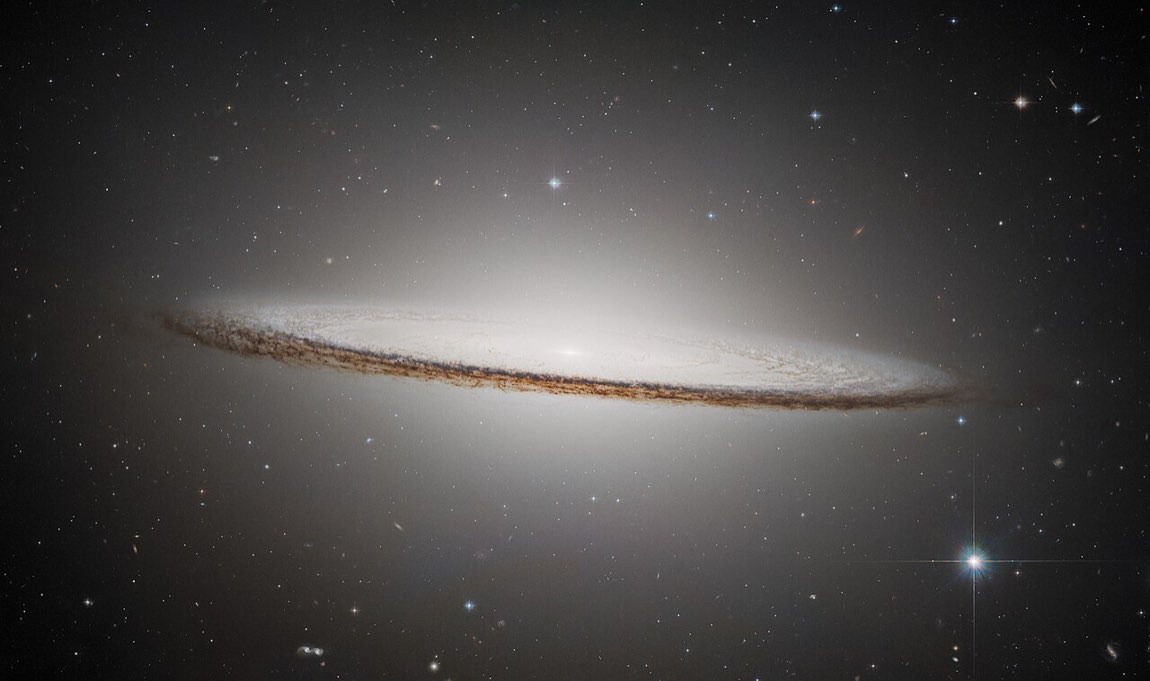
Despite Méchain's retraction, later historians and astronomers began examining the evidence more carefully and concluded that M102 was most likely a real, independent observation — just badly recorded. NGC 5866, a lenticular galaxy in the constellation Draco, emerged as the strongest candidate for two distinct reasons. First, its appearance closely matches Méchain's printed description in the 1781 catalogue: a faint nebula near a star of 6th magnitude, positioned between the stars Omicron Boötis and Iota Draconis. Second, and crucially, hand-written notes that Messier made on his personal copy of the catalogue provide a position on the sky that points toward NGC 5866. The combination of a matching verbal description and a matching hand-written coordinate is compelling enough that NASA officially treats M102 and NGC 5866 as the same object. NGC 5866 is also known as one of two galaxies commonly called the Spindle Galaxy.
04 NGC 5866: A Lenticular Galaxy Edge-On
If the identification with NGC 5866 is correct, then M102 belongs to a class of galaxies called lenticular galaxies — a category that sits between elliptical and spiral galaxies in the standard classification scheme. Lenticular galaxies have a disk-like structure similar to spirals but lack the prominent spiral arms, and they tend to have older stellar populations with little ongoing star formation. NGC 5866 is particularly striking because it is viewed nearly edge-on from Earth, which gives it the elongated, spindle-like silhouette responsible for its popular nickname. This edge-on orientation makes the galaxy's dust lane — a dark band running along its midplane — unusually easy to see, and it has made NGC 5866 a visually distinctive object in telescopic images despite being described by Méchain as "very faint" with the instruments of the 18th century.
05 The Comet Hunter's Accidental Legacy
The Messier Catalogue was never intended to be a great atlas of deep-sky objects. Charles Messier compiled it purely out of practical frustration: he was a devoted comet hunter, and fuzzy, nebulous-looking objects kept tricking him into thinking he had found a new comet. His list was essentially a nuisance file — a record of things that were definitely not comets, so he could stop wasting time on them. Méchain was his collaborator in this effort, sharing observations and discoveries. It is a small irony of history that the catalogue Messier built to help him find comets became far more enduring than any of the comets he actually discovered. The ambiguity of M102 is a direct consequence of the catalogue's informal, working-document origins: coordinates were sometimes missing, descriptions were brief, and the standard of record-keeping was not what a modern observatory would require.
06 The Other Candidates and Why They Fall Short Deeper
Several other galaxies have been proposed as the true identity of M102, though none has gained the support that NGC 5866 has. NGC 5879, NGC 5907, NGC 5905, and NGC 5908 are all galaxies located near NGC 5866's position in the sky, which makes them geometrically plausible. However, the article on the subject notes a decisive observational problem: none of these galaxies is as bright or as high in surface brightness as NGC 5866, making it less likely that any of them is what Méchain actually recorded. A more creative suggestion involves NGC 5928, a 14th-magnitude galaxy positioned between Omicron Boötis and Iota Serpentis. Astronomer J. L. E. Dreyer proposed in his Notes and Corrections to the New General Catalogue that Iota Serpentis might have been mistakenly recorded as Iota Draconis, shifting the apparent position. Even so, NGC 5928's 14th magnitude makes it essentially unobservable with the instruments Messier and Méchain used — the faintest confirmed Messier objects are around 10th magnitude, leaving NGC 5928 far below the threshold.
07 Méchain's Letter and Its Publishing History Deeper
The documentary trail around M102's retraction is itself a small story in the history of scientific communication. Méchain's letter to J. Bernoulli was a private piece of correspondence, not a formal scientific paper, yet it became the primary source for dismissing M102 as a real observation. That letter entered the public record twice, in two different languages and two different publications: first in the original French in the Memoirs of the Berlin Academy for 1782, and then in a German translation — described as "somewhat rearranged" — by Johann Elert Bode in the Berliner Astronomisches Jahrbuch for 1786. The fact that Bode rearranged the content when translating it raises questions about how faithfully the German version represents what Méchain actually wrote. The dual-publication history, combined with the informal nature of the original letter, means historians must be careful about how much weight to give Méchain's retraction as definitive evidence.
08 How Messier 101 Got Drawn Into the Dispute
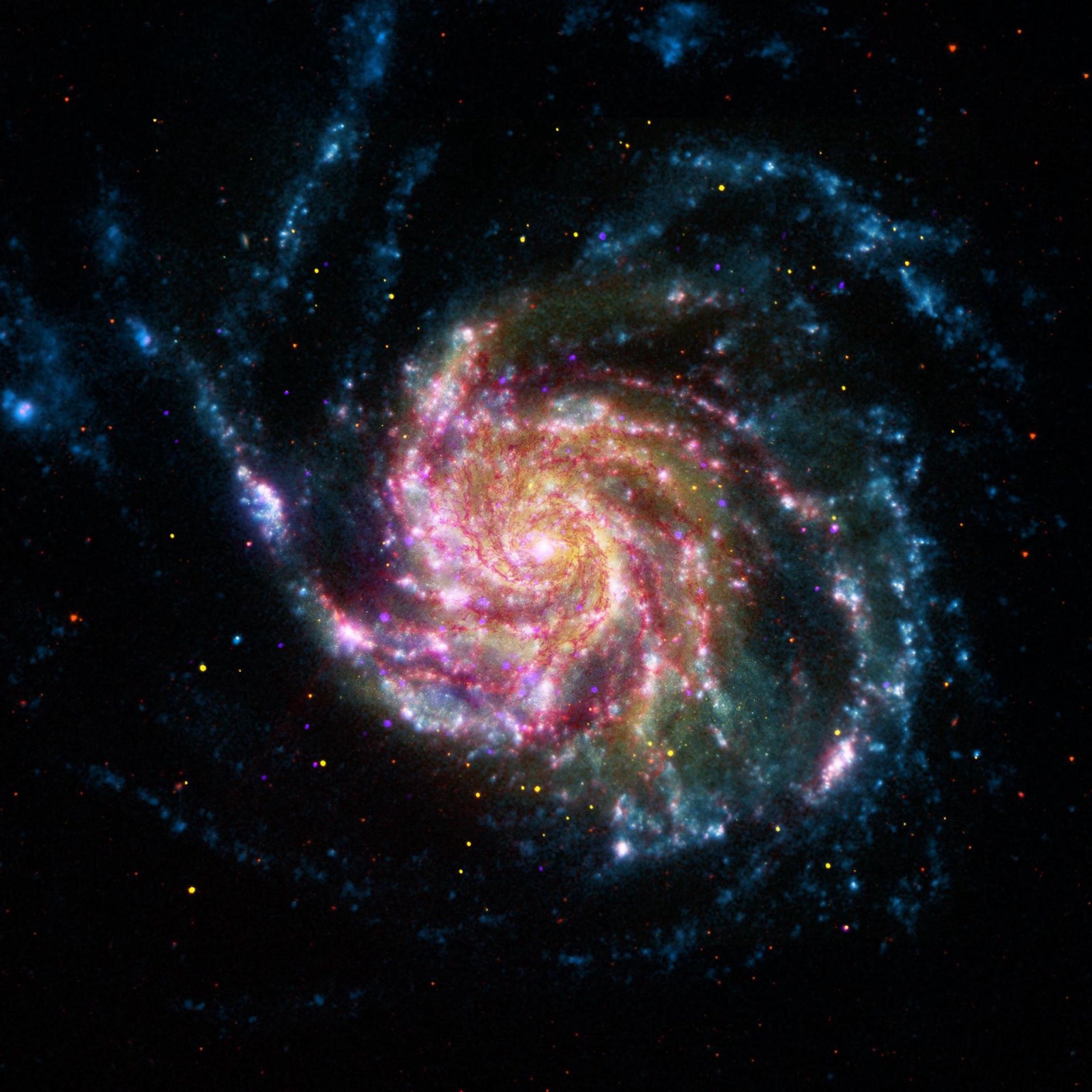
Messier 101, also known as the Pinwheel Galaxy or NGC 5457, is a face-on spiral galaxy in the constellation Ursa Major — a spectacular object in its own right, but a very different-looking thing from NGC 5866. It is the galaxy that Méchain himself claimed M102 was a duplicate of, which is why it became the default "answer" to the M102 question for many years. If Méchain's retraction is taken at face value, then there is no M102: the number simply points back to M101, and the catalogue has 109 real objects rather than 110. But the later historical evidence — particularly the match between NGC 5866 and both Méchain's description and Messier's hand-written notes — has persuaded many researchers that Méchain was mistaken in his retraction, or possibly confused about which observation he was recanting. The two candidates, M101 and NGC 5866, could hardly be more different in appearance, which makes the debate more than a dry archival question.
09 An Open Question After 240 Years
What makes the M102 problem genuinely interesting is that it has not been resolved by the discovery of new data — there is no smoking-gun document that settles it. The identification remains a matter of historical interpretation: weighing a printed catalogue description, hand-written coordinate notes, a letter of retraction, and the physical properties of several galaxies against one another. Different authorities have reached different conclusions, and the article is careful to say that M102 "cannot be unambiguously identified." NASA's position — treating M102 as NGC 5866 — represents a practical institutional choice rather than a consensus of the entire astronomical community. Amateur astronomers, professional historians of science, and observational astronomers continue to discuss the question. For a catalogue that was originally a comet hunter's scratch pad, it has generated a surprisingly rich and unresolved debate about the reliability of historical astronomical records.
10 Observing the Likely Candidate, NGC 5866
If you accept NASA's identification, then M102 is the galaxy NGC 5866 in the constellation Draco, and observing it means pointing your telescope at a lenticular galaxy that Méchain himself called "very faint." Its edge-on orientation, while visually striking in deep photographic images that reveal the dark dust lane along its disk, also concentrates its light into a narrow sliver rather than spreading it across a broad face, which affects how it appears through an eyepiece. The original Messier description notes that a star of 6th magnitude — a star just at the limit of naked-eye visibility under good conditions — lies near the object, which can serve as a useful finder landmark. The constellation Draco wraps around Ursa Minor in the northern sky, making NGC 5866 a circumpolar object for observers at mid-northern latitudes, visible on any clear night when it clears the horizon sufficiently.
 ⤢