Confirmed exoplanet · Database record + computed analysis
CoRoT-7 b
A confirmed world orbiting CoRoT-7, 521.5 light-years away.
A super-Earth
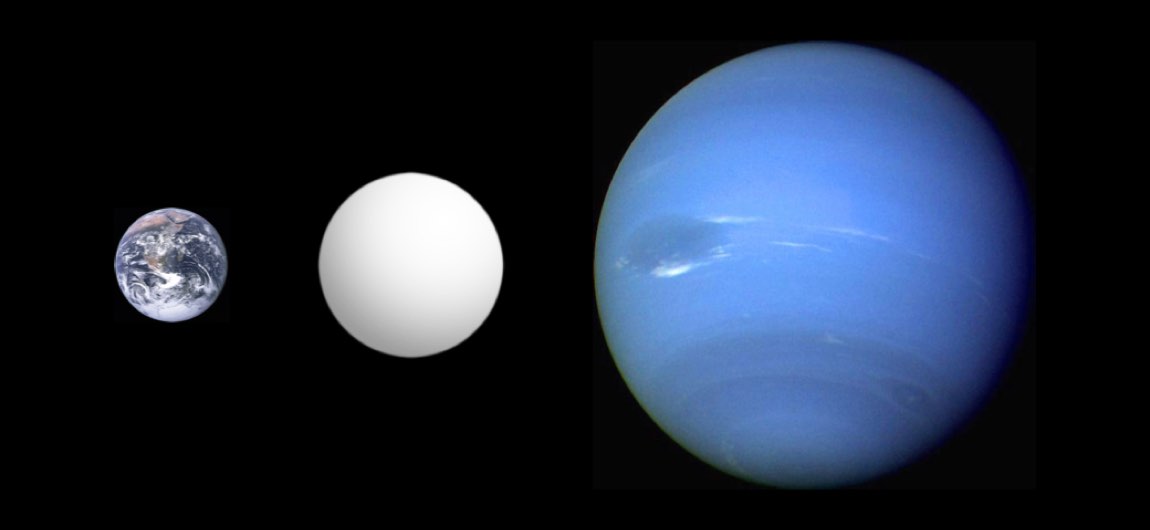
1.68 Earth radii. Worlds between Earth and Neptune in size are the most common in the galaxy, yet our Solar System has none, which is why each one matters.
The orbit
Its year lasts about 20.5 hours, making it an ultra-short-period planet skimming its star.
Temperature and starlight
Its equilibrium temperature (the airless-world estimate) is about 1,483 °C. Hot enough to melt copper; any surface would glow. It receives 1,773.8 times the starlight Earth gets.
Its sun
Its star is an orange K-type (5,275 K), G9 V: cooler and longer-lived than the Sun, a class some astronomers consider ideal for habitability. It shares the system with 2 other known planets.
How far is that, really?
At 522 light-years, tonight's light from this system left it around the year 1504. A Voyager-speed probe would need roughly 9,227,459 years to get there.
How we found it
It was found by the transit method: the planet crosses its star's face on schedule, dimming it by a tiny, repeating fraction. The dip's depth gives the planet's size. The discovery was announced in 2009 from CoRoT.
Everything above is computed from the archive’s measured values for this planet. Where a quantity is missing, the statement is omitted rather than guessed.
The deep dive
Researched for the Atlas from Wikipedia — CoRoT-7b (10,243 characters read) · updated Sep 20, 2026
01 How CoRoT Caught the First Rocky World
The CoRoT space telescope stared at the star CoRoT-7 continuously from October 15, 2007, to March 3, 2008 — nearly five months without blinking. During that vigil it recorded 153 separate transit signals, each lasting just 1.3 hours and dimming the star by only 3.4 parts in ten thousand. That is an extraordinarily faint dip, roughly equivalent to watching a fruit fly cross the face of a floodlight from a kilometer away. After just 40 days of data, CoRoT's onboard "Alarm mode" pipeline algorithm flagged the repeating signal as suspicious, triggering ground-based follow-up observations. The formal discovery announcement came over a year later, on February 3, 2009, at the CoRoT Symposium 2009 held in Paris, and the findings were published in a special issue of the journal Astronomy and Astrophysics devoted to CoRoT results. Because the transit depth directly encodes the planet's size relative to its star, CoRoT-7b emerged as the smallest exoplanet with a measured diameter known at that time — a record it held until Kepler-10b was announced in January 2011.
02 The Mass Debate: One Planet, Many Answers Deeper
Measuring the mass of CoRoT-7b proved far messier than finding it. The HARPS spectrograph was recruited to detect the star's tiny gravitational wobble, but the host star is unusually active, and its surface churning produces radial velocity noise that swamps the planet's delicate signal. The discovery paper by Queloz et al. used a pre-whitening procedure and harmonic decomposition, arriving at 4.8 Earth masses and a density of 5.6 ± 1.3 g cm⁻³. Hatzes et al., using Fourier analysis instead, favored 6.9 Earth masses and spotted hints of a third planet, CoRoT-7d, with a Neptune-like mass on a 9-day orbit. Pont et al. argued the systematic errors were larger than declared, placing the mass anywhere between one and four Earth masses with only a 1.2-sigma detection confidence. Boisse et al. tried simultaneous fitting of stellar activity and planetary signals, settling on 5.7 Earth masses but with very large uncertainty. A second CoRoT team paper, filtering data by using only nights with multiple measurements, found 7.42 Earth masses and a density of 10.4 ± 1.8 g cm⁻³. Finally, Ferraz-Mello et al. corrected a bias in the original approach and reported 8 Earth masses, converging with the CoRoT team's later result. The current best estimate stands at 6.06 ± 0.65 Earth masses.
03 An Orbit Shorter Than a Human Work Week
CoRoT-7b completes one full orbit in just 20 hours, 29 minutes, and 9.7 seconds — less time than most people spend at work across three days. At the time of its discovery, this was the shortest orbital period of any known planet. To achieve that pace, the planet must be huddled extraordinarily close to its star: only one twenty-third of the distance between the Sun and Mercury, which is itself already the innermost planet of our Solar System. Mercury sits about 57.9 million km from the Sun; CoRoT-7b races around its star at a tiny fraction of that gulf. The companion planet CoRoT-7c, detected through radial velocity data at the same time, orbits much farther out at 6.9 million km (0.046 AU) with a period of 3.7 days, making even it seem leisurely by comparison. The star system itself lies 520 light-years (159 parsecs) from Earth in the constellation Monoceros, the Unicorn.
04 Spitzer's Independent Confirmation
Because the radial velocity mass measurements were so contentious, scientists needed a completely independent way to confirm that CoRoT-7b was genuinely a planet and not a false positive — perhaps an eclipsing binary star mimicking a transit. The Spitzer Space Telescope provided that reassurance by observing CoRoT-7b's transits at infrared wavelengths entirely different from those used by CoRoT's optical detectors. Crucially, Spitzer measured the same transit depth as CoRoT had recorded. This wavelength independence is a powerful test: astrophysical false positives such as background eclipsing binaries tend to produce depth variations across different wavelengths, whereas a true planet-transit depth remains constant. The agreement between the two space telescopes validated CoRoT-7b as a genuine planet with very high confidence, sidestepping the noisy radial velocity controversy entirely. It was a clean, elegant confirmation built purely on photometry at two very different parts of the electromagnetic spectrum.
05 A Lava Ocean Baking in Starlight
CoRoT-7b almost certainly rotates with one face permanently locked toward its star — tidally frozen the way the Moon always shows Earth the same side. The consequences for the dayside are extreme: detailed theoretical work concludes the surface there is as hot as the tungsten filament inside an incandescent light bulb, hot enough to sustain a global ocean of liquid rock rather than any solid crust. Researchers coined the term "lava-ocean planets" specifically for CoRoT-7b and any similar worlds, treating it as the prototype of an entirely new planetary class. Meanwhile the permanent nightside cools enough for a crust to form, though pools of lava are expected to sit above the convecting mantle, fed by intense volcanism. The contrast between the two hemispheres is therefore not merely a difference of temperature but of fundamental geological regime: molten ocean on one side, cratered lava fields and thin crust on the other.
 ⤢
⤢
06 Inside the Planet: Mantle, Core, and Convection Deeper
Modeling CoRoT-7b's interior at an assumed mass of 5 Earth masses reveals an unusual convective structure. The planet is expected to have a small core containing no more than 15% of the planet's mass — at most 0.75 Earth masses — surrounded by a layered mantle. In the lower mantle, close to the core-mantle boundary, higher pressures make the material more viscous, so convection there is sluggishly slow compared to the upper mantle. Temperature asymmetry between the permanent day and night sides drives lateral temperature differences in downwelling regions of several hundred kelvins. On the dayside, the surface is hot enough to participate directly in the convection cycle, providing the clearest theoretical evidence that the entire dayside is submerged in a lava ocean. On the nightside the cooler surface allows a crust to solidify, punctuated by volcanic outpourings. Perhaps most consequentially, models indicate the iron core is likely solid rather than liquid. A liquid iron core is what generates Earth's magnetic field, so CoRoT-7b is expected to lack a self-generated magnetic field — leaving its already paper-thin atmosphere even more vulnerable to stellar radiation.
07 A Rocky Vapor Sky Unlike Any in the Solar System Deeper
At the extreme dayside temperatures thought to reach around 2,500 K (2,230 °C; 4,040 °F), silicate rock itself vaporizes, producing an extraordinarily exotic atmosphere with a pressure approaching just 1 Pa — roughly ten-millionths of Earth's sea-level pressure. This mineral vapor sky is dominated by sodium, molecular oxygen (O₂), atomic oxygen (O), and silicon monoxide, with smaller contributions from potassium and other metals. Higher up, the atmosphere may carry suspended mineral particles: magnesium, aluminium, calcium, silicon, and iron could condense below about 10 km altitude into mineral grains of enstatite, corundum, spinel, wollastonite, silica, and iron (II) oxide, essentially raining rock back onto the surface. Titanium may be swept to the nightside before condensing as perovskite and geikielite. More volatile sodium and potassium would resist condensing into clouds and dominate the outermost layers. Despite this rich theoretical picture, observations with the UVES spectrograph searching for emission and absorption lines — including calcium (Ca I and Ca II) and sodium — found nothing above detection limits, consistent with a cloudless, extremely low-pressure rocky-vapor atmosphere.
08 Mercury's Twin or Neptune's Ghost?
Scientists disagree about what kind of world CoRoT-7b fundamentally is. One hypothesis casts it as a chthonian planet — the stripped-down remnant of a Neptune-like gas or ice giant whose outer layers were boiled away by its star's proximity. In this scenario the planet began much larger and was whittled down to its dense rocky core over billions of years. Other researchers reject this idea, pointing to the youth of the CoRoT-7 star system as evidence that there has not been enough time for such dramatic erosion; they argue the planet was always rocky. If the higher mass estimates are correct — around 7 to 8 Earth masses — the density would be higher than Earth's and would imply a substantial iron core, making CoRoT-7b structurally more like Mercury than like Earth. If the lower mass estimates hold, the composition might include up to 40% water in the form of ice or vapor. From the data currently in hand, scientists can only state with confidence that CoRoT-7b does not resemble any rocky planet in our Solar System.
09 Tidal Forces and Volcanic Fury Deeper
CoRoT-7b's orbit is not guaranteed to be perfectly circular. The gravitational tug-of-war between its host star and the neighboring planet CoRoT-7c could introduce a slight orbital eccentricity — a small but meaningful departure from a circular path. Even a tiny eccentricity, as the planet alternately squeezes and relaxes under changing tidal stresses, can generate intense internal heating through tidal friction. Scientists draw the analogy to Jupiter's moon Io, the most volcanically active body in the Solar System, which is similarly kneaded by tidal forces from Jupiter and the other Galilean moons. For CoRoT-7b, positioned so much closer to a star far more massive than Jupiter, the potential heating could be even more dramatic, adding another powerful engine of volcanism on top of the lava ocean already expected from direct stellar heating alone. Whether this tidal heating is actually occurring depends on the precise orbital eccentricity, which remains observationally unconstrained.
10 The Companion Planet CoRoT-7c
CoRoT-7b is not alone. Radial velocity measurements that were used to weigh CoRoT-7b also revealed a second planet in the system, CoRoT-7c, orbiting its star every 3.7 days at a distance of 6.9 million km (0.046 AU). With a mass 8.4 times that of Earth, CoRoT-7c qualifies as a super-Earth, though it was only detected gravitationally — it does not transit its star as seen from Earth, so no size or density measurement is possible. Hints of a possible third planet, CoRoT-7d, emerged in the Hatzes et al. analysis, with a mass comparable to Neptune's and an orbital period of about 9 days, but this detection remains tentative. The presence of at least one confirmed companion is scientifically important because CoRoT-7c's gravity is one of the forces that could nudge CoRoT-7b's orbit away from perfect circularity, potentially driving the tidal volcanic heating described in theoretical models of the system.
11 What CoRoT-7b Means for Planet Definitions
Before CoRoT-7b was announced in February 2009, astronomers had discovered hundreds of exoplanets but virtually all were gas giants — puffed-up worlds detected because their large size made their transits and gravitational tugs easy to measure. CoRoT-7b broke open a new door as the first potential extrasolar terrestrial planet to have its diameter measured, with a radius of just 1.58 times Earth's, implying a volume roughly 3.94 times Earth's. Its density, roughly similar to Earth's under most mass estimates, confirmed a rocky bulk composition rather than a gassy one. The discovery also prompted the formal proposal of a new planetary category — "lava-ocean planets" — for worlds so close to their stars that their surfaces are permanently molten. Although Kepler-10b displaced it from the record books in January 2011, CoRoT-7b's discovery marked the moment astronomers realized they could detect and characterize Earth-sized rocky worlds beyond the Solar System, fundamentally shifting the ambitions of the entire field.
About this record
The measured values come from the NASA Exoplanet Archive, and any missing value has not been determined yet; the Atlas never fills gaps with guesses. More standout worlds: Proxima b, TRAPPIST-1e, K2-18 b, 55 Cancri e, and the detection methods that found them all.