Exoplanets
How We Find Exoplanets
ConfirmedThe idea
Planets around other stars are billions of times fainter than their suns, so astronomers get clever. Watch a star dim on schedule: something's crossing it (transit). Watch starlight wobble red-blue-red: something's tugging (radial velocity). Watch a background star flare in brightness: a planet's gravity focused its light (microlensing). A handful have even been photographed directly.
Go deeper Advanced
Transits (Kepler, TESS) dominate the count and give radii — plus atmospheres via transmission spectroscopy; RV gives masses (together: density). Microlensing finds far-out and rogue planets; astrometry (Gaia's coming harvest) gives full 3D orbits; direct imaging catches young hot giants. Each method's biases differ, which is exactly why demographics need them all.
The deep dive
Researched for the Atlas from Wikipedia — Methods of detecting exoplanets (58,000 characters read) · updated Sep 20, 2026
01 Why direct imaging is so brutally hard
A star like the Sun outshines the reflected light from any planet orbiting it by roughly a billion to one. That ratio is not a minor technical inconvenience — it is the defining challenge of the entire field. To put it in everyday terms, detecting an Earth-sized planet next to its star from a distance would be a little like trying to spot a firefly hovering one metre from a searchlight, while standing several kilometres away. Even the intrinsic glow that giant planets radiate in infrared — which is more favourable than reflected visible light — demands that telescopes block the star's light with coronagraphs or use nulling interferometry before the planet signal has any chance of rising above the noise. As of June 2025, only a small fraction of confirmed exoplanets have been detected directly, and fewer still have been resolved as a separate point of light from their host star. Almost every other method works around this problem by measuring what the planet does to the star, rather than seeing the planet at all.
02 The first confirmed planets ever found
The honour of confirming the first planets beyond our Solar System belongs not to a Sun-like star but to a pulsar — a rapidly spinning neutron star left over from a supernova explosion. In 1992, Aleksander Wolszczan and Dale Frail used the exquisite regularity of radio pulses from PSR 1257+12 to detect tiny timing anomalies that could only be explained by orbiting planets tugging the pulsar around their shared centre of mass. Their discovery was confirmed by 1994. Pulsars spin so predictably that this method can detect bodies far smaller than any other technique — in principle less than a tenth of Earth's mass. The irony is that the method's very sensitivity comes bundled with a severe limitation: pulsars are rare, and any planet found there almost certainly cannot host life, given the ferocious radiation environment. These first confirmed exoplanets were simultaneously the most precisely detected and the least habitable objects the field has ever found.
03 How a wobbling star reveals its planet
Every planet pulls gravitationally on its star, causing the star to trace a small orbit around the pair's common centre of mass. As the star rocks toward and away from Earth, its spectral lines shift slightly — compressed to shorter wavelengths when approaching, stretched to longer ones when receding. This Doppler shift is the basis of the radial-velocity method, also called Doppler spectroscopy. The numbers involved are humbling: Jupiter induces a solar wobble of only about 13 metres per second, roughly jogging pace. Earth pulls the Sun by a mere 9 centimetres per second — less than a leisurely walk. Modern spectrographs such as HARPS, mounted on the European Southern Observatory's 3.6-metre telescope at La Silla, Chile, can reliably detect velocity variations down to 3 metres per second. Until around 2012 this was by far the most productive planet-hunting technique, before Kepler's transit detections overtook it in sheer numbers. One persistent limitation is that the method only yields the planet's minimum mass, because the orbit's tilt to our line of sight is unknown — a factor formally written as sin i.
 ⤢
⤢
04 What a transit light curve actually tells us Deeper
When a planet crosses the face of its star, four quantities are written into the shape of the resulting dip in brightness. The transit depth — the fractional drop in the star's light — is set by the ratio of the planet's area to the star's area; for HD 209458, this dimming is 1.7 percent, while an Earth crossing a Sun-like star dims it by only 80 parts per million, roughly 0.008 percent. The transit duration tells how fast the planet moves along its orbital arc. The ingress and egress durations — how long it takes the planet's disc to slide fully onto and then off the stellar face — depend on exactly where the planet crosses: a dead-centre equatorial transit has shorter ingress and egress than one near the stellar limb. From these four observables, astronomers can calculate the orbital semi-major axis, the stellar radius, the planetary radius, the orbital inclination, and, with some assumptions, the eccentricity. Add a radial-velocity measurement and the mass follows, giving a density that distinguishes rocky from gaseous worlds. The transit method is therefore uniquely powerful precisely because it encodes so many physical properties into a single brightness curve.
05 False alarms: when a dip is not a planet Deeper
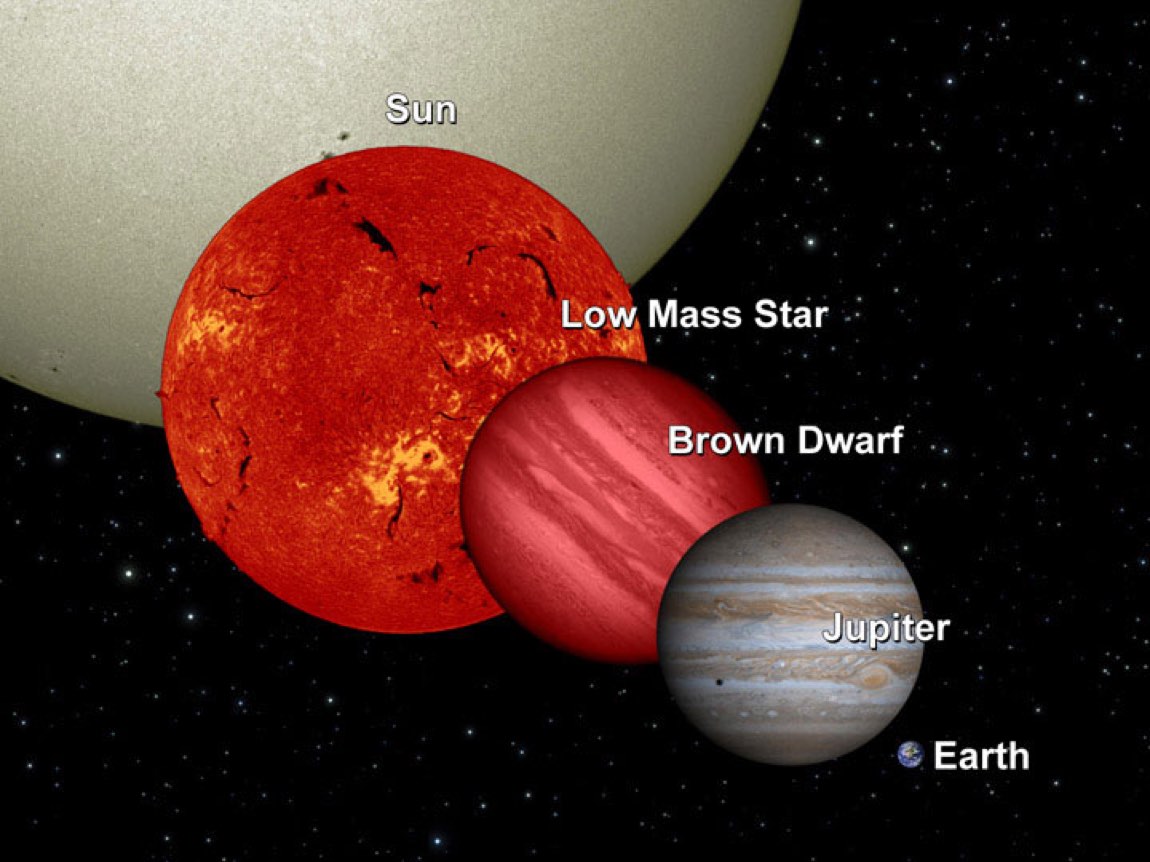
A 2012 study found that the false-positive rate for transit detections by the Kepler mission could be as high as 40 percent in single-planet systems. Three physical situations account for most imposters. A blended eclipsing binary places an unrelated background eclipsing pair along the same line of sight as a bright foreground star; the foreground star's constant light dilutes the eclipse depth until it mimics a planetary transit. A grazing eclipsing binary occurs when one star barely clips the limb of its companion, producing a shallow dip that matches what a small planet would create. Finally, both white dwarfs and brown dwarfs are physically close in size to gas giant planets because all three types of object are supported against gravity by degenerate electron pressure — meaning the light curve cannot distinguish between them on size alone. Radial velocity follow-up is essential for Jupiter-sized or larger detections, since brown dwarfs and even small stars fall in the same size range. Systems with two or more transiting candidates carry a naturally much lower false-positive probability and often can be validated without extensive additional observation.
06 Measuring planets with gravitational lenses
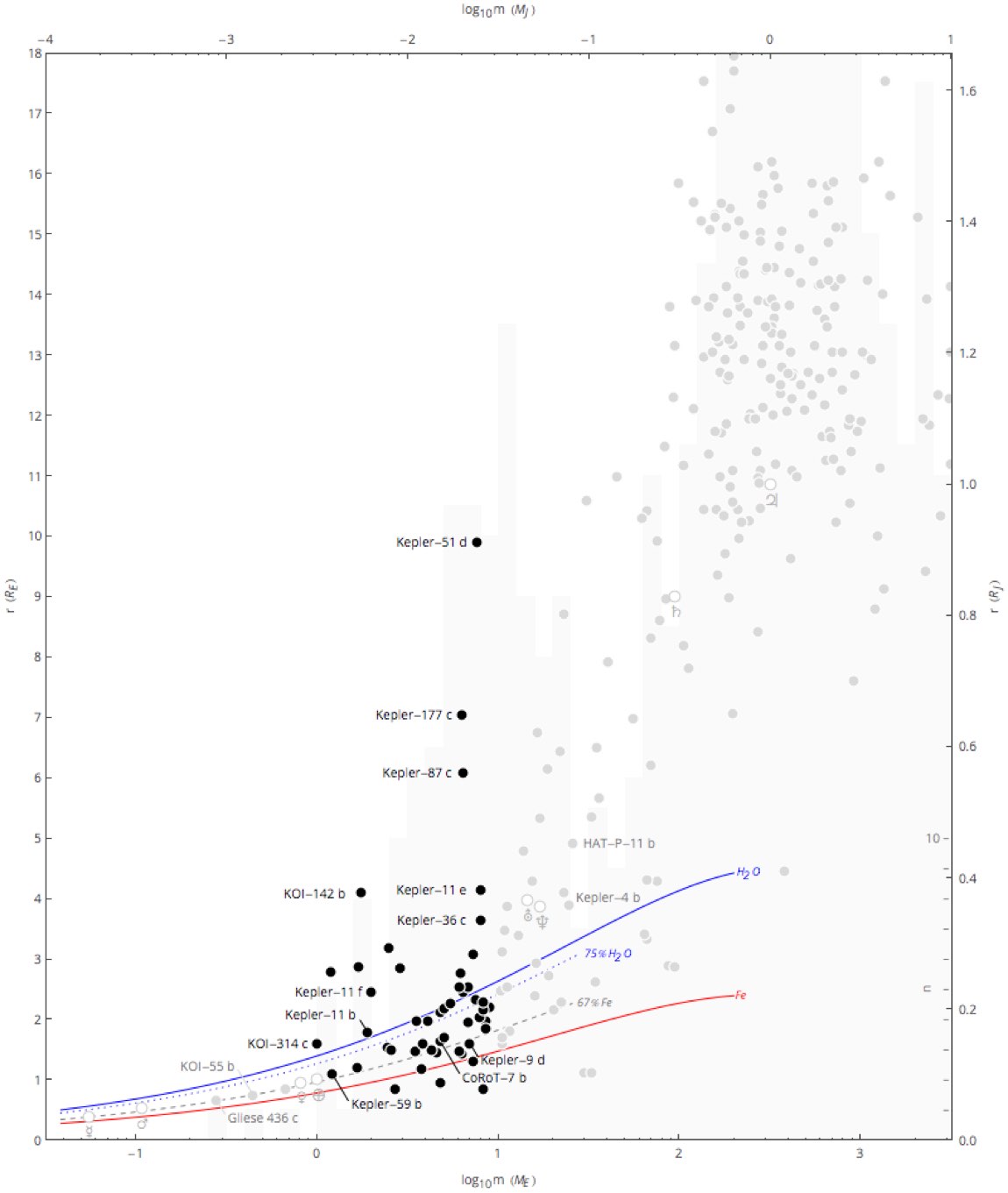
When a foreground star drifts almost exactly in front of a more distant background star, its gravity bends and temporarily amplifies the background star's light — an event called gravitational microlensing. If the foreground star hosts a planet, the planet adds its own brief gravitational tweak to the brightening, lasting hours to days within the overall lensing event. Shude Mao and Bohdan Paczyński proposed using this effect to find binary stellar companions in 1991, and Andy Gould and Abraham Loeb refined the idea as an exoplanet technique in 1992. In 2002, the Polish-led OGLE collaboration developed workable observational procedures and found several candidates that same month. The technique is uniquely sensitive to planets at 1–10 astronomical units from their stars — the region that transit and radial-velocity surveys tend to miss — and it was the first method capable of detecting Earth-mass planets around ordinary main-sequence stars. Its central drawback is that each lensing event is a one-time occurrence; because the precise alignment never repeats, follow-up observations of the same system are essentially impossible, and the detected planets typically lie several kiloparsecs away.
 ⤢
⤢
07 Transit timing: planets detecting planets Deeper
If a known transiting planet is the only body in its system, it crosses the stellar disc at perfectly regular intervals. Introduce a second planet and gravitational nudges cause the first planet's orbital period to stretch and shrink slightly — sometimes by just minutes. Those tiny deviations in transit timing can betray a completely invisible companion whose own orbital inclination is too steep for it to transit at all. The technique was demonstrated with Kepler-19b, whose transits vary by five minutes in amplitude with a period of about 300 days, revealing the non-transiting Kepler-19c. In the Kepler-36 and Kepler-88 systems, where planets orbit close enough to gravitationally interact strongly, transit timing variations pinned down masses with genuine precision. For circumbinary planets — those orbiting two stars at once — the timing variations are dominated by the stars' orbital motion rather than gravitational perturbations from other planets, which complicates automated detection but actually makes physical confirmation easier once a candidate is identified. Kepler-16b was the first planet confirmed through this transit duration variation approach.
08 Astrometry: two centuries of near misses
Astrometry — measuring the tiny back-and-forth wobble of a star's sky position as a planet tugs it — is the oldest exoplanet search strategy. William Herschel argued in the late 18th century that the star 70 Ophiuchi showed such motion. The first formal astrometric calculation for a planetary companion was made by William Stephen Jacob in 1855 for that same star. Over the following two centuries, a stream of confident planetary detections using this method circulated among astronomers, culminating in a 1996 announcement of multiple planets around Lalande 21185 by George Gatewood. Not one of these detections survived independent scrutiny. The problem is fundamental: a planet shifts its star's position by an angle so small that ground-based atmospheric turbulence drowns the signal completely. The Hubble Space Telescope did manage to use astrometry to characterise an already-discovered planet around Gliese 876 in 2002. The space mission Gaia, launched in 2013, is expected to find thousands of planets astrometrically, and by 2022 the combination of Gaia data with radial-velocity measurements had enabled characterisation of Jupiter-analogue planets including the nearest such worlds, epsilon Eridani b and epsilon Indi Ab.
09 Directly imaging planets: what has been seen
Because young giant planets are still warm from formation, they glow brightly in infrared, making them the easiest targets for direct imaging. In 2004, astronomers using ESO's Very Large Telescope imaged 2M1207b, a companion to a brown dwarf, confirmed the following year to be several times more massive than Jupiter with an orbital radius exceeding 40 AU. On 13 November 2008 two landmark results appeared simultaneously: the Hubble Space Telescope detected an object near Fomalhaut — later shown to be an expanding debris cloud from a planetesimal collision rather than a true planet — and a multi-planet system around HR 8799 was announced, directly imaged using the Keck and Gemini observatories. Three planets with masses of approximately ten, ten, and seven Jupiter masses were resolved in that system. Three days after that, analysis of images from 2003 revealed a planet of roughly 8 Jupiter masses orbiting Beta Pictoris, confirmed in 2010 as a real companion and not a chance alignment. In March 2019, ESO astronomers using the GRAVITY instrument on the Very Large Telescope Interferometer made the first direct exoplanet detection via optical interferometry, detecting HR 8799 e.
 ⤢
⤢
10 Reading atmospheric chemistry through starlight Deeper
The transit method opens an indirect window onto planetary atmospheres that does not require resolving the planet at all. During transit, the star's light filters through the planet's upper atmosphere; certain wavelengths are absorbed by specific molecules there, leaving detectable fingerprints in the high-resolution stellar spectrum. During secondary eclipse — when the planet passes behind the star — subtracting the star's brightness before and after from the combined brightness during occultation isolates the planet's own signal. In March 2005, two teams exploited this technique with the Spitzer Space Telescope: a group from the Harvard-Smithsonian Center for Astrophysics led by David Charbonneau studying TrES-1, and a Goddard Space Flight Center group led by L. D. Deming studying HD 209458b. They measured temperatures of 1,060 K (790°C) for TrES-1 and approximately 1,130 K (860°C) for HD 209458b. Secondary eclipse measurements can also constrain a planet's orbital eccentricity independently of other planets in the system. Polarimetry adds yet another atmospheric probe: when starlight reflects off a planetary atmosphere, molecular interactions partially polarise the light, and the polarisation spectrum in principle reveals atmospheric composition — though measurements of polarised light from exoplanets remain technically demanding and disputed in several cases.
11 The Kepler revolution in planet statistics
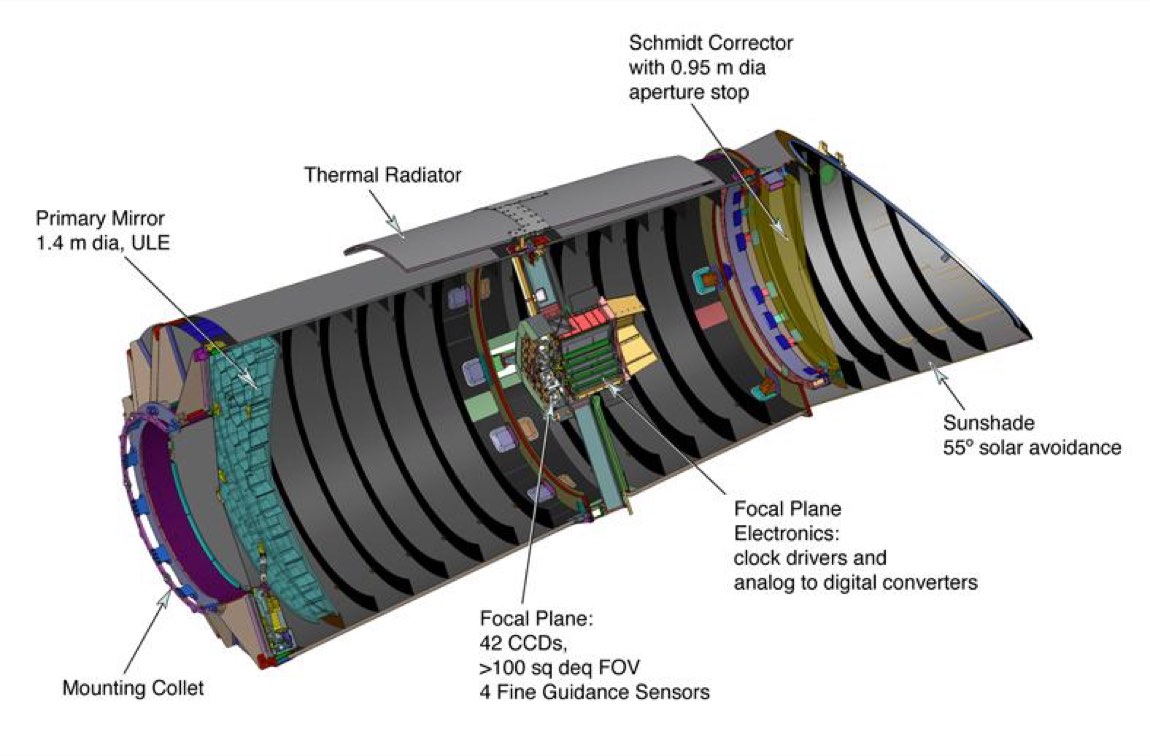
Launched in March 2009, NASA's Kepler space telescope was pointed at roughly one hundred thousand stars simultaneously in the constellation Cygnus, seeking transits with enough precision to detect Earth-sized worlds. By 2 February 2011 the team released a list of 1,235 planet candidates, 54 of which sat in their stars' habitable zones. By 5 December 2011 that number had grown to 2,326 candidates; 207 were Earth-sized, 680 super-Earth-sized, 1,181 Neptune-sized, 203 Jupiter-sized and 55 larger than Jupiter. The count of Earth-sized candidates had risen 200 percent and super-Earths 140 percent compared with the February figures. By June 2013 the candidate total reached 3,278, with some confirmed planets smaller than Mars — such as Kepler-62c — and one, Kepler-37b, even smaller than Mercury. The satellite stopped transmitting in November 2012, was retired in June 2013, and had its mission extended twice before that. Its successor, the Transiting Exoplanet Survey Satellite (TESS), launched in April 2018. Together these missions transformed exoplanet science from a discipline of individual detections into one with genuine statistical power over the demographics of planetary systems.
12 Debris disks as circumstantial planet evidence
Many stars are surrounded by disks of fine dust detectable because the grains absorb starlight and re-emit it as infrared radiation. Even a total dust mass far below Earth's mass can produce enough surface area to outshine the parent star in infrared. Dust disks have been found around more than 15 percent of nearby Sun-like stars. Because stellar radiation pressure sweeps particles into interstellar space relatively quickly, the continuous presence of dust implies constant replenishment through collisions among comets and asteroids — indirect evidence that a population of small bodies exists. Sometimes disk architecture hints at something larger. A central cavity may mean a planet has swept its orbital neighbourhood clear. Clumps within a disk may trace a planet's gravitational influence. Both features appear in the disk around Epsilon Eridani, hinting at a planet near 40 AU beyond the inner planet already confirmed by radial velocity. The dust disk around Tau Ceti suggests an outer reservoir analogous to the Solar System's Kuiper Belt but at least ten times thicker. White dwarf atmospheres tell a related story: contamination by heavy elements such as magnesium and calcium, which cannot rise from the stellar core, most likely arrives from asteroid-like bodies falling onto the star.
13 Open frontiers: methods not yet proven Deeper
Several detection strategies remain either theoretical or unconfirmed. Relativistic beaming — the brightening of a star as its planet tugs it toward the observer — was proposed by Abraham Loeb and Scott Gaudi in 2003 and yielded its first planet discovery (Kepler-76b) in 2013, but a Jovian-mass planet at just 0.025 AU from a Sun-like star is barely detectable even edge-on. Auroral radio emissions from exoplanet magnetospheres, potentially detectable by instruments like the Arecibo telescope, have produced claims but no confirmed detections as of the article's information. Disk kinematics — measuring deviations from smooth Keplerian gas flow in protoplanetary disks around young stars such as HD 163296 — can reveal embedded forming planets before they are otherwise observable. Gravitational wave detection through LISA is theoretically capable of identifying large planets and brown dwarfs orbiting white dwarf binaries within the Milky Way, with estimates ranging from 17 detections in pessimistic scenarios to more than 2,000 in optimistic ones. Even a candidate exoplanet in the Whirlpool Galaxy was announced in September 2020, detected by X-ray eclipses of a high-mass binary — currently the only method with any prospect of finding planets in another galaxy.