Astrobiology
The Fermi Paradox
HypothesisThe idea
Enrico Fermi's lunchtime question: 'Where is everybody?' The galaxy is old and huge; even slow starships could settle it in a few million years — a blink. If technological life were common, someone should have visited or signaled by now. The silence is data. Explanations range from 'life is rare' to 'intelligence is rare' to 'civilizations are quiet or brief' — and choosing between them is genuinely hard.
Go deeper Advanced
Proposed filters: abiogenesis odds, eukaryote-style transitions, technological longevity (the L term), deliberate quiet (dark forest), or simple observational incompleteness — we've deeply searched a swimming pool's worth of an ocean. The 'Great Filter' framing carries a sting: if the filter is ahead of us rather than behind, optimism about alien life becomes pessimism about our future. SETI's null results so far constrain only narrow bands and epochs.
The deep dive
Researched for the Atlas from Wikipedia — Fermi paradox (58,000 characters read) · updated Sep 20, 2026
01 A lunch question that became a paradox
The famous question did not emerge from a formal lecture or a published paper. In 1950, Enrico Fermi was walking to the Fuller Lodge at Los Alamos National Laboratory in New Mexico with colleagues Emil Konopinski, Edward Teller, and Herbert York when conversation drifted to flying saucer reports and faster-than-light travel. After the group had already moved on to other topics over lunch, Fermi suddenly blurted out a question that each colleague remembered slightly differently: Teller recalled "Where is everybody?", York heard "Don't you ever wonder where everybody is?", and Konopinski remembered "But where is everybody?" Teller noted that the whole table immediately understood Fermi was asking about extraterrestrial life, despite the non-sequitur delivery. According to York, Fermi then performed rapid back-of-the-envelope estimates on the probability of Earth-like planets, the probability of life, the probability of intelligence, and the likely duration of high technology — and concluded the galaxy should have been visited "long ago and many times over." Teller, by contrast, recalled Fermi saying little more than that the nearest beings might be very far away and that we live "in the sticks, far removed from the metropolitan area of the galactic center."
02 Who really deserves credit for the paradox?
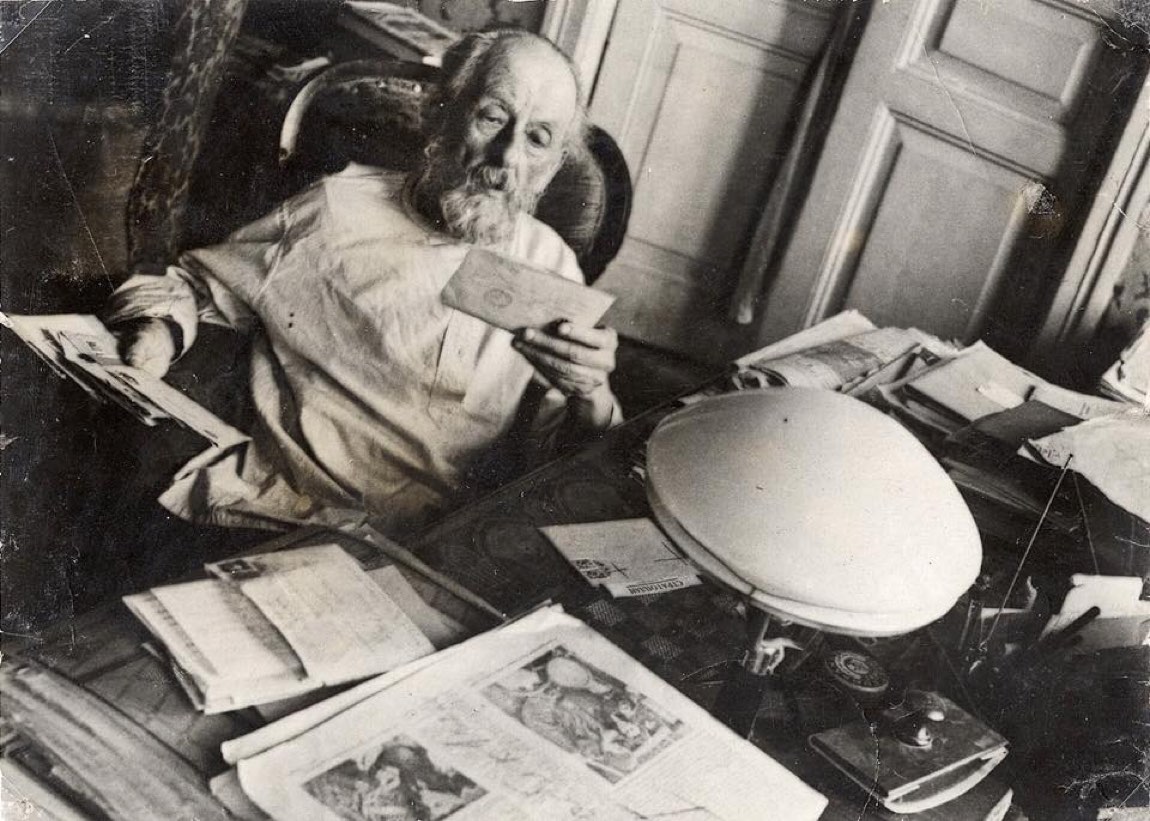
Fermi never published a single word about the paradox that carries his name. Carl Sagan once suggested the famous quote might be apocryphal, and researcher Robert Gray has argued that what Fermi actually said challenged the feasibility of interstellar travel rather than the existence of alien life — a subtler and quite different point. The question appeared in print for the first time only in a footnote of a 1963 paper by Carl Sagan. The word "paradox" was not attached to Fermi's name until a 1977 article by David Stephenson. Some scholars therefore prefer alternative labels such as the "Hart–Tipler argument," after Michael Hart, whose 1975 article in the Quarterly Journal of the Royal Astronomical Society gave the first detailed academic examination, and Frank Tipler, whose influential response argued that the absence of self-replicating alien spacecraft in the Solar System proves intelligent life does not exist elsewhere. Going further back, Bernard Le Bovier de Fontenelle raised essentially the same logical point in 1686, Jules Verne echoed it in 1865, and Soviet rocket scientist Konstantin Tsiolkovsky wrestled with it in the 1930s — though his philosophical writings were suppressed and remained unknown for most of the twentieth century.
03 The galaxy could be crossed in millions of years
One reason the paradox carries such force is the timescale mismatch between the age of the universe and the time needed to spread across the Milky Way. Even without faster-than-light travel — using only propulsion concepts that fall within the reach of known physics — estimates suggest the entire Milky Way galaxy could be colonized in somewhere between 5 million and 50 million years. That span sounds vast in human terms, roughly the time since our ape-like ancestors roamed Africa, yet it is geologically brief and cosmologically tiny against the 13.8 billion years the universe has existed. Since many stars are far older than the Sun, any civilization that arose even a few hundred million years earlier would have had more than enough time to reach every corner of the galaxy. A 2013 study by Anders Sandberg and Stuart Armstrong found that with the energy resources of a single planetary system, an intelligent civilization could spread not just across the Milky Way within a few million years but also reach nearby galaxies over a timescale that is, on cosmic terms, negligibly short — making the Fermi paradox considerably sharper than many had assumed.
04 What the Drake equation actually tells us Deeper
Frank Drake formulated his famous equation in 1961 to impose systematic thinking on the variables controlling whether detectable alien civilizations exist. It multiplies together the rate of star formation, the fraction of stars with planets, the number of habitable planets per system, the fraction where life arises, the fraction where intelligence emerges, the fraction that become detectable, and the length of time they broadcast. The first scientific SETI meeting — attended by ten people including Drake and Carl Sagan — estimated the number of communicating civilizations in the Milky Way at somewhere between 1,000 and 100,000,000. Frank Tipler and John D. Barrow, using pessimistic inputs, concluded the average number per galaxy is much less than one. The reason both extremes are defensible is that the last four terms — the fraction where life appears, where intelligence appears, where technology appears, and how long signals are sent — are entirely unknown. An analysis by Anders Sandberg, Eric Drexler, and Toby Ord that explicitly modeled this uncertainty concluded there is "a substantial ex ante probability of there being no other intelligent life in our observable universe." Almost all Drake equation arguments, the article notes, also suffer from the overconfidence effect, assigning specific numbers to probabilities whose underlying mechanisms are not understood, with estimates varying over many hundreds of orders of magnitude.
 ⤢
⤢
05 The Great Filter: behind us or ahead? Deeper
Robin Hanson introduced the concept of the Great Filter in 1996 to describe whatever natural barrier makes the journey from simple chemistry to spacefaring civilization extraordinarily unlikely. The most widely discussed candidate is abiogenesis — the random chemical emergence of the first self-replicating molecules from inanimate matter — because no one has demonstrated how probable or improbable this step is. Other proposed filters include the evolution of eukaryotic cells, the invention of meiosis, or the development of a brain capable of complex logical reasoning. Astrobiologists Dirk Schulze-Makuch and William Bains reviewed the history of life on Earth and concluded that many key transitions, including oxygenic photosynthesis, multicellularity, and tool-using intelligence, are likely to occur on any Earth-like planet given enough time, suggesting the filter does not lie in those steps. They proposed that the filter may instead be abiogenesis itself, the rise of technological human-level intelligence, or civilizations destroying themselves before they can expand. Paleobiologist Olev Vinn has suggested the filter may have universal biological roots tied to evolutionary animal behavior. The stakes are high: if the filter lies in our past, humanity may be rare but safe; if it lies ahead, the silence of the cosmos is an ominous warning about our own future.
06 Dyson spheres and the search for megastructures Deeper
In 1959 Freeman Dyson observed that every developing human civilization continuously increases its energy consumption, and reasoned that an advanced civilization might attempt to capture the majority of its star's energy output. He proposed a hypothetical structure — a shell or cloud of objects surrounding a star — that would absorb as much radiant energy as possible. Such a construction would alter the star's observable spectrum, shifting it from normal stellar emission lines toward black-body radiation peaking in the infrared, providing an astronomical fingerprint for the technology. Direct observation of thousands of galaxies has so far produced no explicit evidence of such artificial construction. The most widely discussed candidate came in October 2015, when astronomers noticed an unusual dimming pattern from the star KIC 8462852, observed by the Kepler space telescope, which some speculated could be a Dyson sphere under construction. However, follow-up observations completed in 2018 showed the dimming varied with the frequency of the light, consistent with dust rather than an opaque solid structure, ruling out the megastructure hypothesis. The search continues, with proposed additional signatures including asteroid mining that could change the appearance of stellar debris disks, or spectral lines from nuclear waste disposed of inside stars.
07 Why self-replicating probes raise the stakes
The Hart–Tipler conjecture offers one of the sharpest logical arguments in the whole debate. Its reasoning runs as follows: self-replicating probes — spacecraft that mine local materials to build copies of themselves — could exhaustively survey a galaxy the size of the Milky Way in as little as a million years. If even a single civilization anywhere in the Milky Way's history had attempted this, those probes would now be everywhere. Because no such probes have been found in the Solar System, the argument concludes there likely is no other intelligent civilization in the galaxy. Frank Tipler's version of this argument was influential enough that Senator William Proxmire cited it when he pushed for termination of the federally funded NASA SETI program in 1981. A related concept is the Bracewell probe, a hypothetical autonomous spacecraft designed not to replicate but to seek out civilizations and carry on real-time dialogue with them, relaying findings home at light speed. Attempts to signal or activate hypothetical Bracewell probes in Earth's vicinity have not succeeded. Stephen Jay Gould countered Tipler's reasoning by arguing that predicting the colonization strategies of alien minds is no more reliable than predicting the behavior of people in other cultures.
08 Radio silence: decades of searching
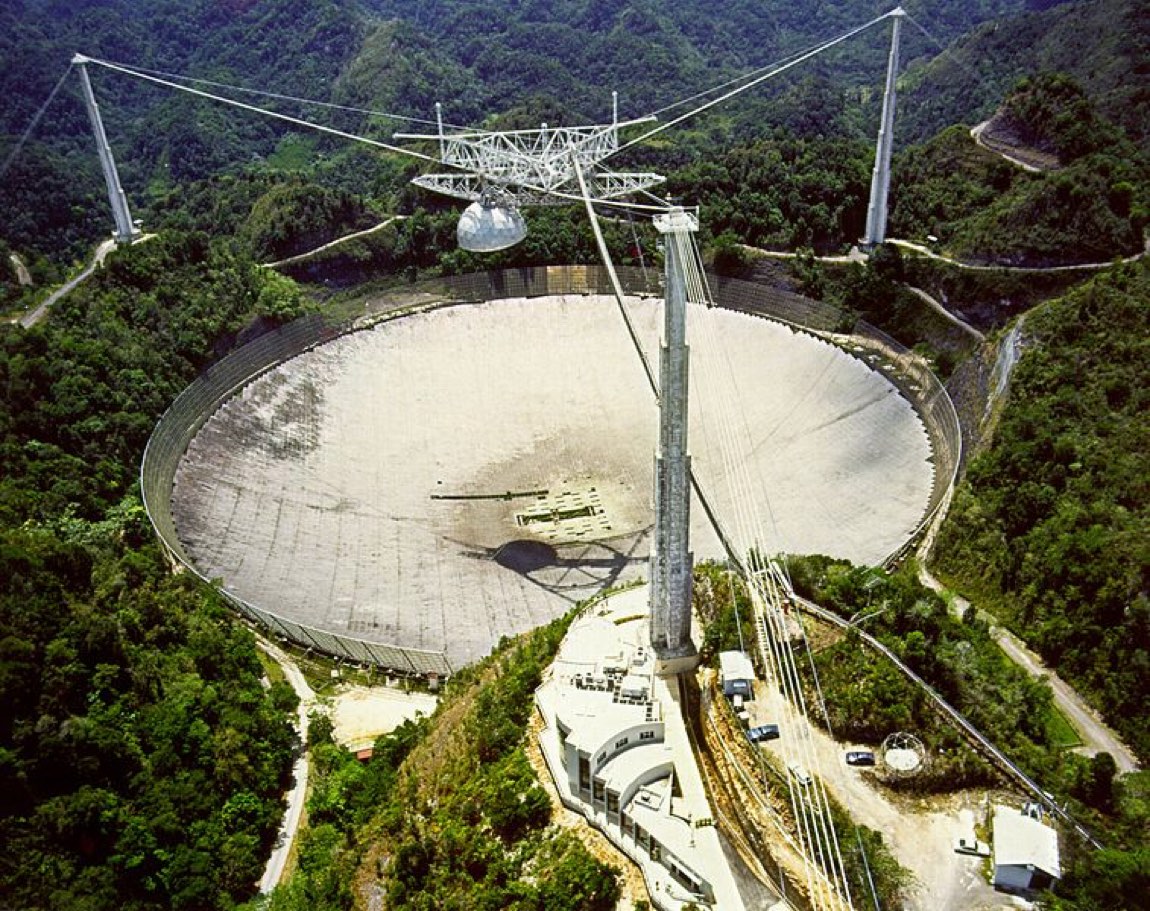
Systematic searches for artificial radio signals from space have been ongoing since 1960, yet several decades of SETI analysis have not revealed any unusually bright or meaningfully repetitive radio emissions. The challenge is severe even in principle. SETI estimates that with a telescope as sensitive as the Arecibo Observatory, Earth's own television and radio broadcasts would be detectable only out to a distance of 0.3 light-years — less than one-tenth of the distance to the nearest star system. A deliberately aimed, high-powered beacon is far easier to detect and could in principle be identified hundreds to tens of thousands of light-years away, but only if receivers are tuned to the right frequency at the right moment and the beam is pointed toward Earth. The situation is further complicated because, as of 2019, the most sensitive radio telescopes on Earth could not detect non-directional broadband signals even at a fraction of a light-year away. Earth itself is moving away from easy detectability as communications shift from open broadcasts to cables, fiber optics, and spread-spectrum transmissions. Seth Shostak noted in 2006 that radio leakage from a planet is likely to get weaker as its civilization advances, meaning that searching for radio leakage may be a narrowing window of opportunity.
 ⤢
⤢
09 Pulsars, dimming stars, and false alarms
Astronomers have repeatedly encountered phenomena that briefly suggested possible artificial origin before natural explanations were found. When pulsars were first discovered in 1967, their pulses were so precisely timed that researchers informally labeled them LGM — for "little green men" — before determining they were rapidly rotating neutron stars. The star KIC 8462852 generated excitement in 2015 when its irregular dimming, detected by the Kepler space telescope, prompted speculation about a Dyson sphere under construction, only to be explained by dust clouds in 2018. These episodes illustrate a recurring dynamic: the universe produces genuinely surprising natural phenomena that can mimic the signatures scientists imagine for technology. The article notes that exoplanet observation has matured considerably, with missions like Kepler and TESS having characterized Earth-size planets and allowed estimates that potentially habitable worlds number in the range of 0.5 to 1.0 per star in the Milky Way — meaning billions of candidate worlds exist. The first candidate terrestrial planet within a star's habitable zone was identified in 2007. Whether any of those worlds hosts a civilization capable of signaling remains entirely unknown.
10 Could climate change silence civilizations? Deeper
A 2018 study by Adam Frank and colleagues applied dynamical systems theory to the fate of energy-intensive civilizations and proposed climate change as a potential great filter operating across the cosmos. Their model treats civilizations as systems consuming planetary resources and receiving feedback from their environments through changes in the planet's carrying capacity. The study produced four possible outcomes: a "die-off" in which population overshoots carrying capacity, crashes, and stabilizes at a much lower level; a "sustainability" path where civilization transitions to low-impact resources before catastrophic damage occurs; a "collapse without resource change" in which the civilization tips past recovery; and a "collapse with resource change" in which switching to sustainable resources comes too late to prevent irreversible environmental damage. Frank argued that driving climate change may be generic to any young, energy-intensive civilization because the laws of physics demand feedback between energy use and planetary conditions. He suggested that viewing Earth's current situation in this cosmic context might offer insight into the broader Fermi paradox: if most civilizations collapse before achieving long-duration spaceflight, the universe would be filled with the ruins of brief technological experiments rather than enduring interstellar empires.
11 The oxygen bottleneck and waterworld trap Deeper
Two economic and planetary arguments suggest the leap to spaceflight may require an unusually hospitable planet. Amedeo Balbi and Adam Frank proposed the concept of an "oxygen bottleneck": Earth's atmosphere is about 21% oxygen, but the industrial processes essential to building spacecraft — particularly metal smelting and many forms of electricity generation — require oxygen concentrations of at least around 18%. A planet whose atmosphere contains enough oxygen to support complex intelligent life but falls below that industrial threshold would be technologically locked at a pre-spaceflight level, however clever its inhabitants. A related argument involves "waterworlds." David Brin noted that Earth sits near the inner edge of the Sun's habitable zone and may be anomalous in having only about 32% continental landmass, which he suggested may be high among water-bearing planets. On a world with far less land, creatures with hands capable of manipulating fire and building tools might never evolve — producing a universe populated by intelligent dolphins and squid who could never construct radio telescopes or rockets. These arguments reframe the Fermi paradox: rather than asking why aliens do not contact us, they ask whether the physical prerequisites for technological civilization are themselves exceedingly rare.
12 Virtual worlds, AI collapse, and the Great Silence Deeper
Several sociological and technological hypotheses propose that civilizations capable of interstellar communication may simply lose interest in it. Avi Loeb has suggested that extraterrestrial individuals might prefer immersive virtual realities with different physical rules over the difficult business of colonizing planets. Nick Bostrom extended this idea, suggesting that sufficiently advanced beings might transfer their minds entirely into artificial virtual environments through mind uploading and abandon the physical universe. A related argument holds that entertainment and social technologies are inherently less costly than space exploration and may reliably outcompete it for attention and resources once a civilization can meet its physical needs technologically. A sharper possibility comes from Michael A. Garrett, who argued that biological civilizations may universally underestimate how quickly artificial intelligence progresses and fail to control it in time, making AI a potential great filter. He further argued this dynamic could limit the longevity of advanced technological civilizations to less than 200 years — a number so small that even a galaxy full of civilizations might produce almost no overlap in the narrow windows during which any two of them were simultaneously broadcasting and listening.
✦ Keep exploring