Astrobiology
The Science of Life Elsewhere
HypothesisThe idea
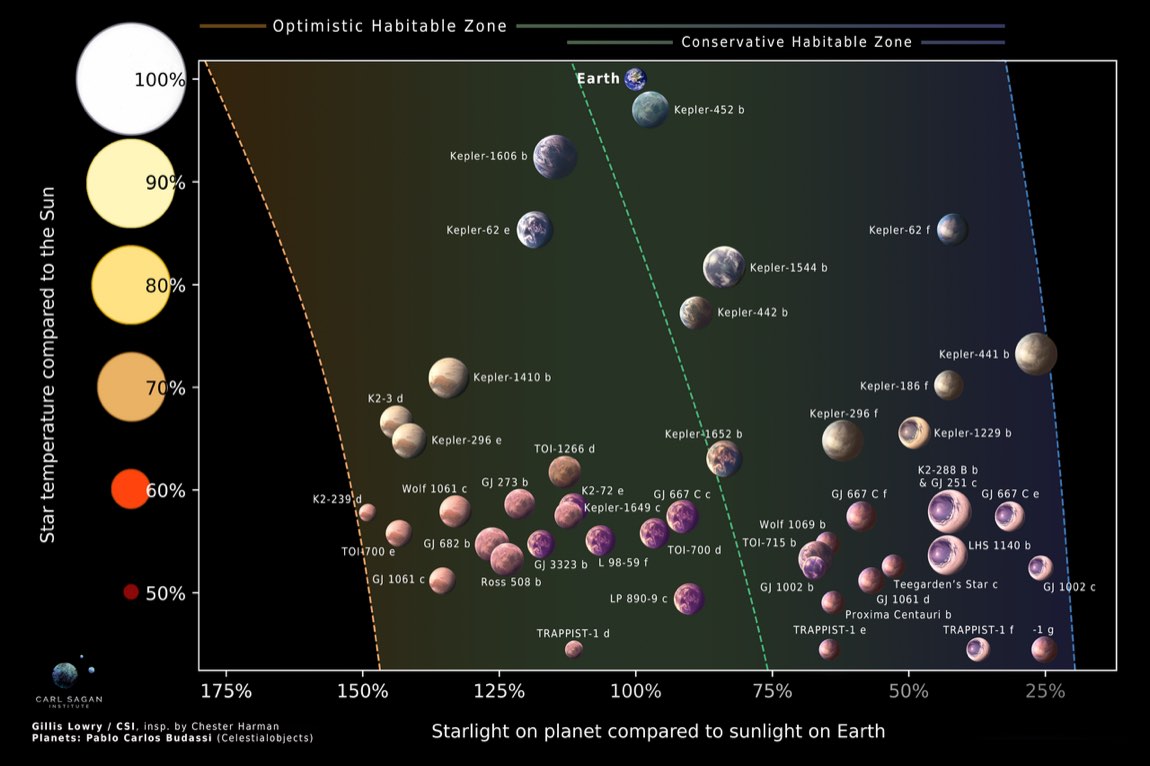
Astrobiology asks three testable questions: What does life need? (By Earth's example: liquid water, chemistry, energy.) Where else do those exist? (Ancient Mars, Europa's and Enceladus's oceans, temperate exoplanets — many places.) And how would we detect it? (Fossil chemistry in rocks, gas mixtures in atmospheres that only biology maintains.) One data point — Earth — anchors everything; no second example has been found. Yet.
Go deeper Advanced
Life on Earth appears in the record within ~1 Gyr of formation and thrives in every extreme niche tested — encouraging priors, sample size one. Current fronts: Mars sample return (fossil biosignatures), Europa/Enceladus ocean chemistry, JWST/HWO atmospheric biosignatures (O₂+CH₄ disequilibrium), and the strict protocols for claiming detection — because the first claim will be doubted, as it should be.
The deep dive
Researched for the Atlas from Wikipedia — Astrobiology (43,785 characters read) · updated Sep 20, 2026
01 Who named this field and when
The word astrobiology was first proposed by Russian astronomer Gavriil Tikhov in 1953, built from the Greek roots for star, life, and study. But the field quickly gathered sister terms. American molecular biologist Joshua Lederberg coined exobiology, meaning the search for life external to Earth — a narrower label that many felt undersold the discipline's ambitions. Even stranger in origin is xenobiology, meaning biology based on foreign chemistry: American science fiction writer Robert Heinlein invented the word in his 1954 novel The Star Beast, and scientists later borrowed it for their own technical purposes. NASA funded its first exobiology project in 1959 and formally founded the Exobiology Program in 1960, which is now one of four main elements of NASA's current Astrobiology Program. The naming history matters because it reflects a real tension in the field — is this a search for life just like ours, or for any chemistry that could be called living?
02 Why carbon gets the starring role
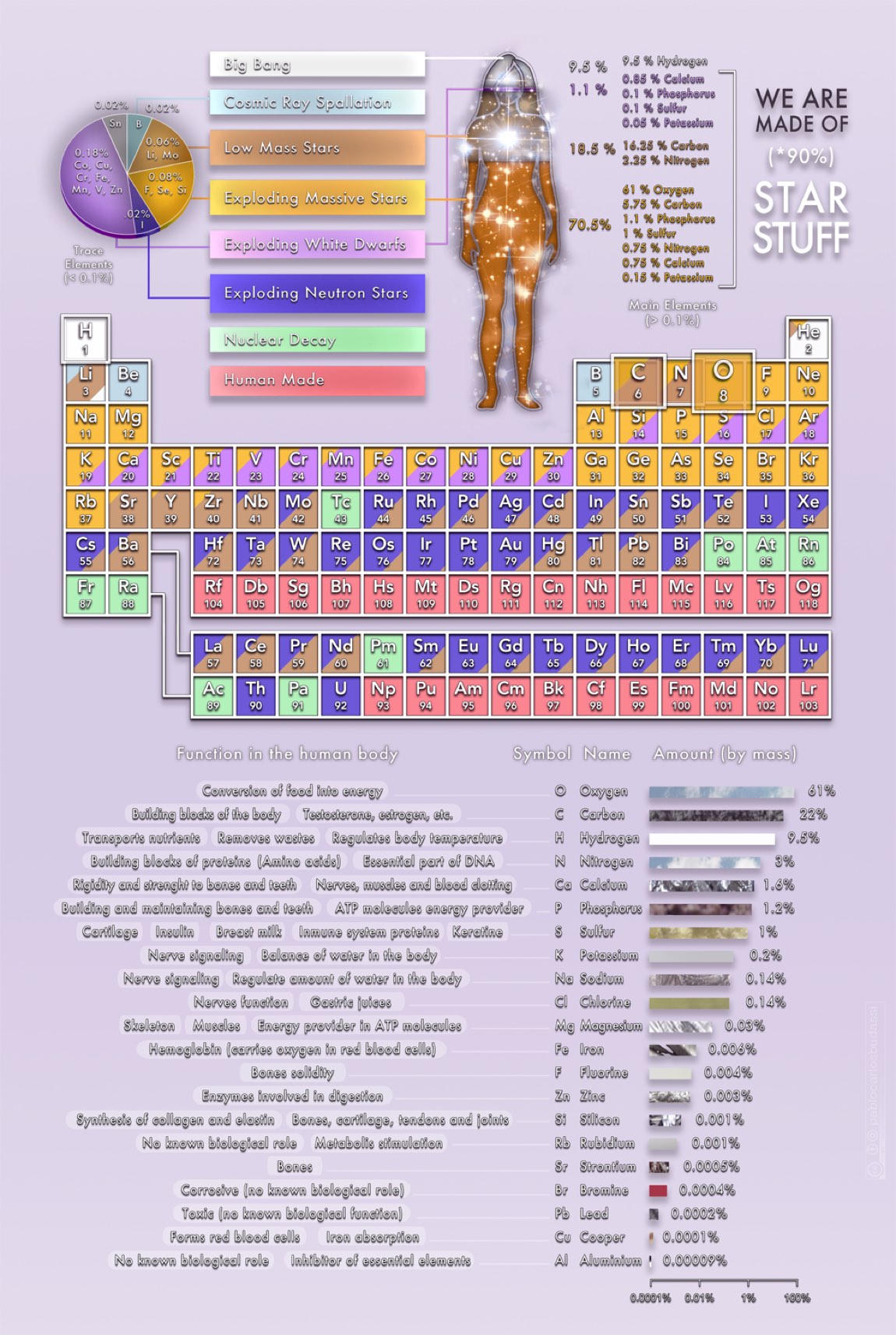
Astrobiology does not assume life must look like life on Earth, but it does lean heavily on carbon for practical reasons grounded in chemistry. Carbon is the fourth most abundant element in the universe. The energy required to make or break a carbon bond sits at just the right level — bonds are stable enough to persist, yet reactive enough to rearrange. Critically, carbon atoms bond readily to other carbon atoms, enabling the construction of extremely long and complex molecules. No other common element matches this combination. Researchers therefore presume that the vast majority of life in the Milky Way would be carbon-based, while remaining open to theoretical alternatives. Polycyclic aromatic hydrocarbons, or PAHs, illustrate how carbon chemistry extends far into space: more than 20 percent of all the carbon in the universe may be tied up in PAHs, which appear to have formed shortly after the Big Bang and are associated with new stars and exoplanets. In interstellar conditions, PAHs are transformed through hydrogenation, oxygenation, and hydroxylation into more complex organics — stepping-stones toward amino acids and nucleotides.
03 The 1977 dive that rewrote biology
Until the 1970s, scientists assumed all life ultimately depended on sunlight. That assumption collapsed in 1977 when researchers aboard the deep-sea submersible Alvin descended to the Galapagos Rift and found colonies of giant tube worms, clams, crustaceans, and mussels clustered around undersea volcanic features called black smokers. These creatures had no access to sunlight whatsoever. At the base of their food chain sat bacteria that extract energy by oxidizing reactive chemicals — hydrogen and hydrogen sulfide — welling up from Earth's interior, a process called chemosynthesis. Other organisms entirely decoupled from sunlight include green sulfur bacteria that capture geothermal light for anoxygenic photosynthesis, and bacteria that run their metabolism on the radioactive decay of uranium. The astrobiological conclusion was transformative: life requires only water and an energy gradient, not a star. This single discovery massively expanded the number of plausible extraterrestrial habitats and placed moons like Europa and Enceladus — with their subsurface oceans warmed by radiogenic and tidal heating — firmly on the map of places worth searching.
 ⤢
⤢
04 Organisms that can endure outer space Deeper
Extremophile research has catalogued life thriving in ice, boiling water, acid, alkali, the water cores of nuclear reactors, salt crystals, and toxic waste. Some organisms go further still, surviving direct exposure to the vacuum and radiation of outer space. These include the lichen fungi Rhizocarpon geographicum and Rusavskia elegans, the bacterium Bacillus safensis, the radiation-resistant Deinococcus radiodurans, Bacillus subtilis, the yeast Saccharomyces cerevisiae, seeds from the plant Arabidopsis thaliana, and the invertebrate tardigrade. Tardigrades are not considered true extremophiles but are classified as extremotolerant; their extreme radiation tolerance and the presence of DNA-protection proteins raise serious questions about whether life could survive transport through space. The Tanpopo orbital mission found early evidence that clumps of microorganisms can survive at least one year in low Earth orbit, suggesting that clumps greater than 0.5 millimeters could be a viable mechanism for spreading life between planets — directly testing the panspermia hypothesis.
05 Viking's inconclusive search for metabolism
The Viking program gave astrobiology its first direct planetary experiment. The two landers, one deployed near Mars's equator and one further north, each carried four types of biological experiments to the surface in the late 1970s — the only Mars landers ever to search specifically for signs of current microbial metabolism. Robotic arms collected soil samples into sealed test containers on the craft. Norman Horowitz, chief of the Jet Propulsion Laboratory bioscience section for the Mariner and Viking missions from 1965 to 1976, led part of this effort. Horowitz acknowledged that carbon's versatility made it the most likely basis for exotic life on other planets, yet he concluded that the conditions found on Mars were incompatible with carbon-based life. The overall results were inconclusive and remain disputed by some scientists today — a reminder that designing experiments to detect unknown biochemistry is extraordinarily difficult when we have only one example of life to guide us.
06 Martian meteorites and their contested fossils
Two meteorites from Mars have generated significant debate about possible past life. The Allan Hills 84001 meteorite was recovered in Antarctica in 1984; scientist David McKay and a small number of colleagues argued it contains microfossils of extraterrestrial origin, though this interpretation is widely considered controversial. The second-largest Martian meteorite, Yamato 000593, was found on Earth in 2000. Examined at the microscopic level, it contains spheres rich in carbon compared to surrounding material that lacks such spheres; some NASA scientists have suggested these carbon-rich spheres may have been formed by biotic activity. Neither claim has achieved consensus. Separately, on 5 March 2011, Richard B. Hoover of the Marshall Space Flight Center reported alleged microfossils resembling cyanobacteria in CI1 carbonaceous meteorites, publishing in the Journal of Cosmology. NASA formally distanced itself from Hoover's claim. As of 2024, no evidence of extraterrestrial life has been conclusively identified.
 ⤢
⤢
07 The Drake equation as a thinking tool Deeper
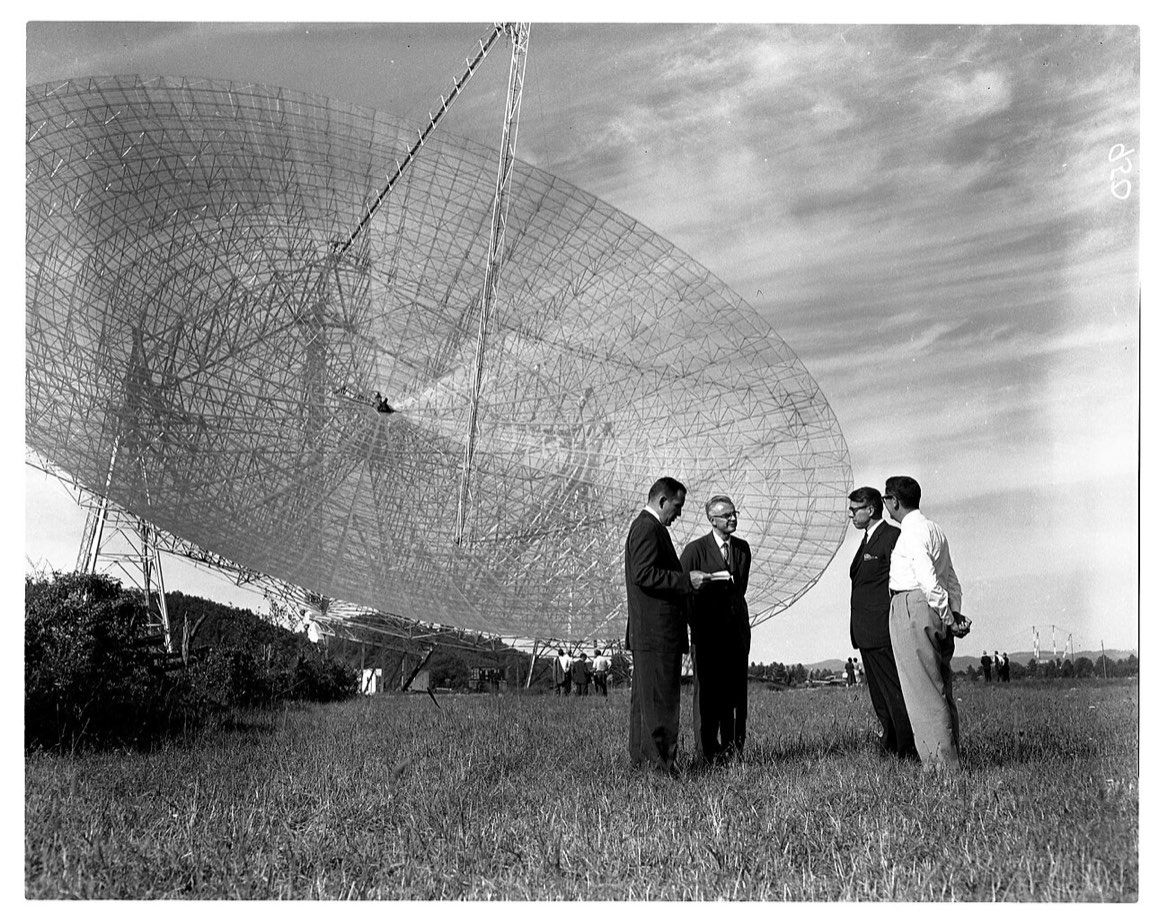
Frank Drake originally formulated his famous equation not as a predictive formula but as an agenda for discussion at the Green Bank conference. The equation estimates the number of communicative civilizations in the galaxy as the product of factors including the rate of formation of suitable stars, the fraction of those stars with planets, the number of Earth-sized worlds per system, the fraction where life develops, the fraction where intelligence develops, the fraction that develop electromagnetic communication, and the lifetime of such civilizations. The rationale is sound, but the equation cannot currently be constrained to reasonable error limits because several factors — particularly those describing the emergence of intelligence and civilization longevity — can never be directly verified. Critics note that some applications of the formula have lapsed into pseudoscientific arguments. The equation connects directly to the Fermi paradox, which asks: if intelligent life is common, why is there no obvious evidence of it? The Rare Earth hypothesis offers one answer, postulating that the specific combination of conditions enabling multicellular life on Earth — galaxy position, star type, planetary size, orbit, atmosphere — may be extraordinarily rare, even if microbial life is widespread.
08 Icy moons as the solar system's top suspects
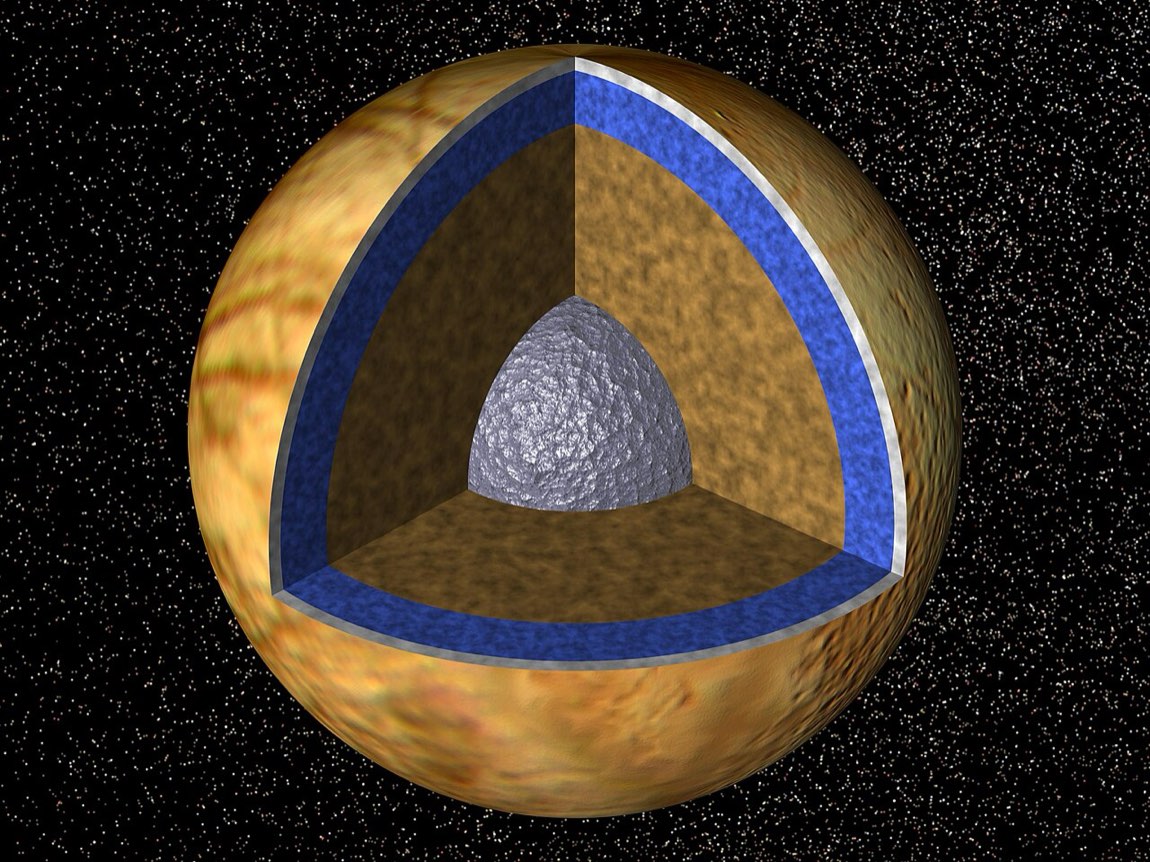
Europa, moon of Jupiter, and Enceladus, moon of Saturn, are now considered the most likely locations in the Solar System for extant extraterrestrial life, because both possess subsurface liquid water oceans where radiogenic and tidal heating prevents freezing. Europa Clipper, launched by NASA on 14 October 2024, will begin detailed reconnaissance of Europa in 2030, investigating whether its internal ocean could harbor conditions suitable for life and helping select future landing sites. Multiple proposed missions specifically target Enceladus: the Enceladus Life Finder would probe its internal aquatic ocean; the Life Investigation For Enceladus concept would collect particles directly from the moon's active icy plumes, which also spray into Saturn's E ring; and the Journey to Enceladus and Titan mission would assess the habitability of both moons from orbit. The fact that Enceladus actively vents plume material into space means a spacecraft need not even land to sample its ocean chemistry — an almost uniquely favorable scenario for remote life detection.
09 Titan and the Dragonfly rotorcraft mission
Saturn's moon Titan presents a strikingly different kind of astrobiological target. Its thick atmosphere and rich organic chemistry make it a natural laboratory for prebiotic chemistry, even though surface temperatures are far too cold for liquid water. NASA's Dragonfly mission, scheduled to land on Titan in 2036, will use a rotorcraft design to perform controlled flights between multiple surface locations, sampling diverse regions and geological contexts. Its primary goals are to assess Titan's microbial habitability and study its prebiotic chemistry. A separate orbiter concept called Oceanus, proposed in 2017 for the New Frontiers program, would map Titan's organic chemistry, geology, gravity, and topography, and identify locations where organics might interact with liquid water. Titan also appears as a secondary target in the Explorer of Enceladus and Titan mission concept proposed to ESA in 2017, illustrating how the moon's complexity warrants investigation from multiple scientific angles simultaneously.
 ⤢
⤢
10 Biosignatures: what searchers look for Deeper
Astrobiologists searching other worlds for signs of life look for biosignatures — detectable indicators that biology has been or is present. These take several forms. Organic compounds, isotopic ratios, and microbial fossils can be sought in rocks or soil by rovers. Atmospheric biosignature gases can be probed remotely; scientists are studying the possibility of microbial life in the upper atmosphere of Venus as one such target. Telescopes including the James Webb Space Telescope and the Transiting Exoplanet Survey Satellite are being used to examine exoplanet atmospheres spectroscopically, searching for chemical compositions inconsistent with purely abiotic chemistry. A newer approach emerges from quantum chemistry: organic molecules produced by living systems generally display narrower HOMO-LUMO gaps than those formed abiotically, with this distinction sharpened among more water-soluble compounds. Such electronic gap measurements are emerging as a promising biosignature for distinguishing biotic from abiotic chemistry in future life-detection missions. In 2020, astronomers even proposed studying shadows of trees on exoplanets at certain times of day, detecting patterns through remote observation.
11 SETI, CETI, and the debate over messaging
The search for extraterrestrial intelligence uses radio and optical telescopes to listen for signals from other technological civilizations. A companion discipline, CETI — extraterrestrial intelligence communications — focuses on composing and deciphering messages that another civilization could theoretically understand. Human attempts have included broadcasting mathematical languages, pictorial systems such as the Arecibo message, and computational approaches to detecting natural-language signals. In 1971, NASA funded Project Cyclops to search radio frequencies of the electromagnetic spectrum for interstellar communications from outside the Solar System. The ethics of active messaging remain contested. Carl Sagan advocated transmitting messages, while theoretical physicist Stephen Hawking warned against it, arguing that aliens might raid Earth for its resources. This disagreement is not merely philosophical: it touches on the asymmetry between the potential benefits of contact and the risks of revealing our location to civilizations whose intentions and capabilities are entirely unknown.
12 What the philosophy of astrobiology debates Deeper
Astrobiology raises genuine philosophical problems that scientists cannot resolve by experiment alone. Planetary scientist David Grinspoon characterizes the field as natural philosophy — speculation grounded in known science. Philosopher Dunér frames it as an existential exercise in self-understanding whose central task is constructing a workable concept of life itself, alongside practical questions about funding, linguistic barriers to interstellar communication, and the definition of intelligence. Persson highlights the ethical obligation toward any extraterrestrial life discovered, the politics of governing uninhabited worlds, and ecological concerns about contamination. Von Hegner argues the field should formally split into astrobiology and astrophilosophy, since astrophilosophical discussions have existed as long as people have debated extraterrestrial life. Šekrst counters that the very name astrobiology embeds a form of conceptual speciesism, since it tries to speak about life in general while implicitly treating terrestrial life as the template. Even the question of viruses matters here: whether viruses count as alive depends entirely on which definition of life one adopts, making definitions not a semantic quibble but a decision with direct experimental consequences.
13 Open questions and the road ahead
As of 2024, no evidence of extraterrestrial life has been identified anywhere. The Viking experiments on Mars were inconclusive and remain disputed. Mars 2020's Perseverance rover, which landed in Jezero Crater on 18 February 2021, is proposed to collect at least 31 samples of rock cores and soil for eventual return to Earth laboratories — a project that could, in principle, resolve some Viking-era ambiguities with far more sophisticated analysis. ExoMars, delayed to a 2028 launch at the earliest following geopolitical disruptions, will drill beneath the Martian surface searching for biosignatures shielded from radiation by ice and rock. Meanwhile, the theoretical foundations of the field continue to shift: assumptions about the necessity of sunlight, liquid water, and even carbon chemistry are all under active debate. Hypothetical biochemistries using water-ammonia mixtures as solvents are discussed seriously. The field's honest position, as astrophysicist Neil deGrasse Tyson put it, is that life on Earth is currently the only known life in the universe, while compelling arguments suggest we are not alone — a gap between evidence and expectation that defines astrobiology's driving tension.