Astrobiology
SETI: Listening for Neighbors
HypothesisThe idea
Since 1960, radio telescopes have periodically swept the sky for signals no natural process makes: narrow-band carriers, repeating patterns, laser flashes. Nothing confirmed in 65 years (the tantalizing 1977 'Wow!' signal never repeated). But the searched fraction of frequency-space-time is tiny, and today's surveys out-search all previous decades combined.
Go deeper Advanced
Breakthrough Listen (2015–) covers a million stars with open data; technosignature thinking now extends past radio to megastructure infrared, atmospheric industry (CFCs), and city lights. Detection protocols emphasize verification-before-announcement. A confirmed signal would be the biggest discovery in history; the enduring null is itself a scientific result about the L term.
The deep dive
Researched for the Atlas from Wikipedia — Search for extraterrestrial intelligence (57,867 characters read) · updated Sep 20, 2026
01 Tesla, Marconi, and the first false alarms
Long before purpose-built SETI programs existed, radio pioneers were already convinced they might hear from Mars. In 1896, Nikola Tesla proposed that an extreme version of his wireless electrical transmission system could reach the planet, and in 1899, while working at his Colorado Springs station, he thought he had actually done it — an odd repetitive static signal seemed to vanish whenever Mars set below the horizon. Later analysis offered several mundane alternatives: Tesla misunderstood his own equipment, he may have picked up Guglielmo Marconi's European experiments, or — most intriguingly — he could have detected naturally occurring radio noise produced by Jupiter's moon Io moving through Jupiter's magnetosphere. Marconi himself, along with Lord Kelvin and David Peck Todd, publicly endorsed the idea that radio could contact Martians. The credulity of the era peaked in August 1924, when Mars came to a historically close opposition and the United States declared a "National Radio Silence Day" — five minutes of quiet on the hour, every hour, for 36 hours — while a receiver was lofted 3 kilometres above ground in a dirigible. The U.S. Army's chief cryptographer, William F. Friedman, was standing by to decode any Martian reply. None came.
02 Project Ozma and the water hole frequency
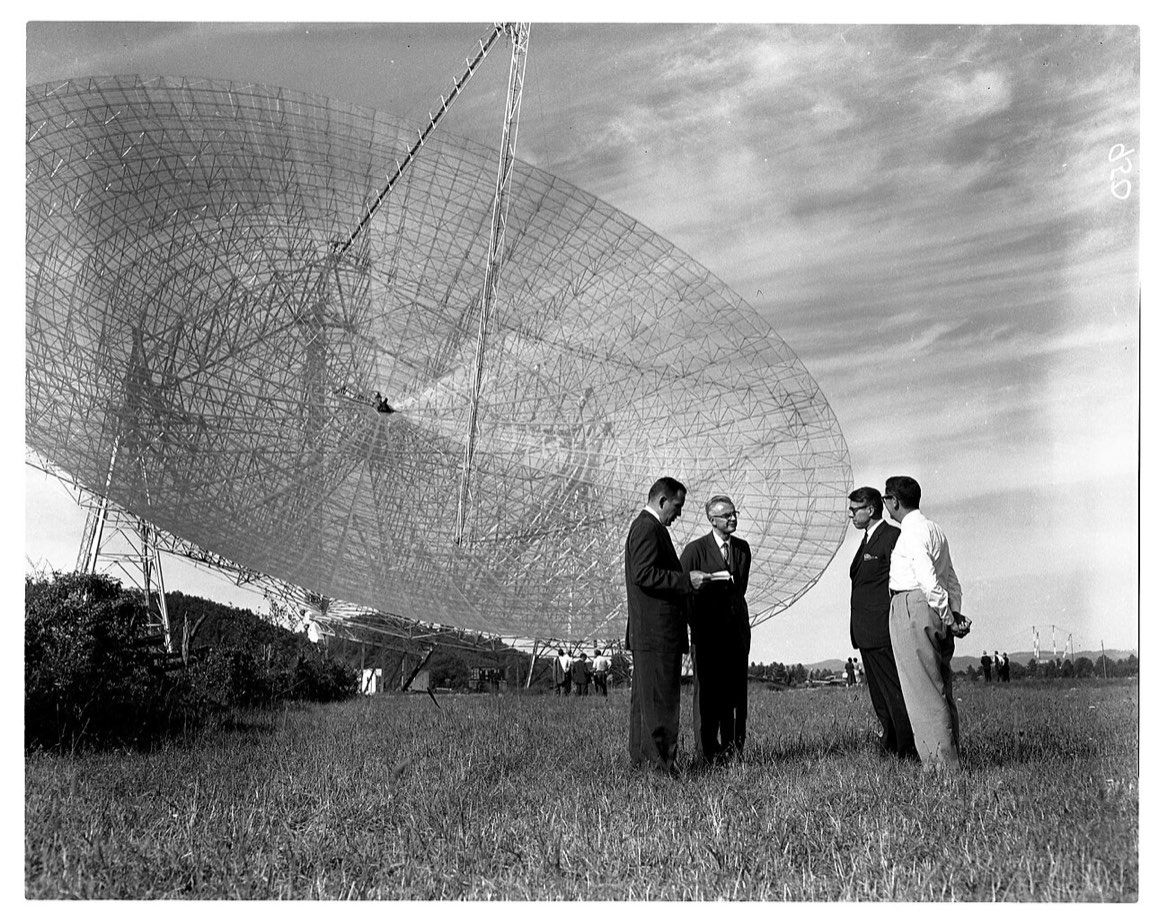
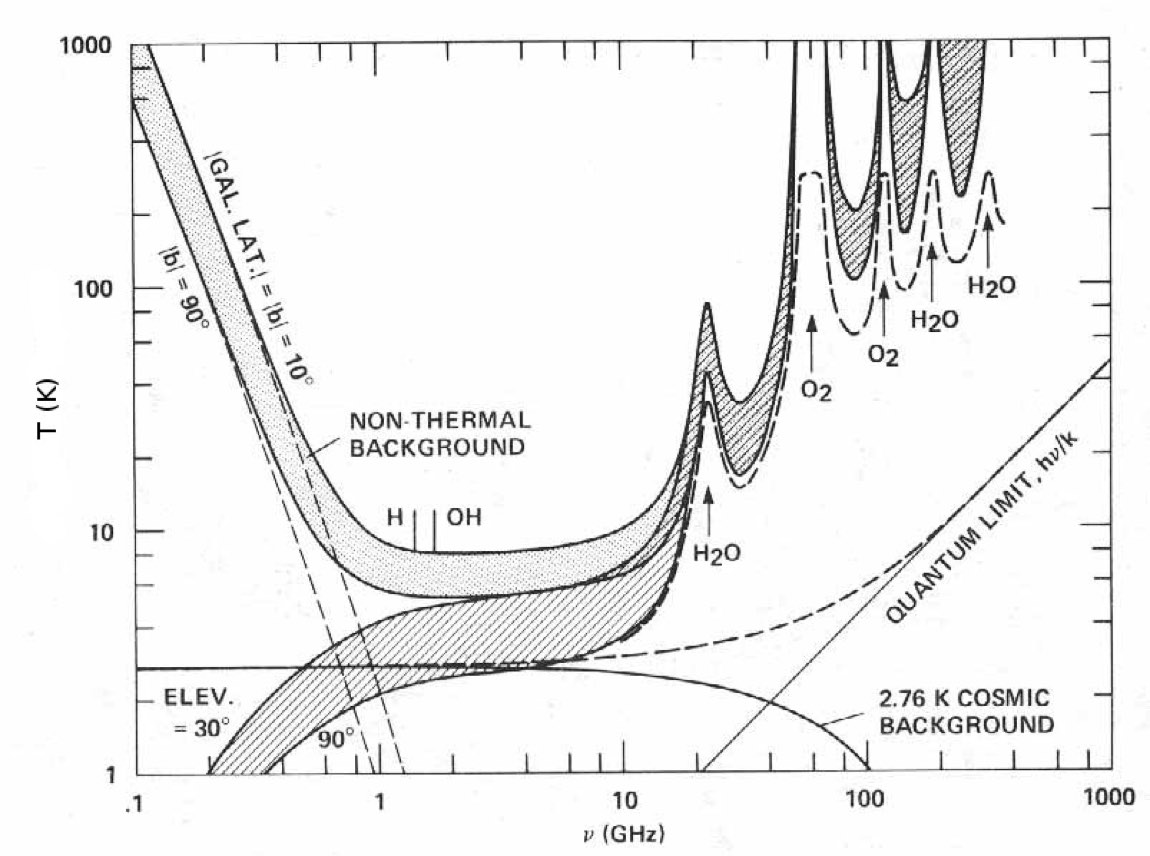
The first experiment recognizable as modern SETI was Project Ozma, named by Frank Drake after the queen of Oz in L. Frank Baum's fantasy novels. In 1960, Drake used a 26-metre radio telescope at Green Bank, West Virginia, to listen to two nearby stars — Tau Ceti and Epsilon Eridani — near the frequency of 1.420 gigahertz. That frequency sits in a stretch of the microwave spectrum nicknamed the "water hole" because it lies between the spectral lines of hydrogen and the hydroxyl radical, the two atoms that form water. Drake scanned a 400 kilohertz band around that marker using a single-channel receiver with a bandwidth of just 100 hertz. He found nothing remarkable. The Morrison-Cocconi paper that had inspired the experiment, published just a year earlier in 1959, had already done the theoretical groundwork — proposing that the microwave spectrum was the logical place to search and suggesting initial target stars. Drake's experimental confirmation that you could actually point a dish at a nearby star and listen systematically gave the entire field its methodological foundation, even though the result was silence.
03 The Wow! signal: best candidate, still unexplained
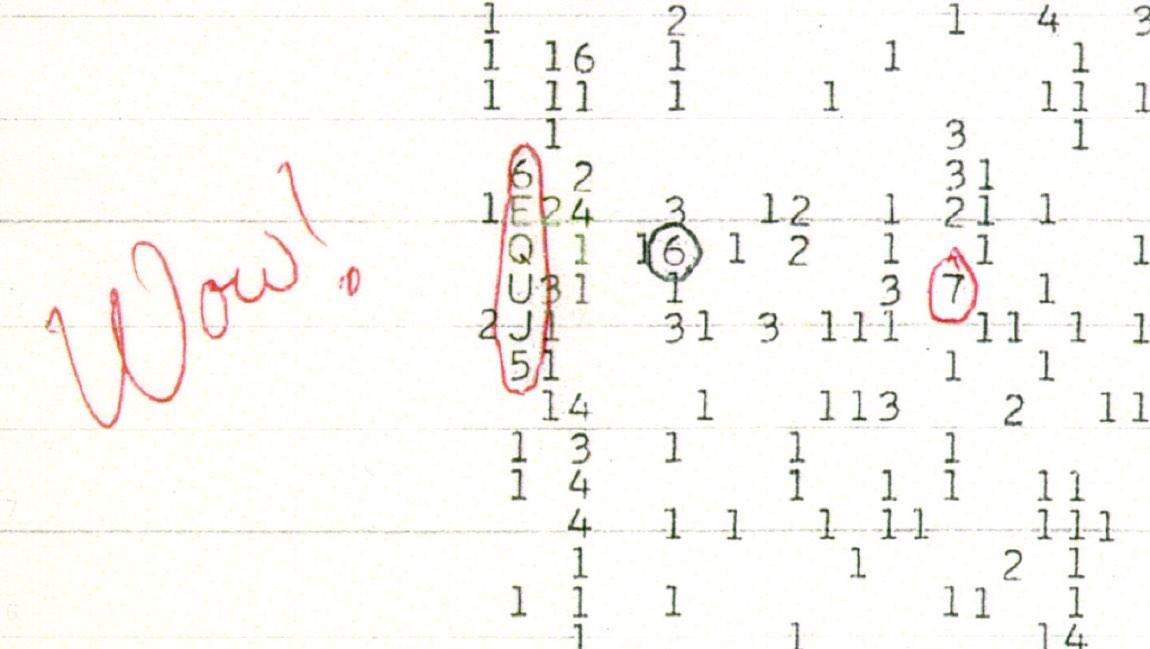
On August 15, 1977, a volunteer named Jerry Ehman was reviewing a printout from Ohio State University's Big Ear radio telescope when he noticed a signal so much stronger than the background noise that he circled it and scrawled "Wow!" in the margin — giving the detection its permanent name. The signal arrived near the 1.420 gigahertz hydrogen frequency, lasted roughly 72 seconds (the full passage time through Big Ear's beam), and has never been detected again despite several follow-up searches. It remains widely regarded as the most compelling candidate ever recorded for a radio signal of artificial extraterrestrial origin, though no confirmation has followed. The SETI Institute does not officially recognize it as extraterrestrial, because independent verification is a core requirement of scientific acceptance. Big Ear itself no longer exists: on March 23, 1999, the 26-metre telescope on which Sentinel, META, and BETA were all based was blown over by strong winds and seriously damaged, ending those programs. The Wow! signal therefore stands as both the field's greatest tantalizing moment and a permanent illustration of why a single, unrepeated detection cannot be taken as proof.
 ⤢
⤢
04 From Suitcase SETI to a billion channels Deeper
Harvard physicist Paul Horowitz recognized in the early 1980s that conventional spectrum analyzers, which used banks of analog filters, simply could not scan enough radio channels fast enough to make a realistic SETI search practical. Using digital signal processing integrated circuits instead, he built a portable device called "Suitcase SETI" in 1981 — capable of monitoring 131,000 narrow-band channels simultaneously. After field testing into 1982, it went into operational use in 1983 at the 26-metre Harvard/Smithsonian telescope at Oak Ridge Observatory, in a program called Sentinel that ran until 1985. Even 131,000 channels proved insufficient, so in 1985 Suitcase SETI was replaced by Project META — Megachannel Extra-Terrestrial Assay — which expanded capacity to 8.4 million channels at a resolution of 0.05 hertz per channel. Crucially, META used Doppler shift analysis to distinguish terrestrial from potentially extraterrestrial signals. Partly funded by filmmaker Steven Spielberg, it was followed by a southern-sky counterpart, META II, started in Argentina in 1990. The next step, BETA — Billion-channel Extraterrestrial Assay — came online October 30, 1995, processing 250 million simultaneous channels at 0.5 hertz resolution across the microwave spectrum from 1.400 to 1.720 gigahertz, using 63 dedicated fast Fourier transform engines each capable of a 222-point complex FFT in two seconds.
05 Project Phoenix and the politics of funding
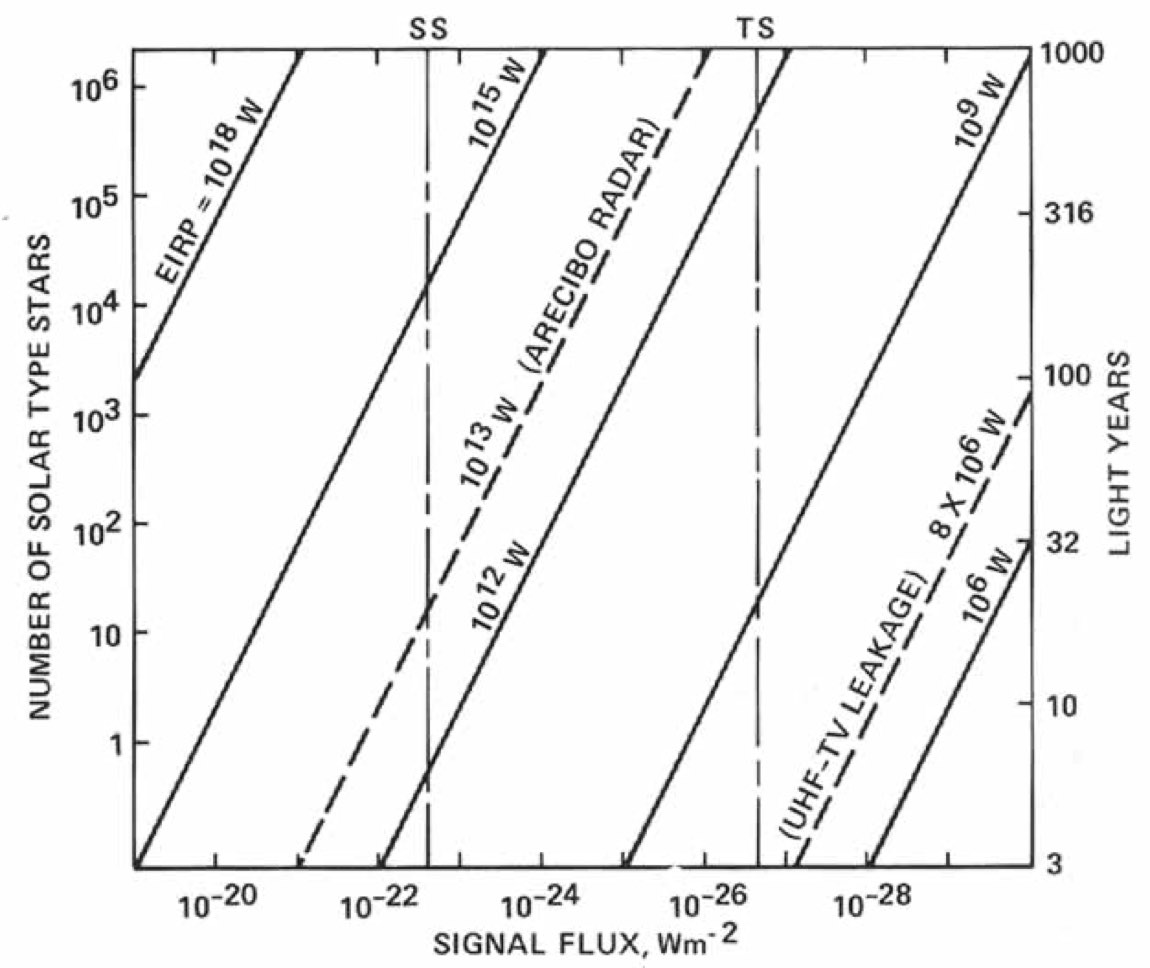
SETI's relationship with government money has been turbulent. NASA's program was defunded by Congress in 1981 after Senator William Proxmire attacked it, then restored in 1982 after Carl Sagan personally persuaded Proxmire of its scientific merit. A full operational program — the NASA Microwave Observing Program, or MOP — was finally launched in 1992, targeting 800 nearby stars and planning to use the Arecibo Observatory's 1,000-foot telescope, the 140-foot Green Bank instrument, and the NASA Deep Space Network. Congress killed it one year later. The nonprofit SETI Institute, based in Mountain View, California, revived the targeted-search component in 1995 under the name Project Phoenix, funding it privately. Under the direction of Jill Tarter, Phoenix observed roughly 1,000 Sun-like stars in the frequency range from 1,200 to 3,000 MHz using telescopes in Australia, West Virginia, and Puerto Rico, and was sensitive enough to detect a transmitter with 1 gigawatt EIRP out to a distance of about 200 light-years. The project continued until approximately 2015. By 2012, maintaining SETI research at the Institute cost around $2 million per year, while different SETI activities globally cost around 10 times that.
06 Breakthrough Listen: the biggest search yet
In July 2015, Stephen Hawking and entrepreneur Yuri Milner announced Breakthrough Listen — a ten-year, $100 million initiative described as the most comprehensive search for alien communications ever mounted. Its science program is based at the Berkeley SETI Research Center within the astronomy department at UC Berkeley. The initiative uses two major radio telescopes — Green Bank Observatory in West Virginia and the Parkes Observatory in Australia — for thousands of hours per year, a dramatic increase over the 24 to 36 hours of annual telescope time previously devoted to such searches. The raw data rate at Green Bank alone reaches 24 gigabytes per second, requiring dedicated on-site hardware just to handle the volume. The Automated Planet Finder telescope at Lick Observatory simultaneously searches for optical laser signals. In October 2019, Breakthrough Listen partnered with the TESS exoplanet mission, committing to scan thousands of newly found planets for technosignatures. Frank Drake, the founder of modern SETI who had conducted Project Ozma in 1960, served on the project's advisory committee, linking the field's first systematic experiment to its largest.
 ⤢
⤢
07 SETI@home: 617 teraFLOPS from living rooms
One of the most creative solutions to SETI's enormous computational demand was simply to borrow the idle processing power of millions of personal computers. SETI@home, conceived by David Gedye along with Craig Kasnoff and launched by UC Berkeley in May 1999, allowed anyone to download the BOINC software and donate their computer's spare cycles to analyzing chunks of radio data from the SERENDIP instrument at Arecibo. Each "work unit" came from the central 2.5 MHz wide band of SERENDIP IV. By June 28, 2009, over 180,000 active participants had connected more than 290,000 computers, generating an average computational power of 617 teraFLOPS — roughly equivalent to one of the world's most powerful supercomputers of that era. By 2010, after ten years, the project had covered over 67 percent of the sky observable from Arecibo at the target frequency, with at least three scans at each point — though that represents only about 20 percent of the full celestial sphere. On March 31, 2020, with 91,454 users still active, the project stopped distributing new work and entered indefinite hiatus. No confirmed extraterrestrial signal was ever found.
08 Optical SETI: hunting laser pulses from space Deeper
Radio waves dominate SETI history, but a parallel tradition targets laser light instead. The idea was first formally proposed by R. N. Schwartz and Charles Hard Townes in a 1961 paper in Nature titled "Interstellar and Interplanetary Communication by Optical Masers." Townes revisited the concept in a detailed 1983 study published in the Proceedings of the National Academy of Sciences. An infrared laser pulse focused through a ten-meter mirror would appear thousands of times brighter than the Sun to a civilization sitting in its beam — making detection plausible despite the targeting problem. The Harvard-Smithsonian group led by Paul Horowitz mounted a laser detector on Harvard's 155-centimeter telescope and between October 1998 and November 1999 inspected about 2,500 stars, finding nothing intentional. A dedicated all-sky survey telescope with a 1.8-meter aperture was subsequently set up at Oak Ridge Observatory. The SETI Institute runs a "Laser SETI" program using cameras that continuously survey the entire night sky for millisecond singleton pulses. In January 2020, two PANOSETI telescopes — Pulsed All-sky Near-infrared Optical SETI — were installed at Lick Observatory, aiming to cover all observable northern-hemisphere sky in both optical and near-infrared bands simultaneously.
09 Technosignatures beyond radio and lasers Deeper
The concept of technosignatures broadens SETI from listening for deliberate transmissions to looking for any detectable consequence of technology at a distance. These fall into three categories: astroengineering structures, signals of planetary origin, and spacecraft. A Dyson sphere built around a star to harvest all its energy would betray itself through an infrared excess from what should be a normal star, or the apparent disappearance of the star in visible light over years. A survey of some 100,000 nearby large galaxies found none showing obvious signs of such advanced engineering. Another hypothetical device, the Shkadov thruster — which moves a star by reflecting some of its own light back on itself — would be revealed when its transits across the stellar disk abruptly stopped. At the planetary scale, city lights on the night side of an exoplanet, industrial chemicals in an atmosphere, or the heat signature of urban areas — distinguishable from volcanoes by their relatively modest temperatures — are all proposed indicators. Geostationary satellites around an exoplanet might be detectable with current technology. Even interstellar spacecraft could leave signatures: a magnetic-sail spacecraft interacting with the interstellar medium would produce synchrotron radiation detectable over thousands of light-years.
 ⤢
⤢
10 The Fermi paradox and the Great Silence
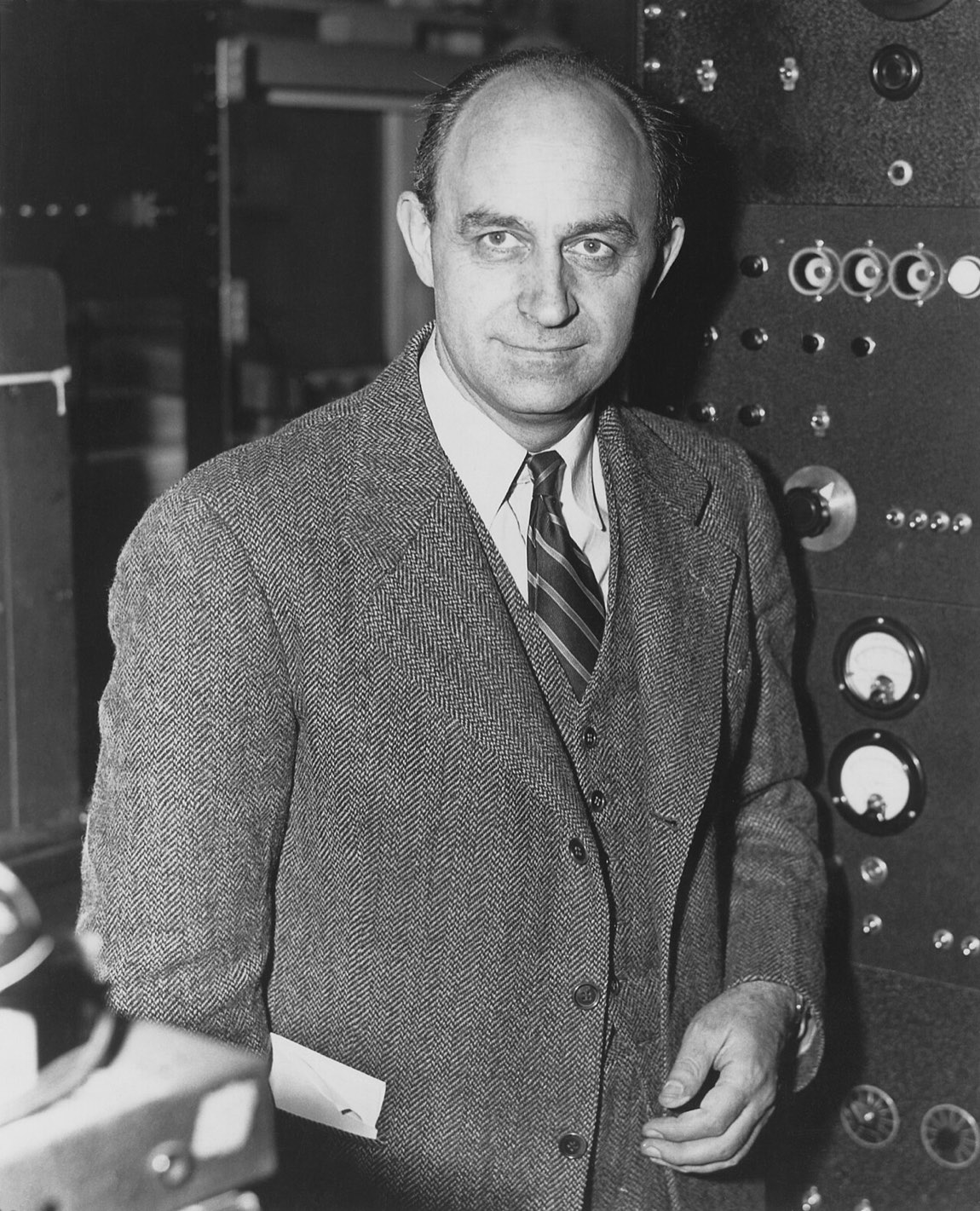
In the 1950s, Italian physicist Enrico Fermi famously asked — in words recalled variously as "Where are they?" or "Where is everybody?" — why, if technologically advanced civilizations are common, none have made themselves known. The SETI version of that puzzle is sometimes called "the Great Silence." The paradox admits several classes of resolution: intelligent life may be far rarer than assumed (the Rare Earth hypothesis); our observations are simply incomplete; our search methods are aimed at the wrong indicators; or advanced civilizations routinely destroy themselves before they can communicate across interstellar distances. German radio astronomer Sebastian von Hoerner estimated the average civilizational lifespan at just 6,500 years and, working from assumptions about habitable planets, calculated that the average distance between communicating civilizations in the Milky Way would be around 1,000 light-years. Science writer Timothy Ferris proposed a different resolution: an "Interstellar Internet" of mostly automated archive systems storing the accumulated knowledge of vanished civilizations and broadcasting it through narrow-band radio or laser links — a hypothesis he noted is, in principle, testable. The Fermi paradox remains one of the central motivating questions behind all SETI research precisely because its answer could rewrite our understanding of life in the universe.
11 Why detection is much harder than it sounds
A persistent misconception is that a sufficiently large radio telescope simply pointed at the sky would eventually pick up alien broadcasts the way a rooftop antenna picks up distant television stations. Charles Stuart Bowyer, the astronomer who initiated SERENDIP, noted that even the world's most sensitive radio telescope of his era could not detect the kind of incidental radio and television noise that Earth has been leaking into space for less than 100 years. For SERENDIP and most SETI projects to succeed, a civilization would need to be deliberately beaming a powerful, targeted signal directly toward Earth. Earth's own unintentional signals — television, radar, radio — have now spread roughly 100 light-years into space, reaching notable stars including Vega, Aldebaran, Barnard's Star, Sirius, and Proxima Centauri, but those signals are too faint for a distant civilization to detect with technology comparable to ours. Project Phoenix's search was sensitive enough to detect a 1 gigawatt EIRP transmitter out to about 200 light-years — impressive, but covering only a tiny fraction of the galaxy's roughly 100,000 light-year diameter.
12 What happens if a signal is actually found?
The International Academy of Astronautics maintains a SETI Permanent Study Group specifically to prepare for a confirmed detection. In 2005 it established the Post-Detection Science and Technology Taskgroup, chaired by Professor Paul Davies, to advise on questions arising from a genuine signal. In October 2000, astronomers Iván Almár and Jill Tarter proposed the Rio scale — an ordinal measure from zero to ten quantifying the impact of any public announcement about extraterrestrial intelligence, modeled on the Torino scale used for asteroid impact risk. The Rio scale later inspired the 2005 San Marino Scale, which rates the risk of transmissions from Earth, and the 2010 London Scale, which addresses detection of extraterrestrial life. The Rio scale itself was revised in 2018; and in June 2026, the IAA ratified the first update to the post-detection protocol after years of deliberation. The protocols currently apply specifically to radio SETI rather than to active messaging. Philosopher Bruce Jakosky has argued that an official disclosure of extraterrestrial life could carry far-reaching and still-undetermined implications for society, particularly for the world's religions — a dimension of the question that formal scientific protocols do not yet fully address.
13 Is SETI science, almost-science, or something else? Deeper
SETI's scientific status has been openly debated for decades. A 2009 editorial in Nature acknowledged that SETI "can't escape an association with UFO believers" and that it is "arguably not a falsifiable experiment" — because no amount of radio silence definitively rules out the existence of alien civilizations that simply are not using radio. Nature also observed that the field is "marked by a hope, bordering on faith" that aliens are aiming signals at Earth. Philosopher Massimo Pigliucci asked in 2010 whether SETI is "uncomfortably close to the status of pseudoscience" for lacking a clear threshold at which negative results would cause the hypothesis to be abandoned. Researcher Milan M. Ćirković, then at the Astronomical Observatory of Belgrade, defended SETI, placing it alongside string theory and evolutionary psychology as "almost-science" — fields where the subject matter makes traditional falsification difficult but the underlying methodology remains rigorous. Particle physicist Richard Carrigan raised a different concern: that a decoded alien signal released onto the Internet could behave like a computer virus, a prospect computer security expert Bruce Schneier dismissed as a "bizarre movie-plot threat." Nature's own bottom line was that despite all these difficulties, "a small SETI effort is well worth supporting, especially given the enormous implications if it did succeed."