Asteroid · Deep guide
2024 PT5
Also called: 2024 PT5
A small asteroid that hitched a ride around Earth for two months in late 2024 — and may be a piece of the Moon.
What is it?
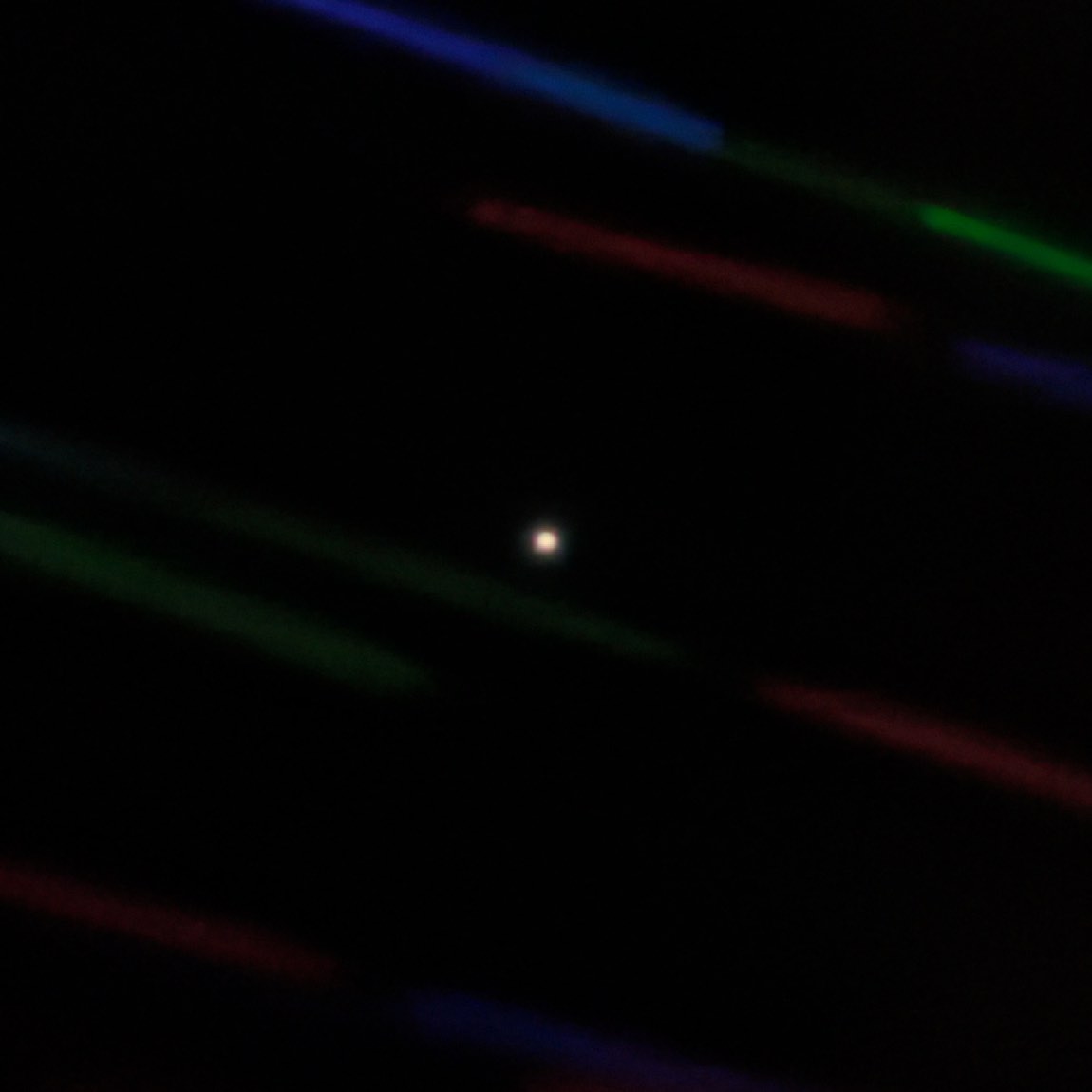
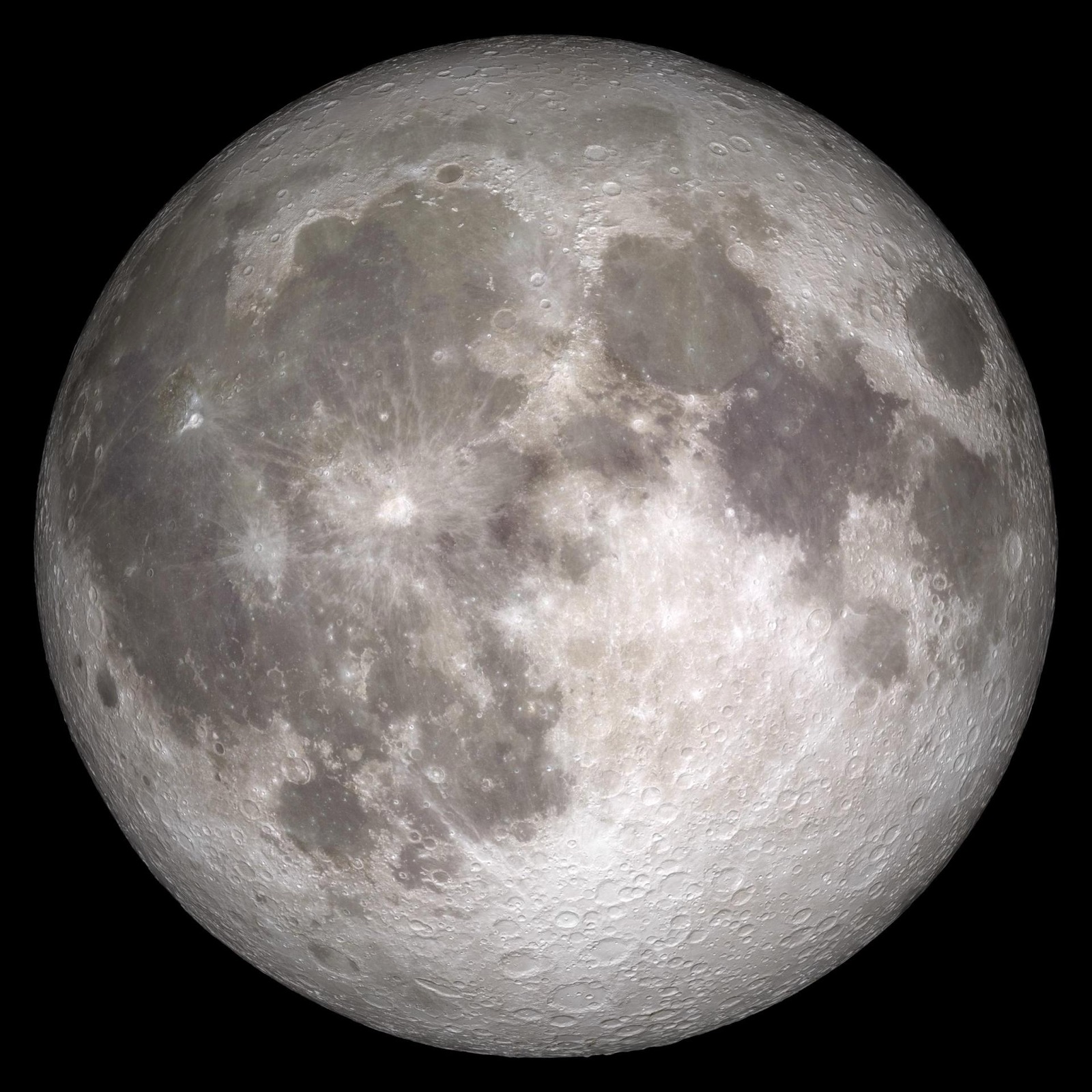
2024 PT5 is a near-Earth object about 11 m across, discovered in August 2024. Between late September and late November 2024 it was briefly bound to Earth on a loose temporary orbit, earning it 'mini-moon' headlines. Its colours and spectrum closely match lunar rock samples, so it may be debris knocked off the Moon by an ancient impact.
The deep dive
Researched for the Atlas from Wikipedia — 2024 PT5 (2,169 characters read) · updated Nov 14, 2026
01 How 2024 PT5 Was Found
2024 PT5 came to light on 7 August 2024, spotted by the ATLAS survey station in Sutherland, South Africa. ATLAS — the Asteroid Terrestrial-impact Last Alert System — is designed precisely for this kind of work: sweeping the sky repeatedly to catch fast-moving objects that might threaten Earth. The asteroid was flagged just days before it made its most recent closest approach to our planet on 8 August 2024, passing at roughly 567,000 km (352,000 mi), less than twice the distance to the Moon. That discovery-to-flyby gap of only one day underscores how quickly small, faint objects can materialize in our cosmic neighbourhood. Within weeks of discovery, CNEOS (the Center for Near Earth Object Studies) had assessed its trajectory carefully enough to remove it from their Sentry Risk Table on 18 August 2024, formally ruling out any risk of an Earth impact. The whole sequence — discovery, characterization, and risk clearance — unfolded in under two weeks, a testament to how rapidly the global planetary-defense network can mobilize around a newly found object.
02 The Mechanics of a Temporary Capture Deeper
What set 2024 PT5 apart from an ordinary flyby was that it briefly fell under Earth's gravitational dominion. Between 29 September 2024 at 19:54 UTC and 25 November 2024 at 16:43 UTC — a span of 1 month and 27 days — the asteroid's geocentric orbital eccentricity dropped below 1 and its geocentric orbital energy turned negative, two conditions that together define a bound orbit. During this window it remained just outside Earth's Hill sphere, the bubble of gravitational influence extending roughly 0.01 AU (about 1.5 million km) from our planet. Its relative velocity with respect to Earth during capture ranged from as low as 0.002 km/s (about 4.5 mph, barely faster than a brisk walk) to 0.439 km/s (980 mph). That astonishingly slow minimum speed is the key to capture: at higher velocities an asteroid simply sails past, but at a few metres per second Earth's gravity can gently shepherd the object into a looping, temporary embrace before the Sun's pull eventually reclaims it.
03 A Moonlike Rock in Disguise
Several independent telescope facilities trained their instruments on 2024 PT5 and reached a strikingly consistent conclusion: its surface looks almost exactly like the Moon's. The Gemini North telescope found that its color indices and spectrum best match lunar rock samples, with S-complex asteroids coming in a distant second. The Gran Telescopio Canarias (GTC) obtained a visible spectrum consistent with an Sv-type asteroid or possibly genuine lunar ejecta. Most compellingly, the Lowell Discovery Telescope combined with the NASA Infrared Telescope Facility (LDT/IRTF) measured 2024 PT5's reflectance spectrum across a broad range of 350 to 2,350 nanometres. That wide-wavelength fingerprint was inconsistent with artificial objects and with ordinary asteroids, but matched both the lunar Maria (the dark volcanic plains) and the Highlands (the brighter, heavily cratered terrain). Scientists announced in January 2025 that the evidence points squarely to lunar ejecta — debris blasted off the Moon's surface by an ancient impact.
04 Ruling Out a Piece of Old Rocket
Whenever a small object is found loitering near Earth on an unusual orbit, one immediate question is whether it might be a discarded rocket stage or other human-made hardware left over from decades of space launches. Such "artificial minimoons" have been misidentified as asteroids before. For 2024 PT5, the LDT/IRTF reflectance spectrum spanning 350 to 2,350 nanometres explicitly ruled out an artificial origin: the spectral shape does not match painted metal, rocket propellant residues, or any other manufactured surface. Its surface is described as quite red in colour, a characteristic shared with certain space-weathered silicate rocks but not with spacecraft materials. This distinction matters because an artificial object would have entirely different implications for orbital dynamics and would hold no scientific value as a sample of the solar system's history. 2024 PT5 is unambiguously a natural rock, most probably a chip of the Moon itself.
05 Its Remarkable Family Resemblance Deeper
2024 PT5 does not stand alone. Its spectrum is noted to be similar to two other enigmatic Earth companions: 469219 Kamoʻoalewa, which orbits as a quasi-satellite of Earth, and 2022 NX1, which was classified as a minimoon during its own temporary capture. Kamoʻoalewa had already attracted scientific attention because of its own lunar-like spectrum, prompting debate about whether a family of Moon-derived objects shares similar orbits near Earth. The spectral similarity among these three objects raises an intriguing possibility: impacts on the Moon over billions of years have sprayed debris into heliocentric orbits that happen to keep these fragments loitering in Earth's gravitational neighbourhood. The 11-metre diameter of 2024 PT5 is roughly comparable to the size of a large house, so fragments of this scale can survive ejection and long interplanetary travel without completely disintegrating, preserving readable mineralogical signatures on their surfaces.
06 Heliocentric, Not a True Minimoon Deeper
Despite the vivid image of 2024 PT5 circling Earth, scientists were careful to draw a formal distinction. In January 2025 they determined that 2024 PT5's orbital path is dominantly heliocentric, meaning it primarily orbits the Sun rather than Earth, and therefore should not be considered a minimoon in the strict sense. A true minimoon completes at least one full revolution around Earth during its capture; 2024 PT5's passage just outside the Hill sphere and its geometry of approach meant it never achieved that full loop. Its temporary capture was real in terms of negative geocentric orbital energy, but the dominant gravitational master throughout remained the Sun. This nuance illustrates how the boundary between "captured satellite" and "slow flyby" can be genuinely blurry for objects with low relative velocities, and why planetary scientists insist on precise dynamical criteria rather than informal labels when classifying these transient visitors.
07 A Spin Too Fast to Measure Easily
Despite its tiny size — roughly 11 metres (36 ft) across, about the length of a city bus — 2024 PT5 spins quickly. Its measured rotation period is around 0.7 hours, meaning it completes a full revolution approximately every 42 minutes. For context, Earth takes 24 hours; even the fastest-spinning large asteroids rarely rotate in under two hours. Such a rapid rotation in a small body is not unusual: without the internal strength needed to hold loose material against centrifugal force, very small asteroids often spin faster than the "spin barrier" that would disrupt a rubble pile, suggesting they may instead be monolithic fragments — single solid pieces of rock rather than gravitationally bound collections of smaller chunks. If 2024 PT5 is indeed a monolithic sliver of lunar crust ejected by an ancient impact, that coherence would naturally allow it to spin at this rate without flying apart.
08 Future Encounters Already on the Calendar
2024 PT5's story is far from over. Having passed Earth in August 2024, dipped into temporary capture in the northern autumn, and made a further approach on 9 January 2025 at roughly 1,801,158 km (1,119,188 mi) with a relative velocity of 1.03 km/s (2,300 mph), astronomers have projected its orbit decades forward. The object is expected to make another approach in 2055, and then — most notably — it will return to orbit around Earth in 2084 for about 43 days. That 2084 visit is more extended than the roughly two-month episode of 2024, offering a potentially richer window for observation or even a future rendezvous mission. Because its orbital evolution can be forecast with confidence, mission planners now have decades to consider whether a small spacecraft could intercept it during one of these predictable slow dances with our planet.
09 What Its Orbit Geometry Looks Like Deeper
The orbital behaviour of 2024 PT5 is shaped by an interplay between its heliocentric orbit and Earth's gravitational well. When the article describes its relative velocity dropping as low as 0.002 km/s during the capture period, that figure is especially striking: 0.002 km/s equals just 2 metres per second, slower than most people can sprint. At such a velocity, Earth's Hill sphere — the region extending to roughly 0.01 AU or 1.5 million km — becomes gravitationally significant even for a body whose fundamental allegiance is to the Sun. The object did not plunge deep inside Earth's Hill sphere but skirted just outside it, keeping the Sun as its dominant gravitational influence while still meeting the technical criteria of negative geocentric energy. This kind of grazing capture on the outer edge of the Hill sphere is a recognised category of temporary satellite behaviour and is distinct from the deeper, longer captures that might produce a genuinely well-defined lunar-style orbit around Earth.
10 The Science Behind Lunar Ejecta Orbits Deeper
The conclusion that 2024 PT5 is composed of ejecta from a lunar impact raises fascinating questions about how material escapes the Moon in the first place. The Moon's surface gravity is about one-sixth of Earth's, and large impactors can excavate craters that launch surface material at speeds exceeding the Moon's escape velocity of roughly 2.4 km/s. Once free, those fragments enter heliocentric orbits shaped by the gravitational influence of both the Sun and the Earth-Moon system. Over time, gravitational nudges can park some of these fragments in orbits that repeatedly bring them close to Earth. The spectral evidence from multiple telescopes — Gemini North, GTC, and LDT/IRTF — all pointing independently to a lunar match, makes this provenance compelling. Importantly, the spectrum distinguished between artificial objects, ordinary asteroids, and lunar samples, leaving lunar ejecta as the best-supported interpretation. The parallel with Kamoʻoalewa suggests this may be a broader population rather than an isolated curiosity.
11 Observing a Rock the Size of a Bus
Characterising an object just 11 metres in diameter from Earth-based observatories is a genuine technical achievement. At its closest approach of roughly 567,000 km in August 2024 — well inside the Moon's average distance of about 384,400 km — it would still have appeared as an unresolved point of light even in the largest telescopes. All physical information therefore came from spectroscopy: splitting that point of light into its component wavelengths and comparing the result to laboratory spectra of known materials. Three different instrument combinations were brought to bear: Gemini North for colour indices and initial spectral matching; the Gran Telescopio Canarias for visible-wavelength spectroscopy; and the Lowell Discovery Telescope paired with the NASA Infrared Telescope Facility for the broadest wavelength coverage, 350 to 2,350 nanometres. Each facility independently converged on the same lunar interpretation, giving scientists unusual confidence in the conclusion for such a small and fleeting object.