 Photograph · Lithopsian · CC BY 4.0
Star Cluster · Deep guide
NGC 6231
Also called: Caldwell 76 · NGC 6231 · Baby Scorpion Cluster · Crocodile Cluster
A blaze of young, hot blue stars near Scorpion's tail, bright enough to see by eye.
What is it?
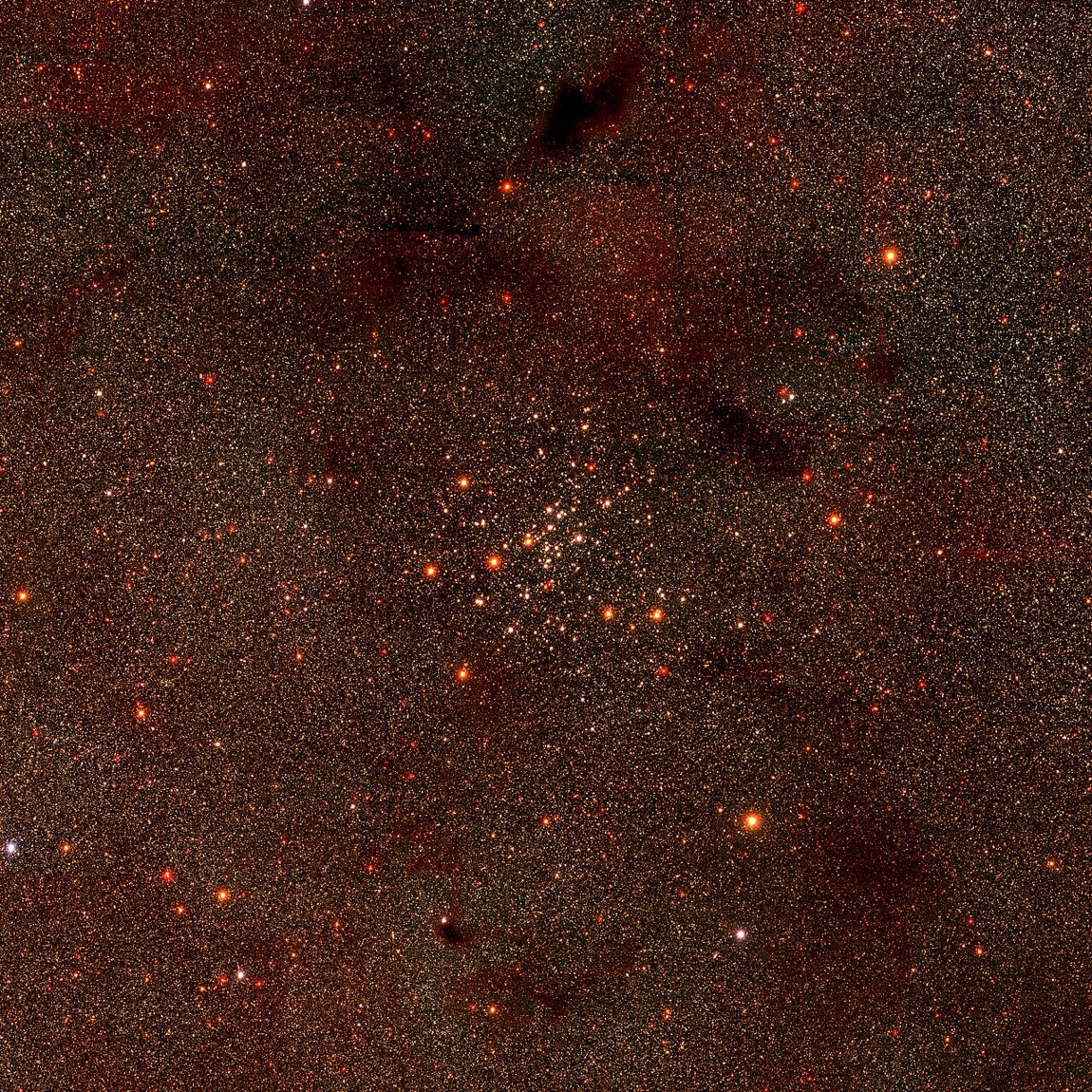
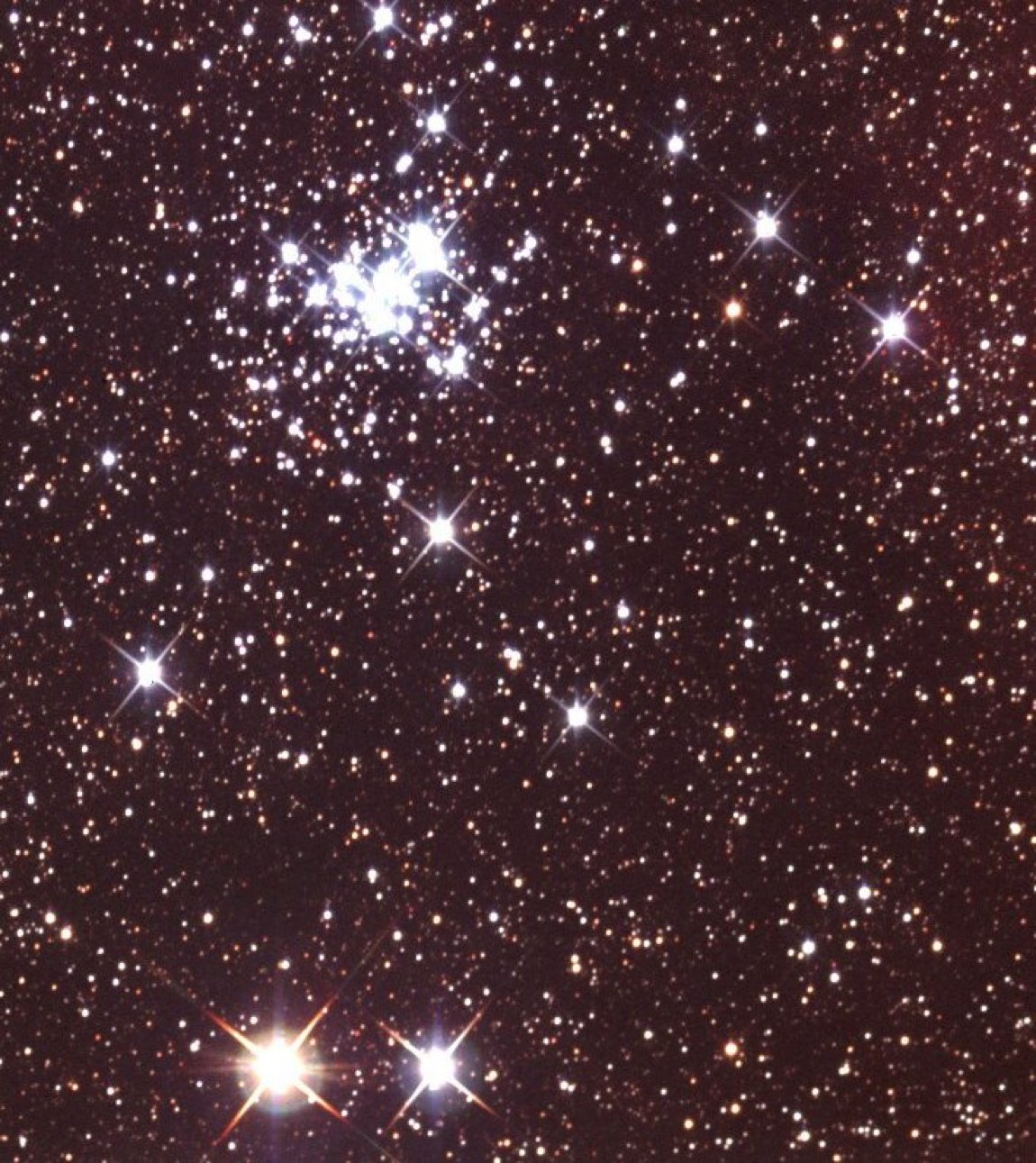
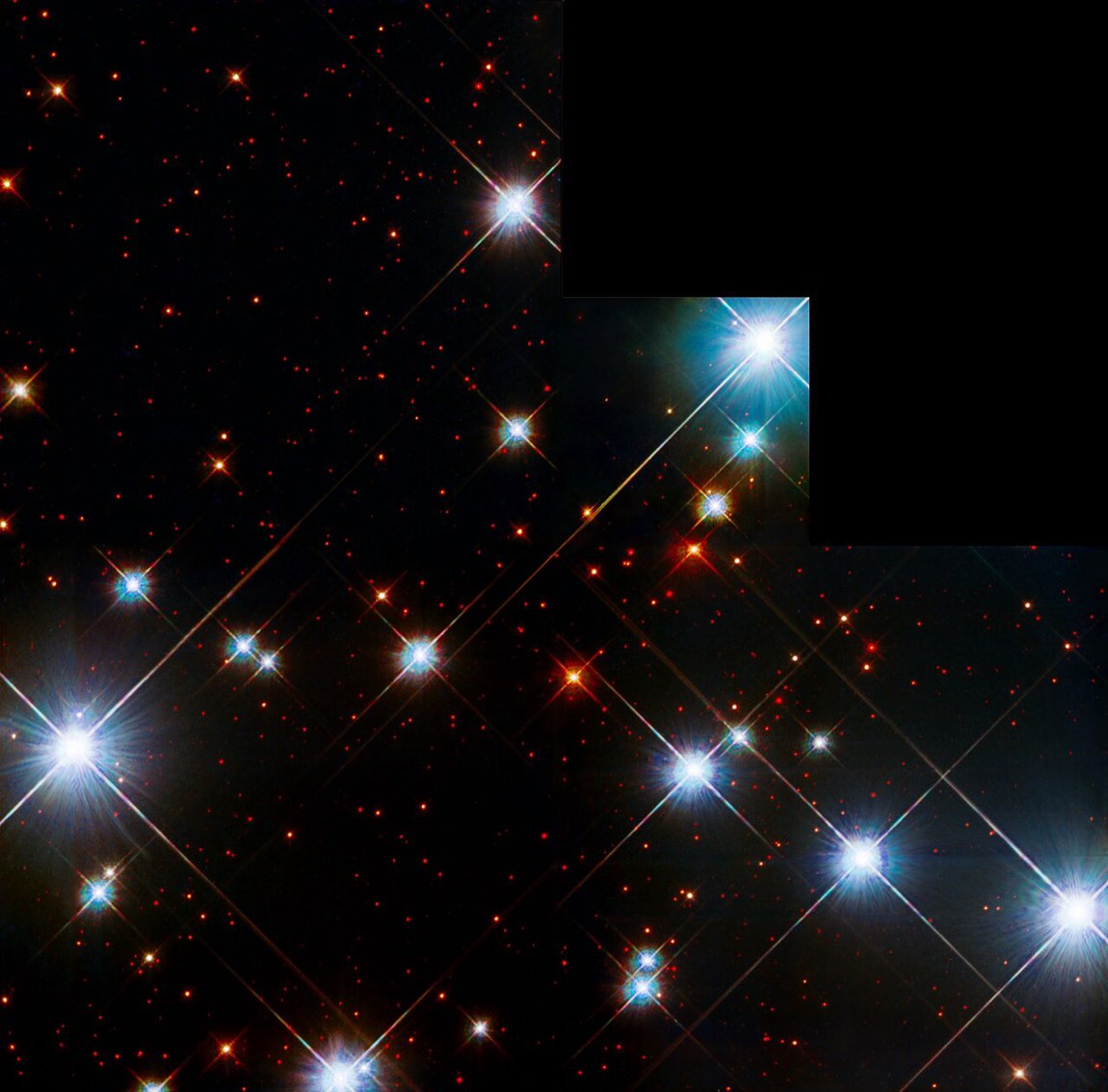
NGC 6231 is an open cluster half a degree north of Zeta Scorpii, sometimes called the Baby Scorpion or Crocodile Cluster. It is the heart of the Scorpius OB1 association, a spread of young, hot blue stars in the Sagittarius Arm of the Milky Way. The cluster is only about 2–7 million years old and includes three Wolf–Rayet stars. Astronomers have used it to measure how often B-type stars come in binary pairs.
The deep dive
Researched for the Atlas from Wikipedia — NGC 6231 (2,471 characters read) · updated Nov 15, 2026
01 A Cluster Born Just Yesterday, Cosmically Speaking
When astronomers estimate the age of NGC 6231, they arrive at a range of 2 to 7 million years — an extraordinary figure when you consider that the Sun is about 4.6 billion years old. In cosmic terms, this cluster is essentially a newborn. Stars this young haven't had time to drift far from the gas and dust that birthed them, and many are still settling into stable lives on the main sequence. The sheer youth of NGC 6231 is part of what makes it scientifically precious: it offers a snapshot of a stellar nursery that has only just finished its most violent creative phase. The stars are bright, hot, and tightly packed, and the cluster sits embedded in the Scorpius OB1 association — a broader swath of young, bluish, massive stars sprawled across the constellation Scorpius. Both the cluster and the association occupy the Sagittarius Arm of the Milky Way, the same spiral arm that lies just outward from our own Orion Arm.
02 Wolf-Rayet Stars: The Cluster's Most Extreme Residents Deeper
Among the most remarkable inhabitants of NGC 6231 are three Wolf-Rayet stars: HD 151932, HD 152270, and HD 152408. Wolf-Rayet stars represent one of the most extreme phases in stellar evolution — they are massive stars that have shed their outer hydrogen envelopes and now blast fierce stellar winds into surrounding space, exposing the hot, luminous nuclear-burning layers beneath. Their spectra are defined by broad emission lines rather than the absorption lines seen in ordinary stars. Finding three of these rare objects in a single open cluster underscores just how massive and short-lived the stellar population of NGC 6231 is. Because Wolf-Rayet stars burn through their fuel at a ferocious rate, their presence confirms that the cluster formed stars of truly enormous mass. These stars are likely candidates to end their lives as supernovae within a cosmically short timeframe, potentially reshaping the surrounding interstellar medium and triggering yet another generation of star formation.
03 The Brightest Star and Why It Matters
The title of brightest star in the Scorpius OB1 association belongs to Zeta1 Scorpii, catalogued as HR 6262, with a visual magnitude of 4.71 and a spectral type of O8. That spectral classification places it among the hottest, most luminous class of stars known, and the article describes it as one of the most radiant stars known in the entire galaxy — a remarkable superlative. Its apparent partner in the sky, Zeta2 Scorpii (HR 6271), looks almost as striking to the naked eye but is an entirely different story: Zeta2 lies only 150 light-years from Earth, far closer than the association itself, and is therefore not a true member of Scorpius OB1. This is a classic example of a line-of-sight coincidence — two stars appearing close together simply because they happen to fall along the same direction from Earth, with no physical relationship between them whatsoever.
04 Measuring How Often Massive Stars Come in Pairs Deeper
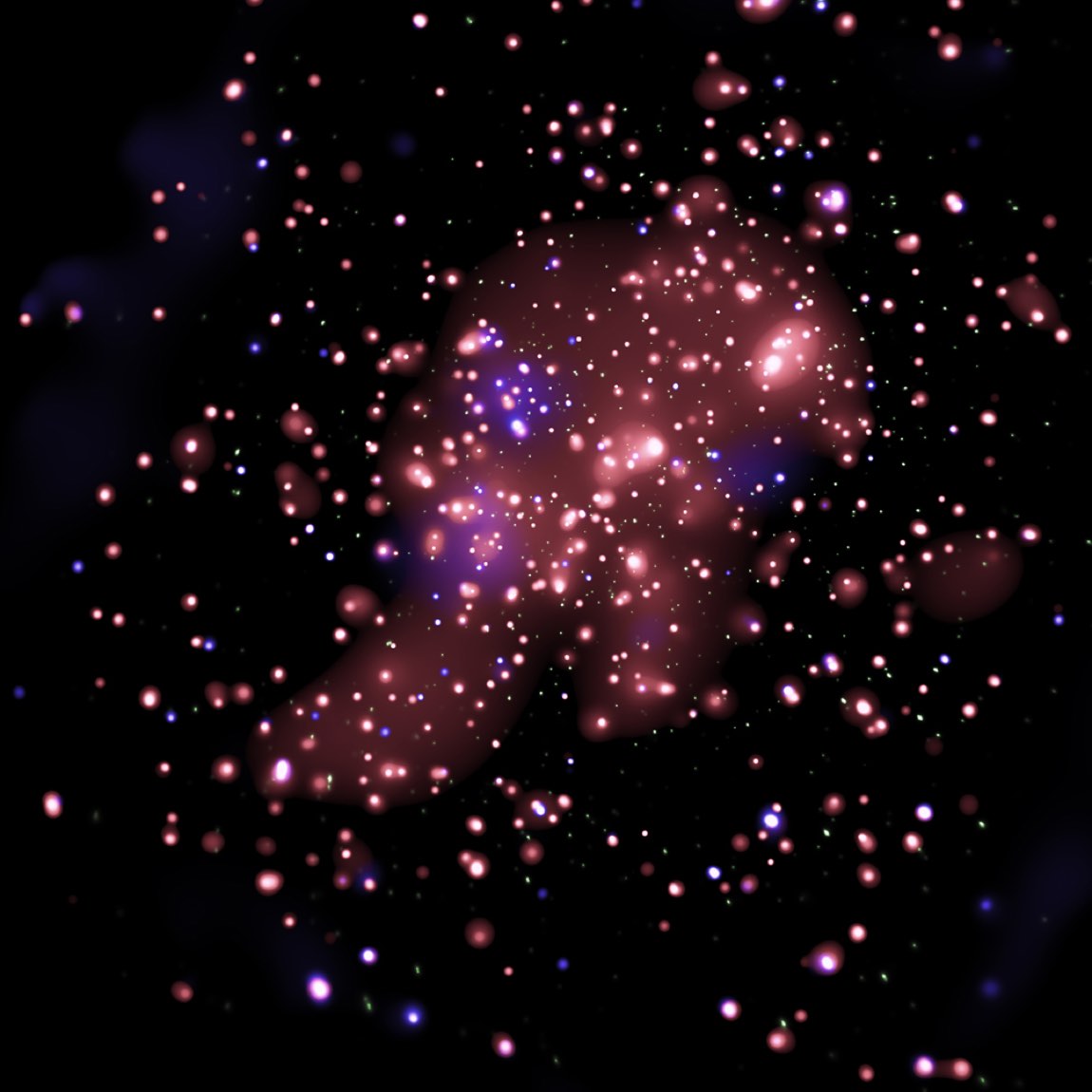
One of the most scientifically productive uses of NGC 6231 has been as a laboratory for studying stellar multiplicity — that is, how frequently stars are born with companions. Because the cluster is young and its stellar population is well-defined, researchers used it to measure the binary fraction of B-type stars: they found that 52% ± 8% of B-type stars in the cluster exist in binary systems. That means roughly half of these massive, hot stars have a gravitational partner. The result is statistically meaningful and carries a nuanced implication: B-type stars form binary pairs commonly, but not as commonly as the even more massive O-type stars, which are known to have an especially high binary fraction. This kind of precise measurement within a single young cluster helps astronomers build a fuller picture of how multiplicity depends on stellar mass — a key ingredient in models of how star-forming regions evolve over time.
05 The False Comet: A Bigger Picture in the Sky
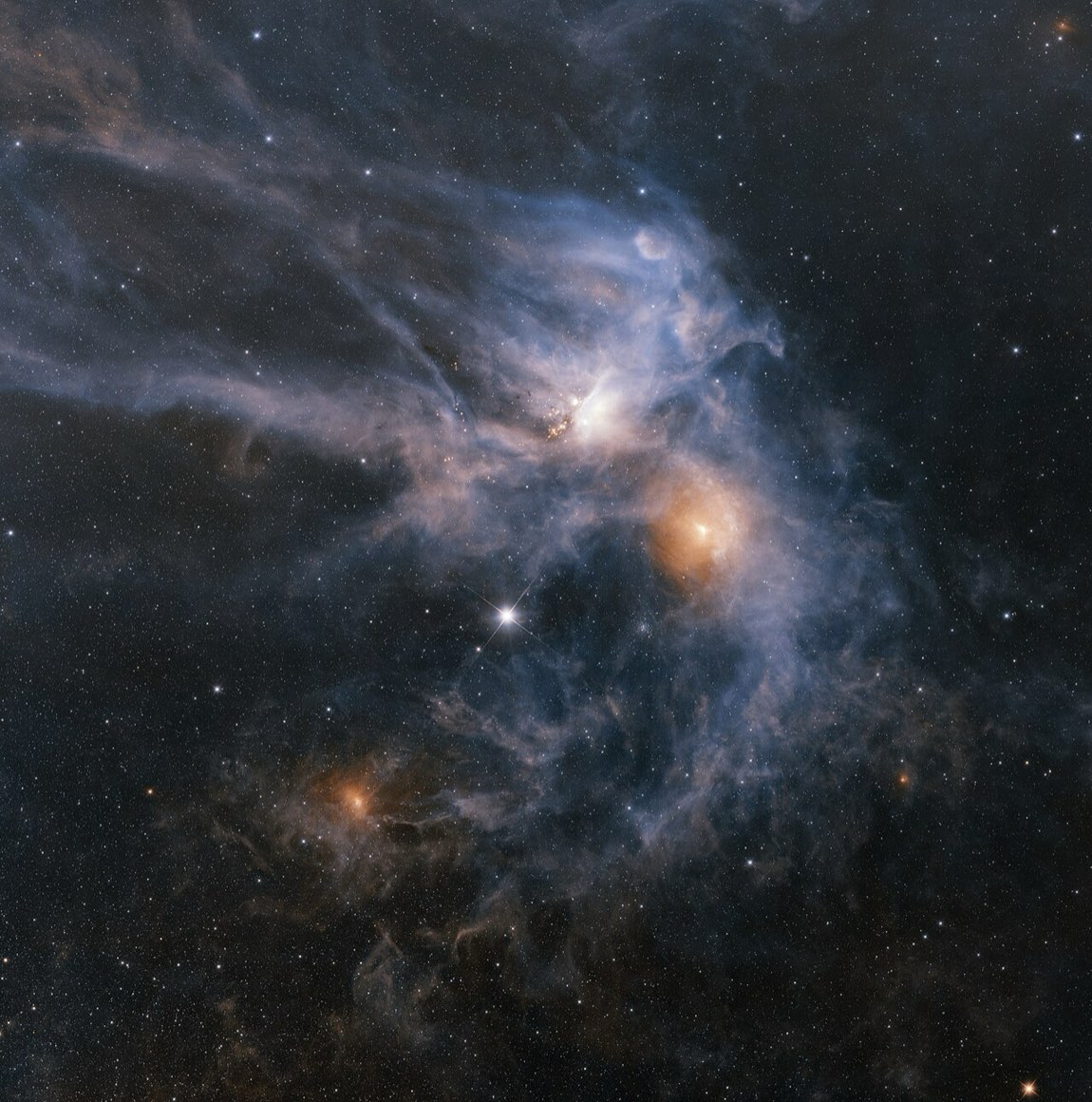
NGC 6231 is striking on its own, but it also serves as the bright head of a much larger naked-eye and binocular asterism called the False Comet. This sweeping collection of stars runs northward from Zeta Scorpii and NGC 6231 for roughly half the distance toward Mu Scorpii, drawing the eye like a comet frozen mid-flight across Scorpius. The tail of the False Comet is shaped by two open clusters, Collinder 316 and Trumpler 24, whose stars fan out in a way that mimics a cometary spray. Trumpler 24 is itself surrounded by IC 4628, an emission nebula also called the Prawn Nebula, whose glowing gas enhances the visual impression of a spreading tail. The whole structure belongs to the Scorpius OB1 association, meaning this apparent asterism reflects genuine physical relationships — these are not random alignment stars but a true family of young, massive stars born from the same giant molecular cloud.
06 Approaching Us: The Cluster Is Closing In
NGC 6231 is not sitting still in the galaxy. The cluster is approaching the Solar System at a velocity of 22 km/s. To put that in perspective, 22 km/s is about 79,000 kilometers per hour — fast by human standards but a gentle drift on the scale of a galaxy. This motion is a radial velocity measurement, meaning it represents the component of the cluster's movement directed straight toward us. Over millions of years, this approach will bring NGC 6231 measurably closer, though any encounter with the Solar System remains extraordinarily remote in both time and probability given interstellar distances. Astronomers measure such velocities using the Doppler shift in stellar spectra — light from an approaching source is compressed toward shorter, bluer wavelengths, and the precise degree of that shift reveals the speed of approach with high accuracy.
 ⤢
07 Discovery Before the Telescope Was King
NGC 6231 was first documented by the Italian astronomer Giovanni Battista Hodierna, who recorded it before 1654 under the designation Luminosae in his catalogue of deep-sky observations. That catalogue appeared in his 1654 book De Admirandis Coeli Characteribus, published in Palermo. Hodierna's work is remarkable for its era — he systematically catalogued fuzzy objects in the sky long before such surveys were fashionable, and his records represent some of the earliest scientific documentation of star clusters and nebulae. After him, the cluster was independently rediscovered by a series of distinguished astronomers: Edmond Halley in 1678, Jean-Philippe de Cheseaux between 1745 and 1746, and Abbé Lacaille between 1751 and 1752. The repeated independent discoveries speak to how visually impressive NGC 6231 is — it demanded attention from anyone sweeping a telescope across Scorpius.
08 The Northern Jewel Box: A Comparison With a Famous Twin
NGC 6231 has earned the informal nickname the Northern Jewel Box because of its visual resemblance to NGC 4755, which is officially known as the Jewel Box cluster. NGC 4755 sits deeper in the southern sky and is celebrated for its rich concentration of brilliant, colorful stars packed into a small area of sky. NGC 6231 produces a similar impression — a compact, sparkling group that rewards telescope views with vivid blue-white stellar points. The comparison is more than cosmetic: both are young open clusters dominated by hot, luminous OB-type stars, so their physical natures are genuinely analogous. The "Northern" qualifier in the nickname is relative to NGC 4755's position rather than to the celestial equator, since NGC 6231 itself sits in the southern sky in Scorpius. The cluster also carries two other common names — the Baby Scorpion Cluster and the Crocodile Cluster — reflecting the variety of impressions its shape leaves on different observers.
09 NGC 6231 in Chinese Astronomical Tradition Deeper
In the long tradition of Chinese astronomy, NGC 6231 is most commonly identified with the asterism Shengong, written 神宮 and meaning "dressing room" or "sacred palace." The identification is not entirely settled, however. In older Chinese sources, Shengong refers instead to the star Mu2 Scorpii, or possibly to another faint star or patch of stars in the same region of sky — a reminder that historical Chinese astronomical records were not always mapping the same objects that modern catalogs track by the same names. The International Astronomical Union's Working Group on Star Names has since adopted the name Shengong specifically for the star HD 153072, grounding the name in a single, unambiguous object. Some sources further complicate matters by associating Shengong with Zeta Scorpii. This layered, sometimes contradictory history of identification illustrates how the boundary between individual stars, clusters, and nearby asterisms can be blurry when viewed without modern coordinate systems.
10 How to Find It and What You Will See
NGC 6231 is well-placed for observers in the southern hemisphere and for those in the northern hemisphere at tropical or subtropical latitudes, where Scorpius climbs high enough above the horizon to reveal the cluster well. The key landmark is Zeta Scorpii, the naked-eye star that marks the base of the Scorpion's tail — NGC 6231 lies about half a degree north of it, close enough that the two appear in the same low-power binocular field. The cluster carries an apparent magnitude that makes it visible in binoculars under reasonably dark skies, and a small telescope begins to resolve individual stars into a glittering concentration. The surrounding region is rich with related objects: the False Comet structure extends northward and can be traced with binoculars, and the emission nebula IC 4628, the Prawn Nebula, encases Trumpler 24 nearby, though it typically requires a larger telescope or narrowband imaging to reveal its full extent.
11 Open Questions Surrounding This Young Cluster Deeper
Despite over three and a half centuries of observations since Hodierna first noted it, NGC 6231 still carries meaningful uncertainties. The age estimate spanning 2 to 7 million years is a wide range — a factor of three and a half — reflecting the genuine difficulty of aging very young clusters whose stars have not yet fully settled onto the main sequence in ways that make precise dating straightforward. The cluster's exact membership boundary within the broader Scorpius OB1 association is also not sharply defined; the distinction between which stars belong to the dense cluster core and which are part of the looser surrounding association is partly a matter of definition. The binary fraction measurement of 52% ± 8% for B-type stars is a solid result, but how that fraction was established, how it evolves as the cluster ages, and whether it reflects primordial conditions or has been shaped by dynamical interactions are questions that require continued study. The three Wolf-Rayet stars also invite ongoing investigation into how massive star evolution proceeds in crowded young environments.
 ⤢