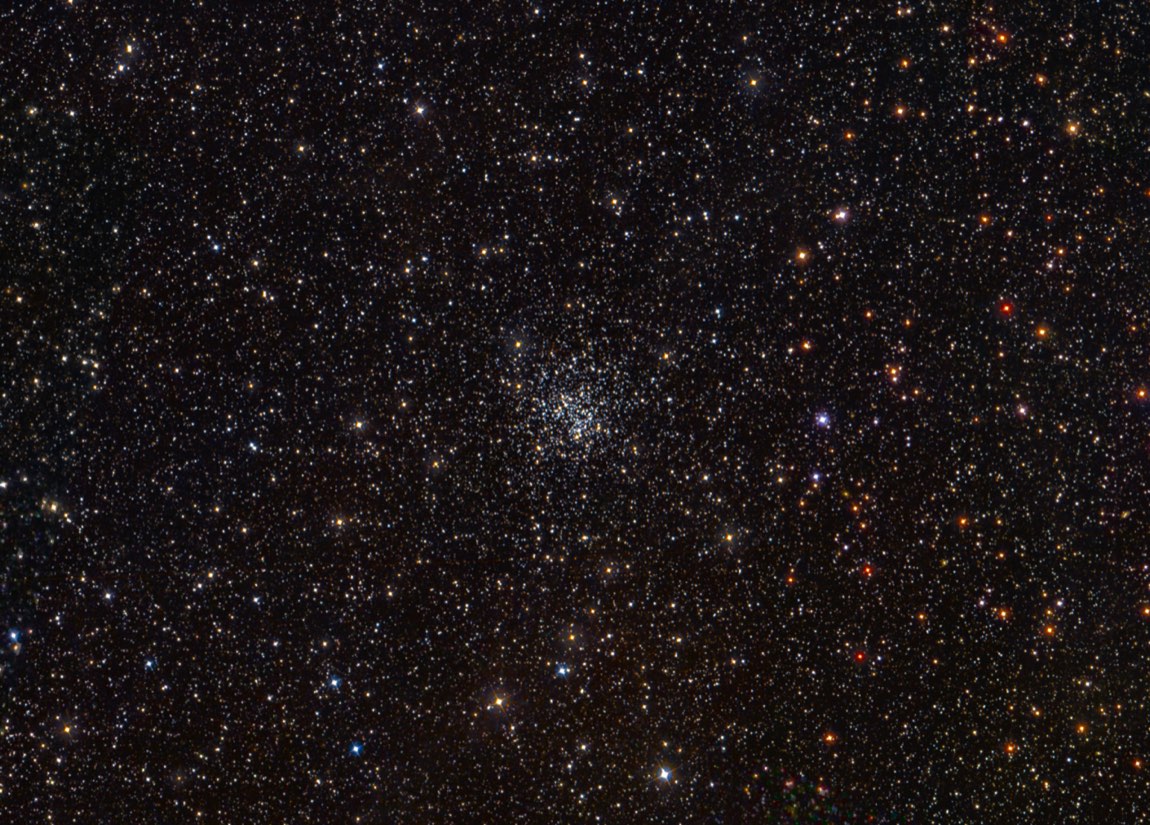
 Photograph · YayLol123 · CC BY 4.0
Star Cluster · Deep guide
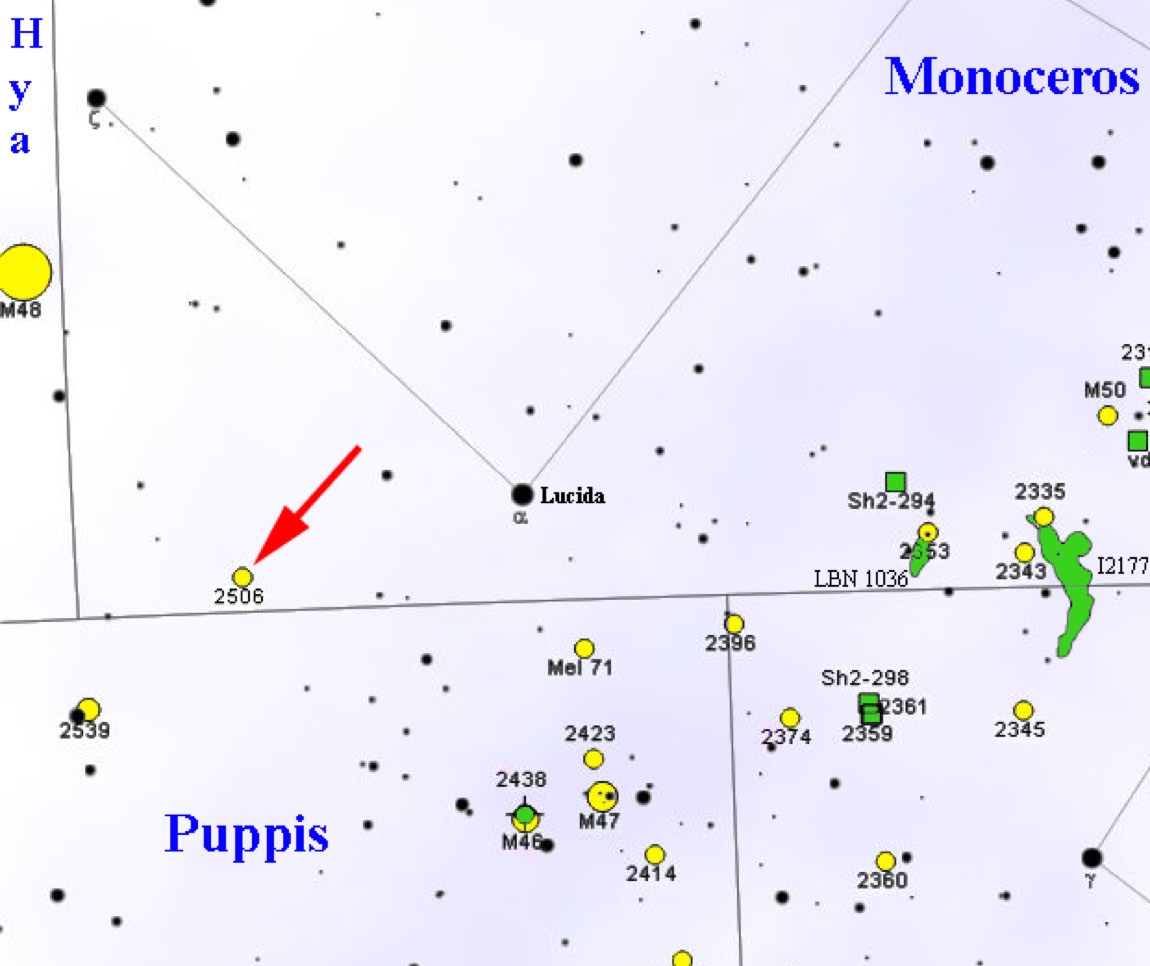
NGC 2506
Also called: Caldwell 54 · C54 · Collinder 170 · Melotte 80
A two-billion-year-old open cluster on the far side of the Milky Way from its centre.
About 1.265e+04 light-years away
Light makes the trip in 12,650 years
What is it?
NGC 2506 is a slightly elongated open cluster in Monoceros, lying near the galactic anticentre, the direction pointing directly away from the heart of the Milky Way. At about two billion years old it is of intermediate age for an open cluster, and it is somewhat poorer in heavy elements than the Sun. Its stars include twelve blue stragglers, fourteen Gamma Doradus variables, three Delta Scuti stars and two eclipsing binaries. William Herschel discovered it in 1791.
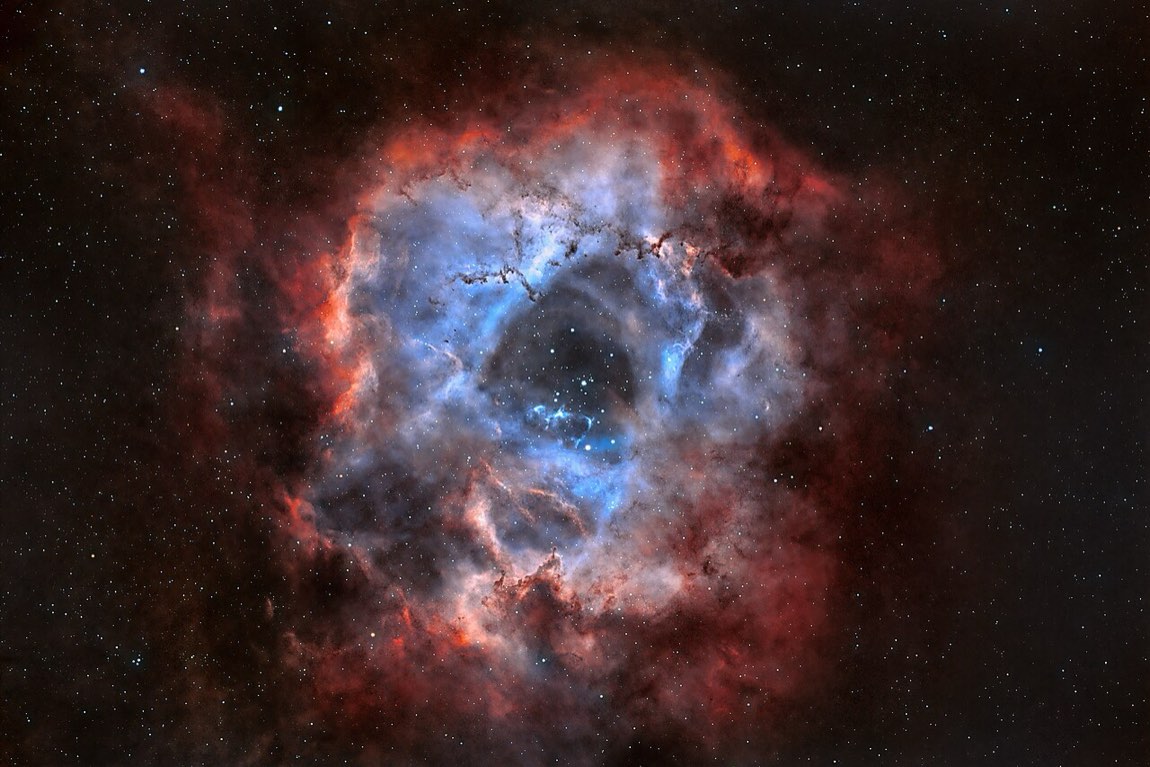
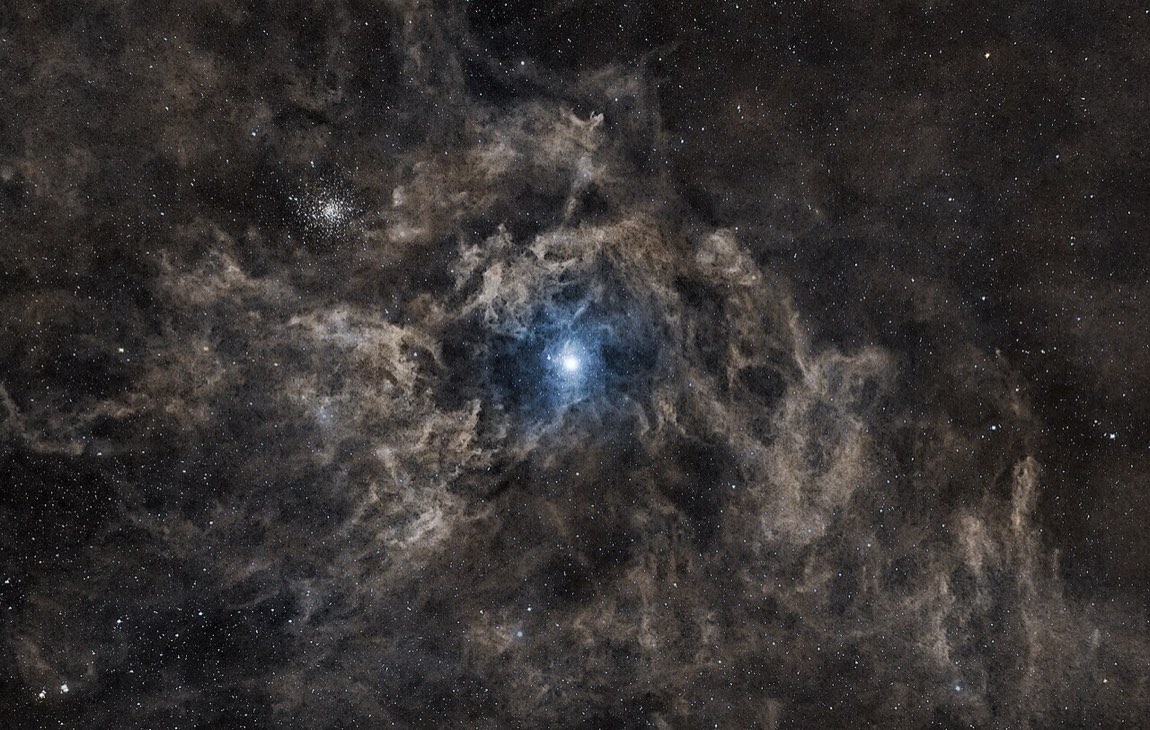
More real images of NGC 2506
Genuine spacecraft and telescope imagery, every frame credited and licensed. Tap any photo to enlarge.