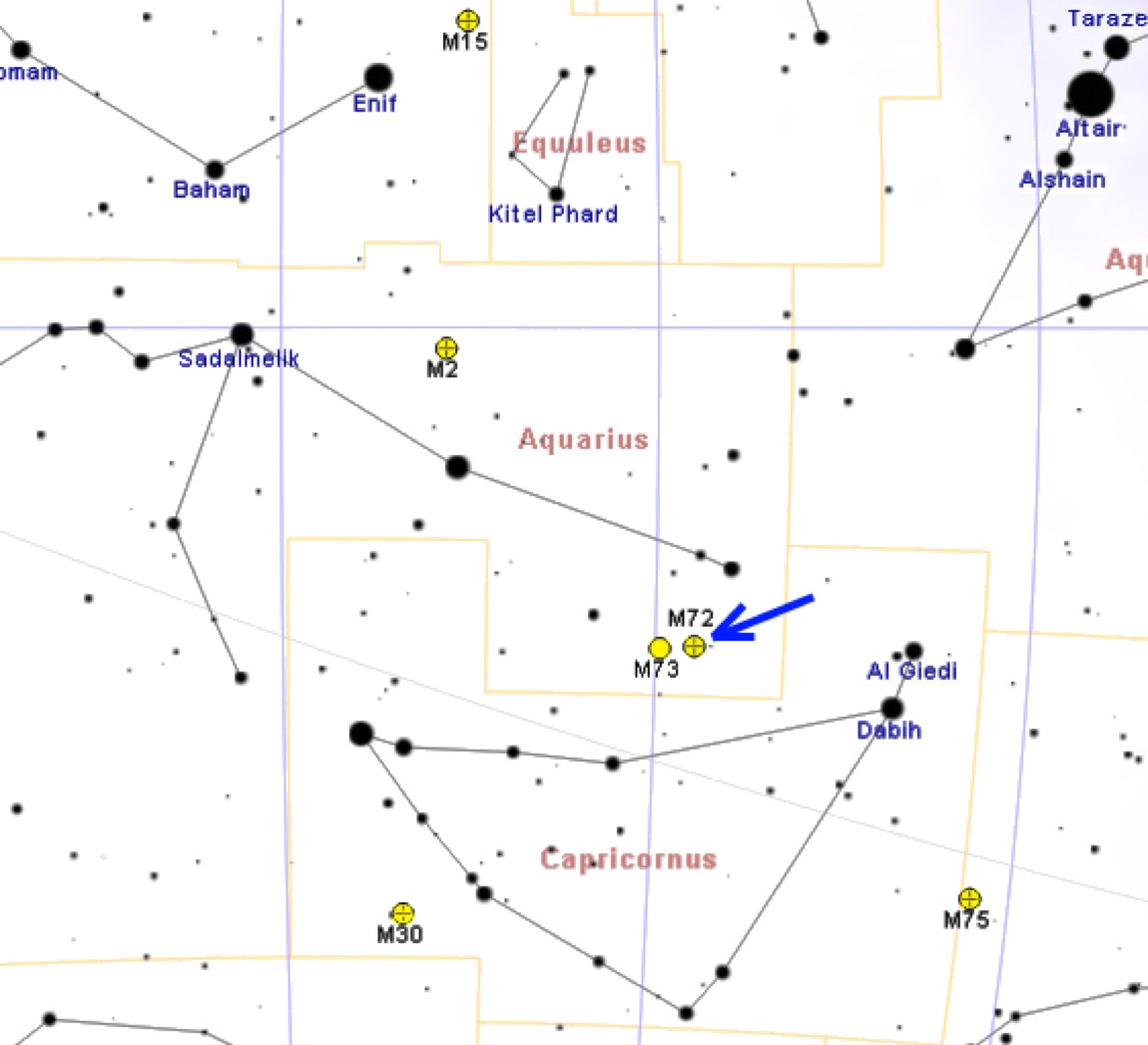
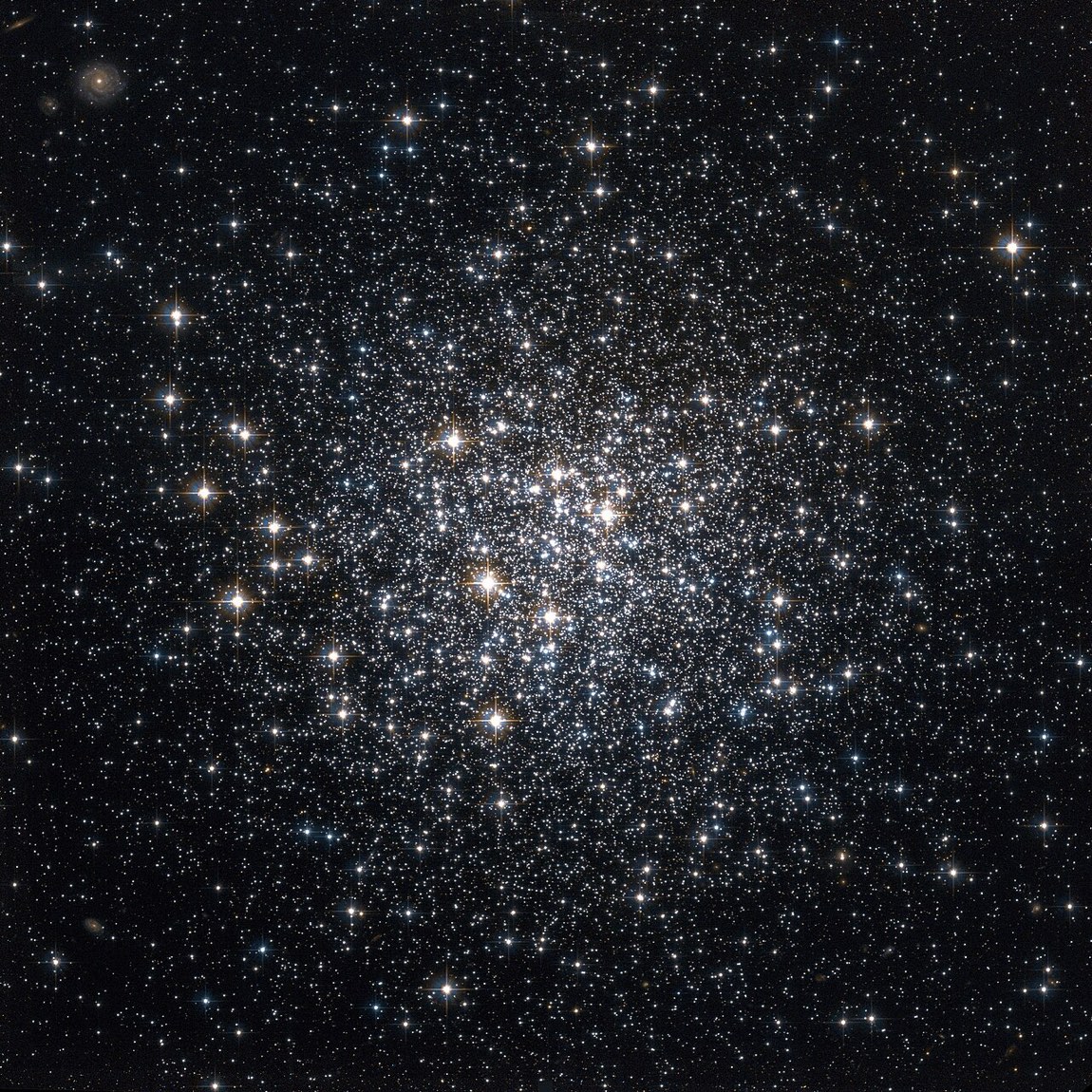
 Photograph · en:NASA , en:STScI , en:WikiSky · Public domain
Star Cluster · Deep guide
Messier 72
Also called: M72 · NGC 6981
A faint, distant globular cluster in Aquarius, lying far out in the galaxy's halo.
About 54,600 light-years away
Light makes the trip in 54,600 years
What is it?
Messier 72 is a globular cluster in southwestern Aquarius. Pierre Méchain discovered it on 29 August 1780, and Messier observed it about five weeks later. Both men took it for a faint nebula; John Herschel, with a larger telescope, saw it as a round cluster of stars. It is one of the more remote Messier globulars, about 54,600 light-years away, and holds an estimated 168,000 solar masses of stars. A census of its variable stars counted 43.
More real images of Messier 72
Genuine spacecraft and telescope imagery, every frame credited and licensed. Tap any photo to enlarge.