Moon · Deep guide · orbits Uranus
Cressida
Also called: Uranus IX · S/1986 U 3
A potato-shaped Uranian moon that may one day crash into its neighbour Desdemona.
What is it?
Cressida was found in Voyager 2 images on 9 January 1986. It is an elongated grey moon about 92 km long whose long axis points toward Uranus, and it whips around the planet in about 11 hours. In 2024 researchers measured its mass, and it orbits close to a 3:2 resonance with Uranus's eta ring. Computer models of the crowded inner system suggest Cressida and Desdemona could collide within the next 100 million years.
The deep dive
Researched for the Atlas from Wikipedia — Cressida (moon) (1,312 characters read) · updated Nov 15, 2026
01 Discovered in a Single Fleeting Flyby
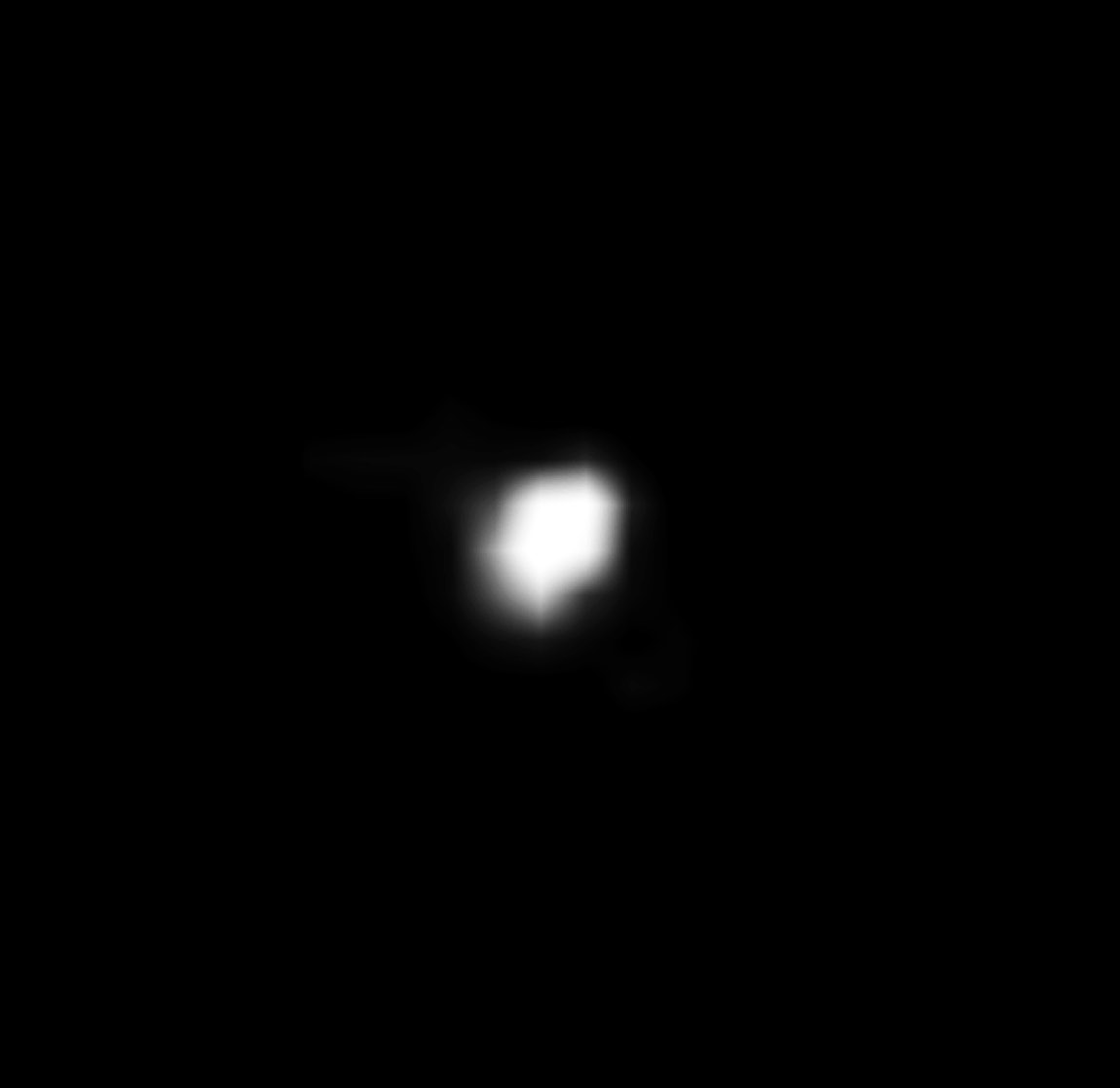
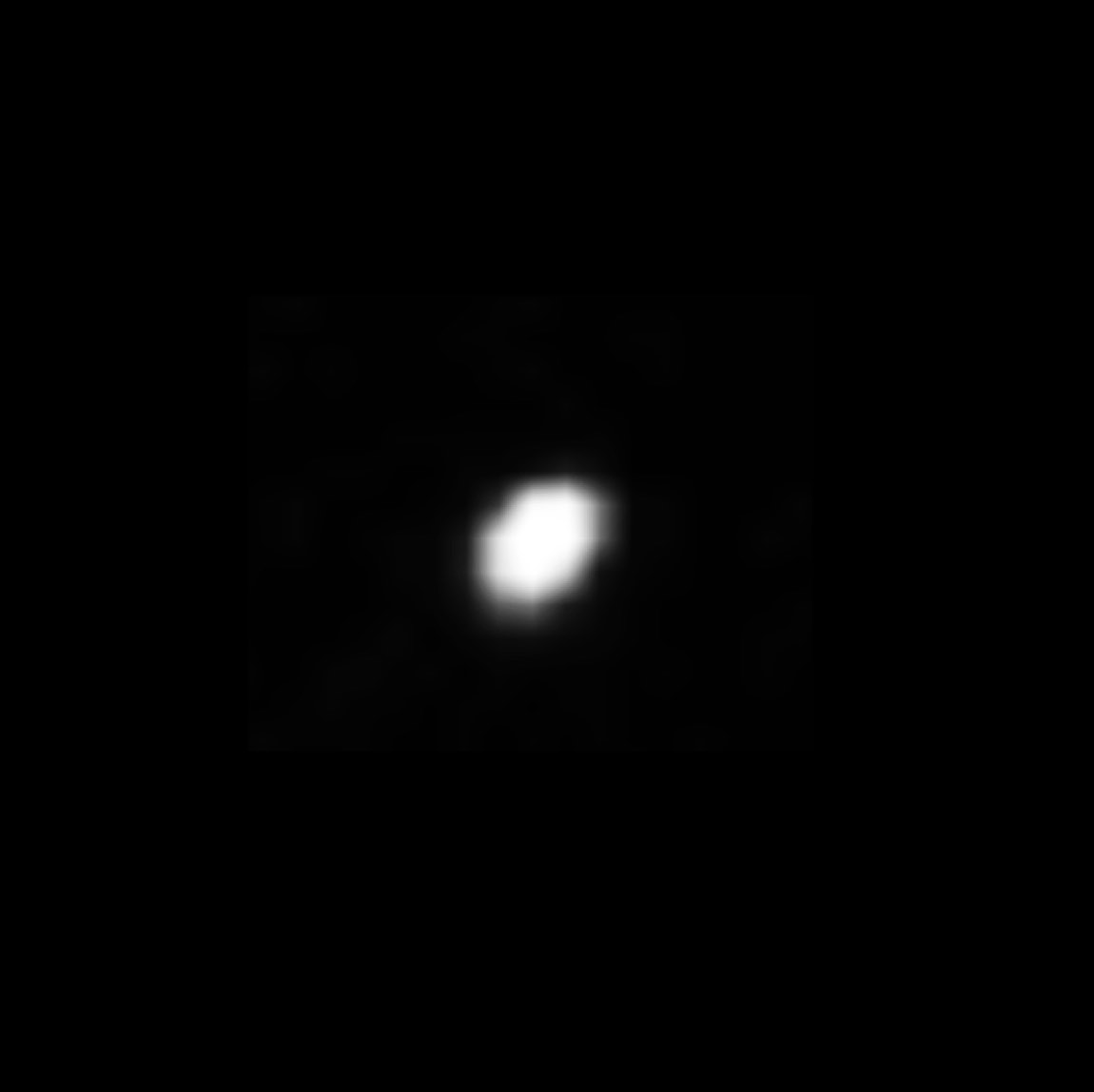
Cressida owes its entire discovery to one spacecraft and one brief encounter. Voyager 2 swept past Uranus in January 1986, and on the 9th of that month its cameras captured the images that revealed Cressida hiding in the planet's inner system. The moon was assigned the holding name S/1986 U 3 — a dry placeholder that simply records the year, the planet, and the order of discovery — before eventually receiving its permanent name. No other spacecraft has visited Uranus since, which means every measurement scientists have of Cressida still traces back to those few days of data collected nearly four decades ago. That single encounter gives Cressida's story an almost melancholy quality: a world glimpsed once, labeled, and then left to orbit in the dark while researchers do what they can with aging pixels.
02 A Name Drawn From Shakespearean Tragedy
The moon takes its name from Cressida, a Trojan woman whose story has haunted Western literature for centuries. She appears as the daughter of Calchas in William Shakespeare's play Troilus and Cressida, and also in tales by Geoffrey Chaucer and others — a tragic heroine passed between worlds and allegiances through no entirely free choice of her own. The convention of naming Uranian moons after Shakespearean and Popean characters gives the whole system a literary atmosphere unlike any other planet's family of moons. Cressida also carries the formal numerical designation Uranus IX, reflecting its place in the ordered catalog of Uranian satellites. That dual identity — a poetic name alongside a bureaucratic Roman numeral — neatly captures the tension between the romantic and the technical that runs through planetary science.
03 Membership in the Crowded Portia Group
Cressida is not an isolated world. It belongs to the Portia group, a family of inner Uranian satellites that includes Bianca, Desdemona, Juliet, Portia, Rosalind, Cupid, Belinda, and Perdita — nine moons sharing similar orbits and similar photometric properties, meaning they reflect light in comparable ways. This clustering strongly suggests a shared origin, most likely the breakup of one or more larger parent bodies long ago. The members of the group travel in a tightly packed orbital neighborhood, which is part of what makes the system so dynamically interesting and so potentially unstable over geological timescales. Because these moons are so alike in their surface brightness and orbital character, distinguishing one from another in observational data is genuinely difficult, and much of what is said about one member applies broadly to the others.
04 An Elongated Shape Aimed at Uranus Deeper
Voyager 2's imagery revealed that Cressida is not a sphere but an elongated body, measuring 92 km × 74 km (57 mi × 46 mi) — roughly the length of metropolitan London end to end, but considerably narrower. Its shape is described as a prolate spheroid, meaning it is stretched along one axis like a rugby ball, and the ratio of its axes is 0.8 ± 0.3. The uncertainty in that figure is large, underscoring just how limited the available data are. Crucially, Cressida's major axis — its longest dimension — points directly toward Uranus. This is a classic signature of tidal locking combined with tidal elongation: the planet's gravitational gradient stretches the moon slightly and keeps that stretched axis aligned with the planet at all times. Cressida's surface appears grey in color, consistent with the dark, spectrally neutral material common across the inner Uranian system.
05 How the η Ring Helped Weigh a Moon Deeper
One of the most remarkable recent developments in Cressida's story is that scientists managed to measure its mass without ever sending another spacecraft. Cressida orbits close to a 3:2 resonance with Uranus's η (eta) ring, meaning that for every three orbits Cressida completes, the ring material nearby completes roughly two. That gravitational relationship leaves detectable fingerprints on the ring's shape — small perturbations that encode information about the mass of the body causing them. By analyzing those ring distortions, researchers in 2024 calculated Cressida's mass as (1.839 ± 0.212) × 10¹⁷ kg. For context, that is about 184 quadrillion metric tons. The article notes that Cressida is one of only a few small Uranian satellites whose mass has been directly measured by any method, making this result particularly valuable for understanding the entire inner moon system.
06 A Low Albedo and What It Implies
Cressida has a geometric albedo of just 0.069, meaning it reflects less than seven percent of the sunlight that strikes it. That makes it an exceptionally dark surface — darker than asphalt, and comparable to the darkest asteroids and cometary nuclei. This deep darkness is shared by the other members of the Portia group and by Uranus's rings themselves, hinting that all of these objects are coated in the same kind of radiation-processed, carbon-rich material. At Uranus's distance from the Sun — roughly 19 times Earth's distance — incoming sunlight is already faint, and a surface that reflects only 6.9 percent of even that faint light would appear profoundly black to any observer floating nearby. The albedo figure is currently one of only a small number of physical properties known about Cressida, which illustrates just how incomplete our picture of this moon remains.
07 An Orbital Future That Ends in Collision
Cressida's long-term fate is not peaceful. The crowded environment of the Portia group means that gravitational interactions among the moons are slowly but continuously reshaping their orbits. Current models suggest that Cressida may collide with its neighbor Desdemona within the next 100 million years. On a human timescale that sounds almost unimaginably distant, but in planetary science terms it is relatively soon — the Solar System is about 45 times older than that. Such a collision would not be a gentle merging; it would almost certainly be a violent impact that shatters both moons into fragments, perhaps feeding new ring material into the already complex Uranian ring system. This kind of orbital instability within the Portia group raises broader questions about whether the group itself is a relatively young structure, assembled from debris not so very long ago and already beginning to reorganize again.
08 What We Still Do Not Know About Cressida Deeper
The article is unusually candid about the limits of current knowledge: beyond its orbit, its size of 92 km × 74 km, and its geometric albedo of 0.069, the text states plainly that little is known about Cressida. Its internal structure is uncharacterized — scientists cannot say whether it is a solid, consolidated body or a loosely bound rubble pile held together mainly by its own modest gravity. Its surface geology is unknown in any detail; Voyager 2's images were not sharp enough to resolve craters, ridges, or other features. Its composition beyond the broad label of 'dark material' is unestablished. Even the shape ratio of 0.8 ± 0.3 carries a large uncertainty. The 2024 mass measurement is a genuine advance, but it also highlights by contrast how much remains inaccessible without a new mission. Cressida stands as a reminder that discovery and understanding are very different things.
09 Observing Cressida From Earth
Cressida is essentially unobservable with any amateur telescope. Its diameter of roughly 80 kilometers, combined with a surface that reflects less than seven percent of already-dim sunlight, makes it far too faint and far too close to the overwhelming glare of Uranus for any ground-based observer to pick out. Even professional observatories struggle with the inner Uranian moons; the discoveries made from Earth in the Uranian system have generally relied on stellar occultations — moments when a moon or ring passes in front of a distant star — rather than direct imaging. The mass measurement published in 2024 relied on the indirect evidence of ring perturbations rather than any new direct observation of Cressida itself. For now, the best images humanity has of this moon remain the few frames captured by Voyager 2 during its sole flyby in January 1986, and revisiting them with fresh analytical tools has proven surprisingly productive.