Explore the Universe. Understand Everything In It.
★
Menu
Home Tonight's Sky News
Explore Solar System PlanetsMoons StarsExoplanets GalaxiesBlack Holes NebulaeAsteroids & Comets Star ClustersMeteorites Constellations Space Exploration Space Industry
Sky Astronomy Calendar Launches
Learn & Tools Start Learning Astrophysics Scale of the Universe Timeline Glossary A–Z People Young Astronomers Top Lists Tools Compare Worlds Ask the Atlas AI Agents API
About About us Methodology Contact

Guided View
New to astronomy? We explain every term as you browse, in plain English. Same pages, with the help built in.

Expert View
You know the sky. Just the content, clean and compact, with no extra explanations. This is the default view.

Interface language
Light mode
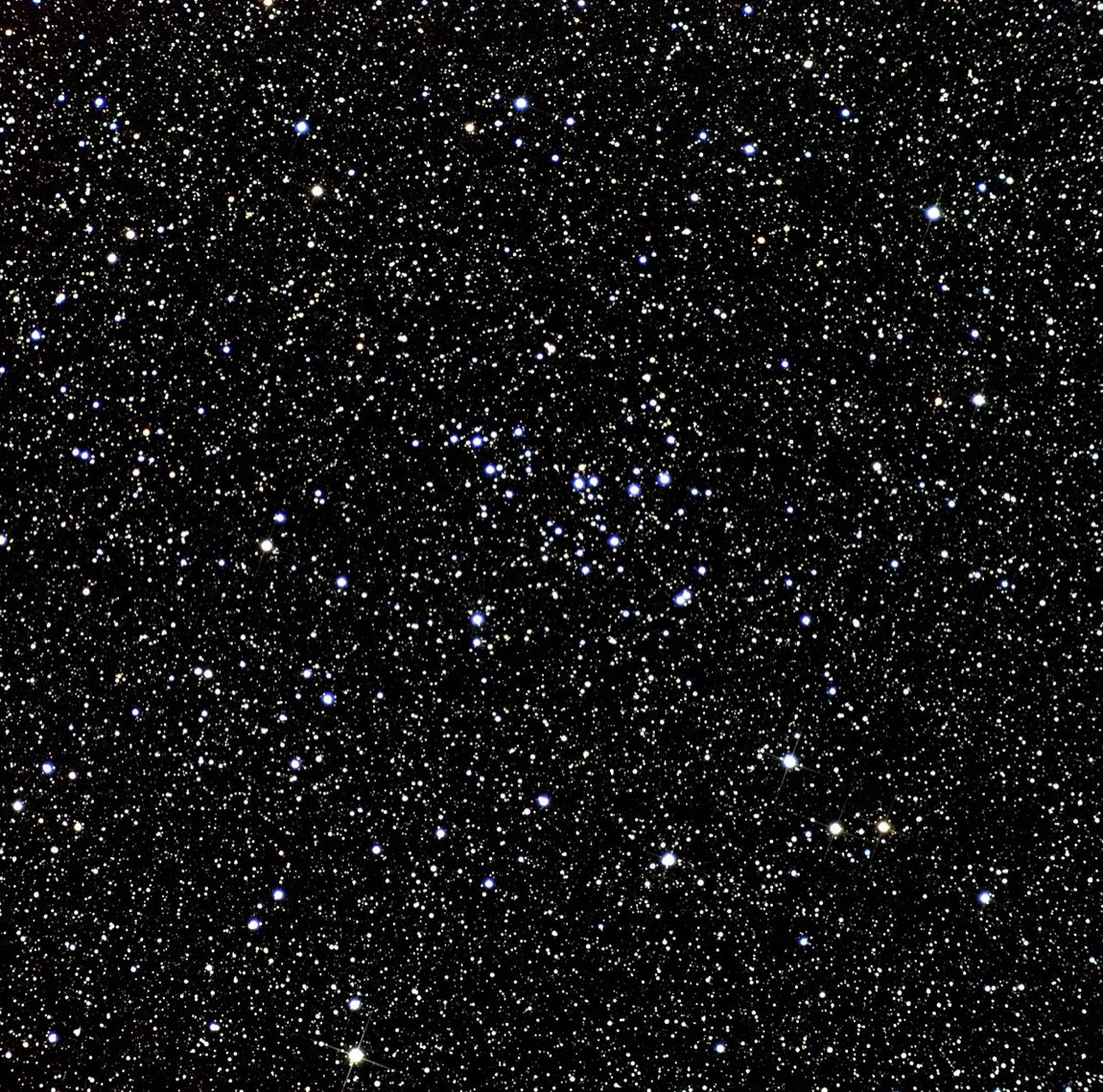
NGC 7243 Photograph · Egres73 · CC BY-SA 3.0

Star Cluster · Deep guide

NGC 7243

Also called: Caldwell 16 · C16 · Collinder 448

A loose Lacerta cluster where a decade of watching turned up 37 eclipsing binary stars.

About 2,864 light-years away Light makes the trip in 2,864 years

What is it?

NGC 7243 is an open star cluster in the small northern constellation Lacerta, near the star Alpha Lacertae. A 2003 study identified 211 likely members and put its combined mass at a few hundred Suns, with an age of about 250 million years based on which stars have begun to age off the main sequence. Observing campaigns spanning a decade, reported in 2016, found 37 eclipsing binary stars and 26 pulsating variables in the cluster. William Herschel discovered it on 26 September 1788.
✦ Keep exploring