 Photograph · Legacy Surveys / D.Lang (Perimeter Institute) & Meli thev · CC BY 4.0
Star Cluster · Deep guide
NGC 5823
Also called: Caldwell 88 · NGC 5823
A modest open cluster straddling the border of Circinus and Lupus.
About 4,680 light-years away
Light makes the trip in 4,680 years
What is it?
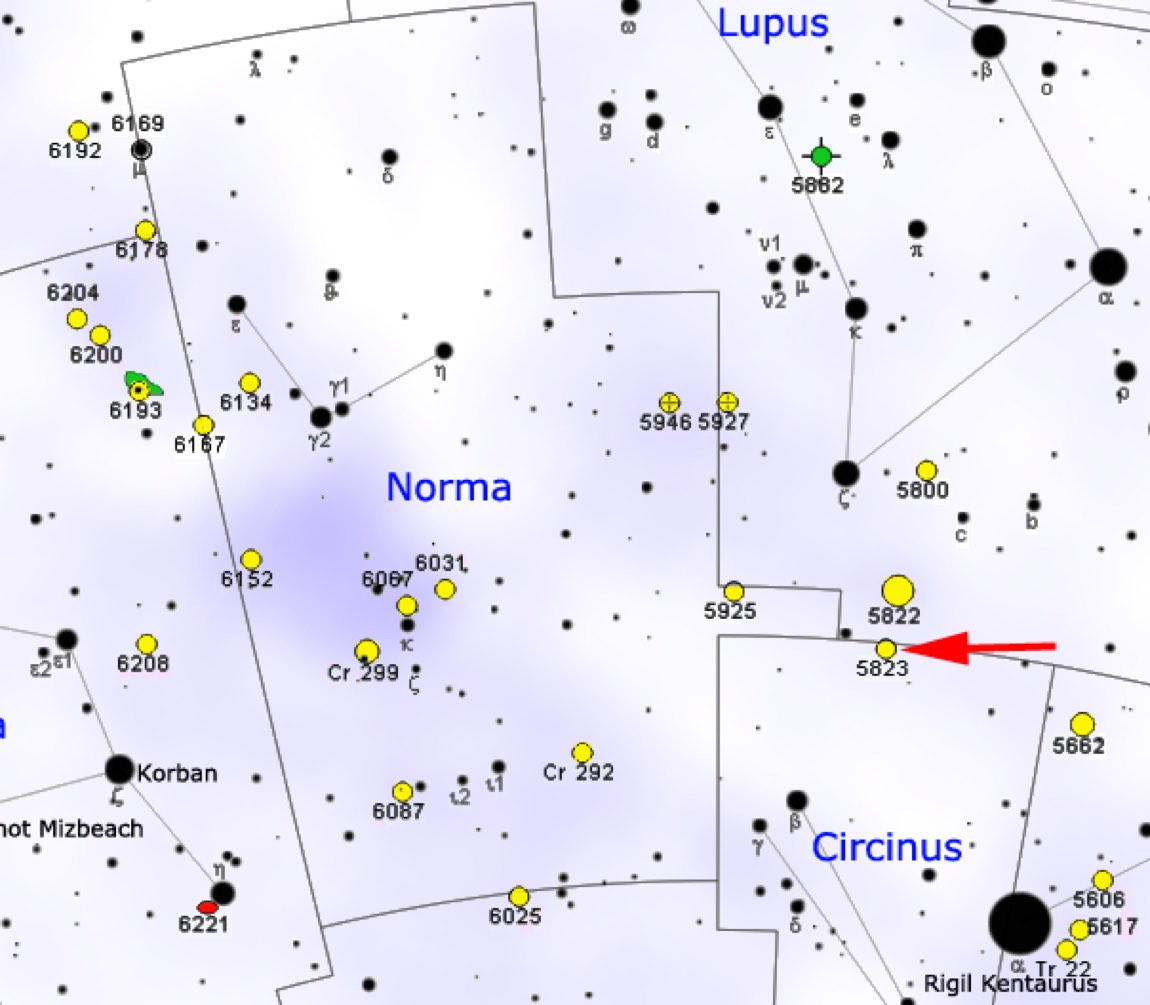
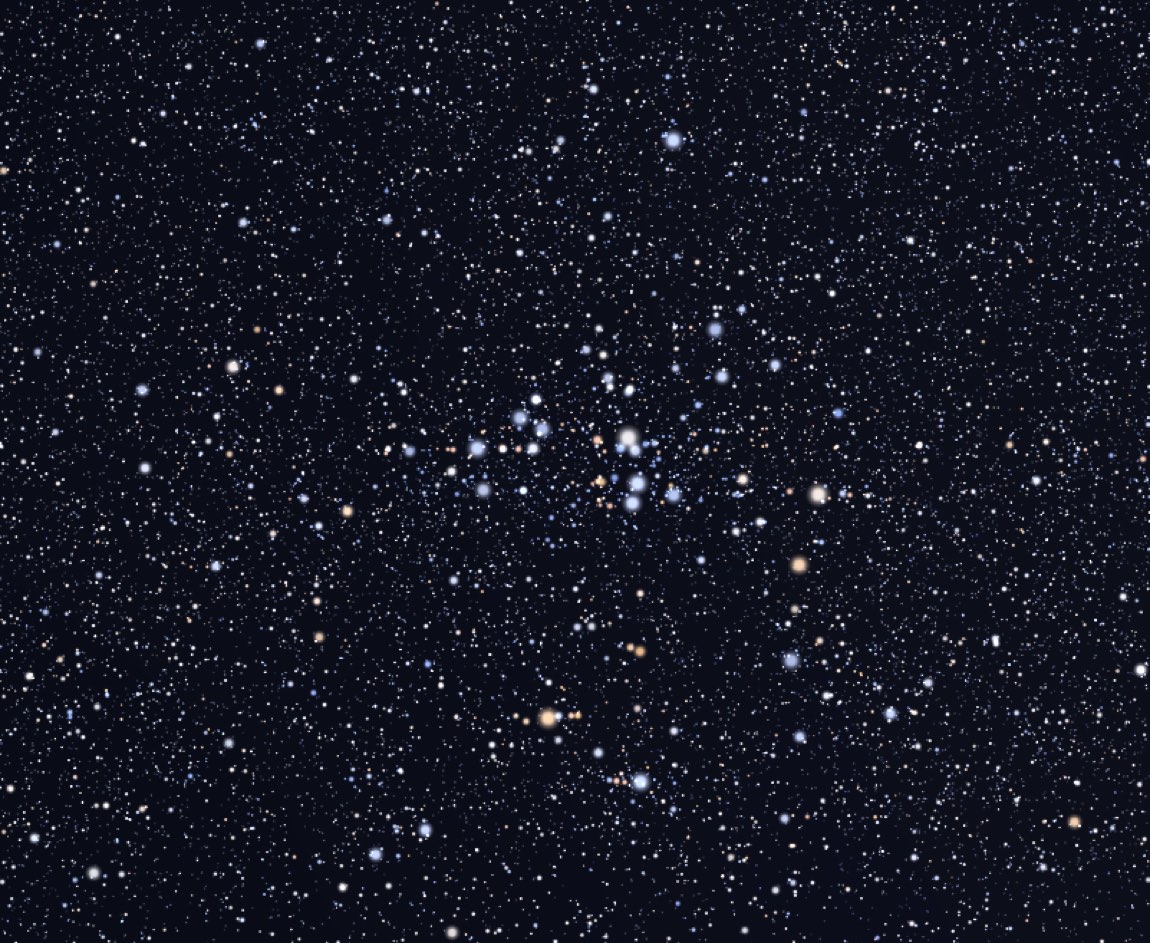
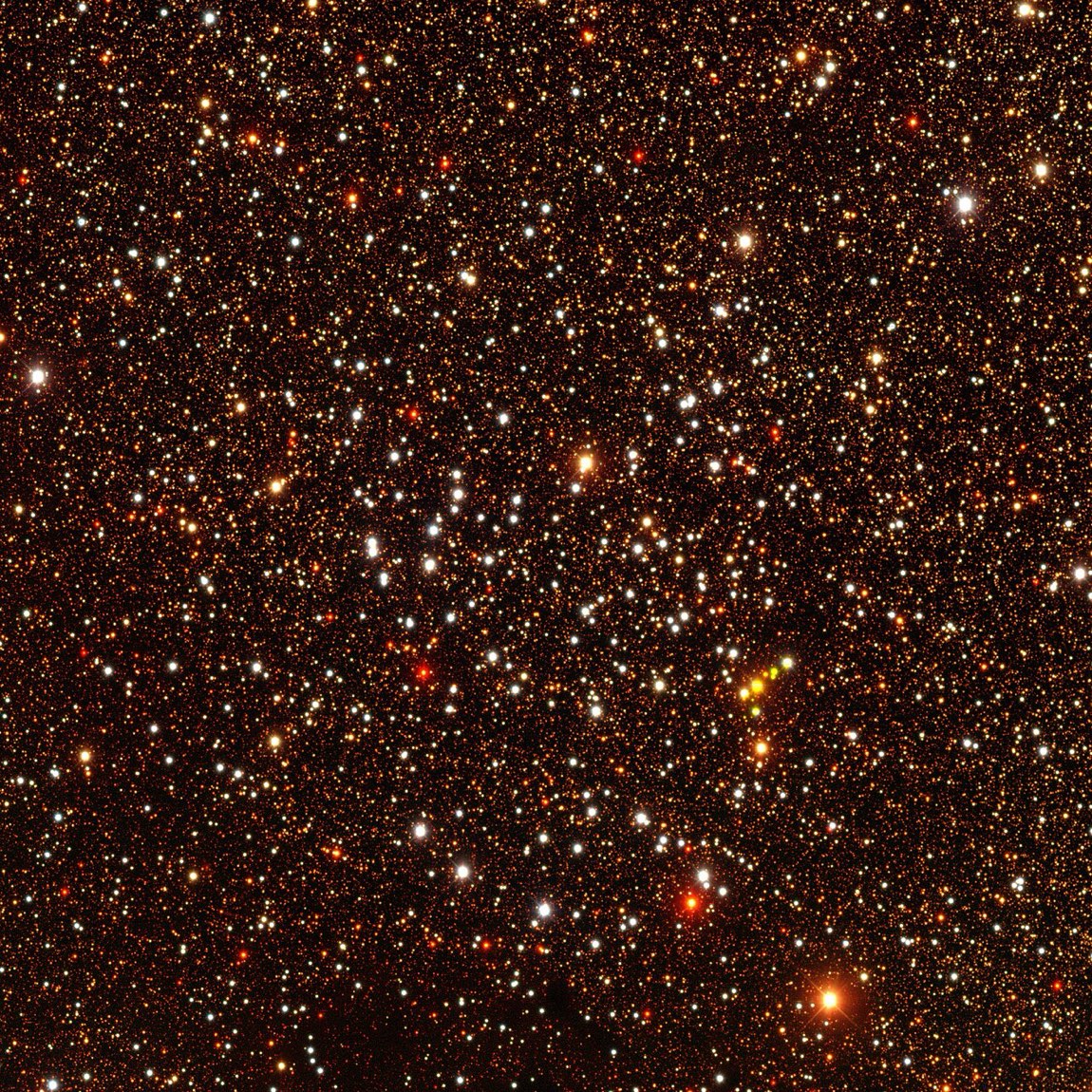
NGC 5823 is an open cluster of stars in Circinus, sitting close to and spilling across the border with Lupus. James Dunlop discovered it in 1826 from Australia. With a combined brightness of about magnitude 7.9 it needs binoculars or a small telescope. It lies roughly 4,700 light-years away, a distance known to within about 3 percent. Beyond its Caldwell and NGC numbers it is also catalogued as Collinder 290 in the Collinder list of open clusters.
More real images of NGC 5823
Genuine spacecraft and telescope imagery, every frame credited and licensed. Tap any photo to enlarge.