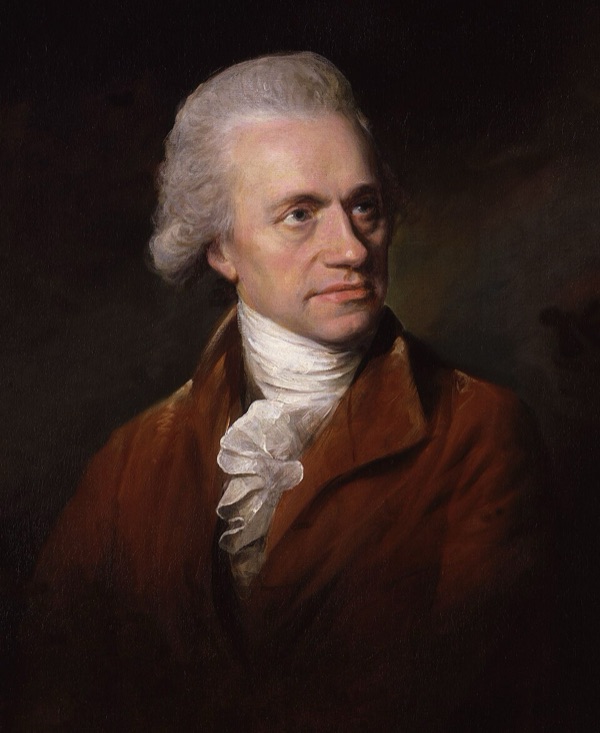
 Lemuel Francis Abbott · Public domain
Astronomy · 1738–1822 / 1750–1848
William & Caroline Herschel
Discovering Uranus; founding deep-sky astronomy
The story
A musician-turned-telescope-maker and his sister, comet-hunter Caroline — astronomy's first professional woman, salaried by the King. William found Uranus in 1781 (the first new planet in recorded history), infrared light in 1800, and with Caroline catalogued thousands of nebulae and clusters.
Why it matters
They doubled the Solar System's size, revealed light beyond the visible, and their catalog grew into today's NGC — the index every deep-sky observer still uses.
The deep dive
Researched for the Atlas from Wikipedia — William Herschel (33,862 characters read) · updated Sep 20, 2026
01 A Musician Who Taught Himself the Sky
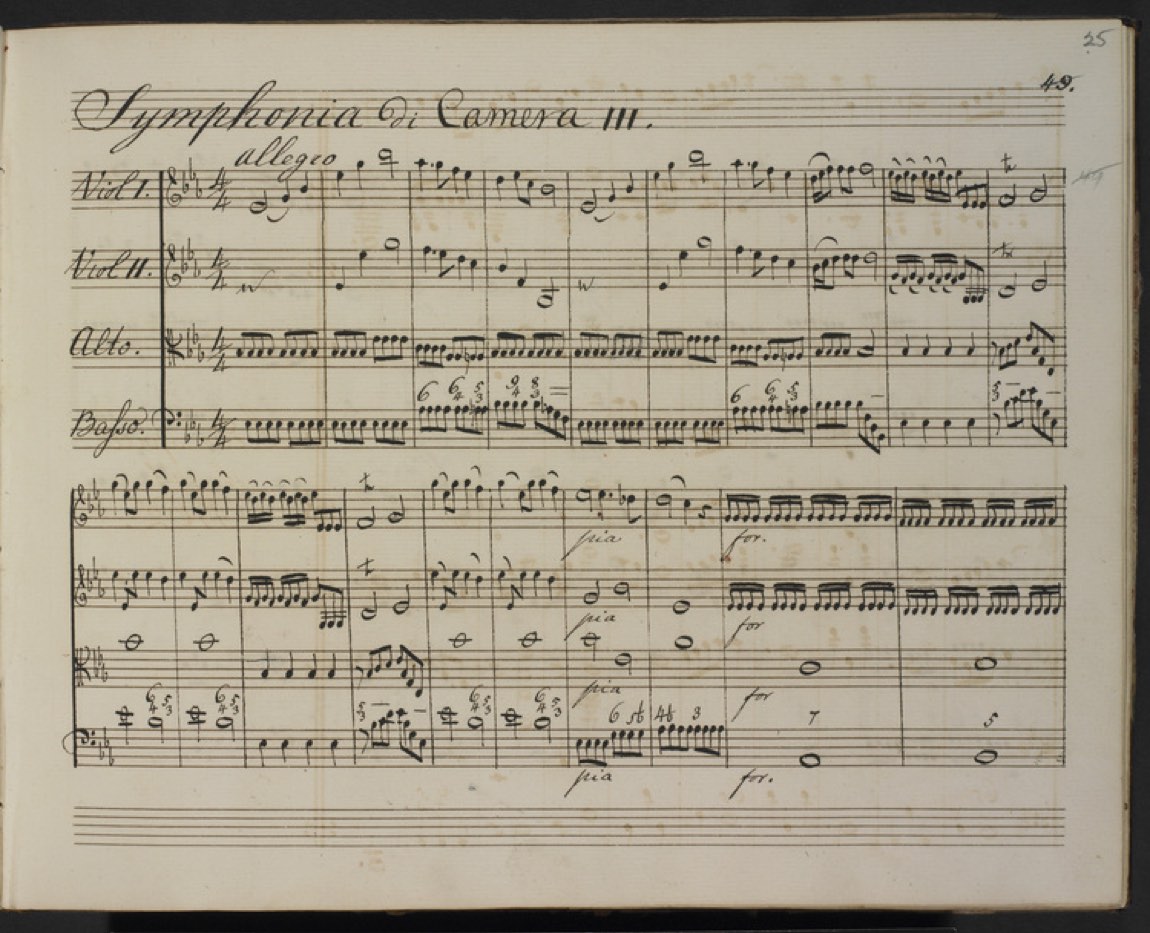
William Herschel arrived in England in 1757 as a refugee oboist of nineteen, fleeing the aftermath of the Battle of Hastenbeck. Music occupied the next decade of his life almost entirely: he led the Durham Militia band from 1760 to 1761, played first violin for Charles Avison's Newcastle orchestra, became the first organist at what is now Halifax Minster, and by 1766 had secured the prestigious post of organist at the Octagon Chapel in Bath, where he also served as Director of Public Concerts. He composed prolifically — 24 symphonies, 12 concertos, and a large body of keyboard and vocal music. Yet this same intellectual energy pulled him toward books on optics and natural philosophy. Reading Robert Smith's A Compleat System of Opticks led him directly to telescope-building, and James Ferguson's popularisation of Newtonian astronomy gave him the theoretical grounding he needed. His transition from professional musician to pioneering astronomer was gradual, self-directed, and owed nothing to a university education — he had none.
02 Grinding Mirrors for 16 Hours a Day
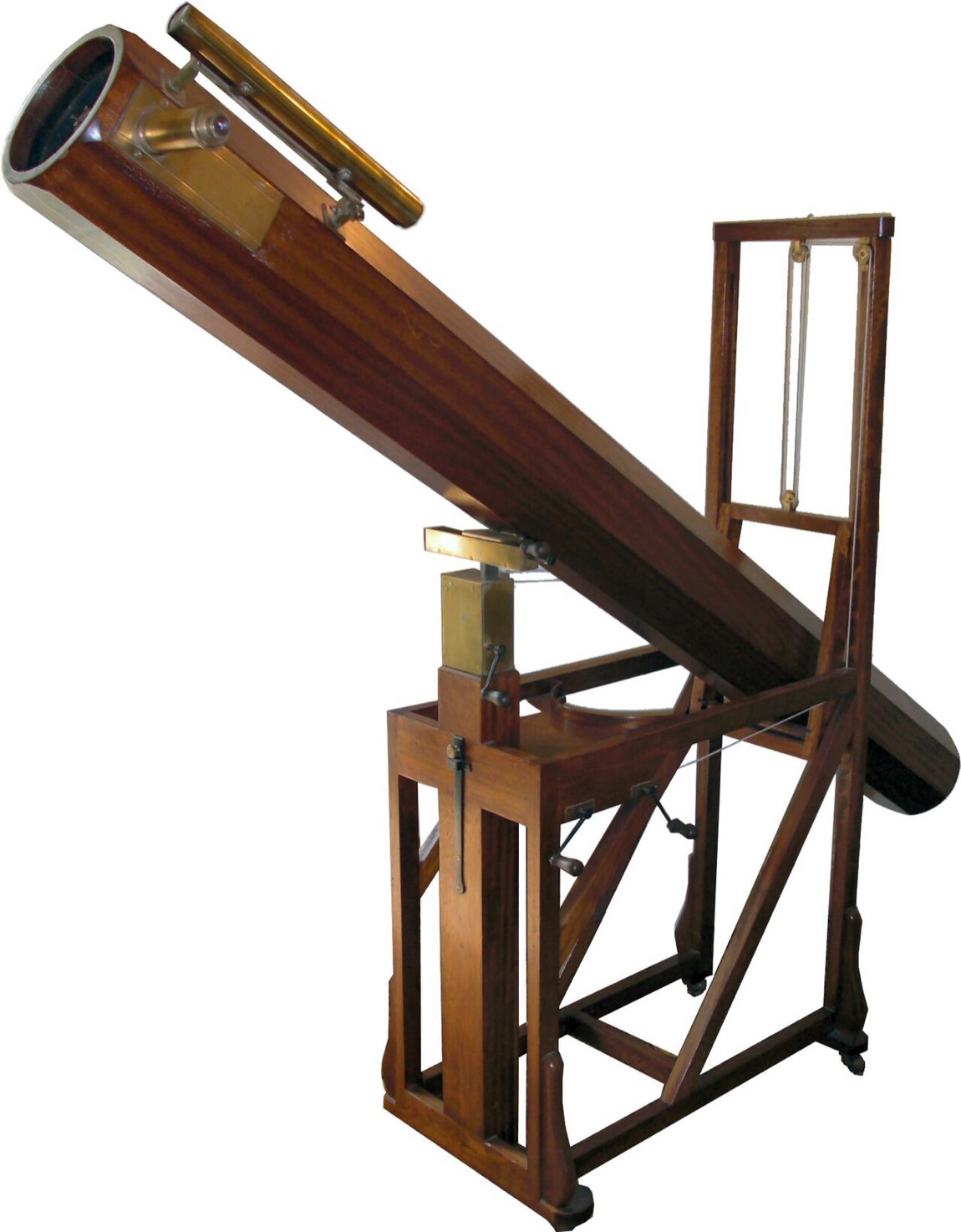
Herschel's path into practical astronomy ran straight through his hands. Finding that no one else was producing mirrors of the size and quality he wanted, he simply learned to make them himself, taking lessons from a local mirror-builder and then spending up to 16 hours a day grinding and polishing speculum metal — an alloy of copper and tin. The work was punishing and dangerous. Caroline Herschel's eyewitness account of one casting session describes molten metal leaking from a cracked furnace, stone flooring exploding upward to ceiling height, and William collapsing exhausted on a heap of brickbats. Over his lifetime Herschel is reported to have cast, ground, and polished more than 400 mirrors ranging from 6 to 48 inches in diameter, and he and his assistants built and sold at least 60 complete telescopes. The King of Spain reportedly paid £3,150 for a single instrument. Because speculum metal was a poor reflector, Herschel eliminated the secondary diagonal mirror from the standard Newtonian design and tilted the primary mirror so he could look straight down into the tube — an arrangement now called the Herschelian telescope.
03 The 40-Foot Behemoth and Its Limits Deeper
Herschel's most celebrated instrument was a reflecting telescope with a primary mirror 49.5 inches (1.26 m) in diameter and a focal length of 40 feet (12 m) — at the time the largest scientific instrument ever built. George III supplied £4,000 toward its construction in 1785, yet the project still ran over budget and took five years to complete. The mirror blanks alone weighed 1,000 pounds (450 kg) each, roughly the mass of a small car, and had to be hand-polished repeatedly. When the first disk deformed under its own weight, a second, thicker one with a higher copper content was cast. In 1789, within the first month of the telescope's operation, Herschel used it to discover Mimas and then Enceladus, two moons of Saturn. Yet he was disappointed with the instrument overall: its enormous tube was cumbersome to manoeuvre, and the images it produced were not proportionally sharper than those from his smaller 18.5-inch (47 cm), 20-foot-focal-length (6.1 m) reflector, which he in practice preferred for most observations. The 40-foot would not be meaningfully surpassed until Victorian engineers developed precision techniques for large mirrors.
 ⤢
⤢
04 Discovering Uranus — and Naming It Wrong
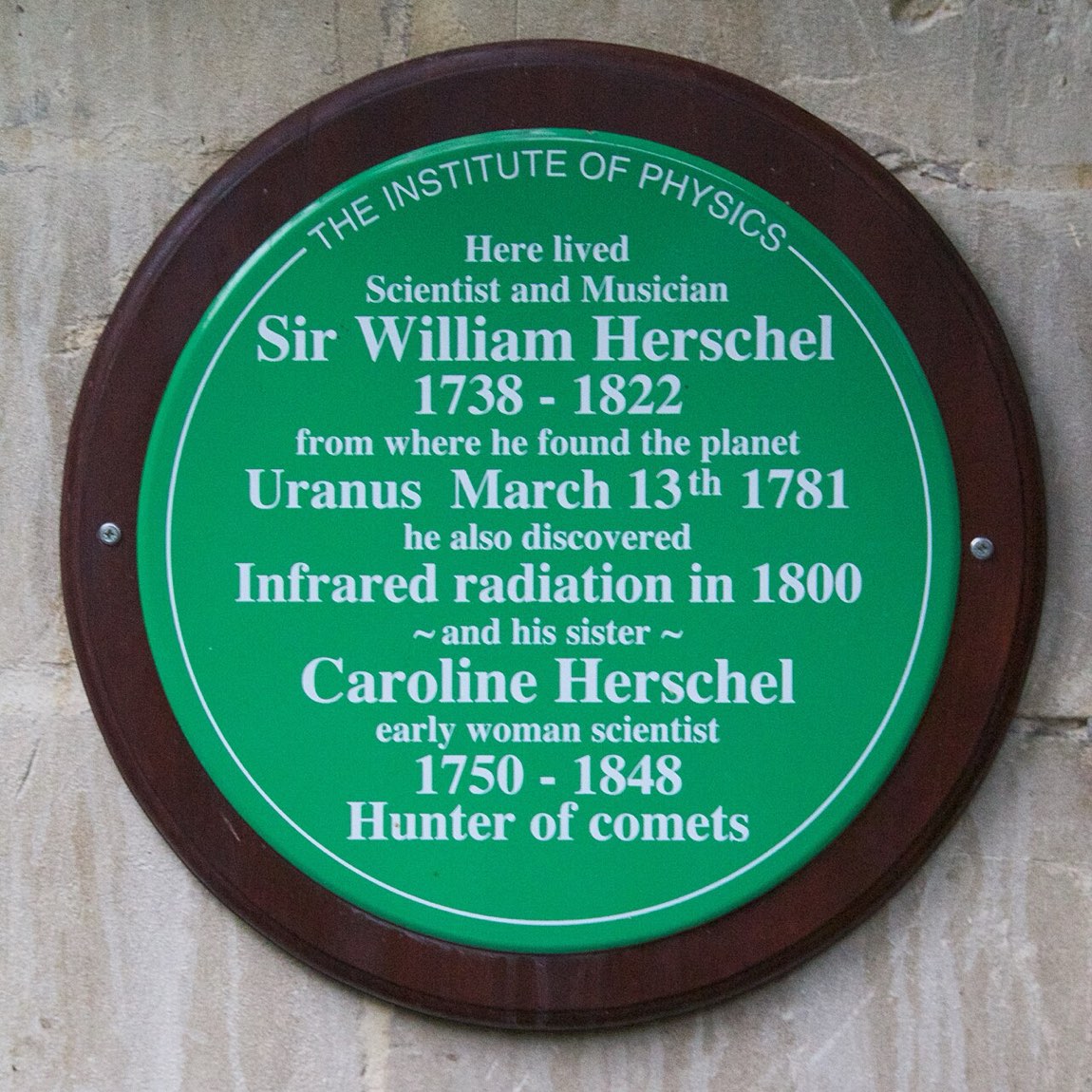
On 13 March 1781, while systematically sweeping for double stars from his garden in Bath, Herschel noticed an object that appeared as a disk rather than a point of light. He initially thought it was a comet. He reported it to Astronomer Royal Nevil Maskelyne, continued observing, and then Finnish-Swedish astronomer Anders Lexell computed the orbit and found it almost certainly planetary. Herschel agreed, and proposed naming it the Georgian Star — Georgium sidus — in honour of George III, a choice that won him royal favour but found no international acceptance. In France, where naming anything after the British king was politically distasteful, the planet was simply called Herschel for decades, until the name Uranus was universally adopted. The astrological symbol for Uranus still incorporates the capital H of Herschel's surname. The discovery made him famous immediately: that same year he received the Copley Medal and was elected a Fellow of the Royal Society, and in 1782 George III appointed him The King's Astronomer — a distinct post from the Astronomer Royal.
05 Eight Hundred Double Stars and a New Branch of Astronomy Deeper
Herschel's search for double stars began in October 1779 from the back garden of his house in New King Street, Bath, using a 6.2-inch aperture (160 mm), 7-foot-focal-length (2.1 m) Newtonian telescope of his own manufacture. His original goal was parallax measurement — comparing the apparent shift of a nearby star against a distant companion to estimate stellar distances, a technique first proposed by Galileo. He found far more pairs than anticipated. His first catalogue, presented to the Royal Society in 1782, listed 269 double or multiple systems; a second in 1784 added 434 more; and a third published in 1821 contained 145 additional systems. By 1797 he had remeasured many of the same pairs and detected positional changes that parallax alone could not explain. He waited until 1802 to formally propose that these were true binary systems — two stars orbiting each other under mutual gravitational attraction — and confirmed the hypothesis in 1803. In all he discovered over 800 confirmed double or multiple star systems, nearly all of them physical rather than merely optical pairs. New catalogues extending his work were not published until after 1820, by Friedrich Wilhelm Struve, James South, and his son John Herschel.
06 Caroline Herschel: Assistant, Then Astronomer
Caroline Herschel arrived in Bath on 24 August 1772 to live with William at New King Street, initially to pursue a singing career. William introduced her to astronomy that same year. Her early contributions were practical and essential: she polished mirrors, copied catalogues, and — after William became King's Astronomer — served as his live recorder, sitting at a desk near an open window while he shouted his observations from the telescope, allowing him to avoid the time-wasting cycle of letting his eyes readjust to indoor light. In 1783 William built her a small Newtonian reflector with a handle designed for vertical sky sweeps, and her independent work began in earnest. Between 1786 and 1797 she discovered or observed eight comets. Between 1783 and 1787 she independently found M110 (NGC 205), the second companion galaxy of Andromeda. She also rediscovered Comet Encke in 1795 and found fourteen new nebulae. Her updated and corrected index of Flamsteed's star catalogue contained more than 560 stars not previously included. For her work as William's assistant, George III granted her an annual salary of £50 — making her the first woman in England to hold a government position and the first to be paid as an astronomer.
 ⤢
⤢
07 Cataloguing the Deep Sky — 2,400 New Objects Deeper
From 1782 to 1802, with the most intensive effort between 1783 and 1790, Herschel conducted systematic sweeps of the sky using two 20-foot-focal-length (610 cm) telescopes with apertures of 12 and 18.7 inches (30 and 47 cm). Excluding duplicated and lost entries, he ultimately identified over 2,400 objects he defined as nebulae — a term then applied to any visually diffuse object, including what are now recognised as galaxies. He organised his discoveries into eight classes: bright nebulae, faint nebulae, very faint nebulae, planetary nebulae, very large nebulae, very compressed and rich star clusters, compressed clusters, and coarsely scattered clusters. Three catalogues appeared in 1786, 1789, and 1802. His discoveries were later combined with Caroline's 11 objects and John Herschel's 1,754 objects into the General Catalogue of Nebulae and Clusters, published in 1864. John Dreyer then expanded and edited this, adding observations by many other nineteenth-century astronomers, to produce the New General Catalogue of 7,840 deep-sky objects in 1888 — whose NGC numbering system remains the standard identifying label for these objects today. The fact that galaxies are extragalactic systems was not confirmed until Edwin Hubble's work in 1924, long after Herschel's death.
08 Infrared Light Found Beyond the Red
In early 1800, Herschel was experimenting with coloured filters to reduce the brightness of sunlight for solar observation and noticed that filters of different colours seemed to produce different amounts of heat. To investigate systematically, he passed sunlight through a prism and placed thermometers at each colour of the resulting spectrum, also placing control thermometers beyond the visible edges. The thermometer positioned just past the red end of the spectrum — where no visible light fell — registered a temperature one degree higher than the thermometer in red light itself. Further experiments convinced him that an invisible form of light existed beyond the red end of the visible spectrum. He published these results in April 1800, announcing the discovery of what he called calorific rays and what we now call infrared radiation. The discovery was a direct byproduct of his telescope work: his habit of measuring, testing, and quantifying everything in his optical experiments led him to a phenomenon that none of his contemporaries had formally identified.
09 Sunspots, Wheat Prices, and a Contested Idea Deeper
Over roughly 40 years, from 1779 to 1818, Herschel regularly observed sunspots and tracked variations in their number, form, and size. Much of this work fell during the Dalton Minimum, a period of unusually low solar activity, which meant sunspots were relatively rare and the standard 11-year solar cycle was not apparent in his data. Herschel compared his sunspot records with the wheat price series published by Adam Smith in The Wealth of Nations and in 1801 reported to the Royal Society that five prolonged periods of few sunspots corresponded with higher wheat prices — implying that reduced solar activity suppressed agricultural yields. The claim was ridiculed by some contemporaries. Later in the nineteenth century, William Stanley Jevons revisited the idea, proposing the 11-year solar cycle as a driver of recurring economic booms and slumps, explicitly building on Herschel's basic hypothesis. Herschel's use of commodity prices as a climate proxy was methodologically novel even if the conclusions remained contested. One later study found a detectable solar influence on English wheat markets over ten solar cycles between 1600 and 1700, though the statistical significance of the correlation continues to be disputed by some researchers.
 ⤢
⤢
10 Mapping the Milky Way — Right Shape, Wrong Centre
Herschel was the first astronomer to attempt a model of the Milky Way's structure based on systematic observation and measurement rather than speculation. By counting stars in different directions across the sky, he concluded that the galaxy is shaped like a disk — a fundamentally correct insight. However, he assumed that the Sun sat at or near the centre of that disk, a heliocentric view of the galaxy that would not be overturned until the twentieth century, when Harlow Shapley, Heber Doust Curtis, and Edwin Hubble used more powerful and accurate telescopes to demonstrate that the Sun is far from the galactic centre. Herschel also studied the proper motion of stars and in 1783 was the first to demonstrate the nature and extent of the solar motion — the fact that the Sun itself is moving through space — and he identified the direction of the solar apex as pointing toward Lambda Herculis, a position only 10 degrees away from the value accepted today. That level of accuracy, achieved with eighteenth-century instruments, is a measure of how carefully and patiently he worked.
11 Moons, Mars, and a Word He Coined
Beyond Uranus, Herschel accumulated a remarkable list of solar system discoveries. He found two moons of Uranus — Titania and Oberon — and two moons of Saturn — Mimas, only about 250 miles (400 km) in diameter, and Enceladus — the latter two spotted within the first month of the 40-foot telescope's operation in 1789. He did not name any of these moons; that task fell to his son John, in 1847 and 1852. Herschel also improved the determination of Mars's rotation period, measured the planet's axial tilt, and established that the Martian polar ice caps — first observed by Cassini in 1666 and Huygens in 1672 — change size with the Martian seasons. In 1802, shortly after Wilhelm Olbers discovered the minor planet 2 Pallas, Herschel introduced the word asteroid, derived from the Greek asteroeides meaning star-like, to describe the star-like appearance of small solar-system bodies as opposed to the visible disks of the major planets. By the 1850s the term had become standard. It has also been suggested, though not conclusively established, that Herschel detected rings around Uranus.
12 Honours, Legacy, and the Catalogue That Endures
Recognition came to Herschel steadily but late by modern standards — he was already in his forties when Uranus made him famous overnight. He received the Copley Medal in 1781, was elected a Fellow of the Royal Society the same year, was knighted into the Royal Guelphic Order in 1816, and became the first President of the Royal Astronomical Society when it was founded in 1820. He died at Observatory House in Slough on 25 August 1822, and is buried under the tower of St Laurence's Church nearby. His epitaph reads: Coelorum perrupit claustra — He broke through the barriers of the heavens. Caroline outlived him by 26 years, dying on 9 January 1848, and spent much of that time organising his nebula data, arranging two-and-a-half thousand nebulae and star clusters into zones of similar polar distances so that her nephew John could re-examine them systematically. John Herschel published the General Catalogue of Nebulae and Clusters in 1864; John Dreyer expanded it into the New General Catalogue of 7,840 objects in 1888. That catalogue's NGC numbering system is still in everyday use by astronomers around the world.