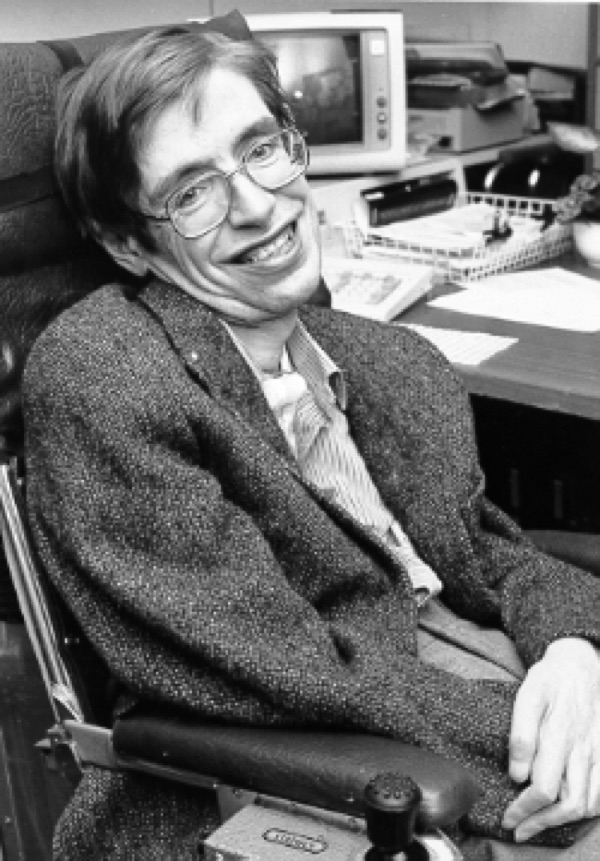
 NASA · Public domain
Theoretical physics · 1942–2018
Stephen Hawking
Black-hole radiation and singularity theorems
The story
Diagnosed with ALS at 21 and given two years, Hawking worked for 55 more — proving (with Penrose) that general relativity forces singularities, then showing quantum effects make black holes glow, evaporate, and eventually vanish: Hawking radiation.
Why it matters
He fused quantum theory and gravity for the first time and set up the information paradox that still drives fundamental physics — while A Brief History of Time made the deepest questions everyone's questions.
The deep dive
Researched for the Atlas from Wikipedia — Stephen Hawking (58,000 characters read) · updated Sep 20, 2026
01 A family shaped by financial ruin and books
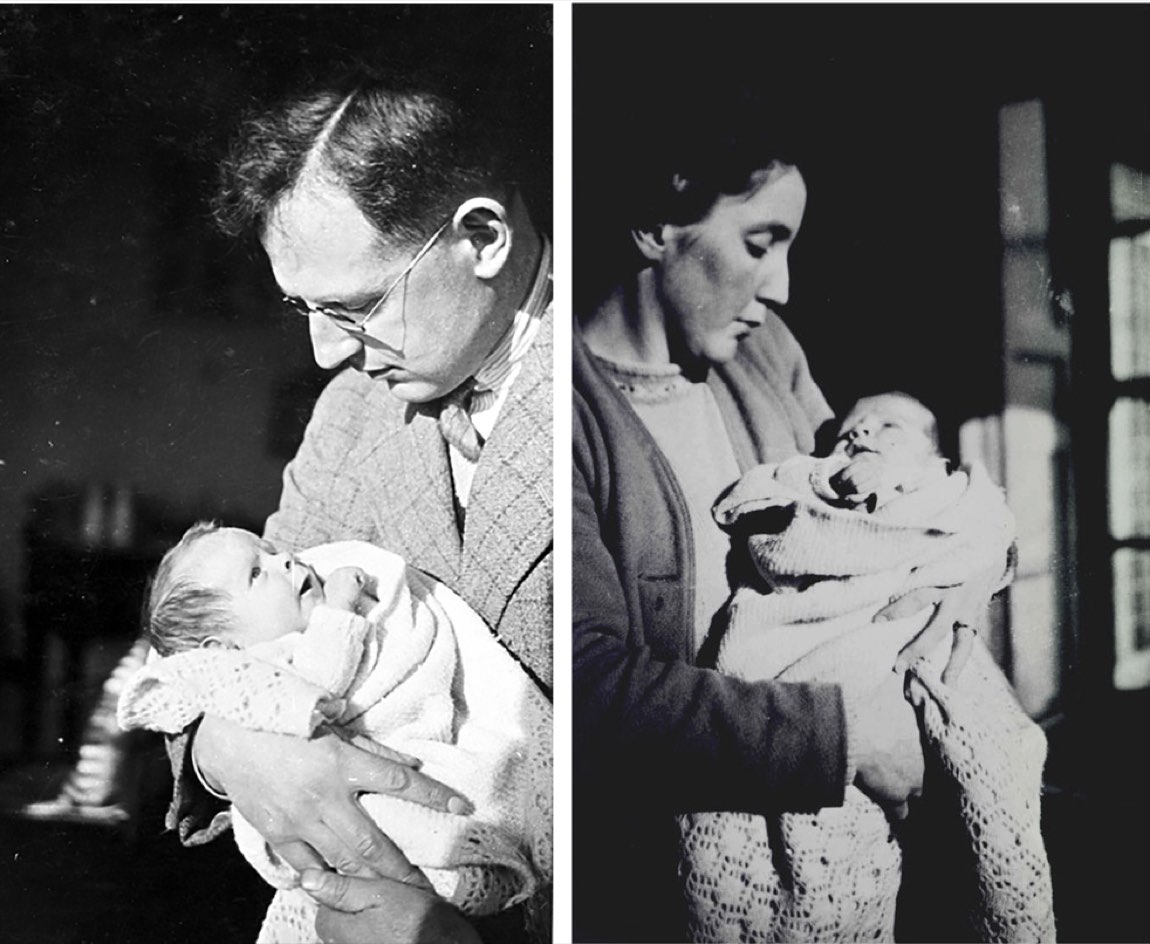
Stephen William Hawking was born on 8 January 1942 in Oxford, though his roots ran through Yorkshire, Glasgow, and London. His wealthy paternal great-grandfather overextended himself buying farmland, then went bankrupt during the great agricultural depression of the early twentieth century. It was his great-grandmother who saved the family — not through investment, but by opening a school inside their own home. Both his parents eventually attended Oxford despite these constraints: his father Frank read medicine, his mother Isobel read Philosophy, Politics and Economics. The household in St Albans that Hawking grew up in was considered highly intelligent and somewhat eccentric; meals were often spent with each family member silently reading a book. They travelled in a converted London taxicab and lived frugally in a large, cluttered, poorly maintained house. Frank's frequent research trips to Africa meant the family sometimes travelled independently — on one occasion spending four months in Mallorca visiting the poet Robert Graves and his wife. These circumstances — intellectual intensity combined with material modesty — formed the domestic atmosphere in which Hawking's curiosity about fundamental things took root.
02 From clock parts to Cambridge: early education
Hawking's path through school was neither smooth nor obviously stellar at first. He began at Byron House School in Highgate, London, which he later blamed for his failure to learn to read, faulting its progressive methods. In St Albans he attended the High School for Girls briefly — younger boys were then permitted — before moving to Radlett School and, from September 1952, St Albans School, having passed the eleven-plus a year early. His father wanted him at Westminster School, but the thirteen-year-old Hawking fell ill on the day of the scholarship examination; without a scholarship the fees were unaffordable, so he stayed at St Albans. That apparent setback kept him close to a circle of friends with whom he built a computer from clock parts, an old telephone switchboard, and recycled components, guided by mathematics teacher Dikran Tahta from 1958 onward. Although nicknamed 'Einstein' by classmates, he was not initially an academic standout. Hawking wanted to study mathematics at university, inspired by Tahta, but his father urged medicine, and since University College Oxford did not offer mathematics at the time, Hawking settled on physics and chemistry. He won a scholarship after sitting examinations in March 1959, ignoring his headmaster's advice to wait a year.
03 Oxford: a thousand hours and a borderline result
Hawking arrived at University College Oxford in October 1959, aged seventeen, and for the first eighteen months found the work 'ridiculously easy' and felt bored and lonely. His physics tutor Robert Berman later observed that Hawking needed only to know that something could be done before he could do it, without consulting how others had approached it. In his second and third years he opened up socially — he coxed a rowing crew at Oxford's University College Boat Club, cultivating a daredevil image by steering on risky courses that led to damaged boats. By his own estimate, he studied about 1,000 hours across his entire three years at Oxford, a figure that made sitting his finals genuinely difficult. He decided to answer only theoretical physics questions rather than those requiring factual recall. The result sat on the boundary between first- and second-class honours, forcing an oral examination. Hawking told the examiners directly: 'If you award me a First, I will go to Cambridge. If I receive a Second, I shall stay in Oxford, so I expect you will give me a First.' Berman later noted the examiners were intelligent enough to recognise they were talking to someone far cleverer than most of themselves. He received his first-class BA in physics, then travelled to Iran with a friend before beginning graduate work at Trinity Hall Cambridge in October 1962.
04 Diagnosis, depression, and Sciama's intervention
Hawking's first year as a doctoral student at Cambridge was difficult in ways that went far beyond academic adjustment. He had hoped to be supervised by the noted astronomer Fred Hoyle, but was assigned instead to Dennis William Sciama, one of the founders of modern cosmology — a disappointment he felt keenly at the time. He also found his undergraduate mathematics training inadequate for the demands of general relativity and cosmology. Then, in January 1963, at age twenty-one, came the diagnosis of motor neurone disease. Doctors initially gave him a life expectancy of two years. He fell into depression and felt there was little point in continuing his research. His disease progressed more slowly than predicted: although he had difficulty walking unsupported and his speech was becoming almost unintelligible, the grim two-year prognosis proved unfounded. Sciama encouraged him to return to work, and Hawking did. The intellectual rebirth was signalled publicly in June 1964, when Hawking attended a lecture and openly challenged the work of Hoyle and his student Jayant Narlikar — an act his colleagues marked as the beginning of his reputation for both brilliance and brashness. He obtained his PhD in applied mathematics and theoretical physics, specialising in general relativity and cosmology, in March 1966.
 ⤢
⤢
05 Singularities, Penrose, and the Adams Prize Deeper
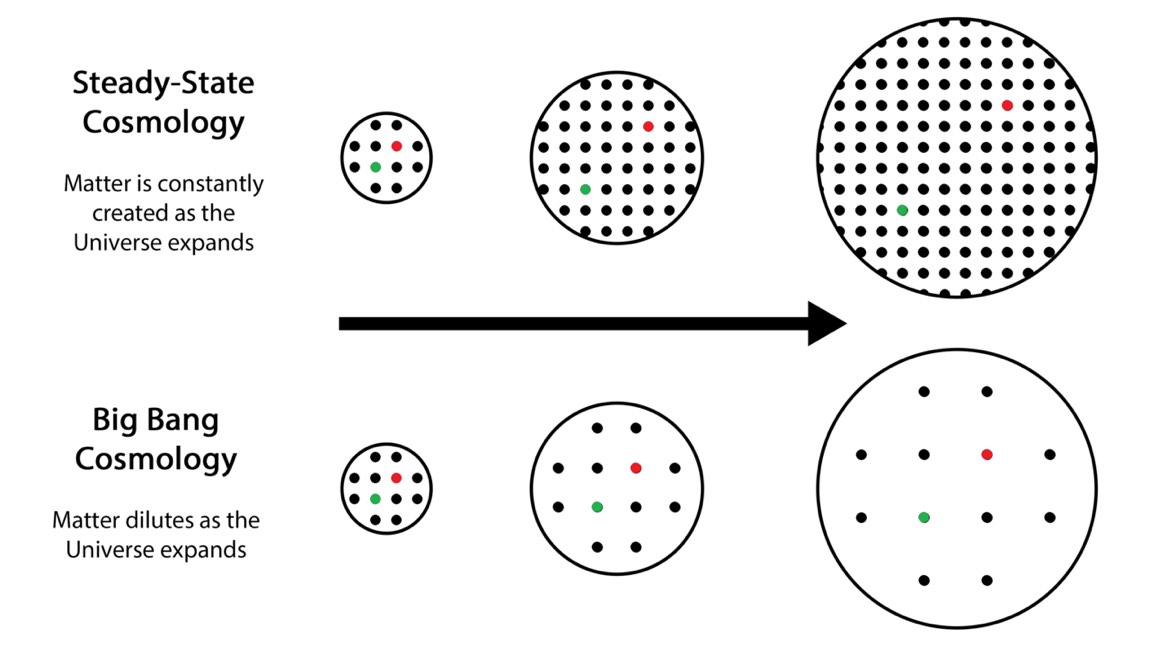
When Hawking began his doctoral work in the early 1960s, the physics community was genuinely divided between the Big Bang and Steady-State theories of cosmic origin. Inspired by Roger Penrose's theorem establishing a spacetime singularity at the centre of black holes, Hawking applied the same mathematical reasoning to the universe as a whole, writing his thesis on this topic during 1965. That thesis, titled Properties of Expanding Universes, was approved in 1966. His essay 'Singularities and the Geometry of Space–Time', submitted that same year, shared top honours with a paper by Penrose to win the Adams Prize, one of Cambridge's most prestigious mathematical awards. Collaborating directly with Penrose, Hawking extended singularity theorem concepts beyond his thesis work. Their joint essay was runner-up in the 1968 Gravity Research Foundation competition, and in 1970 they published a proof that if the universe obeys general relativity and fits any of the physical cosmology models developed by Alexander Friedmann, it must have begun as a singularity. This work laid the rigorous mathematical foundation for what would become the standard model of cosmic origins. Hawking also won the Gravity Research Foundation Award in January 1971 for his essay titled 'Black Holes', and was elected a Fellow of the Royal Society in 1974, becoming one of the youngest scientists ever to receive that honour.
06 Hawking radiation: the idea that caused a fight Deeper
Hawking's 1974 claim that black holes emit thermal radiation — now universally known as Hawking radiation — emerged from an unexpected source of frustration. After visiting Moscow and speaking with Yakov Zeldovich and Alexei Starobinsky, whose work showed that rotating black holes emit particles according to the uncertainty principle, Hawking set out to verify their findings. His own calculations contradicted his earlier second law of black hole mechanics, which had held that the total surface area of a black hole's event horizon cannot decrease. The contradiction was uncomfortable, but the new finding supported Jacob Bekenstein's 1972 theory that black holes possess an entropy proportional to the area of their event horizon. The initial reception was hostile: physicist John G. Taylor dismissed the idea as 'absolute rubbish' following one of Hawking's lectures. By the late 1970s, after further research was published, the discovery was widely accepted as a major breakthrough in theoretical physics. Hawking's second law was separately validated in 2025 by analysis of the black hole merger GW250114. The search for direct astrophysical detection of Hawking radiation from actual black holes continues in the twenty-first century, and some claimed detections from acoustic and optical analogues of black holes remain in scientific doubt.
07 Wagers, rivals, and the information paradox war Deeper
Hawking used scientific wagers as a form of intellectual theatre throughout his career, and several of them became landmarks in theoretical physics. In 1974 he bet his Caltech colleague Kip Thorne that Cygnus X-1, a well-known X-ray source, was not a black hole — describing it as an insurance policy against his own ideas being wrong. He conceded that bet in 1990. In 1991 he wagered with Thorne and John Preskill of Caltech that Roger Penrose's cosmic censorship conjecture — that naked singularities cannot exist unclothed within a horizon — was correct; he conceded in 1997, then negotiated a more refined version of the wager. That same year, Hawking and Thorne bet Preskill on the black hole information paradox: Hawking argued that information swallowed by a black hole is irretrievably lost, a position that violated the fundamental principles of quantum mechanics and sparked what Leonard Susskind later called 'the Black Hole War'. Hawking had first proposed information loss in 1981. By 2003, consensus among physicists was shifting against him. In a 2004 Dublin lecture he conceded the Preskill bet, proposing a controversial solution involving black holes with more than one topology. In January 2014 he called the alleged loss of information in black holes his 'biggest blunder'. In August 2015 he suggested information might actually be retrievable from black holes, though he did not consider the paradox fully resolved.
08 The no-boundary proposal and the mind of God Deeper
In 1981, at a Vatican conference, Hawking presented work suggesting the universe might have no boundary — no beginning or end — in spacetime. He subsequently developed this idea with physicist Jim Hartle, and in 1983 they published the Hartle–Hawking state, a model proposing that prior to the Planck epoch the universe had no boundary in spacetime, and that before the Big Bang, time simply did not exist. The concept of the beginning of the universe, in this framework, becomes literally meaningless. Hawking illustrated the idea with an analogy: the initial singularity of classical Big Bang models is replaced with a region akin to the North Pole — one cannot travel north of the North Pole, yet there is no boundary there; it is simply the point where all northward lines converge. The no-boundary proposal initially predicted a closed universe, a result with theological implications Hawking addressed directly: 'if the universe has no boundaries but is self-contained... then God would not have had any freedom to choose how the universe began.' A 1985 paper extended the work to argue that if the no-boundary proposition were correct, time would run backwards when the universe eventually collapsed. Don Page and Raymond Laflamme independently showed this conclusion was flawed, and Hawking withdrew it.
 ⤢
⤢
09 The Lucasian Chair and how physics changed for him
In 1979 Hawking was elected Lucasian Professor of Mathematics at the University of Cambridge, a post widely regarded as one of the most prestigious academic positions in the world, which he held until mandatory retirement at age sixty-seven in 2009. His inaugural lecture was titled 'Is the End in Sight for Theoretical Physics?' and proposed N = 8 supergravity as the leading candidate theory for resolving the outstanding problems of the field. Around this same time he underwent a personal shift in his approach to physics, moving away from insistence on rigorous mathematical proof toward a more intuitive and speculative style. He told Kip Thorne: 'I would rather be right than rigorous.' This transition accompanied a health crisis that forced him, albeit reluctantly, to accept nursing services at home. Between 1979 and 2009 he also maintained a visiting relationship with the California Institute of Technology, spending approximately one month there almost every year since his first Sherman Fairchild Distinguished Visiting Professorship in 1974. After retiring as Lucasian Professor, he became director of research at the Cambridge University Department of Applied Mathematics and Theoretical Physics, a position he held until his death.
10 A Brief History of Time: 237 weeks and 9 million copies
In 1982, needing money to finance his children's education and household expenses, Hawking decided to write a popular book about the universe accessible to the general public. Rather than approach an academic press, he signed with Bantam Books, a mass-market publisher, and received a substantial advance. A first draft was completed in 1984, and one of the first messages he produced with his newly acquired speech-generating device was a request for his assistant to help him finish writing it. His editor at Bantam, Peter Guzzardi, repeatedly pushed him to explain ideas clearly in non-technical language — a process requiring many revisions from an increasingly irritated Hawking. Published in April 1988 in the United States and June 1988 in the United Kingdom, A Brief History of Time appeared on the Sunday Times bestseller list for a record-breaking 237 weeks. By 2009, it had sold an estimated 9 million copies and had been translated into many languages. A Newsweek cover and a television special both described Hawking as 'Master of the Universe'. The success created new pressures: celebrity invitations and visitors left him limited time for both physics and his students, and some colleagues felt the attention he received owed more to his disability than to his science — an assessment Hawking himself found quietly painful.
11 Communication: cheek muscles and 2,500 words
Hawking lost the remaining ability to speak after contracting pneumonia during a visit to CERN in mid-1985, and requiring a tracheotomy. In 1986 he received a computer program called the Equalizer from Walter Woltosz, CEO of Words Plus, who had originally developed an earlier version to help his mother-in-law, who also had ALS. The system allowed Hawking to press a switch to select phrases, words, or letters from a bank of about 2,500 to 3,000 options that were scanned on screen. David Mason, a computer engineer and the husband of Hawking's nurse Elaine Mason, adapted a small computer and mounted it on Hawking's wheelchair. Using his hand initially, Hawking could produce up to 15 words per minute. By 2005, he had lost sufficient hand control to require a different method: he began operating the device using movements of a single cheek muscle, reducing output to about one word per minute. To address the risk of locked-in syndrome, he collaborated with Intel researchers on systems that could interpret brain patterns or facial expressions. The team ultimately adopted an adaptive word predictor built by London startup SwiftKey, trained on large amounts of Hawking's own written materials. The American-accented synthetic voice the system produced was no longer manufactured by the time he became famous for it, but Hawking refused to switch, saying he preferred it and had come to identify with it.
12 Honours, epitaph, and ashes between Newton and Darwin
Hawking accumulated honours across five decades. He was elected a Fellow of the Royal Society in 1974, becoming one of the youngest ever elected. He received the Eddington Medal and the Pius XI Gold Medal in 1975; the Dannie Heineman Prize, the Maxwell Medal and Prize, and the Hughes Medal in 1976; the Albert Einstein Medal in 1978; the Gold Medal of the Royal Astronomical Society in 1985; jointly with Penrose, the Wolf Prize in 1988; the Copley Medal from the Royal Society in 2006; and the Presidential Medal of Freedom — the United States' highest civilian honour — in 2009. He reportedly declined a knighthood in the late 1990s in objection to British science funding policy. In 2002 a BBC poll of the 100 Greatest Britons placed him at number 25. He died at his home in Cambridge on 14 March 2018, aged 76, having lived more than fifty years beyond his original two-year prognosis. His ashes were interred in Westminster Abbey's nave between the graves of Isaac Newton and Charles Darwin. The memorial stone is inscribed with an equation describing the temperature of Hawking radiation emitted by black holes — an epitaph he had directed be used at least fifteen years before his death. In June 2018, a speech of his, set to music by composer Vangelis, was beamed from a European Space Agency dish toward A0620-00, one of the nearest known black holes to Earth.