 NASA Hubble Space Telescope · Public domain
Space astronomy · 1925-2018
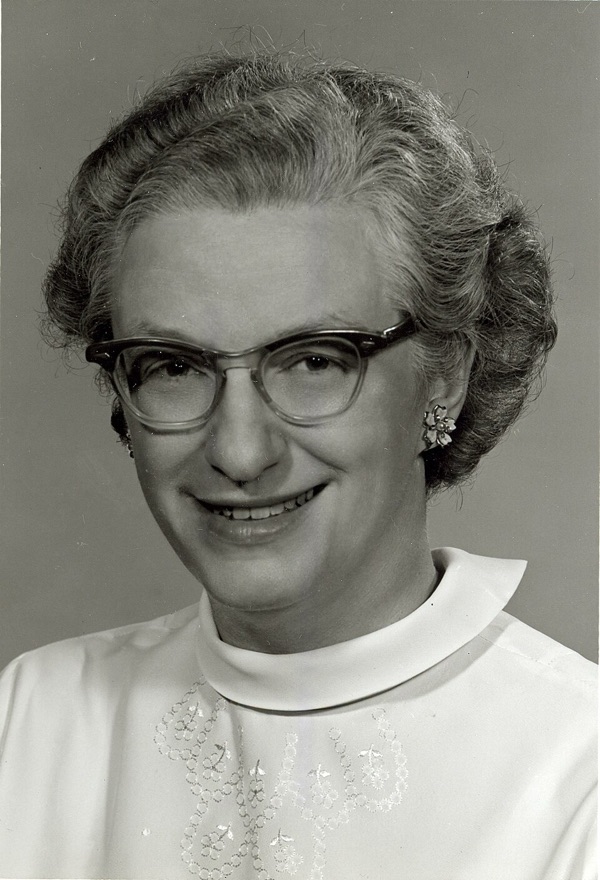
Nancy Grace Roman
The 'Mother of Hubble' and architect of astronomy from space
The story
Told as a student that women did not do science, Roman became NASA's first chief of astronomy, where she spent the 1960s and 70s conceiving, defending and shepherding the idea of a large space telescope through skeptical committees — the program that became Hubble.
Why it matters
Great observatories are political achievements before they are technical ones; Roman built the coalition that put astronomy above the atmosphere. NASA's next flagship survey telescope is named for her.
The deep dive
Researched for the Atlas from Wikipedia — Nancy Grace Roman (28,333 characters read) · updated Sep 20, 2026
01 A childhood spent chasing the stars
Nancy Grace Roman was born on May 16, 1925, in Nashville, Tennessee, to a music teacher mother and a physicist-mathematician father who soon became a geophysicist for an oil company. The family moved constantly — Oklahoma, Texas, New Jersey, Michigan, and then Nevada by 1936, when her father joined Civil Service geophysical research. Baltimore, Maryland, became home around age 12, after Irwin Roman was hired as Senior Geophysicist at the U.S. Geological Survey's Baltimore office. Both parents were major influences on Roman's scientific curiosity. At age 11, she organized an astronomy club, meeting with classmates once a week to study constellations from books. Despite discouragement from nearly everyone around her, she had fixed on astronomy as her life's work by seventh grade. She attended Western High School in Baltimore, completing an accelerated program and graduating in just three years — an early sign of the determination that would define her entire career.
02 Learning to read the sky at Swarthmore
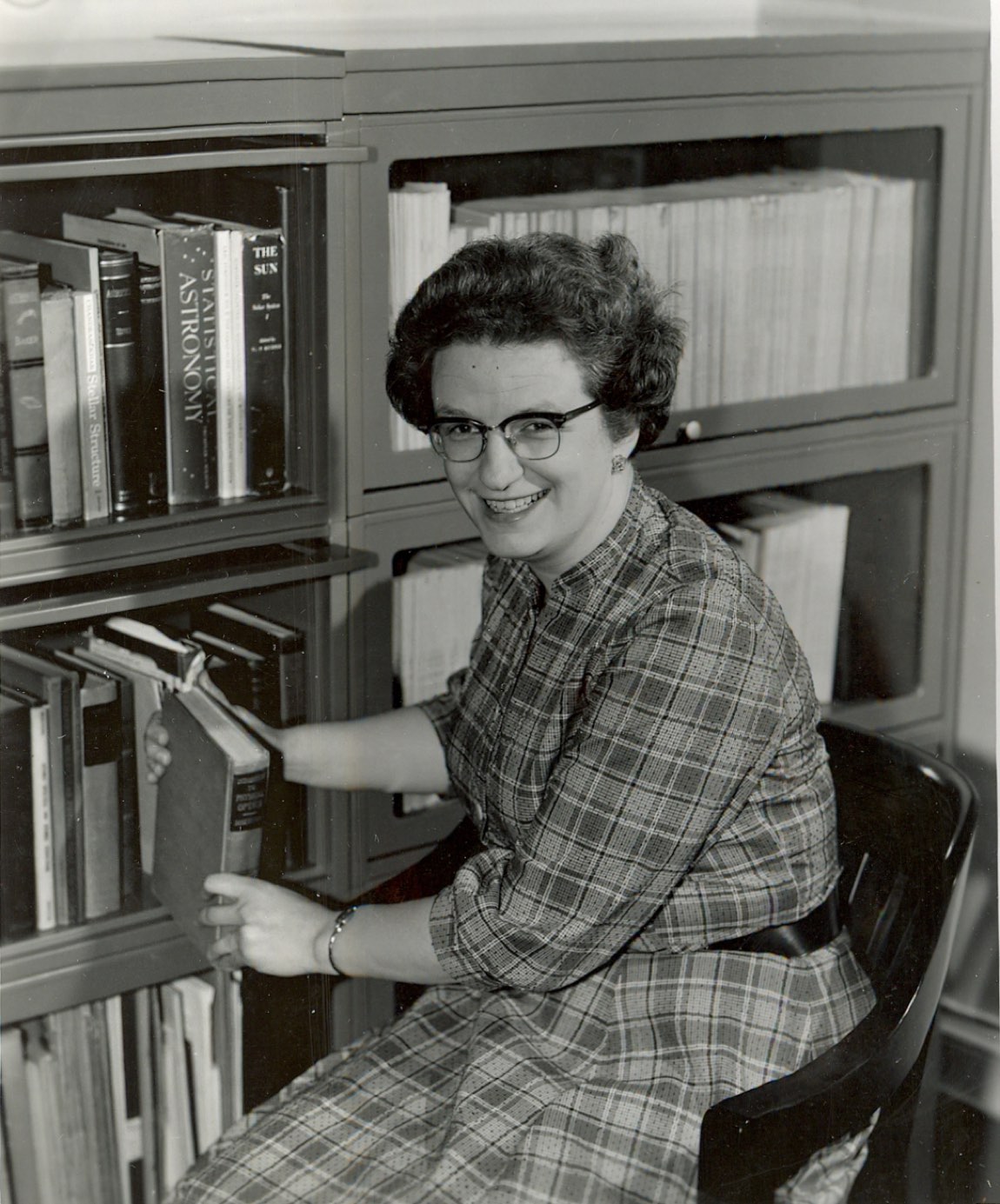
Roman enrolled at Swarthmore College intending to major in astronomy, only to find the dean of women openly hostile to the idea: the dean reportedly said that if a student insisted on majoring in science or engineering, she would have nothing more to do with them. The astronomy department chair, Peter van de Kamp, was initially discouraging as well, but he did teach her the subject. Roman revived two defunct student telescopes on campus, an experience she credited with giving her a feel for instruments and observing techniques. In her sophomore year she began processing astronomical photographic plates at the Sproul Observatory, absorbing Van de Kamp's philosophy that astronomers owe future generations the same data legacy they received from the past. Van de Kamp also taught her astrometry in a one-on-one lecture course and pushed her to use the professional astronomy library independently. She graduated in February 1946, and Van de Kamp steered her toward the University of Chicago, which was rebuilding its astronomy department in the aftermath of World War II.
03 Graduate school and a dissertation on stellar groups Deeper
Roman arrived at the University of Chicago for graduate study in March 1946, finding the coursework less demanding than Swarthmore's rigorous curriculum. Eager for hands-on research, she approached three prominent professors — Otto Struve, George van Biesbroeck, and William Wilson Morgan — each with the same request: an observational project. Struve assigned theory, Van Biesbroeck gave data analysis, but Morgan offered genuine observational work using a 12-inch (30 cm) telescope, most likely the refractor from the Kenwood Astrophysical Observatory. Their working relationship was turbulent; Morgan went six months without speaking to her at one point, yet he continued to support her research throughout. Roman earned her Ph.D. in 1949 with a dissertation on the Ursa Major Moving Group. She then accepted Morgan's invitation to return as his research associate at Yerkes Observatory, spending six years there and traveling regularly to the McDonald Observatory in Texas, then managed by the University of Chicago, with funding from the Office of Naval Research.
 ⤢
⤢
04 Two discoveries that changed how we read stars
Roman's most influential early research emerged from a systematic survey of all naked-eye stars similar to the Sun. She found they split into two distinct groups based on chemical content and motion through the galaxy. Stars containing smaller amounts of elements heavier than hydrogen and helium — astronomers call these "metals" — move faster than stars with more heavy elements. She also demonstrated that not all common stars are the same age, proved by comparing hydrogen lines in low-dispersion spectra. Stars with stronger hydrogen lines tended to orbit closer to the center of the Milky Way, while the metal-poor, faster-moving stars followed more elliptical paths off the galactic plane. These observations provided the first observational clue to the formation history of our galaxy and laid groundwork for decades of subsequent research. The paper was later selected as one of the 100 most important papers published in 100 years by the Astrophysical Journal — a rare honor that underscores how foundational the work was.
05 A lucky catch: AG Draconis changes everything
While working at Yerkes Observatory, Roman turned her spectroscope on the star AG Draconis and found that its emission spectrum had changed completely since earlier observations. She published the discovery and later admitted the timing was almost pure luck: AG Draconis exhibits that spectroscopic state only about 2 to 3 percent of the time. The paper's publication substantially raised her profile within the astronomical community and gave her career a significant boost at a moment when women had almost no institutional leverage. In 1955 she published a catalog of high-velocity stars in the Astrophysical Journal Supplement Series, documenting spectral types, photoelectric magnitudes and colors, and spectroscopic parallaxes for roughly 600 stars. Her "UV excess" method, derived from that work, gave astronomers a practical shortcut: instead of taking full spectra, they could identify metal-rich stars by measuring only their colors — a technique that spread quickly through the field and remained in wide use.
06 Radio waves, radar, and a Cold War first Deeper
Roman joined the Naval Research Laboratory in 1954, entering the young American field of radio astronomy. The NRL had already built the largest accurate radio telescope in the country in 1951 — a 50-foot (15 m) parabolic antenna mounted on top of one of its research buildings. She rose to head the microwave spectroscopy section of the radio astronomy program and contributed to mapping much of the Milky Way at a frequency of 440 MHz, determining the spectral break in the galaxy's nonthermal radio emission. She also pioneered radio astronomy in geodetic work, using radar ranging at a wavelength of 10 cm (2.86 GHz) to refine the calculated distance to the Moon, presenting this at a geodesy conference in 1959 as the best available method for measuring Earth's mass. In 1956, she traveled to Armenia — then part of the Soviet Union — for the dedication of the Byurakan Observatory, becoming the first civilian to visit Armenia after the Cold War began. The trip cemented her international reputation and led to a series of public astronomy lectures back home.
 ⤢
⤢
07 Building NASA's astronomy program from scratch
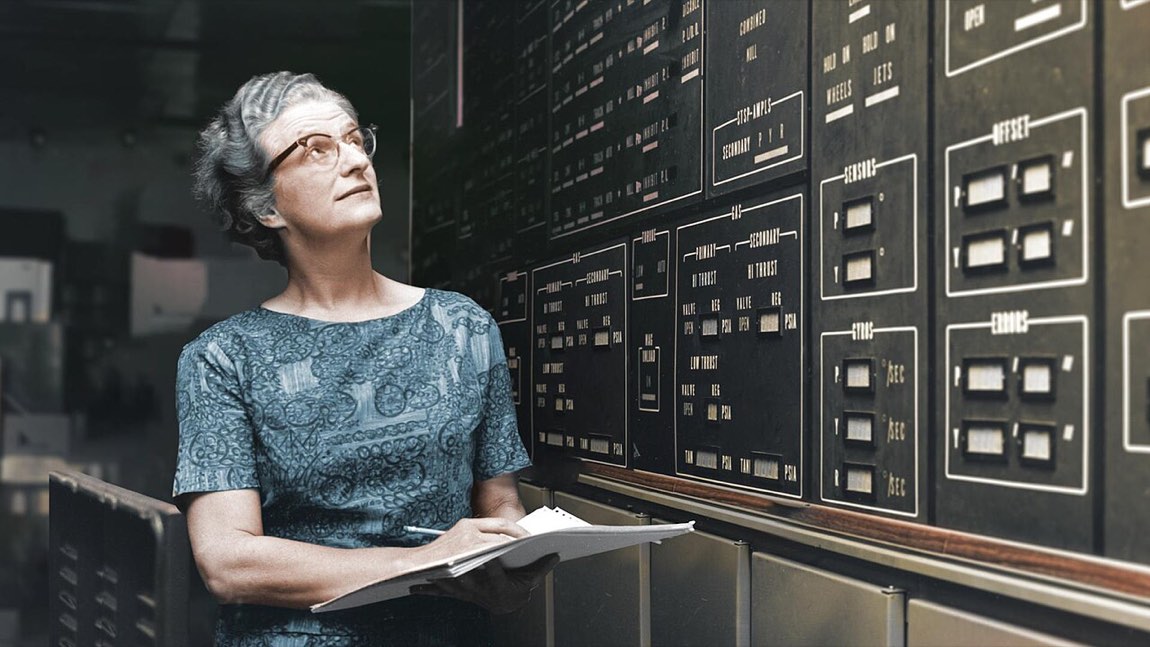
Roman arrived at NASA in late February 1959 as Head of Observational Astronomy, drawn by an informal invitation she received at a lecture by Harold Urey. In early 1960 she became Chief of Astronomy in NASA's Office of Space Science — the first woman to hold an executive position at the agency. The program she inherited included the Orbiting Solar Observatories and geodesy and relativity work. She traveled the country giving lectures at university astronomy departments, simultaneously promoting space science and gathering scientists' priorities so that NASA's research agenda would reflect the needs of the broader astronomical community. As early as 1960, just one year into the job, she was publishing policy statements declaring that the entire astronomical community would participate in NASA's program and that NASA would act as coordinating agency rather than gatekeeper. This philosophy — that major observatory projects serve the community rather than individual research groups — became the standard model for large astronomical facilities.
08 Satellites, observatories, and one Nobel Prize Deeper
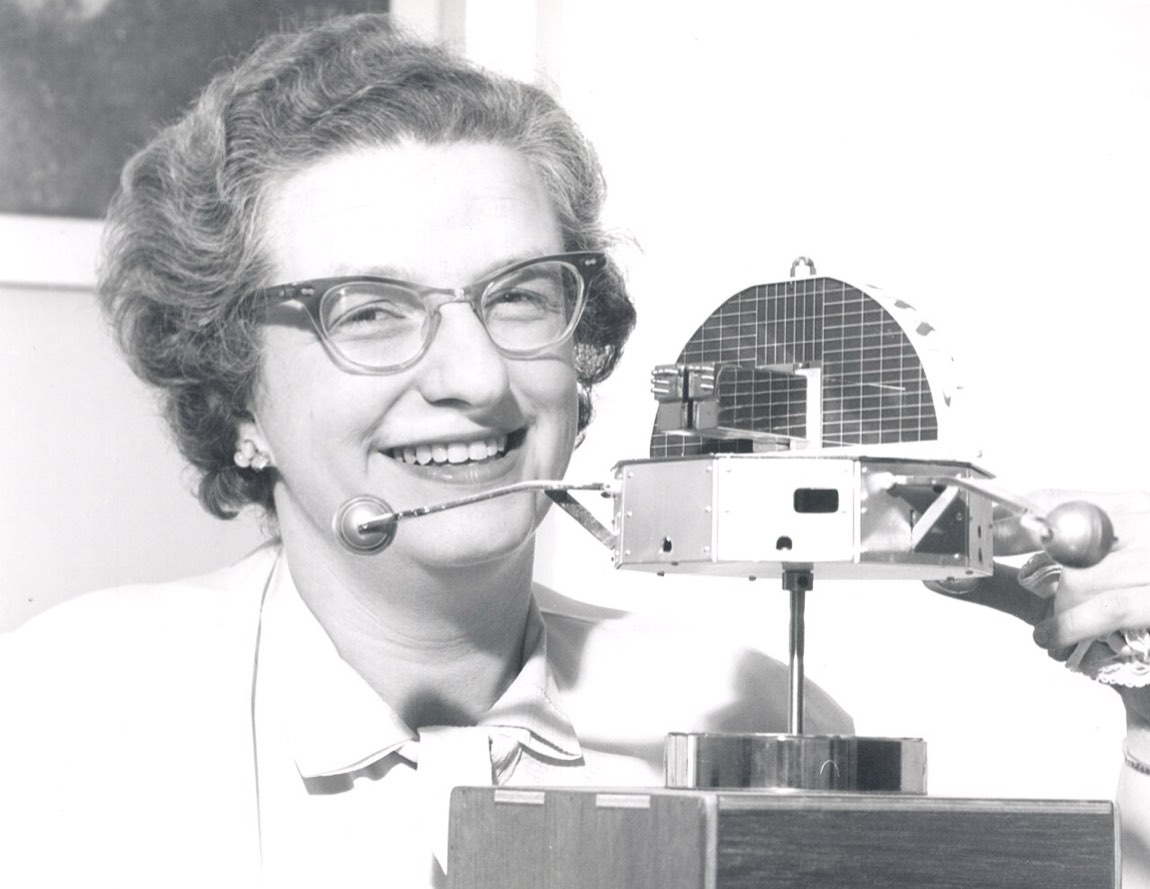
The range of programs Roman managed at NASA was extraordinary. She oversaw development and launch of OSO 1 in May 1962, OSO 2 in February 1965, and OSO 3 in March 1967. The Orbiting Astronomical Observatory program, which she led from 1959, produced the first successful space telescope in OAO-2, launched December 1968, followed by Copernicus (OAO-3), a highly successful ultraviolet telescope that operated from 1972 to 1981. She oversaw three small astronomy satellites: the X-ray explorer Uhuru in 1970 with Riccardo Giacconi, the gamma-ray Small Astronomy Satellite 2 in 1972, and the X-ray Small Astronomy Satellite 3 in 1975. She launched NASA's airborne astronomy program — a 12-inch (30 cm) telescope in a Learjet in 1968, then the 36-inch (91 cm) Kuiper Airborne Observatory in 1974. The Cosmic Background Explorer, which Roman initially doubted could survive peer review, ultimately earned the Nobel Prize in 2006 for two of its lead scientists. She called her role in securing the International Ultraviolet Explorer her greatest personal success, saying she carried the fight "almost single handedly."
09 How the Hubble Space Telescope got its foundation
Roman's connection to the Hubble Space Telescope runs deeper than the "Mother of Hubble" nickname suggests. She deliberately chose to develop the smaller OAO telescopes first, arguing that even the modest 12-inch (30 cm) instruments of OAO-2 represented a major technological leap, particularly in pointing control systems. After OAO-2's success she began championing a large space telescope publicly. She prompted NASA to ask the National Academy of Sciences in 1969 to evaluate a 3-meter-class space telescope, producing an endorsement to proceed. In 1971 she created the Science Steering Group for the Large Space Telescope, appointing both NASA engineers and astronomers from across the country to design a free-floating observatory that was scientifically ambitious yet technically feasible. She also helped establish the Space Telescope Science Institute as the body responsible for science operations. In the 1970s she wrote Congressional testimony to sustain funding, and she invested in detector technology that led to Hubble being the first major observatory to fly charge-coupled device detectors.
 ⤢
⤢
10 An early vision for finding other worlds Deeper
Long before exoplanet hunting became a mainstream field, Roman was thinking carefully about how space might enable the search. In 1959 she wrote a paper in the Astronomical Journal on detecting planets around other stars. That same year — the year she joined NASA — she proposed, possibly for the first time, that a space-based telescope could detect planets around other stars, and even outlined a technique using a rotated coronagraphic mask to block stellar light. A similar approach was eventually used with the Hubble Space Telescope to image the candidate exoplanet Fomalhaut B, and the Nancy Grace Roman Space Telescope is designed to image giant exoplanets using a related method. As early as 1980 Roman believed the future Hubble could detect Jupiter-sized exoplanets through astrometry; astronomers successfully applied that technique in 2002 to characterize a previously discovered planet around the star Gliese 876. Her 1959 coronagraph idea therefore traces a direct conceptual line to some of the most exciting capabilities of the telescope that now bears her name.
11 Obstacles, decisions, and a hard-nosed reputation
Roman faced structural barriers throughout her career. The University of Chicago had never appointed a woman to its academic staff, and the scarcity of tenured research positions available to women was a direct reason she left Yerkes. Her high school guidance counselor sneered when she asked to take second-year algebra instead of Latin. She was one of very few women at NASA and, for a time, its only female executive. She attended management courses in Michigan and at Penn State specifically designed for women in leadership, which she found addressed women's interests rather than their actual professional problems. Within the astronomical community she was known for bluntness; Robert Zimmerman noted that her hard-nosed manner of approving or denying proposals made her disliked by many. That style was visible in her decision to terminate the relativity program in the early 1960s after the Pound-Rebka experiment on the ground achieved better accuracy than the projected space-based experiments. She also turned down faculty offers from Wayne State University and the University of Southern California because she judged their astronomical instrumentation inadequate.
12 Awards, asteroids, and a LEGO minifigure
Roman's recognition arrived across many decades and in strikingly varied forms. Early honors included the Federal Woman's Award and being named one of Life magazine's 100 Most Important Young People, both in 1962. NASA gave her its Exceptional Scientific Achievement Medal in 1969 and its Outstanding Scientific Leadership Award in 1978. Honorary doctorates came from Russell Sage College (1966), Hood College (1969), Bates College (1971), and her own Swarthmore College (1976). The asteroid 2516 Roman was named in her honor. NASA named a technology fellowship program after her — the Nancy Grace Roman Technology Fellowship in Astrophysics. In 2017, she was one of four women featured in a "Women of NASA" LEGO set alongside Margaret Hamilton, Mae Jemison, and Sally Ride. Roman described that last honor as "by far the most fun" of all the recognition she received. In May 2020, NASA administrator Jim Bridenstine announced that the Wide Field Infrared Survey Telescope would be renamed the Nancy Grace Roman Space Telescope, cementing her place in the history of space astronomy.
13 After NASA: classrooms, catalogs, and recorded books
Roman took early retirement from NASA in 1979 after twenty-one years, in part to care for her elderly mother. She spent another year as a consultant completing the selection of the Space Telescope Science Institute. Curious about computing, she audited a FORTRAN course at Montgomery College, which led directly to a consulting position with ORI, Inc. from 1980 to 1988, where she worked on geodesy and astronomical catalogs. By 1995 she had become head of the Astronomical Data Center at NASA's Goddard Space Flight Center, continuing until 1997. She then spent three years teaching advanced junior high and high school students and K-12 teachers, including those in underserved districts. That was followed by ten years recording astronomical textbooks for Reading for the Blind and Dyslexic. In a 2017 interview she said: "I like to talk to children about the advantages of going into science and particularly to tell the girls, by showing them my life, that they can be scientists and succeed." She died on December 25, 2018, in Chevy Chase, Maryland, following a long illness. Over her lifetime she published 97 scientific papers.