 NRAO/AUI/NSF · CC BY 4.0
Radio astronomy · 1905–1950 / 1911–2002
Karl Jansky & Grote Reber
Accidentally discovering the radio universe
The story
Bell Labs engineer Jansky, hunting static that disturbed transatlantic calls in 1933, traced a hiss to the center of the Milky Way — the first cosmic radio detection. Astronomy shrugged; radio amateur Grote Reber didn't, building a 9-m dish in his Illinois backyard and mapping the radio sky alone for a decade.
Why it matters
They opened the first new window on the universe since the eye — the path to pulsars, quasars, the CMB, and black-hole images. The unit of radio flux is the jansky.
The deep dive
Researched for the Atlas from Wikipedia — Karl Guthe Jansky (10,081 characters read) · updated Sep 20, 2026
01 A Family Wired for Science
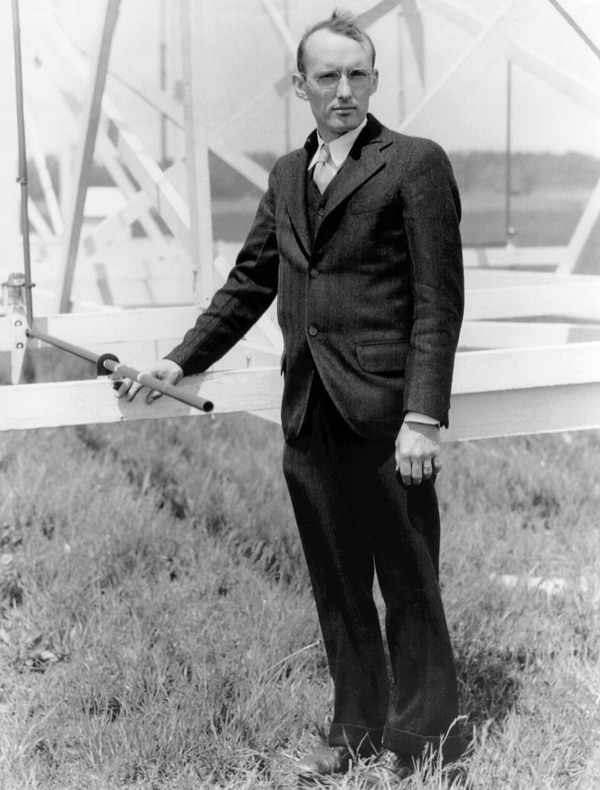
Karl Guthe Jansky was born on October 22, 1905, in what was still the Territory of Oklahoma, not yet a state. His father, Cyril M. Jansky, was dean of the college of engineering at the University of Oklahoma at Norman — a man of Czech immigrant stock who had begun teaching at the remarkable age of sixteen and would eventually retire as a professor of electrical engineering at the University of Wisconsin. That combination of engineering instinct and teaching devotion shaped the household Karl grew up in. His name itself carried a mentorship forward: he was named after Dr. Karl Eugen Guthe, a physics professor at the University of Michigan who had been a formative influence on his father. His older brother Cyril Jr., ten years Karl's senior, helped construct some of the earliest radio transmitters in the United States, including 9XM in Wisconsin — now WHA of Wisconsin Public Radio — and 9XI in Minnesota, now KUOM. Radio was not a hobby in this family; it was practically the furniture.
02 Wisconsin, a Kidney, and Bell Labs
Jansky earned his BS in physics from the University of Wisconsin in 1927, then stayed an extra year in Madison completing all the graduate coursework for a master's degree except the thesis itself — a gap he would only formally close in 1936, when he submitted a thesis on his radio astronomy findings to earn that long-deferred degree. In July 1928, at age 22, he joined Bell Telephone Laboratories. A kidney condition he had carried since college — the condition that would ultimately contribute to his death at 44 — influenced where Bell Labs posted him: the relatively healthy outdoor environment of the field station in Holmdel, New Jersey. Bell's practical motivation was entirely commercial: the company wanted to understand atmospheric and ionospheric behavior at short wavelengths of roughly 10 to 20 meters to improve trans-Atlantic radio telephone service. Jansky's specific assignment was to identify and characterize sources of static that might degrade voice transmissions across the ocean.
 ⤢
⤢
03 The Merry-Go-Round Antenna
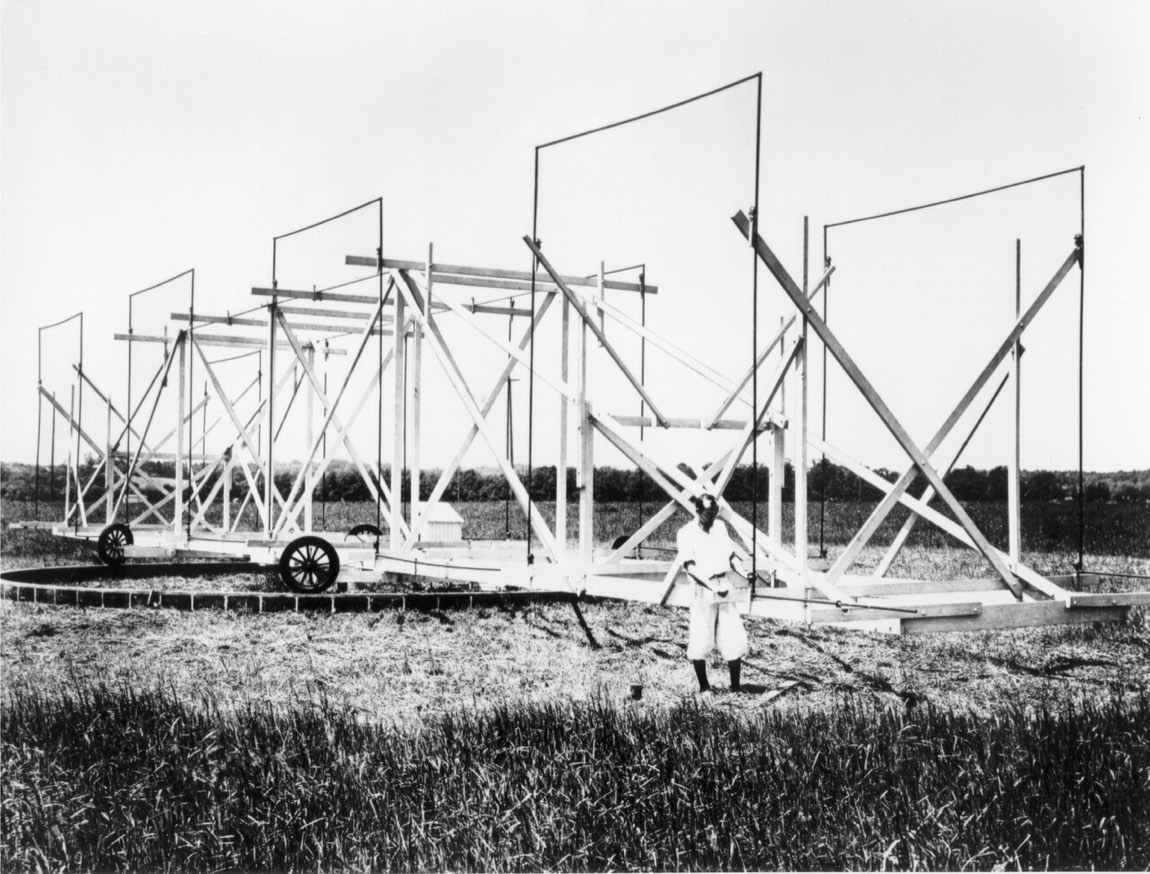
To hunt for interference, Jansky built a directional antenna designed to receive at a frequency of 20.5 MHz, corresponding to a wavelength of about 14.6 meters. The structure was roughly 100 feet (30 meters) in diameter and stood about 20 feet (6 meters) tall. What made it peculiar and memorable was its mounting: it sat on top of a turntable riding on four Ford Model-T wheels, which allowed the entire assembly to be rotated in azimuth so that engineers could pinpoint the compass direction of any incoming signal. The contraption earned the affectionate nickname "Jansky's merry-go-round," and its total construction cost was later estimated at less than $1,000 — roughly the price of a modest used car today. A small shed beside the antenna housed an analog pen-and-paper recording system that continuously traced signal intensity onto paper as the antenna swept around, leaving a physical record of everything the instrument heard.
04 Three Kinds of Static, One Mystery
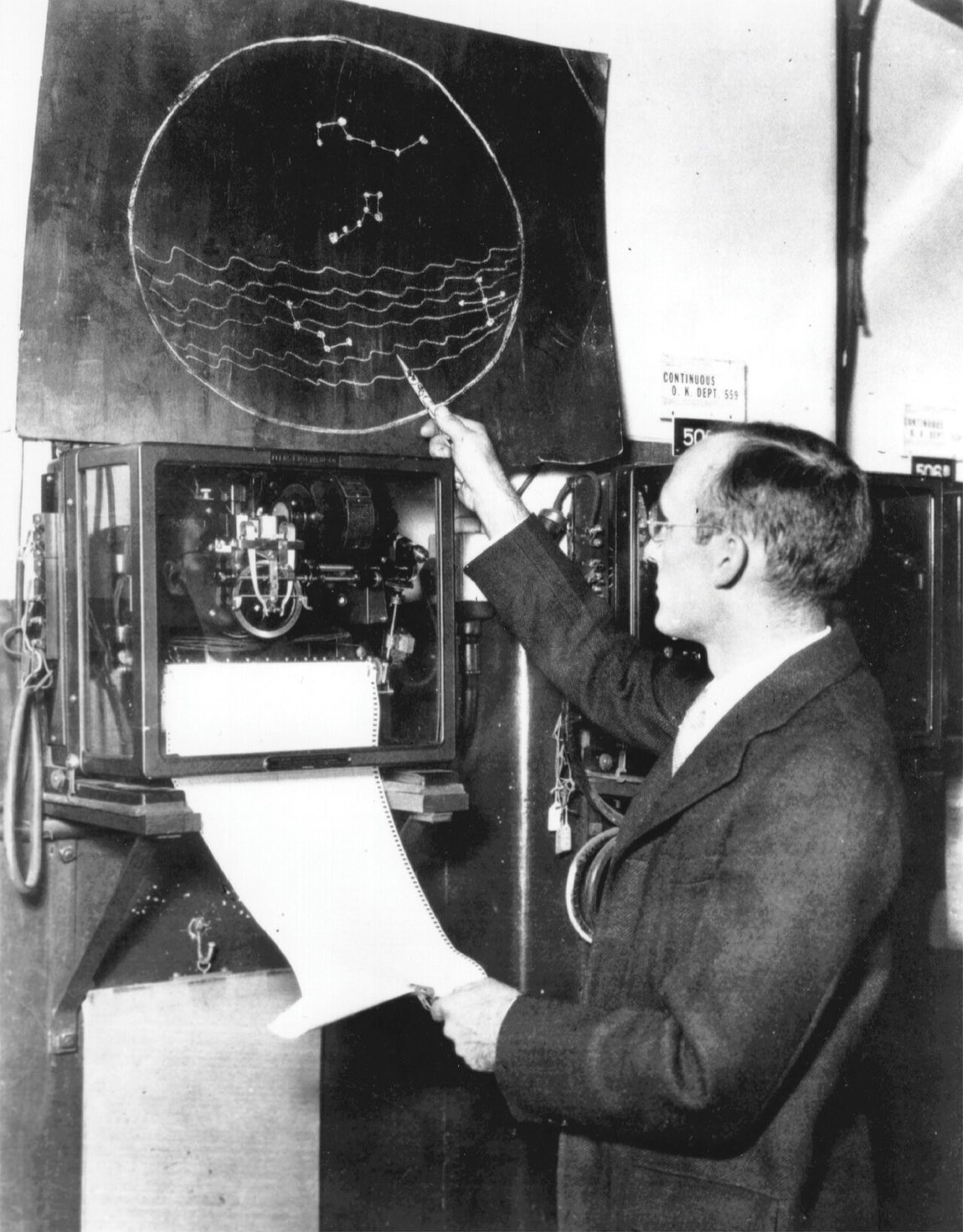
After spending several months recording signals from every compass direction, Jansky sorted what he heard into three distinct categories: static from nearby thunderstorms, static from distant thunderstorms, and a faint, persistent hiss of completely unknown origin. The first two were expected; the third was not. Because the location of this mystery signal's maximum intensity shifted once per day, Jansky's first hypothesis was entirely reasonable — he suspected he was detecting radio emission from the Sun, whose position also shifts systematically through the day. That hypothesis held for a few months. Then the signal's peak position drifted noticeably away from the Sun's position, and Jansky was forced back to the data. The cycle he measured for the signal's return was 23 hours and 56 minutes — not the 24-hour solar day, but something subtly and critically different.
 ⤢
⤢
05 A Friend Who Knew About Sidereal Days Deeper
The four-minute discrepancy between Jansky's 23-hour-56-minute cycle and the ordinary 24-hour day was the key that unlocked the discovery, and it took a conversation with a friend to turn that key. Jansky discussed the puzzling signal with Albert Melvin Skellett, an astrophysicist who was also his friend. Skellett immediately recognized what 23 hours and 56 minutes meant: it is the length of a sidereal day, the time the Earth takes to rotate once relative to the distant stars rather than relative to the Sun. Any fixed astronomical object — a star, a nebula, the center of the galaxy — returns to the same position in the sky every sidereal day. Once Jansky understood this, he compared his antenna records against optical astronomical maps and identified the direction of maximum signal: it pointed toward the center of the Milky Way, in the constellation Sagittarius. He noted the peak precisely: 7:10 p.m. on September 16, 1932.
06 Announcement, Newspaper Fame, and Silence
Jansky formally announced the discovery in April 1933 at a meeting in Washington, D.C., to an audience that was, by most accounts, unable to grasp its significance. The public response was larger than the scientific one: the New York Times ran the story on May 5, 1933, and NBC broadcast a special radio program letting listeners hear "radio sounds from among the stars." In October 1933, Jansky published the findings in the Proceedings of the Institute of Radio Engineers under the carefully hedged title "Electrical disturbances apparently of extraterrestrial origin." He also noted a puzzle about the Sun: if stars produce radio noise, the Sun — far closer than any other star — should overwhelm the signal. It did not. Jansky attributed the Sun's silence to the fact that in the early 1930s it was passing through an inactive phase of its sunspot cycle, a reasonable and accurate explanation.
 ⤢
⤢
07 Interstellar Gas and a Stalled Career Deeper
By 1935, Jansky had developed a physical interpretation for what he was hearing: he suggested the strange radio signals were produced by interstellar gas, specifically through what he called "thermal agitation of charged particles." This was a genuinely insightful hypothesis for a researcher working with only a bachelor's degree and no formal astronomical training, arriving at conclusions that would take the broader community years to absorb. He called the emission "Star Noise" in the thesis he eventually submitted in 1936 for his University of Wisconsin master's degree. But after 1935, his attempts to push the research further stalled completely. Astronomers found the work foreign to their training and instruments. Bell Labs, operating under the financial pressure of the Great Depression, could not justify funding research into a phenomenon that had no discernible effect on the trans-Atlantic telephone service the company was paid to provide. Jansky was redirected to other engineering work and never returned to radio astronomy.
08 Grote Reber Carries the Torch Alone
The field Jansky opened might have stayed dormant indefinitely were it not for Grote Reber, a radio engineer who read about the 1933 discovery and decided to act. In 1937, Reber singlehandedly built a radio telescope in his backyard in Illinois and used it to conduct the first systematic survey of astronomical radio waves — work he pursued essentially alone while the professional astronomy community remained indifferent. A second figure shaped by Jansky's discovery was John D. Kraus, who after World War II established a radio observatory at Ohio State University and wrote a textbook on radio astronomy that became a long-standing standard in the field. Kraus later described the significance of Jansky's work in vivid terms: in 1930, he wrote, essentially everything humanity knew about the heavens had come from what could be seen or photographed. Jansky changed that, opening a universe of radio sounds to which mankind had been deaf since the beginning of time.
09 Death at 44 and the Nobel Question
Jansky spent his later years as a resident of Little Silver, New Jersey, continuing his engineering work at Bell Labs but never returning to the cosmic static that had briefly made him famous. He died on February 14, 1950, at age 44, in a hospital in Red Bank, New Jersey — now called Riverview Medical Center — from a heart condition rooted in the kidney disease he had carried since his college years. The question of whether he deserved a Nobel Prize has been raised explicitly: engineer and historian William A. Imbriale wrote that had Jansky not died so early, he would undoubtedly have been awarded one. The Nobel Prize is not awarded posthumously, so the timing of his death foreclosed that recognition permanently. He accomplished all of his foundational radio astronomy work while still in his twenties, holding only a bachelor's degree in physics.
10 How Astronomers Keep His Name Alive
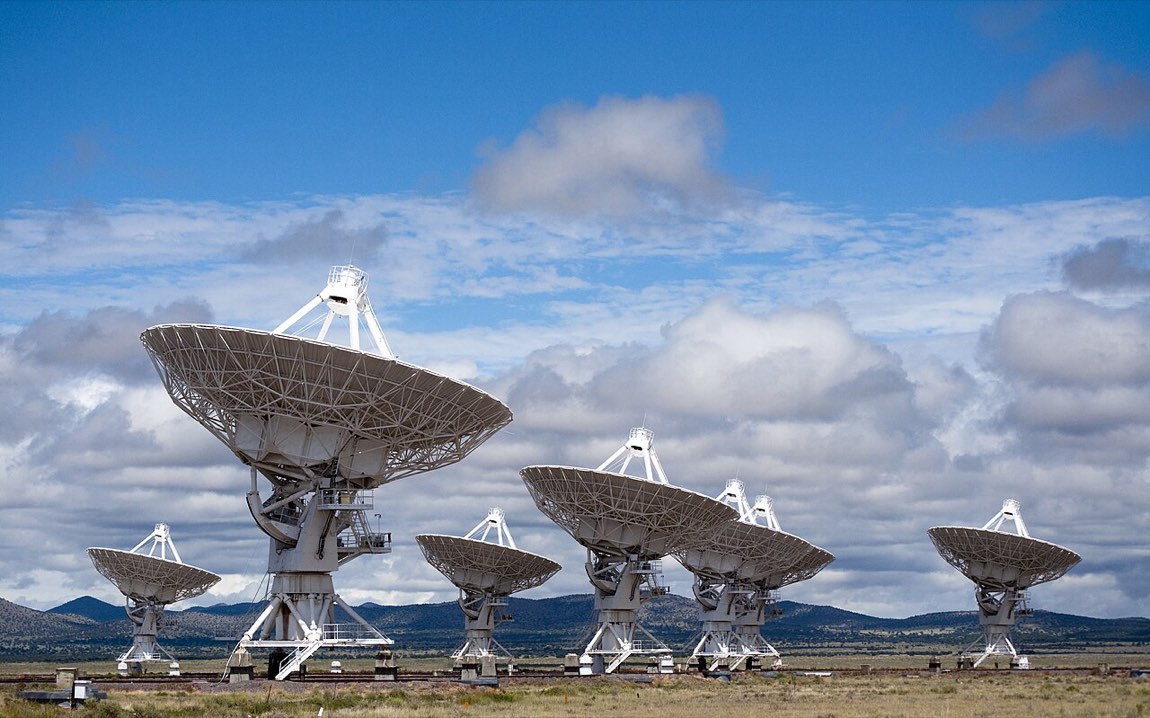
The astronomical community has memorialized Jansky across several dimensions of the field he founded. The unit of spectral irradiance used by radio astronomers to measure the brightness of cosmic radio sources is the jansky, defined as 10⁻²⁶ watts per square meter per hertz — an almost incomprehensibly small quantity that reflects how faint most cosmic radio sources genuinely are. A lunar crater carries his name, as does Asteroid 1932 Jansky. The National Radio Astronomy Observatory named its postdoctoral fellowship program after him and awards the Jansky Prize annually. Most visibly, on March 31, 2012, the NRAO renamed the Very Large Array radio telescope in Magdalena, New Mexico — a facility of 27 dish antennas spread across the desert — the Karl G. Jansky Very Large Array. The term "Jansky noise" is also in use, referring to high-frequency static disturbances of cosmic origin, sometimes called cosmic noise.
11 The Monument Frozen at a Precise Moment Deeper
In 1998, researchers Tony Tyson and Robert Wilson of Lucent Technologies — the corporate successor to Bell Telephone Laboratories — determined the precise location of Jansky's original antenna at what is now the Bell Labs Holmdel Complex at 101 Crawfords Corner Road in Holmdel, New Jersey. A monument and plaque were placed there to mark the achievement. The monument is a stylized sculpture of the original rotating antenna, and it was oriented with deliberate precision: it points in exactly the direction Jansky's antenna was facing at 7:10 p.m. on September 16, 1932, the moment of maximum signal when the instrument was aligned with the center of the Milky Way in the direction of Sagittarius. That same care for exactness characterizes the replica at Green Bank Observatory in West Virginia, where a full-scale reconstruction of Jansky's rotating antenna stands near a reconstructed version of Grote Reber's 9-meter dish — a physical pairing of the two pioneers who built radio astronomy from nothing.