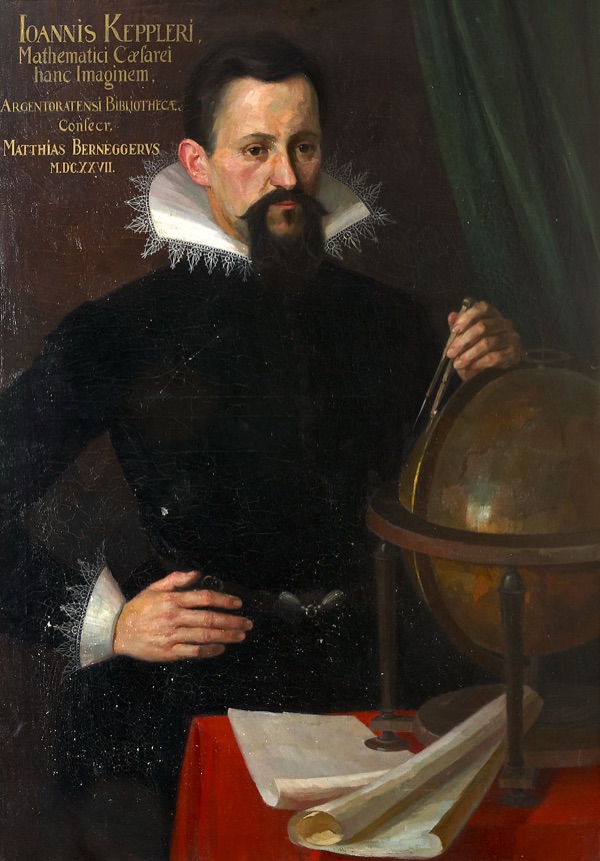
 August Köhler [1] · Public domain
Astronomy · 1571–1630
Johannes Kepler
The three laws of planetary motion
The story
Inheriting Tycho Brahe's peerless naked-eye measurements, Kepler spent years failing to fit Mars's orbit with circles — then let go of 2,000 years of circular dogma. Orbits are ellipses; planets sweep equal areas in equal times; period squared tracks distance cubed.
Why it matters
Kepler's laws turned the Solar System into clockwork you could compute, set up Newton's gravity, and still govern every mission trajectory. NASA's planet-hunting telescope bore his name.
The deep dive
Researched for the Atlas from Wikipedia — Johannes Kepler (58,000 characters read) · updated Sep 20, 2026
01 A Sickly Child Who Counted Stars
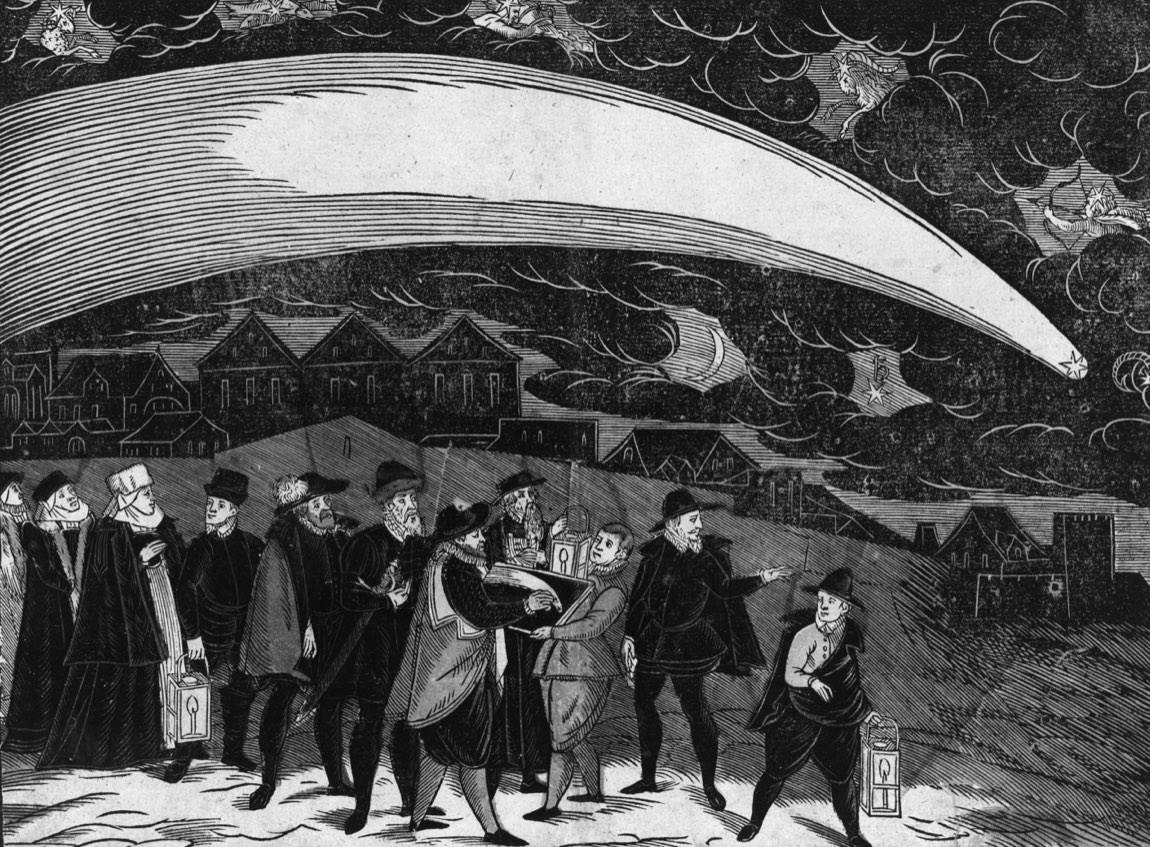
Johannes Kepler was born on 27 December 1571 in the Free Imperial City of Weil der Stadt, now part of the Stuttgart Region in Baden-Württemberg. The Kepler family had seen better days: his grandfather Sebald had been Lord Mayor of the city, but the family fortune was already in decline by the time Johannes arrived. His father Heinrich earned an unstable living as a mercenary and abandoned the family when Johannes was five, believed to have died fighting in the Netherlands. His mother Katharina, an innkeeper's daughter, worked as a healer and herbalist. Born prematurely, Kepler described himself as weak and sickly throughout childhood, and smallpox left him with impaired vision and crippled hands — a cruel irony for a future astronomer who would depend on precise observation. Yet despite these hardships, he was already remarkable: at his grandfather's inn, travelers marveled at his phenomenal ability with numbers. At age six, his mother took him to a high place to see the Great Comet of 1577, and at nine he was called outside to watch a lunar eclipse, which he later remembered as appearing "quite red."
02 From Monastery Schools to Copernican Convert
Kepler's formal education traced a careful Lutheran path through the school system of Protestant Württemberg. After elementary schooling in Leonberg and years at two monastic schools — Adelberg from 1584 and the seminary at Maulbronn from 1586 — he entered the Tübinger Stift at the University of Tübingen in September 1589. There he studied philosophy under Vitus Müller and theology under Jacob Heerbrand, a student of Philipp Melanchthon. The pivotal influence, however, was Michael Maestlin, Tübingen's professor of mathematics from 1583 to 1631, who taught Kepler both the Ptolemaic and the Copernican systems. Kepler became a convinced Copernican during his student years, even defending heliocentrism in a formal student disputation on both theoretical and theological grounds, arguing that the Sun was the principal source of motive power in the universe. Despite aiming for Lutheran ministry, he was denied ordination because his views conflicted with the Formula of Concord adopted in 1577. That closed door pushed him toward science: near the end of his studies he was recommended for a mathematics and astronomy teaching post at the Protestant school in Graz, which he accepted in April 1594 at age 22.
03 Platonic Solids and a Geometrical God Deeper
Kepler's first major astronomical work, Mysterium Cosmographicum, grew from a moment of apparent revelation on 19 July 1595 while he was teaching in Graz. He realized that the five Platonic solids — octahedron, icosahedron, dodecahedron, tetrahedron, and cube, nested in that order within one another, each enclosed in a sphere — could produce six layers corresponding exactly to the six known planets: Mercury, Venus, Earth, Mars, Jupiter, and Saturn. He also derived a formula relating the size of each planet's orb to the length of its orbital period: from inner to outer planets, the ratio of increase in orbital period is twice the difference in orb radius. For Kepler, this was not mere geometry; the Sun corresponded to God the Father, the stellar sphere to the Son, and the intervening space to the Holy Spirit. His first manuscript included an extensive chapter reconciling heliocentrism with apparently contradictory biblical passages, which the Tübingen senate required him to remove before granting permission to publish. Mysterium was published late in 1596 and, though not widely read, firmly established Kepler's reputation. He never abandoned its central thesis, publishing an expanded second edition in 1621 with footnotes documenting 25 years of corrections and improvements.
04 Tycho Brahe: Patron, Rival, and Reluctant Key
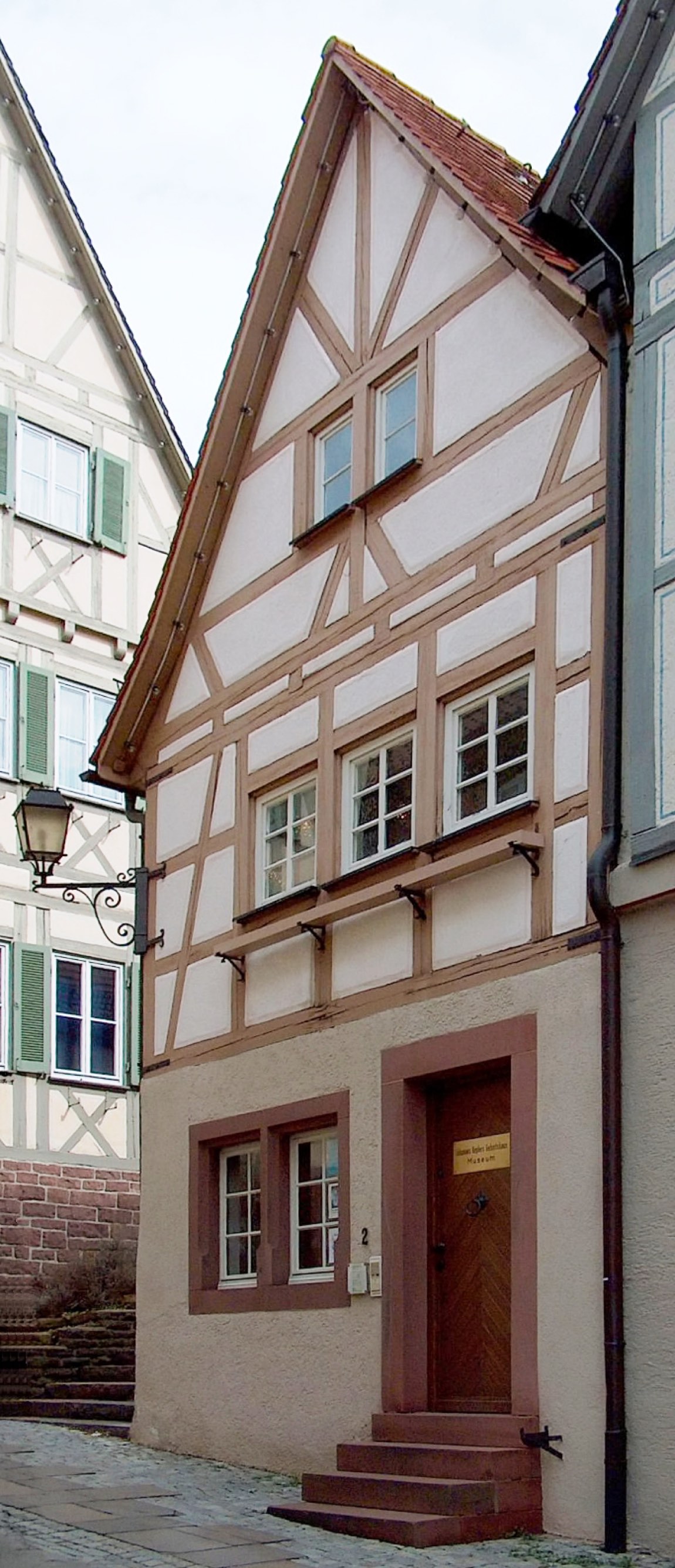
The collaboration between Kepler and the Danish nobleman Tycho Brahe was one of history's most productive and awkward scientific partnerships. Kepler first tried to reach Tycho through Nicolaus Reimers Bär (Ursus), Tycho's bitter rival for the title of imperial mathematician — a diplomatic blunder, since Ursus republished Kepler's flattering letter to press his own priority dispute. Tycho himself nonetheless began corresponding with Kepler, offering a harsh but legitimate critique of the inaccurate numerical data Kepler had borrowed from Copernicus. Kepler visited Tycho at Benátky nad Jizerou, 35 km from Prague, on 4 February 1600, where Tycho's new observatory was being built. Tycho guarded his observational data jealously, but was impressed enough by Kepler's theoretical ability to gradually allow him greater access. Negotiations over a formal arrangement broke down in an angry argument, and Kepler stormed off to Prague on 6 April — only to reconcile shortly after. When Tycho died unexpectedly on 24 October 1601, Kepler was appointed his successor as imperial mathematician just two days later. The full treasure of Tycho's uniquely precise Mars observations, which made the elliptical orbit solution possible, was now in Kepler's hands.
 ⤢
⤢
05 How Eight Arcminutes Changed Astronomy Deeper
The road to Astronomia Nova, published in 1609, was paved with roughly 40 failed attempts to fit Mars's orbit to any acceptable mathematical model. Working under Tycho's direction, Kepler created an initial model using an equant — the same mathematical device Copernicus had tried to eliminate — and achieved agreement with Tycho's observations to within two arcminutes, which was already within the average measurement error. But at certain points the model still diverged from the data by up to eight arcminutes, a gap Kepler refused to dismiss. That insistence on precision forced an entirely new approach. Drawing on William Gilbert's magnetic theory from De Magnete (1600) and his own optical work, Kepler proposed that the Sun radiates a motive force that weakens with distance, causing planets to move faster when closer and slower when farther away. By late 1602, he reformulated this relationship geometrically: a planet sweeps out equal areas in equal times — what became his second law. Only after approximately 40 failed attempts at ovoid orbits did he try an ellipse, which he had assumed earlier astronomers would have already tested. It fit. He immediately generalized: all planets move in ellipses with the Sun at one focus, his first law. Because he employed no calculating assistants, he did not extend the mathematical analysis beyond Mars.
06 The Supernova That Shook the Heavens
In October 1604 a bright new star appeared in the evening sky — what is now known as SN 1604 or Kepler's Supernova. Kepler initially doubted the rumors until he saw it himself, then began systematically observing it. His analysis, published two years later as De Stella Nova, used the lack of any detectable parallax to argue that the star lay beyond the planetary orbits, placing it among the fixed stars. This directly challenged the ancient Aristotelian doctrine of celestial immutability — the idea that the heavens were perfect and unchanging. The birth of a new star, visibly brightening and then fading, implied that the heavens could change after all. Kepler noted its fading luminosity and speculated about its origin. He also attached an appendix engaging the chronological work of Polish historian Laurentius Suslyga: if Suslyga was correct that accepted timelines were four years behind actual dates, then the Star of Bethlehem would have coincided with the first great conjunction of the preceding 800-year cycle — the same type of astrological configuration that, in 1604, astrologers were associating with momentous events such as the rise of Charlemagne and the birth of Christ. The supernova thus became both a scientific and a theological provocation.
07 Light, Lenses, and the Inverted Retinal Image Deeper
Kepler's contribution to optics began with unexplained eclipse phenomena — why did lunar shadows have unexpected sizes, why did total lunar eclipses produce a red color, and what was the unusual light framing a total solar eclipse? Through most of 1603 he paused his planetary work to focus exclusively on these questions. The resulting manuscript, presented to Emperor Rudolf II on 1 January 1604 and published as Astronomiae Pars Optica, described the inverse-square law governing the intensity of light, reflection by flat and curved mirrors, and the principles of pinhole cameras. Most remarkably, Kepler became the first person to recognize that the eye's lens projects an image onto the retina that is both inverted and reversed — a finding neuroscientists still credit him with today. He suggested the image is corrected "in the hollows of the brain" by the activity of the soul, sidestepping the perceptual problem as outside the scope of optics. In 1611 his follow-up work Dioptrice set out the theoretical basis of double-convex converging and double-concave diverging lenses, explained real versus virtual images, and described the improved "Keplerian telescope" using two convex lenses, capable of higher magnification than Galileo's convex-concave design. Astronomiae Pars Optica is today recognized as the foundation of modern optics.
08 Personal Catastrophe and the Third Law
The years Kepler spent in Linz, from 1612 to 1626, were marked by repeated personal catastrophe alongside some of his most important discoveries. His Lutheran pastor Daniel Hitzler refused him communion over a doctrinal dispute about the real presence of Christ in the Eucharist, and by 1619 Kepler's excommunication was formally declared. His mother Katharina was accused of witchcraft in December 1615; Kepler mounted a years-long legal defense, and she was held in prison during 1620 and 1621 before finally being released on 4 October 1621, acquitted after refusing to confess even under the threat of torture. She died about six months later. Meanwhile the Thirty Years' War threatened Linz directly, and in 1626 a siege and a fire destroyed the house and printing works on the city's outskirts. Through all this, in 1618 Kepler discovered what is now called his Third Law of planetary motion — that the square of a planet's orbital period is proportional to the cube of its mean distance from the Sun. He had first drafted an outline of the work that would contain it, Harmonice Mundi, back in 1599; when his young daughter Katharina died in 1618, the grieving father turned away from the demanding Rudolphine Tables and toward the harmonics manuscript, completing and publishing it in 1619.
 ⤢
⤢
09 Gravity Before Newton: Kepler's Half-Step Deeper
Kepler articulated a surprisingly modern concept of gravity decades before Newton, though he stopped short of a complete theory. In Astronomia Nova (1609) he defined gravity as "a mutual corporeal attraction among cognate bodies," specifying that heavy bodies are not pulled toward some abstract center of the universe but toward the center of a round body such as the Earth. He stated clearly that the attractive forces between two bodies like the Earth and Moon are proportional to their respective masses. He linked this directly to the tides, writing that "if the Earth should cease to attract its waters, all marine waters would be elevated and would flow into the body of the moon." Yet Kepler did not use mutual attraction to account for planetary orbital motion, which he believed was driven by a rotating force emanating from the Sun. Galileo found Kepler's moon-dominated tide theory ridiculous, famously writing: "I am more astonished at Kepler than at any other. Despite his open and acute mind... he has nevertheless lent his ear and his assent to the moon's dominion over the waters, to occult properties, and to such puerilities." Kepler countered that Galileo's rival tide theory could not explain why tide timing correlates with lunar phases — a correlation known since antiquity. When Kepler's Third Law was later combined with Christiaan Huygens' law of centrifugal force, it allowed Newton, Halley, and others to derive the inverse-square law of gravitation.
10 Religion, Excommunication, and a Mother's Trial
Throughout his life Kepler occupied an uncomfortable position within Protestant Christianity: Lutheran by upbringing and conviction but repeatedly penalized for holding views that deviated from Lutheran orthodoxy. He was denied ordination as a minister because his beliefs conflicted with the Formula of Concord adopted in 1577. In Linz, his pastor refused him communion over the doctrine of the real presence of Christ in the Eucharist, and years of appeals to the Stuttgart Consistory, involving his theologian friend Matthias Hafenreffer who ultimately sided against him, ended in formal excommunication in 1619. Kepler advocated tolerance across denominations, writing that "Christ the Lord neither was nor is Lutheran, nor Calvinist, nor Papist." The witchcraft trial against his mother Katharina, beginning in 1615, has been interpreted by historians as partly an attack by Lutheran authorities against Kepler himself. His manuscript of Somnium, which described a fictional trip to the Moon narrated by a character whose mother consults a demon to learn the means of space travel, may have contributed to the accusations. After her acquittal, Kepler composed 223 footnotes to the story — several times longer than the text itself — explaining its allegorical and scientific content.
11 The Rudolphine Tables and a Death on the Road
The Rudolphine Tables — comprehensive tables of planetary positions based on Tycho Brahe's unparalleled observational data — were assigned to Kepler two days after Tycho's death in 1601 and became the central obligation of the rest of his working life. They replaced the previous standard, the Prutenic Tables of Erasmus Reinhold. Kepler completed them in 1623 but negotiations with Tycho's heirs, disputes over printing location, and the chaos of war delayed publication until September 1627 in Ulm, where Kepler had moved after fire destroyed his Linz printing operation during the 1626 siege. To simplify the enormous volume of calculations required, Kepler read John Napier's 1614 work on logarithms in 1617 and, dissatisfied that Napier presented only the method without derivation, developed his own logarithm tables from arithmetic principles — published as Chilias logarithmorum in 1624. After delivering the Rudolphine Tables to Emperor Ferdinand II in Prague, Kepler settled uneasily in Sagan, Silesia, under the patronage of General Wallenstein. Still owed large sums by the imperial treasury, he set out on 8 October 1630 to collect the debts in person. A few days after reaching Regensburg he fell ill and died on 15 November 1630. He was buried just outside the Regensburg city walls in the Protestant cemetery of St. Peter, which was destroyed a few years later during the war.
12 The Snowflake Pamphlet and the Packing Problem Deeper
Among the more surprising corners of Kepler's output is a short pamphlet he composed as a New Year's gift in 1611 for his friend and patron Baron Wackher von Wackhenfels. Entitled Strena Seu de Nive Sexangula — A New Year's Gift of Hexagonal Snow — it contained the first published description of the hexagonal symmetry of snowflakes. Kepler extended the discussion into a hypothetical atomistic physical basis for that symmetry, which led him to pose what became known as the Kepler conjecture: a statement about the most efficient way to pack spheres together. This problem has direct practical relevance to understanding the structure of crystalline solids. It remained unproven for nearly four centuries and was only formally solved by Thomas Hales in 2017. Similarly grounded in everyday observation was his 1615 work Nova stereometria doliorum vinariorum — New Solid Geometry of Wine Barrels — which originated when Kepler watched merchants in 1613 measure barrel volume by inserting a rod diagonally from the opening to the bottom of the cask and realized the method was mathematically improvable. Finding no printer in Augsburg willing to publish the Latin text, he brought the printer Johannes Plank from Erfurt to Linz; it became the first book ever printed in that city, at Kepler's own expense. The work contributed to the development of infinitesimal methods that would later feed into calculus.