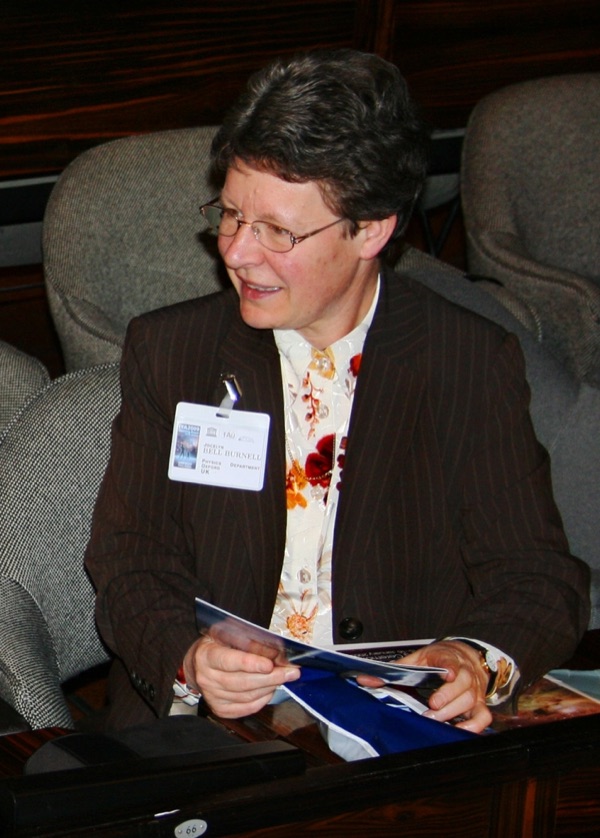
 Launch_of_IYA_2009,_Paris_-_Grygar,_Bell_Burnell.jpg : Astronomical In · CC BY-SA 3.0
Astrophysics · 1943–
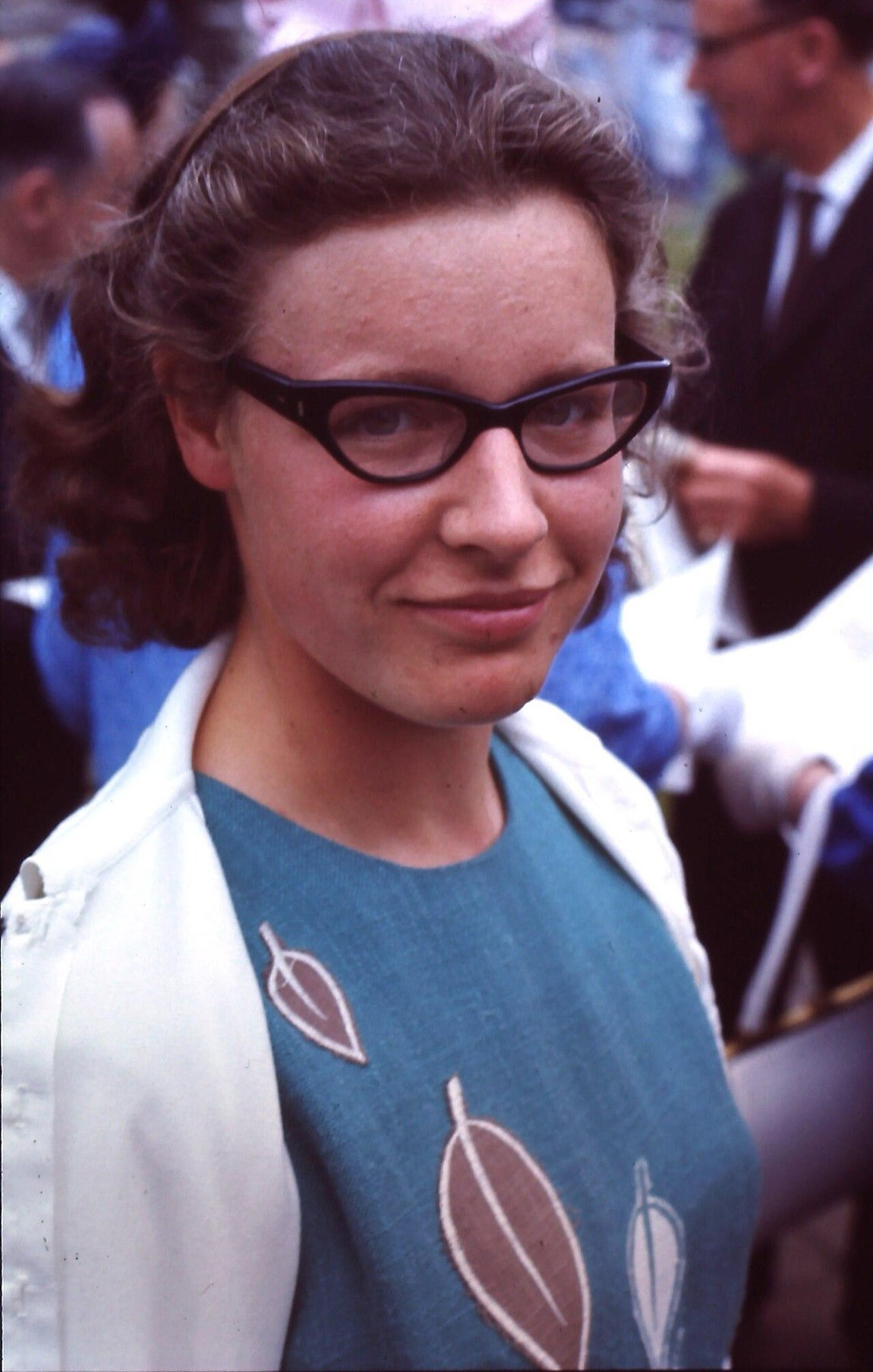
Jocelyn Bell Burnell
Discovering pulsars
The story
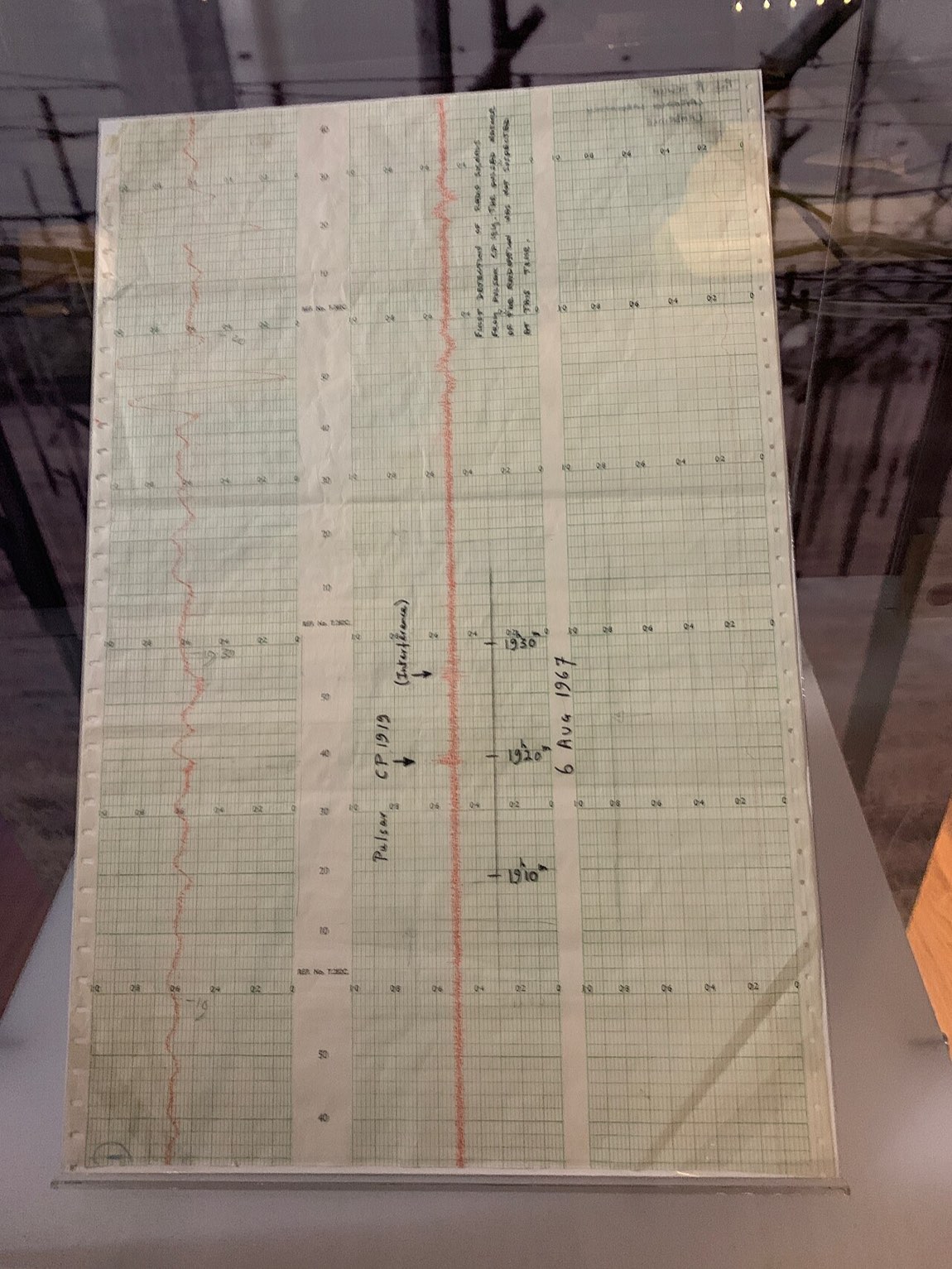
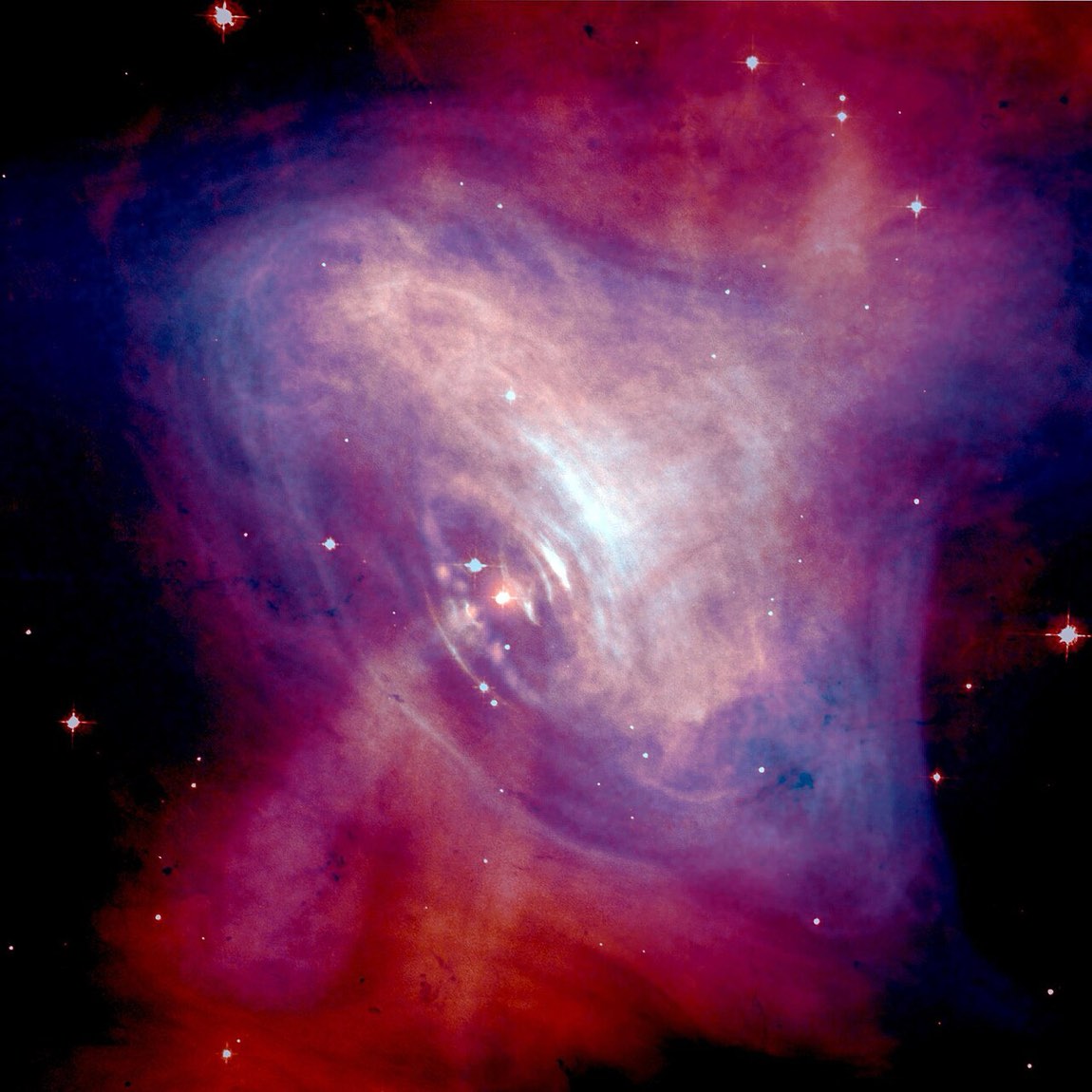
As a graduate student in 1967, Bell noticed a 'scruff' of perfectly regular radio pulses in miles of chart paper — half-jokingly labeled LGM-1, 'little green men.' It was a spinning neutron star: the first pulsar. The Nobel went to her supervisor; the field's respect went to her.
Why it matters
Pulsars confirmed neutron stars exist, later provided the first exoplanets and binary-pulsar tests of relativity, and now serve as galaxy-sized gravitational-wave detectors. She donated her later $3M Breakthrough Prize to fund physicists from under-represented groups.
The deep dive
Researched for the Atlas from Wikipedia — Jocelyn Bell Burnell (14,225 characters read) · updated Sep 20, 2026
01 A childhood shaped by Armagh's skies
Jocelyn Bell was born on 15 July 1943 in Lurgan, County Armagh, Northern Ireland, into a family whose home was named "Solitude." Her father, Philip Bell, was an architect, and the family's connection to astronomy was unusually direct: he later helped design the Armagh Planetarium, and the nearby Armagh Observatory was somewhere young Jocelyn could visit and be encouraged by working scientists. She read her father's astronomy books and absorbed the subject long before any formal instruction began. That early immersion in a household where science was treated as a living thing, not just a school subject, gave her an orientation that no curriculum could fully provide. The observatory staff's active encouragement of a girl from a provincial Northern Irish town was far from guaranteed in that era, and it planted a sense of belonging in the discipline that would carry her through later, harder obstacles.
02 The school fight that nearly stopped physics
Bell's early schooling exposed a structural barrier that shaped her story as much as any telescope. At Lurgan College's Preparatory Department, which she attended from 1948 to 1956, the rules were blunt: boys studied technical subjects, girls studied cooking and cross-stitching. Physics was not on offer for girls until Bell's parents and other families formally challenged the school's policies. That intervention succeeded, and she was allowed to study science — a small institutional victory with enormous personal consequences. Even so, she failed the eleven-plus examination, and her parents responded by sending her to The Mount School in York, a Quaker girls' boarding school. There her physics teacher, Mr. Tillott, changed her relationship with the subject entirely. His lesson was that physics did not require memorising vast catalogues of facts but rather a few key ideas that could be applied, built upon, and extended. Bell Burnell later credited him as a genuinely good teacher who showed her how accessible physics actually was.
03 Building the antenna that found pulsars
When Bell arrived at Cambridge to pursue her doctorate under Antony Hewish, her first task was not observing but constructing. She and her colleagues built the Interplanetary Scintillation Array just outside Cambridge, an instrument designed to study quasars, which had only recently been discovered. The array was a large, ground-level radio telescope, and building it was physical, hands-on work. Once operational, it produced chart-recorder paper in enormous quantities. Bell was responsible for reviewing the output by hand, sometimes working through as much as 96 feet — roughly 29 metres — of paper data per night. That is about the length of three standard London double-decker buses laid end to end. It was in this unglamorous, meticulous process of manual inspection that she first noticed, in August 1967, what she described as a "bit of scruff" — a faint, anomalous signal tracking across the sky with the stars rather than remaining fixed relative to the Earth.
 ⤢
⤢
04 Three months from scruff to discovery
The signal Bell spotted in August 1967 was not immediately recognized as extraordinary. Because the paper records had to be checked by hand, it took her three months to isolate and confirm the anomaly, bringing the moment of clear identification to 28 November 1967. What she found was a signal pulsing with striking regularity, approximately once every one and a third seconds. That clockwork precision was itself the puzzle: natural astrophysical sources were not supposed to be so metronomically reliable. The source, later catalogued as PSR B1919+21, was informally nicknamed "Little Green Man 1" — LGM-1 — because the team briefly, half-seriously, entertained the idea that the regularity might indicate an artificial, perhaps extraterrestrial, origin. The BBC Horizon series later documented the process. It took several more years after the initial announcement before the scientific community fully identified such objects as rapidly rotating neutron stars, establishing the pulsar as a new class of astrophysical object.
05 Arguing a real signal into existence Deeper
Bell's role in the discovery extended well beyond spotting an oddity on paper. When she brought the anomaly to Hewish's attention, he was initially sceptical, insisting the signal was probably interference of human origin — terrestrial noise rather than a cosmic source. Bell persisted, continuing to report the anomaly and making the case that it was genuine. This kind of persistence by a junior researcher against a supervisor's scepticism is rarely documented so clearly, and Feryal Özel, an astrophysicist at the University of Arizona, later articulated its significance precisely: Bell helped build the array, noticed the signal, and argued for its reality. When a graduate student takes that degree of lead in a project, Özel said, it is hard to play it down. Bell also noted that she was excluded from meetings Hewish and Martin Ryle held regarding the discovery — a detail that illuminates the informal boundaries drawn around her participation even as her name appeared second on the five-author announcement paper.
06 The Nobel decision and its long echo
The 1974 Nobel Prize in Physics went to Antony Hewish and Martin Ryle — Hewish specifically for his decisive role in discovering pulsars, Ryle for aperture-synthesis technique in radio astronomy. Bell, the person who first noticed the signal and argued for its authenticity, was not among the recipients. The omission was controversial immediately: fellow astronomer Sir Fred Hoyle criticised it at the time. Bell herself, in 1977, offered a careful and self-deprecating response, saying she did not believe it would be appropriate to award the Nobel to a research student except in very exceptional circumstances, and that she did not consider her case exceptional. Decades later her assessment shifted: she observed that being both a graduate student and a woman, together, had demoted her standing in the eyes of those making such decisions. The debate has not closed. It remains one of the most discussed questions of attribution in modern science, raised regularly whenever the Nobel committee's practices around large collaborations are scrutinised.
 ⤢
⤢
07 A career across a dozen institutions
After Cambridge, Bell Burnell's career moved through an unusual number of institutions, partly reflecting her husband's career as a local government officer whose postings took the family around Britain. She worked at the University of Southampton from 1968 to 1973, University College London from 1974 to 1982, and the Royal Observatory in Edinburgh from 1982 to 1991. Concurrently, between 1973 and 1987 she was a tutor, consultant, examiner, and lecturer for the Open University. In 1986 she became project manager for the James Clerk Maxwell Telescope on Mauna Kea, Hawaii, a role she held until 1991. She then became Professor of Physics at the Open University from 1991 to 2001. Later posts included visiting professor at Princeton University, dean of science at the University of Bath from 2001 to 2004, visiting professor of astrophysics at the University of Oxford, and a Fellowship at Mansfield College, Oxford, in 2007. She worked part-time for many years while raising her son, Gavin Burnell, who went on to join the condensed matter physics group at the University of Leeds.
08 How media treated the woman who found pulsars
In a 2020 lecture at Harvard, Bell Burnell described the media environment surrounding the pulsar discovery in frank terms. Interviews followed what she called a "disgusting" standard format: Hewish would be questioned on the astrophysics, while she was treated as the human-interest portion of the story. Journalists asked about her vital statistics, the number of boyfriends she had, the colour of her hair, and requested she undo some buttons for photographs. The word pulsar itself entered the language during this period — the Daily Telegraph's science reporter shortened the phrase "pulsating radio source" to the compact term that has been used ever since — but the coverage surrounding the word's coinage reflected attitudes toward women in science that Bell Burnell documented with characteristic precision rather than bitterness. Her account at Harvard forms one of the clearest first-person records of how science journalism of the era handled female scientists.
09 The $3 million prize she gave entirely away
In 2018, Bell Burnell received the Special Breakthrough Prize in Fundamental Physics, worth three million dollars — approximately £2.3 million. The Special Prize differs from the regular annual Breakthrough Prize in that it is not restricted to recent discoveries, allowing recognition of work done decades earlier. Rather than keeping the money, Bell Burnell donated all of it to establish what became the Bell Burnell Scholarship Fund, directed at funding women, underrepresented ethnic minority students, and refugee students to enter physics research. Administration of the fund was placed with the Institute of Physics. The decision attracted wide attention because the sum was unusually large and the donation was immediate and total. It translated a personal experience of exclusion — from a school that barred girls from science, through a Nobel committee that overlooked her — into a structural intervention designed to change the pipeline of people entering the discipline.
 ⤢
⤢
10 Leadership roles across four decades Deeper
Bell Burnell's institutional leadership ran parallel to her research career and eventually exceeded it in scope. She was president of the Royal Astronomical Society from 2002 to 2004. She served as president of the Institute of Physics from October 2008 to October 2010 and then again as interim president after the death of her successor, Marshall Stoneham, in early 2011. In February 2014 she was elected president of the Royal Society of Edinburgh, the first woman to hold that office, serving until April 2018. In 2013 she was elected Pro-Chancellor of Trinity College Dublin, and in February 2018 she was appointed Chancellor of the University of Dundee, a position she held until 2023. The Institute of Physics named its award for early-career female physicists the Jocelyn Bell Burnell Medal and Prize in 2016, a renaming that anchored her advocacy role institutionally. In 2021 she received the Gold Medal of the Royal Astronomical Society, and also in 2021 she became the second woman ever — after Dorothy Hodgkin in 1976 — to receive the Copley Medal of the Royal Society.
11 Faith, Quakers, and a scientist's inner life
Bell Burnell's engagement with Quakerism began at school and has continued as a consistent thread through her adult life. She served as Clerk to the sessions of Britain Yearly Meeting in 1995, 1996, and 1997, and as Clerk of the Central Executive Committee of Friends World Committee for Consultation from 2008 to 2012. In 1989 she delivered the Swarthmore Lecture at Yearly Meeting in Aberdeen under the title "Broken for Life," a talk later published by Quaker Home Service. In 2013 she gave a James Backhouse Lecture published as "A Quaker Astronomer Reflects: Can a Scientist Also Be Religious?" — a direct attempt to articulate how cosmological knowledge relates to biblical, Quaker, and broader Christian thought. She also served on the Quaker Peace and Social Witness Testimonies Committee. Her willingness to discuss this dimension of her life publicly is relatively unusual for a physicist of her standing and reflects a coherent personal philosophy that has run alongside, rather than in tension with, her scientific work.
12 Stamps, banknotes, and a nudibranch
The cultural acknowledgement of Bell Burnell's work has taken several concrete and sometimes unexpected forms. In July 2022, Ulster Bank issued a science-themed polymer fifty-pound banknote featuring Bell Burnell alongside other women, including figures from Northern Ireland's life sciences sector. She used the occasion to speak publicly about the importance of women entering scientific careers and the growth of Northern Ireland's scientific sector. In 2025, An Post included her image on a stamp celebrating women in STEM. A painting by Stephen Shankand, commissioned by the Royal Society, was added to the Society's collection at its Carlton House Terrace headquarters in November 2020. A new species of nudibranch — a type of sea slug — was named Cadlina bellburnellae in her honour, adding her name to taxonomy in a way that is, by scientific convention, permanent. She was also the subject of the first part of the BBC Four three-part series Beautiful Minds, directed by Jacqui Farnham.