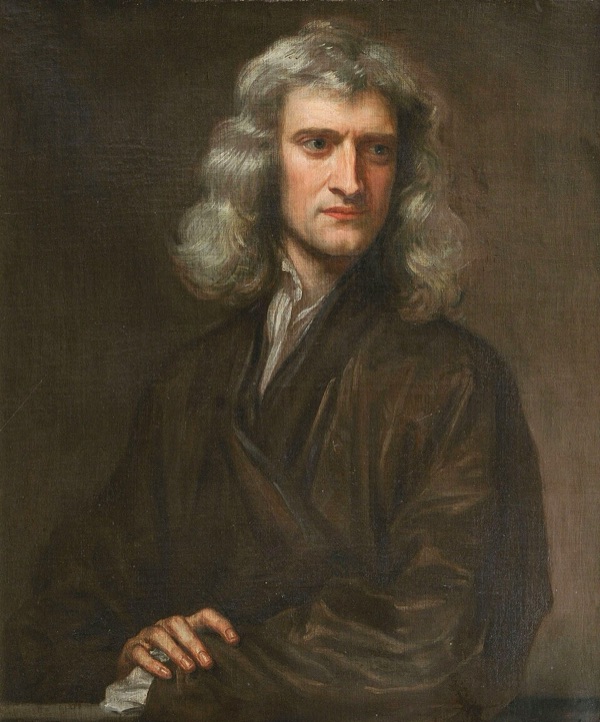
 Godfrey Kneller · Public domain
Physics · 1643–1727
Isaac Newton
Universal gravitation, the laws of motion, and the reflecting telescope
The story
Newton unified the heavens and the ground: the same force that drops an apple holds the Moon in orbit, expressed in one equation. His Principia (1687) is arguably the most consequential science book ever printed; he also invented the mirror telescope every great observatory descends from.
Why it matters
For two centuries Newtonian gravity WAS the universe's operating system, and it still flies every spacecraft (Einstein's corrections matter only at extremes). He made 'why do planets move?' a solved problem.
The deep dive
Researched for the Atlas from Wikipedia — Isaac Newton (58,000 characters read) · updated Sep 20, 2026
01 A Premature Child Who Reshaped Physics
Isaac Newton was born on Christmas Day 1642 (Julian calendar) at Woolsthorpe Manor in Lincolnshire, entering the world so small his mother Hannah Ayscough said he could have fit inside a quart mug. His father, also named Isaac, had died three months before his birth. When Newton was three, his mother remarried the Reverend Barnabas Smith and left her son in his grandmother's care — a wound Newton never fully healed. A list of sins he compiled up to the age of 19 includes the entry 'Threatening my father and mother Smith to burn them and the house over them,' a glimpse of the fierce emotional interior behind the composed public figure. He attended The King's School in Grantham from roughly age twelve to seventeen, where the curriculum centered on Latin and Ancient Greek. A telling detail from those years: Newton's drive to become top-ranked student was ignited not by scholarly ambition but by a desire for revenge after losing, then winning, a fight with a schoolyard bully. He distinguished himself by building sundials and models of windmills — practical, mechanical curiosity that would never leave him.
02 Cambridge: Subsizar to Lucasian Professor
Newton entered Trinity College, Cambridge in June 1661 not as a wealthy student but as a subsizar, paying his fees by performing valet duties for fellows and wealthier students until he won a scholarship in 1664 that covered his costs for four more years. Cambridge's curriculum was still rooted in Aristotle, though Newton privately devoured more modern thinkers — Descartes, Galileo, Thomas Street. He filled notebooks with 'Quaestiones' probing mechanical philosophy on his own initiative. By August 1665 he had his BA, but almost immediately the university closed due to the Great Plague, sending Newton home to Woolsthorpe. Those enforced two years away from Cambridge have been called, by physicist Louis Trenchard More, years with 'no other examples of achievement in the history of science to compare.' He returned to Trinity in April 1667, was elected a fellow in October, and in 1669 — just one year after receiving his MA and at only 26 years old — succeeded Isaac Barrow as Lucasian Professor of Mathematics, a chair whose holder he argued should be exempt from the Church of England ordination requirement. King Charles II agreed, sparing Newton a direct conflict between his post and his privately unorthodox theology.
03 The Plague Years: Two Golden Years of Discovery Deeper
Between 1665 and 1667, working largely in isolation at Woolsthorpe, Newton developed the foundational ideas in three fields simultaneously: calculus, optics, and gravitation. His calculus work had actually begun earlier — a manuscript dated 20 May 1665 shows he had 'already developed the calculus to the point where he could compute the tangent and the curvature at any point of a continuous curve.' By October 1666 a further manuscript, later published among his mathematical papers, extended this into what scholar Tom Whiteside called a 'radically novel, indeed unprecedented' systematic calculus unifying differentiation and integration. In optics, 1666 brought his crucial prism observation: the spectrum of colours leaving a prism at minimum deviation is oblong even when the entering beam is circular, proving that the prism refracts different colours by different angles and that colour is intrinsic to light rather than produced by the object. In gravitation, he was developing ideas that would eventually become the inverse-square law. Newton himself was characteristically understated about the period, writing in later life that he seemed 'only like a boy playing on the sea-shore' while the great ocean of truth lay undiscovered. He was, according to scholar Richard S. Westfall, entirely self-taught in mathematics, carrying out his research 'entirely on his own.'
04 Newton's Reflecting Telescope: Glass, Metal, and Rings
Newton's investigation of colour led directly to a practical invention. Realising that any refracting telescope lens would split light into colours — chromatic aberration — he concluded the problem was insurmountable for lens-based designs and instead built a telescope using reflective mirrors as the objective. The challenge was finding a suitable mirror material and shaping technique; previous reflecting telescope designs had either never been built or had failed in practice. Newton ground his own mirrors from a custom composition of highly reflective speculum metal, using the interference pattern known as Newton's rings to judge optical quality. In late 1668 he produced the first known functional reflecting telescope, approximately eight inches long. With it he could see the four Galilean moons of Jupiter and the crescent phase of Venus. When the Royal Society requested a demonstration in 1671, the response was enthusiastic enough to encourage Newton to publish his notes on colour, which later expanded into Opticks. The telescope design still bears his name: the Newtonian telescope. He also constructed, in 1699, an improved reflecting quadrant notable for being the first to use two mirrors simultaneously, greatly steadying the view of both horizon and celestial body — a design that John Hadley later independently reinvented, causing long-running confusion about credit.
 ⤢
⤢
05 Principia: From a Comet to Universal Gravitation
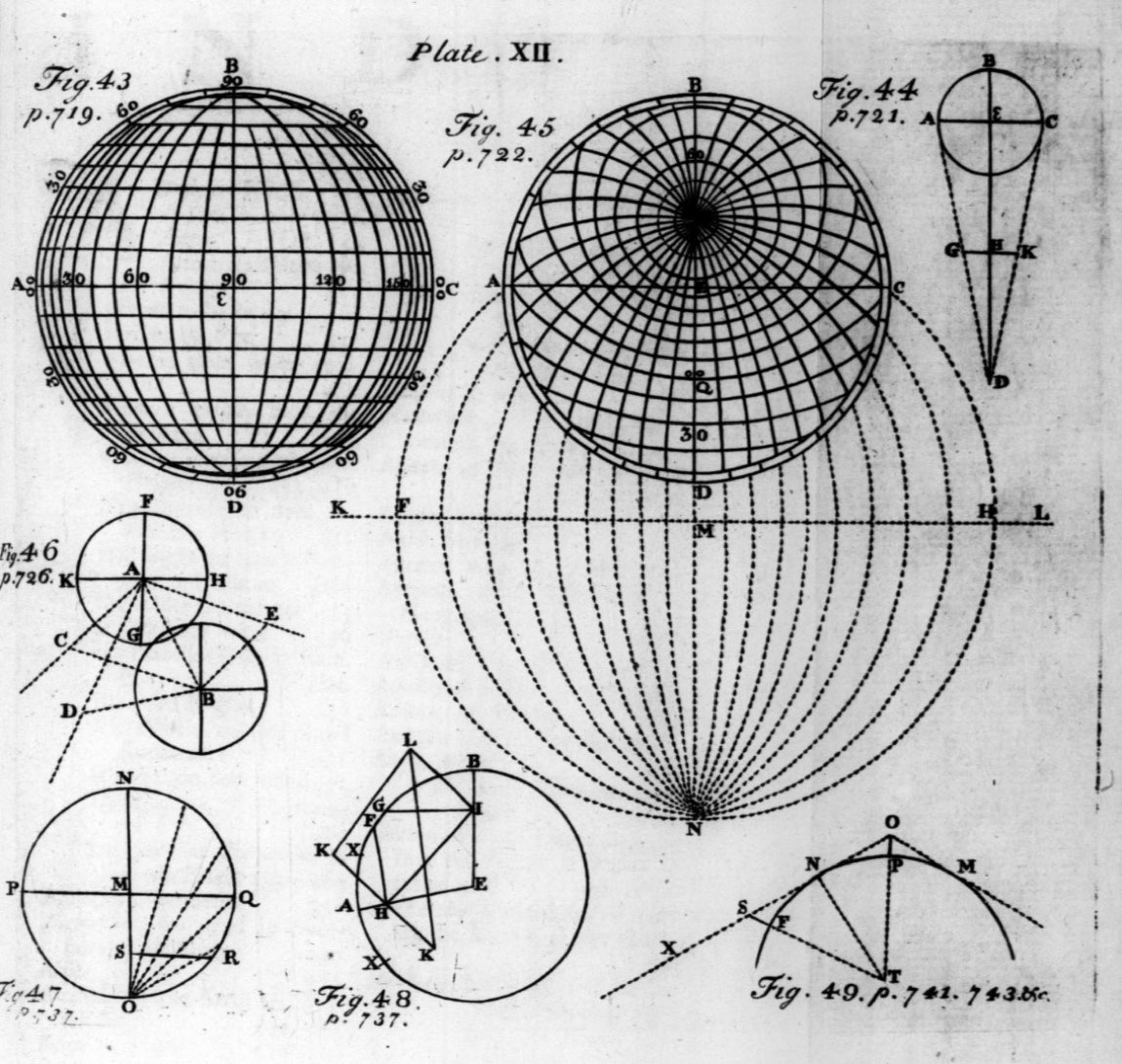
Newton had been thinking about gravitation since at least 1665, but a series of external triggers turned private speculation into the Principia. The appearance of a comet in the winter of 1680–1681 prompted correspondence with the Astronomer Royal John Flamsteed. Then Robert Hooke, in opening a correspondence with Newton around 1679–80, inadvertently stimulated Newton to prove that elliptical planetary orbits follow directly from a centripetal force inversely proportional to the square of the distance. Newton shared this result with Edmond Halley and the Royal Society in a short tract, De motu corporum in gyrum, copied into the Society's Register Book in December 1684 — this nine-sheet document was the nucleus of the Principia. Halley then provided both encouragement and financial support to see the full work published. Philosophiæ Naturalis Principia Mathematica appeared on 5 July 1687. In it Newton stated his three universal laws of motion, formulated the law of universal gravitation, derived Kepler's laws from first principles, accounted for tides, comet trajectories, the precession of the equinoxes, and inferred that Earth is an oblate spheroid. He also gave the first quantitative estimate of the solar mass and determined the masses and densities of Jupiter and Saturn, placing the Sun, Earth, Jupiter, and Saturn on a single comparative scale — described by later historians as 'a supreme expression of the doctrine that one set of physical concepts applies to all bodies throughout the universe.'
06 The Calculus War with Leibniz Deeper
Few scientific disputes have been as damaging or as long-running as the priority fight over calculus. Newton had developed his 'method of fluxions' by the end of 1666, roughly nine years before Leibniz independently arrived at his own formulation. This priority is not seriously contested: historian A. Rupert Hall states 'the truth has not been seriously in doubt for the last 250 years.' But Newton was reluctant to publish — fear of controversy held him back — and Leibniz published first, using a notation that continental European mathematicians, and eventually British ones after 1820, found far more convenient. The peace Newton's close friend Nicolas Fatio de Duillier had maintained began to crack in 1699 when Duillier accused Leibniz of plagiarism. In 1708 mathematician John Keill repeated the accusation in the Royal Society's journal. By 1711 the Royal Society published a study naming Newton as true discoverer and branding Leibniz a fraud — and it emerged later that Newton himself had written the study's concluding remarks. The dispute poisoned both men's lives until Leibniz died in 1716. Despite the controversy, modern mathematicians recognise both as independent discoverers; the dot notation Newton used survives today in physics, while Leibniz's notation dominates everywhere else.
07 Obstacles: Controversy, Breakdown, and Rivals
Newton's career was punctuated by conflicts that were partly temperamental and partly structural. His early paper on light and colours provoked Robert Hooke's criticism, and Newton reacted by withdrawing almost entirely from public scientific debate — a pattern he repeated more than once. His relationship with Flamsteed, the Astronomer Royal, turned hostile after Newton prematurely published Flamsteed's Historia Coelestis Britannica, data Newton had used in his own lunar studies. The lunar problem itself took a severe personal toll: biographer David Brewster recorded that during work on the Moon's motion in 1692–93, Newton 'was deprived of his appetite and sleep,' and he told astronomer John Machin that 'his head never ached but when he was studying the subject.' In 1693, the same year his friendship with Fatio de Duillier abruptly ended, Newton suffered a nervous breakdown, sending accusatory letters to Samuel Pepys and John Locke. Mercury found in his hair after death — almost certainly from his extensive alchemical experiments — may have contributed to erratic behaviour in his later years. Despite all this, Newton maintained an iron grip on his work and his institutional positions for decades.
08 Master of the Mint: Newton Hunts Counterfeiters
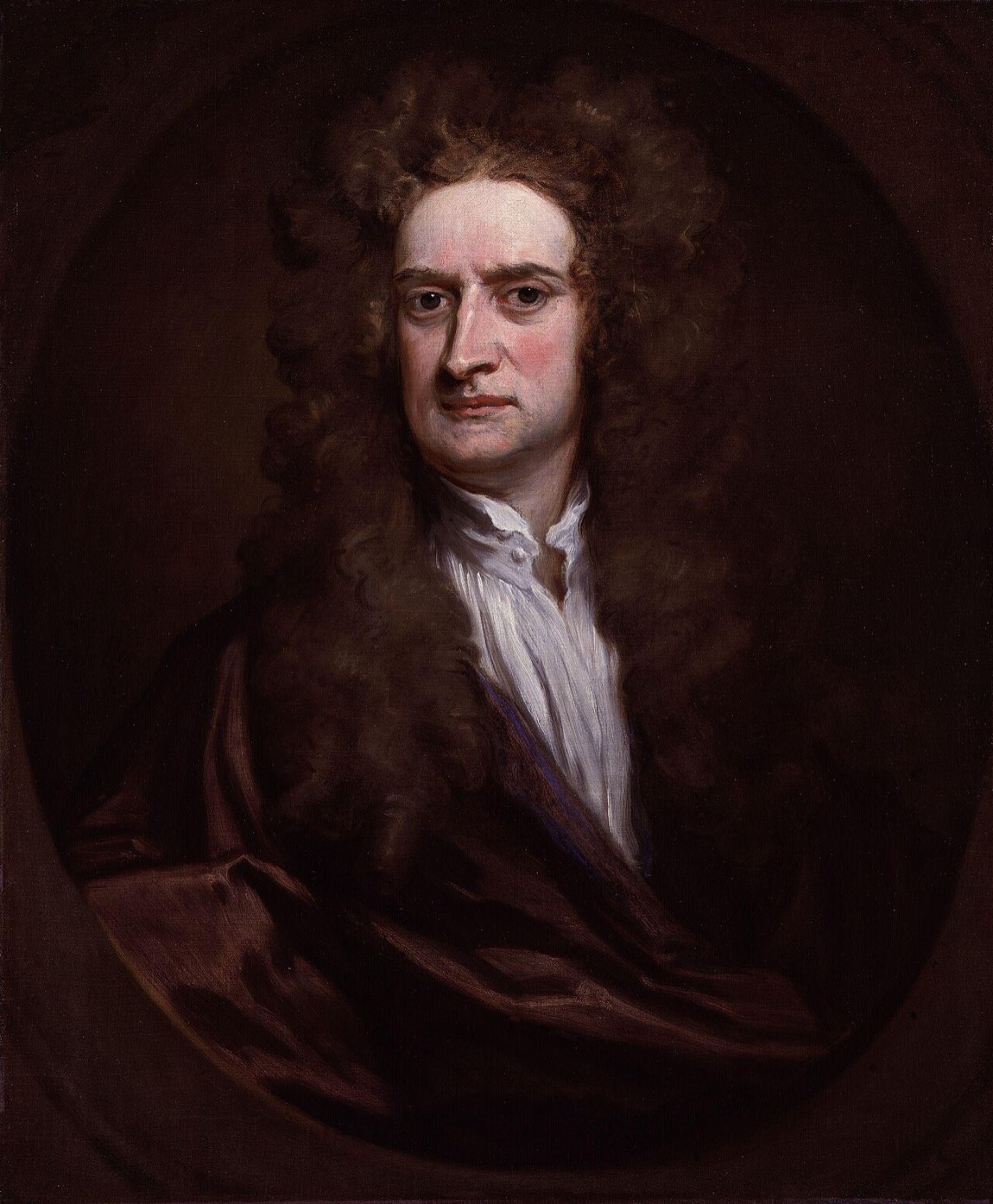
In 1696 Newton left Cambridge for London to become Warden of the Royal Mint, a post obtained through the patronage of Charles Montagu, 1st Earl of Halifax. What were intended as comfortable sinecures became, under Newton, intensive operations. He estimated that 20 per cent of coins taken in during the Great Recoinage of 1696 were counterfeit — counterfeiting being high treason punishable by hanging, drawing, and quartering. Newton pursued conviction with the same systematic intensity he brought to physics. He had himself appointed justice of the peace across all the home counties, disguised himself to gather evidence in bars and taverns, and conducted more than 100 cross-examinations of witnesses, informers, and suspects between June 1698 and Christmas 1699. He successfully prosecuted 28 coiners, including the serial counterfeiter William Chaloner, who was hanged. On the technical side, he reduced the standard deviation of guinea weights from 1.3 grams to 0.75 grams, raised the Mint's weekly output of coin from 15,000 pounds to 100,000 pounds, and ultimately saved the Treasury £41,510 — roughly £3 million in 2012 values — with improvements that lasted until the 1770s. He held the post of Master from 1699 until his death in 1727.
 ⤢
⤢
09 Newton's Unorthodox Faith and Hidden Writings Deeper
Newton was a deeply religious man, but his theology was profoundly at odds with Anglican orthodoxy. He privately rejected the doctrine of the Trinity — a potentially dangerous position in his era — and refused to take holy orders, unlike virtually all other Cambridge faculty of the time. His manoeuvre of persuading King Charles II that the Lucasian Professorship should be exempt from ordination requirements was as much personal as professional. Beyond the institutional arrangements, Newton devoted enormous energy to biblical study and alchemy. His personal library of 1,752 identifiable books shows the scale of these interests: theology accounted for 27.2 percent (477 books), alchemy for 9.6 percent (169 books), mathematics for 7.2 percent (126 books), physics for 3.0 percent (52 books), and astronomy for just 1.9 percent (33 books) — meaning the subjects for which he is most famous made up slightly less than 12 percent of his collection. Most of his work on alchemy and biblical chronology remained unpublished until long after his death. A manuscript he sent to John Locke disputing the authenticity of a New Testament passage (1 John 5:7) was not published until 1785, nearly sixty years after his death.
10 Newton's Burning Mirror and Other Experiments Deeper
Beyond his theoretical breakthroughs, Newton built instruments and ran experiments with remarkable ingenuity. In 1704 he constructed and presented to the Royal Society a burning mirror consisting of seven concave glass mirrors, each about one foot in diameter. Estimates place its maximum radiant energy output at 460 W cm⁻², described as 'certainly brighter thermally than a thousand Suns' — the Sun's radiation in London in May 1704 being estimated at 0.065 W cm⁻². David Gregory reported it caused metals to smoke, boiled gold, and vitrified slate; William Derham considered it the most powerful burning mirror in Europe at the time. Newton's investigations of electricity were equally ahead of their era: he built a primitive frictional electrostatic generator using a glass globe — the first to use glass rather than the sulfur used by scientists such as Otto von Guericke — and in 1675 demonstrated that an electric charge on one side of a glass sheet could attract 'light bodies' on the other, interpreting this as evidence that electric forces pass through glass. He also theorised what is now called the Goos–Hänchen effect, a small lateral shift in totally internally reflected polarised light, providing both experimental and theoretical explanations using a mechanical model.
11 Recognition, Knighthood, and a State Funeral
Newton accumulated institutional honours throughout his later life, though the circumstances were sometimes mixed. He was elected Fellow of the Royal Society in 1672 and became its president in 1703, a post he held until his death in 1727. He served two brief terms as Member of Parliament for the University of Cambridge, in 1689–1690 and 1701–1702, though accounts suggest his parliamentary contributions were minimal. In April 1705 Queen Anne knighted him during a visit to Trinity College — the second scientist to be knighted after Francis Bacon — though historians note the honour was likely motivated more by the parliamentary election in May 1705 than by recognition of scientific achievement. He was also made an associate of the French Académie des Sciences. When Newton died in his sleep on 20 March 1727 at age 84, he received a state funeral — the first in England for someone recognized primarily for intellectual achievement. The Lord Chancellor, two dukes, and three earls bore his pall, with most of the Royal Society in attendance. His body lay in state at Westminster Abbey for eight days before burial in the nave. He was the first scientist buried there. The Political State of Great Britain devoted three pages to his achievements, calling him 'the greatest of Philosophers, and the Glory of the British Nation.'
12 Newton's Scientific Method as a Living Framework Deeper
Newton's most lasting contribution to science may be methodological rather than any single discovery. In the Principia he outlined four explicit rules for scientific reasoning: admitting only causes sufficient to explain observed effects; assigning the same cause to the same natural effect; treating qualities found universally in experiments as genuinely universal; and holding propositions derived from observation as accurate until contradicted by new phenomena. These rules, combined with his famous 'hypotheses non fingo' — 'I do not frame hypotheses' — from the Principia's second edition (1713), set a standard that observation must anchor every theoretical claim. Newton's method went further than simple prediction: it required phenomena to accurately measure theoretical parameters, turned theoretical questions into ones solvable by measurement, and used provisional propositions to guide successive approximations. His work on light in the 1670s illustrated the cycle in action — conducting experiments, taking detailed notes, formulating theory, designing new experiments to test it, then describing the entire process so that others could replicate every step. This approach was adopted by his successors for extensions of gravitational theory to astronomy and remains foundational in modern physics.