 Unknown author Unknown author · Public domain
Astronomy · 1868–1921
Henrietta Swan Leavitt
Astronomy's distance ruler, the Cepheid period–luminosity law
The story
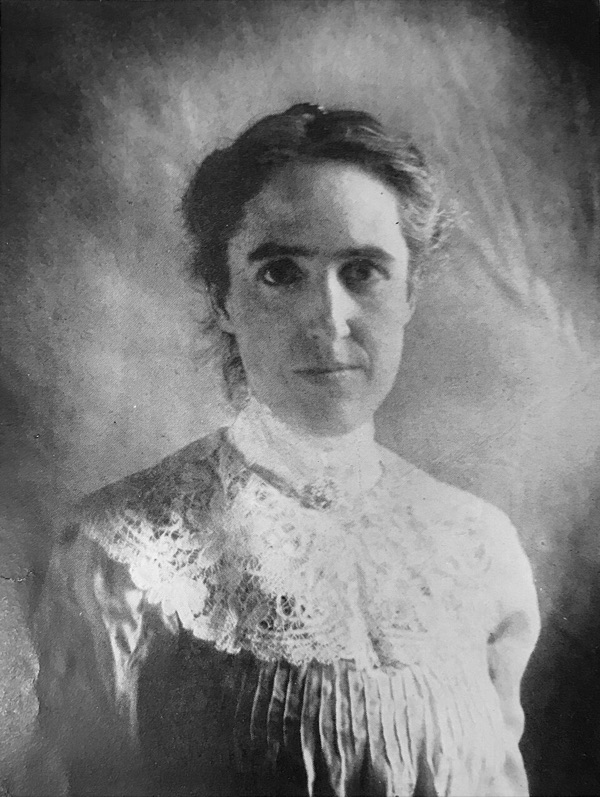
Hired at Harvard as a 'computer' to measure star brightnesses on glass plates for 30 cents an hour, Leavitt noticed that Cepheid stars' pulse rhythm reveals their true wattage. Rhythm plus apparent brightness equals distance.
Why it matters
Her law was the first ruler that reached beyond the Milky Way — Hubble used it to prove other galaxies exist and that the universe expands. Few discoveries by anyone, ever, unlocked more.
The deep dive
Researched for the Atlas from Wikipedia — Henrietta Swan Leavitt (12,921 characters read) · updated Sep 20, 2026
01 A Lancaster Childhood and an Unlikely Path to the Stars
Henrietta Swan Leavitt was born on July 4, 1868, in Lancaster, Massachusetts, into a family with deep roots in New England Puritan history. Her father, George Roswell Leavitt, served as a Congregational church minister, and the family traced its lineage back to Deacon John Leavitt, an English Puritan tailor who had settled in the Massachusetts Bay Colony in the early seventeenth century — the family name appearing in early records as "Levett." This religious heritage was not incidental background noise in Leavitt's life; she remained deeply committed to her church throughout her career and was described by colleagues as selflessly devoted to family and faith alike. Her path into astronomy was neither direct nor obvious. She spent two years at Oberlin College before transferring to Harvard University's Society for the Collegiate Instruction of Women, later known as Radcliffe College. Her coursework there was genuinely broad — classical Greek, fine arts, philosophy, analytic geometry, and calculus — and she encountered astronomy only in her fourth year, earning an A− in the course. That single late exposure to the subject would eventually redirect the entire trajectory of cosmology.
02 What It Meant to Be a Human Computer
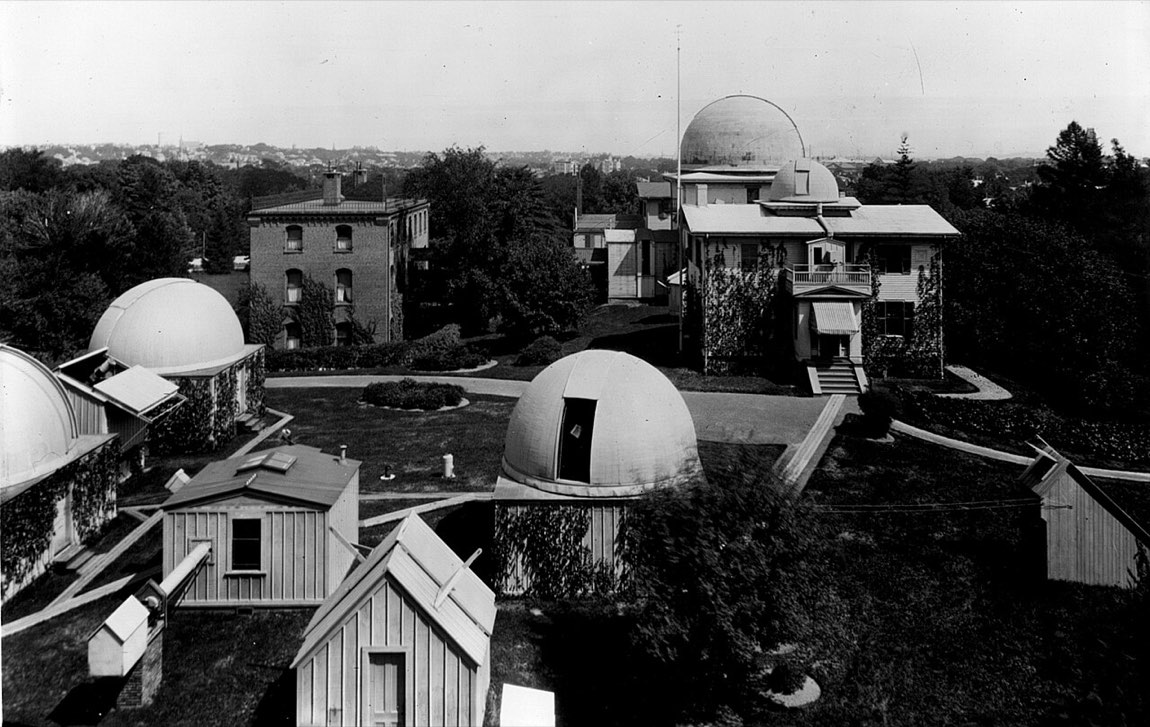
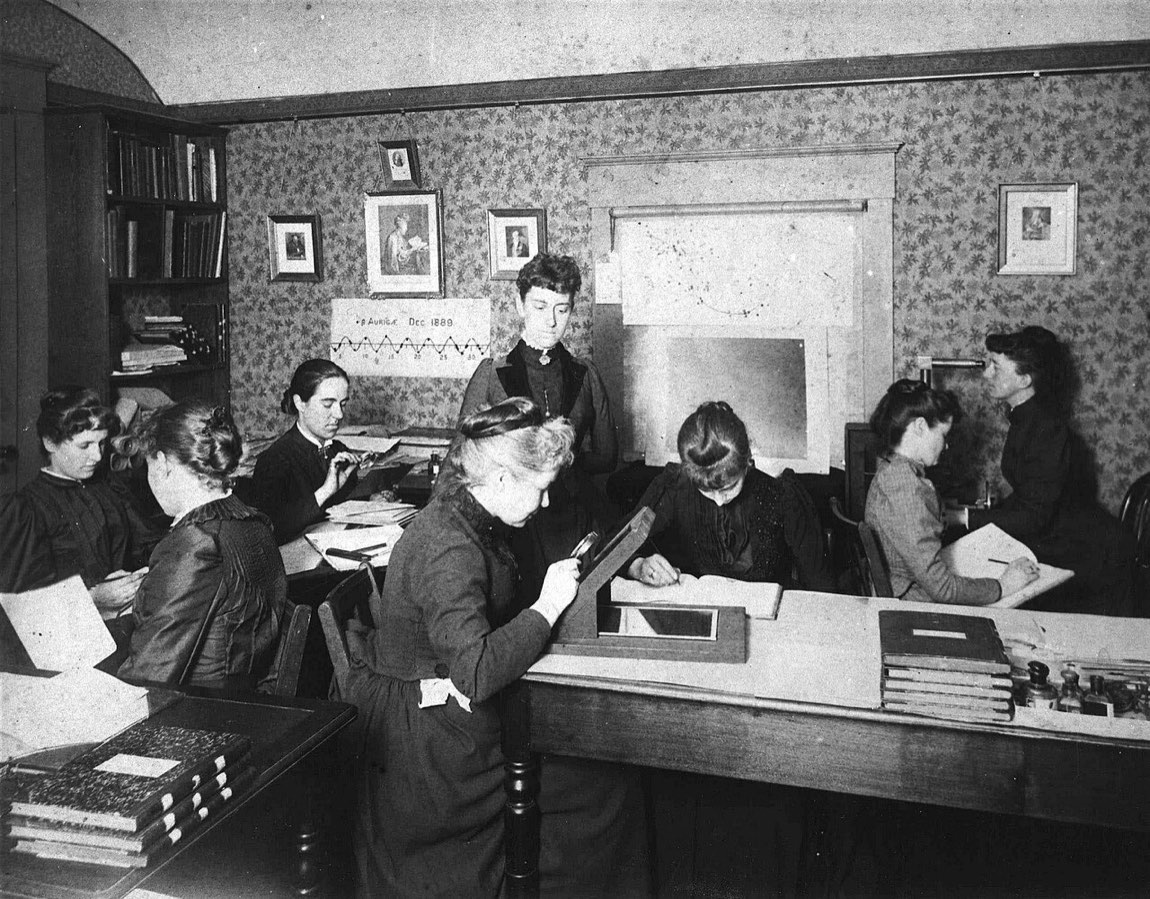
When Leavitt began volunteering at the Harvard College Observatory after college, she joined a group of women known as "human computers" — people hired not to observe the sky but to measure and interpret the photographic plates that telescopes produced. In 1902, observatory director Edward Charles Pickering formally hired her to catalog the positions and brightness of stars from the plate collection. The institutional rules of the era kept women entirely away from the telescopes themselves; their role was to extract data from images already taken by others. The pay reflected this subordinate status starkly. Leavitt initially received nothing at all, working as an unpaid volunteer. When she was eventually compensated, she earned $0.30 per hour — equivalent to roughly $10.75 in 2025 — and only $10.50 per week (about $376.25 in 2025). She worked alongside Annie Jump Cannon, a colleague who, like Leavitt herself, was deaf. Pickering assigned Leavitt specifically to study variable stars in the Small and Large Magellanic Clouds, using plates taken with the Bruce Astrograph at the Boyden Station of the Harvard Observatory in Arequipa, Peru. From those plates she identified 1,777 variable stars before her deeper investigation truly began.
 ⤢
⤢
03 Health Crises That Repeatedly Interrupted Her Work
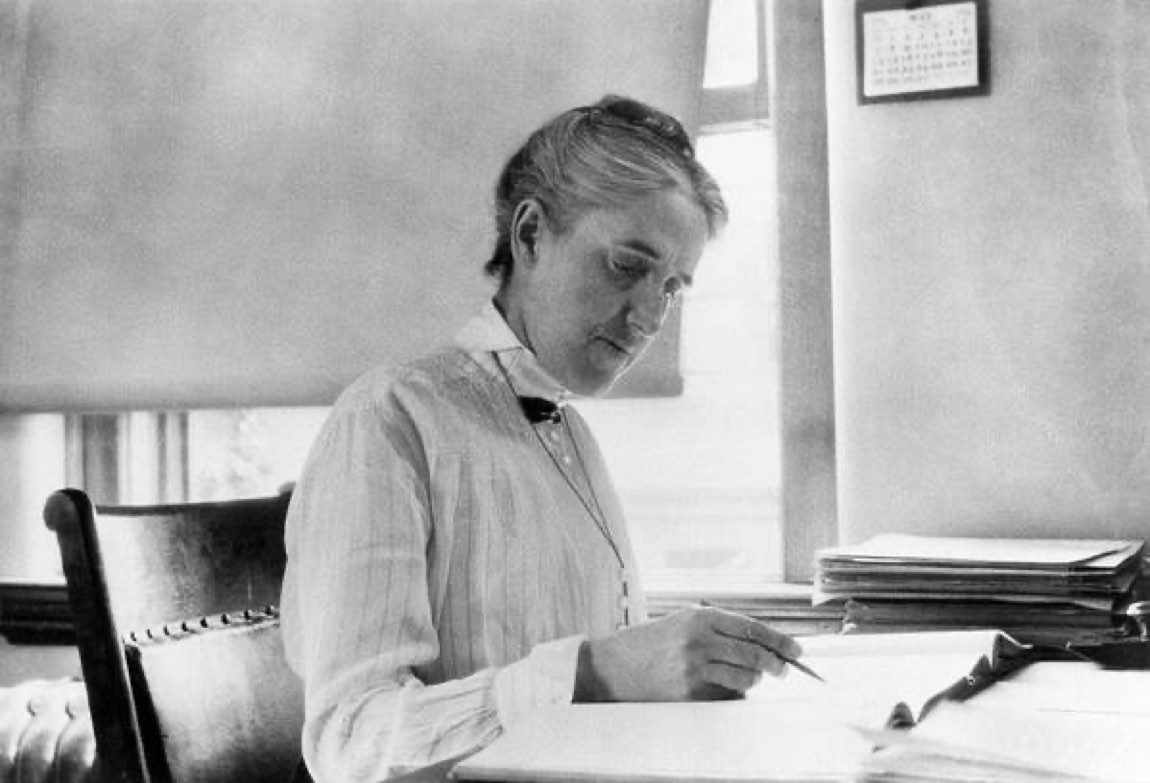
Leavitt's scientific career was shaped not only by institutional barriers but by persistent, serious illness. As early as 1893, she was earning credits toward a graduate degree in astronomy for her observatory work, but chronic illness prevented her from ever completing it. She left the observatory for stretches that included two trips to Europe and a stint as an art assistant at Beloit College in Wisconsin. During this period away she contracted an illness that triggered progressive hearing loss, and she gradually became completely deaf. She returned to the Harvard College Observatory in 1903, but health interruptions and family obligations continued throughout her career. She died on December 12, 1921, from stomach cancer, at only 53 years old. Colleague Solon I. Bailey, writing her obituary, described a person of remarkable warmth: "she had the happy, joyful, faculty of appreciating all that was worthy and lovable in others, and was possessed of a nature so full of sunshine that, to her, all of life became beautiful and full of meaning." She was buried in the Leavitt family plot at Cambridge Cemetery in Cambridge, Massachusetts, in a spot marked by a tall hexagonal monument topped with a globe on a draped marble pedestal.
04 The Geometry That Made the Magellanic Clouds a Ruler Deeper
The logical leap at the heart of Leavitt's discovery was elegantly simple and, in hindsight, almost obvious — yet no one had made it before her. In 1908 she published results noting that brighter Cepheid variable stars in the Small Magellanic Cloud tended to have longer pulsation periods. Then, in her pivotal 1912 paper, she examined 25 Cepheid variables in the same cloud and plotted magnitude against the logarithm of period. The graph revealed a clean straight line, meaning the relationship between brightness and period was not approximate or suggestive but mathematically precise and linear on a log scale. The crucial enabling assumption was geographical: because all the stars in the Small Magellanic Cloud are at roughly the same enormous distance from Earth, any differences in their apparent brightness on a photographic plate must reflect genuine differences in intrinsic luminosity, not differences in distance. That insight converted apparent brightness directly into relative intrinsic brightness. What remained unknown was the absolute scale — the actual distance to the cloud — but Leavitt foresaw that if parallax measurements could be made to even a few nearby Cepheids of known period, the entire scale would snap into calibration. That calibration came within a year of her 1912 paper, when Ejnar Hertzsprung measured distances to several Cepheids in the Milky Way.
 ⤢
⤢
05 Delta Cephei and the One-Ten-Thousandth Comparison
To understand the practical power of what Leavitt had built, consider the specific example her work produced. Delta Cephei — the star that gave Cepheid variables their name — became what she identified as the long-sought "standard candle." When she found a Cepheid variable in the Small Magellanic Cloud with the same five-day pulsation period as Delta Cephei, she could compare their apparent brightnesses directly. The Small Magellanic Cloud Cepheid appeared roughly one ten-thousandth as bright as Delta Cephei. Applying the inverse-square law of light — brightness falls off with the square of distance — she calculated that the Small Magellanic Cloud must lie 100 times farther away than Delta Cephei. This was not an estimate or an approximation; it was a geometrically derived distance, the first of its kind for an object outside our galaxy. The broader implication was immediately clear: Cepheid variables could serve as distance markers across scales that parallax could never reach. Parallax, the only other technique available, works only out to several hundred light-years, whereas Cepheid variables can now measure distances up to about 60 million light-years.
06 A Paper Signed by Her Boss, Written by Her
The authorship of Leavitt's transformative 1912 paper carries a telling detail about the professional norms of the era. The paper was formally communicated and signed by Edward Charles Pickering, the observatory's director — not by Leavitt herself. Yet the very first sentence of the paper acknowledges that it was "prepared by Miss Leavitt." This arrangement was standard practice at the Harvard College Observatory, where women were regarded as support staff whose intellectual contributions were funneled through their male supervisors for publication. Science writer Jeremy Bernstein later reflected that even Pickering probably did not anticipate the magnitude of what Leavitt would find: "I doubt Pickering thought she would make a significant discovery — one that would eventually change astronomy." The 1908 precursor paper, published in the Annals of the Astronomical Observatory of Harvard College, was similarly embedded in institutional convention. Leavitt's name eventually became inseparably attached to the discovery — the period-luminosity relationship is now widely called Leavitt's Law — but that recognition came slowly and largely after her death, a pattern common to many women scientists of her generation.
 ⤢
⤢
07 Building the Harvard Standard for Stellar Brightness Deeper
Beyond her Cepheid work, Leavitt made a second major contribution to astronomy that is less celebrated but was foundational to the field's ability to do precise photometry. She developed and continually refined the Harvard Standard for photographic measurements — a logarithmic scale ordering stars by brightness across more than 17 magnitudes. To construct the initial version of this scale, she analyzed 299 photographic plates taken by 13 different telescopes, reconciling the differences in instrument sensitivity and plate chemistry into a coherent, unified brightness system. The International Committee of Photographic Magnitudes formally accepted her standard in 1913. This was meticulous, painstaking work that had none of the conceptual drama of the Cepheid discovery but was absolutely necessary infrastructure for every subsequent brightness-dependent measurement in astronomy. Without a reliable common scale, the apparent brightness comparisons that made Cepheid distance measurement possible would themselves have been unreliable. Leavitt also discovered T Pyxidis in 1913, a recurrent nova in the constellation Pyxis that has erupted in 1890, 1902, 1920, 1944, 1967, and 2011, making it one of the most frequently recurring novae known.
08 Hubble's Debt and the Nobel That Wasn't
Edwin Hubble's two most celebrated achievements both depended directly on the measuring tool Leavitt built. In 1923 and 1924, Hubble identified Cepheid variables in the Andromeda Nebula and, applying Leavitt's Law, calculated that the distances were far too great for Andromeda to be a structure within the Milky Way — it had to be a separate galaxy entirely. This resolved the "Great Debate" about whether spiral nebulae were nearby gas clouds or distant island universes. Hubble then combined Leavitt's distance measurements with observed galactic redshifts to establish that the universe is expanding, a finding codified in Hubble's law. Hubble himself reportedly said that Leavitt deserved the Nobel Prize for her work. The recognition nearly came: mathematician Gösta Mittag-Leffler, a member of the Swedish Academy of Sciences, attempted to nominate her in 1924. He was informed that she had died of cancer three years earlier. The Nobel Prize is not awarded posthumously, and so the honor was never conferred. Leavitt's discovery had also prompted Harlow Shapley to revise the position of the Sun within the Milky Way, moving it away from the galactic center — another enormous conceptual shift traceable to her plates.
09 Memberships, Appointments, and Late Recognition Deeper
Leavitt's professional affiliations document a woman who was recognized within the formal structures of science even as the pay and publishing conventions of her institution reflected something quite different. She was a member of Phi Beta Kappa, the American Association of University Women, the American Astronomical and Astrophysical Society, and the American Association for the Advancement of Science. She also held honorary membership in the American Association of Variable Star Observers. In 1921, when Harlow Shapley replaced Pickering as director of the Harvard College Observatory, he appointed Leavitt as head of stellar photometry — a formal leadership role she had arguably earned many years earlier through the sheer depth and output of her work in that precise area. The appointment came only months before her death that same year, leaving the question open of what she might have accomplished with greater institutional authority earlier in her career. Her grave in Cambridge is shared in the Leavitt family plot with her uncle Erasmus Darwin Leavitt; the nearby graves of Henry and William James give some sense of the intellectual Cambridge she inhabited.
10 Named for Her: Asteroid, Crater, and a Telescope
Posthumous honors for Leavitt have taken several concrete, permanent forms in the landscape of astronomy. The asteroid 5383 Leavitt carries her name, as does a crater on the Moon named Leavitt — both honors specifically given to recognize deaf men and women who have contributed to astronomy, a designation that acknowledges the particular dimension of Leavitt's experience alongside her scientific achievements. One of the telescopes in the ASAS-SN network, located at McDonald Observatory in Texas, is also named in her honor. These naming conventions are not merely ceremonial; they place her permanently in the working vocabulary of astronomers who use star maps, navigate asteroid databases, or operate under the banner of that telescope network. The BBC included her in their Missed Genius series, and her story has been the subject of a biography by George Johnson published in 2005, a 2015 stage play by Lauren Gunderson titled Silent Sky, a Cosmos episode hosted by Neil deGrasse Tyson, and works of visual art, poetry, and children's literature — a reach into popular culture that reflects how dramatically the field's perception of her contribution has grown in recent decades.