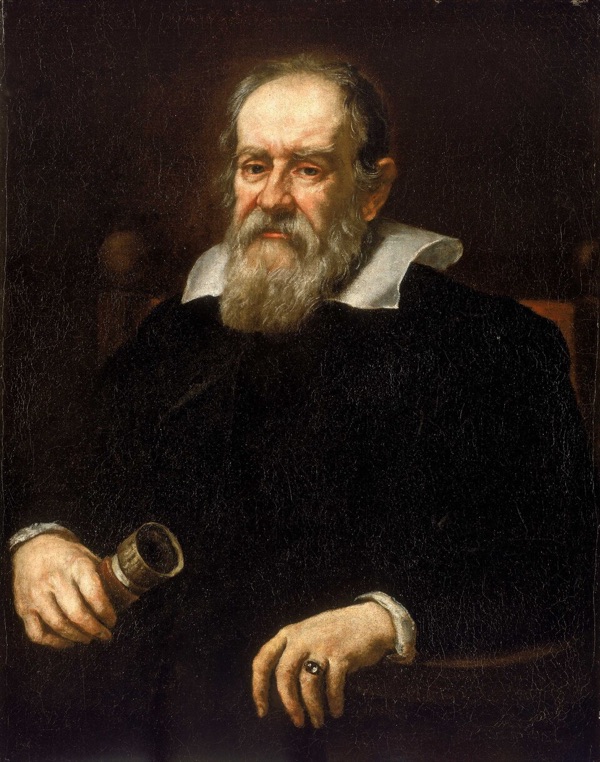
 Justus Sustermans · Public domain
Astronomy · 1564–1642
Galileo Galilei
First telescopic observations; evidence for the Sun-centered system
The story
In 1609 the Italian physicist pointed a home-improved telescope at the sky and broke the old universe in months: mountains on the Moon, moons circling Jupiter, phases of Venus, countless stars in the Milky Way. The Inquisition forced him to recant heliocentrism; legend has him muttering 'and yet it moves.'
Why it matters
He made astronomy an observational, instrument-driven science and physics a mathematical one. Jupiter's four big moons — the first bodies plainly not orbiting Earth — still carry the name 'Galilean.'
The deep dive
Researched for the Atlas from Wikipedia — Galileo Galilei (58,000 characters read) · updated Sep 20, 2026
01 A Musical Family Behind the Scientist
Galileo did not emerge from a family of scholars or clergymen — he came from musicians. His father Vincenzo Galilei was a leading lutenist, composer, and music theorist who belonged to the Florentine Camerata, the intellectual circle whose experiments with ancient Greek dramatic ideals laid the groundwork for the entirely new art form of opera. Vincenzo was no armchair theorist: he performed experiments establishing what may be the oldest known nonlinear relation in physics, finding that for a stretched string, pitch varies as the square root of the tension. Young Galileo grew up watching a parent use careful measurement to uncover hidden mathematical order in the physical world. He absorbed that habit completely and became an accomplished lutenist himself. The family's financial life was precarious, made worse by his younger brother Michelangelo, also a musician, who repeatedly borrowed money from Galileo and failed to pay his share of dowry obligations, pressures that pushed Galileo toward practical invention as a secondary income stream.
02 From Medicine to Mathematics by Accident
Galileo enrolled at the University of Pisa in 1580 to study medicine, a pragmatic choice encouraged by his father because physicians earned more than mathematicians. The pivot that changed everything was almost comically casual: he accidentally attended a lecture on geometry and was transfixed. After persuading his reluctant father, he abandoned medicine and threw himself into mathematics and natural philosophy. Before that switch, however, medicine gave him at least one great observation. In 1581, watching a chandelier swing in the cathedral — its arc pushed wider and narrower by air currents — he timed it against his own pulse and noticed that the period seemed constant regardless of how far it swung. He went home and confirmed it with two pendulums of equal length. That isochronous property of the pendulum, imperfect as his understanding of it was (Christiaan Huygens would later show the true limits), became a thread running through the rest of his career, culminating late in life when the blind Galileo designed an escapement mechanism for a pendulum clock.
03 Telescopes Built, Sold, and Turned Skyward
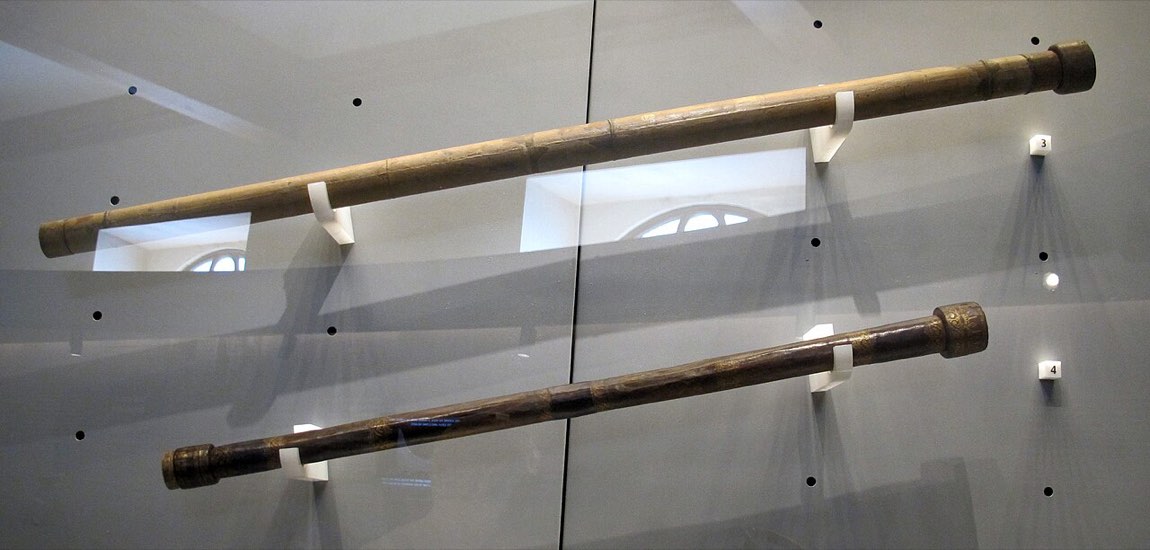
When news of Hans Lippershey's Dutch telescope reached Galileo in 1608, he had apparently only descriptions to work from, yet by 1609 he had built a version with roughly 3× magnification and quickly improved it to about 30×. On 25 August 1609, he demonstrated one achieving about 8× or 9× magnification to Venetian lawmakers, an event with clear commercial overtones — telescopes were a profitable sideline, sold to merchants for use at sea and as trade goods. For a time Galileo was one of the few craftsmen who could grind lenses well enough for astronomical work. He published his first telescopic discoveries in March 1610 in a short book called Sidereus Nuncius, meaning Starry Messenger. The name "telescope" itself was coined not by Galileo but by the Greek mathematician Giovanni Demisiani at a 1611 banquet held by Prince Federico Cesi to induct Galileo into the Accademia dei Lincei, the elite scientific organization whose membership Galileo wore as a badge of honor, sometimes signing himself "Galileo Galilei Linceo."
04 Seven Weeks That Revealed Jupiter's Moons Deeper
The discovery of Jupiter's four largest moons unfolded over less than two weeks of careful observation in January 1610. On 7 January, Galileo logged what he called "three fixed stars, totally invisible by their smallness," arranged in a straight line near Jupiter. When their positions shifted on subsequent nights in ways no fixed star could explain, he understood something extraordinary was happening. On 10 January one vanished — hidden, he correctly inferred, behind Jupiter itself. By 13 January he counted four objects, and by 15 January he concluded they were orbiting the planet. Galileo named them the Medicean stars to honor his future patron Cosimo II de' Medici and Cosimo's three brothers. Simon Marius independently discovered the same moons on 8 January 1610 and later supplied the names Io, Europa, Ganymede, and Callisto from Marius's 1614 publication Mundus Iovialis — the names used today. Within eighteen months Galileo had obtained what Johannes Kepler had called impossible: remarkably accurate estimates of all four orbital periods. He immediately saw a navigational application, proposing the moons' predictable eclipses as a universal clock for determining longitude, a method later successfully applied by Giovanni Domenico Cassini in 1681 for land surveys, including the remapping of France.
 ⤢
⤢
05 Venus, Phases, and a Crumbling Cosmos Deeper
From September 1610, Galileo tracked Venus through its complete cycle of phases — crescent, gibbous, and full — and recognized the profound cosmological meaning. In the Ptolemaic geocentric model, Venus's orbit was constrained entirely to one side of the Sun, so it could show only a limited set of phases: crescent and new if placed on the near side, or gibbous and full if placed on the far side. A complete phase cycle, matching what Galileo observed, was flatly impossible under Ptolemy. The Copernican model predicted exactly what Galileo saw. Yet the outcome in the early 17th century was not an overnight conversion to full heliocentrism. Instead, as the article makes clear, the great majority of astronomers moved to intermediate geo-heliocentric systems — Tychonic, Capellan, or Extended Capellan models — that could reproduce the phases of Venus without committing to the parallax predictions that full heliocentrism required. Galileo's observation was decisive in eliminating pure Ptolemaic geocentrism, but the debate between Copernican and hybrid systems continued, illustrating how a single telescopic fact, however compelling, rarely settles a cosmological dispute in one stroke.
06 Sunspots, Scheiner, and a Bitter Priority War
Sunspots became the focal point of one of Galileo's most damaging personal feuds. The dispute began with a question of priority: who first observed and correctly interpreted the dark patches crossing the Sun's face? The Jesuit astronomer Christoph Scheiner announced his discovery to Mark Welser, a banker and amateur scholar, who then asked Galileo for his opinion. Both men were actually unaware that Johannes Fabricius had already published observations of sunspots before either of them. Galileo and Scheiner argued not only about credit but about interpretation — Galileo correctly argued the spots were features on the Sun's surface, which contradicted Aristotelian doctrine that the heavens were perfect and unchanging. An apparent annual variation in sunspot trajectories, observed by Francesco Sizzi and others in 1612–1613, also provided evidence against both the Ptolemaic and Tychonic systems. The feud turned permanently hostile and, according to Galileo and his friends, the alienated Jesuits were partly responsible for pushing his later condemnation by the Inquisition — though the article notes that supporting evidence for this remains inconclusive.
07 The Dialogue That Destroyed His Alliances
Galileo's Dialogue Concerning the Two Chief World Systems, published in 1632 with formal authorization from the Inquisition and papal permission, should have been a safe book. Pope Urban VIII, formerly Cardinal Maffeo Barberini and a long-standing friend and admirer of Galileo, had personally requested that it present arguments for and against heliocentrism without advocating either side. The problem was the character Simplicio, the Aristotelian stand-in, who was repeatedly made to look foolish and whose name carried the Italian connotation of "simpleton." Whether Galileo intended this as satire of the Pope — who had supplied some of Simplicio's arguments — remains debated; most historians believe Galileo was genuinely surprised by the reaction. But Urban, who at the time was under political pressure and even feared for his own life amid court intrigue, felt publicly humiliated. The Jesuits, already alienated by the comet dispute and The Assayer, withdrew their earlier support. In one book Galileo had managed to lose his most powerful ecclesiastical patron and the support of the most influential scientific order in Europe simultaneously.
08 Trial, Sentence, and the House on the Hill
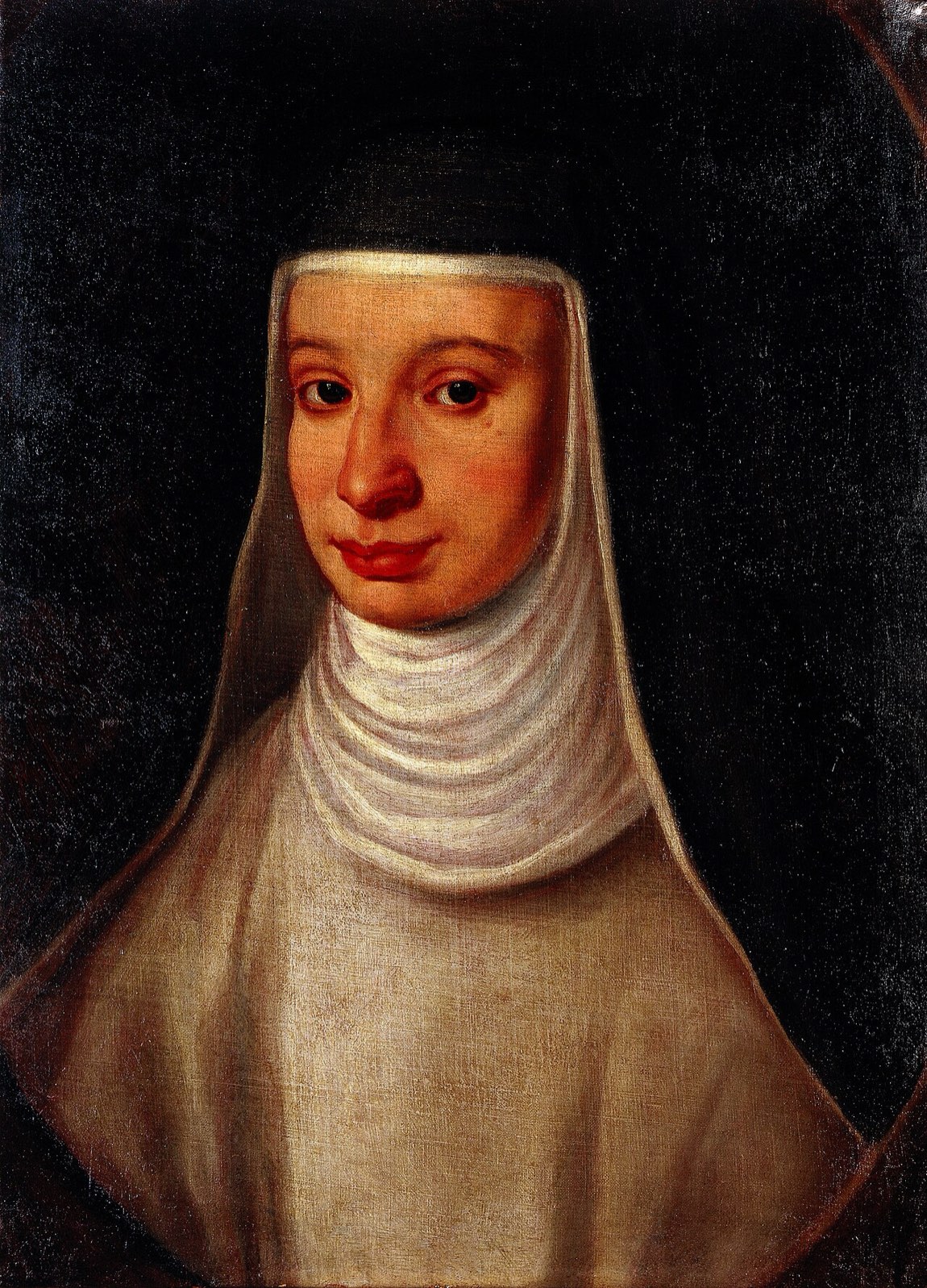
Called to Rome in September 1632, Galileo finally arrived in February 1633 and faced inquisitor Vincenzo Maculani. Throughout the proceedings he insisted he had faithfully obeyed the 1616 order not to hold or defend Copernican opinions, and he initially denied even defending them in the Dialogue. He was eventually persuaded to admit a reader could reasonably interpret the book as a Copernican defense. His final interrogation in July 1633 included the threat of torture, but he maintained his denial. The sentence, delivered 22 June 1633, had three parts: he was found "vehemently suspect of heresy" — stopping short of a formal heresy charge, which spared him corporal punishment — required to publicly abjure, curse, and detest his opinions; sentenced to imprisonment, commuted the following day to house arrest for life; and had the Dialogue banned along with a prohibition on publishing any future works. He was allowed to return to his villa at Arcetri near Florence in 1634 after a period with Archbishop Ascanio Piccolomini in Siena. He was also ordered to recite the Seven Penitential Psalms once a week for three years — a burden his daughter Maria Celeste took upon herself after obtaining ecclesiastical permission.
 ⤢
⤢
09 Two New Sciences: Masterwork Under Arrest Deeper
The bitter irony of Galileo's final years is that house arrest produced his most consequential scientific work. Discourses and Mathematical Demonstrations Relating to Two New Sciences, published in Holland in 1638 to avoid Catholic censorship, summarized roughly forty years of work on what are now called kinematics and the strength of materials. It was this book that led Albert Einstein to call Galileo the "father of modern physics." In it, Galileo formally presented the time-squared law — that distance fallen under uniform acceleration is proportional to the square of elapsed time (d ∝ t²) — and argued that all bodies in a vacuum would fall at the same speed regardless of mass. He also explored the limits of suction pumps, noting a measurement of about 18 Florentine yards, roughly 34 feet or 10 meters, as the maximum height water could be pulled, though his explanation of why was incorrect. By the time the book appeared, Galileo had gone completely blind in 1638, and he was also suffering from a painful hernia and insomnia. He died on 8 January 1642, aged 77, following a fever and heart palpitations, still under house arrest.
10 Fingers, Reburial, and a Long Road to Honor
Galileo's burial was itself a drawn-out indignity. The Grand Duke of Tuscany, Ferdinando II, wished to inter him in the main body of the Basilica of Santa Croce in Florence with a marble mausoleum, but Pope Urban VIII and Cardinal Francesco Barberini objected because Galileo had been condemned for vehement suspicion of heresy. He was instead placed in a small room beside the novices' chapel. Nearly a century passed before, in 1737, a monument was finally erected in the main basilica and his remains were moved there. During that reburial, three fingers and a tooth were removed. One of those fingers is currently on display at the Museo Galileo in Florence. The Church's formal reassessments came slowly: the ban on reprinting his works was lifted in 1718, Pope Benedict XIV authorized his complete scientific works in 1741, and the general prohibition on heliocentric books was removed from the Index in 1758. It was not until 1835 that all official opposition, including the specific ban on the Dialogue, disappeared entirely, and not until 31 October 1992 that Pope John Paul II publicly acknowledged the Inquisition had erred in condemning Galileo.
11 Relativity's Forgotten First Sketch Deeper
Before Einstein, before Newton, Galileo articulated a principle that sits at the foundation of modern physics: the laws of nature look identical in any system moving at constant speed in a straight line, regardless of that speed or direction. He expressed it not as an equation but as a vivid thought experiment embedded in the Dialogue, inviting the reader to shut themselves below the decks of a moving ship with fish, butterflies, dripping bottles, and jumping friends, and discover that no observation inside the cabin can reveal whether the ship is moving or at rest. This principle of Galilean invariance provided the basic framework Newton later encoded in his laws of motion and became, transformed but recognizable, central to Einstein's special theory of relativity. Galileo's version had a subtle flaw — he conceived inertial motion as circular rather than straight, consistent with his Copernican conviction that planetary orbits represented a natural, gravity-free circular persistence — but the core insight, that uniform motion is physically indistinguishable from rest, was revolutionary and durable.
12 Instruments, Patents, and the Practical Galileo
Alongside his theoretical work, Galileo was a prolific and commercially minded instrument maker. Between 1595 and 1598 he devised and improved a geometric and military compass for gunners and surveyors, expanding on earlier designs by Tartaglia and Guidobaldo del Monte. Under his direction, instrument maker Marc'Antonio Mazzoleni produced more than 100 of these compasses; Galileo sold each for 50 lire and charged 120 lire for a course of instruction in their use. He constructed a thermometer in 1593 using air expansion in a bulb to move water in a tube, and had published a small book on his hydrostatic balance as early as 1586. In 1594 he obtained a patent from the Venetian Republic for a horse-powered water pump. By 1624 he was using a compound microscope — he gave one to Cardinal Zollern in May of that year and sent another to Prince Cesi in September — and illustrations of insects made with one of his microscopes, published in 1625, appear to be the first clear documentation of a compound microscope in use. Fellow Accademia dei Lincei member Giovanni Faber coined the word "microscope" for Galileo's instrument, deliberately paralleling the word "telescope."