 Raphael Perrino · CC BY 2.0
Radio astronomy & SETI · 1930-2022
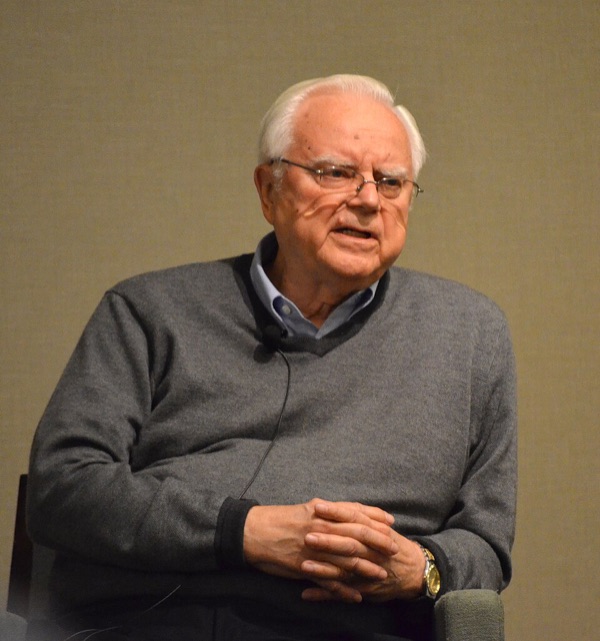
Frank Drake
The first search for extraterrestrial signals, and the equation that framed the question
The story
In 1960 Drake pointed a radio telescope at two nearby stars in Project Ozma, the first scientific search for alien signals. A year later he wrote the Drake Equation to organize the question of how many civilizations might exist, and later co-designed the Arecibo message and the Pioneer and Voyager plaques.
Why it matters
He turned 'are we alone?' from philosophy into a research program — one this site's SETI and Fermi-paradox pages still follow.
The deep dive
Researched for the Atlas from Wikipedia — Frank Drake (6,805 characters read) · updated Sep 20, 2026
01 A Chicago Childhood Pointed at the Stars
Frank Donald Drake was born on May 28, 1930, in Chicago, Illinois, into a household shaped by technical and artistic sensibilities. His father worked as a chemical engineer, and his mother taught music — a combination that perhaps seeded both Drake's methodical scientific instincts and his later feel for communicating ideas across vast cultural distances. He showed an early fascination with electronics and chemistry, tinkering in ways that foreshadowed a career built on coaxing signals out of the cosmos. He had two younger siblings. When it came time for university, financial practicality guided him toward a Navy Reserve Officer Training Corps scholarship at Cornell University, where he initially pursued engineering before the pull of the night sky proved irresistible. A single lecture in 1951, delivered by astrophysicist Otto Struve, crystallized his thinking about the possibility of life elsewhere in the universe — a conviction that would quietly organize the next seven decades of his professional life. Struve himself would later play a pivotal enabling role in Drake's first formal SETI experiment.
02 From Engineering Physics to Cecilia Payne-Gaposchkin Deeper
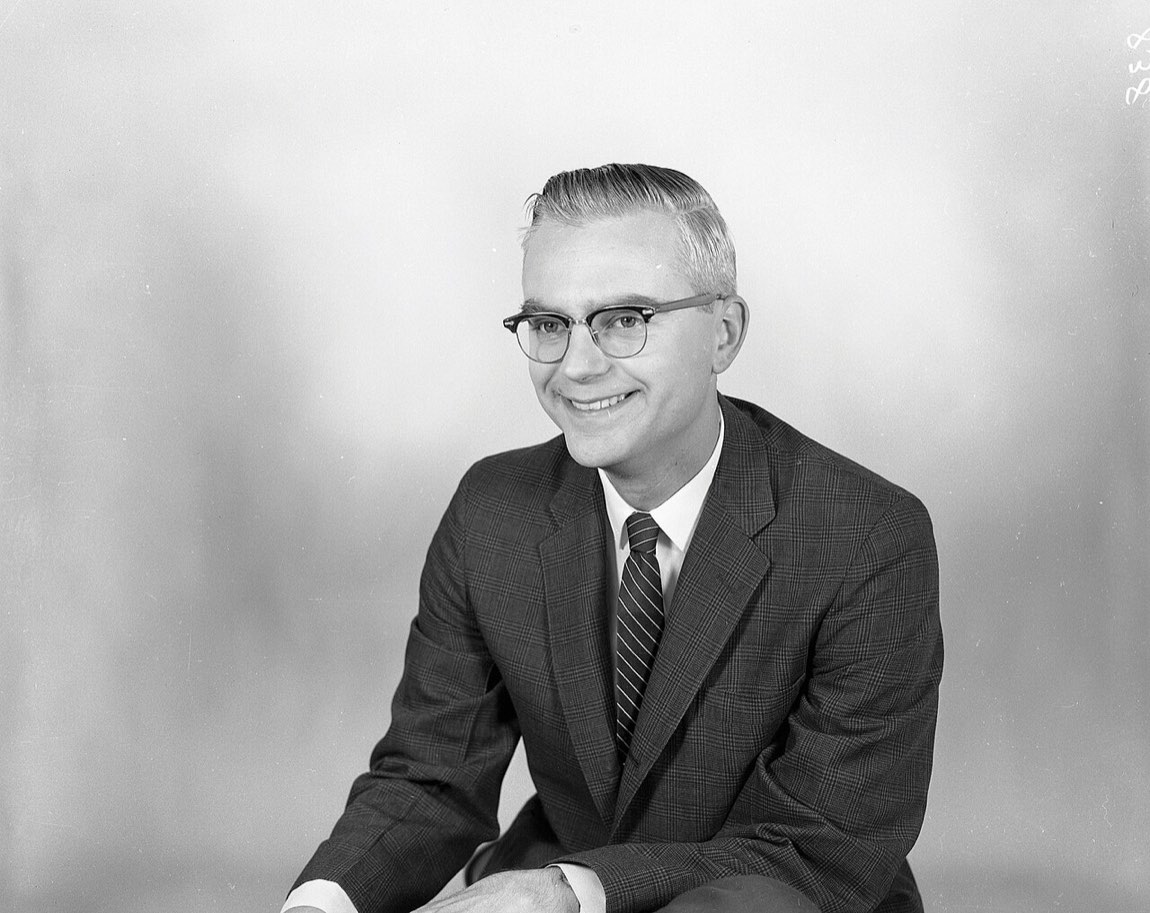
Drake graduated from Cornell with a B.A. in Engineering Physics, a degree that straddled the boundary between the abstract and the applied — good training for someone who would spend his career building instruments to ask unanswerable questions. Before entering graduate school, he fulfilled his military obligation as an electronics officer aboard the heavy cruiser USS Albany, an experience that gave him hands-on grounding in the practical challenges of signal detection and communication. He then entered Harvard University, completing graduate work between 1952 and 1955 and earning both an M.S. and a Ph.D. in astronomy. His doctoral advisor was Cecilia Payne-Gaposchkin, one of the most consequential astronomers of the twentieth century, famous for demonstrating that stars are composed primarily of hydrogen. Being mentored by Payne-Gaposchkin placed Drake inside a lineage of scientists who had already challenged scientific consensus once — an intellectual inheritance that may have made him more comfortable pursuing ideas, like SETI, that colleagues viewed with deep skepticism.
03 Radio Eyes on Jupiter and Venus
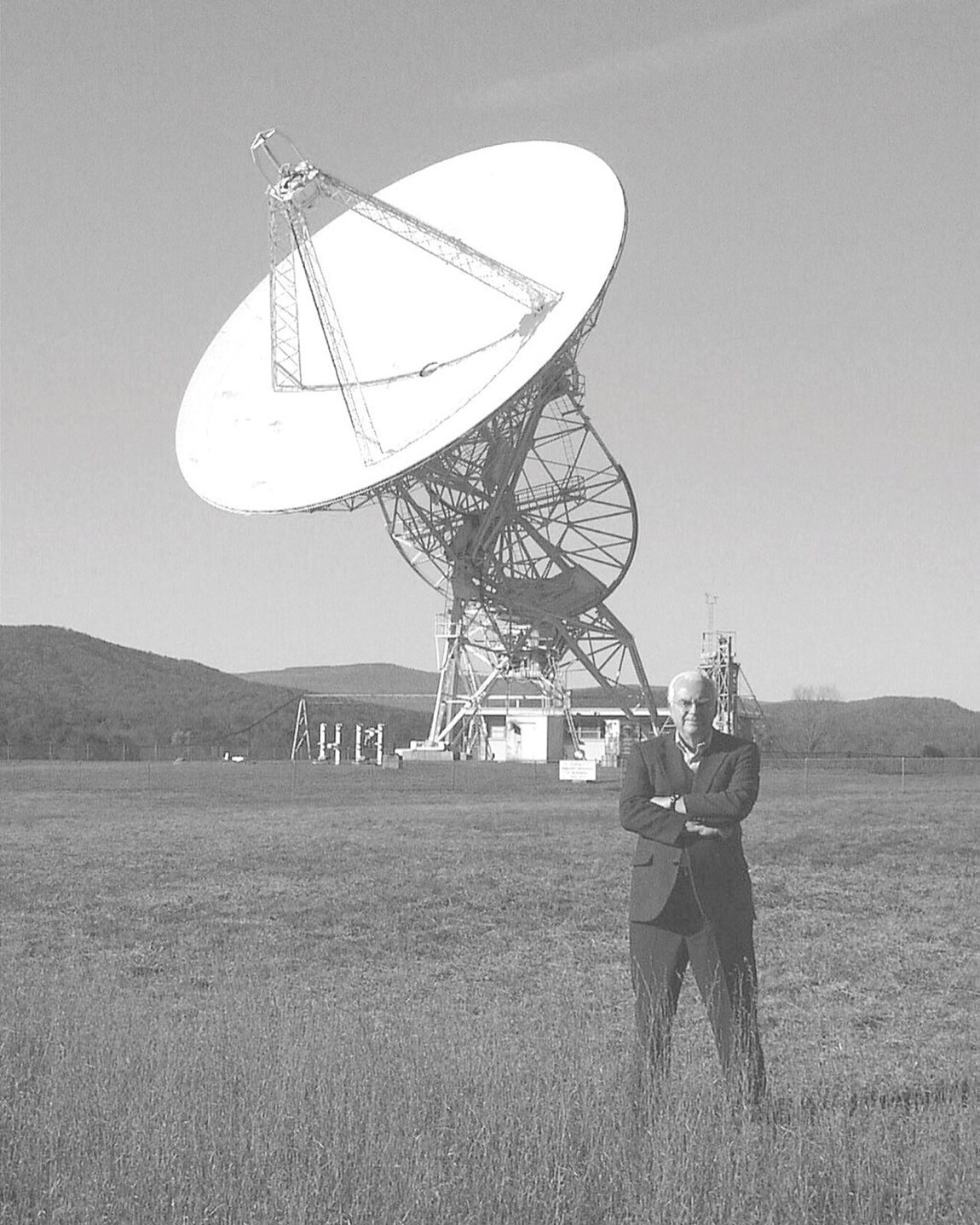
Drake's earliest professional work had nothing to do with extraterrestrial civilizations and everything to do with listening carefully to the solar system's own electromagnetic chatter. Joining the National Radio Astronomy Observatory in Green Bank, West Virginia, in 1958, he used the facility's radio telescope to study planetary radio emissions with a precision that had not previously been possible. His observations revealed the ionosphere and magnetosphere of Jupiter — a discovery of genuine physical importance, establishing that the giant planet harbored a powerful, structured magnetic environment. He also observed the atmosphere of Venus through its radio signature, and separately mapped radio emission from the Galactic Center. Beyond planetary science, he worked to extend the capabilities of the Arecibo Observatory while it was still under construction, adapting a facility originally designed solely for ionospheric physics so that it could serve the broader needs of radio astronomy. That pragmatic expansion of Arecibo's scientific reach would later make possible his own 1974 interstellar transmission.
 ⤢
⤢
04 Project Ozma: Secrecy, Then Sunlight
In April 1959, Drake secured permission from NRAO director Otto Struve — the very same astrophysicist whose 1951 lecture had first inflamed Drake's thinking about other worlds — to begin what became Project Ozma, a systematic search for extraterrestrial radio communications. The plan was initially kept secret: Drake and Struve feared that public knowledge would invite ridicule severe enough to kill the project before it began. The decision to go public came only after Giuseppe Cocconi and Philip Morrison published a paper in the journal Nature in September 1959 titled "Searching for Interstellar Communications," independently legitimizing the scientific question. With that paper as cover, Drake publicized his work. Starting in 1960, using the NRAO 26-meter radio telescope, he pointed the instrument at two nearby sun-like star systems — Tau Ceti and Epsilon Eridani — listening for artificial signals. None were detected. The project was terminated in July 1960, but it had accomplished something durable: it established that searching was a respectable scientific act, not a fantasy.
05 The Equation That Started a Conference Deeper
In 1961, Drake devised what became known as the Drake equation as a way to organize a scientific conference on SETI at Green Bank. The equation attempts to estimate how many communicating extraterrestrial civilizations might currently exist and be detectable within the Milky Way, by multiplying together a chain of probabilities and rates — from star formation to the fraction of planets that develop intelligent, technological life. Its power is not as a calculator but as a framework: it forces anyone thinking about the problem to be explicit about their assumptions, making vague intuitions into contestable numbers. The equation has been described as the "second most-famous equation in science," after Einstein's E=mc². That comparison speaks to its cultural reach rather than its mathematical complexity. The conference it organized drew Carl Sagan, then a graduate student, who contacted Drake after learning about Project Ozma and began what would become a lifelong scientific collaboration. The Drake equation remains the conceptual skeleton of SETI research more than six decades after its invention.
06 Two Marriages and a Family of Communicators
Drake's personal life unfolded alongside his professional one with its own arc of connection and transition. In 1953, while still in graduate school, he married musician Elizabeth Bell. The marriage produced three sons and lasted until 1976. Two years later, in 1978, Drake married Amahl Shakhashiri. Together they had two daughters. One of those daughters, Nadia Drake, became a science journalist — a continuation, in a different medium, of her father's lifelong project of explaining the universe to people who had not yet been shown how extraordinary it is. Drake's hobbies included lapidary, the craft of cutting and polishing stones and gems, and the cultivation of orchids — two pursuits that reward patient attention to intricate, beautiful detail, qualities that also defined his scientific method. He died on September 2, 2022, at his home in Aptos, California, from natural causes, at the age of 92.
 ⤢
⤢
07 The Pioneer Plaque and a Message in a Bottle
The Pioneer plaque, launched in 1972 aboard Pioneer 10, was the first physical message deliberately sent beyond the solar system — a gold-anodized aluminum plate designed to be interpretable by any technologically advanced extraterrestrial civilization that might one day intercept it. Drake co-designed it with Carl Sagan and Linda Salzman Sagan. The plaque encoded information about humanity's location, our physical form, and basic scientific knowledge using imagery intended to be decoded without any shared linguistic context. Two years later, in 1974, Drake authored the Arecibo message, a radio transmission broadcast from the Arecibo Observatory — the first deliberate interstellar radio message sent from Earth, encoding astronomical and biological information about our planet. Later, Drake served as technical director alongside Carl Sagan and Ann Druyan in developing the Voyager Golden Record, described in the article as an improved version of the Pioneer plaque concept that also incorporated audio recordings. These three projects formed a coherent arc: increasingly ambitious attempts to introduce Earth to the universe.
08 Cornell, Arecibo, and Decades of Institution-Building Deeper
Drake's career was not only that of a working scientist but of someone who shaped the institutions through which science is done. After a brief stint at the Jet Propulsion Laboratory in 1963 as section chief of Lunar and Planetary Science, he returned to Cornell in 1964 as a faculty member, eventually being named Goldwin Smith Professor of Astronomy in 1976. He served as associate director of the Cornell Center for Radiophysics and Space Research, as director of the Arecibo Observatory from 1966 to 1968, and as director of the National Astronomy and Ionosphere Center from 1971 to 1981. When he moved to the University of California, Santa Cruz, in 1984, he became Dean of Natural Sciences — a role he held until 1988. That same year, 1984, the SETI Institute was founded as a nonprofit, with Drake as president of its board of trustees. He later directed its Carl Sagan Center. From 1988 to 1990, he served as president of the Astronomical Society of the Pacific, and from 1989 to 1992 as chairman of the Board of Physics and Astronomy for the National Research Council. He retired from teaching in 1996 but held emeritus status at UC Santa Cruz.
09 Warning Future Humans About Nuclear Waste Deeper
One of the more unexpected chapters of Drake's career came in 1991, when the United States Department of Energy convened an expert panel to address a genuinely strange problem: how do you warn people ten thousand years in the future not to dig in a place where nuclear waste is buried? The site in question was New Mexico's Waste Isolation Pilot Plant. Drake was among the experts assembled to evaluate the effectiveness of various long-term warning messages — a challenge that sits at the intersection of semiotics, anthropology, materials science, and exactly the kind of thinking about cross-civilizational communication that Drake had practiced for decades in the SETI context. The question of how to communicate danger across a span of time longer than recorded history has no easy answer, but Drake's experience designing messages intended to be understood by beings with no shared culture or language made him unusually well suited to think about it. The episode illustrates how SETI research, often dismissed as impractical, can generate insights with entirely terrestrial applications.
10 Recognition: An Asteroid and a Lounge
Drake's honors ranged from the grandly cosmic to the warmly local. Asteroid 4772 Frankdrake was named in his honor — a piece of the solar system carrying his name through the same darkness he spent his career listening across. He was elected to the National Academy of Sciences in 1972, and to the American Academy of Arts and Sciences in 1974, both recognitions that marked his acceptance into the highest tiers of American scientific life. In 2001, the SETI Institute — the organization he helped found and long led — gave him its own Drake Award. In 2018, the National Space Society recognized him with its Space Pioneer Award for Science and Engineering. Perhaps the most intimate tribute is the Drake Lounge at the Green Bank Observatory, named after him at the very facility where Project Ozma began and where, in 1961, he wrote an equation on a chalkboard that has been reproduced in textbooks, popular books, and conference presentations ever since. The naming of a gathering space at Green Bank connects his legacy directly to the place where his ideas first became experiments.
11 What He Said About Life in the Universe
Drake was not a scientist who kept his motivating convictions hidden behind technical language. He said plainly what drove him: "As far as I know, the most fascinating, interesting thing you could find in the universe is not another kind of star or galaxy… but another kind of life." That statement is worth sitting with. Drake spent his career mapping Jupiter's magnetosphere, directing observatories, chairing national committees, and advising on nuclear waste warnings — but this sentence reveals the single organizing passion underneath all of it. The universe, in his view, was not primarily a collection of physical phenomena to be catalogued; it was a potential community of minds, and the question of whether humanity was alone in it was the most consequential question science could ask. He died in 2022 without an answer, as had everyone before him. But he had transformed that question from a philosophical speculation into a research program — which is perhaps the most a scientist can do with any question that remains, for now, open.