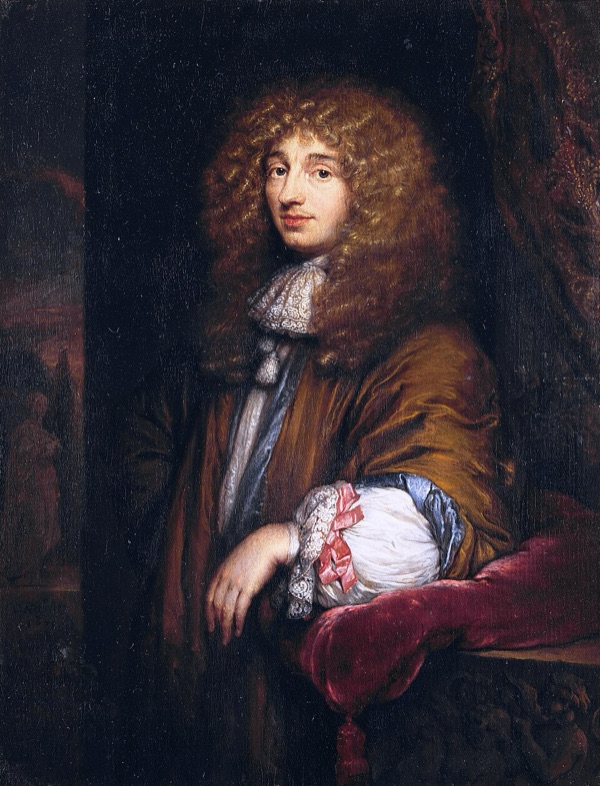
 Caspar Netscher · Public domain
Physics & astronomy · 1629-1695
Christiaan Huygens
Saturn's rings, Titan, the pendulum clock, and wave optics
The story
The Dutch polymath ground his own lenses, discovered Titan in 1655, and solved the riddle of Saturn's strange 'handles': a thin flat ring touching the planet nowhere. He invented the pendulum clock — precision timekeeping, astronomy's essential tool — and proposed that light travels as waves.
Why it matters
He turned observation into explanation: not just seeing Saturn's oddity but deducing its geometry. ESA's Titan lander bears his name, and landed on the world he found 350 years earlier.
The deep dive
Researched for the Atlas from Wikipedia — Christiaan Huygens (52,480 characters read) · updated Sep 20, 2026
01 A childhood shaped by Europe's finest minds
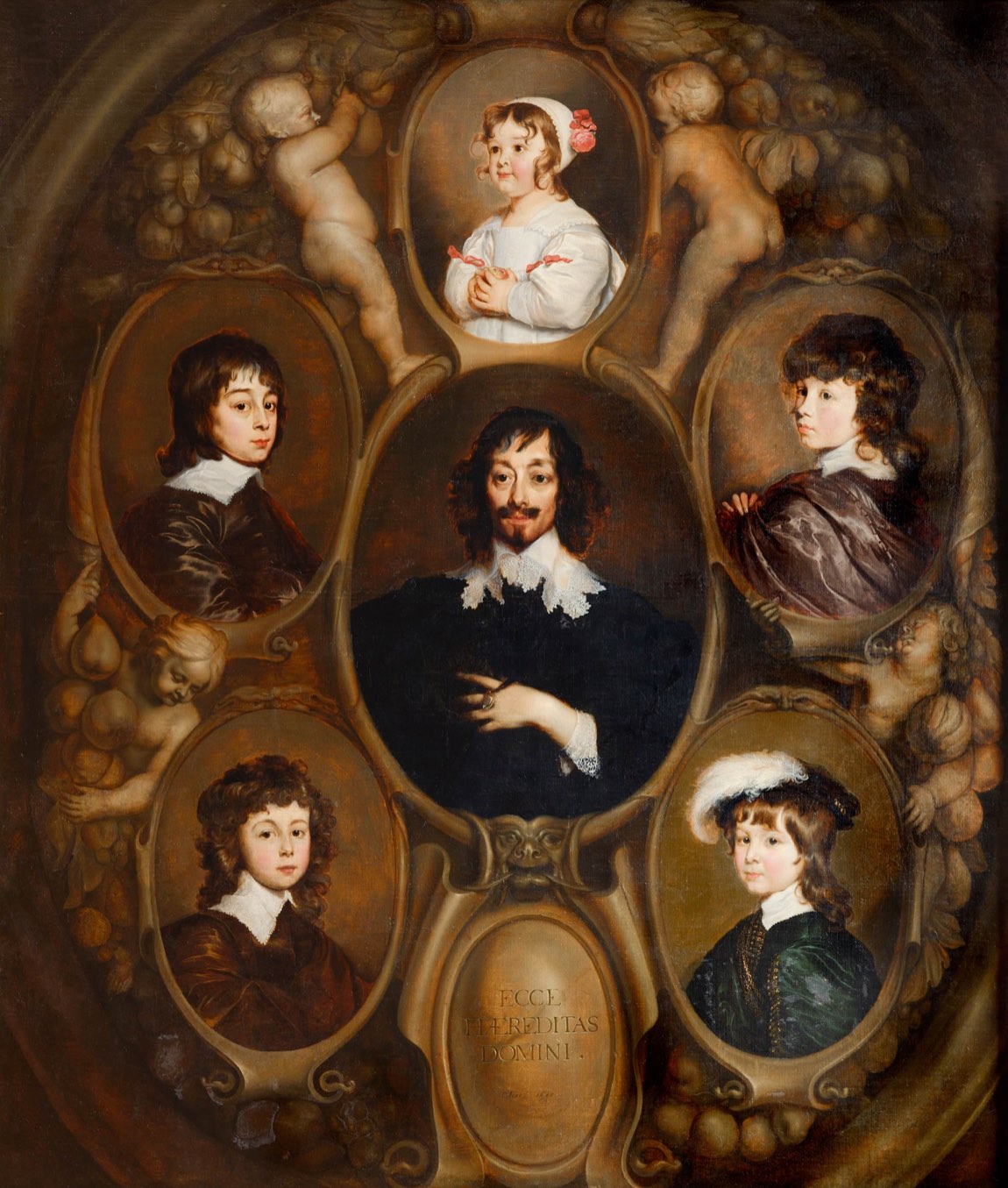
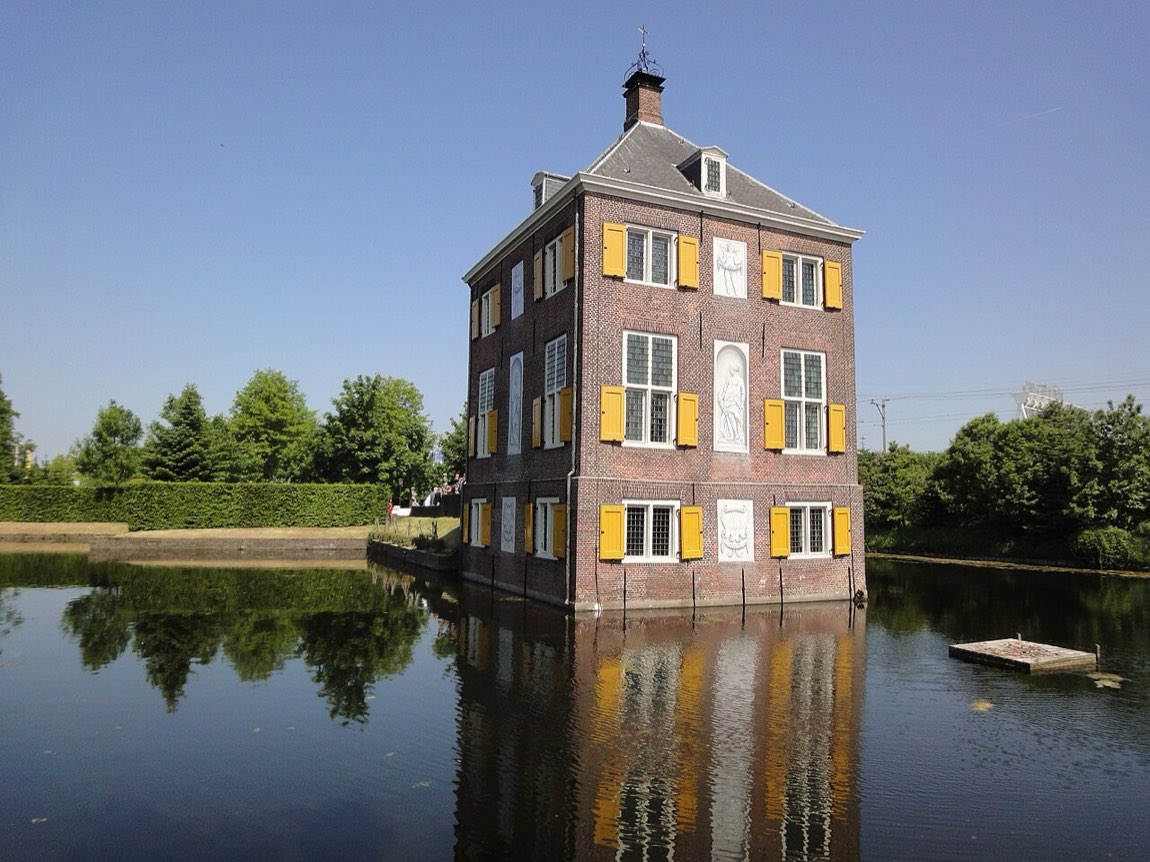
Christiaan Huygens was born on 14 April 1629 in The Hague into a family that functioned as a kind of living switchboard for European intellectual life. His father, Constantijn Huygens, was a diplomat and advisor to the House of Orange, but also a poet, musician, and tireless correspondent who exchanged letters with Galileo Galilei, Marin Mersenne, and René Descartes. Christiaan was educated entirely at home until the age of sixteen, absorbing languages, music, history, geography, mathematics, logic, and rhetoric alongside dancing, fencing, and horse riding — a curriculum that blended courtly polish with serious scholarship. From a young age he liked to build miniatures of mills and other machines, a practical curiosity that never left him. In 1644, his mathematical tutor was Jan Jansz Stampioen, who assigned the fifteen-year-old a demanding reading list on contemporary science. Descartes himself was later impressed by the boy's geometry, and Mersenne, one of the era's great scientific networkers, christened young Christiaan the 'new Archimedes' — a flattering comparison that set a very high bar for the career to come.
02 Universities, tutors, and a failed diplomatic career
At sixteen, Huygens enrolled at Leiden University to study law and mathematics, remaining there from May 1645 to March 1647. Frans van Schooten Jr., professor at Leiden's Engineering School, became his private tutor, updating his mathematics with the work of Viète, Descartes, and Fermat on Descartes's own recommendation. Huygens then moved to the newly founded Orange College in Breda, where his father was a curator and the English lecturer John Pell taught him mathematics. His brother Lodewijk's duel with a fellow student brought that chapter to an abrupt close. After completing his studies in August 1649, Huygens briefly served as a diplomat with Henry, Duke of Nassau, visiting Bentheim, Flensburg, Copenhagen, and Helsingør. He hoped to cross the Øresund to meet Descartes in Stockholm but Descartes died before this was possible. His father had envisioned a diplomatic career for him, but the First Stadtholderless Period of 1650 stripped the House of Orange of power and removed Constantijn's influence. Recognizing his son's indifference to diplomacy, the family relented, and in 1654 Huygens returned to his father's house in The Hague, free at last to devote himself entirely to research.
03 Letters before publications: the Mersenne years
Huygens generally wrote in French or Latin, and in 1646, still a student at Leiden, he began corresponding with Mersenne, his father's friend and Europe's foremost scientific clearing-house. The letters reveal a precocious and wide-ranging mind. In October 1646 he wrote about the shape of a suspension bridge, demonstrating that a hanging chain is not a parabola as Galileo had believed — a curve Huygens would later name the catenaria in 1690 while corresponding with Leibniz. Over 1647 and 1648 his letters covered a mathematical proof of the law of free fall, the rectification of the ellipse, projectiles, and the vibrating string. He also took the time to show that Grégoire de Saint-Vincent's famous claim to have squared the circle was simply wrong. Mersenne died in 1648, cutting off one of Huygens's richest intellectual connections, but the habit of correspondence — and the caution about committing results to print — stayed with him for life. Van Schooten continued as mentor and gatekeeper, providing technical feedback and urging care for the sake of Huygens's growing reputation. This slow, epistolary approach to science meant that some of Huygens's greatest results circulated privately for years before reaching a wider audience.
 ⤢
⤢
04 How he cracked Saturn's puzzling appearance
When earlier astronomers pointed their telescopes at Saturn they saw something deeply strange — two blurry appendages flanking the planet that appeared and disappeared over the years, baffling everyone including Galileo. Huygens attacked the problem with better optics and better mathematics. In 1655, grinding lenses with his brother Constantijn, he built a refracting telescope with 43× magnification and discovered Titan, Saturn's largest moon, on 25 March of that year — making him the first person to identify a moon of Saturn. He then spent years piecing together the geometry of what surrounded the planet. In 1659, he published Systema Saturnium, announcing that Saturn was encircled by 'a thin, flat ring, nowhere touching, and inclined to the ecliptic.' That phrase — precise, elegant, correct — resolved decades of confusion in a single sentence. The book is considered the most important work on telescopic astronomy since Galileo's Sidereus Nuncius fifty years earlier. It went well beyond Saturn: Huygens provided measurements of the relative distances of the planets from the Sun, introduced the concept of the micrometer, and demonstrated a method for measuring the angular diameters of planets, turning the telescope from a mere sighting device into an instrument capable of genuine measurement.
05 Mars in half a day: an early planetary clock Deeper
While completing Systema Saturnium in 1659, Huygens also turned his telescope toward Mars and observed Syrtis Major, a large volcanic plain on the Martian surface. By tracking the movement of this dark feature across the disk over multiple nights, he estimated the length of a Martian day at 24½ hours. The actual value is 24 hours and 37 minutes, meaning Huygens was off by only a few minutes — a remarkable result for a ground-based visual observation in the seventeenth century. This was among the earliest uses of surface-feature tracking to determine a planet's rotation period, a technique that became standard in planetary astronomy. The same publication in which he announced Saturn's ring also contained this Mars result, illustrating how Huygens treated the telescope as a precision scientific instrument rather than simply a means of seeing farther. His introduction of the micrometer — a device for measuring small angular separations — was essential to making such quantitative work possible, and it foreshadowed the era when planetary astronomy would be inseparable from careful measurement.
06 The pendulum clock and the problem of longitude
Huygens invented and patented the pendulum clock in 1657, and it was manufactured in Paris by Isaac II Thuret. The improvement over existing verge-and-foliot clocks was dramatic: clocks of that era lost about 15 minutes per day, while Huygens's pendulum clock lost only about 15 seconds per day. It became the most accurate timekeeper for almost 300 years, until the 1930s. The oldest surviving example is dated 1657 and can be seen today at the Museum Boerhaave in Leiden. A central motivation was the urgent practical problem of finding longitude at sea, which required a reliable clock that could maintain accurate time on a moving ship. The pendulum clock failed that test: the rocking of a vessel disturbed the pendulum's swing. In 1660, his brother Lodewijk tested one on a voyage to Spain and reported that heavy weather made it useless. Trials continued through the 1660s, with mixed and disputed results. Despite the commercial disappointment — Pierre Séguier denied him French rights, and rivals in Rotterdam and London copied his design almost immediately — the clock transformed scientific timekeeping on land, enabling accurate measurements of the inequality of the solar day that had not been possible before.
 ⤢
⤢
07 Horologium Oscillatorium: mechanics as a book Deeper
Sixteen years after inventing the pendulum clock, Huygens published Horologium Oscillatorium in 1673, and it proved to be far more than a clockmaker's manual. It is widely regarded as one of the most important seventeenth-century works on mechanics and stands as the first modern treatise in which a physical problem is idealized using mathematical parameters and then rigorously analysed. Much of the book addresses a nagging flaw: Mersenne and others had noticed that pendulums are not quite isochronous — wide swings take slightly longer than narrow ones. Huygens solved this by identifying the tautochrone, the curve down which a mass slides in the same time regardless of starting point. By geometric methods that anticipated the calculus, he showed this curve to be a cycloid. He also solved Mersenne's earlier question of how to calculate the period of a compound pendulum of arbitrary shape, leading him to discover the centre of oscillation and its reciprocal relationship with the pivot. He derived the formula for the period of an ideal pendulum, T = 2π√(l/g), and by studying compound pendulums made pivotal contributions to the concept of moment of inertia. He even recorded a curious observation: two pendulum clocks mounted side by side on the same support would spontaneously synchronize, swinging in opposite directions — a phenomenon now called entrainment.
08 Waves versus particles: a theory ahead of its time
In 1678, Huygens communicated to the Académie des sciences in Paris his wave theory of light, published twelve years later in 1690 as the Traité de la Lumière. The theory described light as radiating wavefronts, with propagation explained by spherical waves emitted at every point along each wavefront — the idea now called the Huygens–Fresnel principle. It assumed light travelled through an omnipresent ether of perfectly elastic particles, and Huygens took it to be a longitudinal wave. The theory was not widely accepted. Newton's competing corpuscular theory, laid out in his Opticks of 1704, commanded far greater authority, partly because longitudinal waves carry only one polarization and could not account for the birefringence that Huygens himself had studied in Iceland spar. Huygens's ideas lay largely dormant until Thomas Young's interference experiments in 1801 and François Arago's detection of the Poisson spot in 1819 could not be explained by any particle theory. Augustin-Jean Fresnel then revisited the wave model and in 1821 explained birefringence by recognising that light is a transverse, not longitudinal, wave. The Huygens–Fresnel principle remained the foundation of physical optics until Maxwell's electromagnetic theory and, ultimately, quantum mechanics redrew the picture entirely.
09 Paris, patronage, and an uneasy institution
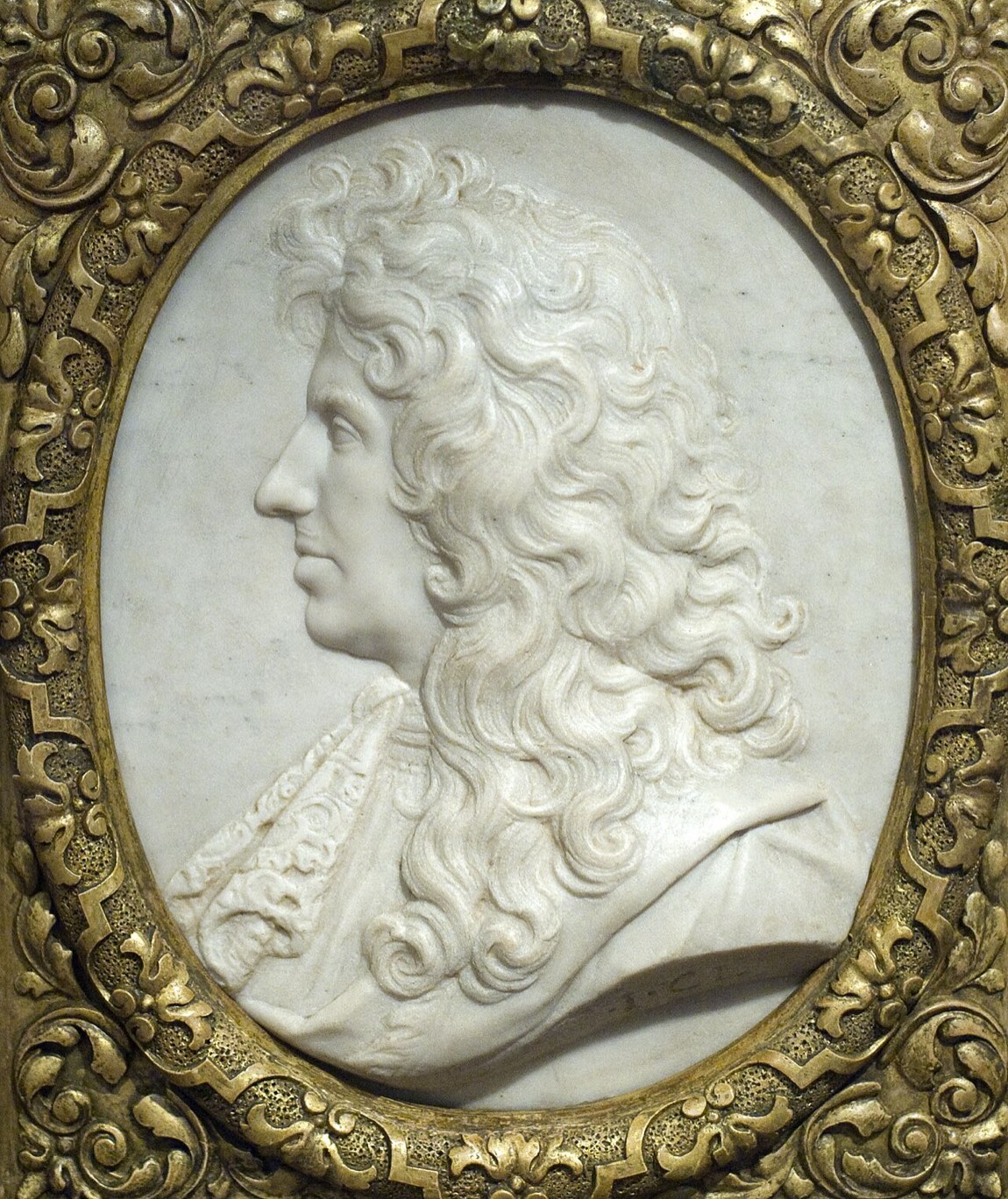
In 1666, Huygens moved to Paris at the invitation of Louis XIV to take a leadership role at the newly founded French Académie des sciences, an institution that placed him at the centre of European science for fifteen years. His most important patron there was Jean-Baptiste Colbert, the king's First Minister, who also commissioned Huygens to build a mechanical planetarium showing all known planets and moons orbiting the Sun. Huygens completed the design in 1680 and had his clockmaker Johannes van Ceulen build it the following year, but Colbert died in the interim and the new minister declined to renew Huygens's contract, leaving the planetarium undelivered. The Académie provided resources and prestige but also friction: in 1670, seriously ill, Huygens designated Francis Vernon to carry his papers to the Royal Society in London should he die, a gesture that speaks to his anxiety about French institutional security. The aftermath of the Franco-Dutch War of 1672–78 further complicated his standing with the Royal Society. He also collaborated productively during these years: the physicist Denis Papin served as his assistant from 1671, and together they worked on a gunpowder engine — a precursor to the internal combustion engine — that did not bear direct fruit but pointed toward future technology.
 ⤢
⤢
10 Probability, life tables, and a geometry of chance Deeper
Huygens's engagement with probability grew from a visit to Paris in 1655, where he encountered the work of Fermat, Pascal, and Desargues on games of chance. The result was De Ratiociniis in Ludo Aleae, translated into Latin by Frans van Schooten and published in 1657 as the clearest and most rigorous mathematical treatment of gambling problems then in existence. Huygens borrowed from Pascal the concepts of a fair game and equitable contract, then extended them to build a theory of expected values applicable to unequal chances. He closed the book with five challenging problems that served as the standard test of mathematical skill in probability for the next sixty years, drawing responses from Abraham de Moivre, Jacob Bernoulli, Johannes Hudde, Baruch Spinoza, and Leibniz. His use of expected values directly inspired Bernoulli's later work on probability theory. Huygens's probabilistic thinking extended beyond gambling: in 1661, Sir Robert Moray sent him John Graunt's life table, and Huygens and his brother Lodewijk soon turned to questions of life expectancy. Huygens eventually constructed what appears to be the first graph of a continuous distribution function, derived under the assumption of a uniform death rate, and used it to solve problems in joint annuities — an application of pure mathematics to human mortality that was strikingly modern in approach.
11 Cosmotheoros: water, life, and other worlds
Shortly before his death, Huygens completed Cosmotheoros, a speculative work on extraterrestrial life published posthumously by his brother Constantijn Jr. in 1698 under the English title The Celestial Worlds Discover'd. Huygens argued that water in liquid form was essential for life and that the properties of water must vary from planet to planet to suit each world's temperature range. He interpreted dark and bright spots on Mars and Jupiter as evidence of water and ice on those surfaces. The work is candid about its own uncertainty: Huygens acknowledged that extraterrestrial life is neither confirmed nor denied by the Bible, and wrestled openly with why God would create other planets if not to serve some greater purpose. It was also in Cosmotheoros that he published his method for estimating stellar distances: he made progressively smaller holes in a screen facing the Sun until the light through one hole appeared equal in brightness to the star Sirius, concluding that Sirius was approximately 30,000 times as far away as the Sun — an estimate based on the assumption, now known to be incorrect, that Sirius is exactly as luminous as the Sun. Despite its speculative nature, the book sits alongside serious astronomy: it contains Huygens's estimates for the relative sizes of the Solar System presented as sober measurement, not fantasy.
12 Newton's shadow and a fading reputation
By the end of the seventeenth century, Isaac Newton's towering reputation had begun to eclipse Huygens's, and the eclipse deepened rapidly after Huygens died in The Hague on 8 July 1695. He was buried, like his father before him, in an unmarked grave at the Grote Kerk. Several factors accelerated his fading from public memory. His persistent preference for classical geometric methods became unfashionable as mathematicians embraced Leibniz's calculus. His reluctance to publish — De Motu Corporum ex Percussione, completed in 1656, appeared only in 1703; De Vi Centrifuga, written in 1659, likewise in 1703; and the Dioptrica never in his lifetime — meant that contemporaries often absorbed his ideas without clear attribution. His wave theory of light lost the argument to Newton's corpuscular theory for well over a century. Yet the historian Hugh Aldersey-Williams has noted that 'Huygens's achievement exceeds that of Newton in some important respects,' and modern assessments have recovered much of his standing. Newton, Leibniz, Guillaume de l'Hôpital, and the Bernoullis all expressed admiration for him during his lifetime. His complete works were published in twenty-two volumes between 1888 and 1950, and the European Space Agency named its Titan lander — which touched down in 2005 — the Huygens probe in his honour.