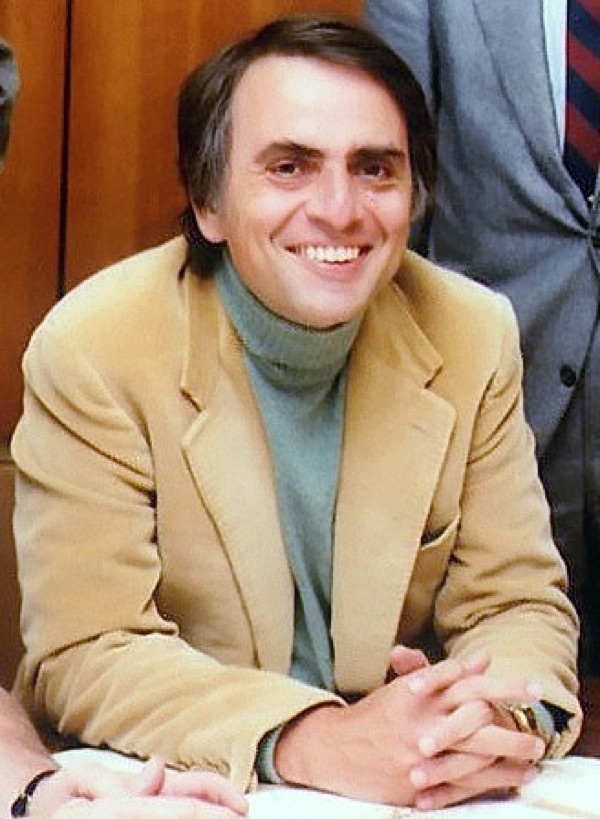
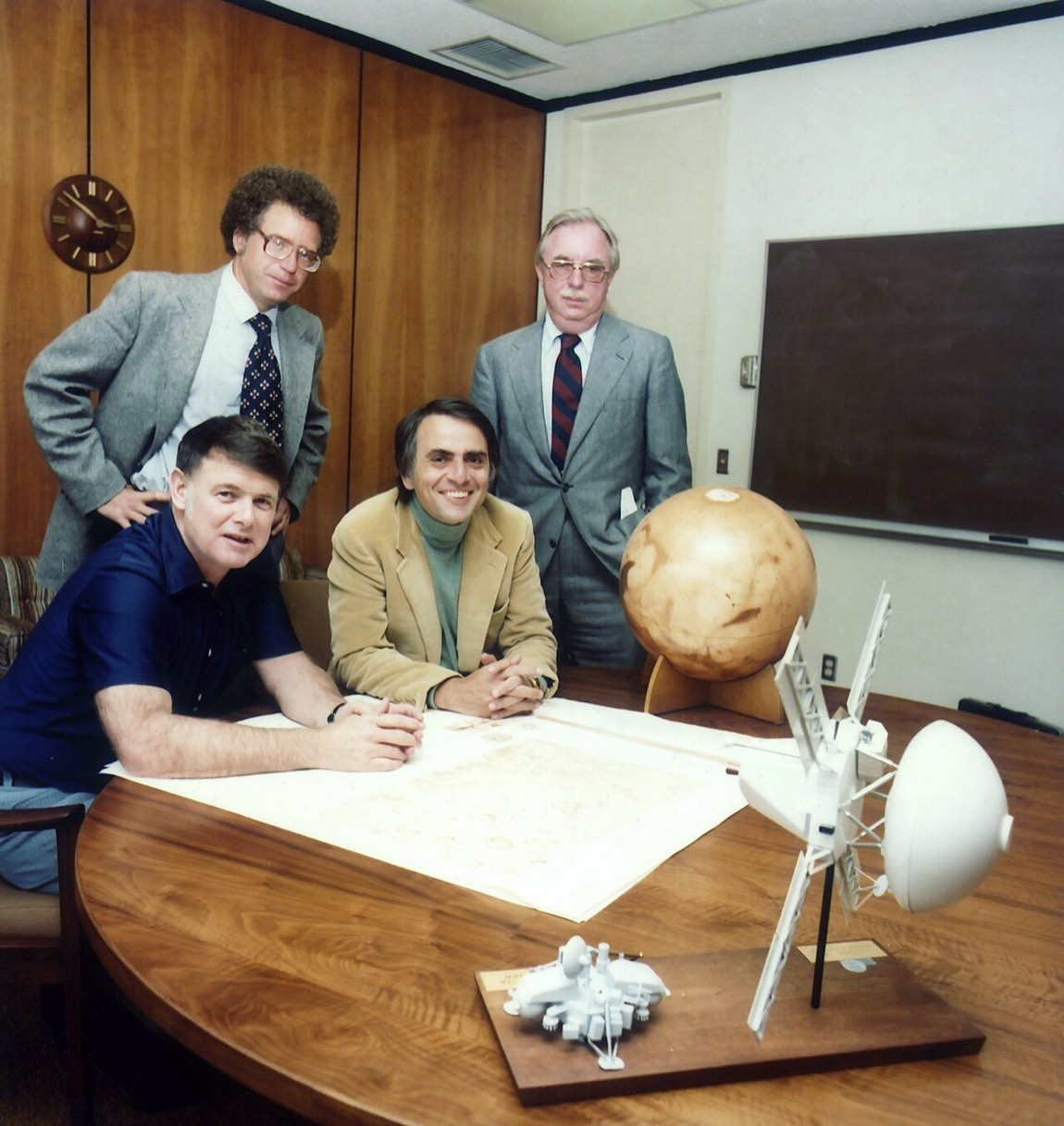
 NASA/JPL · Public domain
Planetary science · 1934–1996
Carl Sagan
Bringing the universe to everyone
The story
A serious planetary scientist (he predicted Venus's greenhouse furnace and worked on Viking, Voyager and Pioneer) who became science's greatest storyteller: Cosmos reached hundreds of millions, and the Voyager Golden Record and 'Pale Blue Dot' reframed Earth itself.
Why it matters
He built the case that wonder and rigor are allies, co-founded the field of exobiology, and taught generations — including many working astronomers — to look up. 'We are a way for the cosmos to know itself.'
The deep dive
Researched for the Atlas from Wikipedia — Carl Sagan (58,000 characters read) · updated Sep 20, 2026
01 A Brooklyn childhood and the spark of wonder
Carl Edward Sagan was born on November 9, 1934, in the Bensonhurst neighborhood of Brooklyn, New York. His father Samuel had emigrated from Kamianets-Podilskyi in the Russian Empire and worked as a garment worker; during the worst years of the Great Depression he served as a movie theater usher. His mother Rachel, who had grown up in poverty during World War I, harbored intellectual ambitions that her circumstances never permitted her to fulfill. Biographer Keay Davidson argued she channeled those dreams into her son. Sagan himself credited his mother with his analytical bent and his father — who spent free time giving apples to the poor and mediating labor disputes — with his sense of wonder. The decisive early experience came at the 1939 New York World's Fair, where exhibits showing a tuning fork's sound converted into a wave on an oscilloscope, a photoelectric cell that turned light into crackling noise, and a nascent television all left him asking, in his own words, 'How could a tone become a picture and light become a noise?' He also witnessed the burial of a time capsule at Flushing Meadows, an event that thrilled him — and that, as an adult, he would effectively recreate by placing messages aboard spacecraft bound for interstellar space.
02 Library cards, library stars
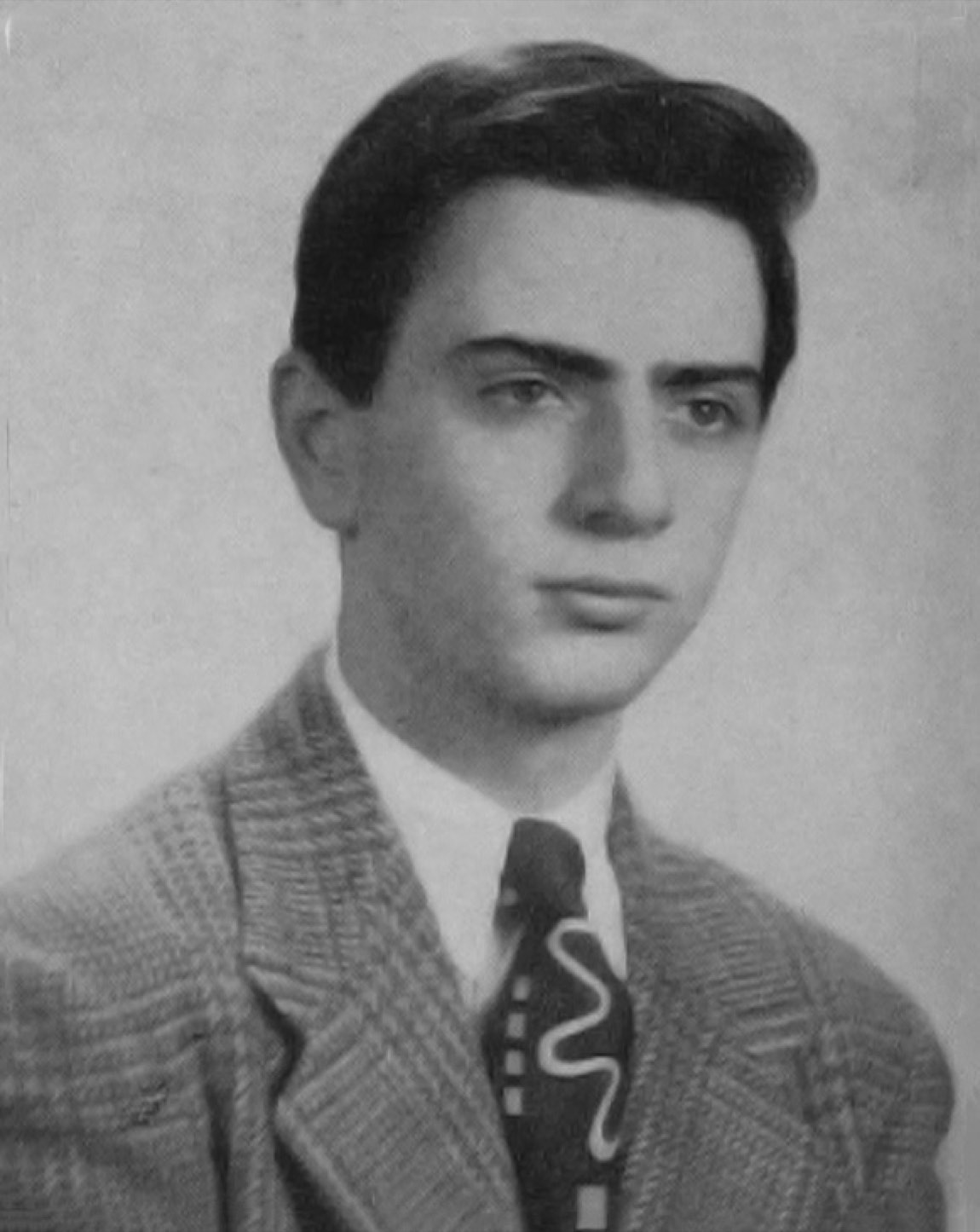
Sagan's astronomical awakening arrived not through a telescope but through a library book. When he asked a librarian for something about stars, she first returned a volume of celebrity portraits — actors with names like Clark Gable and Jean Harlow. He complained, and she found the right book. Reading that the stars were suns, only enormously far away, hit him with the force of revelation. He recalled: 'The scale of the universe suddenly opened up to me. It was a kind of religious experience. There was a magnificence to it, a grandeur, a scale which has never left me.' He did not yet know the inverse square law for light, so he could not calculate any distance, but he grasped intuitively that the stars had to be farther away 'than 85th Street, farther away than Manhattan, farther away, probably, than New Jersey.' At roughly six or seven, he was already making trips to the American Museum of Natural History and the Hayden Planetarium. By age thirteen his parents were buying him chemistry sets, and by 1947 he had discovered the magazine Astounding Science Fiction, which he devoured monthly and rated story by story on scorecards modeled on baseball statistics.
 ⤢
⤢
03 The education of an astronomer Deeper
Sagan's high school years in Rahway, New Jersey produced a paradox: he was a straight-A student who bored his teachers as much as they bored him, and administrators urged his parents to send him to a school for gifted children — advice they could not afford to follow. He taught himself molecular geometry by cutting shapes from cardboard. Graduating in 1951, he enrolled at sixteen at the University of Chicago, one of the few institutions willing to accept him so young. The college, redesigned by chancellor Robert M. Hutchins around Great Books, Socratic dialogue, and comprehensive examinations, gave Sagan access to a galaxy of mentors: he worked in a physics department orbiting Enrico Fermi, learned mathematical elegance from Subrahmanyan Chandrasekhar, discussed chemistry with Harold Urey, spent summers apprenticed in biology to H. J. Muller at Indiana University, and studied planetary astronomy under Gerard Kuiper — then the field's only full-time practitioner. He earned a Bachelor of Liberal Arts, then a Bachelor of Science in physics in 1955, a Master of Science in physics in 1956, and a Doctor of Philosophy in astronomy and astrophysics in 1960. His doctoral thesis, directed by Kuiper, was titled 'Physical Studies of the Planets.' From Kuiper he learned the back-of-the-envelope calculation — scribbling approximate equations on an old envelope to test whether an explanation even made order-of-magnitude sense — a skill he later described as cutting through nonsense 'like a knife through butter.'
04 A classified lunar secret and a scholarship leak Deeper
Among the more startling episodes of Sagan's early career was his involvement in a classified U.S. Air Force program called Project A119, which he worked on in 1958 alongside Kuiper for the Armour Research Foundation. The project's goal was to detonate a nuclear warhead on the Moon and document the effects. Sagan held a Top Secret clearance with the Air Force and a Secret clearance with NASA. The project remained hidden for decades, but in 1999 an article in the journal Nature revealed that Sagan had included the classified titles of two Project A119 papers in his 1959 scholarship application to the University of California, Berkeley. A follow-up letter to the journal by project leader Leonard Reiffel confirmed Sagan's security leak. The episode sits in curious counterpoint to the interplanetary messages Sagan would later champion: a man who would dedicate years to broadcasting humanity's best qualities across the cosmos had, as a young graduate student, inadvertently broadcast a military secret in a fellowship application. His interest in using nuclear detonations in space would resurface later in life, eventually informing his thinking about asteroid deflection technologies and their dual-use dangers.
 ⤢
⤢
05 Venus hot, Mars dusty: the scientific core Deeper
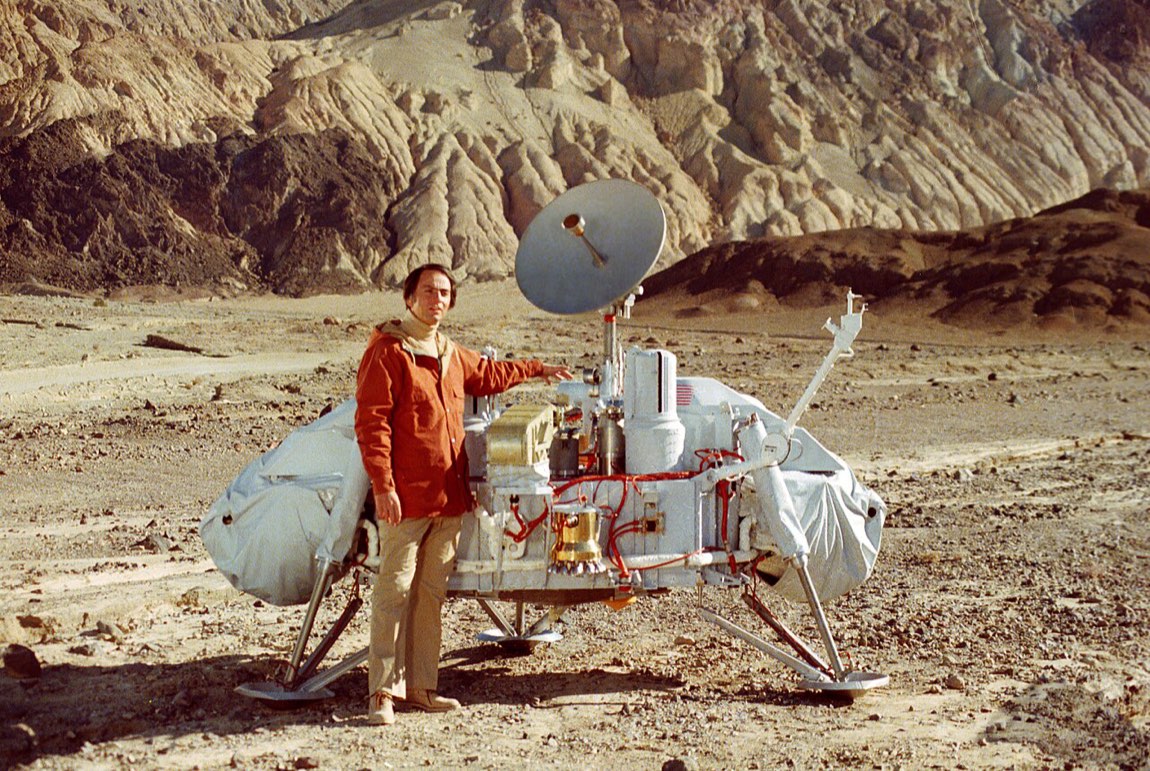
Sagan's most consequential planetary science contributions were built on physical reasoning rather than laboratory apparatus, earning him former student David Morrison's description as 'an idea person and a master of intuitive physical arguments.' His analysis of radio waves from Venus led him to conclude, in a 1961 paper in Science, that the planet's surface temperature reached 500 °C (900 °F) — a blazing counterpoint to the balmy paradise others had imagined. Mariner 2 confirmed those conclusions in 1962. He also argued, successfully, that the observed color variations on Mars's surface were not seasonal vegetation changes as widely believed, but shifts in surface dust driven by windstorms. He was among the first to hypothesize that Saturn's moon Titan might possess oceans of liquid compounds and that Jupiter's moon Europa might harbor subsurface oceans of water — a hypothesis later indirectly confirmed by the spacecraft Galileo. He helped solve the mystery of Titan's reddish haze, identifying it as complex organic molecules raining onto the surface. He testified to the U.S. Congress in 1985 that the greenhouse effect would alter Earth's climate system, explicitly comparing it to the natural runaway greenhouse effect that transformed Venus into its current lethal state. As of 2017, he remains the most cited scientist in SETI research.
06 Tenure denied: the Harvard rupture
Sagan arrived at Harvard in 1963 as an assistant professor — a position he had specifically negotiated after astronomers Fred Whipple and Donald Menzel initially offered only a lectureship following his 1961 Science paper. He lectured, conducted research, and advised graduate students there until 1968, while also working at the Smithsonian Astrophysical Observatory in Cambridge. Then Harvard denied him tenure, a decision Sagan later described as very unexpected. The reasons layered on top of each other: colleagues felt his interests sprawled too broadly across disciplines at a time when academia prized narrow specialization; others perceived his public scientific advocacy as borrowing others' ideas for self-promotion. Most damaging was a letter from his own former mentor Harold Urey — a Nobel laureate whose opinion carried decisive weight — recommending strongly against tenure. Fred Whipple actually wanted Harvard to keep him, but Urey's opposition proved determinative. Cornell astronomer Thomas Gold had been courting Sagan for years, and now Sagan accepted. He joined Cornell's faculty, became a full professor there in 1970, and in 1976 was named the David Duncan Professor of Astronomy and Space Sciences — a position he held until his death. Unlike Harvard, Cornell, in the words of the article, 'welcomed Sagan's growing celebrity status.'
 ⤢
⤢
07 Messages in bottles sent to the stars
Sagan's most tangible contributions to interstellar communication were physical objects. In 1972 he assembled the first message ever sent into space: a gold-plated plaque attached to Pioneer 10. Pioneer 11, launched the following year, carried an identical copy. Sagan then refined his thinking for the Voyager Golden Record, dispatched with both Voyager spacecraft in 1977. The record is a sample of Earth's sights and sounds that includes music by Bach, Beethoven, and Chuck Berry, among much else. He also contributed to the Arecibo message, a radio signal beamed from the Arecibo Observatory on November 16, 1974, aimed at informing any potential extraterrestrials about Earth — though the article notes his role there was less central than his role in the Pioneer and Voyager projects. All of these efforts grew from the same instinct that had thrilled him as a nine-year-old watching a time capsule buried at Flushing Meadows: the idea that a carefully chosen artifact could reach minds and civilizations not yet imaginable. In 1982, Sagan persuaded 70 scientists — including seven Nobel Prize winners — to sign a petition in the journal Science advocating SETI, a moment the article describes as signaling 'a tremendous increase in the respectability of a then-controversial field.'
08 Cosmos and the half-billion viewers
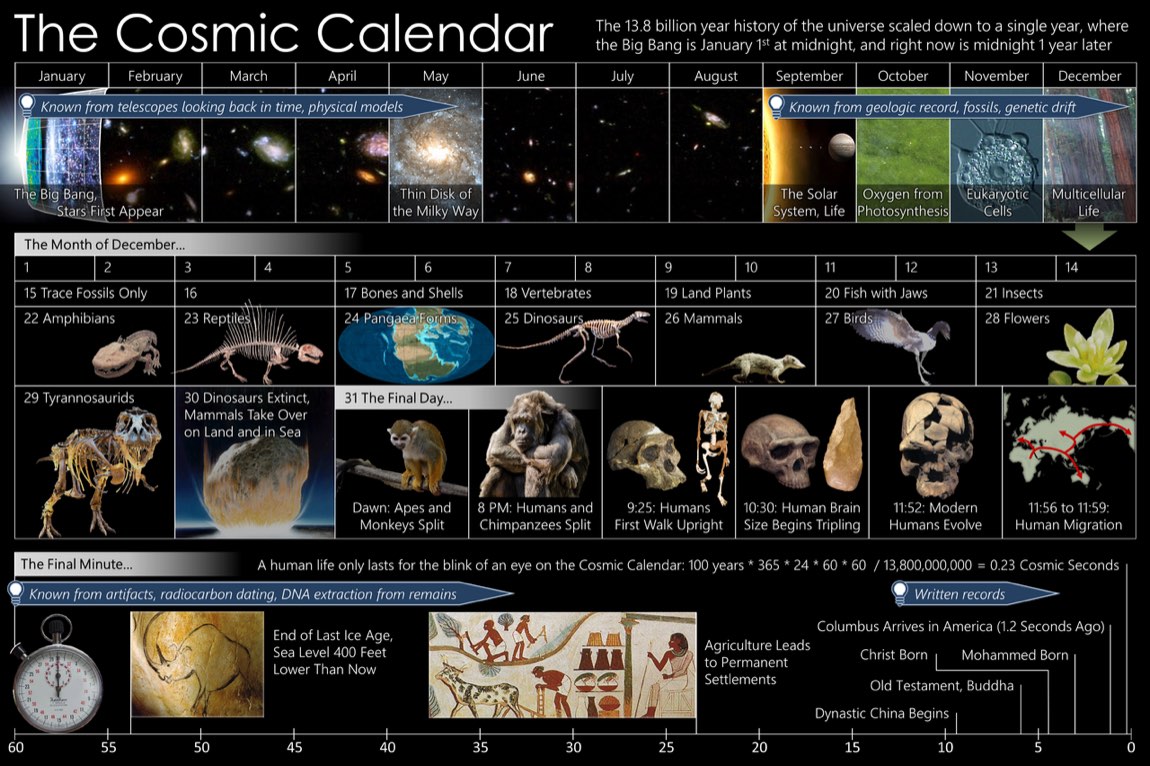
Co-written with Ann Druyan and narrated by Sagan, the 13-part PBS series Cosmos: A Personal Voyage aired in 1980 and reached at least 500 million people across 60 countries, making it the most widely watched series in the history of American public television until Ken Burns's The Civil War surpassed it in 1990. The production recreated the Library of Alexandria and drew on Jacob Bronowski's The Ascent of Man as a precedent. Its scope was extraordinary: the evolution of stars linked to the evolution of life, two millennia of scientific progress, Sagan seated on the Aegean island of Samos discussing Pythagoras and Aristarchus, then strolling through the Cavendish Laboratories recounting the birth of modern atomic physics. Critic Frederic Golden wrote that the series was 'Sagan's attempt to make sense out of what is for many people the hopelessly baffling world of 20th century science.' The accompanying book became the bestselling science book to that date. Cosmos won two Emmy Awards and a Peabody Award, along with a Hugo Award for Best Dramatic Presentation. Its music featured Bach, Vivaldi, and Vangelis. A sequel series, Cosmos: A Spacetime Odyssey, produced by Druyan and Seth MacFarlane and hosted by Neil deGrasse Tyson, appeared in 2014.
 ⤢
⤢
09 Nuclear winter and a scientist under arrest Deeper
Sagan's Cold War activism took him well beyond the lecture hall. In 1983 he was one of five co-authors — the 'S' in the 'TTAPS' model — of a landmark paper containing the first published use of the term 'nuclear winter,' a phrase coined by his colleague Richard P. Turco. The hypothesis, building on Paul Crutzen's earlier 'Twilight at Noon' concept, argued that a substantial nuclear exchange could cool Earth's surface enough to collapse agriculture and unravel life. Sagan promoted the finding aggressively through the media, drawing severe criticism from nuclear physicist Edward Teller, who eventually wrote that Sagan was 'an excellent propagandist, remembering that a propagandist is the better the less he appears to be one.' Sagan's own biographers conceded that nuclear winter was 'a low point for Sagan' scientifically, though politically it amplified his public profile. His opposition to nuclear escalation was not merely rhetorical: when anti-nuclear protesters staged actions at the Nevada Test Site beginning on Easter Sunday 1986, Sagan participated and was arrested on two separate occasions after climbing over a chain-link fence during the underground Operation Charioteer and Musketeer nuclear test series. He also voluntarily surrendered his top-secret clearance in protest over the Vietnam War.
10 Skepticism as craft, not temperament
Sagan's commitment to scientific skepticism had identifiable intellectual roots. He credited Martin Gardner's Fads and Fallacies in the Name of Science and Charles Mackay's Extraordinary Popular Delusions and the Madness of Crowds with teaching him critical thinking. In 1974 he challenged Immanuel Velikovsky to a public debate. He wrote a column for Parade magazine proposing what he called a 'Baloney detection kit' — a phrase actually coined by his friend Arthur Felberbaum — and expanded the concept into his penultimate book, The Demon-Haunted World, which he described as a manifesto for scientific thinking. The book lamented that most newspapers ran a daily astrology column while very few ran even a weekly astronomy column. His famous maxim, 'Extraordinary claims require extraordinary evidence,' is sometimes called the Sagan standard, though the article notes it closely parallels a statement by Marcello Truzzi, a fellow founder of the Committee for the Scientific Investigation of Claims of the Paranormal, and traces back through Théodore Flournoy to Pierre-Simon Laplace's Principle of Laplace from 1899. At Cornell, Sagan taught a Senior Seminar on Critical Thinking. He argued that science's predictive precision — reliably forecasting solar eclipses to the minute a century in advance — was the sharpest practical distinction between science and pseudoscience.
11 The asteroid deflection dilemma Deeper
Late in his life Sagan turned his attention to near-Earth objects (NEOs) and identified what he called a deflection dilemma. He argued that any technology capable of nudging an asteroid away from Earth — including nuclear detonations — could, with equal ease, be used to redirect a non-threatening object toward it, creating a weapon of immense destructive power. In a 1994 co-authored paper he criticized a three-day 'Near-Earth Object Interception Workshop' held by Los Alamos National Laboratory in 1993 for failing to mention, even in passing, these 'ancillary dangers.' He proposed that awareness of the natural NEO impact threat, paired with recognition of the dual-use nature of any deflection technology, might serve as a 'new and potent motivation to maturing international relations.' He did not rule out eventually deploying nuclear explosive deflection with sufficient international oversight, envisioning a 'work our way up' approach that might, once enough knowledge was gained, also help in mining asteroids. His thinking on nuclear detonations in space had begun as far back as 1958, during his work on the classified Project A119 — the Air Force plan to detonate a nuclear device on the Moon — and never entirely left him.
12 A disputed legacy and a denied membership
Sagan accumulated an extraordinary volume of honors: the Pulitzer Prize for General Nonfiction in 1978 for The Dragons of Eden, the NASA Distinguished Public Service Medal in 1977, the National Academy of Sciences Public Welfare Medal in 1994 — described as the academy's highest award — two Emmy Awards, a Peabody Award, three Hugo Awards, and the Oersted Medal, among many others. Yet the National Academy of Sciences, whose Public Welfare Medal he won, reportedly denied him membership because his media activities had made him unpopular with many fellow scientists. The contradiction captures the fault line that ran through his career: Harold Urey, who blocked his Harvard tenure, later wrote him warmly about The Dragons of Eden, calling him 'a man of many talents.' Bill Nye took his astronomy class at Cornell. Neil deGrasse Tyson, whom Sagan tried to recruit to Cornell at age seventeen, said the encounter taught him not just that he wanted to be a scientist but what kind of person he wanted to become. Isaac Asimov named Sagan as one of only two people he had ever met whose intellect surpassed his own — the other being Marvin Minsky. Sagan died of pneumonia on December 20, 1996, at the Fred Hutchinson Cancer Research Center in Seattle, after two years of myelodysplasia and three bone marrow transplants. He was 62. He was buried at Lake View Cemetery in Ithaca, New York.