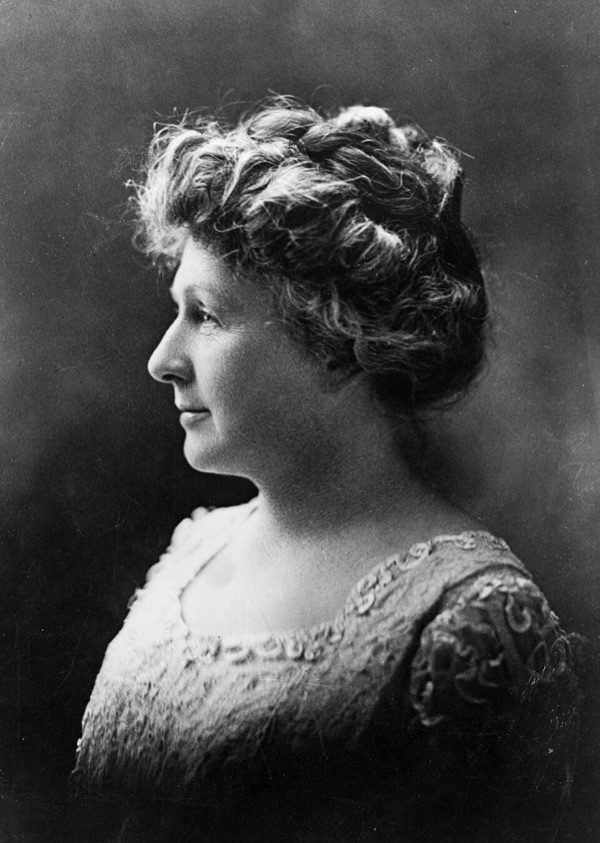
 New York World-Telegram and the Sun Newspaper · Public domain
Astronomy · 1863-1941
Annie Jump Cannon
Classifying the stars into O B A F G K M
The story
At Harvard, Cannon classified the spectra of more than 350,000 stars — by eye, at speeds no one matched, while profoundly deaf for most of her career. She forged today's O-B-A-F-G-K-M temperature sequence and built the Henry Draper Catalogue, the reference for a century of stellar science.
Why it matters
Every 'G2V' or 'M-dwarf' on this site speaks her language. Her temperature ordering made stellar physics possible — Payne-Gaposchkin's hydrogen discovery grew directly from Cannon's system.
The deep dive
Researched for the Atlas from Wikipedia — Annie Jump Cannon (10,870 characters read) · updated Sep 20, 2026
01 A Shipbuilder's Daughter Who Mapped the Stars
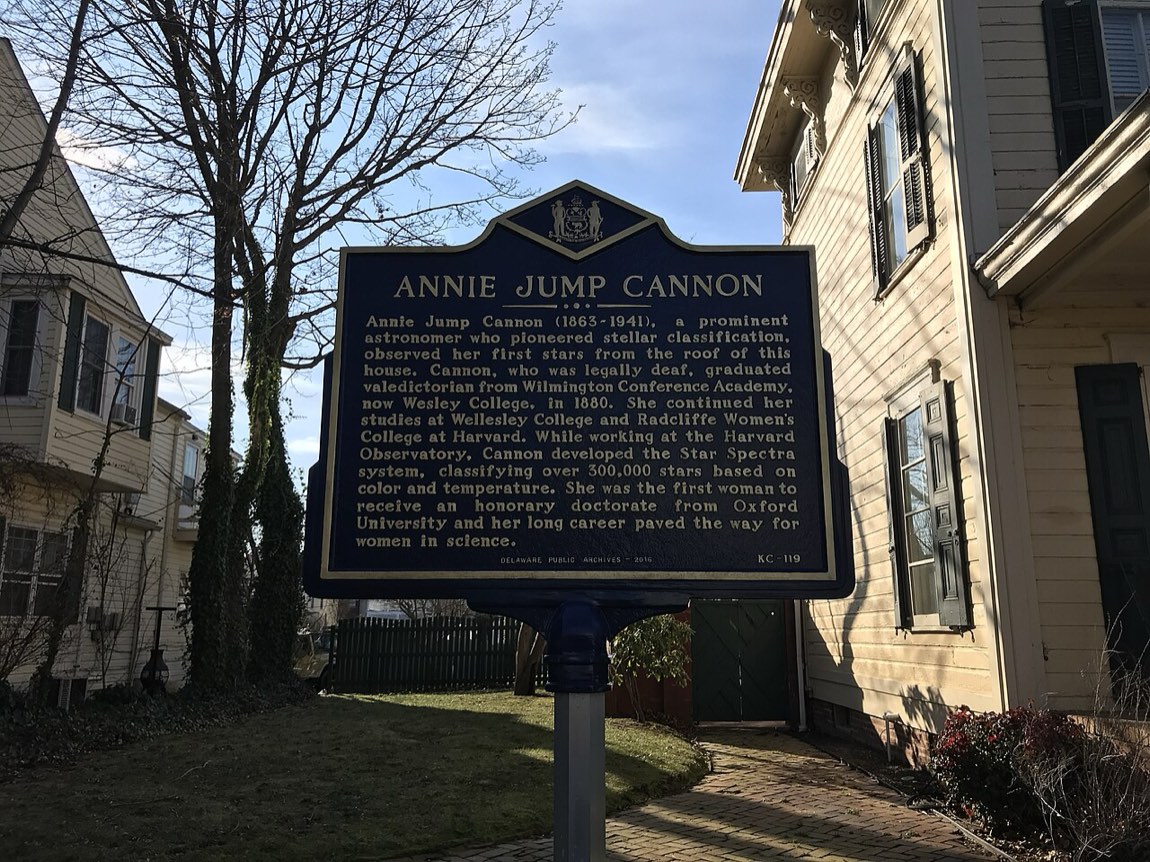
Annie Jump Cannon was born on December 11, 1863, in Dover, Delaware, the eldest of three daughters of Wilson Cannon, a shipbuilder and state senator, and his second wife, Mary Jump. Her family home in Dover was not an obvious launching pad for a career in stellar classification, yet it was precisely there that her scientific life began. Her mother, Mary, taught young Annie the constellations using an old astronomy textbook, and the two of them would climb to the attic together to identify stars overhead. That same mother urged her daughter toward mathematics, chemistry, and biology, and specifically suggested Wellesley College as the place to pursue them. Mary also taught Cannon the household economics that would, unexpectedly, serve her well later — the organizational habits she built in a domestic setting became the backbone of an extraordinary cataloging career. Cannon has been described by contemporaries as "ebullient," and she chose not to marry or have children, pouring her considerable energy entirely into her work.
02 Valedictorian, Photographer, and Late Returner
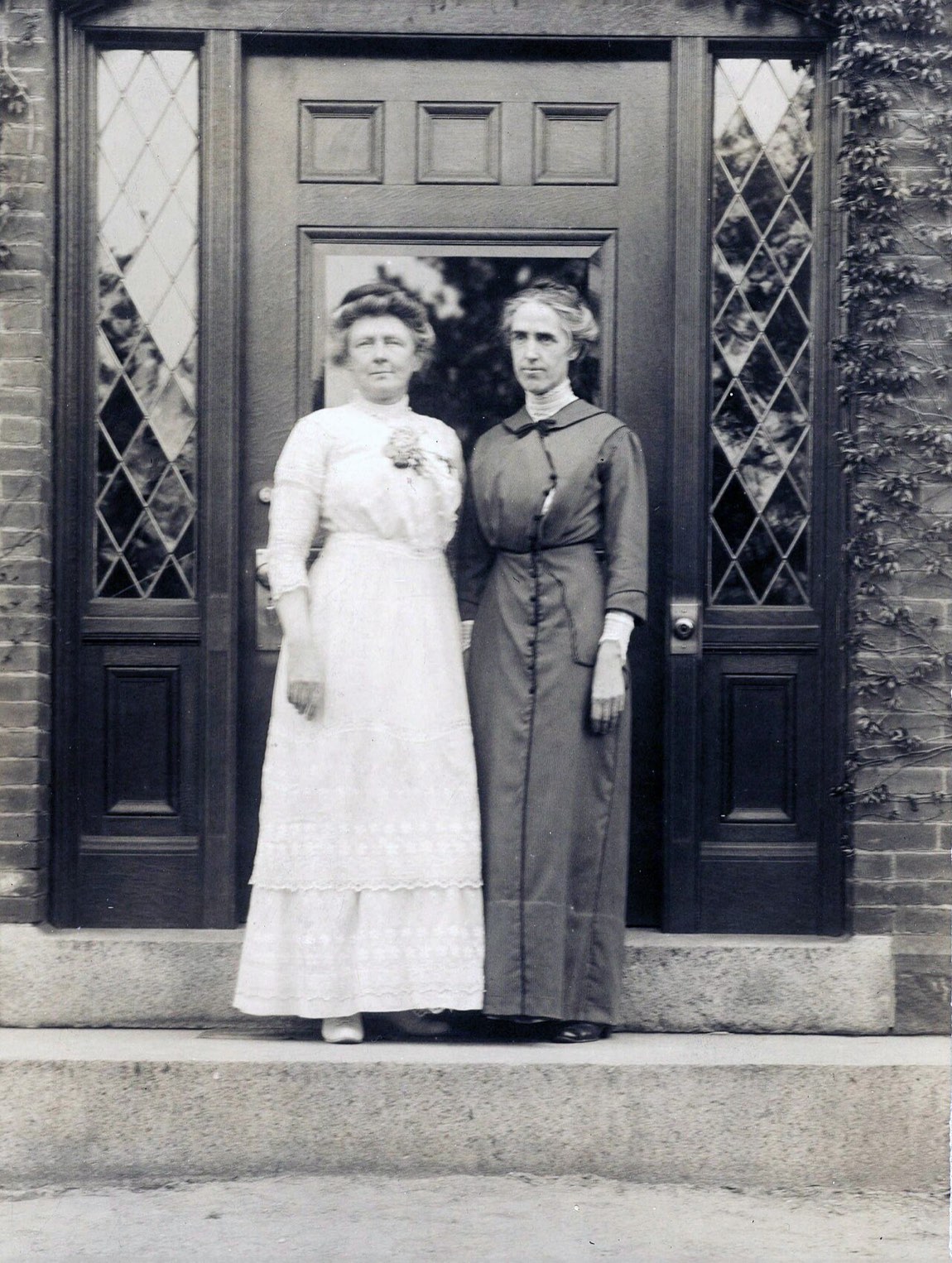
Cannon enrolled at Wellesley College in Massachusetts in 1880, studying physics and astronomy under Sarah Frances Whiting, one of the very few women physicists in the United States at the time. She graduated as valedictorian with a physics degree in 1884, then returned to Delaware for a full decade. Those years were not scientifically idle. Cannon developed serious skills in photography, an art form that was still genuinely new. In 1892 she traveled through Europe with a Blair box camera, and her prose and photographs from Spain were gathered into a pamphlet titled "In the Footsteps of Columbus," published by the Blair Company and distributed as a souvenir at the Chicago World's Columbian Exposition of 1893. The pamphlet was a small but real publication — evidence that Cannon was already comfortable turning careful observation into a communicable record, a habit that would define her scientific output for the next four decades.
 ⤢
⤢
03 Scarlet Fever and the Turn Back to Science
Shortly after the Columbian Exposition, Cannon contracted scarlet fever, which rendered her nearly deaf. The article notes that sources vary on the precise timing and cause, so the link to scarlet fever, while commonly cited, is not entirely settled. What is clear is that profound hearing loss made ordinary socializing genuinely difficult, and Cannon responded by immersing herself more deeply in her work — a pattern that would persist for the rest of her life. In 1894 her mother died, making life in Delaware harder still. She wrote to her former Wellesley instructor, Sarah Frances Whiting, asking whether a position was available. Whiting hired her as a junior physics teacher, which allowed Cannon to take graduate courses in physics and astronomy and introduced her to spectroscopy. To gain access to better instruments, she enrolled at Radcliffe College the same year as a "special student." Radcliffe was deliberately positioned near Harvard so that Harvard professors could repeat their lectures there, and this arrangement gave Cannon direct access to the Harvard College Observatory.
04 The Harvard Computers and Daily Working Life
Edward C. Pickering hired Cannon as his assistant at the Harvard College Observatory in 1896, and she joined a group known as the Harvard Computers — women engaged to complete the Henry Draper Catalogue, whose ambition was to map and define every star in the sky to a photographic magnitude of about 9. The division of labor inside the observatory was sharply gendered: men operated the telescopes and took the photographs, while the women, working during the day, examined the resulting data, performed astronomical calculations, and cataloged the plates. Many of those women were paid only 25 cents an hour to work seven hours a day, six days a week. Cannon's colleagues in this group included Henrietta Swan Leavitt, Antonia Maury, and Florence Cushman. Cannon and the other women were initially criticized for being "out of their place" and for not being housewives, and women rarely rose above the level of assistant in this line of work at the time. The fund supporting the entire project had been established by Mary Anna Draper, widow of physician and amateur astronomer Henry Draper.
 ⤢
⤢
05 The Classification Dispute She Helped Resolve Deeper
The path to a unified stellar classification system was not smooth. Work on the Draper Catalogue had begun before Cannon arrived, and by 1885 a genuine disagreement had opened about how stars should be sorted. The original analysis had been started by Nettie Farrar, who left the project within months to be married. That left two competing philosophies: Antonia Maury, Henry Draper's niece, advocated a complex and detailed classification scheme, while Williamina Fleming, who was overseeing the day-to-day project for Pickering, wanted something far simpler and more practical. Cannon's contribution was to negotiate a working compromise. She began by concentrating on bright stars in the southern hemisphere and applied a third approach entirely: a division of stars into the spectral classes O, B, A, F, G, K, and M, based on the strength of their Balmer absorption lines. When absorption lines were later understood in terms of stellar temperatures, this ordering was rearranged to reflect temperature rather than line strength — but the rearrangement was done deliberately to avoid forcing updates to existing star catalogs.
06 Speed and Scale: 200 Stars an Hour
The sheer pace of Cannon's classification work is one of the most concrete facts in her story. When she first began cataloging, she classified roughly 1,000 stars in three years. By 1913 she had accelerated to 200 stars an hour — and at peak speed she could classify three stars per minute simply by examining their spectral patterns. Using a magnifying glass, she could work down to the ninth magnitude, which the article specifies is around 16 times fainter than the unaided human eye can detect. Pickering himself remarked in 1927 that she was "the only person in the world — man or woman — who can do this work so quickly." Her own notation reveals something of her working vocabulary: in her notes she recorded brightness as "Int," short for intensity. Over her entire career she manually classified around 350,000 stars — more than any other person — and in doing so also discovered 300 variable stars, five novas, and one spectroscopic binary, and assembled a bibliography of roughly 200,000 references.
 ⤢
⤢
07 An Ambassador Between Scientific Communities Deeper
Cannon's influence extended well beyond classification tables. At a time when women did not commonly rise beyond the level of assistant in observatory work, she brokered partnerships and equipment exchanges between men in the international astronomical community, functioning in what the article describes as an "ambassador-like role." She helped the men at Harvard gain wider visibility, and her network stretched across national boundaries. In 1922 she spent six months in Arequipa, Peru, photographing stars in the southern hemisphere. She represented professional women at the 1933 World's Fair in Chicago, the Century of Progress. The astronomer Cecilia Payne worked directly with Cannon, using Cannon's classification data as the empirical foundation for demonstrating that stars are composed mainly of hydrogen and helium — one of the foundational results of twentieth-century astrophysics. Cannon thus contributed not only her own published catalogs but also the dataset that enabled a key discovery by another scientist.
08 A Cascade of Institutional Firsts
The formal recognition Cannon received unfolded across decades and institutions. In 1911 she was named Curator of Astronomical Photographs at Harvard. In 1914 she was admitted as an honorary member of the Royal Astronomical Society. In 1921 she received an honorary doctorate in mathematics and astronomy from the University of Groningen in the Netherlands, making her one of the first women to receive an honorary doctorate from a European university. In 1925 she became the first woman to receive an honorary doctorate of science from Oxford University, and the same year was elected to the American Philosophical Society. In 1929 the League of Women Voters named her one of the "greatest living American women." In 1931 she became the first woman to receive the Henry Draper Medal. In 1932 she won the Ellen Richards Prize from the Association to Aid Scientific Research by Woman. In 1938 she was appointed the William C. Bond Astronomer at Harvard University — a named chair at the institution where she had spent her career.
09 The Prize She Created for Those Who Followed
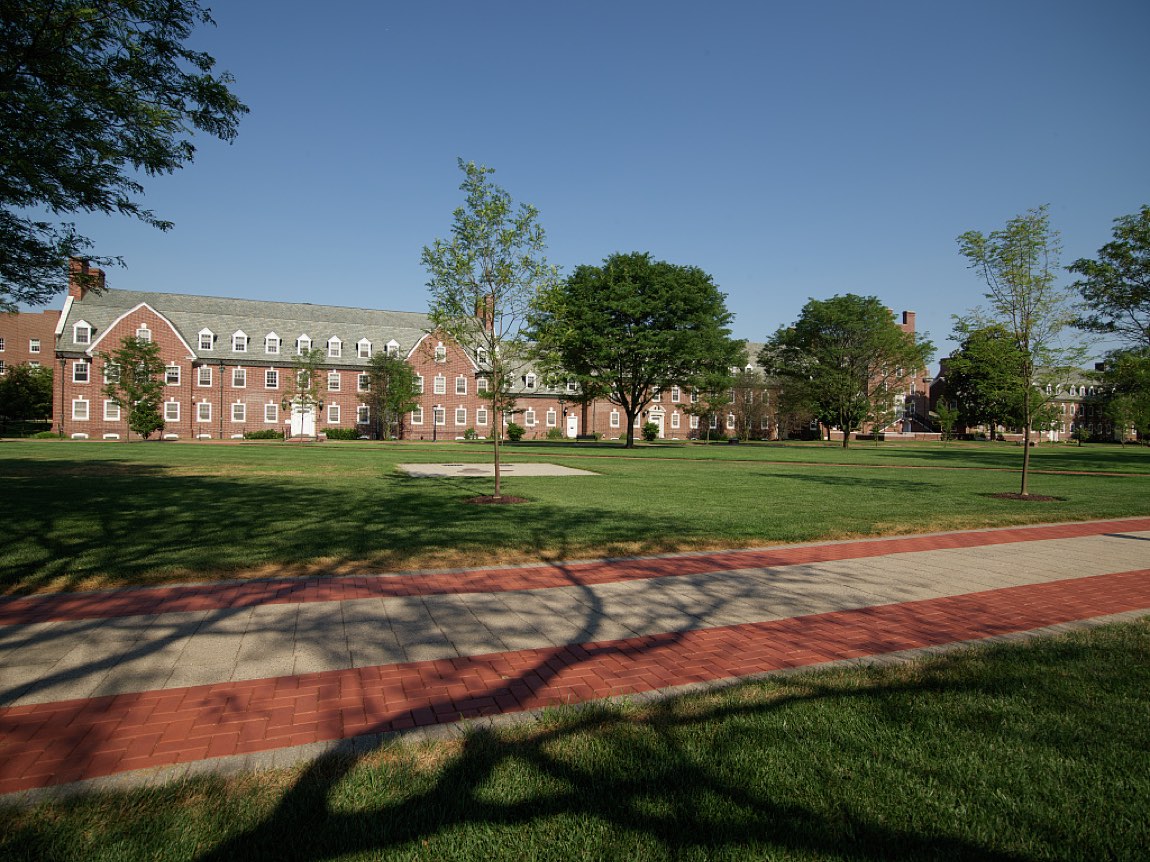
In 1935, Cannon used her own resources to establish the Annie J. Cannon Prize, defined as an award for "the woman of any country, whose contributions to the science of astronomy are the most distinguished." The prize had actually begun distribution in 1934, and the American Astronomical Society now presents it annually to a woman astronomer in North America. Cannon's decision to create the award reflects a deliberate effort to shape the field beyond her own lifetime, building an institutional mechanism to recognize women in a discipline where recognition had been slow to arrive. The prize sits alongside a set of named honors that have accumulated around her memory: the lunar crater Cannon, the asteroid 1120 Cannonia, Cannon Hall at the University of Delaware, and inclusion in Judy Chicago's art installation The Dinner Party. In 1994 she was inducted into the National Women's Hall of Fame, and in 2019 she appeared on Delaware's American Innovation dollar coin.
10 Forty Years of Work, and Active Until the End
Cannon's formal career in astronomy lasted more than forty years, concluding with her retirement in 1940. She did not, however, stop working at retirement. She continued actively pursuing astronomical research at the observatory until a few weeks before her death. She died on April 13, 1941, in Cambridge, Massachusetts, at the age of 77, after being ill for more than a month. The article emphasizes that throughout her long career Cannon played a specific role in helping women gain acceptance and respect within the scientific community — through what it describes as a calm, hardworking attitude rather than confrontation. The International Astronomical Union had formally adopted her stellar classification system on May 9, 1922, and the article notes that with only minor changes that system is still in use today, meaning the structure she built from thousands of hours of individual spectral judgments continues to organize how astronomers describe the stars.