United Launch Alliance
Company · United States · founded 2006
The reliability institution of US launch: for years the sole ride for America's most precious payloads. ULA launched every US Mars rover, New Horizons, and countless national-security missions. Its new Vulcan rocket (first flight January 2024) carries the franchise forward against fierce commercial competition.
✦ Highlights
- Unmatched success streak
- Launched Curiosity, Perseverance, New Horizons
- Vulcan Centaur era
The deep dive
Researched for the Atlas from Wikipedia — United Launch Alliance (28,689 characters read) · updated Sep 20, 2026
01 The Merger That Created ULA
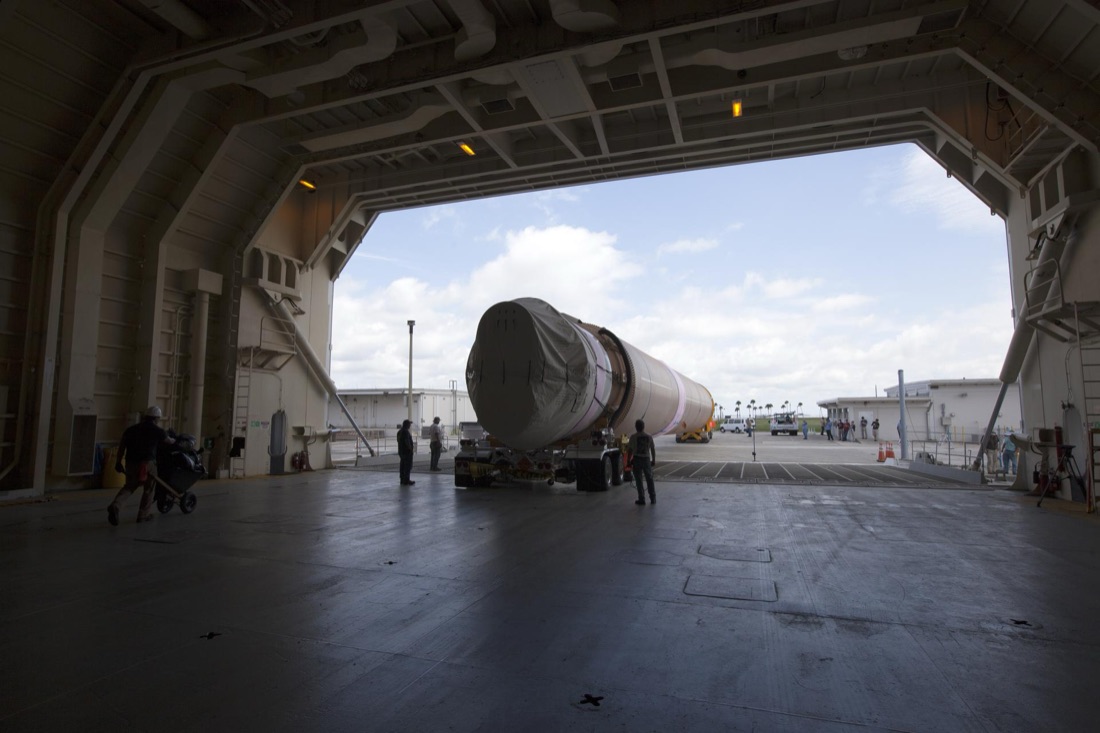
United Launch Alliance was born from an unusual mixture of litigation, financial distress, and national security anxiety. Boeing and Lockheed Martin announced their 50/50 joint venture on May 2, 2005, nearly a year and a half before ULA officially began operating in December 2006. The two firms had spent years competing for Department of Defense launch contracts under the Evolved Expendable Launch Vehicle program, and both claimed that competition had made the business unprofitable. Boeing's position was further weakened when it was caught holding proprietary Lockheed Martin documents in 2003, triggering legal action that the merger ultimately settled. SpaceX challenged the deal on antitrust grounds, arguing it would create a launch monopoly, but the Federal Trade Commission cleared it, explicitly placing national security access to space above competition concerns. The Department of Defense estimated the consolidation would produce annual savings of $100–150 million. Production was gathered into a single factory in Decatur, Alabama, and all engineering was relocated to Littleton, Colorado, while marketing and sales of the individual rocket lines stayed with the parent companies.
02 Two CEOs, Two Very Different Eras
ULA's first decade was shaped by Michael Gass, who oversaw the physical merging of Boeing and Lockheed Martin launch teams. Cost pressures bit early: by early 2009 ULA laid off 350 of its 4,200 workers and shut down two of its seven launch pads. The company's pricing drew sharp public scrutiny when, in 2013, SpaceX argued ULA's launches cost roughly $460 million each and offered comparable services at $90 million. Gass countered that ULA's average price was $225 million, with future missions potentially as low as $100 million. When Tory Bruno took over in August 2014, the challenges were even steeper: SpaceX's reusable rockets were reshaping the market, Congress was moving to ban the Russian-made RD-180 engine after Russia's annexation of Crimea, and ULA's commercial customer base had nearly evaporated. Bruno cut the workforce from 3,600 to 2,500 by 2018 and compressed operations from five launch pads to two. Bruno resigned unexpectedly on December 22, 2025, later revealed to be departing for competitor Blue Origin, with chief operating officer John Elbon named interim CEO.
 ⤢
⤢
03 The RD-180 Problem and Its Solution Deeper
The Atlas V's high performance depended on its first-stage RD-180 engine, a Russian-designed kerosene-and-liquid-oxygen powerplant that ULA obtained from abroad. Russia's 2014 annexation of Crimea turned that dependency into a political liability almost overnight. In 2016, Congress passed a law prohibiting the military from procuring launch services that use the RD-180 after 2022. ULA's response was to stockpile approximately 100 RD-180 engines — enough to fulfill all remaining Atlas V contracts — while simultaneously developing a domestic replacement. That replacement became the BE-4, built by Blue Origin and burning liquid oxygen and liquid methane. The BE-4 partnership was central to the entire Vulcan Centaur program, because ULA needed a new engine, Blue Origin needed a launch customer, and both companies needed to demonstrate domestic, sanction-proof propulsion. The Atlas V would continue flying on its stockpile through its scheduled retirement, while Vulcan would carry the new engine forward. No new Atlas V orders were accepted once the stockpile strategy was locked in.
04 Vulcan Centaur: Design and Capability Deeper
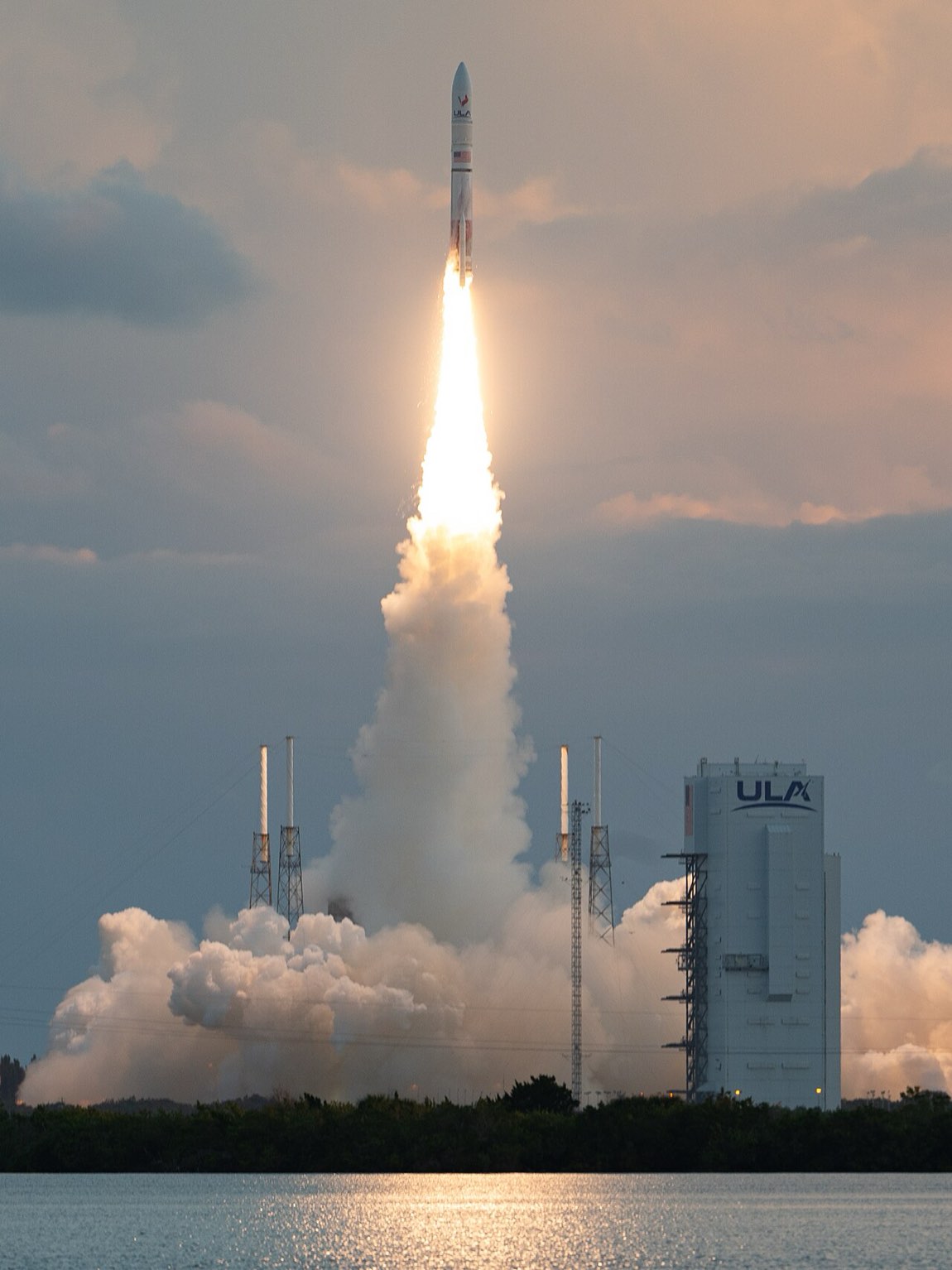
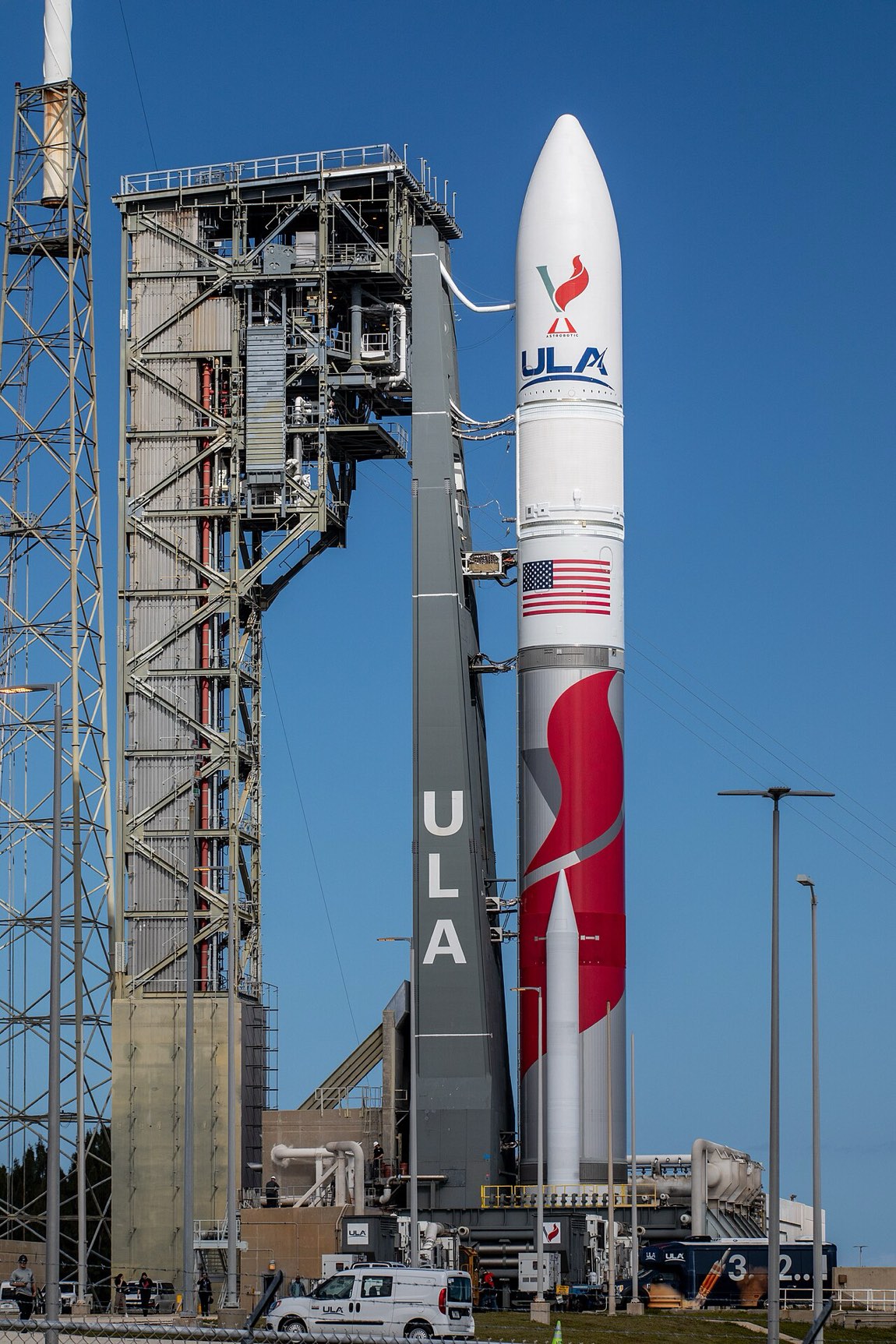
Vulcan Centaur is ULA's next-generation heavy-lift rocket, deliberately engineered to merge the best elements of the Atlas and Delta families while introducing new technology. Its first stage shares the same diameter as the Delta family's Common Booster Core and is powered by two BE-4 engines running on liquid oxygen and liquid methane. At liftoff, the vehicle generates 3,800,000 pounds-force (17,000 kN) of thrust — roughly equivalent to about 24 fully loaded Boeing 747s at maximum thrust. That power lets Vulcan carry 56,000 pounds (25,000 kg) to low Earth orbit, 33,000 lb (15,000 kg) to a geostationary transfer orbit, and 16,000 lb (7,300 kg) to geostationary orbit. The second stage is the Centaur V, an upgraded version of the Centaur III from the Atlas program, burning liquid hydrogen and liquid oxygen through two RL10 engines built by Aerojet Rocketdyne. Up to six GEM 63XL solid rocket boosters from Northrop Grumman can supplement the first stage. Development was funded as a public-private partnership, with the U.S. government contributing approximately $1.2 billion and Boeing and Lockheed Martin covering an estimated 75% of total development costs as of March 2018.
 ⤢
⤢
05 SMART Reuse: ULA's Partial Recovery Plan Deeper
Rather than recovering and landing entire rocket stages the way SpaceX does, ULA has designed a different partial reuse scheme it calls SMART — Sensible Modular Autonomous Return Technology. The idea targets only the most expensive components: after the Vulcan first stage exhausts its fuel, the BE-4 engines and avionics would be jettisoned as a combined module. That module would then be protected by an inflatable heat shield during atmospheric reentry, slowed by parachutes, and recovered after splashing down in the ocean. Crucially, the inflatable heat shield is designed to serve double duty as a flotation raft, keeping the hardware buoyant until a recovery ship arrives. ULA estimates that recovering and refurbishing these components could reduce the cost of producing the first stage by 65%. The system is still in the investigative phase as of the period covered by the article, and has not yet flown operationally. If successful, it would allow ULA to claim a meaningful cost reduction without the infrastructure investment of full-stage powered landings.
06 First Flights, Anomalies, and Hard Lessons
ULA's very first launch, a Delta II from Vandenberg on December 14, 2006, ended in embarrassment: the payload, a National Reconnaissance Office satellite designated USA-193, failed shortly after reaching orbit and had to be destroyed on February 21, 2008, by a U.S. Navy SM-3 missile fired from the cruiser USS Lake Erie. Less than a year into operations, ULA also experienced an upper-stage anomaly on June 15, 2007, when the Centaur engine aboard an Atlas V shut down early, leaving a pair of NROL-30 ocean surveillance satellites in a lower orbit than planned — though the NRO still declared the mission a success. In March 2016 an Atlas V first stage shut down approximately five seconds early due to a minor anomaly; the Centaur upper stage compensated by burning for about one minute longer than planned using its reserved fuel margin, and the payload was successfully delivered. Vulcan Centaur's second certification flight in October 2024 also saw one solid rocket booster suffer a partial thrust loss, but the vehicle reached orbit. These episodes collectively illustrate ULA's design philosophy: build in margin so upper stages can absorb first-stage shortfalls.
 ⤢
⤢
07 Scientific Missions Across the Solar System
Amid its steady diet of military satellites, ULA has launched some of the most scientifically significant spacecraft of the past two decades. The Phoenix Mars lander and Dawn asteroid probe both departed on Delta II rockets in 2007. The Kepler space telescope and Wide-field Infrared Survey Explorer launched in 2009, also on Delta IIs. The Curiosity rover and Juno spacecraft flew on Atlas Vs in 2011, followed by MAVEN to Mars in 2013. The InSight Mars lander's 2018 Atlas V launch was the first interplanetary mission ever to depart from the U.S. West Coast. A Delta IV Heavy carried the Parker Solar Probe in August 2018 — using a Star-48BV kick stage, it reached the highest spacecraft velocity ever recorded at that time. The Atlas V later carried ESA's Solar Orbiter in February 2020 and NASA's Perseverance rover, along with the Ingenuity helicopter, in July 2020. The Lucy asteroid probe followed in October 2021 and Landsat 9 in September 2021. The inaugural Vulcan Centaur flight in January 2024 dispatched Astrobotic's Peregrine lunar lander on a trans-lunar trajectory, adding a new vehicle to ULA's scientific launch résumé.
08 The Atlas V's Human Spaceflight Role
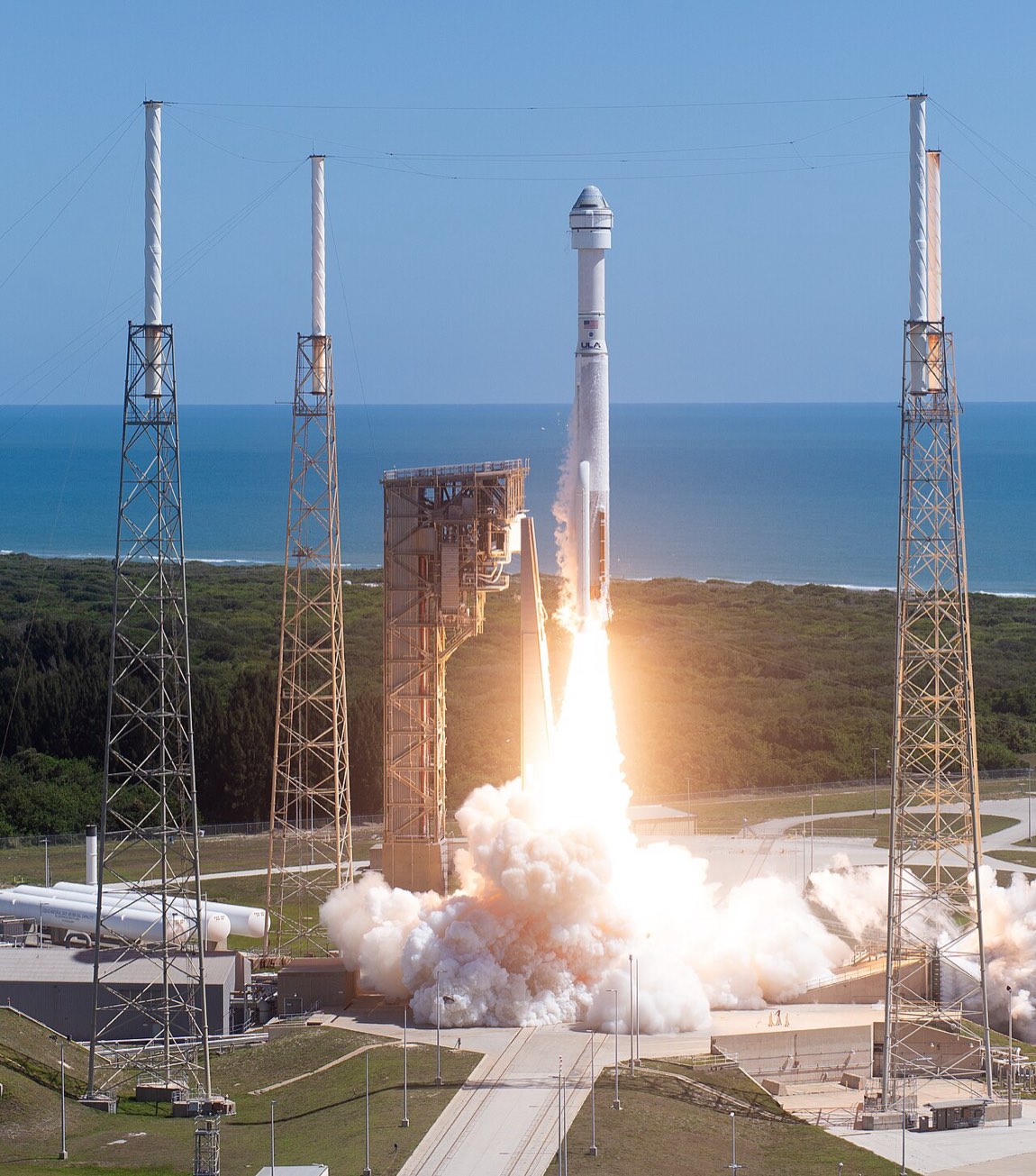
Atlas V was never originally designed to carry people, but Boeing's Starliner crew capsule required exactly that capability, prompting a substantial modification effort. Engineers added upgraded computers for crew monitoring and abort functions, dedicated data links, and manual abort mechanisms. The Starliner configuration of Atlas V is notably unusual: it flies with two solid rocket boosters, no payload fairing — because Starliner's own aeroshell replaces it — and a dual-engine Centaur upper stage that produces a shallower ascent profile to limit the g-forces experienced by the crew. This bespoke configuration stands 172 feet tall. ULA was contracted for nine Starliner missions on Atlas V. The program's path has been rocky: the first Orbital Flight Test in December 2019 suffered a partial failure, the second in May 2022 succeeded in docking with the International Space Station, and the Crew Flight Test in June 2024 carried two NASA astronauts to the station. Atlas V's role in human spaceflight represents one of the last chapters in its operational life before retirement.
 ⤢
⤢
09 Delta IV Heavy: A Workhorse's Final Years
The Delta IV Heavy was the most powerful member of the Delta family and one of the largest rockets in the world during its service life. Boeing flew it once before ULA's formation, and ULA flew it on fifteen additional missions from 2007 through its final launch on April 9, 2024, at Cape Canaveral Space Force Station, for a lifetime total of sixteen flights. Its distinctive architecture combined a central Common Booster Core with two identical strap-on CBCs that separated earlier in flight, all capped with a 5-meter composite payload fairing. An aluminum trisector fairing — a three-part design derived from the Titan IV program — was also available and first flew on the DSP-23 mission. Among its most notable payloads were the Orion spacecraft's first test flight in December 2014 and the Parker Solar Probe in August 2018. The vehicle's final four missions, all between 2020 and 2024, carried classified National Reconnaissance Office payloads. With the Delta IV Heavy gone, the Falcon Heavy has effectively claimed its commercial market niche, and Vulcan Centaur is intended to cover the national security role.
10 Project Kuiper and ULA's Commercial Pivot
For most of its existence, ULA's commercial customer base was thin, leaving it overwhelmingly dependent on military and intelligence contracts. Amazon's Project Kuiper satellite internet constellation changed that calculus dramatically. In 2022, Amazon selected ULA as one of its launch providers, awarding 9 launches on Atlas V and 38 launches on Vulcan Centaur — together the largest commercial contract in ULA's history, out of a total of 83 Kuiper launches spread across multiple providers. The Atlas V portion began in October 2023, when ULA launched the first two prototype Kuiper satellites. To handle the expected launch rate, ULA is expanding infrastructure at Cape Canaveral by repurposing the former Solid Motor Assembly and Readiness Facility, originally built for the Titan IVB program, into a second integration building called VIF-A — the Amazon Vertical Integration Facility. Planned upgrades include raising the facility's roof by 45 feet and adding an offline vertical integration cell for parallel processing of the Centaur V upper stage and Vulcan booster. The existing integration building will be redesignated VIF-G and focus on government missions.
11 Factories, Pads, and the Shrinking Footprint Deeper
ULA's physical infrastructure tells the story of a company that consolidated aggressively and is now selectively expanding. At its founding it operated seven launch pads; by the Tory Bruno era that had been compressed to two active pads. Headquarters sit in Centennial, Colorado, handling program management and engineering. The main manufacturing facility in Decatur, Alabama spans 1.6 million square feet (150,000 square meters) — about 28 American football fields under one roof. A propulsion test center in Pueblo, Colorado opened in 2015, and a component factory in Harlingen, Texas fabricated Atlas V parts until 2024. On the launch side, Space Launch Complex 41 at Cape Canaveral remains the sole fully active pad as of mid-2024. Vandenberg's SLC-3 went quiet in 2022 but is being converted for Vulcan to restore polar-orbit launch capability. The geographic logic is straightforward: Cape Canaveral launches go eastward to benefit from Earth's rotation for equatorial and geostationary orbits, while Vandenberg points toward polar paths favored by reconnaissance, weather, and Earth-imaging satellites.
12 National Security Contracts and Growing Tension
Military and intelligence missions have always been ULA's financial backbone, and a series of large contracts has kept that relationship intact even as criticism mounted. In December 2013 ULA won a DoD contract for 36 rocket cores covering up to 28 launches. In August 2020 the company was awarded 60% of National Security Space Launch missions over a five-year period beginning in 2022. Most recently, in April 2025, the Department of Defense awarded ULA a $5.3 billion contract for 19 missions as part of a broader procurement covering roughly 80 national security launches between 2025 and 2034 — though SpaceX received the majority with 28 missions and Blue Origin received seven. That same month, tensions with the military sharpened: in May 2025 testimony to the House Armed Services Committee, Major General Stephen G. Purdy described Vulcan's recent performance as "unsatisfactory," saying that slow progress in replacing Atlas and Delta had postponed four national security missions and disrupted Space Force objectives. He stated plainly that ULA would need to "repair trust" and demonstrate greater accountability — a stark public rebuke for a company whose primary customer is the U.S. government.
13 Ownership Uncertainty and the Road Ahead
By late 2023, parent companies Boeing and Lockheed Martin were actively seeking to sell ULA, signaling that neither conglomerate viewed the launch business as a long-term priority. Reported potential buyers included Blue Origin, Cerberus Capital Management, and Textron. By mid-2024, Sierra Space had entered advanced acquisition talks, but as of 2025 the sale had not closed. Meanwhile, Tory Bruno's surprise resignation on December 22, 2025 — driven by his move to Blue Origin, itself once a ULA partner through the BE-4 engine deal — added further leadership uncertainty. Chief operating officer John Elbon stepped in as interim CEO. Vulcan Centaur completed its two certification flights in January and October 2024, but ongoing schedule delays drew pointed criticism from military officials. ULA is targeting roughly two launches per month across its Atlas and Vulcan fleets in 2025 and 2026, though only nine launches occurred across all of 2025, six of which actually flew. The company faces a demanding combination of ownership ambiguity, leadership transition, a rocket still building its flight record, and a primary customer whose patience is visibly wearing thin.