SpaceX
Company · United States · founded 2002
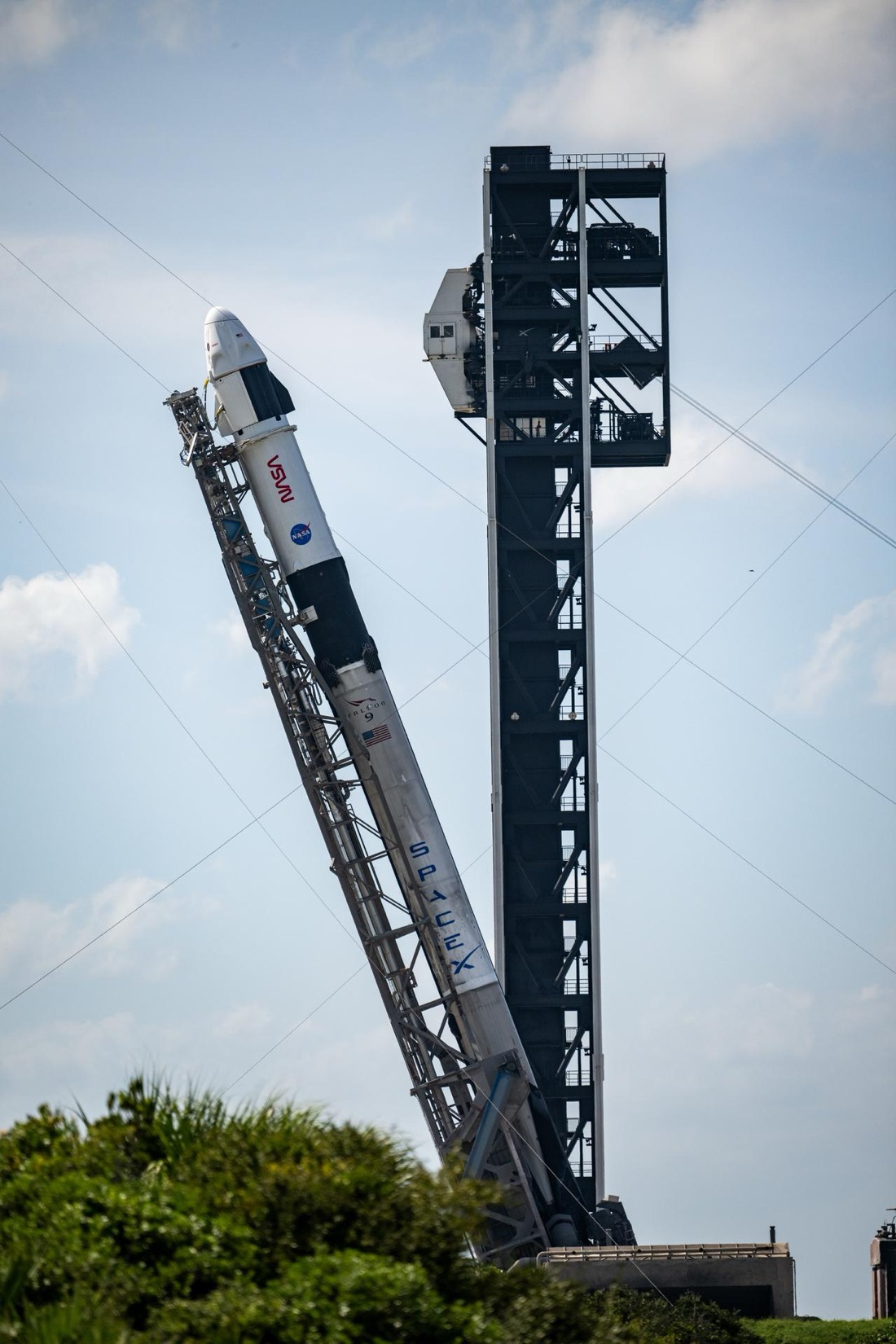
The company that normalized the impossible: orbital boosters landing tail-first and flying again (150+ reflights of single boosters), astronauts on commercial capsules (since 2020), and Starship — the largest rocket ever flown, designed for full reuse and Mars. Its launch prices reshaped the whole industry's economics; its Starlink constellation reshaped the night sky itself (to astronomers' real concern).
✦ Highlights
- First reflown orbital booster (2017)
- First commercial crew (2020)
- Starship test program
- Starlink
The deep dive
Researched for the Atlas from Wikipedia — SpaceX (56,421 characters read) · updated Sep 20, 2026
01 From a Warehouse to Orbit: SpaceX's Origin
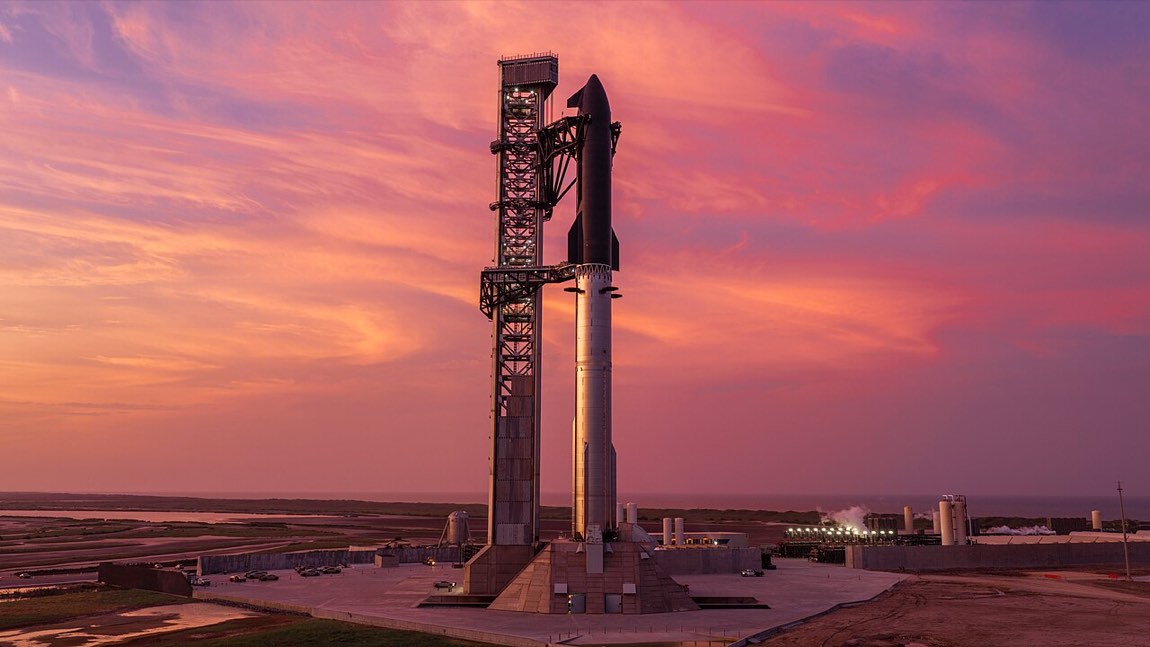
SpaceX traces its roots to a single meeting in early 2001, when Elon Musk connected with Mars Society founder Robert Zubrin and donated $100,000 to his organization. Musk conceived Mars Oasis — a project to land a greenhouse and grow plants on Mars — and traveled to Moscow twice seeking a surplus Dnepr rocket. The Russians proved unwilling sellers. On the flight home from his second trip, Musk concluded he could build cheaper rockets himself by applying vertical integration, using commercial off-the-shelf components, and borrowing the modular philosophy of software engineering. In early 2002 he began hiring, approaching five people for the initial positions. One of them, rocket engineer Tom Mueller, became CTO; Gwynne Shotwell, previously at TRW, eventually became COO and president. The company's first home was a warehouse in El Segundo, California. Total development cost of the first rocket, Falcon 1, ran approximately $90 million to $100 million — a fraction of what government programs routinely spent on comparable hardware.
02 Three Failures That Nearly Killed SpaceX
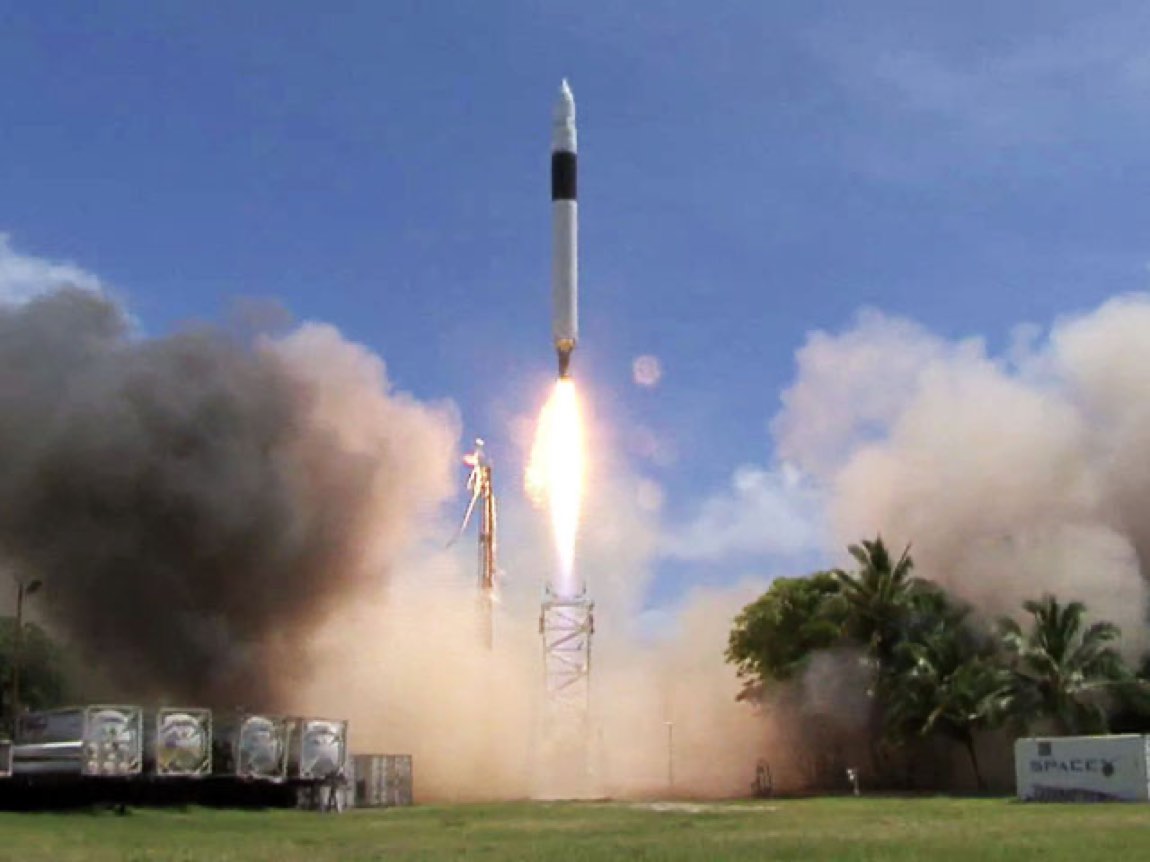
Between 2006 and 2008, every Falcon 1 launch ended in failure, pushing SpaceX to the edge of bankruptcy. The timing was catastrophic: Musk's other venture, Tesla Motors, was simultaneously running out of money, meaning that Tesla, SolarCity, and Musk personally were all near insolvency at once. Musk was reportedly waking from nightmares, screaming and in physical pain from the stress. The fourth Falcon 1 launch, on September 28, 2008, finally succeeded, giving the company its first orbital milestone. With roughly $30 million left, Musk split the funds between SpaceX and Tesla. In December 2008, NASA awarded SpaceX a $1.6 billion Commercial Resupply Services contract — effectively saving the company. Gwynne Shotwell was promoted to president for her role in negotiating that deal with NASA Associate Administrator Bill Gerstenmaier. The Falcon 1 flew one more time successfully before being retired in July 2009, freeing resources for the larger Falcon 9.
 ⤢
⤢
03 The Reusability Revolution: Landings and Reflights Deeper
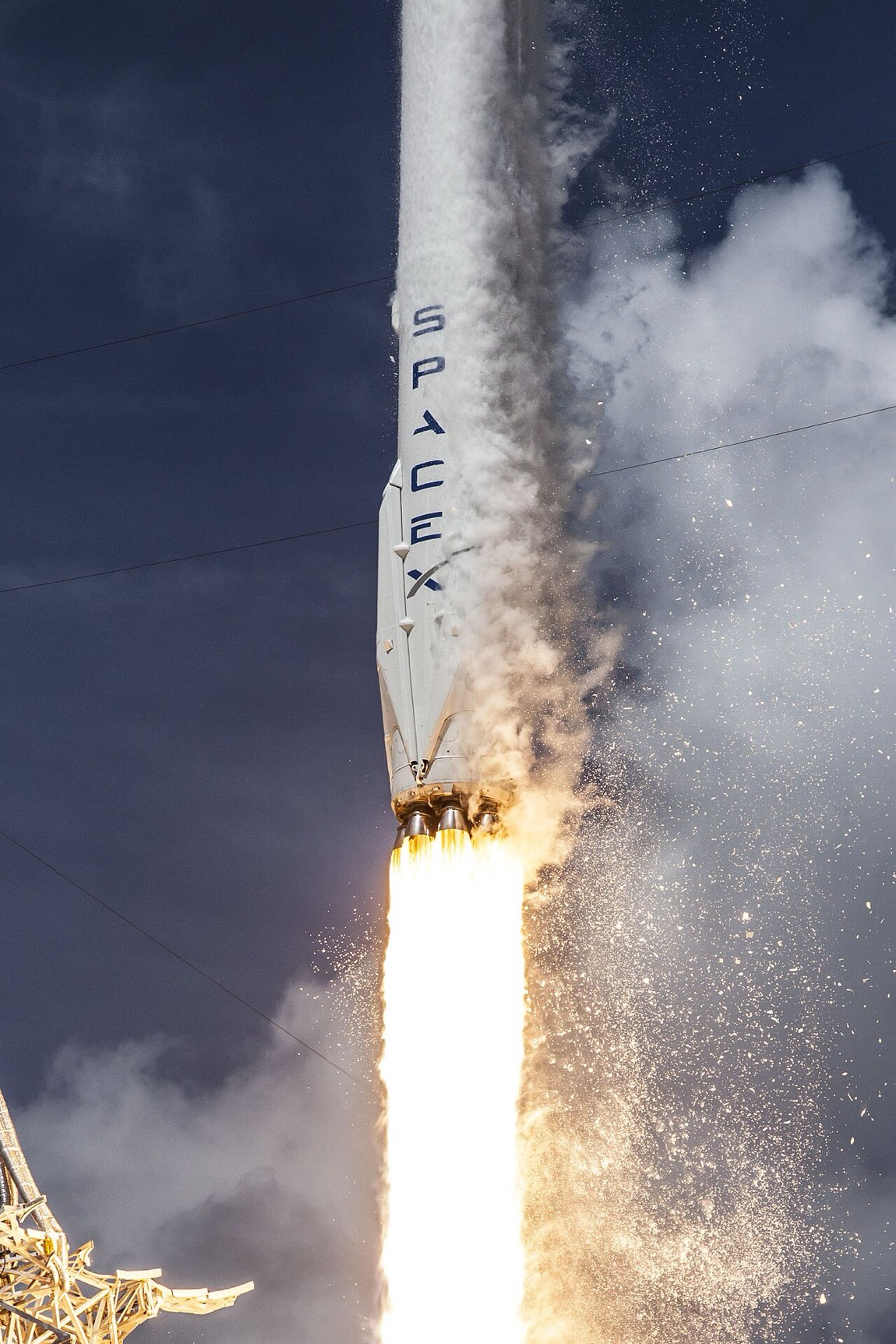
SpaceX's reusability program began quietly with low-altitude, low-speed vertical-takeoff-and-landing tests in late 2012, escalating to high-velocity, high-altitude booster return tests in late 2013. The decisive milestone came in December 2015 with Falcon 9 Flight 20, the first successful recovery of an orbital-class rocket's first stage at a ground landing zone. Four months later, in April 2016, the company nailed its first landing on the autonomous spaceport drone ship named Of Course I Still Love You in the Atlantic Ocean. By October 2016, SpaceX was offering customers a 10% price discount for flying on a previously flown booster. The concept graduated from discount incentive to routine practice in March 2017, when the SES-10 satellite rode a returned Falcon 9 back to space — the first re-launch of a payload-carrying orbital rocket in history. That same booster was recovered again, making it the first landing of a reused orbital-class rocket. As of May 2026, Falcon boosters had completed nearly 650 landings and reflights, averaging roughly three missions per week.
04 Two Major Failures and What They Revealed Deeper
SpaceX's safety record includes two high-profile in-flight failures that halted operations and forced engineering rethinks. In late June 2015, the CRS-7 resupply mission exploded about two minutes after liftoff. Engineers traced the cause to a two-foot-long steel strut holding a helium pressure vessel inside the upper stage; the strut snapped under acceleration, allowing high-pressure helium to breach the low-pressure propellant tank. The second incident, in early September 2016, was not a flight failure but proved equally damaging: a Falcon 9 exploded on the pad during a routine pre-launch propellant fill for a static fire test, destroying the AMOS-6 communications satellite — valued at $200 million — before it ever flew. The culprit was liquid oxygen that had cooled so much it solidified and then ignited when it contacted carbon-composite helium pressure vessels. The explosion sent SpaceX into a four-month launch hiatus. Combined with the CRS-7 loss, these events shaped stricter propellant loading procedures and influenced pressure vessel material choices going forward.
 ⤢
⤢
05 Falcon Heavy: Muscle Built From Three Cores
Falcon Heavy began as a straightforward concept: strap three slightly modified Falcon 9 first-stage cores together and add a payload fairing. The result is a heavy-lift vehicle capable of delivering up to 63,800 kg to low Earth orbit — roughly the mass of five fully loaded school buses — or 26,700 kg to geosynchronous transfer orbit. Its 27 Merlin 1D engines fire simultaneously at liftoff, generating enormous aerodynamic and structural loads that required the central core and side boosters to be specially reinforced. The inaugural flight on February 6, 2018, carried Musk's personal Tesla Roadster as a dummy payload, sending it into a heliocentric orbit. Both side boosters returned to land simultaneously at Cape Canaveral in a visually striking synchronized touchdown. Like Falcon 9, Falcon Heavy is certified for National Security Space Launch missions. On August 30, 2026, a Falcon Heavy launched NASA's Nancy Grace Roman Space Telescope from Kennedy Space Center Launch Complex 39A.
06 Starship: The Largest Rocket Ever Flown
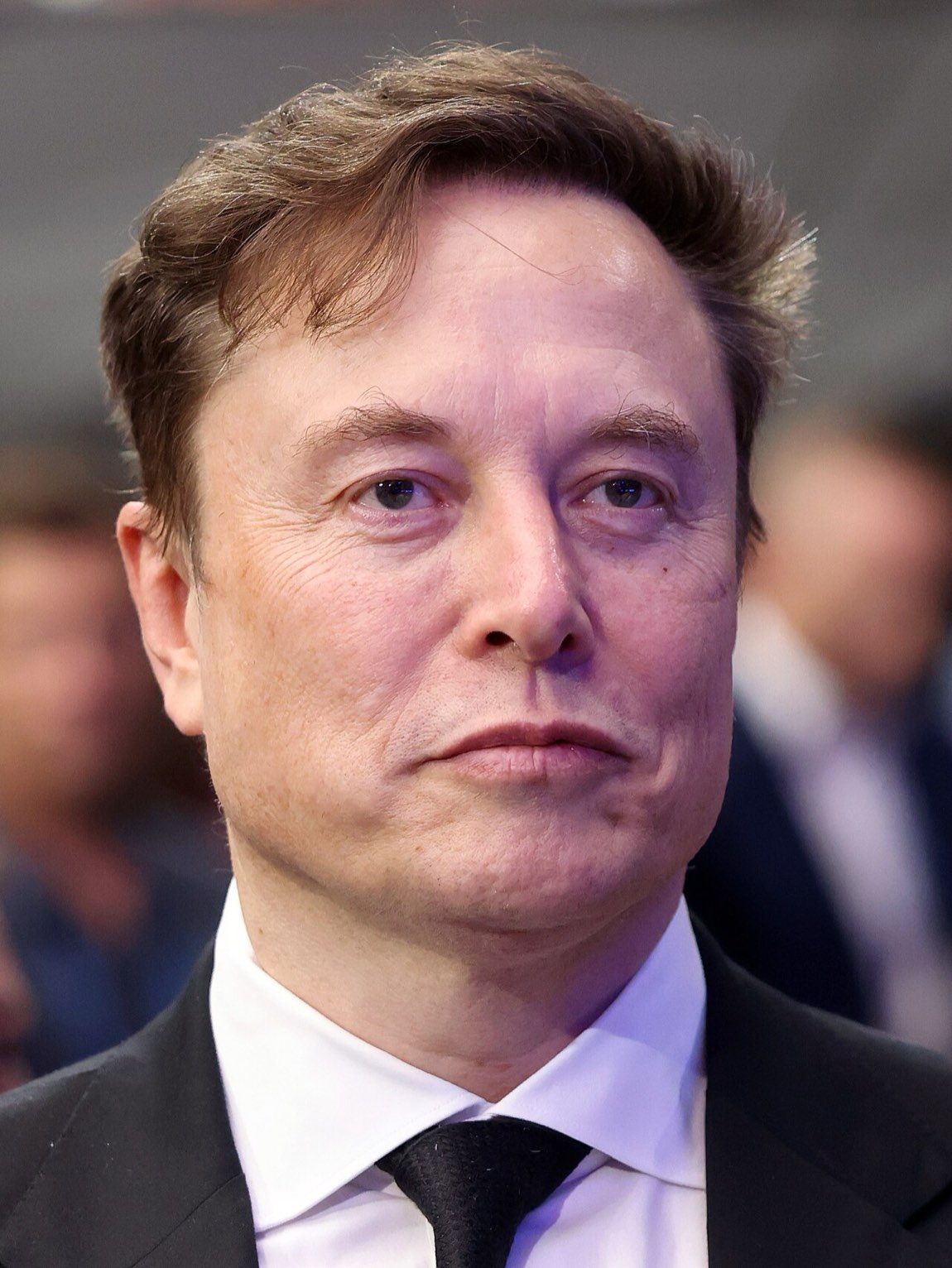
Starship is SpaceX's fully reusable super-heavy-lift system, consisting of a first stage called Super Heavy and a second stage also called Starship. With a planned payload capacity exceeding 100 tons, it is the largest and most powerful rocket ever flown. Development began with early prototypes in 2019 in both Florida and Texas, with all construction eventually consolidating at the Starbase facility in South Texas. The system is intended to supersede SpaceX's existing Falcon hardware and serve as NASA's human lunar lander under the Artemis program, a role won via contract on April 16, 2021. Starship's twelfth flight test on May 22, 2026, was the first to use the Version 3 vehicle with Raptor 3 engines, and the first test flight to carry an actual payload — approximately 44,000 kg of Starlink mass simulators — to orbit. Despite one Super Heavy engine and one upper-stage engine shutting down early, the vehicle reached its planned trajectory, though the booster was destroyed before splashdown.
 ⤢
⤢
07 Starship's Long Road Through Test Failures Deeper
Starship's integrated flight test campaign has been a publicly documented progression of partial successes and outright failures. The first test on April 20, 2023, ended when multiple booster engines failed, causing the vehicle to spin erratically before the automated flight termination system intentionally destroyed it over the Gulf of Mexico — before booster separation had even occurred. The second test in November 2023 saw both vehicles fly briefly before separately exploding. The third flight in March 2024 was the first to reach a planned suborbital trajectory, though the booster malfunctioned before landing and the ship was lost during re-entry. The fifth test in October 2024 was the first without any engine failures and achieved the first successful tower catch of the Super Heavy booster. Subsequent tests in January and March 2025 both lost the upper stage: one exploded over the Atlantic near the Turks and Caicos Islands roughly 8.5 minutes after launch; the other broke apart after an oxygen leak triggered engine shutdown and the self-destruct system. A static fire test explosion in June 2025 prompted regulatory scrutiny and an OSHA fine of approximately $116,000.
08 Starlink: From Constellation to Revenue Engine
Starlink began as an announced concept in January 2015, when SpaceX described a 4,000-satellite broadband constellation. The first batch of 60 operational satellites launched in May 2019. The service entered initial test operation in late 2020 and began accepting orders in early 2021, promising customers download speeds of 50 to 150 Mbit/s and latency of 20 to 40 milliseconds. By December 2022 Starlink had surpassed 1 million subscribers worldwide, and the constellation now exceeds 6,000 satellites in roughly 550-kilometer orbits. Starlink generates the bulk of SpaceX's income and has seeded a military offshoot called Starshield, designed to host government payloads on a Starlink-derived satellite bus, serving the Space Development Agency's missile-defense constellation. Astronomers have raised ongoing concerns about light pollution from the satellites' brightness in both optical and radio wavelengths. SpaceX has responded with brightness-reduction upgrades; the satellites also carry krypton-fueled Hall thrusters for autonomous collision avoidance and end-of-life deorbit.
 ⤢
⤢
09 Pricing Power and the Launch Market Shake-Up
Before SpaceX entered the commercial launch market, geostationary communications satellite launches were dominated by Arianespace flying the Ariane 5 and International Launch Services flying the Proton rocket. SpaceX's published Falcon 9 price of $56.5 million per launch to low Earth orbit undercut existing providers and forced European operators to push ESA for price reductions on the Ariane 5 and Ariane 6. The disruption extended to U.S. military launches, a market United Launch Alliance had monopolized since 2006 — with launch costs that had risen to over $400 million per mission. SpaceX broke that monopoly after Falcon 9 v1.1 received National Security Space Launch certification in 2015. The first national security contract won was a GPS III satellite launch for $82.7 million, roughly 40% less than comparable previous missions. NASA's own analysis found SpaceX developed Falcon 9 for an estimated $390 million total, while NASA's traditional contracting approach would have cost approximately $4 billion — about ten times more.
10 Facilities: Where SpaceX Builds and Launches
SpaceX operates four orbital launch sites and three major production and testing facilities. The Hawthorne, California factory — housed in a building originally constructed by Northrop to manufacture Boeing 747 fuselage sections — handles Falcon 9 manufacturing, Dragon spacecraft production, mission control, and most engineering. It served as corporate headquarters until August 2024. The McGregor, Texas test facility, originally part of the Bluebonnet Ordnance Plant from World War II and later leased by SpaceX in 2003, has expanded from roughly 256 acres to 4,000 acres by 2015; every SpaceX rocket engine undergoes acceptance testing there, and by 2024 more than 7,000 tests had been conducted at the site. Starbase, near Brownsville, Texas, is now both corporate headquarters and the manufacturing and launch hub for Starship. Launch sites in Florida — Cape Canaveral Space Launch Complex 40 and Kennedy Space Center Launch Complex 39A — and Vandenberg Space Force Base in California handle Falcon missions, with Vandenberg enabling highly inclined orbits between 66° and 145°.
11 Human Spaceflight and Private Astronauts
SpaceX's human spaceflight program began with years of incremental testing: a pad abort test in May 2015, an uncrewed orbital demonstration in March 2019, and an in-flight abort test in January 2020. The program reached a historic milestone on May 30, 2020, when Crew Dragon Demo-2 launched NASA astronauts Doug Hurley and Bob Behnken from Kennedy Space Center Launch Complex 39A — the first crewed orbital launch from American soil in nine years and the first time a private company sent astronauts to the ISS. Operational crew rotation missions followed, including Crew-1 in November 2020 and Crew-2 in April 2021, each carrying mixed crews of NASA, JAXA, and ESA astronauts. SpaceX has also opened human spaceflight to private customers: the Inspiration4 mission in 2021, chartered by Shift4 Payments CEO Jared Isaacman, placed four privately trained crew members into low Earth orbit for approximately three days. SpaceX's 2024 Polaris Dawn mission featured the first-ever private spacewalk, using a spacesuit SpaceX unveiled in May 2024 specifically designed for extravehicular activity.
12 Starmind and Space-Based AI Computing Deeper
Following SpaceX's February 2026 acquisition of xAI — the highest-valued business acquisition in history at a combined valuation of $1.25 trillion — the company outlined an ambition to place artificial intelligence computing infrastructure in orbit. The centerpiece is Starmind, a solar-powered space-based data center described by SpaceXAI as an orbital satellite with localized compute that exploits the readily available power and passive cooling of space, then beams results back via high-bandwidth lasers to the Starlink constellation. The first-generation Starmind AI1 satellite is designed with a wingspan of 75 meters and a deployed height of 30 meters, carrying up to 250 kW peak and 175 kW average compute payload. In August 2026, Nvidia confirmed the satellite's internal computing architecture would be based on an optimized Nvidia Vera Rubin NVL72 system. The stated rationale for moving compute to orbit is to overcome the power and cooling constraints of ground-based data centers — constraints already evident in contracts such as Anthropic's $1.25 billion per month deal for capacity at xAI's Colossus 1 facility in Memphis, Tennessee.
13 The IPO That Made History Twice
For most of its existence SpaceX resisted going public; Elon Musk only confirmed plans for an IPO in December 2025. Four banks were selected in January 2026 to lead the offering, and SpaceX filed with Nasdaq under the ticker symbol SPCX on May 20, 2026. The IPO priced on June 11, 2026, at $135 per share, giving the company a valuation of $1.77 trillion and making it the highest-valued IPO in history. Trading began on June 12. The offering raised $75 billion, the largest IPO by proceeds on record — surpassing any previous listing. An earlier securities reference cited the raise as $86 billion and briefly described the event as making Musk the first US-dollar trillionaire. The shareholding structure, built around Musk's super-voting stock giving him 84% of voting power despite owning 39% of outstanding shares, effectively prevents anyone from removing him as chief executive and board chair regardless of other shareholders' wishes.