Sierra Space
Company · United States · founded 2021
Keeper of the spaceplane dream: Dream Chaser, a lifting-body shuttle descendant, is built to carry cargo (eventually crew) to orbit and land gently on runways — a capability lost since 2011. Its inflatable habitats, burst-tested beyond ISS safety margins, target the commercial stations meant to follow the ISS.
✦ Highlights
- Dream Chaser spaceplane
- Inflatable habitat technology
The deep dive
Researched for the Atlas from Wikipedia — Sierra Space (4,789 characters read) · updated Sep 20, 2026
01 From Sierra Nevada to Sierra Space
Sierra Space did not emerge from nowhere. It was spun off from the Sierra Nevada Corporation, a long-established aerospace development company founded in 1963 — more than two decades before the commercial space era began in earnest. That parent company accumulated decades of contracts and technical expertise before leadership decided to carve out its space activities into a fully independent commercial entity. Sierra Space was formally established in April 2021, headquartered in Louisville, Colorado, with facilities spread across six states including Wisconsin, Florida, North Carolina, Texas, and Alabama, plus a testing presence at NASA's Marshall Space Flight Center. The deliberate separation gave the new company the organizational agility to pursue commercial contracts, private investment, and partnerships that a larger, more diversified defense contractor might find harder to navigate. Within months of its founding, Sierra Space announced a Series A investment round of $1.4 billion, which valued the company at $4.5 billion — a striking opening statement for an entity less than a year old.
02 Dream Chaser: A Spaceplane Returns
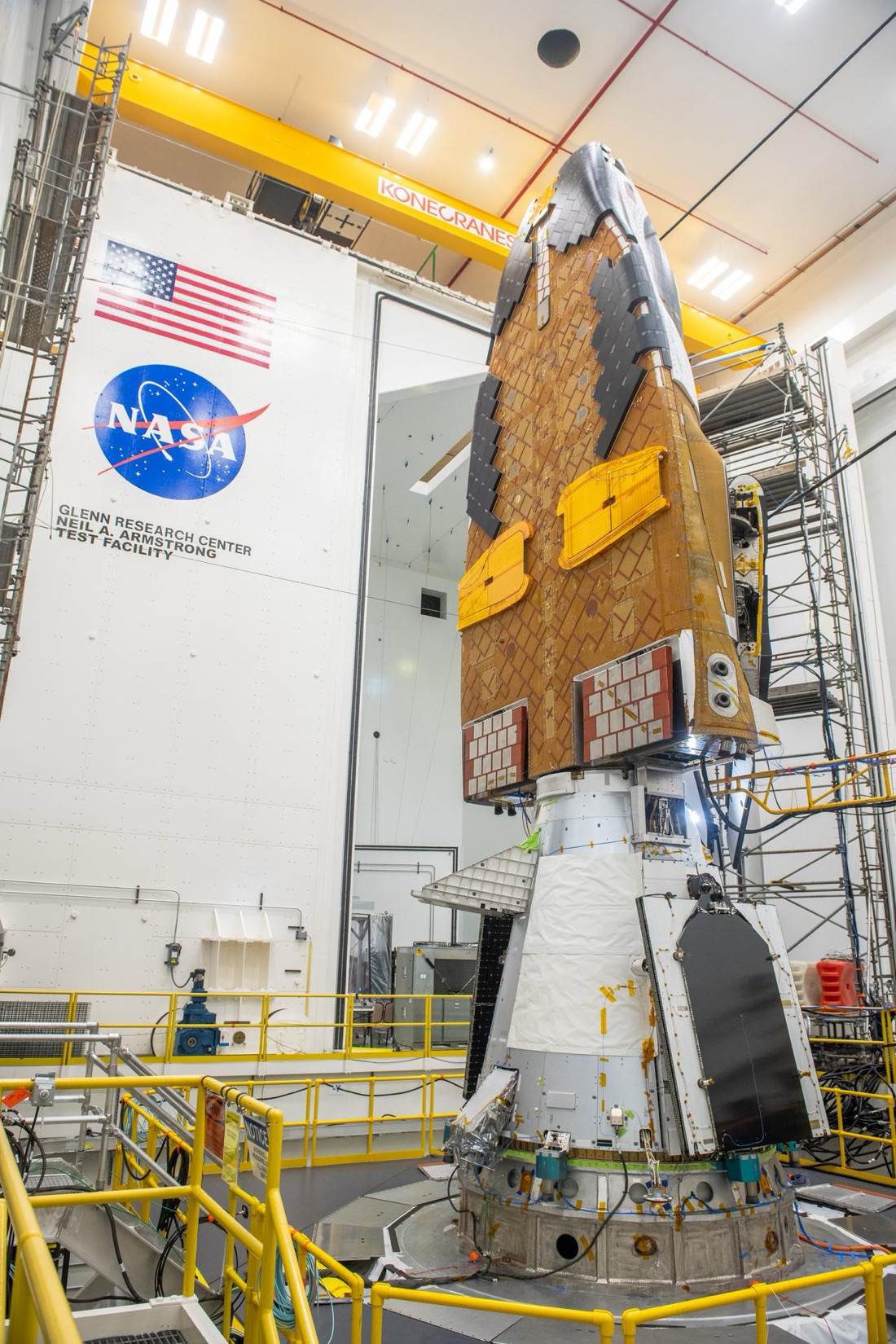
The centerpiece of Sierra Space's transportation ambitions is the Dream Chaser spaceplane, a vehicle selected by NASA to deliver cargo to the International Space Station under the Commercial Resupply Services 2 contract. Unlike traditional capsules that splash down in the ocean, Dream Chaser is a winged vehicle designed to land on a runway, a design philosophy that opens possibilities for reuse and for returning fragile or sensitive cargo intact. The first Dream Chaser vehicle, designated DC-101 and named Tenacity, completed assembly in November 2023. Following assembly, Tenacity was scheduled to be shipped to NASA's Neil A. Armstrong Test Facility for environmental testing, a suite of evaluations that subjects spacecraft to the thermal, acoustic, and vibration stresses they will encounter during launch and operations. Sierra Space also signed a Cooperative Research and Development Agreement with the United States Transportation Command in September 2022 to explore using Dream Chaser and its companion Shooting Star cargo modules for rapid global delivery of Department of Defense logistics and personnel.
03 The Shooting Star Cargo Module
Alongside Dream Chaser itself, Sierra Space developed the Shooting Star cargo module, conceived as a companion spacecraft that expands the vehicle's overall carrying capacity. The Shooting Star was explicitly included in the September 2022 agreement with the United States Transportation Command, which explored using the pairing for timely global delivery of Department of Defense logistics and personnel. This dual-vehicle architecture suggests Sierra Space envisions Dream Chaser operating not just as a stand-alone spacecraft but as part of a modular system, where the spaceplane handles crew and high-value return cargo while Shooting Star handles bulk outbound supplies. The combination was attractive enough to prompt interest from national security customers alongside the civilian NASA contract, pointing to a strategy of serving multiple markets with a single platform rather than designing separate vehicles for each customer category.
04 Building Orbital Reef with Blue Origin
In October 2022, Sierra Space and Blue Origin jointly received a $130 million contract to develop Orbital Reef, described by the companies as the world's first commercially owned and operated space station. The intended concept is a mixed-use business park in space in low Earth orbit, designed to serve commerce, research, and tourism. The partnership pairs Blue Origin's launch and large-structure capabilities with Sierra Space's habitat and life-support expertise, and it positions both companies to compete for the long-term destination market that will exist as the International Space Station eventually retires. Sierra Space's contribution centers on the LIFE habitat module, an inflatable structure that packs efficiently for launch and then expands to a much larger pressurized volume on orbit. For context, the $130 million contract is a starting investment for what would ultimately be a multi-billion-dollar infrastructure project operating continuously in low Earth orbit.
05 LIFE Habitat: Inflation Tests and Safety Margins Deeper
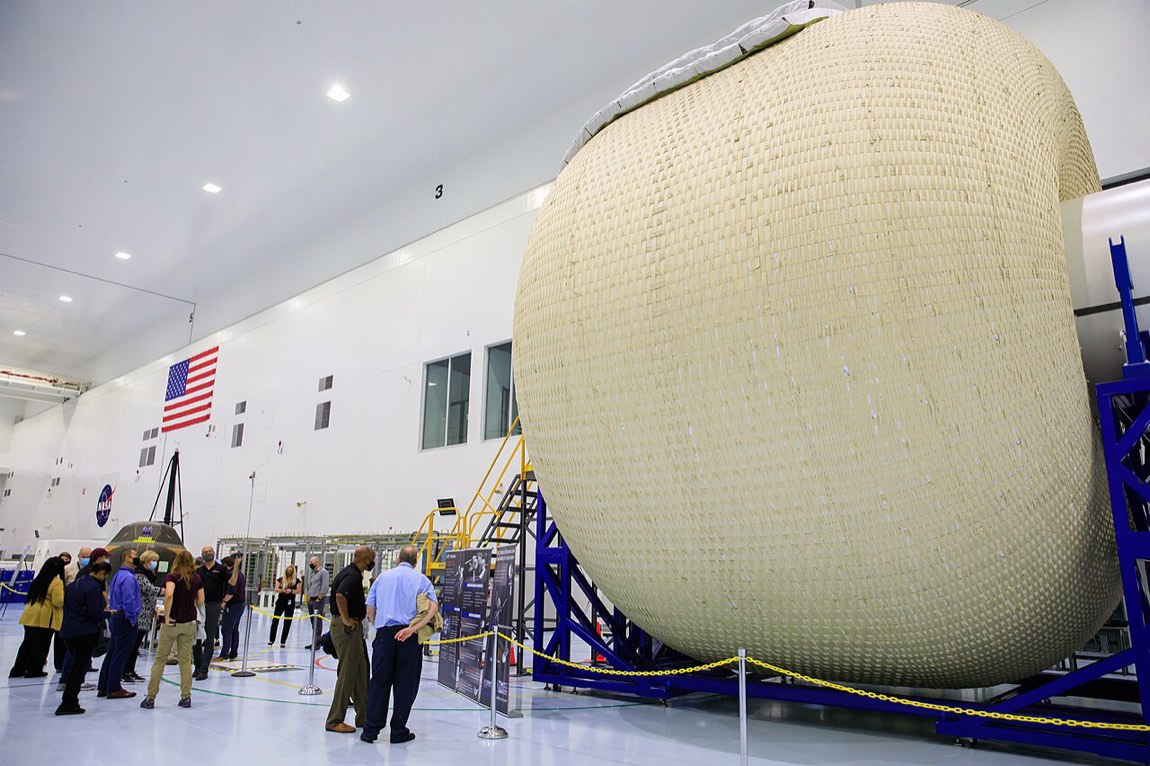
The Large Integrated Flexible Environment, or LIFE, module is Sierra Space's inflatable habitat designed for commercial space stations including Orbital Reef. Inflatable structures are attractive because they launch in a compact, dense configuration and then pressurize to a much larger living and working volume once in orbit — a concept NASA explored as far back as the Bigelow-era TransHab program. Sierra Space put LIFE through a rigorous series of burst pressure tests. In July 2022, a sub-scale test achieved a maximum burst pressure of 192 pounds per square inch. A second sub-scale ultimate burst pressure test on November 15, 2022 pushed that figure to 204 psi. The governing safety requirement stands at 182.4 psi, meaning both tests exceeded the threshold. Full-scale LIFE pressure testing began in 2023, and on January 22, 2024 Sierra Space announced a successful full-scale burst test that exceeded safety margins by 27 percent. These results gave the program a concrete structural validation milestone before any hardware reaches orbit, addressing one of the central engineering concerns about inflatable architecture.
 ⤢
⤢
06 ILC Dover and the Soft Goods Partnership Deeper
Inflatable space habitats depend critically on the fabric-based structural layers that contain pressure, resist micrometeorite impacts, and provide thermal protection — collectively called soft goods in the industry. In April 2023, Sierra Space announced a partnership with ILC Dover, making that company the exclusive provider of soft goods for the LIFE modules. ILC Dover is not a newcomer to human spaceflight soft goods; the company has a long heritage in spacesuit manufacturing, including work on Apollo-era suits. Under the Sierra Space agreement, ILC Dover's scope extends to both the inflatable habitat structures and spacesuits, covering two of the most demanding soft-goods applications in human spaceflight. This exclusivity arrangement suggests Sierra Space wanted a single accountable partner for these components rather than managing multiple suppliers, which simplifies the supply chain for a program that must meet stringent crew-safety standards.
07 The Vortex Engine and Air Force Partnership Deeper
In July 2023, Sierra Space announced a partnership with the United States Air Force to develop a new rocket engine under a 27-month contract valued at $22.6 million. The engine, designated the Vortex with the technical identifier VR35K-A, is specified to produce 35,000 pounds-force of thrust and is intended as an upper-stage engine. Upper-stage engines operate in the vacuum of space after a booster has done its job, and they must be highly efficient and reliably restartable — requirements that impose different engineering constraints than sea-level engines. The contract scope covers designing flight-weight engine components using data gathered from component-level testing and integrated breadboard engine tests, meaning the program progresses from individual part validation through progressively more integrated firings before arriving at a flight-representative design. The 35,000 lbf thrust class positions the Vortex for medium-to-large upper stages, relevant to the kinds of payloads Sierra Space and its partners envision placing in low Earth orbit.
08 Microgravity Biology and Biotech Research
Sierra Space has actively positioned itself in the life-sciences-in-space market, which treats the microgravity environment of orbit as a laboratory rather than just a transit corridor. In August 2023, the company announced a collaboration with BioServe Space Technologies to grow hematopoietic stem cells in microgravity, with the goal of researching treatments for blood cancer. Hematopoietic stem cells are the precursors to all blood cell types, and scientists believe that removing the gravitational forces that normally act on cells and their surrounding tissues may reveal biological behaviors difficult or impossible to study on the ground. In the same month, Sierra Space also partnered with Redwire on a biotech experiment platform intended to be installed aboard Sierra Space's commercial space station LIFE module. Together these partnerships suggest a deliberate strategy of recruiting science customers to future LIFE modules before the hardware even reaches orbit, building a user community around the destination.
09 Layoffs, Leadership Change, and Refocus
Not all of Sierra Space's recent history has been growth. Reports from November 2023 indicated the company laid off 165 workers in what was described as a realignment, and additional layoffs followed in October 2024. These reductions reflect the financial pressures common to capital-intensive aerospace startups managing the gap between development spending and revenue. Leadership also changed at the top: Dan Jablonsky, who previously held senior roles at Ursa Major Technologies and Maxar Technologies, was appointed CEO in February 2026, while company founder Fatih Ozmen retained the role of chair. The transition brought in an executive with direct experience at companies operating across the commercial and national-security space sectors. Shortly after the leadership change, in March 2026, Sierra Space announced a $550 million Series C funding round led by LimunArx Capital Management, which valued the company at $8 billion — nearly double the $4.5 billion valuation established at the Series A round in 2021.
10 Satellite Buses: The Velocity, Horizon, Titan Line
In early 2024, Sierra Space moved into the satellite bus market by announcing its own product line under three names: Velocity, Horizon, and Titan. A satellite bus is the structural and systems platform — power, attitude control, communications, thermal management — onto which a customer mounts whatever payload instrument or sensor they need. By offering a named product line rather than purely custom one-off designs, Sierra Space signals an intent to serve a broader commercial satellite market with standardized, repeatable platforms that can be tailored to specific missions without starting from scratch each time. The three-tier naming suggests buses at different scales or capability classes, though the article provides no further specification of mass, power, or orbit capability for each variant. This addition rounds out Sierra Space's product portfolio across transportation, destinations, and applications — the three categories the company itself uses to organize its offerings.
11 Scale and Heritage: 500 Missions, 4,000 Systems
Sierra Space's corporate heritage, carried over from its parent Sierra Nevada Corporation, includes participation in over 500 space missions and the delivery of more than 4,000 space systems and subsystems to customers across the industry. Those numbers place the company in a different category from pure startups: while its commercial space station and Dream Chaser programs are new, the underlying organization has been building and integrating flight hardware for decades. The 4,000 systems figure spans a wide range of applications — propulsion components, environmental control hardware, power systems, and more — supplied to programs operated by NASA, the Department of Defense, and commercial customers. This breadth means Sierra Space enters partnerships and contracts with a manufacturing and systems-integration pedigree that pure venture-backed newcomers cannot easily replicate, even if the flagship Dream Chaser and LIFE programs are still working toward their first operational missions.