Roscosmos (Russia)
Space agency · Russia · founded 1992
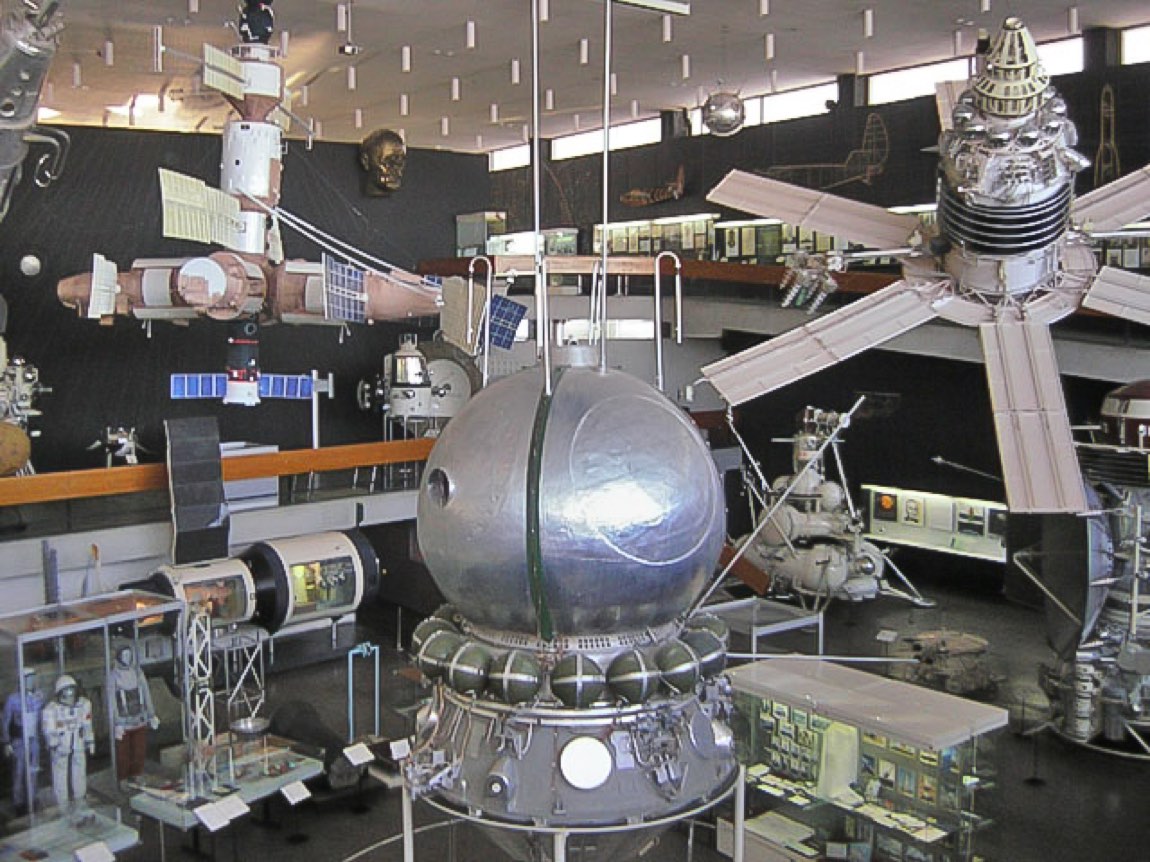
Heir to the program that opened the Space Age: first satellite, first human, first spacewalk, first landings on Venus. Modern Roscosmos anchors the ISS's Russian segment and flies the venerable Soyuz, though its science program has thinned (Luna-25's 2023 crash ended a 47-year lunar gap painfully). Its history remains unmatched by anyone.
✦ Highlights
- Sputnik & Gagarin firsts
- Venera Venus landings
- Soyuz dynasty
- ISS partnership
The deep dive
Researched for the Atlas from Wikipedia — Roscosmos (25,680 characters read) · updated Sep 20, 2026
01 From Soviet Bureaus to Russian Agency
When the Soviet Union dissolved in 1991, it left behind no single space headquarters — the Soviet program had operated through competing design bureaus and a council of designers who held far more real authority than any political body. Creating a central agency was therefore a genuinely new experiment. President Yeltsin signed the founding decree on 25 February 1992, establishing the Russian Space Agency, with Yuri Koptev — a veteran of Mars lander design at NPO Lavochkin — as its first director. The early agency struggled for relevance: powerful bureaus like Energia fought to protect their own domains, and key decisions bypassed the agency entirely. The choice to keep Mir flying beyond 1999, for instance, was made by Energia's private shareholder board, not by Koptev's office. Even the decision to develop the Angara rocket family reflected Khrunichev's ability to attract resources more than any coherent long-term strategy from the agency itself. This institutional fragmentation shaped the character of Russian space policy for the entire post-Soviet generation.
02 Crisis Financing and Commercial Survival
The 1990s hit Roscosmos with a severe cash drought. Scientific interplanetary missions nearly vanished from the program, judged too expensive for a shrinking budget. To keep operations alive, the agency pivoted toward two unconventional revenue streams: commercial satellite launches sold on the global market, and space tourism sold to wealthy private passengers through the Space Adventures company. By 2009, six fare-paying tourists had flown to the ISS, each paying an estimated fee of at least $20 million. NASA itself became a paying customer, purchasing seats on Soyuz spacecraft at approximately $21 million per person each way — $42 million for a round trip — along with Progress resupply flights billed at $50 million apiece. At one point NASA had purchased 71 return trips on Soyuz for nearly $4 billion over six years. This commercial ingenuity kept cosmonauts flying and stations staffed, but it also meant that up to 50 percent of Russia's space budget, as of 2009, was consumed by the crewed program, crowding out planetary science and other ambitions.
 ⤢
⤢
03 The Decade-Long Budget Rebound Deeper
Russia's oil and gas export boom in the mid-2000s transformed Roscosmos's financial picture almost overnight. In 2006 the Russian Duma approved a ten-year budget of 305 billion rubles — roughly $11 billion — for the space agency alone, with total national space expenditures projected at 425 billion rubles over the same period. The 2006 annual budget reached 25 billion rubles (about $900 million), a 33 percent increase over 2005, with planned annual growth of 5 to 10 percent thereafter. An additional 130 billion rubles was expected from industry investments and commercial launches. By 2009 the federal space budget held steady at about 82 billion rubles ($2.4 billion) even through the global economic crisis, and by 2011 national spending on space had reached 115 billion rubles ($3.8 billion). The rebound funded GLONASS navigation satellites — which received 9.9 billion rubles in 2007 alone, with a further $2.6 billion directed by Prime Minister Putin in 2008 — as well as new science spacecraft and work on the Angara rocket family.
04 Reorganization After a String of Failures
A Proton-M rocket failure in July 2013 became the trigger for the most sweeping restructuring of Russian space industry since the Soviet collapse. Deputy Prime Minister Dmitry Rogozin declared the sector so failure-prone that it required direct state supervision. Three days after the Proton accident, the Russian government warned of "extremely harsh measures" that would "spell the end of the space industry as we know it." The United Rocket and Space Corporation was formed as a joint-stock company in August 2013 to consolidate the fragmented sector. Plans released in October 2013 called for a unified command structure and reductions in redundant capabilities — changes officials acknowledged could lead to tens of thousands of layoffs. Rogozin noted that Russia's space sector employed about 250,000 people while the United States achieved comparable results with only 70,000, and that Russian space productivity was roughly eight times lower than America's, with companies operating at about 40 percent efficiency. In June 2015 all rocket engine companies were merged into United Rocket and Space Corporation, and in December 2015 Putin signed the decree abolishing the old state agency, replaced by the new state corporation effective 1 January 2016.
 ⤢
⤢
05 Corruption, Losses, and a Troubled Workforce Deeper
Even the reorganized Roscosmos faced chronic internal problems that money alone could not fix. In November 2018, Alexei Kudrin, head of Russia's financial audit agency, named Roscosmos as the public enterprise with the highest losses due to irrational spending and outright theft and corruption under director Igor Komarov, who was removed in May 2018. Putin himself called publicly for drastically improved quality and reliability of space vehicles that same year. Structural workforce issues compounded the financial ones: as of 2007 the average age of space industry employees was 46 years, wages remained low, and much of the equipment was obsolete. The COVID-19 pandemic added further strain — in 2020 Roscosmos reported losing 25 billion rubles in revenue and 1 billion rubles in net income, driven by reduced foreign contracts, increased health-related personnel costs, and pandemic stay-at-home days. The crisis was acute enough that in October 2021 the agency temporarily paused rocket engine tests at its Voronezh engineering bureau for one month to divert 33 tons of oxygen to local medical centers.
06 Ukraine War and the Collapse of Launch Revenues
The Russian invasion of Ukraine in February 2022 sent shockwaves through Roscosmos's commercial business. In early March 2022, director Rogozin suspended Russian participation in the European Soyuz launch program at the Guiana Space Centre in French Guiana and halted deliveries of RD-181 engines used in Northrop Grumman's Antares rockets. ESA suspended cooperation on the ExoMars rover mission — since renamed Rosalind Franklin — in late March. British satellite operator OneWeb, previously a Roscosmos launch customer, signed new contracts with ISRO and SpaceX after Rogozin demanded it drop UK government venture capital investment. By February 2024, Roscosmos reported losses of 180 billion rubles in export revenues — roughly $2.1 billion — chiefly from lost engine sales and launch services. The agency had shed 90 percent of its launch service contracts since the start of the war. As of August 2024, Russia had completed only nine orbital launches for the year, a pace that put it on track for its fewest orbital launches since 1961. Analysts projected Roscosmos's share of the global launch market, valued at $12.4 billion in 2021 and forecast to reach $38 billion by decade's end, would shrink in favor of competitors including SpaceX, Blue Origin, Japan, and India.
 ⤢
⤢
07 The Soyuz and Progress: Workhorses of the Station Era
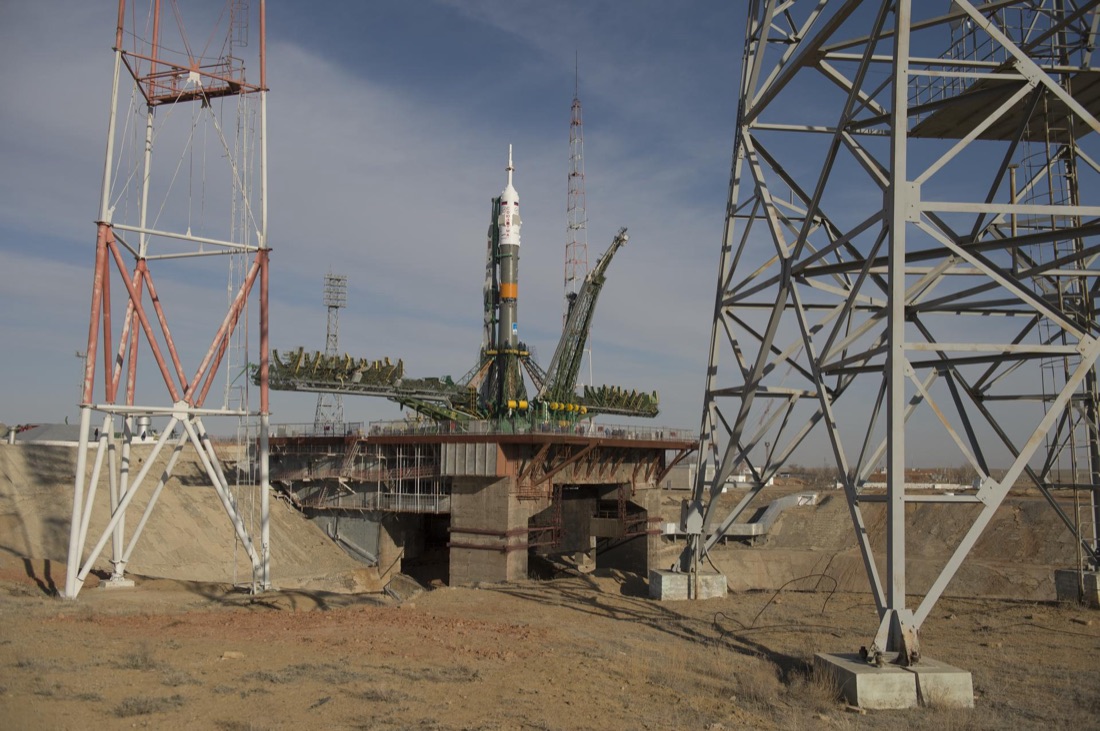
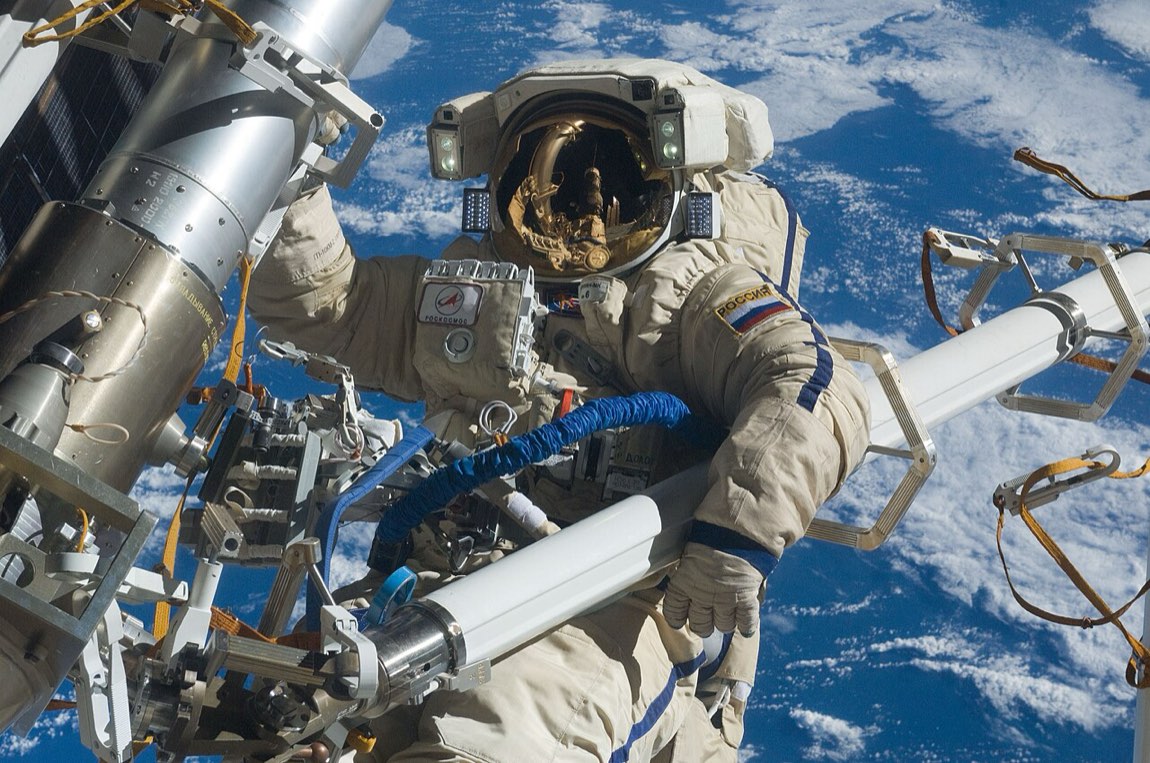
Roscosmos inherited the Soyuz program from the Soviet Union and turned it into the most-flown crewed spacecraft in history. The most recent variants — Soyuz MS for crew and Progress MS for cargo — continue to service the International Space Station. The partnership with ISS began concretely on 31 October 2000, when a Soyuz lifted off from Baikonur at 10:53 a.m. Kazakhstan time carrying Expedition One Commander William Shepherd of NASA alongside cosmonauts Sergei Krikalev and Yuri Gidzenko. They arrived at the ISS on 2 November, initiating an uninterrupted human presence aboard the station that has continued ever since. Roscosmos also constructed seven modules of the Russian Orbital Segment, starting with Zarya in 1998. The Nauka module, originally planned for 2007, was delayed repeatedly and finally attached to the ISS in July 2021, becoming the final planned Russian component of the station. Looking ahead, Roscosmos plans to build the Russian Orbital Station around Nauka following the ISS deorbit, currently anticipated from 2028, with the new station projected to cost 609 billion rubles at completion in 2032.
08 Planetary Setbacks: Mars and the Moon Deeper
Russia's record with interplanetary missions since 1991 has been marked more by failure than success. The Mars 96 mission was lost, and the Fobos-Grunt Mars probe — intended to return samples from the Martian moon Phobos — never escaped low Earth orbit after its 2011 launch, crashing back to Earth in 2012. The Luna-Glob program was designed to revive Soviet-era lunar exploration: its first mission, the Luna 25 lander, launched in 2023 but crashed onto the Moon. Future Luna-Glob plans span seven missions through the 2030s, including orbiters, polar landers, and a sample return. The one genuine planetary success of the post-Soviet era came through partnership: the joint Roscosmos-ESA Trace Gas Orbiter entered Martian orbit in 2016. A planned Venera-D orbiter and lander mission to Venus, designated Venera-17, has been postponed to beyond 2034. For the Moon's future, Roscosmos is developing the Orel crewed spacecraft and the Yenisei super heavy-lift rocket, and has signed on with China and 11 other countries to plan the International Lunar Research Station.
 ⤢
⤢
09 Cosmodromes: Three Launch Sites Across a Continent
Roscosmos operates jointly with the Russian Space Forces across three cosmodromes spanning an enormous geographic range. Baikonur, located in Kazakhstan, is the world's first and largest spaceport — Roscosmos renewed its lease on the facility with the Kazakh government in 1994, a critical move during the financially turbulent 1990s. Plesetsk cosmodrome sits in the Arkhangelsk region of northern Russia and is primarily managed by the Space Forces. The newest facility, Vostochny, is under construction in Amur Oblast near the town of Tsiolkovsky; it launched its first rocket in 2016 and was scheduled for completion by 2018. In late 2025, Vostochny was the launch site for three Iranian satellites lofted aboard a Soyuz-2.1b rocket, illustrating the cosmodrome's growing role in launching payloads for non-Western partners as Western customers departed. Mission Control Center and the famous Star City cosmonaut training complex are both located in Moscow Oblast, while Roscosmos headquarters moved in 2025 to the new National Space Centre in the Fili district of Moscow.
10 Next-Generation Rockets Taking Shape Deeper
Roscosmos is developing several new launch vehicles to modernize a fleet still dominated by decades-old designs. The Angara family was a long-gestating priority: the heavy-lift Angara A5 and small-lift Angara-1.2 are now operational, while the medium-lift Soyuz-2 variants — Soyuz-2.1a and Soyuz-2.1b, each capable of launching 8.5 tons to low Earth orbit — represent upgraded versions of the R-7-derived rocket. The R-7 itself in its standard Soyuz form can loft about 7.5 tons to LEO, while the Proton-M carries over 20 tons. Looking further ahead, Roscosmos is developing the medium-lift Soyuz-5 and the Soyuz-7, which is designed to be partially reusable and uses methane-oxygen (methalox) propellant — a technology also pursued by SpaceX and Blue Origin. At the heavy end, the Yenisei super heavy-lift rocket is planned to support crewed lunar missions. An earlier ambition, the Kliper small reusable lifting-body spacecraft, was cancelled in July 2006 after failing to attract ESA or JAXA as co-developers, and was replaced by the Orel spacecraft program, whose first uncrewed and crewed test flights are expected in 2028.
11 Space Science Satellites Past and Present Deeper
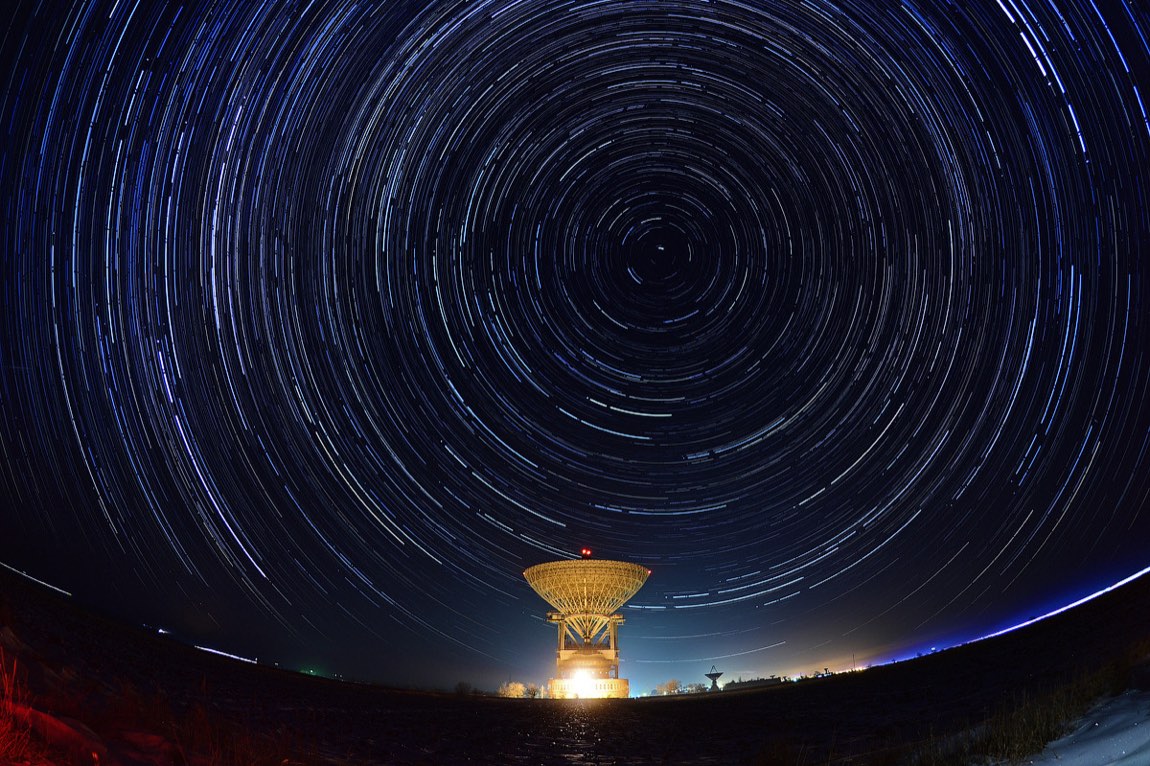
Beyond human spaceflight, Roscosmos has operated a series of science spacecraft with mixed longevity. Koronas-Foton, a solar observatory launched in January 2009, was lost in April 2010. Spektr-R (RadioAstron), a space-based radio telescope launched in July 2011, operated until retirement in May 2019. Spektr-RG, a combined X-ray and gamma-ray observatory launched in 2019, remains partially operational, with one of its two telescopes still functioning. Future flagship science missions include Spektr-UV and Spektr-M, both planned for around 2030. Earth observation assets include the Elektro-L meteorological satellite series (first launched January 2011), the Meteor-M weather satellites, the Resurs-P Earth observation constellation with imagery resolution up to 1.0 meters, and the Gonets low-orbit communication satellite network, which as of 2016 consisted of 13 satellites. The Bion-M series, resumed in 2013, conducts space medicine experiments — though a 2014 mission carrying five geckos in the Foton-M4 satellite ended in the deaths of all five animals, with investigators concluding the likely cause was a heating system failure, though the exact cause was officially declared unknown.
12 Shifting Alliances in a Divided Space Age
The geopolitical fractures opened by the 2022 invasion of Ukraine forced Roscosmos to pivot from decades of Western partnership toward a narrower set of non-Western relationships. Russia had previously backed out of the NASA-led Lunar Gateway project in 2020, and in March 2021 signed a memorandum with China's National Space Administration to cooperatively build the International Lunar Research Station, since joined by 11 other countries. The Russian invasion accelerated the decoupling from Western space agencies, with ESA suspending ExoMars cooperation and the Guiana Space Centre Soyuz program ending abruptly. By late 2025, Roscosmos was launching satellites for Iran from Vostochny, signaling a strategic reorientation toward partners outside Western sanctions regimes. Meanwhile in October 2023, director Yury Borisov — who replaced the inflammatory Rogozin in July 2022 — announced the Russian Orbital Station would require 150 billion rubles over the following three years, with a total projected cost of 609 billion rubles by its 2032 completion. Roscosmos's first deputy director acknowledged the agency might not return to profitability until 2025, underscoring the scale of the financial disruption caused by lost Western contracts.