Rocket Lab
Company · USA / New Zealand · founded 2006
The small-rocket champion: Electron launches boutique payloads from New Zealand and Virginia with 3D-printed engines, and the company has quietly become a full space-systems house — building spacecraft for NASA Moon and Mars missions and readying the larger Neutron to challenge Falcon 9's class.
✦ Highlights
- Electron small-launch dominance
- CAPSTONE to the Moon
- Neutron development
The deep dive
Researched for the Atlas from Wikipedia — Rocket Lab (27,879 characters read) · updated Sep 20, 2026
01 Peter Beck and the Founding Vision
Rocket Lab traces its origin to a single trip Peter Beck made to the United States after founding the company in New Zealand in June 2006. That visit convinced him that a genuinely low-cost small rocket was not only technically feasible but commercially urgent — a gap nobody had yet filled. Early funding came from an unlikely cast: Mark Rocket, who became a seed investor and co-director from 2007 to 2011; businessman Stephen Tindall; Silicon Valley venture capitalist Vinod Khosla; and the New Zealand Government itself. The company's very first public milestone arrived in November 2009, when it became the first private company in the Southern Hemisphere to reach space, launching its Ātea-1 sounding rocket from Great Mercury Island, a private island owned by New Zealand banker and investor Michael Fay. Although the payload — a ballistic instrumentation dart — was not recovered and the mission was deemed unsuccessful in that narrow sense, the achievement was enough to validate the team and attract a U.S. government contract from the Operationally Responsive Space Office just one month later, in December 2010, to study low-cost CubeSat launch.
02 The Ātea-1 Rocket: Details and Legacy
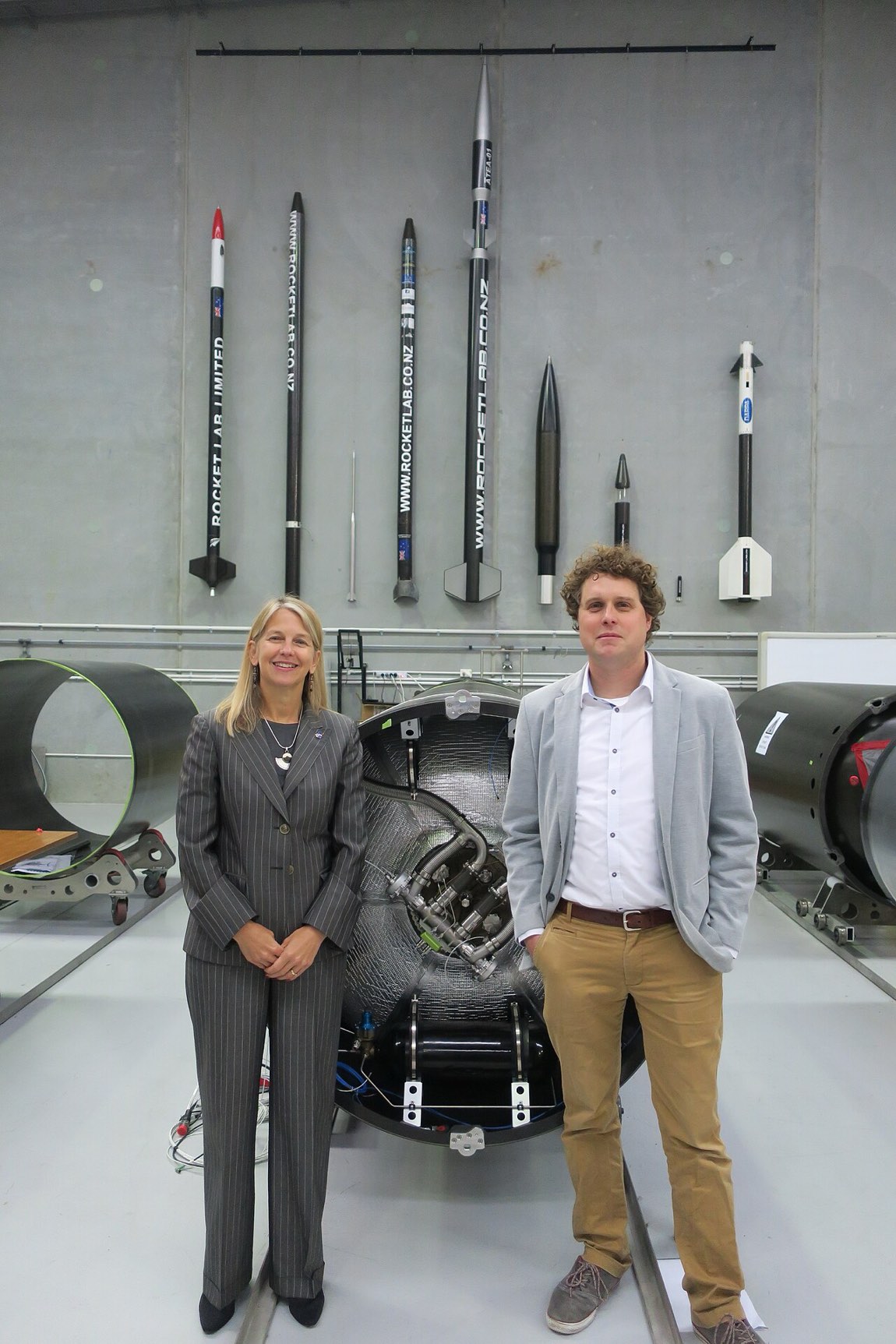
The Ātea-1 was a slender vehicle — just 6 metres long and weighing approximately 60 kilograms, about the mass of an adult person — designed to loft a 2-kilogram payload to roughly 120 kilometres altitude. The local Māori iwi named it Manu Karere, meaning Bird Messenger, a title that blended indigenous identity with the rocket's literal purpose of carrying messages skyward. It lifted off on 30 November 2009 at 01:23 UTC and splashed down approximately 50 kilometres downrange. Tracking relied on a GPS uplink to the Inmarsat-B satellite constellation. Because the dart payload carried no telemetry downlink and was described as potentially hazardous, mariners were warned not to handle it if found at sea. Critically, the boost stage itself was recovered, giving engineers enough telemetry to fully characterise the rocket's performance. That data closure allowed Rocket Lab to confidently pivot the entire team toward the much more ambitious Electron orbital rocket, making Ātea-1 less a failure than a proof-of-concept that consumed itself purposefully.
 ⤢
⤢
03 Rutherford Engine: Electric Pumps and 3D Printing Deeper
The Rutherford engine sits at the technical heart of Electron and represents a genuine departure from conventional rocket propulsion. Where traditional engines drive propellant pumps through a gas generator, an expander cycle, or a preburner, the Rutherford uses battery-powered electric motors — an approach that eliminates the complex turbomachinery plumbing that has historically been one of the most failure-prone parts of a rocket. The engine is largely fabricated through additive manufacturing using electron beam melting, a process in which an electron beam selectively fuses layers of metal powder inside a high vacuum. By March 2016, the second-stage variant of the Rutherford had completed firing tests, producing 5,000 pounds-force, or about 22 kilonewtons, of thrust. Both stages of Electron use Rutherford engines, with the first stage running a cluster of them and the second stage a single unit. The Long Beach, California headquarters is the primary production site for Rutherford engines, where additive manufacturing allows the company to print combustion chambers and other precision components that would take far longer to machine conventionally.
04 Electron's First Flights: Success, Failure, and Orbit
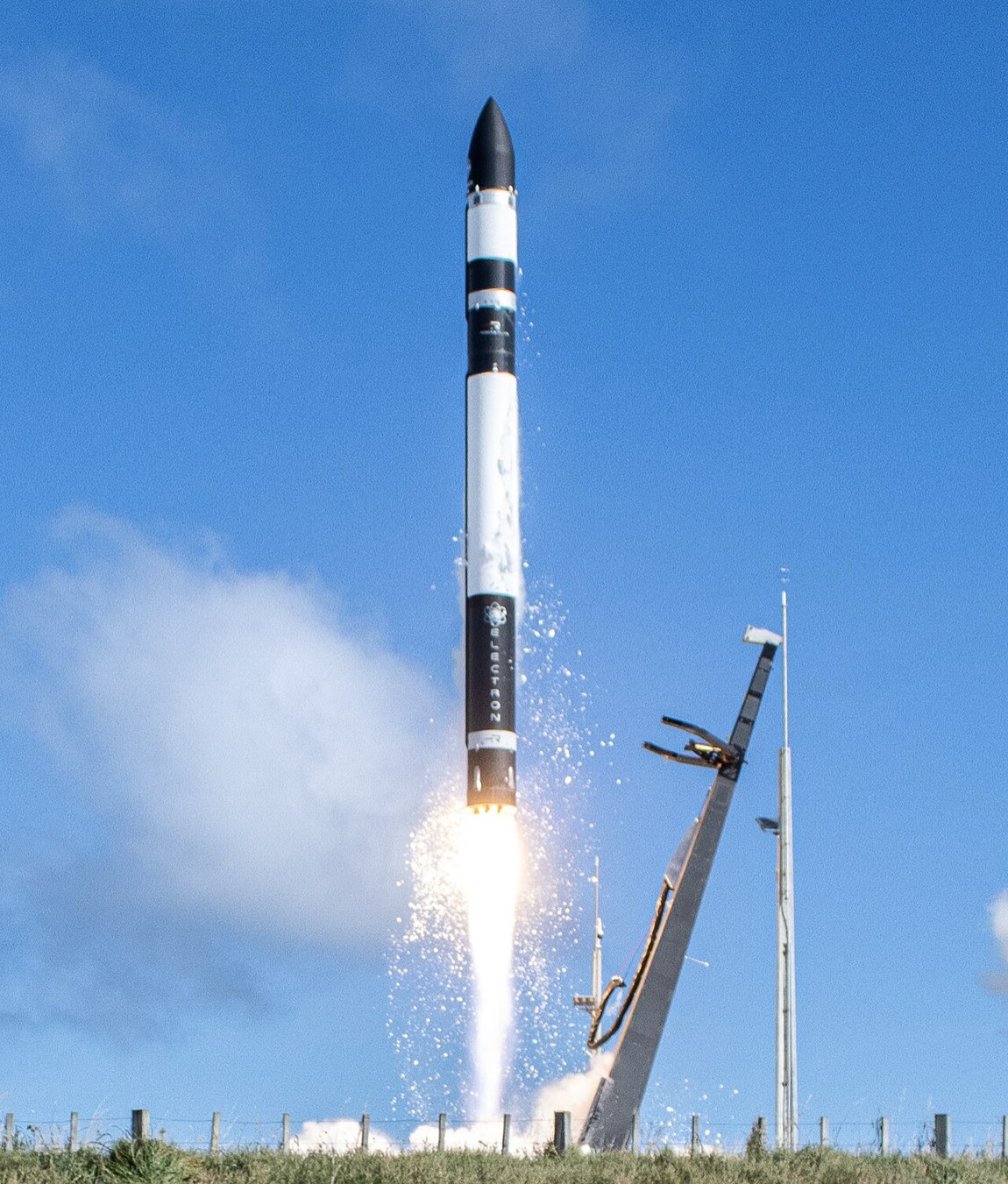
Electron's debut came on 25 May 2017, lifting off from Māhia Peninsula on New Zealand's North Island. The rocket climbed to approximately 224 kilometres before telemetry was lost, forcing flight controllers to destroy the vehicle — a painful but common outcome for a maiden launch. Less than eight months later, on 21 January 2018, the second flight, named Still Testing, reached orbit and deployed three CubeSats for Planet Labs and Spire Global. That flight also carried Humanity Star, a 1-metre-wide carbon-fiber geodesic sphere made of 65 reflective panels, which re-entered and burned up in March 2018. The first fully commercial launch followed on 11 November 2018, carrying satellites for Spire Global, GeoOptics, a CubeSat built by high school students, and a prototype dragsail. NASA valued its own first Electron mission, also launched in 2018, at $6.9 million including launch services. The rocket's projected cost per launch is listed as less than $5 million, and it can deliver 150 kilograms to a 500-kilometre Sun-synchronous orbit — a payload class that had previously lacked a dedicated, affordable ride to space.
 ⤢
⤢
05 Recovery Attempts: Parachutes and Helicopter Catches Deeper
Rocket Lab's pivot toward reusability is all the more striking because the company had publicly stated it had no intention of recovering and reusing its launch vehicles — then reversed course in 2018. The effort, disclosed in August 2019, aimed to use a parachute and mid-air helicopter retrieval rather than the powered propulsive landings SpaceX employs. In December 2019, flight number 10 tested a proprietary aerothermal decelerator to survive the brutal transition from space back into the lower atmosphere, and it worked. The first complete recovery attempt came on 19 November 2020 during the Return to Sender mission, which successfully deployed 30 small satellites and demonstrated controlled first-stage descent. The landmark catch occurred on 3 May 2022 during There And Back Again, when a helicopter seized the falling booster in mid-air — a genuine historic first for any orbital-class rocket. Beck later acknowledged the booster was hanging improperly, so it was released to parachute into the ocean for ship retrieval rather than risk damaging the helicopter. In total, two helicopter capture attempts and six soft water recoveries have been made with Electron boosters, and the company's carbon composite manufacturing processes — which once required 400 hours of hand labor per structure — have been partly automated by a robot named Rosie the Robot, cutting composite production to 12 hours.
06 Notable Failures and What They Taught
Electron's record includes instructive failures alongside its successes. On 4 July 2020, flight 13 — named Pics or It Didn't Happen — suffered an issue during the second-stage burn that prevented the rocket from reaching orbit, destroying all payloads. On 15 May 2021, Running Out Of Toes successfully executed first-stage recovery but then failed to place its two BlackSky satellites into orbit due to a second-stage anomaly. On 19 September 2023, another second-stage failure destroyed a Capella Space synthetic-aperture radar imaging satellite shortly after stage separation. A pattern emerges: the second stage has been the source of Electron's most consequential anomalies. The company returned to flight after the 2023 failure on 14 December 2023, launching a Japanese radar imaging satellite in what marked a record-setting tenth Electron flight in a single calendar year. Each failure triggered investigation and return-to-flight work, and the overall mission success rate across more than 75 orbital missions as of January 2026 reflects a vehicle that has matured substantially since 2017, even if second-stage reliability remains the most closely watched metric.
 ⤢
⤢
07 Neutron: Rocket Lab's Bid for Medium Lift
Announced in March 2021 alongside the company's plan to go public, Neutron is a two-stage medium-lift vehicle designed at a different scale from Electron. It stands 40 metres tall — roughly as tall as a 13-story building — with a fairing 4.5 metres in diameter, and carries payload capacities of 13 to 15 short tons to orbit. Unlike Electron, whose first stage is recovered by parachute and helicopter, Neutron's booster is designed to return to a floating landing platform downrange, similar in concept to SpaceX's Falcon 9 approach, though Beck has publicly expressed a preference for Return to Launch Site landing to avoid fixed offshore assets. Neutron will launch from Launch Complex 3 at Wallops Island, Virginia, a pad officially opened on 28 August 2025. Manufacturing will take place at a facility adjacent to that launch site, with ground broken on 11 April 2022. The Archimedes engine powers Neutron; the first complete Archimedes engine was assembled in mid-2024 and sent to NASA's Stennis Space Center for testing, where Rocket Lab had cut the ribbon on an engine test facility back in November 2022. The company originally targeted a first Neutron launch by 2025, spending between $250 and $300 million of its SPAC proceeds on the program.
08 CAPSTONE and the Path to Lunar Orbit
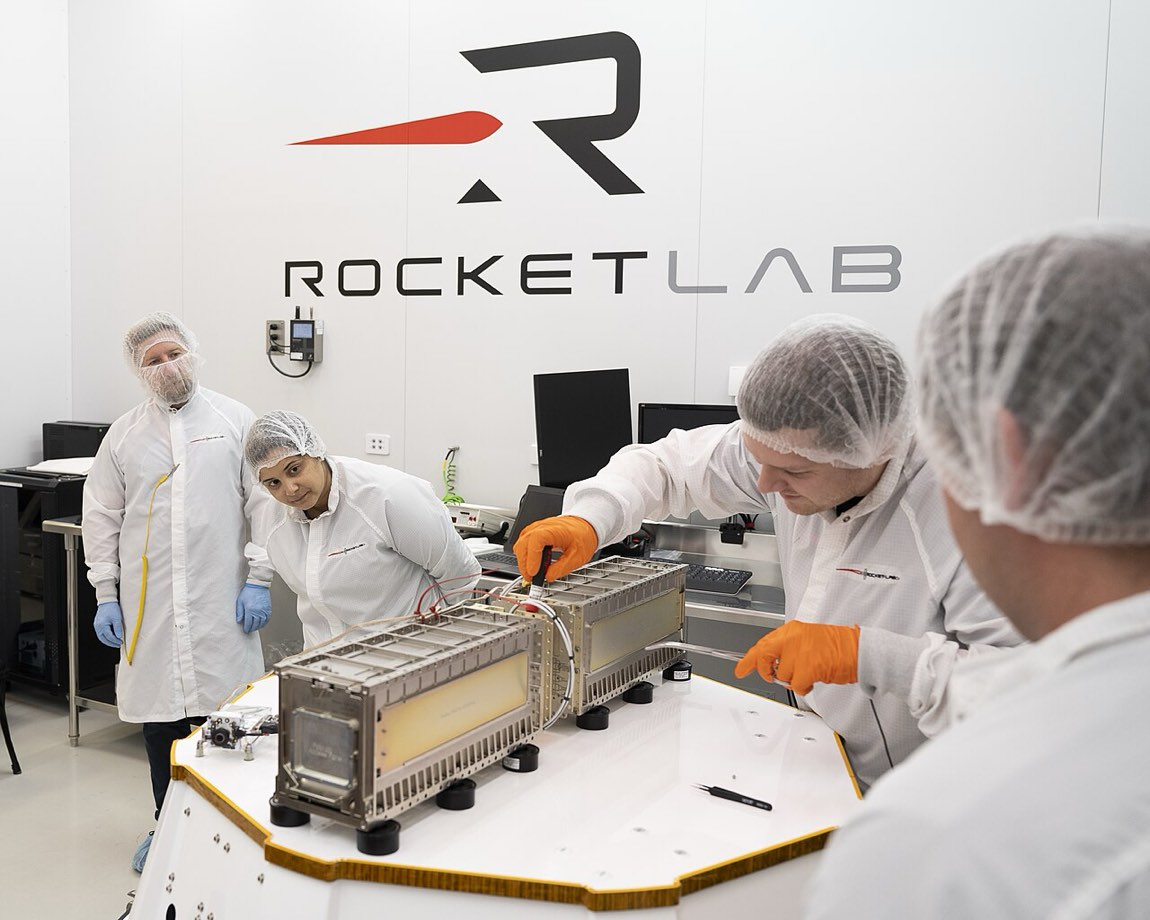
One of Rocket Lab's most scientifically significant missions was CAPSTONE — the Cislunar Autonomous Positioning System Technology Operations and Navigation Experiment — which NASA selected Electron to launch in February 2020. CAPSTONE is a microwave-oven-sized CubeSat weighing 55 pounds, and its mission was to validate a near-rectilinear halo orbit, a highly elliptical lunar path proposed for NASA's Lunar Gateway outpost as part of the Artemis program. The mission's complexity required Rocket Lab's Photon spacecraft bus to perform the translunar injection burn using the HyperCurie engine; on 4 July 2022 that burn successfully released CAPSTONE on a trajectory to the Moon. The launch had originally been planned from Launch Complex 2 in Virginia, but was shifted to Launch Complex 1 in New Zealand in August 2021 after delays certifying the NASA autonomous flight termination system for the Virginia pad. CAPSTONE completed its primary six-month mission and, as of July 2023, was continuing an enhanced mission providing ongoing data in support of Artemis — a notable outcome for what was billed as a pathfinder risk-reduction exercise for one of the most ambitious human spaceflight programs since Apollo.
 ⤢
⤢
09 HASTE: Turning Electron into a Hypersonic Testbed Deeper
The Hypersonic Accelerator Suborbital Test Electron, or HASTE, is a suborbital variant of Electron that doubles the payload capacity to 700 kilograms and can deploy payloads from 80 kilometres altitude and above. Its first mission, Scout's Arrow, flew on 18 June 2023 for defense technology company Leidos. Where Electron's mission is to place small satellites precisely into orbit, HASTE's job is to accelerate test articles to hypersonic speeds in the upper atmosphere, giving researchers and the military access to flight conditions that are extremely difficult to replicate in ground facilities. The vehicle's relevance to national security is underscored by a contract signed in March 2026 worth $190 million — approximately NZ$327 million — with the U.S. Department of Defense for a series of hypersonic test flights. As of March 2026, Rocket Lab had secured contracts for at least twenty HASTE missions to be launched up to 2030, making it a substantial and growing revenue line distinct from the orbital launch business.
10 Facilities: From Māhia to Maryland
Rocket Lab's operational footprint spans multiple continents and disciplines. Launch Complex 1 on the Māhia Peninsula in New Zealand consists of two pads — LC-1A, opened officially on 26 September 2016 and first used in 2017, and LC-1B, which first launched on 28 February 2022 — licensed to support a launch every 72 hours for 30 years. Launch Complex 2 at Wallops Island, Virginia, hosted its first Electron launch on 24 January 2023. LC-3, also at Wallops and intended for Neutron, held its opening ceremony on 28 August 2025. Manufacturing is distributed: Long Beach, California houses Rutherford and Archimedes engine production and avionics, including the Engine Development Center opened in October 2023 in the former Virgin Orbit factory. Auckland, New Zealand produces propellant tanks and handles overall vehicle integration. Warkworth, New Zealand hosts composite manufacturing facilities acquired from SailGP Technologies in October 2023. A Space Structures Complex is planned for Middle River, Maryland, focused on advanced composites for both Neutron and broader industry supply. Additional facilities exist in Albuquerque, New Mexico (via SolAero), Littleton, Colorado (via ASI), Pasadena, California (via Motiv Space Systems, now Rocket Lab Robotics), Toronto, Canada (via Sinclair Interplanetary), and — as of the 2026 Mynaric acquisition — Germany, giving the company its first European presence.
11 The Venus Life Finder: Searching for Organics
In August 2022, Rocket Lab announced an extraordinarily ambitious private science mission: becoming the first private company to send a spacecraft to Venus. The vehicle, called the Venus Life Finder (VLF), is a small probe designed to plunge through Venus's upper atmosphere for roughly five minutes, sampling the cloud layer between 29 miles and 37 miles — or 47 to 60 kilometres — above the planet's surface while searching for organic compounds. The probe would be launched on an Electron rocket using a Photon spacecraft bus, a configuration that has already proven itself on the CAPSTONE lunar mission. As of March 2025, the target launch date was the summer of 2026. The scientific motivation is Venus's sulfuric acid clouds, which some researchers have proposed could harbor microbial life — a deeply contested hypothesis, but one serious enough that NASA and independent scientists have argued for renewed Venusian atmosphere exploration. If Rocket Lab succeeds, VLF would be among the first privately funded interplanetary science missions in history, and the first dedicated to directly probing Venus's atmosphere for biosignatures.
12 Becoming a Vertically Integrated Space Company Deeper
Rocket Lab's acquisition strategy is the clearest expression of its ambition to control every layer of the space supply chain. Since 2020 the company has purchased seven organizations: Sinclair Interplanetary in April 2020 for small satellite components, Advanced Solutions Inc. in October 2021 for flight software, Planetary Systems Corporation in November 2021 for $81.4 million to secure satellite separation systems, SolAero in January 2022 for space solar power products, GEOST in August 2025 for electro-optical and infrared sensors, Mynaric AG in April 2026 for $155.3 million in aggregate consideration for laser optical communications terminals, and Motiv Space Systems in May 2026 for in-space robotics and precision mechanisms — the Motiv team of 50 people and its Pasadena facilities subsequently rebranded as Rocket Lab Robotics. The company also introduced Gauss, an in-house electric propulsion system, in April 2026, with a production line already capable of manufacturing more than 200 thrusters per year at announcement. Its largest single contract as of January 2024 was a $515 million U.S. Space Force military satellite project. In May 2026 a further $90 million Space Force contract called for two geostationary satellites. These moves collectively push Rocket Lab from launch provider toward what it explicitly calls an end-to-end space company.