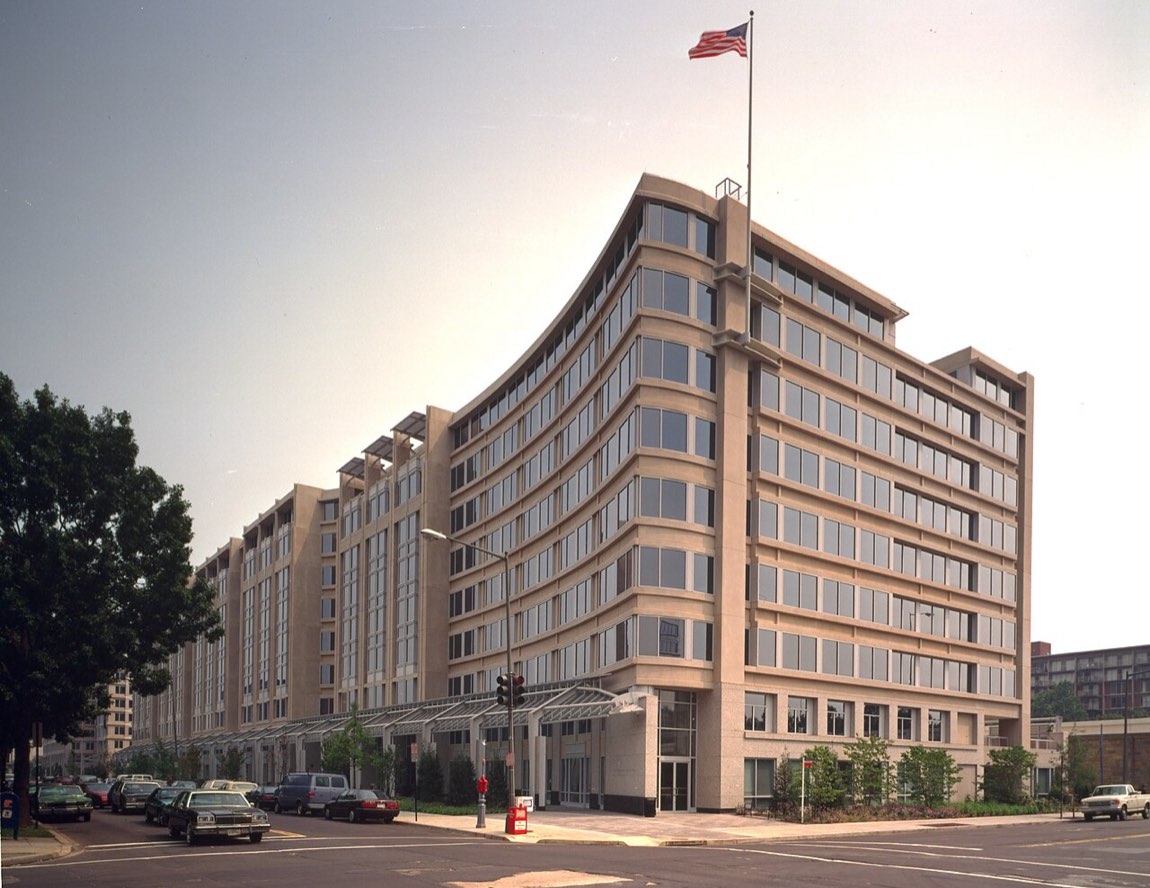
NASA
Space agency · United States · founded 1958
The world's flagship civilian space agency. NASA has landed people on the Moon, robots on Mars, and probes on comets and moons of Saturn; its telescopes rewrote cosmology. Its model has shifted with the times — today it buys rides from commercial partners and leads the Artemis return to the Moon.
✦ Highlights
- Apollo Moon landings (1969–72)
- Voyager grand tour
- Hubble & JWST
- Mars rover dynasty
- Artemis program
The deep dive
Researched for the Atlas from Wikipedia — NASA (58,000 characters read) · updated Sep 20, 2026
01 From NACA to NASA: A Civilian Pivot
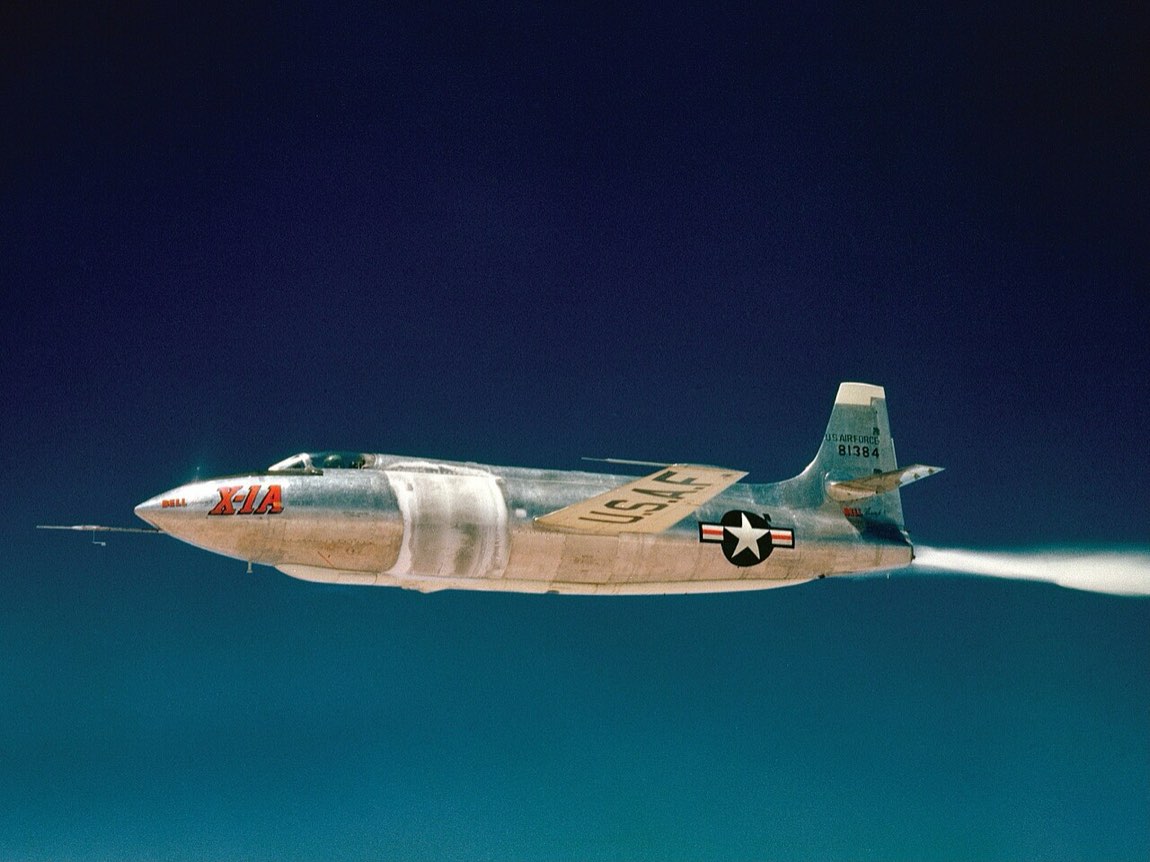
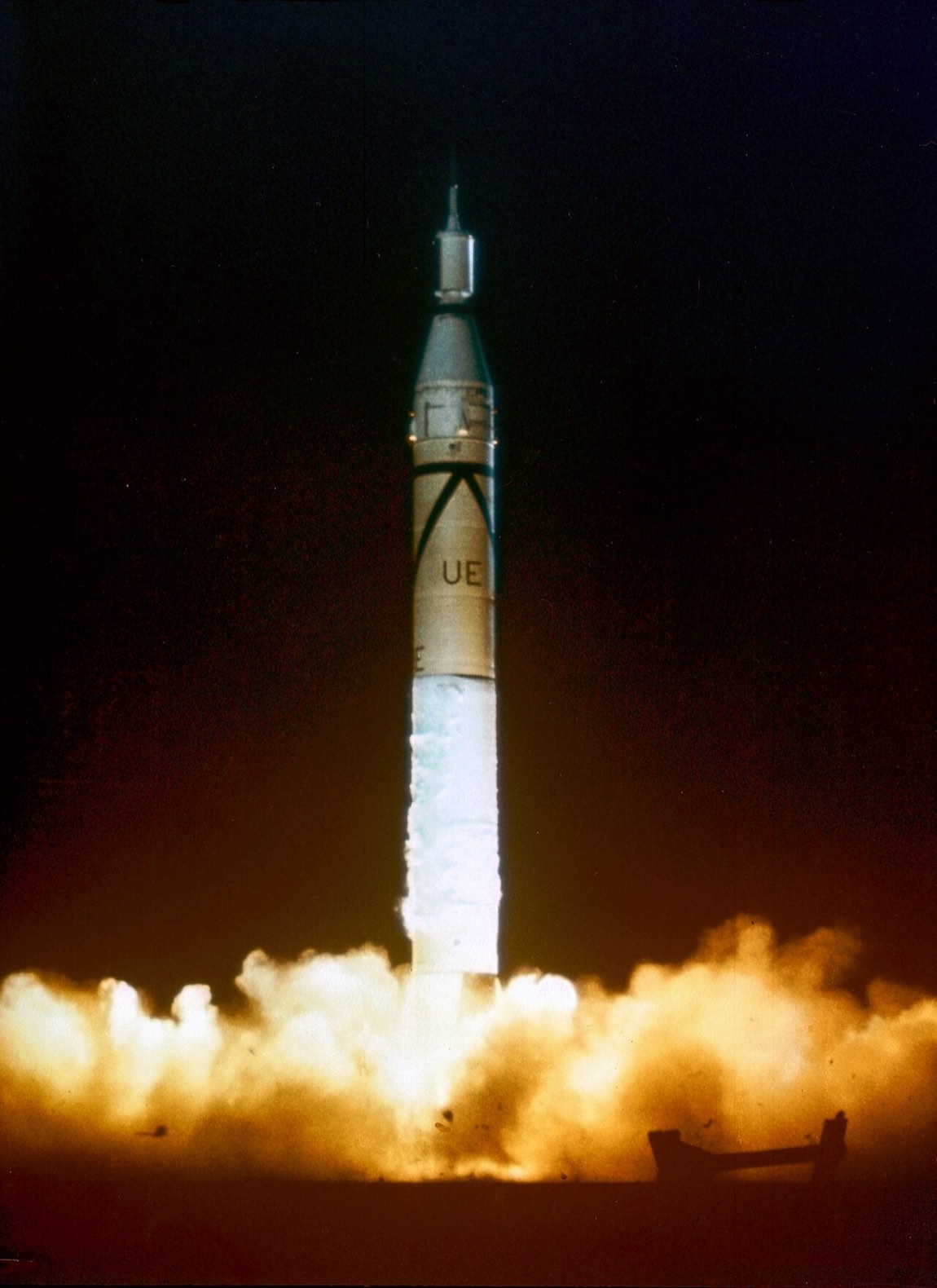
NASA did not emerge from nothing. Its direct ancestor, the National Advisory Committee for Aeronautics (NACA), was created by Congress in 1915 after the United States recognized it had fallen badly behind Europe in aviation capability. For forty years NACA quietly supported the Air Force, Army, Navy, and civil aviation with aeronautical research, even helping develop and test the Bell X-1, the first aircraft to break the sound barrier. When the Soviet Union launched Sputnik 1 and ignited the Space Race, the U.S. response was complicated: the Naval Research Laboratory's Project Vanguard stumbled, forcing the Army Ballistic Missile Agency to step in and successfully launch Explorer 1, America's first satellite, on February 1, 1958. President Eisenhower then made a deliberate policy choice — separating military and civil space programs. NASA was formally established on July 29, 1958, and began operations on October 1, 1958. It absorbed NACA's 8,000 employees and three major research laboratories, along with Project Vanguard, the Jet Propulsion Laboratory, and Wernher von Braun's Army Ballistic Missile Agency team — giving the new civilian agency both the talent and the hardware it needed from day one.
02 Mercury, Gemini, and the Art of Learning Fast
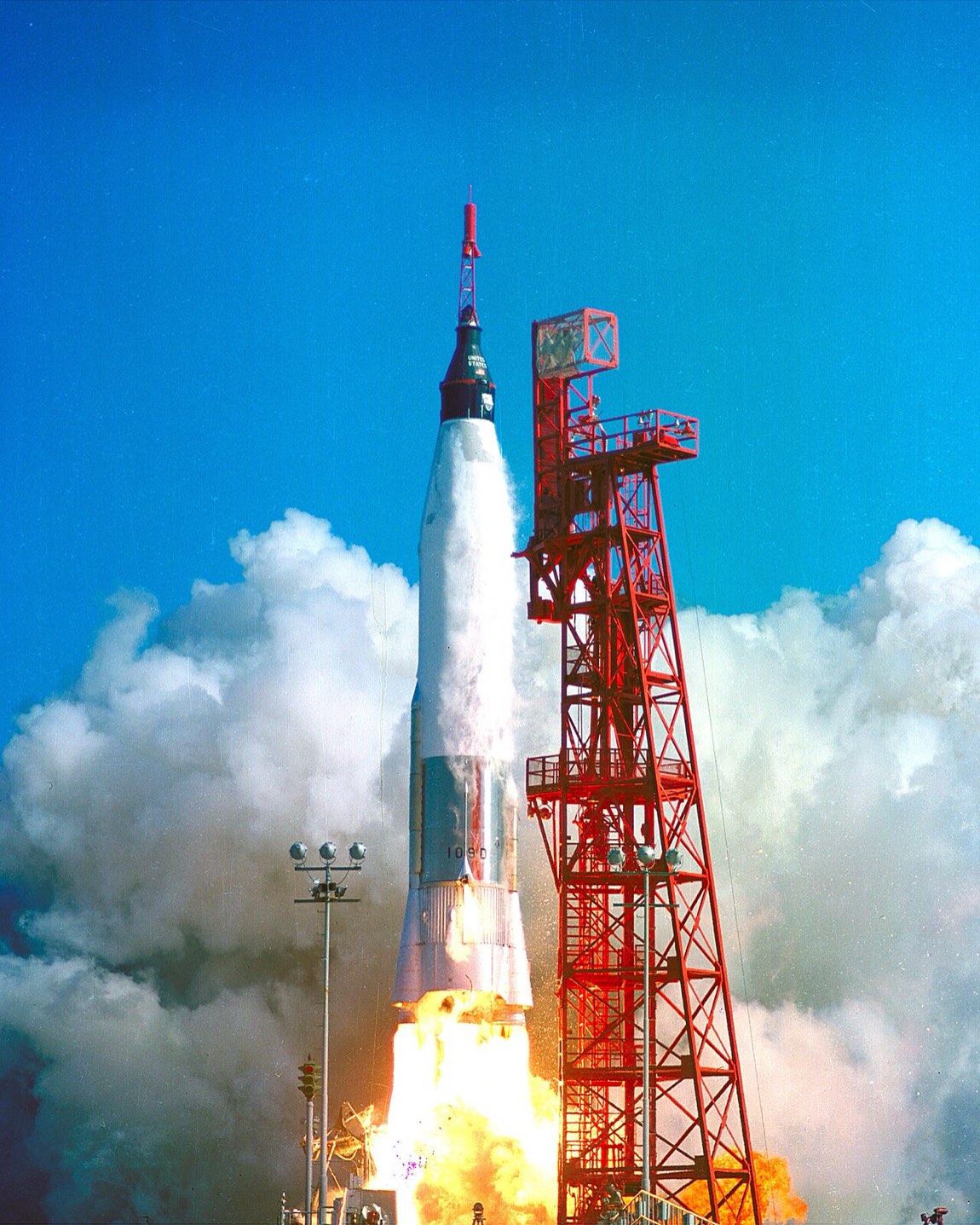
Project Mercury was NASA's crash course in human spaceflight. Its seven astronauts — three Air Force pilots, three Navy aviators, and one Marine Corps pilot — were chosen at President Eisenhower's insistence from military ranks rather than the civilian pool NASA had originally preferred. Alan Shepard became the first American in space on May 5, 1961, performing a suborbital flight aboard Freedom 7, though that milestone came 23 days after Soviet cosmonaut Yuri Gagarin had already completed a full orbital flight. John Glenn closed some of that gap on February 20, 1962, orbiting Earth three times in Friendship 7 — and flying the final two orbits manually after an autopilot malfunction. Mercury's sixth and last mission, flown by Gordon Cooper in May 1963, logged 22 orbits over 34 hours aboard Faith 7. Project Gemini then pushed the boundaries further, using a modified Air Force Titan II rocket to carry two astronauts for flights lasting over two weeks. Gemini pioneered the use of fuel cells instead of batteries and conducted the first American spacewalks and orbital rendezvous operations — skills without which a lunar landing was simply impossible. These two programs together formed the methodical, incremental foundation that Apollo would need.
 ⤢
⤢
03 Building the Apollo Machine Deeper
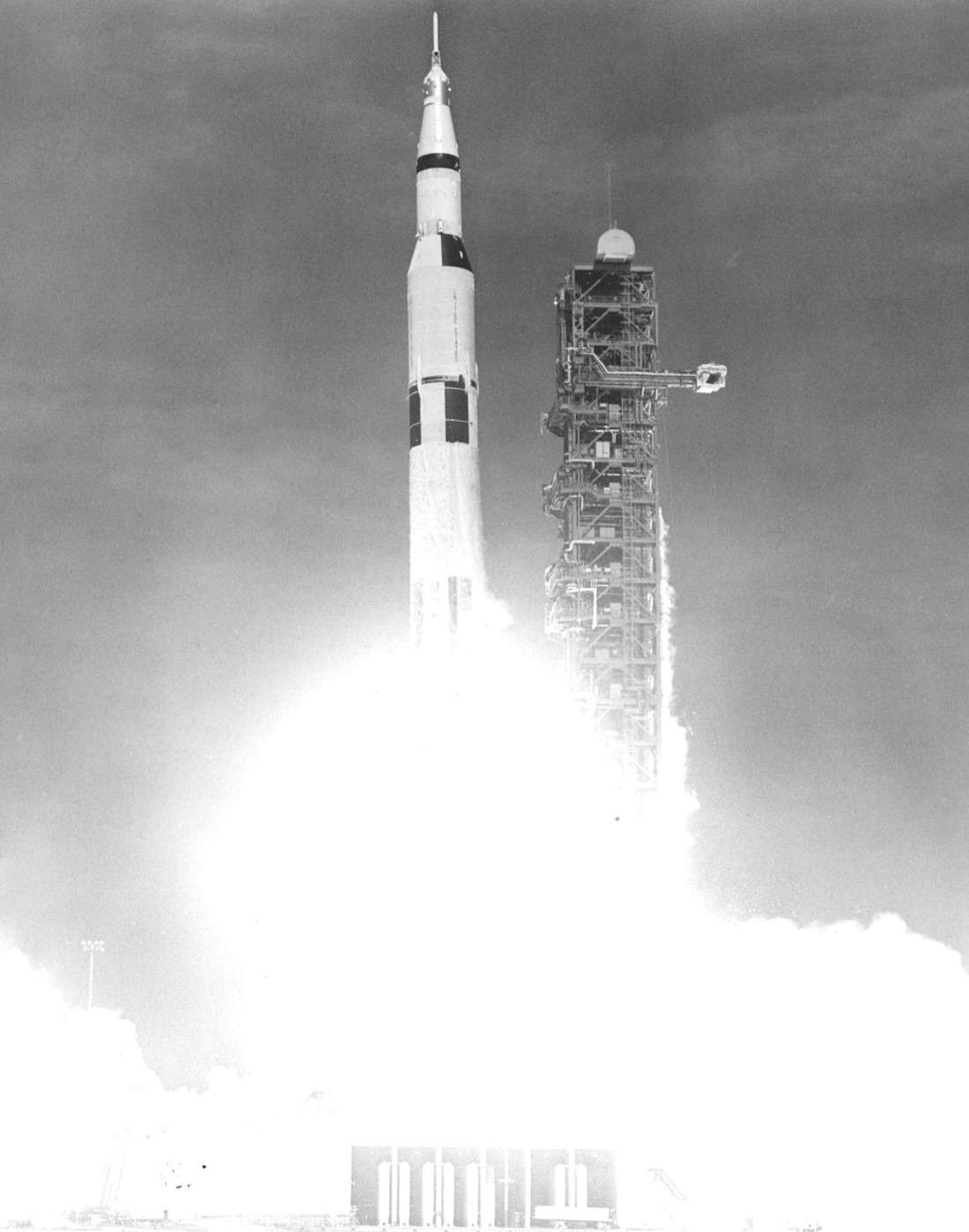
President Kennedy's May 25, 1961, "Urgent National Needs" speech committed the nation to a Moon landing before the decade's end, but the engineering challenge was staggering. NASA modeled its management on the Department of Defense's redundant-systems philosophy for intercontinental ballistic missiles, assigning Air Force Major General Samuel C. Phillips as Apollo program director. Wernher von Braun and his team at the Marshall Space Flight Center developed the Saturn V rocket from the earlier Saturn I design. North American Aviation designed and built the Apollo spacecraft, while Grumman built the Lunar Module. At peak effort, an estimated 5 percent of the entire American workforce contributed in some capacity to the Apollo program. The path to the Moon was also paved by three supporting robotic programs: the Ranger program (which mostly failed early on), the Lunar Orbiter program (which mapped the surface and measured radiation), and the Surveyor program (which successfully demonstrated uncrewed lunar landings and characterized the surface regolith). The tragic Apollo 1 fire killed three astronauts and forced a painful redesign pause, yet the program pressed on. Apollo 8 in December 1968 became the first crewed spacecraft to leave low Earth orbit, with Frank Borman, James Lovell, and William Anders orbiting the Moon ten times on December 24 and 25, 1968, becoming the first humans to see Earthrise and photograph the Moon's far side.
04 After the Moon: Skylab and Apollo–Soyuz
With the Apollo lunar missions concluded, NASA used the remaining Saturn V hardware for one final purpose: launching Skylab, its first space station, in 1973. The station's primary module was a repurposed Saturn V third stage — an elegant piece of recycling given the rocket's enormous size. Launch damage was severe enough that the first crew had to perform critical spacewalks simply to make Skylab habitable. Despite that rough start, Skylab hosted nine missions before being decommissioned in 1974. It deorbited in 1979, two years before the Space Shuttle could have boosted its orbit — a timing mismatch that sealed its fate. Meanwhile, 1975 brought a remarkable diplomatic moment: the Apollo–Soyuz test project, in which an American Apollo capsule docked in orbit with a Soviet Soyuz, marking the first international human spaceflight and the last flight of the Apollo capsule. It was a handshake in orbit between Cold War rivals and a preview of the international cooperation that would later define the ISS era. Wernher von Braun had advocated for a space station since NASA's founding, and Skylab, imperfect as it was, proved the concept was achievable.
 ⤢
⤢
05 Robotic Explorers and the Solar System Opened Up Deeper
Even as human spaceflight dominated headlines, NASA's robotic missions were rewriting planetary science. The Mariner program sent probes to Venus, Mars, and Mercury through the 1960s, with Mariner 2 revealing Venus as a hot and inhospitable world and Mariner 9 becoming the first spacecraft to orbit Mars. The 1975 Viking program landed two spacecraft on Mars in 1976, the first successful surface landings there. Outer Solar System exploration began with Pioneer 10, the first probe to visit Jupiter, followed by Pioneer 11, which provided the first close-up views of Saturn; both eventually became the first artificial objects to leave the Solar System. The Voyager program, launched in 1977, executed historic flybys of Jupiter, Saturn, Uranus, and Neptune on trajectories extending into interstellar space. The Galileo spacecraft, deployed from Space Shuttle mission STS-34, became the first to orbit Jupiter and discovered strong evidence of a subsurface ocean on Europa. The Cassini–Huygens mission, a joint NASA–ESA–ASI effort, found evidence of liquid hydrocarbon lakes on Saturn's moon Titan and a subsurface water ocean on Enceladus — both considered astrobiologically significant. Cassini also discovered three new moons around Saturn. The New Horizons mission, launched in 2006, became the first spacecraft to visit Pluto and probe the deeper Kuiper Belt. And when Perseverance landed in 2021, it deployed Ingenuity — the first aircraft ever flown on another planet.
06 The Space Shuttle: Promise, Tragedy, and Legacy
NASA envisioned the Space Shuttle as a reusable workhorse that would make spaceflight routine and economical, eliminating dependence on expensive expendable rockets like the Saturn V. Official development began in 1972, with Rockwell International contracted for the orbiter and engines, Martin Marietta building the external tank, and Morton Thiokol producing the solid rocket boosters. NASA ultimately operated six orbiters: Enterprise for atmospheric testing, and Columbia, Challenger, Discovery, Atlantis, and Endeavour for orbital flights. The first orbital Shuttle flight, Columbia on STS-1, launched in 1981. The program brought genuine firsts — Sally Ride became the first American woman in space aboard STS-7, and STS-41-C performed the world's first on-orbit satellite servicing operation in 1984. But two disasters defined the program's darker legacy. In 1986, Challenger was lost during STS-51L, killing all seven astronauts and grounding the fleet for 36 months. In 2003, Columbia disintegrated on reentry during STS-107, again killing all seven crew members. This second disaster led President George W. Bush to direct that the Shuttle be retired after completing the ISS. The final mission, STS-135, flew in 2011. Between the Shuttle's retirement and SpaceX's first crewed flight in 2020, American astronauts had no domestic option for reaching the ISS.
 ⤢
⤢
07 Great Observatories and the Universe Revealed Deeper
Beginning in the 1990s, NASA deployed four space observatories collectively known as the Great Observatories, each targeting a different part of the electromagnetic spectrum. The Hubble Space Telescope launched in 1990 aboard Discovery on STS-31 and demonstrated it could observe galaxies 15 billion light-years away — but a manufacturing defect in its primary mirror initially crippled it. NASA first compensated with computer enhancement, then flew five Space Shuttle servicing missions to install corrective optics and upgraded instruments. The Compton Gamma Ray Observatory, launched by Atlantis on STS-37 in 1991, identified a possible antimatter source at the Milky Way's center and confirmed that most gamma-ray bursts originate outside our galaxy. The Chandra X-ray Observatory, deployed from Columbia on STS-93 in 1999, provided critical observations of the supermassive black hole Sagittarius A* and observed dark matter separating from regular matter during galactic collisions. The Spitzer Space Telescope, an infrared observatory launched in 2003 on a Delta II rocket and placed in an Earth-trailing orbit, contributed to the discovery and study of brown dwarfs and exoplanets. Complementing these, the Cosmic Background Explorer and the Wilkinson Microwave Anisotropy Probe gathered robust evidence supporting the Big Bang theory. The James Webb Space Telescope, launched in December 2021 on an Ariane 5 rocket, operates in a halo orbit at the Sun–Earth L2 point and is optimized to observe the formation of the first galaxies in the universe.
08 The ISS: A Station Built from Compromise
The International Space Station has its roots in NASA's 1985 proposal for Space Station Freedom, an international project signed with thirteen nations including ESA member states, Canada, and Japan. Despite that ambitious start, Freedom became deeply controversial due to escalating costs and several redesigns that stripped away many of its intended functions. By 1992, the program survived largely because it supported 75,000 aerospace jobs across 39 states — a political reality as much as a technical one. In 1993, the Clinton Administration merged Freedom with the Russian Federation's Mir-2 program, creating the ISS as a way to preserve Russia's post-Cold War space sector while reducing American costs. NASA initially projected development costs at $17.4 billion; the actual total approached $150 billion, with the U.S. funding roughly two-thirds. Orbital assembly began in 1998, with the core U.S. Orbital Segment completed by 2009 and the Russian segment's primary assembly phase finished by 2010. The station has been continuously inhabited since November 2000, eclipsing Mir's occupancy record. As of 2026 it remains the largest artificial satellite in Earth orbit. The ISS program is expected to continue until 2030, after which the station will be retired through a controlled de-orbit.
 ⤢
⤢
09 Commercial Partners and the New Space Economy
The 2003 Columbia disaster and the eventual retirement of the Space Shuttle pushed NASA toward an approach it had long resisted: treating spaceflight services as something a private company could provide under contract. NASA signed its first Commercial Resupply Services contracts in 2008, awarding $1.6 billion to SpaceX for twelve cargo Dragon flights and $1.9 billion to Orbital Sciences for eight Cygnus flights. SpaceX flew its first operational resupply mission in 2012; Orbital Sciences followed in 2014. The Commercial Crew Program extended this logic to human spaceflight: SpaceX began delivering crews to the ISS in 2020 using the Crew Dragon atop a Falcon 9 Block 5, while Boeing's Starliner provided service in 2024 before NASA froze Boeing's contract after a mission that left two astronauts stranded on the ISS for six months. The shift was not frictionless. Dennis Tito, an American investment manager, had already paid Russia to spend four days on the ISS in 2001, overriding intense NASA opposition — an early signal that orbital space would not remain exclusively governmental. Advocates like Buzz Aldrin argued that commercial partnerships would free NASA to refocus on deep-space research and exploration, which is precisely the direction the agency has since taken with the Artemis program.
10 Artemis and the Road Back to the Moon
NASA formally announced the Artemis program in 2019, targeting a return of humans to the Moon and the establishment of a sustainable lunar presence. The program carries over the Orion spacecraft from the canceled Constellation program and pairs it with the new Space Launch System rocket. Artemis I was an uncrewed initial test flight of the SLS that sent an Orion spacecraft on a Distant Retrograde Orbit. Artemis II placed a crew of four on a lunar flyby in April 2026. Artemis III, originally planned for mid-2027 as the first crewed lunar landing since Apollo 17 in 1972, was changed in February 2026 to a low Earth orbit docking test of Orion, with the actual landing pushed to Artemis IV, planned for early 2028. When astronauts do land, they will transfer from Orion to a SpaceX Lunar Starship — selected by NASA as its Human Landing System on April 16, 2021 — for the final descent to the surface. Supporting these crewed missions, NASA's Commercial Lunar Payload Services program has awarded contracts to companies including Intuitive Machines, Firefly Space Systems, and Astrobotic to land robotic probes first. NASA has also been directed by Congress to target a human presence in Mars orbit or on the Martian surface by the 2030s.
11 The Deep Space Network: Talking Across the Solar System Deeper
Sending a spacecraft to Jupiter or beyond is only half the challenge — you also need a way to talk to it across hundreds of millions of kilometers. NASA's Deep Space Network, established in 1963, solves this with three ground station complexes placed roughly 120 degrees apart around the planet: near Barstow, California; near Madrid, Spain; and near Canberra, Australia. That spacing ensures that as Earth rotates, at least one complex always has a line of sight to any spacecraft in the Solar System. The entire system is controlled around the clock from an operations center at the Jet Propulsion Laboratory in Pasadena, California, which manages recurring communications with up to 40 spacecraft simultaneously. Complementing it, the Near Space Network — operational since 1983 — handles satellites in low Earth orbit, geosynchronous orbit, highly elliptical orbits, and lunar orbits, averaging between 120 and 150 spacecraft contacts per day through 19 ground stations worldwide. The Tracking and Data Relay Satellite System, operating in geosynchronous orbit, provides near-continuous real-time coverage for launch vehicles and low Earth orbit missions. Together these networks form the circulatory system of NASA's entire robotic and human spaceflight enterprise, largely invisible to the public but essential to every mission.
12 Disasters as Turning Points: What Went Wrong and Why
NASA's history is punctuated by failures that forced painful reassessment. The Apollo 1 fire killed three astronauts and required a sweeping spacecraft redesign before the lunar program could continue. The Challenger disaster during STS-51L in 1986 destroyed the orbiter and killed all seven crew members, grounding the entire Shuttle fleet for 36 months and forcing 44 commercial companies that had contracted with NASA to return to expendable launch vehicles. When flights resumed with STS-26, the program had undergone stringent safety modifications. Seventeen years later, Columbia disintegrated on reentry during STS-107 in 2003, killing all seven astronauts and triggering President Bush's decision to retire the Shuttle after ISS completion. That decision, combined with the cancellation of the Constellation successor program under the Obama Administration, left the United States without domestic crew launch capability for nearly a decade — from the Shuttle's 2011 retirement until SpaceX's Crew Dragon first flew astronauts in 2020. Prominent former astronauts including Neil Armstrong, Gene Cernan, and Jim Lovell publicly warned that abandoning strong human spaceflight capabilities risked making the United States a second-tier space power. Each disaster reshaped not just hardware and procedures but the political and budgetary landscape NASA operates within.
13 Mars: A Planet NASA Cannot Leave Alone Deeper
No planet has drawn more sustained NASA attention than Mars. Mariner spacecraft began flying past it in the 1960s, Mariner 9 became the first spacecraft to orbit another planet, and the 1975 Viking program achieved the first successful Mars surface landings in 1976. Surface exploration then paused until 1996, when the Mars Global Surveyor orbiter and Mars Pathfinder arrived — Pathfinder deploying Sojourner, the first Mars rover. The early 2000s brought the 2001 Mars Odyssey orbiter, followed in 2004 by the twin Spirit and Opportunity rovers, then the Mars Reconnaissance Orbiter in 2005 and the Phoenix lander in 2007. The Curiosity rover, which landed in August 2012, found that radiation levels on Mars were comparable to those aboard the ISS — a significant data point for planning future human missions — and detected key chemical ingredients necessary for life. The 2013 MAVEN mission observed the Martian upper atmosphere and space environment. The 2018 InSight lander studied the Martian interior. The 2021 Perseverance rover landing included deployment of Ingenuity, the first aircraft ever flown on another planet. NASA has also been directed by Congress to work toward putting humans in Mars orbit or on the Martian surface by the 2030s, and in January 2023 announced a partnership with DARPA on nuclear thermal propulsion — a technology that could dramatically shorten Mars transit times.