JAXA (Japan)
Space agency · Japan · founded 2003
Japan's agency punches far above its budget: it pioneered asteroid sample return (Hayabusa, 2010), perfected it at Ryugu (Hayabusa2), landed SLIM on the Moon with pinpoint precision in 2024, and supplies ISS cargo ships and key instruments across international missions. Next up: the MMX mission to return samples from Mars's moon Phobos.
✦ Highlights
- Hayabusa2 Ryugu samples
- SLIM precision Moon landing
- MMX Phobos sample mission
The deep dive
Researched for the Atlas from Wikipedia — JAXA (39,296 characters read) · updated Sep 20, 2026
01 Three Agencies Become One in 2003
JAXA did not emerge from nothing — it was stitched together from three organizations with distinct cultures and priorities. The Institute of Space and Astronautical Science (ISAS) had spent decades on space science and planetary research, earning particular distinction in X-ray astronomy during the 1980s and 1990s and in radio astronomy through the HALCA space-VLBI mission. The National Aerospace Laboratory of Japan (NAL) focused on aviation research rather than space. The National Space Development Agency of Japan (NASDA), founded on 1 October 1969, handled rockets, satellites, communication technology, and astronaut training, mostly working with licensed American models before developing domestic designs. All three merged on 1 October 2003, forming JAXA as an Independent Administrative Institution administered jointly by the Ministry of Education, Culture, Sports, Science and Technology and the Ministry of Internal Affairs and Communications. The merger was meant to streamline Japan's space program and eliminate duplication, though blending three separate institutional identities into one coherent agency took time. A further governance shift came in 2008 when the Basic Space Law transferred jurisdictional authority to the Strategic Headquarters for Space Development, chaired by the Prime Minister.
02 Japan's Rocket Lineage: From Licensed to Homegrown
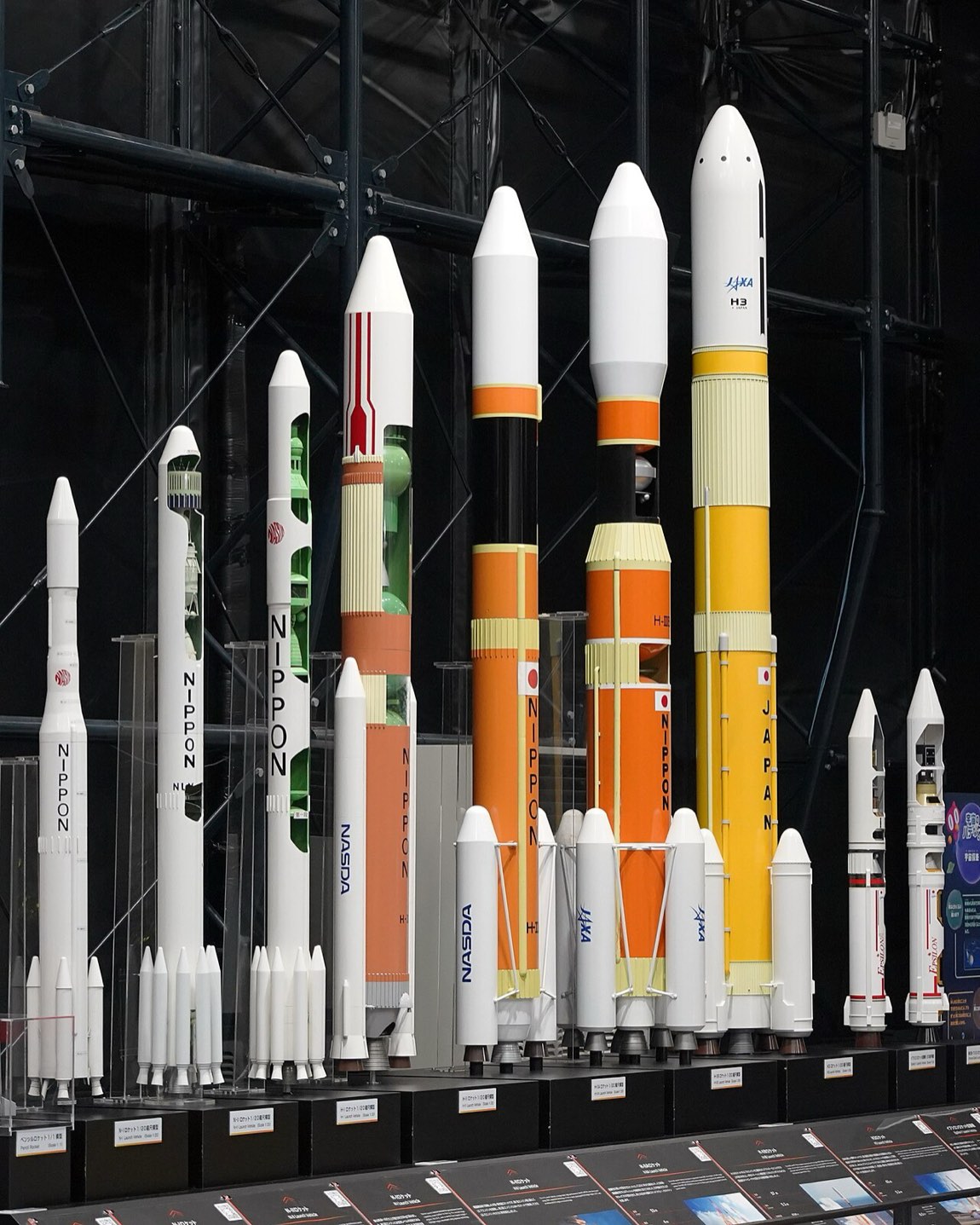
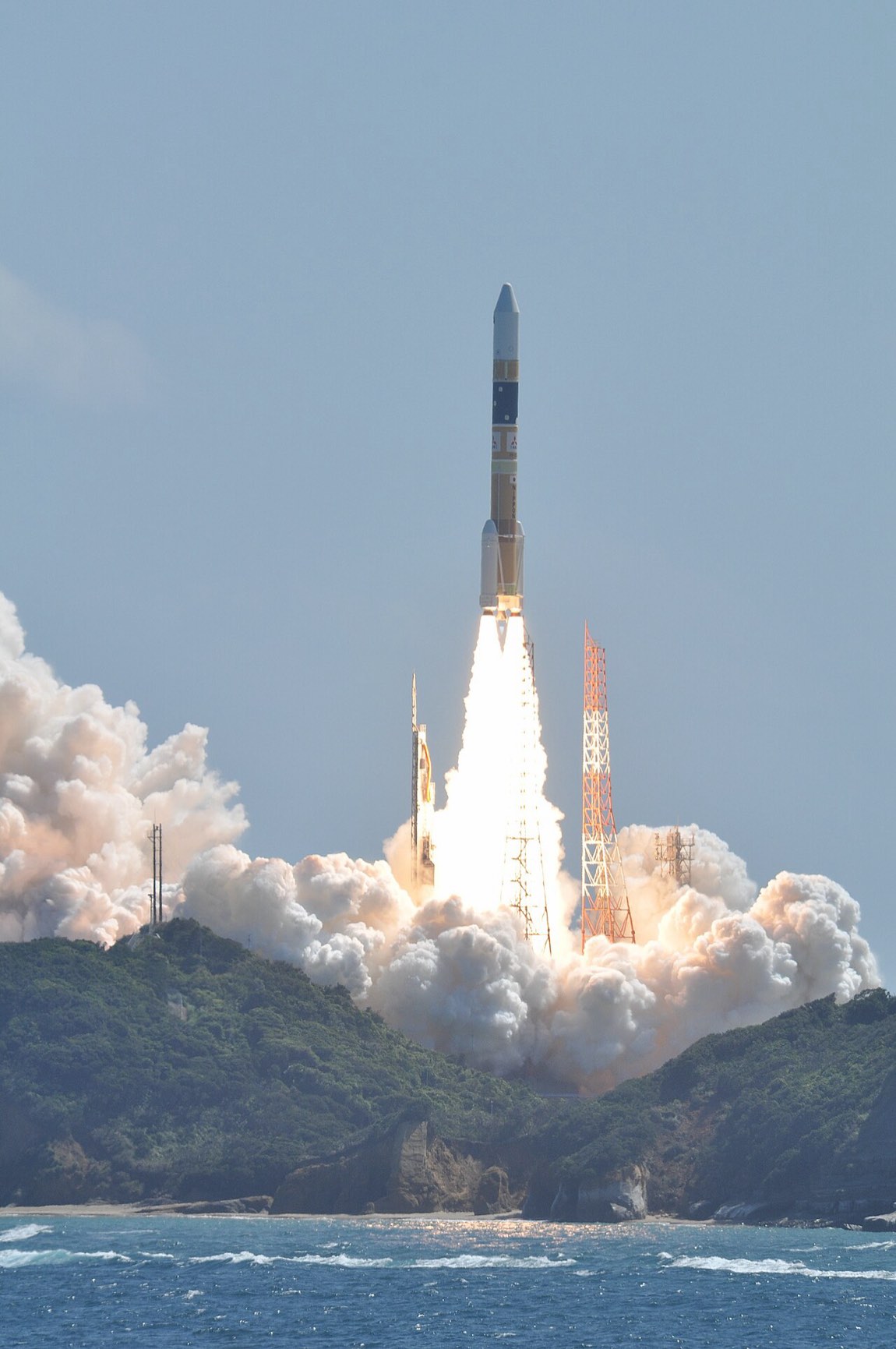
Japan's launch vehicle story is one of deliberate technological independence. Early NASDA rockets were licensed American designs, but the agency pushed toward full domestic capability with the H-II, introduced in 1994 — the first Japanese liquid-fueled launch vehicle developed entirely without foreign licenses. Its first-stage engine, the LE-7, used a staged combustion cycle, and the combination of a liquid-hydrogen two-stage combustion first stage with solid rocket boosters became the foundation of Japanese liquid-fuel launch vehicles for thirty years, from 1994 to 2024. The H-IIA improved on the H-II's reliability while cutting costs; as of June 2025, it had succeeded in 48 of 49 launches, with only the very first post-merger launch, H-IIA No. 6 in November 2003, ending in failure. JAXA retired the H-IIA with Flight No. 50 on 28 June 2025. Running alongside was the H-IIB, operated from September 2009 to May 2020, which successfully launched the H-II Transfer Vehicle six times. The newest vehicle, the H3, began operations in 2023 with an entirely new design rather than an incremental upgrade, using an expander bleed cycle for its first-stage engine — the first time that approach has been used in the world for a first stage — aiming for higher capability at lower cost than its predecessors.
 ⤢
⤢
03 Small Rockets, Big Firsts: Epsilon and the SS-520
Not every Japanese payload needs a large rocket. JAXA developed the solid-fueled Epsilon as a replacement for the retired M-V, which had held the title of the world's largest solid-fuel launch vehicle at the time of the merger. The Epsilon's maiden flight succeeded in 2013, and the rocket has flown six times overall, though one launch ended in failure. At the extreme small end of the spectrum, JAXA achieved something remarkable with the SS-520-5 rocket. In January 2017, a first attempt to reach orbit with one of these sounding-rocket derivatives failed. A second attempt on 2 February 2018 succeeded, placing a four-kilogram CubeSat into Earth orbit. The SS-520-5 is recognized as the world's smallest orbital launcher — a striking contrast to the multi-tonne payloads the H3 is designed to carry. JAXA also uses the S-Series of sounding rockets for upper-atmosphere experiments, keeping a whole spectrum of vehicles available for missions ranging from brief atmospheric probes to heavy interplanetary spacecraft.
04 Hayabusa: The Art of the Round Trip
When Hayabusa launched on 9 May 2003 aboard an M-V rocket, its name — meaning peregrine falcon — hinted at the speed and precision the mission would demand. Its target was 25143 Itokawa, a small near-Earth asteroid. The spacecraft rendezvoused with Itokawa in September 2005 and, after some initial confusion over the incoming telemetry, it was confirmed to have successfully landed on the asteroid's surface in November 2005. On 13 June 2010, Hayabusa returned those samples to Earth, becoming the world's first spacecraft to return asteroid material and the world's first spacecraft to complete a round trip to any celestial body farther from Earth than the Moon. Those two simultaneous firsts made Hayabusa one of the most celebrated achievements in JAXA's history. The follow-on mission, Hayabusa2, launched in 2014 and returned samples from asteroid 162173 Ryugu to Earth in 2020, this time also deploying rovers onto the asteroid's surface. Together the two Hayabusa missions established Japan as the world leader in small-body sample return, a field with direct implications for understanding the early Solar System.
 ⤢
⤢
05 Akatsuki's Second Chance at Venus Deeper
Planetary missions do not always go to plan, and Akatsuki's story illustrates both the risks and the patience required in deep-space exploration. The Venus Climate Orbiter, launched on 20 May 2010 alongside the IKAROS solar sail, was supposed to enter Venus orbit on 7 December 2010. Instead, a maneuvering system failure meant it could not complete the orbit insertion burn, and the spacecraft sailed past Venus into a solar orbit. JAXA engineers spent five years searching for a solution, and on exactly the fifth anniversary of the original failure — 7 December 2015 — Akatsuki successfully entered Venus orbit using its smaller attitude-control thrusters rather than its main engine. This made Akatsuki the first Japanese spacecraft ever to orbit another planet, arriving sixteen years after the originally planned orbital insertion of the ill-fated Nozomi Mars mission. Akatsuki's main scientific goal is to uncover the mechanism behind Venus's atmospheric super-rotation, a phenomenon in which cloud-top winds in the troposphere circulate around the planet faster than Venus itself rotates. As the article notes, a thorough explanation for this phenomenon has not yet been found, leaving one of planetary science's most puzzling weather systems still open to investigation. Akatsuki operated in Venus orbit from 2015 to 2024.
06 SLIM's Pinpoint Landing — and Its Tilted Wake-Up
When Japan's Smart Lander for Investigating Moon touched down on 19 January 2024 at 15:20 UTC, it made Japan the fifth country to achieve a soft lunar landing. SLIM's defining goal was precision: land within 100 meters of a target, something no spacecraft had previously accomplished. It managed 55 meters — well inside that margin — and JAXA declared it the world's first successful pinpoint lunar landing. However, success came with an immediate problem. The lander touched down with its solar panels oriented westward, facing away from the Sun at the start of the lunar day, so it could not generate power and ran entirely on battery until the battery drained that same day. Images from the LEV-2 rover confirmed SLIM had landed in the wrong attitude, losing an engine nozzle during descent and possibly damaging its Earth-pointing antenna. The two small rovers, LEV-1 and LEV-2, deployed during hovering just before final touchdown, operated as expected; LEV-1 conducted seven hops over 107 minutes on the surface and communicated independently with ground stations. On 29 January JAXA re-established contact after a shift in sunlight allowed the panels to generate power. SLIM then survived a lunar night — where surface temperatures reach −120 °C — even though its electronics were not designed for that environment, a feat previously achieved only by some landers in NASA's Surveyor program.
 ⤢
⤢
07 IKAROS and the First True Solar Sail
Solar sails have long existed as a concept, but demonstrating one in actual interplanetary space took decades of incremental work. JAXA's ISAS deployed prototype solar sails from a sounding rocket as early as 9 August 2004, unfurling a clover-type sail at 122 kilometers altitude and a fan-type sail at 169 kilometers, both using film just 7.5 micrometers thick. Subsequent tests in 2006 — as sub-payloads on the Akari and SOLAR-B launches — fell short: one sail failed to fully deploy, and contact with the other was lost. The breakthrough came with IKAROS, launched in May 2010 aboard the same H-IIA rocket as Akatsuki. IKAROS successfully demonstrated solar sail technology in July 2010, becoming the world's first spacecraft to successfully operate a solar sail in interplanetary space. Where previous solar sail efforts by other organizations had either failed or operated only briefly in low Earth orbit, IKAROS proved the concept in the deep-space environment it was designed for. JAXA's stated goal following IKAROS was a solar sail mission to Jupiter after 2020, building on the validated technology.
08 X-ray Astronomy: A String of Hard Lessons Deeper
Japan's X-ray astronomy tradition stretches back to 1979 and the Hakucho satellite, followed by nearly two decades of continuous observation that made ISAS a global leader in the field. That streak was broken in 2000 when the ASTRO-E satellite failed at launch, never receiving even a formal name. Japan was left without an X-ray telescope for five years. The replacement, Suzaku (ASTRO-EII), launched on 10 July 2005 carrying three instruments: an X-ray spectrometer (XRS), an X-ray imaging spectrometer (XIS), and a hard X-ray detector (HXD). Catastrophe struck again almost immediately: a malfunction caused Suzaku to lose its supply of liquid helium, rendering the XRS permanently inoperable. Despite that loss, Suzaku continued operating with its remaining instruments until its mission concluded. The next major X-ray observatory, Hitomi (ASTRO-H), launched on 17 February 2016 — only to appear in the article's list of failed missions for 2016, ending another promising program prematurely. Through each setback, JAXA has continued X-ray science via the Monitor of All-sky X-ray Image (MAXI), mounted on the ISS's Japanese external module, which continuously monitors X-ray objects across a broad energy band of 0.5 to 30 keV.
 ⤢
⤢
09 Kibō, HTV, and Japan's Role on the ISS
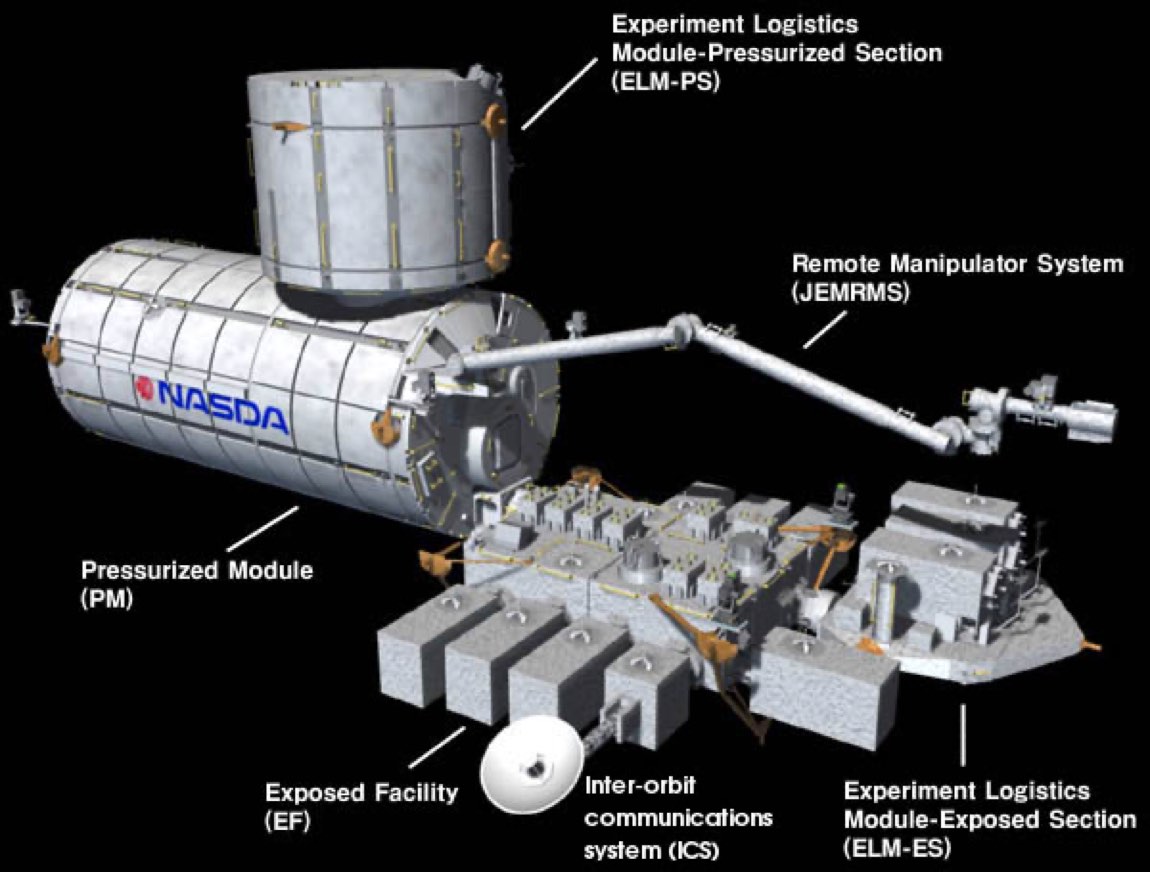
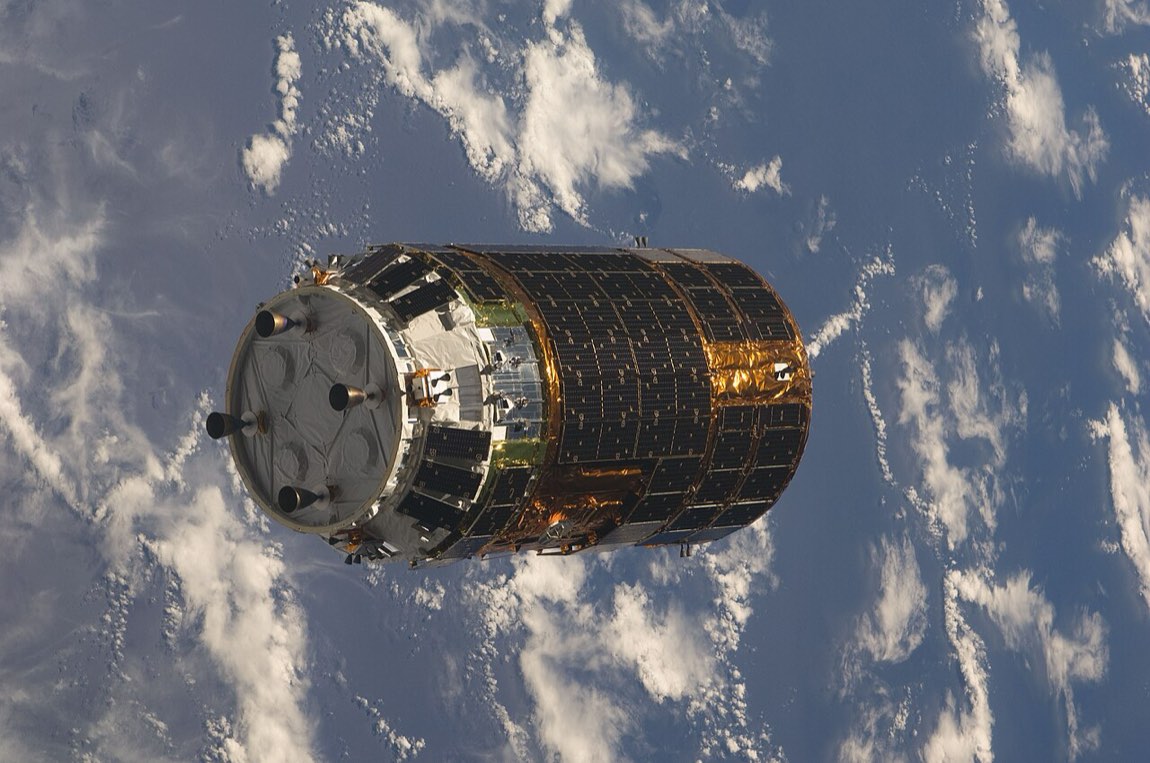
Japan's most visible contribution to the International Space Station is Kibō — meaning hope — the station's largest single module, developed by NASDA before the JAXA merger and delivered to the ISS across three Space Shuttle missions: STS-123, STS-124, and STS-127 in 2008 and 2009. Kibō functions as a pressurized laboratory and includes a Japanese external module where instruments like MAXI are mounted. Beyond building hardware, JAXA has kept Kibō supplied: since 2009 it has regularly resupplied the ISS using the H-II Transfer Vehicle (HTV) cargo spacecraft, with the H-IIB successfully launching HTV six times between September 2009 and May 2020. The next-generation cargo vehicle, HTV-X, is scheduled for its first flight in fiscal year 2025. On the human side, eleven members of the JAXA Astronaut Corps have flown since 1992 aboard the Space Shuttle, Soyuz, and Dragon 2 spacecraft. Kibō has also served as a satellite deployment platform: on 11 May 2018, JAXA used it to deploy the first satellite developed in Kenya, the 1KUNS-PF, built by the University of Nairobi — demonstrating how a single module can support both cutting-edge science and international capacity-building simultaneously.
10 Deep Space Listening: UDSC and MDSS Deeper
Communicating with spacecraft hundreds of millions of kilometers away demands enormous antennas and precise engineering. JAXA's Usuda Deep Space Center (UDSC) in Saku, Nagano, opened in 1984 with a 64-meter antenna built by Mitsubishi Electric — notable as the first deep-space antenna constructed with beam-waveguide technology — and for many years served as Japan's only ground station for interplanetary spacecraft, operating in X- and S-band frequencies. In 2021 it was superseded by the Misasa Deep Space Station (MDSS), also in Saku and just over one kilometer northwest of UDSC. MDSS, also called GREAT (Ground Station for Deep Space Exploration and Telecommunication), cost over ten billion yen and is equipped with a 54-meter dish communicating in X- and Ka-band. Its aperture area is two and a half times larger than equivalent antennas in the NASA and ESA networks, improving sensitivity considerably. MDSS also adds the first direct north-south baseline — Japan to Australia — in the X/Ka VLBI network, providing four new baselines that improve the precision with which spacecraft positions and celestial reference frames can be determined. JAXA, ESA, and NASA are jointly working to refine a unified X/Ka celestial and terrestrial reference frame shared across all three agencies' deep-space networks.
11 Earth Watch: Carbon, Rain, and Failing Satellites
Japan's location — an island nation in a typhoon belt — has given its Earth observation program a distinctly practical urgency. The Tropical Rainfall Measuring Mission, launched in 1997 in cooperation with NASA, studied tropical rainfall seasons, and its successor, the GPM Core Observatory, launched on 28 February 2014, aims to measure global rainfall with unprecedented detail. JAXA provided the GPM's Dual-frequency Precipitation Radar. On the atmospheric chemistry side, the GOSAT satellite launched at the end of fiscal year 2008 to monitor carbon dioxide density distribution worldwide, addressing gaps left by unevenly distributed ground observatories; the satellite weighs approximately 1,650 kilograms and was designed for a five-year life. GOSAT-2 followed in October 2018, and GOSAT-GW launched in June 2025. Not every mission succeeded: both Adeos (Midori) and Adeos 2 (Midori 2) failed after just ten months in orbit each, placing the Earth-observation program under intense scrutiny during the 1990s and early 2000s. More recently, the ALOS-3 optical satellite was lost in March 2023 when the second stage of its H3 rocket failed to ignite — the H3's own debut failure — though ALOS-4, the SAR successor to ALOS-2, launched successfully in July 2024.
12 MMX and the Mystery of Phobos's Origin Deeper
Mars has two small moons, Phobos and Deimos, and their origin remains genuinely disputed: are they captured asteroids, or did they form from debris ejected when a large object struck Mars long ago? JAXA's Martian Moons eXploration mission (MMX), first publicly revealed on 9 June 2015, is designed to settle that question. Its primary goal is to determine the origin of the Martian moons by collecting samples from Phobos and returning them to Earth — a feat that would make MMX the first sample-return mission from the Martian system and one of the most technically ambitious interplanetary endeavors ever attempted. While at Mars, MMX will also conduct remote sensing of Deimos and may observe the Martian atmosphere. As of December 2023, the mission is scheduled to launch in fiscal year 2026. Looking further ahead, JAXA's future science manifest includes LiteBIRD, a mission to study cosmic microwave background B-mode polarization and probe cosmic inflation, to be stationed at the Sun-Earth L2 Lagrange point; JASMINE, an astrometric infrared telescope operating at 2.2 micrometers and targeting the Galactic plane and center where dust absorption limits the European Gaia mission; and participation as a secondary spacecraft provider in ESA's Comet Interceptor mission, scheduled for fiscal year 2029.