ISRO (India)
Space agency · India · founded 1969
India's agency is the world's masterclass in frugal engineering: first-try Mars orbit (2014), a south-polar Moon landing (2023) that made India the fourth nation to land anywhere on the Moon, a solar observatory at L1 (Aditya-L1), and a busy commercial launch business — all on a fraction of other agencies' budgets.
✦ Highlights
- Chandrayaan-3 south-pole landing
- Mangalyaan Mars orbiter
- Aditya-L1 solar mission
The deep dive
Researched for the Atlas from Wikipedia — ISRO (58,000 characters read) · updated Sep 20, 2026
01 From Sounding Rockets to Orbital Ambition
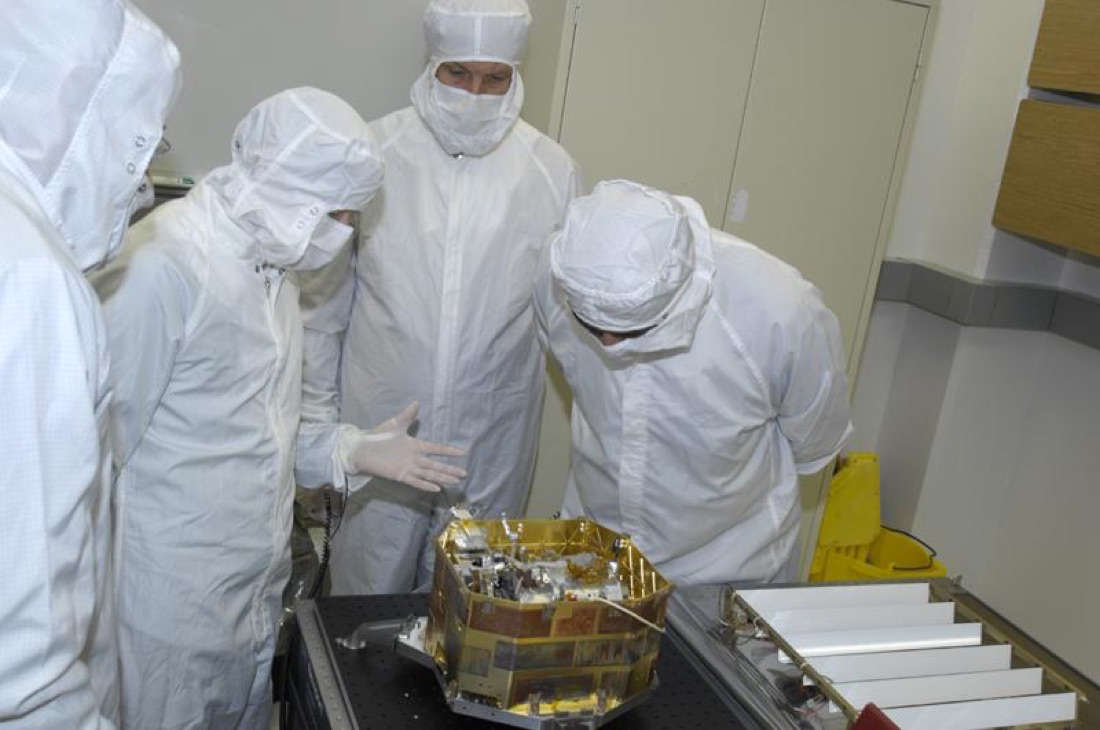
India's space story did not begin with satellites or rockets — it began with a physicist named S. K. Mitra probing the ionosphere from Kolkata in the 1920s using ground-based radio. Decades of scattered cosmic-ray studies, high-altitude balloon experiments, and deep-underground work at the Kolar mines followed before any institutional structure existed. The formal starting gun came in 1962, when Prime Minister Jawaharlal Nehru created INCOSPAR on the recommendation of Vikram Sarabhai, who had already founded the Physical Research Laboratory in Ahmedabad. Sarabhai's co-architect, Homi J. Bhabha, had established the Tata Institute of Fundamental Research in 1945 and later headed the Department of Atomic Energy, which funded space research throughout India after its founding in 1950. The very first hardware milestone was humble: sounding rockets fired from the Thumba Equatorial Rocket Launching Station, chosen precisely because its location near the geomagnetic equator made upper-atmosphere studies especially valuable. An indigenous sounding-rocket series named Rohini followed, with launches beginning in 1967. INCOSPAR became ISRO in 1969, and in 1972 a dedicated Department of Space brought the agency its own administrative home for the first time.
02 Building the First Rockets: SLV to PSLV
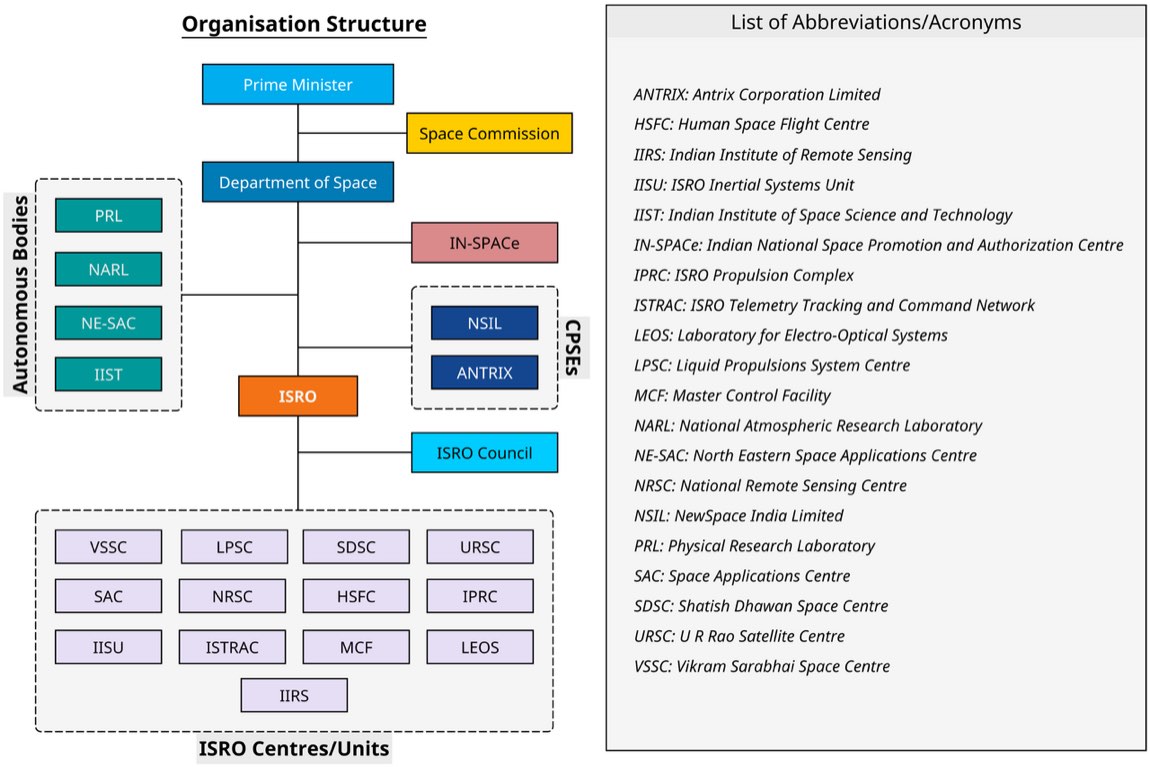
ISRO's path from sounding rockets to orbital capability took roughly two decades of iterative engineering. The target for the first orbital vehicle — the Satellite Launch Vehicle, or SLV — was modest but precise: deliver 40 kg (88 lb) to a 400-kilometre (250 mi) orbit. The first SLV launch in 1979 failed to reach the desired orbit; the second, in 1980, successfully placed the Rohini Series-I satellite RS-1 there, making India the seventh country to achieve orbital launches under its own power. RS-1 was actually India's third satellite in orbit, since Aryabhata had been lofted by the Soviet Interkosmos programme in 1975 and Bhaskara launched from the USSR in 1979. SLV-3 flew two more times before retirement in 1983. Work on the Augmented Satellite Launch Vehicle (ASLV), which used SLV-3 heritage hardware and aimed for geostationary transfer orbit, produced limited success and multiple failures before it too was discontinued. The decisive leap came with the Polar Satellite Launch Vehicle in the 1990s. Apart from its first flight in 1994 and two partial failures, the PSLV accumulated more than 50 consecutive successful flights — an extraordinary record that made it the workhorse for all of India's low-Earth-orbit satellites, small GTO payloads, and hundreds of foreign satellites.
 ⤢
⤢
03 The Cryogenic Engine Saga Deeper
Mastering cryogenic propulsion proved to be one of ISRO's longest and most politically entangled engineering journeys. India initially sought to purchase upper-stage cryogenic engines from Russia's Glavkosmos, but the United States blocked the deal. A revised agreement allowed Russia to supply seven KVD-1 cryogenic stages and one ground mock-up, but explicitly excluded technology transfer or design details — a significant downgrade from the original terms, which had included technology and design. These imported engines powered the first GSLV flights, designated GSLV Mk I. Meanwhile, an entirely indigenous cryogenic technology programme, launched in 1994, took two full decades to reach operational maturity. Once it did, India joined an exclusive group as the sixth country with full launch capabilities, including cryogenic upper stages. The episode also left a strategic lesson: when US sanctions denied India access to GPS signals during the 1999 Kargil War, ISRO responded by developing its own regional navigation constellation, the Indian Regional Navigation Satellite System (IRNSS), operationally named NavIC. Both the cryogenic saga and the navigation rebuff illustrate how external technology denials shaped ISRO's long-term emphasis on indigenous self-reliance.
04 Chandrayaan-1: Water on the Moon
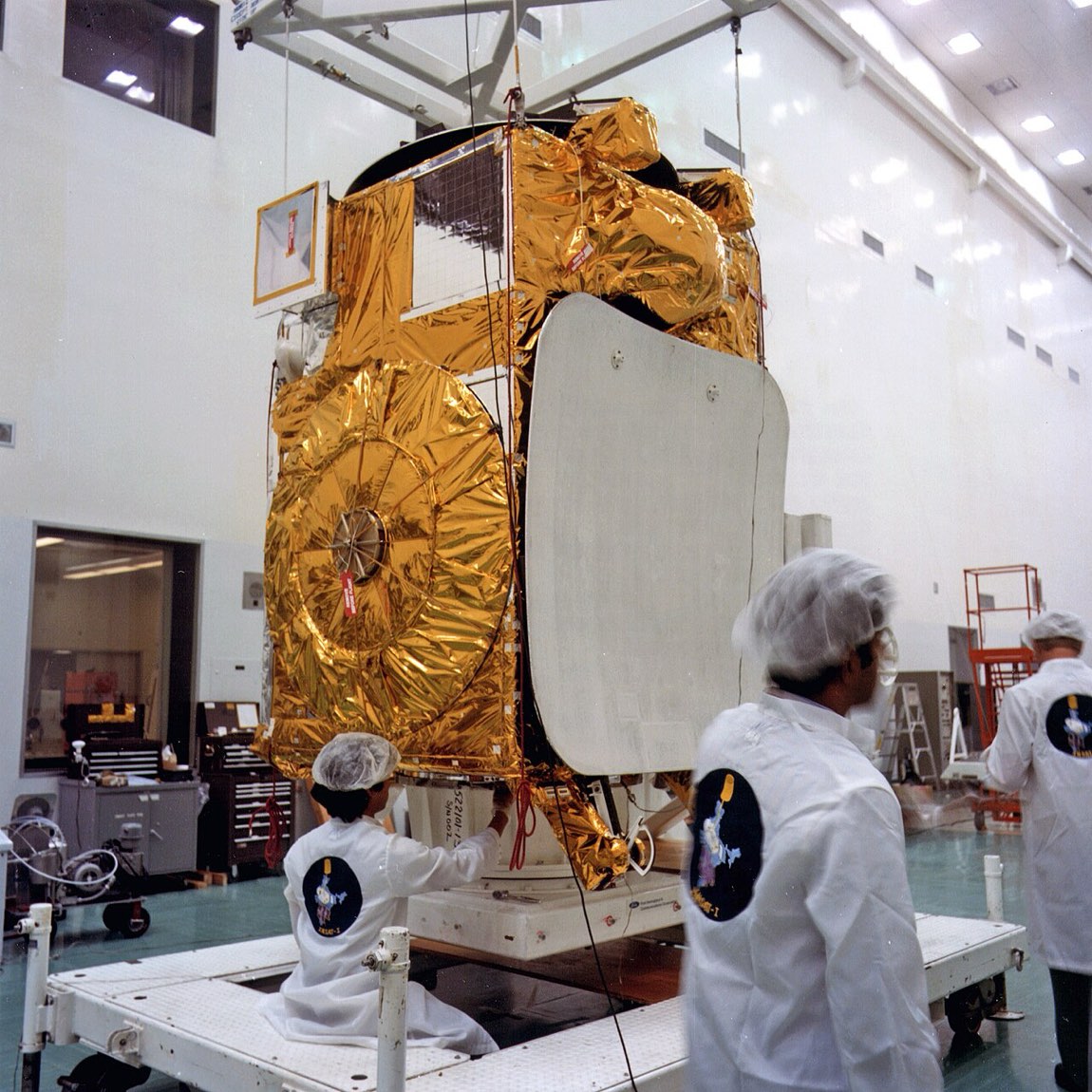
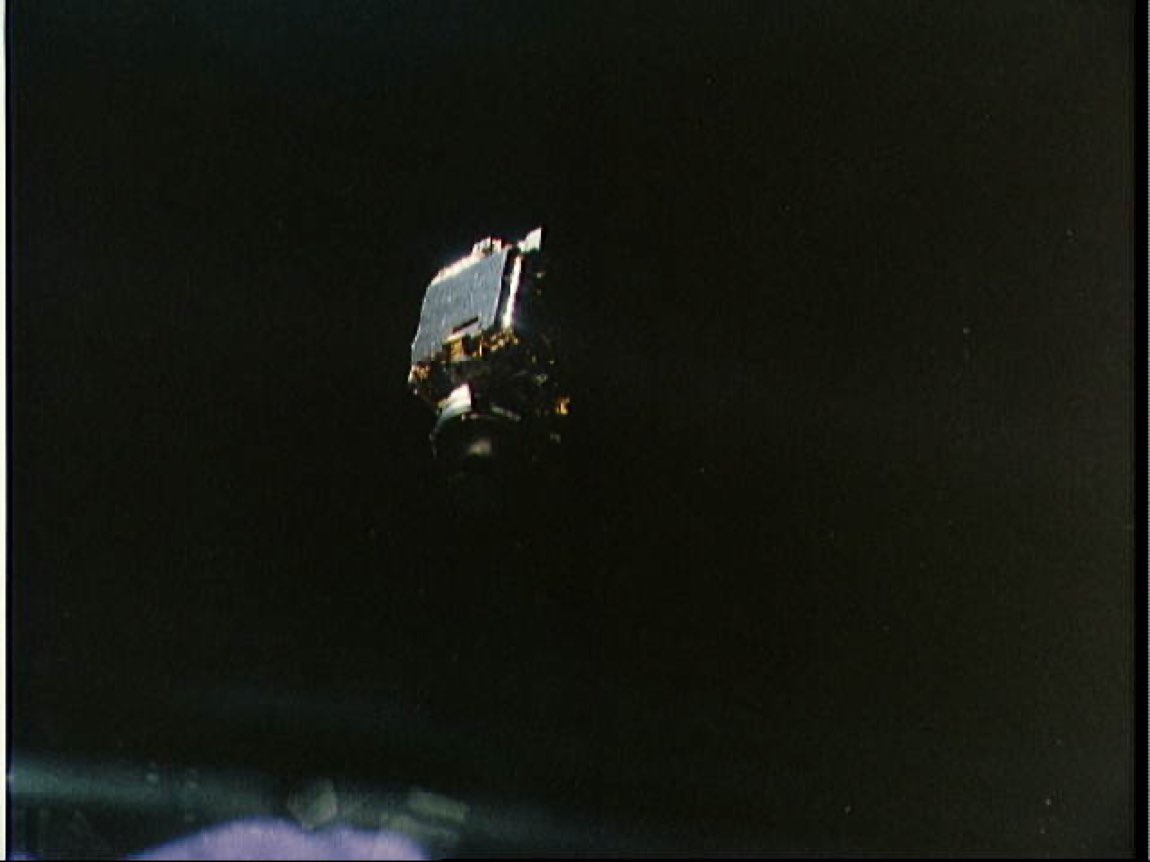
India's first lunar mission launched on 22 October 2008 aboard a modified PSLV from Satish Dhawan Space Centre, entering lunar orbit on 8 November 2008. Chandrayaan-1 carried 11 instruments — five Indian and six from foreign partners including NASA, ESA, the Bulgarian Academy of Sciences, and Brown University, all flown at no charge. During an operational period of 312 days (against a planned two years), the spacecraft mapped the Moon's chemical characteristics and three-dimensional topography at high resolution across visible, near-infrared, and X-ray frequencies. The polar regions drew particular attention because of the possibility of ice deposits. The mission is credited with being the first probe to verify the presence of water on the Moon. For this work, the mission team received the American Institute of Aeronautics and Astronautics SPACE 2009 award, the International Lunar Exploration Working Group's International Co-operation award in 2008, and the National Space Society's 2009 Space Pioneer Award in science and engineering — a notable international recognition for what was India's debut at the Moon.
 ⤢
⤢
05 Chandrayaan-2: A Software Glitch and a Silver Lining
India's second lunar mission launched on 22 July 2019 aboard a GSLV Mk III, carrying an orbiter, the Vikram lander, and the Pragyan rover — all developed domestically. The target was the little-explored south polar region of the Moon, at a latitude of about 70° S. On 7 September 2019, beginning from an altitude of 2.1 km (1.3 mi), the Vikram lander deviated from its intended descent trajectory and telemetry was lost seconds before expected touchdown. A review board concluded that a software glitch caused the crash-landing. The loss of the lander and rover represented a significant setback, but the orbiter survived and was maneuvered so efficiently into its final orbit that its operational lifespan was extended from the planned one year to seven years — a considerable engineering success within the broader disappointment. The orbiter continued returning scientific data and later served as the communication relay for Chandrayaan-3. ISRO treated the Chandrayaan-2 experience as an engineering case study, directly informing the design changes made for the follow-on mission.
06 Chandrayaan-3: Landing at the South Pole
Learning from Chandrayaan-2's software failure, ISRO redesigned the landing approach for Chandrayaan-3, which carried only a lander-rover combination — no new orbiter — communicating instead through the still-functioning Chandrayaan-2 orbiter. On 23 August 2023, the Vikram lander touched down successfully at 6:04 pm IST (12:34 pm GMT) near the lunar south pole, making India the first nation to land a spacecraft in that region and only the fourth country ever to successfully soft-land on the Moon. Prime Minister Narendra Modi proclaimed August 23 as National Space Day in India to mark the occasion. The landing site was named Shiv Shakti Point, and it is the planned sample-collection target for the future Chandrayaan-4 mission, which aims to return up to 3 kg (6.6 lb) of lunar regolith to Earth around 2028. The south polar focus matters scientifically because the permanently shadowed craters in that region are thought to harbor water ice — the same resource Chandrayaan-1 helped confirm exists on the Moon.
 ⤢
⤢
07 Mangalyaan: Mars on a Shoestring
India's Mars Orbiter Mission, informally called Mangalyaan (meaning "MarsCraft"), launched into Earth orbit on 5 November 2013 and entered Mars orbit on 24 September 2014 — the first time any Asian spacecraft reached Mars, and the first time any nation succeeded at Mars on its very first attempt. The spacecraft had a launch mass of 1,337 kg (2,948 lb), carrying 15 kg (33 lb) of five scientific instruments as payload. What made the achievement globally striking was the cost: the entire mission was completed for a record $74 million — famously less than the production budget of several Hollywood space films of that era. The National Space Society awarded the MOM team the 2015 Space Pioneer Award in science and engineering. A follow-on mission, informally called Mangalyaan-2 or the Mars Lander Mission, has been proposed for launch around 2030 with an expanded architecture including a rover, helicopter, sky crane, and supersonic parachute — technologies that would be new territory for ISRO.
08 Navigation, Weather, and Earth Watch From Orbit
ISRO operates two satellite navigation systems, serving very different purposes. GAGAN (GPS Aided GEO Augmented Navigation), developed jointly with the Airports Authority of India, is a Space-Based Augmentation System for civil aviation, providing GPS correction signals across Indian airspace through eight Indian Reference Stations linked to a Master Control Centre; its Technology Demonstration System was completed in 2007. NavIC, the IRNSS constellation, is an independent regional navigation system designed to provide positioning accuracy better than 20 m (66 ft) across India and within 1,500 km (930 mi) of its borders. It offers both a Standard Positioning Service for civilian users and a Restricted Service for authorized users. NavIC exists in large part because the US refused to provide GPS assistance to India during the Kargil War. For Earth observation, the Indian Remote Sensing Programme — now unified under the prefix EOS since 2020 — is the largest collection of remote sensing satellites for civilian use currently in operation, providing optical, radar, and electronic imagery across a spectrum of resolutions for applications from city planning to oceanography.
 ⤢
⤢
09 Astrosat, XPoSat, and Astronomy From Space Deeper
India's first dedicated multi-wavelength space observatory, AstroSat, launched in 2015, studies active galactic nuclei, hot white dwarfs, pulsar pulsations, binary star systems, and supermassive black holes using simultaneous observations across wavelengths — a capability that gives it advantages over single-band observatories. The agency has also maintained a balloon launch base at Hyderabad jointly with the Tata Institute of Fundamental Research since 1967; its location near the geomagnetic equator, where both primary and secondary cosmic-ray fluxes are low, makes it ideal for studying diffuse cosmic X-ray background. A more unusual scientific claim associated with ISRO balloon experiments is the discovery of three species of bacteria in the upper stratosphere at altitudes between 20 and 40 km (12 and 25 mi). These organisms, highly resistant to ultraviolet radiation and not found elsewhere on Earth, were named Bacillus isronensis (honoring ISRO), Bacillus aryabhata (after the ancient astronomer), and Janibacter hoylei (after astrophysicist Fred Hoyle). The newest astronomical satellite, XPoSat, launched 1 January 2024 on a PSLV-DL, studies X-ray polarization from bright astronomical sources including black holes in the energy range 5 to 30 keV, with an expected operational lifespan of at least five years.
10 Gaganyaan and India's Human Spaceflight Path
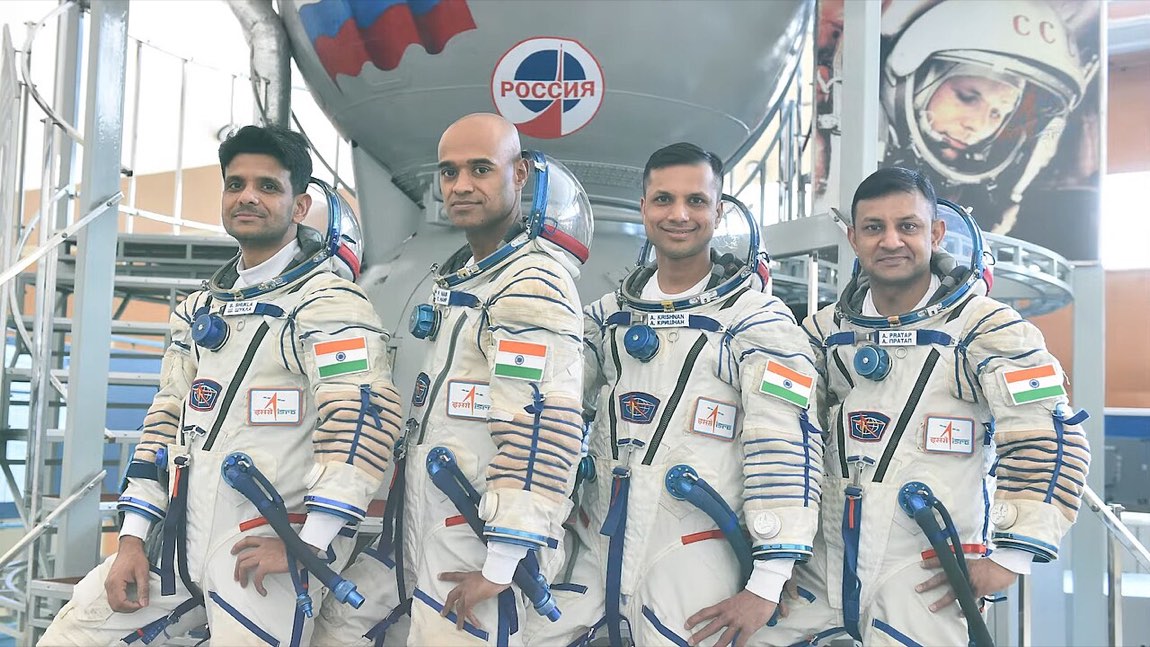
India's human spaceflight ambitions were first formally discussed in 2006, but the pace accelerated dramatically after Prime Minister Narendra Modi announced in his 2018 Independence Day address that Indian astronauts would reach space by 2022 aboard the new Gaganyaan spacecraft. The Gaganyaan capsule is designed to carry up to three people to low Earth orbit at an altitude of 300 to 400 km (190 to 250 mi) for at least seven days, using a GSLV Mk-III launch vehicle, at a project cost of less than ₹100 billion (US$1.3 billion). Key enabling milestones included a 600 kg (1,300 lb) Space Capsule Recovery Experiment in 2007, a pad abort test in 2018, and an agreement signed on 1 July 2019 with Russia's Glavkosmos for astronaut selection, medical examination, and training. Four Indian Air Force personnel completed training at the Yuri Gagarin Cosmonaut Training Center in March 2021. A first integrated air drop test for Gaganyaan was completed on 24 August 2025. Separately, in June 2025, Indian Air Force Group Captain Shubhanshu Shukla flew to the International Space Station as part of Axiom Mission 4 — the first Indian to reach the ISS — conducting around 60 experiments over approximately two weeks, at least seven developed by ISRO or Indian institutions.
11 The SpaDeX Docking Milestone Deeper
On 30 December 2024, ISRO launched the SpaDeX (Space Docking Experiment) mission, using two small satellites to demonstrate rendezvous, docking, and undocking in orbit. The ISRO Telemetry, Tracking and Command Network's Mission Operations Complex verified the successful docking on 16 January 2025. The achievement placed India among a small group of nations that have demonstrated autonomous in-space docking using entirely indigenous technology. Docking capability is not merely a demonstration milestone — it is a critical enabling technology for the planned Bharatiya Antariksh Station (the Indian space station), for the Chandrayaan-4 lunar sample-return mission which will require assembling spacecraft segments in orbit, and ultimately for any crewed lunar landing attempt. The planned Bharatiya Antariksh Station itself would have a mass of approximately 20 tonnes (44,000 lb), orbit at around 400 km (250 mi), and initially support crews of up to three astronauts for 15 to 20 days, with expansion in phases over several years envisioned as a platform for microgravity science, space biology, and international research collaboration.
12 Spin-offs, Telemedicine, and Societal Impact
Vikram Sarabhai's foundational philosophy — that space technology must address the real problems of Indian society, not merely serve as display — has shaped ISRO's applied programmes in concrete ways. Between 1975 and 1976 India ran the Satellite Instructional Television Experiment (SITE), reaching 2,400 villages through video broadcasts in local languages using NASA's ATS-6 satellite, in what was India's largest sociological programme using space technology; it produced measurable improvements in rural education. Today, ISRO's satellite telemedicine network connects patients in remote areas to specialist doctors in urban centers via live video conferencing, enabling real-time diagnosis and treatment guidance. India's INSAT series, the largest domestic communication system in the Asia-Pacific region since the first satellite in 1983, underpins weather forecasting, search-and-rescue, broadcasting, and disaster management. ISRO's research has also generated commercial spin-offs including bionic limbs, silica aerogel insulation for soldiers in extreme cold, distress alert transmitters, and Doppler weather radar. As of April 2026, ISRO has launched 434 foreign satellites from 34 countries — a commercial launch record that itself reflects how a programme built for domestic self-reliance became an internationally competitive launch provider.