Firefly Aerospace
Company · United States · founded 2017
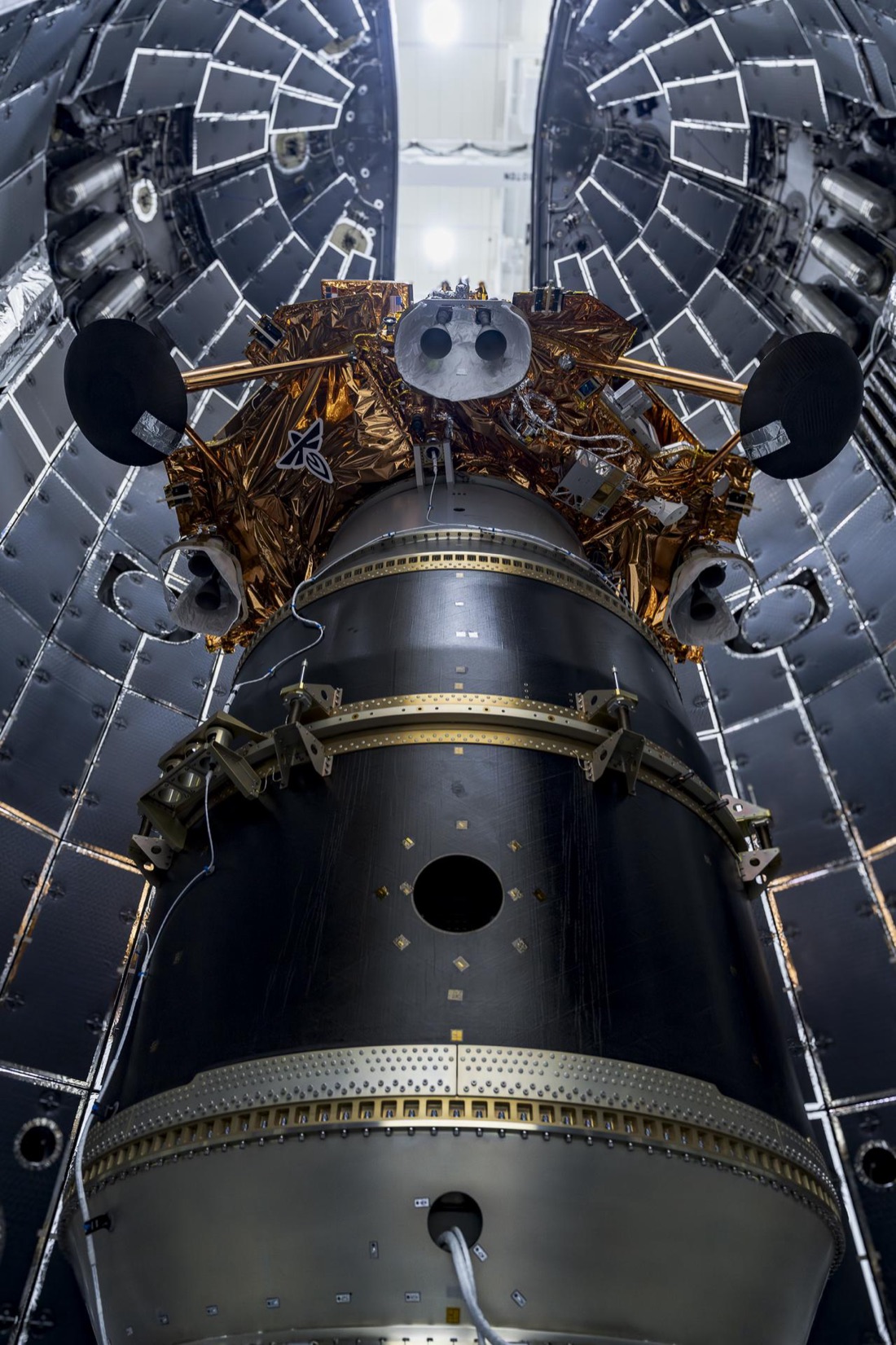
A Texas company that earned its place in history in March 2025 when its Blue Ghost lander touched down upright in Mare Crisium and ran a full lunar-day science campaign for NASA — the first unambiguously successful commercial Moon landing, filmed in glorious detail. Based in Cedar Park, north of Austin.
✦ Highlights
- Blue Ghost Moon landing (2025)
- Alpha launcher
- NASA CLPS missions
The deep dive
Researched for the Atlas from Wikipedia — Firefly Aerospace (19,234 characters read) · updated Sep 20, 2026
01 From Startup to Bankruptcy: The First Firefly
The company that would eventually land on the Moon began as a self-funded startup in January 2014, founded by Tom Markusic, P.J. King, Michael Blum, and a small group of entrepreneurs. Within the first year, Firefly Space Systems had relocated from Hawthorne, California to Cedar Park, Texas, grown to 43 employees, and purchased 215 acres (87 ha) of land in Briggs, Texas — about 50 miles (80 km) north of Austin — for engine testing and manufacturing. The original Alpha design was revealed in July 2014, and the company performed its first hot-fire engine test, of the FRE-R1, on September 10, 2015. The ambition was real, but the company collapsed with startling speed. A legal dispute with Virgin Galactic, which alleged that founder Markusic had destroyed storage devices and misappropriated intellectual property, spooked a major European investor. The entire staff was furloughed in October 2016, and by December 1, 2016, Firefly Space Systems had permanently ceased engineering work. Its assets were auctioned off in March 2017, ending the first chapter of Firefly's history before a single rocket had ever flown.
02 Rebuilding Under New Ownership
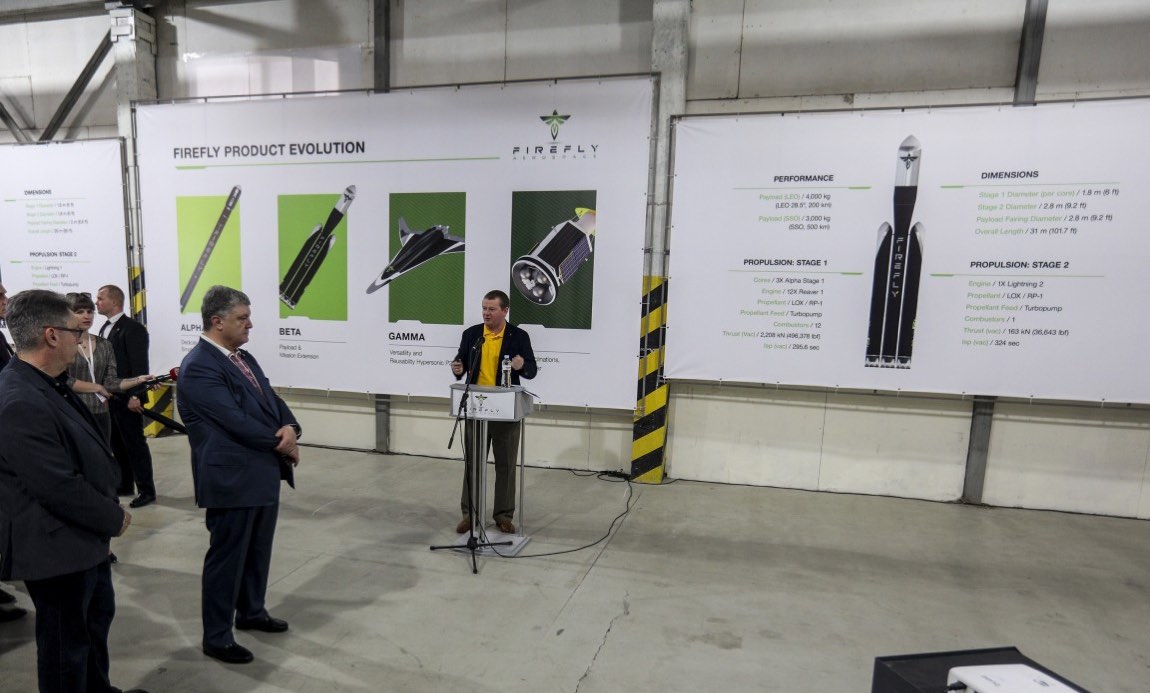
The second incarnation of Firefly emerged immediately from the ashes of the first. Noosphere Ventures, led by Max Polyakov, purchased the auctioned assets in March 2017 and renamed the company Firefly Aerospace. Polyakov personally committed to funding Firefly through at least its first two launches — a critical guarantee for a company that had just collapsed for lack of investment. The new management made meaningful technical changes: the revised Alpha vehicle dropped the aerospike engine configuration in favor of a pump-fed engine, which pushed the first expected launch date from the original 2016 target back to roughly 2019. On May 17, 2018, Firefly opened a research and development center in Dnipro, Ukraine, which was intended to eventually employ more than 150 people and was equipped with what was described as the largest 3D printer in Ukraine, for producing metal parts. The Ukrainian connection later became a liability: after Russia's 2022 invasion, the Dnipro facility was bombed, and many of the engineers either enlisted in the Ukrainian military or fled the country, dissolving that part of Firefly's workforce entirely.
03 CFIUS, National Security, and Ownership Change Deeper
Even before the Russian invasion of Ukraine made the situation irreversible, Firefly's ownership structure had attracted scrutiny from the United States government. In late November 2021, the Committee on Foreign Investment in the United States (CFIUS) sent Polyakov a letter requesting that he and Noosphere Venture Partners divest nearly 50 percent of their stake in Firefly, citing national security concerns. The government's stated rationale pointed to Polyakov being an ethnic Ukrainian and to the historical cooperation between Ukraine and Russia on rockets — a justification Polyakov publicly disputed. Despite his objections, he agreed to comply. On February 24, 2022 — the same day Russia launched its full-scale invasion of Ukraine — it was announced that Polyakov and Noosphere would sell their stake to AE Industrial Partners, a private equity firm. The transaction fundamentally changed Firefly's ownership profile from a venture backed by a single committed individual to one managed by institutional investors. The company subsequently completed a $75 million Series A round led by DADA Holdings in May 2021, and eventually went public on Nasdaq under the ticker symbol "FLY" in August 2025, raising $868 million and achieving a valuation of approximately $10 billion.
 ⤢
⤢
04 Alpha's Troubled Road to Orbit
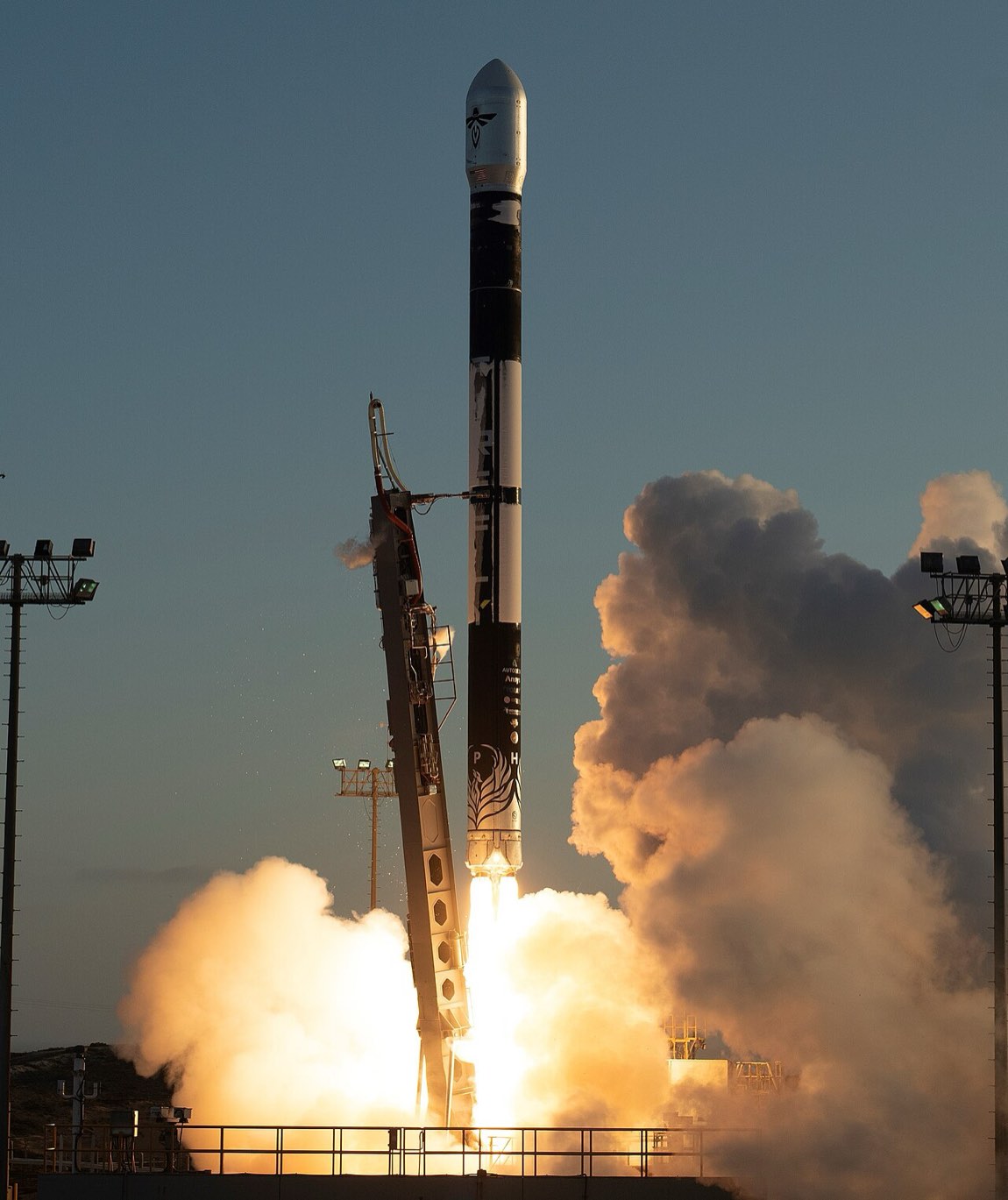
The Firefly Alpha rocket is an expendable small-lift vehicle rated to carry 1,030 kg (2,270 lb) to low Earth orbit or 630 kg (1,390 lb) to Sun-synchronous orbit, with an advertised launch price of $15 million. Its path to operational status was anything but smooth. The first test flight on September 3, 2021, ended when an anomaly during ascent caused the Range Safety officer to activate the Flight Termination System, destroying the vehicle. The second attempt, on October 1, 2022, was a partial success: Alpha reached orbit and deployed seven satellites, making it the first orbital rocket powered by a tap-off cycle engine. However, the final deployment orbit was lower than intended, and most of the satellites re-entered the atmosphere approximately one week after launch. The first fully successful launch came on September 14, 2023, delivering a spacecraft for Millennium Space to orbit for the U.S. Department of Defense. That mission was completed just 27 hours after Firefly received notice to launch — setting a new record for the fastest national security responsive launch, shattering the previous record of 21 days set in June 2021. Firefly's fourth launch in December 2023 was again only partially successful, with the second stage failing to perform its circularization burn and leaving its payload in an elliptical orbit.
05 The Tap-Off Cycle: An Engine Rarity Deeper
One of Firefly's most technically distinctive claims is its engine architecture. The company states it is the only organization to have developed an orbital-class rocket engine using the combustion tap-off cycle, and specifically the only one to do so with RP-1 (a highly refined kerosene) and liquid oxygen propellants. In a tap-off engine, there is no separate gas generator to drive the turbopumps; instead, hot gas is drawn — tapped off — directly from the main combustion chamber to power them. This simplifies the engine system by removing a component, though it introduces its own design challenges. Other tap-off engines exist, notably the Rocketdyne J-2S and Blue Origin's BE-3PM, but both burn liquid hydrogen rather than RP-1. Firefly's Reaver engine, used in clusters of four on Alpha's first stage, produces 184 kilonewtons (41,000 lbf) of thrust with a specific impulse of 295.6 seconds. The upper-stage Lightning engine produces 70.1 kilonewtons (15,800 lbf) with a specific impulse of 322 seconds and uses Firefly's patented "Crossfire" injector design. Reaver runs at fixed throttle from ignition to cutoff, skipping the throttle-down at maximum aerodynamic pressure that most rockets perform, and uses a TEA-TEB pyrophoric ignition system also employed by SpaceX's Merlin engine.
06 Blue Ghost and the First Commercial Moon Landing
Firefly's most consequential achievement to date is the Blue Ghost lunar lander, designed at its Cedar Park facility to meet NASA's Commercial Lunar Payload Services requirements. The lander takes its name from Phausis reticulata, the blue ghost firefly. On January 15, 2025, Blue Ghost Mission 1 launched aboard a SpaceX Falcon 9 Block 5 rocket, sharing the ride with the competing Hakuto-R Mission 2 lander, which failed. Blue Ghost did not fail. On March 2, 2025, it executed what Firefly described as a "picture-perfect landing," making Firefly the first commercial company in history to achieve a successful soft-landing on the Moon. The mission had been supported by a NASA award of approximately $93.3 million announced in February 2021 for Artemis Commercial Moon Delivery. An earlier lunar lander concept, called Genesis and based on the Beresheet design licensed from Israel Aerospace Industries, was abandoned in 2021 after NASA updated its CLPS specifications and Genesis no longer qualified. Work then shifted to Blue Ghost, the design that ultimately succeeded.
 ⤢
⤢
07 Elytra: Moving Payloads After Deployment Deeper
Beyond rockets and landers, Firefly is developing a family of orbital transfer vehicles called Elytra, intended to transport payloads and satellites between different orbits across low Earth orbit, geostationary orbit, and cislunar space. The system is planned in three variants suited to different mission profiles: Elytra Dawn for LEO operations, Elytra Dusk for transfers from LEO to geostationary altitude, and Elytra Dark for long-duration missions to cislunar space and beyond. Elytra Dark has already been assigned a concrete mission: it will carry Blue Ghost Mission 2 to lunar orbit, serve as an orbiting relay, and deploy the European Space Agency's Lunar Pathfinder payload. In March 2025, the U.S. Defense Innovation Unit awarded Firefly a contract to provide three to six Elytra Dawn vehicles for a project called "Sinequone." The strategic logic behind Elytra is straightforward: a small rocket like Alpha has limited reach, but pairing it with an orbital transfer vehicle effectively extends its useful range, allowing payloads to be placed in orbits that the rocket alone could never achieve directly. In July 2025, a Blue Ghost plus Elytra Dark configuration also secured a $176.7 million NASA CLPS contract for a south-pole lunar mission planned for 2029, which will deliver two rovers and three science instruments.
08 Eclipse and the Antares Partnership Deeper
Firefly's medium-lift vehicle has passed through several names and designs. Originally called Beta and conceived as three Alpha cores strapped together, it was later reimagined as a scaled-up single-core vehicle, then redesigned again after the Northrop Grumman partnership was announced in August 2022. Now called Eclipse, the rocket stands 4.32 m (14.17 ft) in diameter, uses seven Miranda engines on its first stage and one Vira engine on its second, and is designed to deliver more than 16,000 kg to low Earth orbit under a 5 m (16.4 ft) fairing. The Miranda engine expected to power it produces 1,023 kilonewtons (230,000 lbf) of thrust in vacuum with a specific impulse of 305 seconds; as of June 2024 it had entered production after 20 test fires. The Northrop Grumman connection is significant: Firefly is building a de-rated Eclipse first stage to serve as the first stage of the Antares 300 rocket, replacing the Ukrainian-built first stage and Russian-built RD-181 engines that became unavailable after the 2022 invasion. Seven Miranda engines together produce 7,200 kN (1,600,000 lbf) of thrust on the Antares 300, substantially exceeding the capability of the earlier Antares 200-series. Eclipse itself is planned to eventually incorporate first-stage reusability, with refinement of that technology targeted by its sixth flight; its first launch is expected no earlier than 2027.
09 Manufacturing Scale: Briggs and Cedar Park
Firefly's physical infrastructure reflects a company growing from a scrappy startup into a multi-program aerospace manufacturer. The company's headquarters and primary factory occupy approximately 50,000 square feet (4,600 square meters) of manufacturing space in Cedar Park, Texas, capable of producing both composite and metallic components in-house. The separate engine test and manufacturing site in Briggs, Texas — purchased as 215 acres (87 ha) of raw land in 2014 — has expanded substantially. To support Miranda engine production, Eclipse vehicle manufacturing, and Antares 300 first-stage assembly simultaneously, Firefly expanded the Briggs facility from 92,000 to 207,000 square feet (8,500 to 19,200 square meters), more than doubling its footprint. Composite manufacturing has been central to Firefly's design philosophy from the beginning: the company purchased fiber-winding equipment for out-of-autoclave composite cryotank construction as early as 2014, with prototype tanks tested at NASA's Marshall Space Flight Center in mid-2014. That same lightweight carbon composite philosophy carried through to Alpha's structure, reducing dry mass and improving payload fraction. For launch operations, Firefly holds leased access to Vandenberg Space Force Base's Space Launch Complex 2 on the U.S. West Coast and Space Launch Complex 20 at Cape Canaveral in Florida, a pad with a history stretching back to U.S. Air Force use from the 1950s through 1996.
10 Commercial and Defense Launch Market Position
Firefly positions Alpha explicitly to compete in the small satellite launch market against vehicles such as Rocket Lab's Electron, ISRO's SSLV, ABL Space Systems' RS1, and Northrop Grumman's Pegasus — a crowded field of vehicles targeting the same payload class. Its $15 million advertised launch price sits in the range typical for dedicated small-lift vehicles. The national security sector has become an important customer: Firefly's first fully successful Alpha mission in September 2023 flew for the U.S. Department of Defense, and by 2024 the company was competing with Rocket Lab and SpaceX for small satellite launch contracts with the Pentagon. The responsive launch record set on that 2023 mission — 27 hours from notification to launch — is a capability the military prizes and that Firefly has actively advertised. The company also entered a partnership with York Space Systems in October 2018 to offer bundled satellite and launch services, giving potential customers a single-stop option. The Northrop Grumman Antares relationship meanwhile introduces Firefly into the medium-lift supply chain, broadening its revenue base beyond its own branded vehicles. An engine technology transfer arrangement with Astra Space, which purchased up to 50 modified Reaver engines for Astra's Rocket 4 vehicle under the name Chiron, further illustrates how Firefly has pursued propulsion as a standalone business line alongside its launch services.