European Space Agency (ESA)
Space agency · 22 member states · founded 1975
Europe's pooled space program spans 22 nations. ESA specializes in audacious science firsts: landing on a comet (Rosetta/Philae), landing on Titan (Huygens), and mapping two billion stars in 3D (Gaia). It also partners on JWST, ISS and Artemis (it builds Orion's service module).
✦ Highlights
- Rosetta & Philae comet landing
- Gaia astrometry revolution
- Huygens Titan landing
- JUICE to Jupiter's moons
The deep dive
Researched for the Atlas from Wikipedia — European Space Agency (51,266 characters read) · updated Sep 20, 2026
01 From Sputnik Shock to a Shared Agency
The impulse that eventually produced ESA can be traced to a single anxious year: 1958, just months after Sputnik rattled Western confidence. Italian physicist Edoardo Amaldi and French physicist Pierre Auger met to sketch out a common European space body, with scientific representatives from eight countries in the room. What they designed was not one agency but two. ELDO would build rockets; ESRO, led by Auger himself after its formal establishment on 20 March 1964, would run the science. From 1968 to 1972 ESRO managed to launch seven research satellites, a genuine accomplishment. ELDO, however, never delivered a working launch vehicle, and both organisations bled from underfunding and clashing national priorities. The solution was merger. The ESA Convention of 1975 folded ESRO and ELDO into a single agency with ten founding member states — Belgium, Denmark, France, West Germany, Italy, the Netherlands, Spain, Sweden, Switzerland, and the United Kingdom — though the convention did not formally enter into force until the instruments of ratification were deposited in 1980. For five years ESA operated in a kind of constitutional limbo, functioning in a de facto fashion while the paperwork caught up.
02 Early Science: Gamma Rays to Halley's Comet
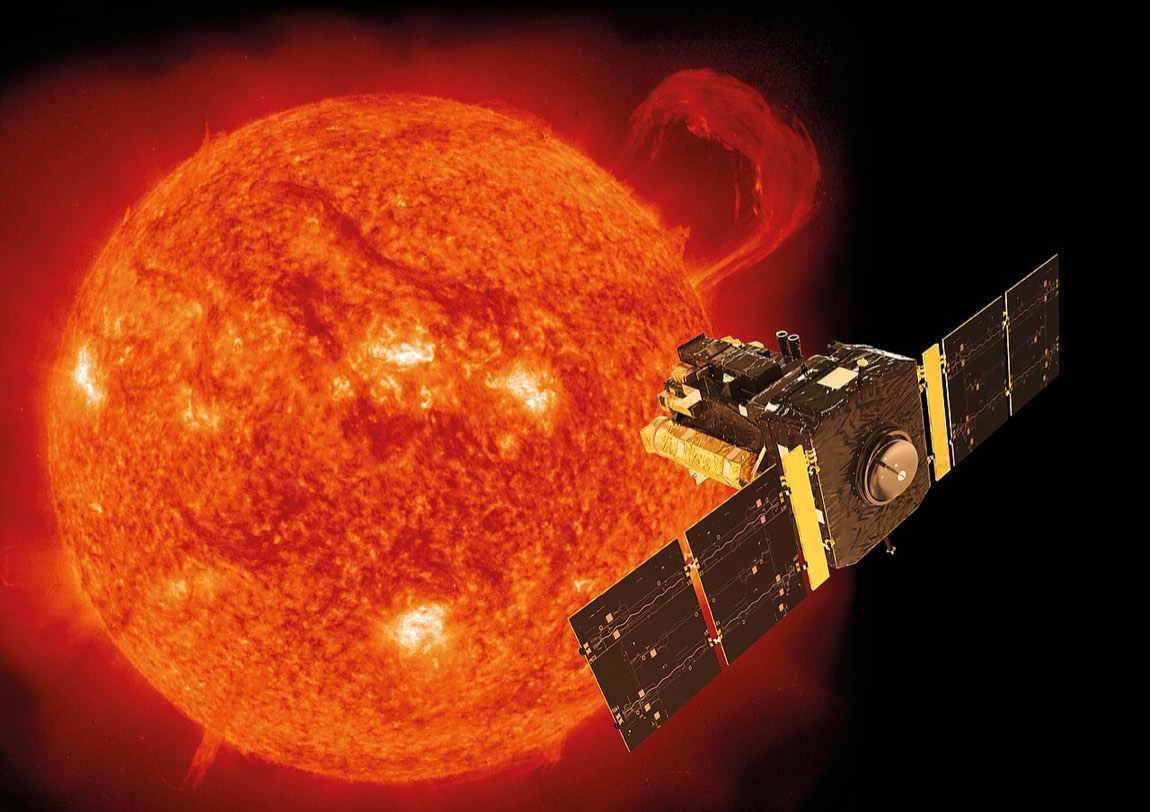
ESA's scientific debut came in its founding year. The Cos-B satellite, first worked on under ESRO, lifted off in 1975 to monitor gamma-ray emissions across the universe. Three years later ESA joined NASA on the International Ultraviolet Explorer, described in the article as the world's first high-orbit telescope; it operated successfully for 18 years after its 1978 launch, a remarkable run for any space instrument. Then in 1986 came ESA's first venture beyond Earth orbit: the Giotto probe dispatched to study comets Halley and Grigg–Skjellerup. It was a bold choice of target — Halley had not been visited by any spacecraft — and it opened ESA's tradition of comet science that would culminate decades later with Rosetta. The 1989 Hipparcos star-mapping mission followed, and the 1990s brought a cascade of joint work with NASA: SOHO to watch the Sun, Ulysses to fly over its poles, and shared involvement in the Hubble Space Telescope. Each mission deepened ESA's scientific credibility and demonstrated that cooperative funding across many nations could produce world-class astronomy.
 ⤢
⤢
03 Building Rockets: Ariane's Long Road to Market Leadership
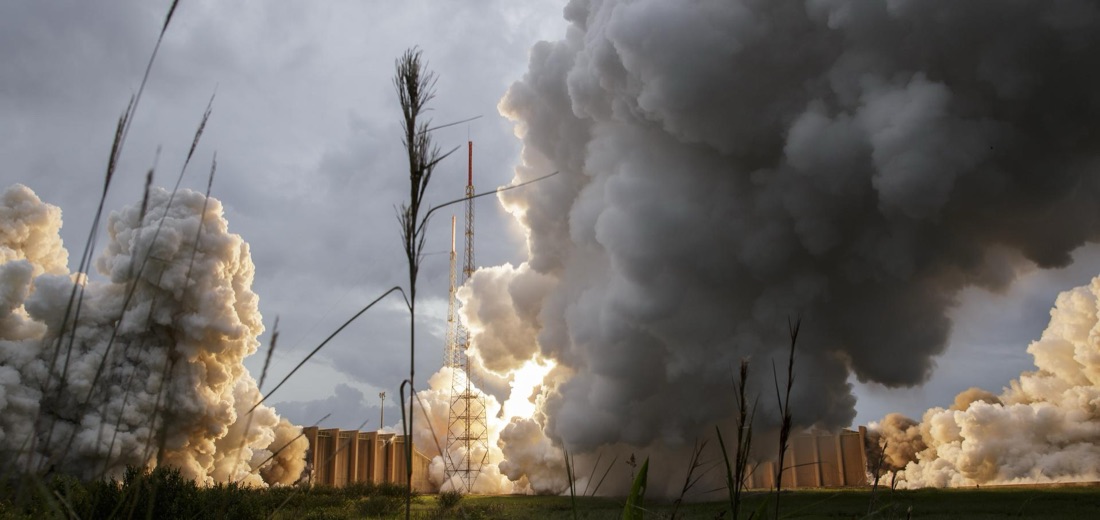
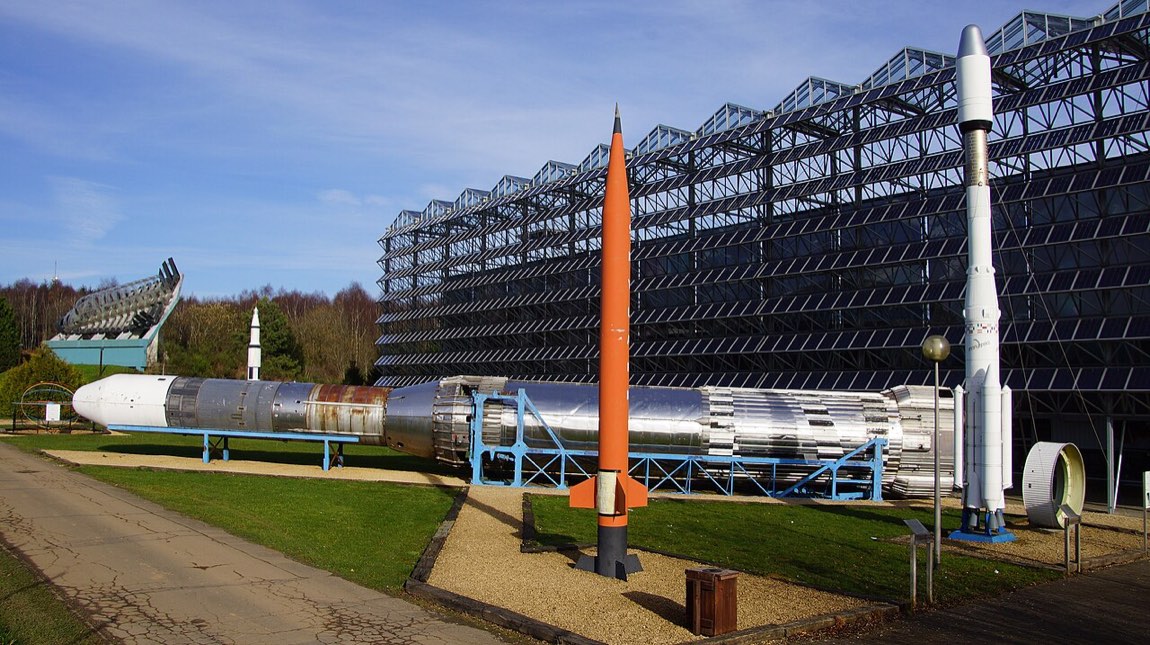
Because ELDO had failed to produce a launcher, ESA inherited the task of building one from scratch. Ariane 1 lifted off in 1979 and began carrying commercial payloads in earnest from 1984. Two intermediate versions refined the design before Ariane 4, which operated between 1988 and 2003, turned ESA into the world leader in commercial space launches during the 1990s — a remarkable commercial achievement for what had started as a purely scientific agency. Its successor, Ariane 5, stumbled badly on its first flight in 1996, an expensive and embarrassing failure. But the rocket recovered, eventually logging 112 successful launches through 2023 and carving out a durable position in what the article calls the heavily competitive commercial space launch market. Meanwhile ESA began developing Vega in 1998, a small-lift vehicle led by Italy and capable of carrying payloads of between 300 and 1,500 kg to an altitude of 700 km in low polar orbit. Vega's maiden launch from Kourou came on 13 February 2012, and after 22 flights it was succeeded by the more powerful Vega-C, whose first flight was in July 2022. Ariane 6 conducted its inaugural flight on 9 July 2024, with its first commercial launch following in March 2025.
04 How ESA Astronauts Finally Got to Space
When ESA was founded, human spaceflight was not part of its original mandate; it saw itself primarily as a scientific research organisation for uncrewed exploration. The first European to reach orbit, Czechoslovak Vladimír Remek, flew on a Soviet Soyuz in 1978 under the Intercosmos programme — an Eastern Bloc initiative, not an ESA one. The first astronaut formally counted as an ESA flier was German Ulf Merbold, who joined the STS-9 Space Shuttle mission in 1983, the same flight that carried the first European-built Spacelab laboratory module. That partnership proved transformative: experience accumulated during Spacelab, including missions fully funded and controlled by Germany and Japan, was later described as instrumental in developing the ISS. ESA spent the 1980s and 1990s also considering its own crewed spacecraft, Hermes — a mini-shuttle for three to five astronauts with a maximum weight of 21 metric tons — as well as a small station called Columbus MTFF. After roughly three billion dollars of expenditure Hermes was cancelled in 1995, largely because the fall of the Soviet Union opened new cooperative possibilities. Columbus was repurposed as a laboratory module on the ISS instead, launched there by NASA's STS-122 mission in 2008.
 ⤢
⤢
05 Rosetta, Philae, and Landing on a Comet
Few ESA missions captured public imagination as completely as Rosetta. Launched in 2004, the spacecraft spent a decade looping through the inner solar system, completing multiple deep-space flybys before arriving in 2014 at its destination: comet 67P/Churyumov–Gerasimenko, a Jupiter-family comet tumbling through space. Rosetta became the first spacecraft ever to orbit a comet, a navigation feat that required matching speed with a body moving in a complex, irregular way. Its lander, Philae, then descended to the surface and performed the first ever landing on a comet. The mission was not flawless — Philae bounced on touchdown and ended up in a shaded area that limited its battery life — but the scientific data returned by Rosetta and TGO's later atmospheric observations helped establish ESA's reputation for technically ambitious deep-space work. The mission had been conceived under the Horizon 2000 science programme and required patience on a scale unusual even for planetary science: from launch to comet arrival was ten years. It demonstrated that ESA could sustain complex, multi-decade projects and deliver landmark firsts at the end of them.
06 Huygens on Titan: The Farthest Landing Ever Made Deeper
ESA's contribution to the joint Cassini–Huygens mission was the Huygens probe, built specifically to descend through the atmosphere of Titan, Saturn's largest moon. Cassini–Huygens launched in 1997, and for seven years the spacecraft traveled outward through the solar system before arriving at Saturn. On 14 January 2005 Huygens separated from the Cassini orbiter and parachuted down through Titan's thick nitrogen atmosphere, transmitting data throughout its descent before landing. The article describes this as the farthest landing from Earth a spacecraft has ever made, a record that still stood as of the article's writing. The mission was a product of ESA–NASA collaboration at its most ambitious: NASA provided the orbiter and launch, ESA provided the lander, and both agencies shared the scientific return. The Huygens landing joined a short list of genuinely unprecedented acts in planetary exploration — alongside Rosetta's comet orbit and Philae's comet landing — and it underlined the value ESA brings to partnerships as a builder of specialised hardware for destinations no single nation might fund alone.
 ⤢
⤢
07 When Missions Fail: Lessons from Schiaparelli Deeper
Not every ESA mission reaches its goal intact. In 2016 ESA launched the ExoMars Trace Gas Orbiter together with the Schiaparelli demonstration lander as the opening mission of the Terrae Novae programme. When the spacecraft arrived at Mars, TGO successfully entered Martian orbit and after 11 months of aerobraking began scientific observations focused on the planet's atmosphere — a genuine success. Schiaparelli, however, failed on landing, crashing onto the Martian surface. The failure was significant because Schiaparelli was explicitly intended to demonstrate the landing technology ESA would need for future surface missions. Separately, the CryoSat-1 satellite designed to monitor Earth's cryosphere was destroyed in 2005 when its Russian launch vehicle failed, forcing ESA to build and fly a replacement, CryoSat-2, in 2010. The Ariane 5 first-flight failure in 1996 similarly set back commercial ambitions before the rocket recovered. These episodes reveal a pattern: ESA has repeatedly experienced high-profile setbacks and rebuilt from them, often learning enough in the process to achieve its goals on the second attempt. The article notes no catastrophic loss of crew in ESA's history, though the agency's astronauts have flown on vehicles operated by other agencies that carried their own risks.
08 The ISS Partnership: Modules, Cargo, and Costs Deeper
ESA's contribution to the International Space Station goes well beyond providing astronauts. The Columbus laboratory module, completed by NASA's STS-122 mission in 2008, gave ESA a permanent pressurised facility for European science on orbit. The Cupola observation module was completed by Alenia Spazio for ESA and added to the station in 2010. In 2020 ESA connected the Bartolomeo platform to the outside of Columbus, expanding capacity for external payloads. The European Robotic Arm was launched in 2021 alongside the Russian Nauka module. On the logistics side ESA developed the Automated Transfer Vehicle; each ATV carried 7,667 kilograms of cargo, and the first, Jules Verne, docked with the ISS on 3 April 2008 using automated systems that tracked the station moving at 27,000 km/h and attached with an accuracy of 2 cm. Five ATVs were flown before the programme ended with Georges Lemaître in 2014. The total estimated cost of the ISS approaches €100 billion including development, construction, and 10 years of operation; ESA committed to paying €8 billion of that, with roughly 90 percent of the ESA share contributed by Germany at 41 percent, France at 28 percent, and Italy at 20 percent.
 ⤢
⤢
09 The Orion Service Module and Artemis
In November 2012, ESA formally committed to providing the European Service Module for NASA's Orion crewed spacecraft, adapting technology developed for the ATV cargo vehicle. The ESM supplies Orion with propulsion, power, thermal control, and consumables — everything the crew capsule itself does not generate. The first ESM flew on Orion's uncrewed test flight in 2022, circling the Moon and returning safely. In 2026, the ESM powered Artemis II, described in the article as the first crewed spaceflight beyond low Earth orbit since 1972, carrying astronauts around the Moon. This contribution gives ESA guaranteed crew seats on Artemis missions and meaningful influence over a programme run by a partner agency, a relationship the article describes as especially important given that the second Trump administration introduced uncertainty into joint ESA–NASA science programmes. ESA also entered a memorandum of understanding with NASA in October 2020 to collaborate on the Lunar Gateway, though the article notes Gateway was later cancelled by NASA, illustrating how international partnership plans can shift with changes in political priorities on either side of the Atlantic.
10 Gaia, Euclid, and the Golden Age of ESA Astronomy
The 2010s and 2020s brought a succession of ESA astronomical observatories that reshaped entire fields. Gaia, the astrometry telescope launched in that decade, produced what the article calls the largest and most precise three-dimensional catalogue of astronomical objects ever made — a census of the galaxy of a kind never previously attempted. CHEOPS followed to characterise exoplanets. Then in 2021, after years of delays, the James Webb Space Telescope — a joint project with NASA and the Canadian Space Agency — launched and reached its operating halo orbit around the Sun–Earth L2 point in 2022, giving astronomers infrared eyes of unprecedented sensitivity. The first half of 2023 saw Euclid launch with a mission to measure the accelerating expansion of the universe and thereby constrain the nature of dark energy and dark matter. The experimental PROBA-3 mission, launched in 2024, demonstrated high-precision formation flying for coronagraphy — two spacecraft holding position relative to each other with extraordinary accuracy to block the Sun's disk and study its corona. ESA also launched LISA Pathfinder as a technology demonstrator for LISA, a future space-based gravitational wave observatory. Each of these missions reflects a decades-long scientific planning process through ESA's Horizon 2000, Horizon 2000 Plus, Cosmic Vision, and Voyage 2050 programmes.
11 Planetary Defence and the Space Safety Programme
In 2019 ESA substantially expanded its Space Situational Awareness programme into the broader Space Safety Programme, recognising three distinct threats: near-Earth asteroids, space weather, and space debris. The programme's first space mission was Hera, launched in 2024, which flew past Mars in 2025 en route to the asteroid Dimorphos — already struck by NASA's Double Asteroid Redirection Test mission — to conduct a post-impact survey and assess how effectively the kinetic impactor had changed the asteroid's orbit. Hera carried two CubeSats, Juventas and Milani, deployed alongside it. The Space Safety Programme also encompasses ground-based projects and a planned series of future missions including PRELUDE launching in 2027 and the Ramses mission in 2028. The programme represents something relatively new for ESA: operational space safety work rather than pure science, and the 2025 ministerial council's full endorsement of its priorities shows that member states regard asteroid and space weather risks as genuine policy concerns, not merely academic ones. The 2025 ministerial council also endorsed ESA's new Strategy 2040, approved a record budget of €22.1 billion, and for the first time widened ESA's mandate to include security and defence.
12 Facilities: Deliberately Spread Across Europe
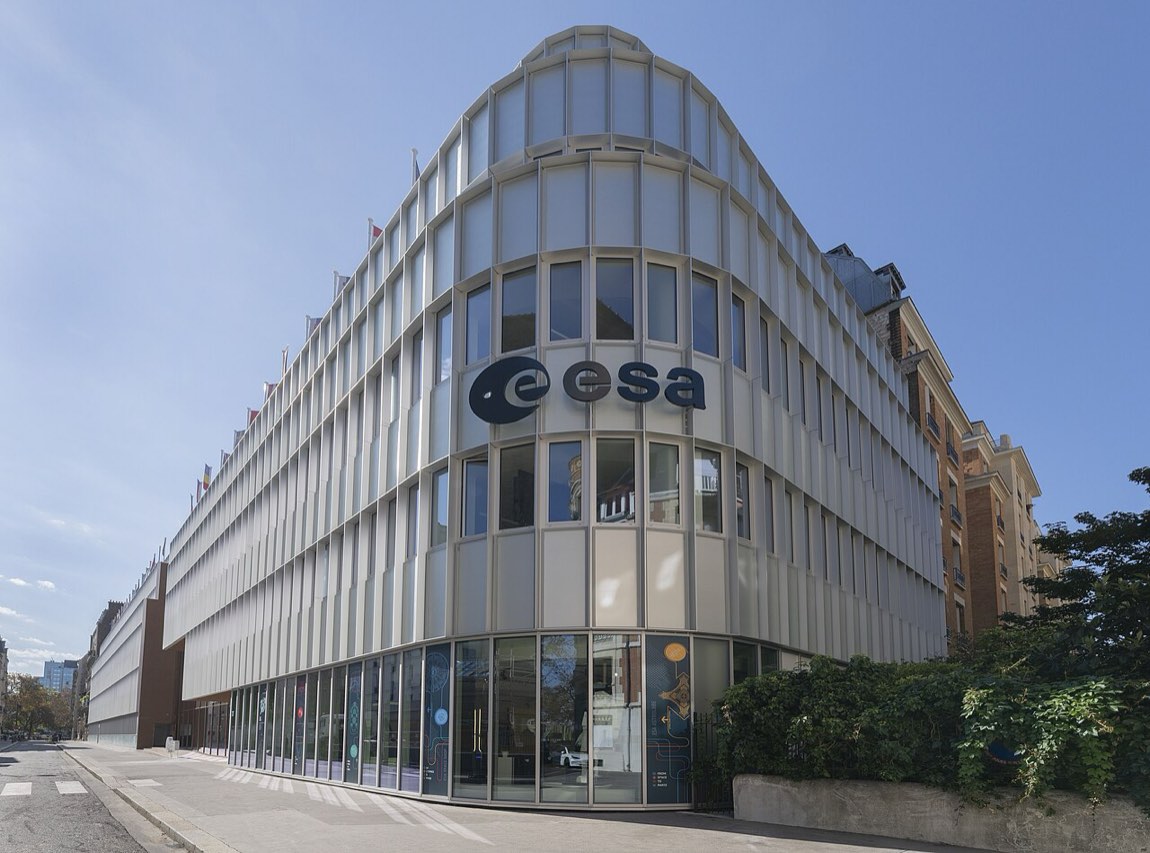
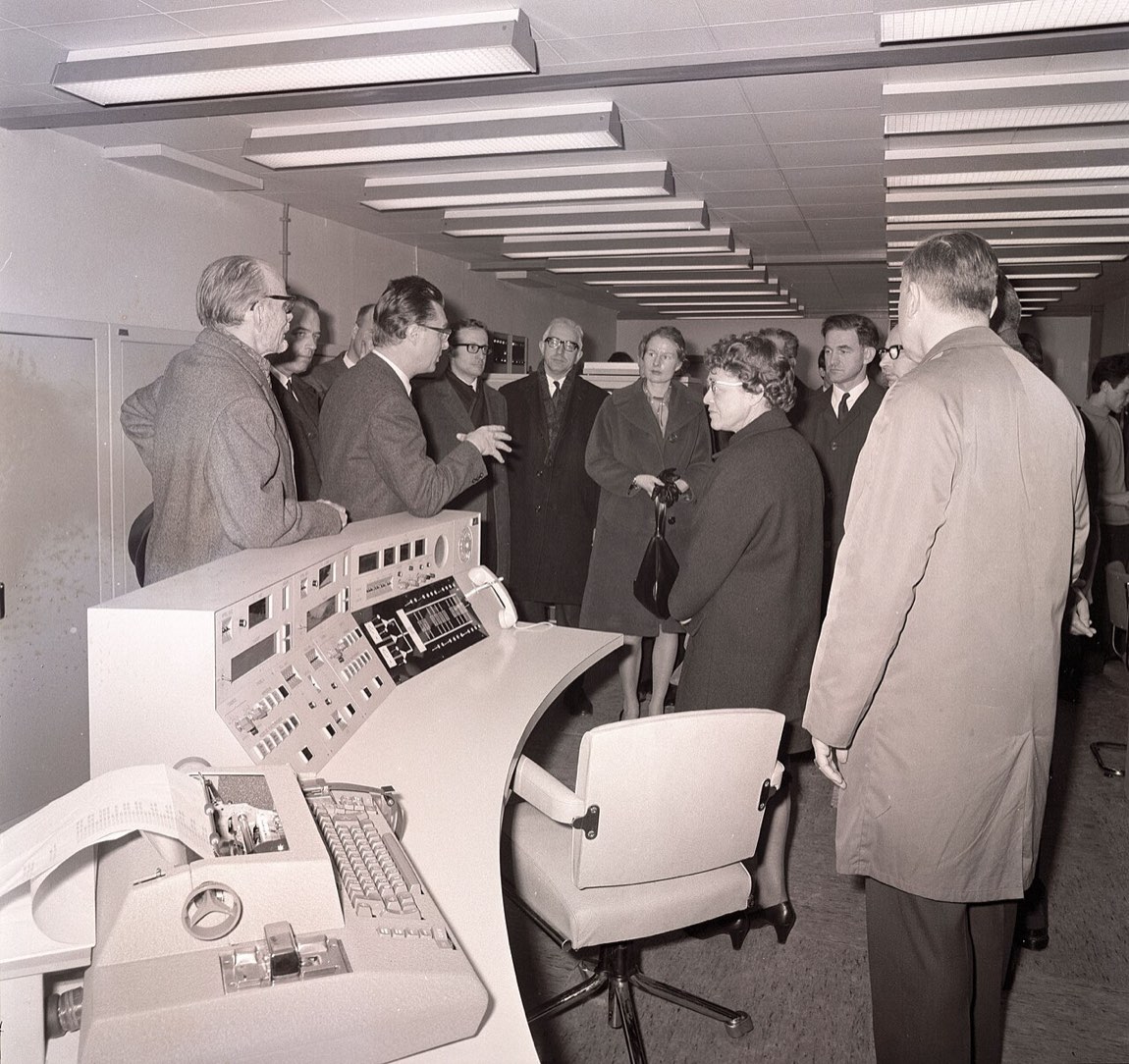
ESA's infrastructure was distributed among member states by design from the ESRO era, a political choice that binds national interests to the agency's success. Headquarters sit in Paris. Most scientific mission development happens at ESTEC in Noordwijk, Netherlands. Mission control is ESOC in Darmstadt, Germany. Astronaut selection and training takes place at the European Astronaut Centre in Cologne, Germany, established in 1990 when European human spaceflight had become routine enough to justify a dedicated facility. Earth observation missions are coordinated from Frascati, Italy; space astronomy from the European Space Astronomy Centre in Villanueva de la Cañada near Madrid; telecommunications research from ECSAT in Harwell, England, created in 2009. The ESTRACK network provides tracking and deep-space communications. ESA's primary launch site is the Guiana Space Centre in Kourou, French Guiana, chosen partly because its near-equatorial location provides an extra velocity boost of nearly 500 m/s compared to polar-latitude spaceports, and allows heavier payloads on equatorial orbits. Additional national facilities including Esrange near Kiruna in Sweden, the Institute of Space Propulsion in Lampoldshausen, Germany, and the Columbus Control Centre in Oberpfaffenhofen, Germany, operate in close collaboration with ESA.
13 Funding Structure and the Georeturn Principle Deeper
ESA's finances work differently from most intergovernmental bodies. Every member state must contribute to mandatory programmes, with each contribution calculated according to the country's Gross National Product; decisions on these programmes require unanimity. As of 2008 the mandatory programmes represented 25 percent of total expenditure, with optional programmes — launchers, Earth observation, human spaceflight, navigation, telecommunications, space safety, and technology — making up the other 75 percent. Member states choose which optional programmes to join, allowing richer or more space-interested nations to invest more heavily in specific areas. The agency operates a policy of georeturn: funds contributed by member states return to industry in those same countries in the form of contracts, giving governments a direct economic justification for participation. Annual budgets have grown steadily from €3.0 billion in 2008 to €7.79 billion in 2024 and €8.26 billion in 2026 for routine operations, with a separate record ministerial commitment of €22.1 billion approved in November 2025 for a multi-year period. The European Union, though not itself an ESA member, contributes to the agency's budget; together EU member states and the EU itself fund roughly 86 percent of ESA's budget, yet ESA remains legally independent and includes non-EU members such as the United Kingdom.