Arianespace / ArianeGroup
Company · Europe (France) · founded 1980
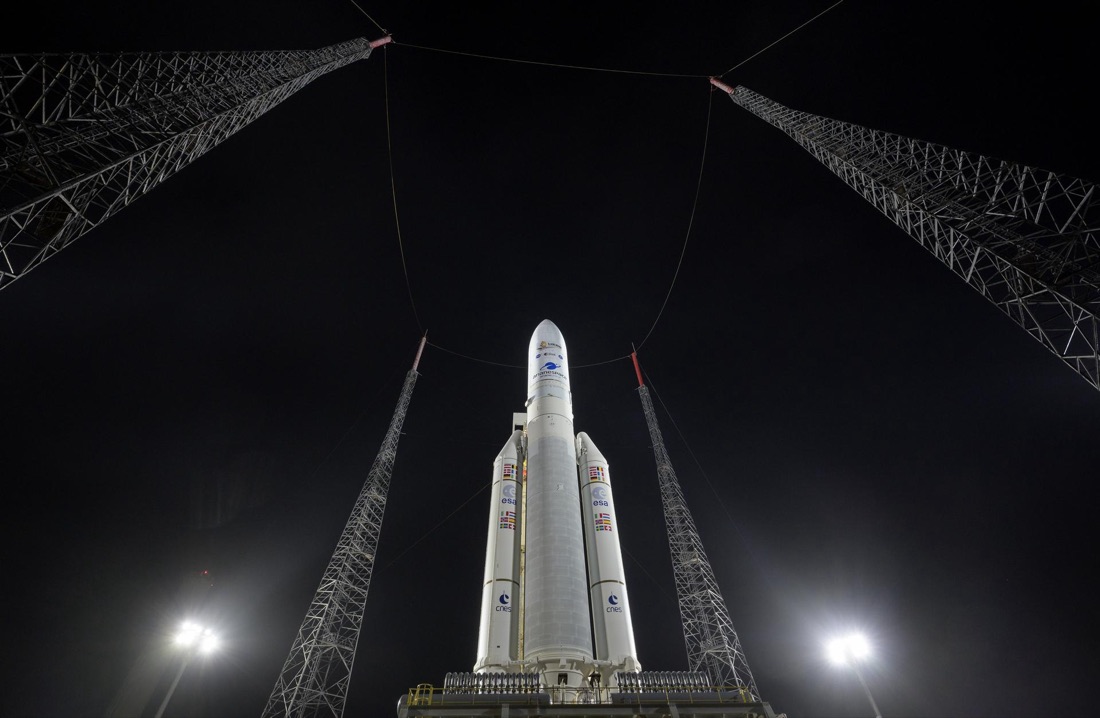
Europe's launcher, and the original commercial launch provider. Ariane 5 delivered half the world's big communications satellites for two decades and sent JWST on a trajectory so accurate it roughly doubled the telescope's usable lifetime. Ariane 6 now carries European access to space in a market transformed by reusability.
✦ Highlights
- JWST's flawless launch
- Ariane 5 dynasty
- Ariane 6 debut
The deep dive
Researched for the Atlas from Wikipedia — Arianespace (12,464 characters read) · updated Sep 20, 2026
01 Why Europe Built Its Own Rocket
Before Arianespace existed, European nations depended on the United States to launch their satellites — a situation that many governments found strategically uncomfortable. France had been lobbying for an independent European launcher as a replacement for the failed Europa rocket even before the European Space Agency was formally established in 1973. Once ESA was up and running, one of its very first programmes was the Ariane heavy launcher, designed explicitly to carry commercial satellites into geosynchronous orbit. France became the largest stakeholder in the effort, with Aérospatiale acting as prime contractor and the engine manufacturer SEP supplying powerplants for all three stages. The development broke new technical ground: prior to Ariane, only the United States had ever flown a launcher using hydrogen-powered upper stages. That achievement set the tone for the entire programme — European ambition backed by genuine engineering firsts, not simply catching up with existing technology.
02 The Birth of a Commercial Launch Industry
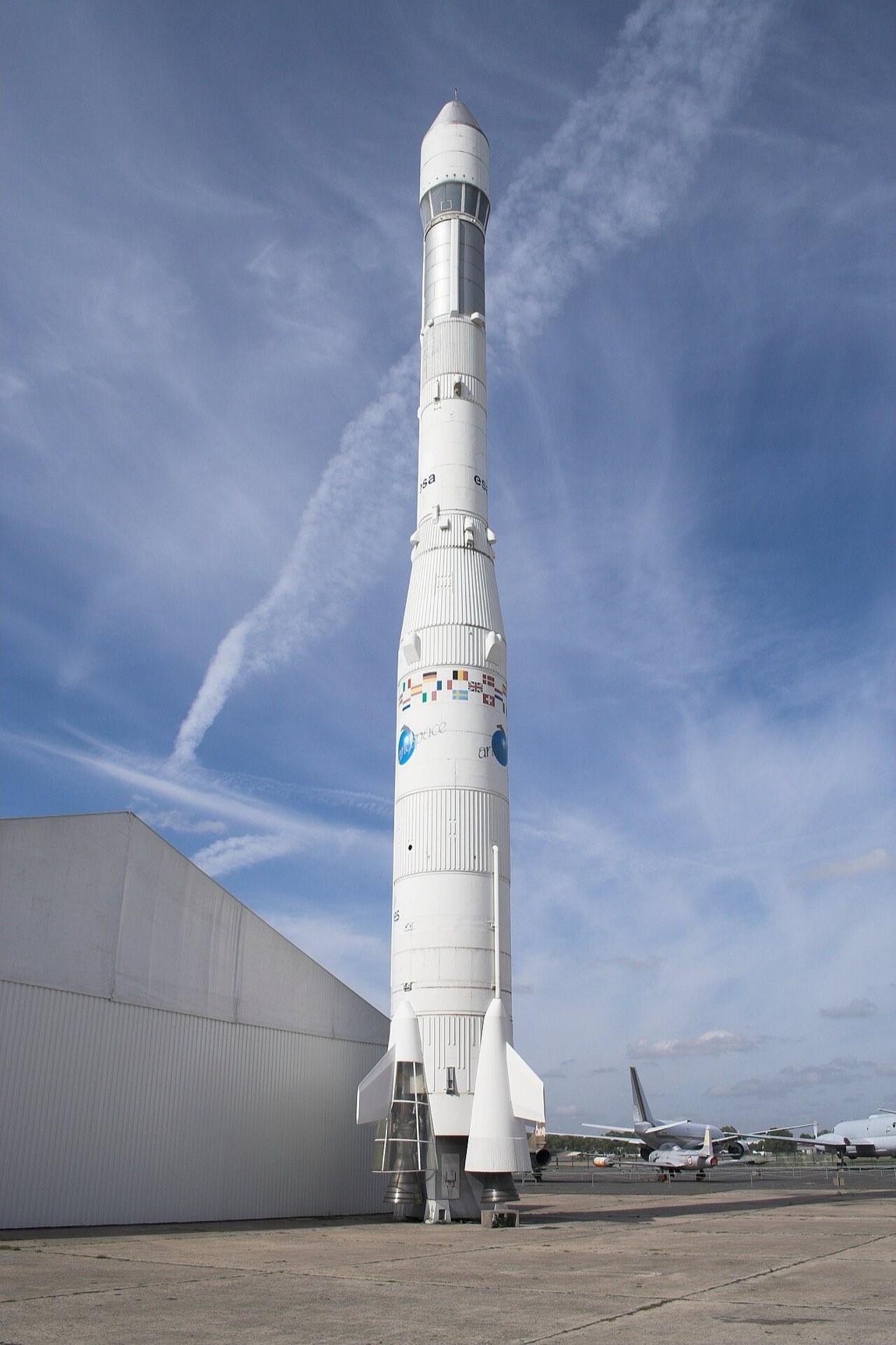
The moment Ariane 1 cleared the launch pad successfully on 24 December 1979, French space agency CNES and ESA moved quickly. Within months they had created Arianespace SA, incorporated in March 1980, making it by its own account the world's first commercial launch services company — a category that simply had not existed before. The company's purpose was specific: promote, market, and manage Ariane launches on behalf of European industry. After three further test launches, the first commercial mission flew on 10 September 1982, but it ended in failure when a turbopump in the third stage gave out. Despite that setback, confidence in the vehicle grew fast. By early 1984, 27 satellites had been booked onto Ariane — estimated at roughly half the world's launch market at the time. That commercial momentum was decisive enough that ESA formally handed responsibility for Ariane operations over to Arianespace after just the tenth mission.
 ⤢
⤢
03 From Ariane 1 to Ariane 4: Growing the Family Deeper
The Ariane 1 was a competent but modest vehicle, weighing a typical 207 tonnes and able to place up to 1.7 tonnes into orbit. Its immediate derivatives, the Ariane 2 and Ariane 3, were relatively short-lived platforms intended to bridge the gap while a more ambitious successor was readied. The Ariane 4, which first flew successfully on 15 June 1988, represented a substantial leap: a typical liftoff weight of 470 tonnes and a payload capacity of up to 4.2 tonnes to orbit, making it a far more flexible vehicle intended to compete at the upper end of the global launcher market. Curiously, despite those larger numbers, the Ariane 4 was actually 15 per cent smaller than the Ariane 3 in certain dimensions — a result of smarter design rather than brute scaling. Further improvements came with the V50 launch, when an upgraded third stage called the H10+ was introduced, adding 110 kg of payload capacity and extending the third-stage burn time by 20 seconds. The final Ariane 1 flight occurred in February 1986, and the series was retired as the Ariane 4 took over.
04 Ariane 5 and Its Controversial Origins Deeper
Development of the Ariane 5 began even before the Ariane 4 made its maiden flight, with ESA formally adopting the programme in January 1985. What followed was an eleven-year development and testing effort before the first launch in 1996. The new vehicle was not simply a scaled-up version of what came before — it broke from the family's design traditions deliberately, being built for heavier payloads of up to 5.2 tonnes and a targeted 20 per cent cost reduction compared to the Ariane 4. It was also engineered to higher safety margins because it was intended to carry crew aboard the proposed Hermes space vehicle. That ambitious dual purpose stirred internal debate within ESA: some member states argued that the mature Ariane 4 already met established market needs perfectly well, and Britain reportedly declined to participate in the Ariane 5 programme for exactly that reason. The first Ariane 5 launch on 4 June 1996 ended in failure; the first successful launch did not occur until 30 October 1997. For several years both the Ariane 4 and Ariane 5 were operated side by side before a decision was made to retire the Ariane 4 entirely.
 ⤢
⤢
05 Vega: Europe's Smaller Ride to Orbit
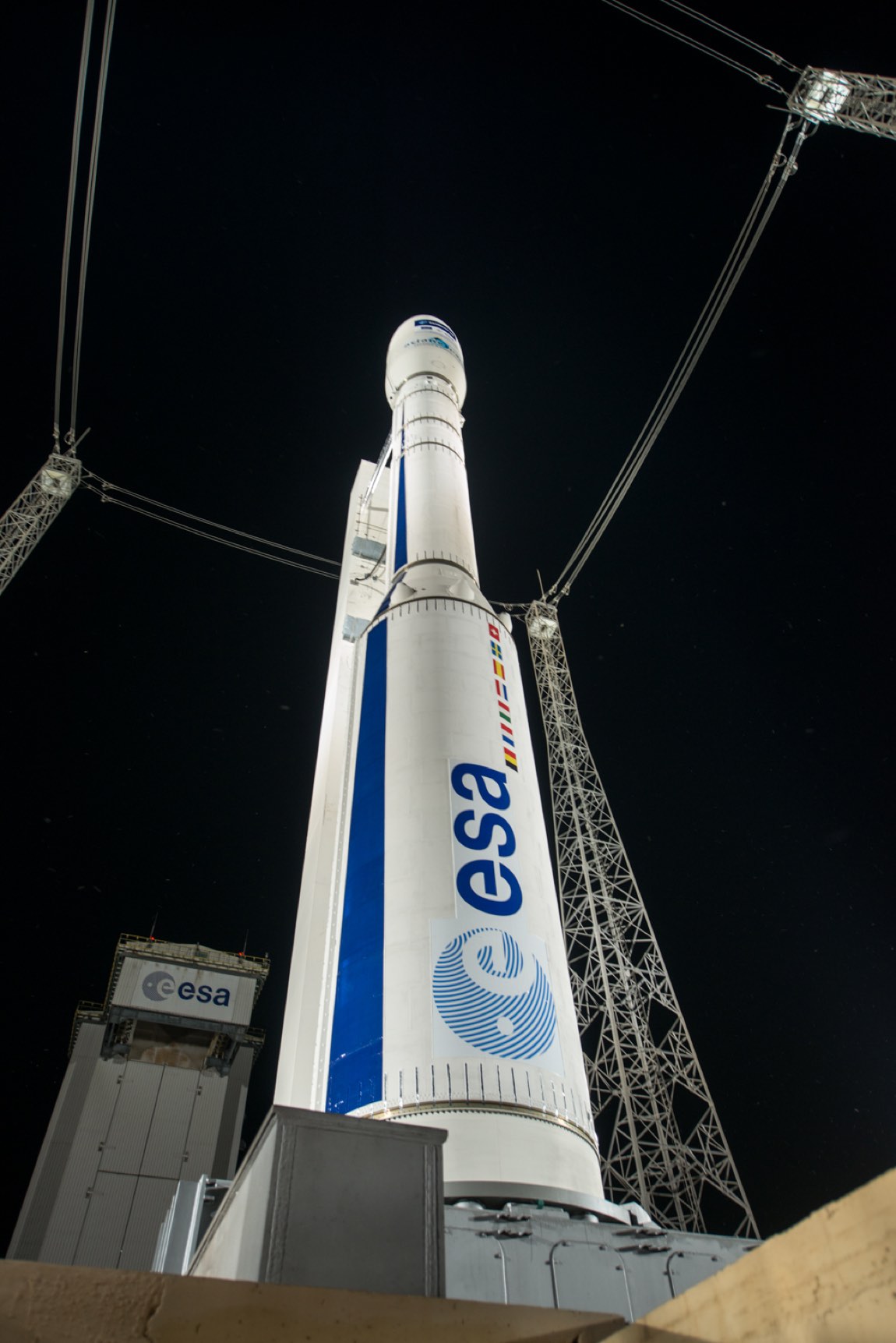
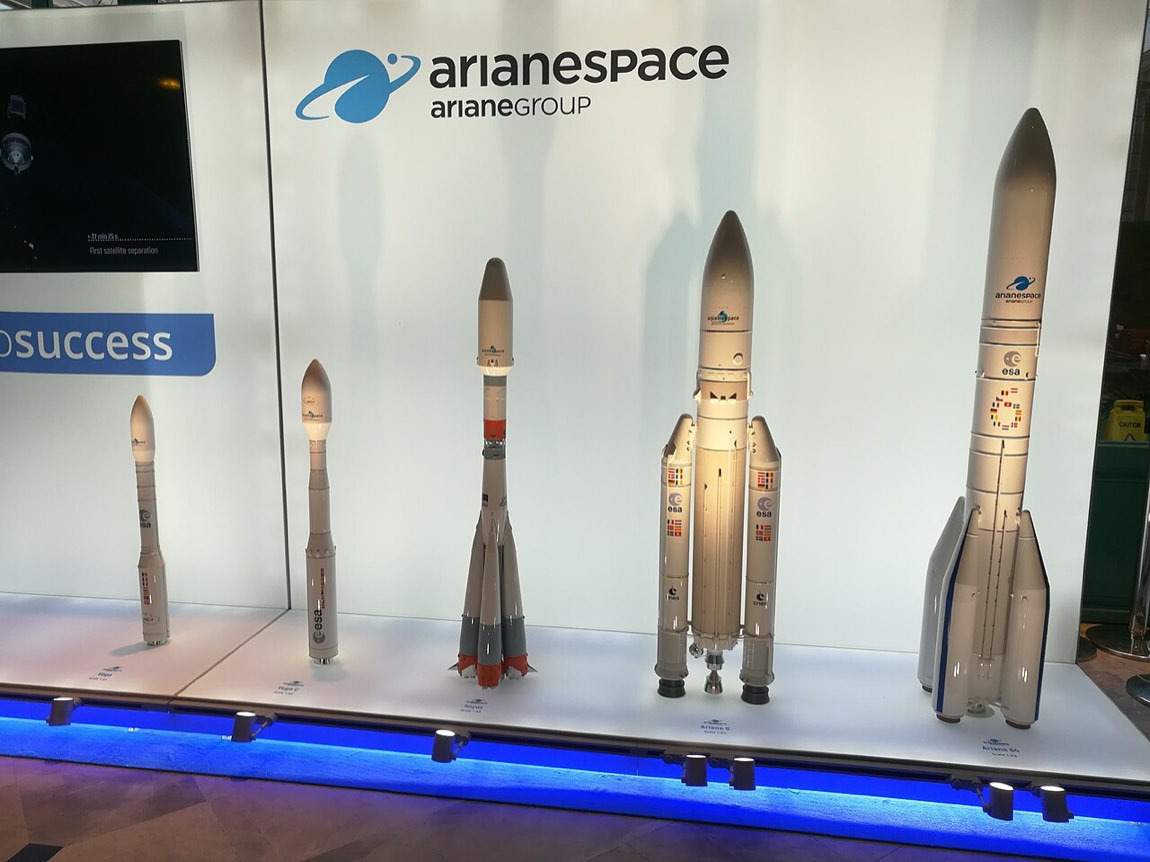
While Ariane dominated the heavy-lift market, a gap existed for smaller satellites needing affordable access to polar and Sun-synchronous orbits. The concept of a solid-propellant small launcher championed by Italy eventually became Vega. ESA and CNES signed contracts for Vega's development in March 2003, with Italy providing 65 per cent of the funding and six additional nations contributing the remainder. A contract between Arianespace and prime contractor ELV to handle vehicle integration at Kourou, French Guiana, was reported in May 2004. The first Vega launch took place on 13 February 2012 and was described as an apparently perfect flight. Arianespace subsequently marketed Vega as a tailored solution for missions to polar and Sun-synchronous orbits, complementing the larger Ariane vehicles. However, the arrangement changed in August 2024 when ESA agreed to allow Avio — the prime contractor — to directly commercialize the upgraded Vega C and seek non-governmental customers itself, with the transition to be complete by end of 2025.
06 Bringing Soyuz to South America
In 2002, ESA announced a cooperation programme with Russia to operate Soyuz rockets from the Guiana Space Centre — a historically significant step since Soyuz had previously launched only from former Soviet territory. Funding and final approval for the initiative came on 4 February 2005, and a dedicated Soyuz launch site was constructed at CSG. The rocket was also modified to operate from the new site and marketed as the Soyuz ST-B. On 21 October 2011, Arianespace achieved a milestone by launching the first Soyuz rocket ever flown outside former Soviet territory; the payload consisted of two Galileo navigation satellites. The programme proved useful enough that Arianespace ordered a total of 23 Soyuz rockets, a supply calculated to cover its needs through 2019 at a pace of three to four launches per year. This gave Arianespace a three-vehicle portfolio spanning small, medium, and heavy payloads — an unusual breadth for a single launch service provider.
 ⤢
⤢
07 SpaceX and the Pricing Crisis of the 2010s
For most of its history Arianespace operated in a relatively stable commercial environment. By 2004 the company held more than 50 per cent of the global market for boosting satellites to geostationary transfer orbit. That position came under serious pressure during the 2010s when SpaceX entered the launch market with significantly lower prices. Arianespace responded by cutting its workforce and pursuing cost reductions. In November 2013 it introduced pricing flexibility for lighter satellites carried on Ariane 5. By early 2014 the company was also considering requesting additional government subsidies; although it had already reduced subsidy support by €100 million per year since 2002, a fall in the value of the US dollar was costing it approximately €60 million per year on launch contracts. By September 2014 Arianespace had signed 11 contracts at reduced prices and carried a backlog worth €4.5 billion covering 38 satellites on Ariane 5, 7 on Soyuz, and 9 on Vega. Despite this, from 2017 onward SpaceX surpassed Arianespace in commercial launch market share.
08 The Guiana Space Centre and Who Owns What
Arianespace conducts all its launches from the Guiana Space Centre, known by its French initials CSG, located in French Guiana on the northeastern coast of South America. The choice of location is no accident — French Guiana sits close to the equator, giving rockets a useful velocity boost from Earth's rotation and making geostationary transfer orbit missions more efficient. The ownership and management structure at CSG is layered. The launch infrastructure itself is owned by ESA, while the site overall is managed by CNES, France's national space agency. Arianespace's role at CSG is operational: its teams handle vehicle integration, mission preparation, and launch countdown management. The company's corporate headquarters sit far from the launch site, in Évry-Courcouronnes, a suburb of Paris. This geographic split between headquarters and launch operations is typical of the collaborative, multinational character that has defined European launch efforts since the ESA's formation.
09 Shareholders, Structure, and Industry Ties Deeper
Arianespace's ownership structure reflects its roots in European industrial cooperation. Its primary shareholders are its own suppliers spread across multiple European nations — a deliberate design choice that ties the company's fortunes directly to the health of the companies that build its rockets. The shareholder count has shifted over time: 24 shareholders in 2008, 21 in 2014, and just 17 as of October 2018, reflecting consolidation across the European aerospace sector. The most significant restructuring came in 2015 when Airbus and Safran merged their space launcher activities into a joint venture originally called Airbus Safran Launchers, later renamed ArianeGroup. This entity absorbed the CNES stake and pooled Airbus and Safran shares, giving ArianeGroup just under 74 per cent of Arianespace. The remaining 26 per cent is spread across suppliers in nine countries, including further Airbus subsidiaries. ArianeGroup itself is responsible for designing and manufacturing the Ariane 6, while Arianespace handles marketing and customer relations.
10 Ariane 6 and the Road Ahead
After Ariane 5 was retired in 2023, its successor Ariane 6 conducted its maiden flight on 9 July 2024. The new rocket was designed to offer a similar payload capacity to the Ariane 5 but at considerably lower costs, addressing the competitive pressure that had built through the SpaceX era. Looking further into the future, Arianespace and ArianeGroup are in the early stages of developing a concept called Ariane Next, intended to be a partially reusable launcher that would succeed Ariane 6 from the 2030s onward. The stated objective for Ariane Next is ambitious: to halve launch costs through reusability. That goal echoes the logic that made SpaceX's Falcon 9 so commercially disruptive. Whether Ariane Next reaches that target will depend on developments over the coming decade, but its existence signals that European space access strategy is now explicitly built around reusability rather than simply refining expendable rockets. Meanwhile, in January 2019, ArianeGroup and Arianespace signed a one-year contract with ESA to study a mission to the Moon to mine regolith — a hint at ambitions beyond launch services alone.
11 Milestones and Notable Firsts by the Numbers
Across 45 years of operations, Arianespace has accumulated a track record that places it among the most experienced launch service providers in the world. As of October 2025, the company had completed 355 missions and placed more than 1,100 satellites into orbit — an average of roughly 24 satellites per year across its history, though the pace has varied considerably. Its first commercial launch, Spacenet 1, flew on 23 May 1984. The programme weathered notable failures: the maiden commercial flight of Ariane 1 on 10 September 1982 was lost to a third-stage turbopump failure, and the first Ariane 5 launch on 4 June 1996 also failed before the type achieved its first success on 30 October 1997. The first Ariane 2 launch on 30 May 1986 failed as well. These setbacks were significant but did not derail the broader programme; the lessons fed back into improved designs and procedures. The 21 October 2011 Soyuz launch carrying two Galileo satellites stands as another milestone — the first time a Soyuz ever flew from outside the former Soviet Union.